
















Understanding Water Treatment Systems
Distinctions Between Water Conditioners and Water Softeners
As someone with comprehensive experience in water therapy systems, I frequently encounter concerns regarding the distinctions between water conditioners and water softeners. Understanding these differences is essential for choosing the right solution for your home’s water quality concerns. Although both systems aim to address difficult water issues, they do so in essentially different ways.
Water Conditioners Explained
Water conditioners commonly utilize a physical process to change the behavior of minerals in the water. They do not remove calcium and magnesium, the main culprits of hardness, but rather alter their form so they do not adhere to surfaces or form scale. This process is often accomplished through template-assisted crystallization (TAC), electromagnetic fields, or catalytic media. The benefits of water conditioners include easier installation and maintenance, and they generally require no salt or chemicals.
Key Points
- Water conditioners alter mineral behavior, prevent scale buildup
- Water softeners remove calcium and magnesium ions from water
- Water conditioners use physical methods, no mineral removal
- Water softeners use ion exchange, remove hardness minerals
- Water conditioners have ease of installation and maintenance
- Water softeners prevent scale buildup, improve appliance efficiency
- Consider water hardness levels, environmental impact, maintenance, health, cost
- Water softeners more effective for high hardness, conditioners lower impact
Water Conditioner vs Water Softener: Key Differences Clarified
As someone with comprehensive experience in water therapy systems, I frequently encounter concerns regarding the distinctions between water conditioners and water softeners. Understanding these differences is essential for choosing the right solution for your home’s water high quality concerns. Although both systems aim to address difficult water issues, they do so in essentially different ways.
Water conditioners commonly utilize a physical process to change the actions of minerals in the water. They do not eliminate calcium and magnesium, the main culprits of hardness, yet rather alter their type so they do not adhere to surfaces or create range. This procedure is often accomplished through template-assisted formation (TAC), electro-magnetic fields, or catalytic media. The advantages of water conditioners include much easier installment and maintenance, and they generally call for no salt or chemicals.
In comparison, water softeners use an ion exchange process to in fact get rid of calcium and magnesium ions from the water. This process includes trading these solidity ions with sodium or potassium ions, properly minimizing water firmness. Water softeners are highly effective at stopping scale accumulation in plumbing and appliances, resulting in longer life expectancies and a lot more effective procedure. Nevertheless, they require regular upkeep, consisting of the replenishment of salt or potassium, and can enhance the salt web content in the water.
| Aspect | Water Conditioner | Water Softener |
|---|---|---|
| Refine | Physical alteration of minerals | Ion exchange |
| Mineral Removal | Does not get rid of minerals | Eliminates calcium and magnesium |
| Upkeep | Reduced upkeep, no salt called for | Needs regular salt replenishment |
| Impact on Water | No adjustment in sodium levels | Increases salt content |
| Benefits | Protects against scale development, very easy installment | Very effective at softening water, safeguards devices |
In summary, while both water conditioners and water softeners offer solutions to tough water issues, their approaches and end results differ significantly. Selecting the appropriate system depends upon your particular demands and preferences, including maintenance demands and the preferred effect on your home’s water quality.
How Water Conditioners Work and Their Advantages
Water conditioners are a progressively popular service for households taking care of water quality concerns. Unlike typical water softeners, water conditioners do not remove the minerals that create water hardness. Rather, they change the method these minerals behave, preventing them from creating range deposits.
Device of Water Conditioners
Water conditioners make use of various methods to customize the residential or commercial properties of hardness-causing minerals such as calcium and magnesium. Typical techniques consist of:
- Electro-magnetic or Magnetic Fields: These conditioners apply magnetic areas to the water, which transforms the molecular framework of the minerals, making them much less likely to adhere to surface areas.
- Template-Assisted Formation (TAC): This technique transforms the firmness minerals into harmless crystalline particles that remain put on hold in the water and are much less most likely to create scale.
- Electrolysis: This method uses an electrical existing to alter the chemical composition of the water, lowering the tendency of minerals to develop scale.
Advantages of Water Conditioners
Among the primary advantages of water conditioners is their ability to decrease scale build-up without including sodium to the water, which is a common by-product of conventional water conditioners. This function makes water conditioners a favored selection for individuals worried regarding salt intake.
Additionally, water conditioners are often easier to set up and keep contrasted to water conditioners. They commonly do not require the regular addition of salt or various other chemicals, which streamlines upkeep and lowers ongoing prices.
Ecological influence is an additional factor to consider where water conditioners succeed. Because they do not depend on salt, they create no brine discharge, which can be hazardous to the setting. This makes them a more environmentally friendly alternative for water therapy.
Furthermore, water conditioners can assist enhance the efficiency and longevity of family devices. By avoiding scale build-up in pipelines and on home heating components, these gadgets operate a lot more effectively and are less susceptible to malfunctions.
Water conditioners additionally preserve the valuable minerals in the water, which can be helpful for health. Unlike softened water, which gets rid of these minerals, conditioned water maintains its nutritional worth.
Comprehending the Mechanism and Benefits of Water Softeners
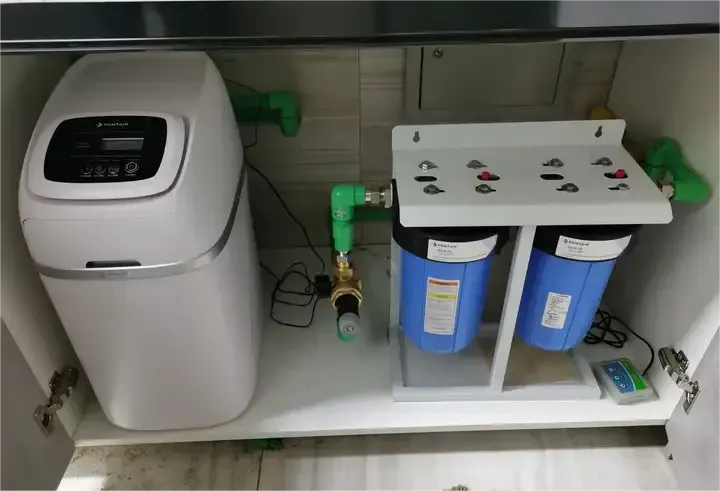
Water softeners are gadgets specifically made to deal with the issue of tough water, which is water that consists of high levels of minerals, primarily calcium and magnesium. These minerals can create a range of problems in the family, such as scaling in pipes and appliances, decreasing their efficiency and lifespan.
The primary device behind water conditioners is the ion exchange process. This procedure includes the replacement of calcium and magnesium ions in the water with salt or potassium ions. The water conditioner device commonly has a resin bed loaded with little resin grains. These grains are billed with salt or potassium ions. As tough water passes with the material bed, the resin grains bring in and keep the calcium and magnesium ions, releasing salt or potassium ions in their area. This leads to softened water that is much less most likely to cause scaling and build-up.
| Part | Feature |
|---|---|
| Material Bed | Residences resin grains that help with ion exchange. |
| Brine Storage tank | Shops the salt or potassium option made use of to charge the resin beads. |
| Control Valve | Regulates the circulation of water and launches the regeneration procedure. |
The benefits of making use of a water softener are countless:
- Prevents Range Accumulation: By getting rid of calcium and magnesium, water conditioners prevent the formation of scale in plumbing systems and appliances.
- Boosts Effectiveness: Softened water improves the efficiency of water heating systems and other devices, potentially reducing energy costs.
- Rises Lifespan of Home Appliances: Decreased range build-up can prolong the life expectancy of dishwashing machines, washing equipments, and other water-using home appliances.
- Enhances Cleansing Efficiency: Softened water boosts the lathering and cleansing capacities of soaps and cleaning agents, causing cleaner garments and meals.
- Reduces Soap Use: Less soap and detergent are needed to attain efficient cleansing, which can cause price savings in time.
In spite of their advantages, it is necessary to take into consideration the potential drawbacks of water conditioners, such as the need for regular upkeep and the enhancement of salt to the water. However, for households taking care of the obstacles of hard water, the benefits of water softeners usually surpass these problems, making them a beneficial service for preserving a healthy and balanced and efficient home water supply.
What are the key differences between water conditioners and water softeners?
Water conditioners use a physical process to alter the behavior of minerals in the water, preventing them from adhering to surfaces or forming scale. They do not remove calcium and magnesium, the primary culprits of hardness. On the other hand, water softeners use an ion exchange process to actually remove calcium and magnesium ions from the water, effectively reducing water hardness.
How do water conditioners work and what are their benefits?
Water conditioners alter the way minerals behave in water without removing them. Common methods include electromagnetic or magnetic fields, template-assisted crystallization (TAC), and electrolysis. The benefits of water conditioners include preventing scale buildup without adding sodium to the water, ease of installation and maintenance, and environmental friendliness due to the absence of salt and brine discharge.
What is the mechanism of water softeners and what are their advantages?
Water softeners use an ion exchange process to remove calcium and magnesium ions from the water, replacing them with sodium or potassium ions. The advantages of water softeners include preventing scale buildup, improving efficiency and lifespan of appliances, enhancing cleaning effectiveness, reducing soap usage, and improving the lathering and cleaning capabilities of soaps and detergents.
How can I choose between a water conditioner and a water softener for my home?
When deciding between a water conditioner and a water softener, consider factors such as water hardness levels, environmental impact, maintenance requirements, health considerations, and cost. Water softeners are more effective for high water hardness levels, while water conditioners have lower environmental impact and maintenance requirements. Health considerations and cost can also influence the decision.