

















The Comprehensive Manufacturing Process of Faucet Water Filters
The article delves into the comprehensive manufacturing process of faucet water filters, revealing how they are designed from activated carbon, resins, and other materials to ensure water safety and taste improvement. This deep dive not only educates but also highlights the meticulous steps taken from raw material selection to final product testing.
Reading this detailed examination benefits anyone interested in the behind-the-scenes work of faucet water filter production. It offers insights into the critical quality control measures and technological intricacies involved, ensuring consumers receive efficient and reliable products. By understanding these processes, consumers can make informed decisions about the products they rely on for clean drinking water.
Key Points
Here are the key points for your article on the manufacturing process of faucet water filters:
- Uses activated carbon and resins
- Includes design and mold creation
- Component manufacturing detailed
- Assembly of filter units explained
- Testing for functionality and safety
- Emphasis on quality control
- Packaging ensures product integrity
- Distribution and logistics optimized
Raw Materials Used in Faucet Water Filters
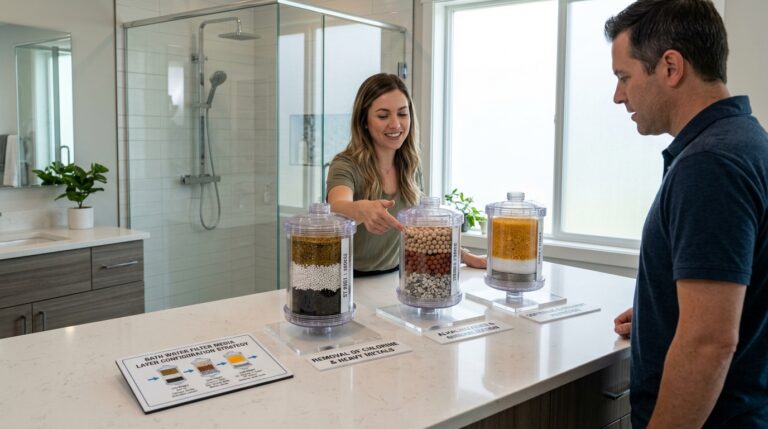
The manufacturing procedure of faucet water filters starts with the choice and preparation of specialized basic materials. The main materials employed consist of turned on carbon, ion exchange materials, and various plastic polymers. These parts are crucial for guaranteeing the efficiency and toughness of the filters.
| Material | Summary | Feature |
|---|---|---|
| Turned on Carbon | A form of carbon processed to have tiny, low-volume pores | Eliminates natural substances and chlorine from water, boosting taste and odor |
| Ion Exchange Resins | Small beads created from organic polymers | Softens water by removing calcium and magnesium ions |
| Plastic Polymers (e.g., ABS, PP) | Thermoplastics understood for their stamina and versatility | Made use of to form the real estate and elements of the filter, making certain structural integrity |
Along with these key materials, silica sand and zeolite are also utilized for their filtering buildings, particularly in layers that precede the key active parts. These products aid in pre-filtering debris and larger bits before water gets to the finer, active filtering phases.
The procurement of these materials is guided by rigorous criteria to guarantee that they are complimentary from pollutants that can compromise the filtering performance. Distributors are normally required to give qualification that these materials satisfy market standards for pureness and efficiency.
Recognizing the duty of each product within the filter aids in maximizing the design and boosting the capability of the end product. It is with meticulous choice and mix of these resources that faucet water filters are able to offer clean, secure, and great-tasting water.
Step-by-Step Manufacturing Process of Faucet Water Filters
The manufacturing process of tap water filters is an accurate procedure that calls for careful focus to detail to guarantee item efficiency and safety. The following actions detail the core procedures associated with creating top quality faucet water filters.
Design and Mold Creation
The preliminary action in the production process includes the design stage, where exact specs for the tap water filters are created. CAD software is frequently used to make the elements with precision. When the design is completed, molds for different filter components such as the casing, connectors, and filter cartridges are developed.
Product Preparation
Different products, including plastics, activated carbon, and ion-exchange resins, are prepared. Plastics are typically processed into granules and fed into shot molding machines, while triggered carbon and resins are dealt with to accomplish the wanted purity and bit size.
Component Manufacturing
Making use of shot molding, plastic components of the water filters are produced. This process entails heating up the plastic granules to a liquified state and infusing them right into the pre-designed molds under high pressure, forming the architectural components of the filters.
Filter Media Assembly
The heart of the tap water filter is its filtration media. Turned on carbon, usually utilized as a result of its adsorptive properties, and ion-exchange resins are loaded into the filter cartridges. This setting up is vital as it identifies the efficiency of the filter in eliminating pollutants from faucet water.
Setting Up of Water Filter Units
Once all parts are manufactured and prepared, assembly of the faucet water filters starts. Elements such as rubber seals, plastic housings, and filter cartridges are set up in a consecutive process, frequently on a production line. Each part is meticulously checked to make certain appropriate fit and function.
Evaluating for Functionality and Safety
Every tap water filter undertakes rigorous screening to guarantee it fulfills industry standards for capability and security. Examinations consist of looking for leaks, validating filter ability, and ensuring the removal of pollutants as specified.
Packaging
The last step in the manufacturing procedure is packaging. Each water filter is packaged securely to stay clear of damage throughout delivery and handling. Product packaging products are selected to preserve the honesty of the filters up until they get to the customer.
This thorough approach to the production of tap water filters makes certain that the end product is trustworthy and efficient in giving clean, risk-free alcohol consumption water.
III. Top Quality Control and Testing in Faucet Water Filter Production
The quality control and testing phase is important in the manufacturing process of faucet water filters to guarantee that each unit fulfills sector criteria and gives safe, clean water. This stage involves a number of methodical steps, each made to recognize and eliminate problems before the products get to the consumer.
Products Inspection
Initially, all raw materials and elements are inspected upon arrival to verify their conformity with specs. This examination covers every little thing from the turned on carbon and ceramic components to the plastic real estates and steel installations.
Refine Monitoring
Throughout the manufacturing process, automated systems and quality control professionals monitor efficiency specifications. Sensors and software program track the effectiveness of filter production line, ensuring that equipment operates within fixed limits to stop flaws.
Examining Protocols
Rigorous screening procedures are employed to evaluate the performance and durability of the filters. These consist of:
| Test Type | Description |
|---|---|
| Circulation Rate Testing | Actions the rate at which water goes through the filter to guarantee it fulfills the ideal flow criteria. |
| Pressure Test | Evaluates the filter’s capability to withstand normal water stress without leaking. |
| Pollutant Reduction Test | Confirms the effectiveness of the filter in eliminating defined impurities, such as lead, chlorine, and other hazardous compounds. |
| Life Process Test | Examines the filter’s durability and functional life expectancy under increased usage problems. |
Final Quality Assurance
After screening, each set of filters goes through a last quality control check. This comprehensive evaluation makes sure that just items that fulfill all performance, safety and security, and longevity standards are authorized for product packaging and circulation.
The emphasis on rigorous high quality control and screening in the production of faucet water filters is vital not just for meeting regulatory compliance however additionally for preserving customer depend on and satisfaction in the effectiveness and integrity of the product.
Product packaging and Distribution of Faucet Water Filters
The last stages in the production of faucet water filters involve precise packaging and circulation procedures designed to make sure the product’s safety and security and integrity reaches the customer without concession. This component of the procedure is important, as it straight affects the marketplace understanding and ultimate satisfaction of completion customers.
Product packaging
Initially, each faucet water filter undergoes a safe and secure packaging procedure. This typically involves securing the filter in a clean and sterile, airtight cling wrap to protect against any type of contamination or damage. Following this, the product is put in a durable, top quality box that consists of all essential customer instructions and lawful disclaimers. This box is designed to endure the rigors of transportation while keeping the aesthetic allure of the item on retail shelves.
Quality Control in Packaging
To make sure constant quality, each batch of packaged filters goes through a collection of quality control checks. These checks consist of physical evaluation for any flaws in packaging, verification of securing integrity, and random tests to make certain the bundles have all ideal parts.
Circulation
When product packaging is validated to meet all standards, the circulation stage starts. Tap water filters are commonly dispersed via a network of warehouses and logistics suppliers. Products are purposefully kept across numerous local warehouse to maximize distribution times to merchants and direct consumers.
Logistics and Transportation
Transportation approaches are selected based on efficiency and ecological effect. Using green transportation services is prioritized, straightening with the sustainability dedications of the making firm. Real-time monitoring systems are employed to keep an eye on the activity of goods, ensuring timely distribution and logistical performance.
Table: Overview of Packaging Materials Used
| Material | Summary | Usage |
|---|---|---|
| Sterilized Plastic Wrap | High-barrier plastic that protects against moisture and contaminants. | Straight contact with product. |
| Branded Boxes | Corrugated cardboard with high resilience and printability. | Outside product packaging and branding. |
| Direction Sheets | Recycled paper printed with soy-based inks. | Put inside each box for user guidance. |
In conclusion, the packaging and circulation of tap water filters are essential actions that not just secure the item but likewise improve its market visibility. By implementing extensive quality controls and utilizing efficient logistical methods, producers ensure that their products fulfill the highest standards of customer satisfaction.
Here are the FAQs based on the provided article content about the manufacturing process of faucet water filters:
FAQs About Faucet Water Filter Manufacturing
What materials are used in manufacturing faucet water filters?
Faucet water filters are primarily made from activated carbon, ion exchange resins, and various plastic polymers like ABS and PP. Additional materials like silica sand and zeolite are also used to enhance the filtration process.
How is the design and molding of faucet water filters done?
The design phase uses CAD software to develop precise specifications. Molds for filter components such as casings and cartridges are then created, ensuring each part meets exacting standards.
What steps are involved in the assembly of faucet water filters?
Assembly includes the integration of plastic casings, rubber seals, and filter cartridges on an assembly line, followed by sequential checks to guarantee each unit’s functionality and safety.
What tests are performed on faucet water filters?
Rigorous testing protocols are applied, including flow rate testing, pressure tests, contaminant reduction tests, and life cycle tests to ensure the filters meet industry standards for performance and durability.
How do manufacturers ensure the quality of faucet water filters?
Quality control involves inspection of raw materials, monitoring manufacturing processes, and final quality assurance checks to confirm that filters perform reliably and are free from defects.
What packaging materials are used to ensure the safety of faucet water filters during distribution?
Filters are sealed in sterile, airtight plastic wraps and placed in durable, branded boxes. Instruction sheets inside the boxes provide user guidance, and materials like corrugated cardboard and recycled paper are used to enhance environmental sustainability.
What measures are taken to distribute faucet water filters effectively?
Manufacturers use a network of warehouses and logistics providers, employing real-time tracking and eco-friendly transport solutions to optimize delivery times and minimize environmental impact.
These FAQs provide a concise overview while avoiding repetition with the detailed content in the article, ensuring that users can quickly find answers to common questions about the manufacturing process, quality control, and distribution of faucet water filters.