
















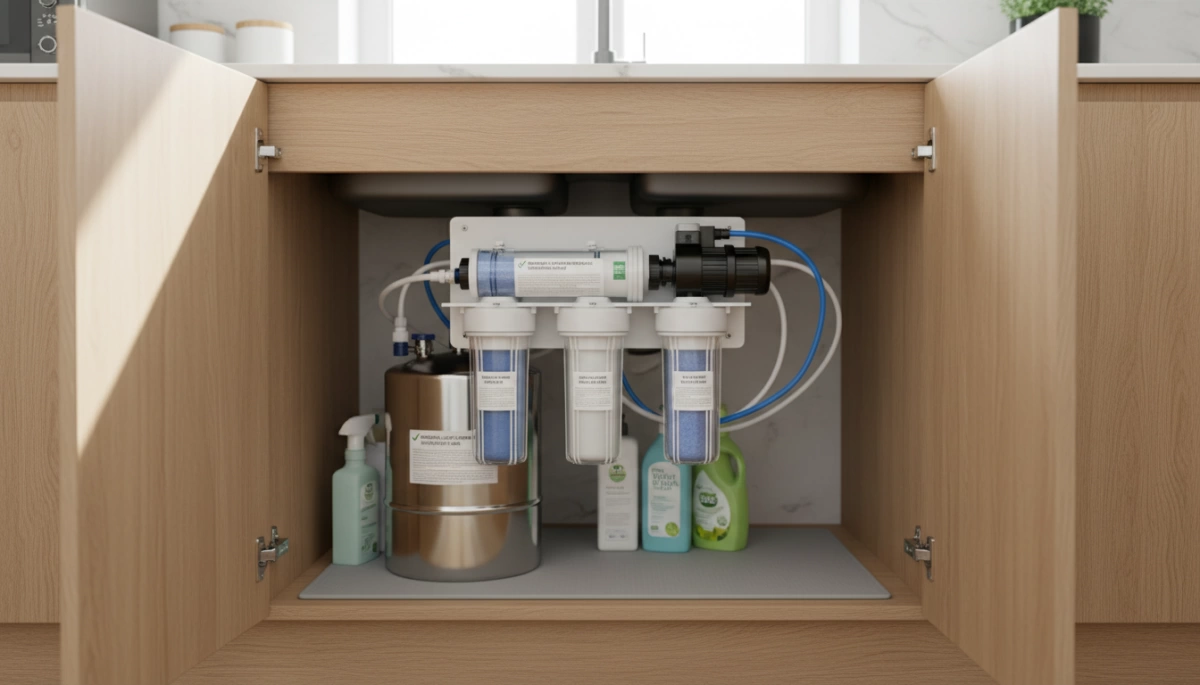
You might already know that an under-sink reverse osmosis system is the gold standard for clean drinking water…
But are you completely sure the system itself is safe?
Well, you\’re in for a treat because I\’ve put together a complete guide to Material Safety Compliance in Under Sink RO Systems.
As someone who has analyzed countless water filtration units, I know that ensuring your equipment doesn\’t leach hidden toxins back into your water is crucial for your health.
In this post, you\’re going to learn exactly how to verify rigorous safety certifications, identify non-toxic components, and spot the red flags that cheap manufacturers hope you miss.
Some standards are rock-solid.
Others are just marketing fluff.
But they\’re all broken down here.
Let\’s dive right in.
Understanding Material Safety in RO Systems
At Driplife, we understand that Material Safety Compliance in Under Sink RO Systems is the foundation of trustworthy water filtration. When global brands and distributors source OEM/ODM solutions, the physical composition of the filtration unit is just as critical as the water quality it produces. With over 15 years of filtration R&D experience, we know that an under-sink system is a complex assembly where water is in constant contact with various surfaces. If these materials are not stabilized through strict quality control, the purification process itself can be compromised.
Why the Plastics and Metals in Your Filter Matter
Water is a universal solvent, meaning it naturally attempts to dissolve materials it touches over time. In a high-performance under-sink setup—like our systems capable of a 5.2L/min flow rate and 2000 Gallon Capacity—water moves through housings, tubing, and metal components at significant pressure.
If the manufacturing process lacks precision, the very materials holding the system together can become a liability.
- Structural Integrity: High-quality plastics and metals must withstand the pressure of high-flow systems without degrading.
- Chemical Stability: The materials used in the water path must remain inert.
- Long-Term Durability: Our membrane fouling resistance technology relies on the surrounding components maintaining their integrity over the system\’s lifespan.
Controlling Material Quality Through Advanced R&D
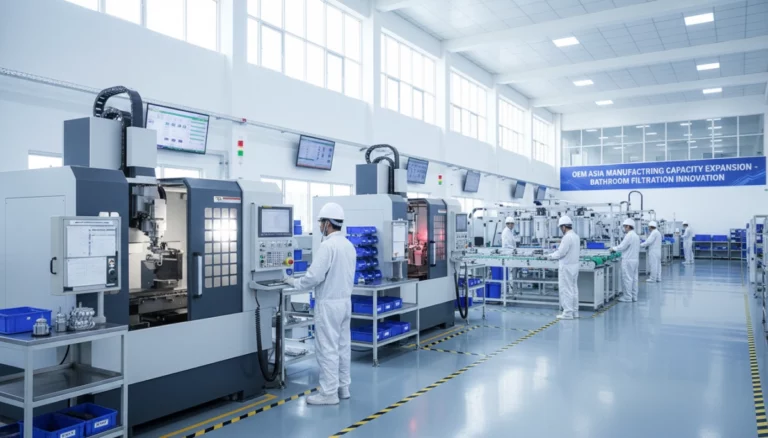
We don\’t just assemble parts; we engineer safety through our state-of-the-art 60,000 ㎡ manufacturing facility. The primary risk in the filtration industry comes from inconsistent production standards that allow impurities into the manufacturing chain.
To combat this, we rely on dedicated advanced laboratories and a rigorous production protocol. By controlling the entire OEM/ODM process, we ensure that the synergy between KDF and carbon materials used in our filters functions exactly as intended, without interference from low-quality housing materials. Our focus is on eliminating variables through:
- Strict Quality Control: Every batch of raw materials is vetted before entering our production lines.
- Advanced Testing: Our labs simulate long-term usage to ensure material stability under real-world conditions.
- Precision Engineering: We utilize specific manufacturing techniques to ensure that our under-sink distribution systems remain robust and safe for commercial and residential deployment.
Key Certifications and Quality Standards in Filtration
Understanding Industry Benchmarks (NSF/ANSI & FDA)
In the world of OEM/ODM manufacturing, we know that certifications are more than just stickers on a box; they are the baseline for trust in the US market. When we develop filtration solutions, we operate with a clear understanding of the rigorous standards required for material safety compliance.
- NSF/ANSI 58: This is the specific standard for Reverse Osmosis systems. For you, this standard verifies that the system is structurally sound and that the materials in contact with water won\’t leach harmful contaminants. It essentially confirms that the RO membrane and components do exactly what they claim to do.
- FDA Compliance: This refers to the materials used—specifically plastics and O-rings—being \”food grade.\” In our 60,000 ㎡ manufacturing facility, we ensure that raw materials meet these safety criteria before they ever hit the production line.
- WQA (Water Quality Association): Often seen alongside NSF, this indicates a product has been tested to rigorous industry standards for performance and safety.
Rigorous Testing in Advanced Laboratories
While knowing the acronyms is important, the real value lies in the manufacturing process. We back our production with 15+ years of R&D experience and dedicated advanced laboratories. We don\’t just guess if a material is safe; we test it.
Whether we are engineering a standalone filter or a complex under-sink distribution system, our strict quality control measures are designed to align with these global benchmarks. This ensures that when you partner with us for OEM solutions, the final product is built to withstand the scrutiny of the toughest safety regulations.
What our quality control guarantees:
- Structural Integrity: Ensuring housings don\’t crack under pressure.
- Material Safety: Verifying that plastics are stable and non-toxic.
- Performance Consistency: Confirming flow rates (like our 5.2L/min systems) and filtration capacity remain true to spec.
Components That Need Safety Compliance
When evaluating Material Safety Compliance in Under Sink RO Systems, every single part that touches your water matters. Creating a truly safe water path requires strict health safety compliance across the entire unit, not just the filters themselves.
Here are the critical components you need to verify:
Storage Tanks and Internal Bladders
If you have a traditional system, the holding tank stores your purified water until you turn on the faucet.
- The Internal Bladder: Inside that metal or plastic tank is a bladder that pushes water to your tap. It must be made from high-quality, food-grade butyl rubber.
- The Risk: Unverified materials can leach a rubbery taste or harmful chemicals back into your clean water. Always ensure your tank utilizes FDA approved RO parts.
Tubing, Fittings, and O-Rings
Water travels through a network of small tubes and connectors before it reaches your glass.
- Water Lines: Always look for non-toxic RO tubing that meets material regulation for food contact.
- Connectors: Standardize on lead-free brass fittings or high-grade, durable plastic quick-connects.
- Seals: Every small O-ring should be part of a BPA-free water filter design. Cheap rubber seals degrade quickly and become major culprits for hidden contamination.
RO Membranes and Filter Housings
This is where the heavy lifting happens.
- Housings: The plastic casings holding your filters sit under constant city water pressure. They must be constructed from certified materials that will not crack, burst, or shed microplastics into your drinking water.
- Membranes: The RO membrane certification guarantees it safely strips out contaminants without introducing new toxins. When factoring in the cost of a water filter for your home, never cut corners on the structural integrity of these casings. Even if you choose a space-saving compact water filter for your under sink area, the plastics doing the filtering must meet the highest drinking water safety standards.
How to Verify Your System is Compliant
When it comes to material safety compliance, RO systems require hard proof. You cannot just take a brand\’s word for it. We see a lot of products hitting the US market making big promises about clean water, but you need to know exactly how to verify those claims before you install anything under your sink.
Checking Manufacturer Labels and Claims
Marketing materials are designed to sell. Seeing buzzwords like \”non-toxic RO tubing\” or \”BPA-free water filter\” printed on a box is a good start, but it is not enough to guarantee your health and safety. Here is what I always tell our customers to look for on the physical labels:
- Exact Standard Numbers: Look for specific text like NSF/ANSI 58 certified rather than a vague \”NSF approved\” stamp.
- Component Specifics: Check that the system specifically lists FDA approved RO parts and food contact material for any component that touches your water.
- Hardware Labels: Every part matters. Whether you are inspecting the main housing or looking at the different types of kitchen sink filtered water faucets included in your kit, look for physical engravings that indicate lead-free brass fittings.
Using Official Databases to Spot Fakes
Unfortunately, fake labels and exaggerated claims exist. To guarantee a safe water path, RO owners must verify the certifications themselves. It takes just a couple of minutes and gives you total peace of mind regarding your drinking water safety standards.
Here is my straightforward method to check your health safety compliance for RO:
- Find the certifying body: Identify the specific logo on the packaging—usually NSF International or the Water Quality Association (WQA).
- Go directly to the source: Visit the official NSF product database or the WQA search portal online.
- Search the exact model number: Do not just search the brand name. A manufacturer might use certified materials for one RO model but cut corners on a cheaper version.
- Verify the seal: If a product claims to have the prestigious WQA Gold Seal, the official database will confirm it instantly.
By taking these quick steps to verify regulatory materials, RO buyers can ensure full water purification compliance and guarantee they are actually bringing safe plastics for water filters into their homes.
FAQs About RO System Materials
As a manufacturer supporting global brands, we often field questions regarding material safety compliance and product integrity. Here is the reality from our factory floor regarding under sink reverse osmosis safety.
Are cheap under sink RO systems safe?
There is a massive difference between efficient manufacturing and cutting corners. As an OEM with a 60,000 ㎡ manufacturing facility, we know that ensuring safety requires investment. Extremely low-priced units often bypass the strict quality control measures and advanced laboratories testing necessary for safety. Reliable systems are backed by years of R&D to ensure every connection and housing meets component safety standards. If a system is suspiciously cheap, it likely lacks the engineering oversight required to guarantee it uses non-toxic RO tubing or safe housing assemblies.
Do RO plastics leach chemicals into the purified water?
In a properly engineered system, the answer should be no. We utilize stable materials and advanced filtration media, such as the synergy between carbon and KDF, to ensure water purity remains compromised. Understanding the science behind KDF 55 in filtration highlights how high-quality media actively protects water quality rather than degrading it. We focus on material safety compliance to ensure that the plastics used in our distribution systems are stable and do not introduce contaminants into the water path.
How often should I replace components to maintain safety?
Even the most durable materials have a lifespan. Our under-sink filters are engineered with membrane fouling resistance technology and boast a 2000 Gallon Capacity, but adhering to replacement schedules is vital. Over time, any filter media can reach saturation. To maintain drinking water safety standards, it is critical to replace filters before they exceed their rated flow capacity of 5.2L/min to prevent potential issues with material degradation or bacterial buildup inside the system.