













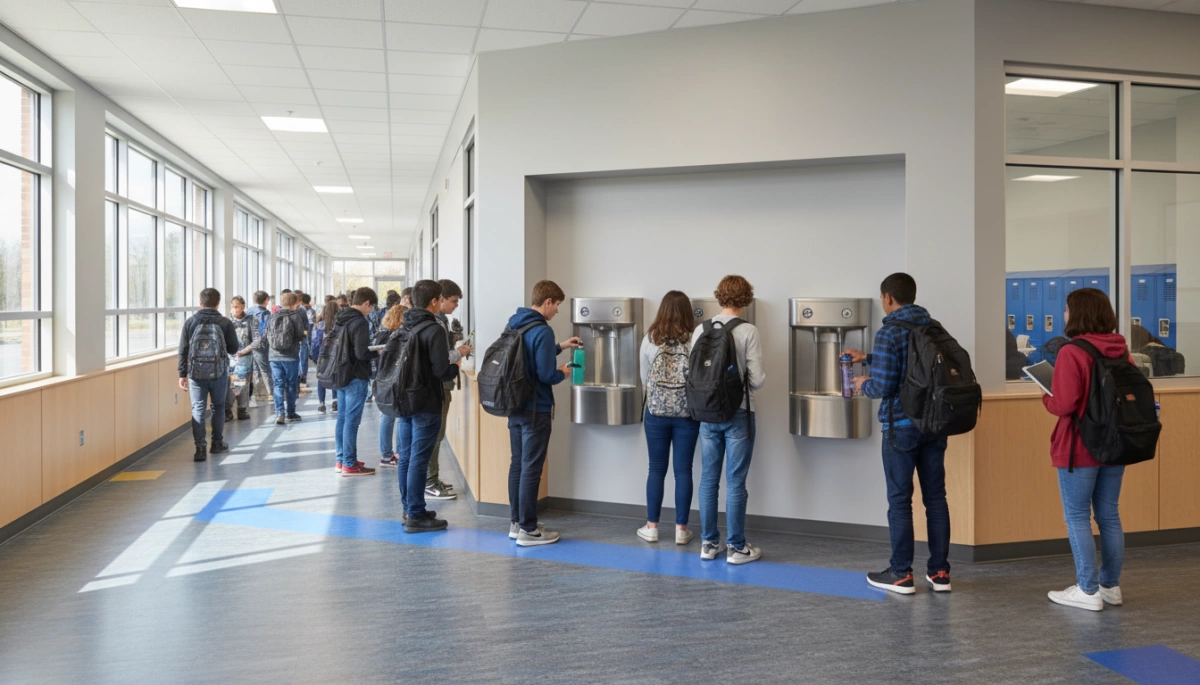
The sound of the bell signals a mass movement—hundreds of students rushing through narrow corridors with barely 3 to 5 minutes to grab a drink and get to class on time. School corridor bottle filling station placement for class change peak traffic isn’t just about hydration; it’s a critical puzzle that affects student flow, safety, and punctuality. If your hydration stations create bottlenecks or force students to cut through crowded walkways, you risk tardiness and congestion. This guide cuts through the chaos, offering precise strategies to optimize installation locations, maximize throughput, and select fast, sensor-driven hardware engineered to handle peak-time demand efficiently. Ready to transform hydration from a traffic stopper into a smooth, rapid solution? Let’s dive in.
Analyzing Hallway Hydro-Dynamics: Understanding Student Flow
Optimizing school corridor bottle filling station placement starts with a precise analysis of hallway hydro-dynamics—mapping how students move during class change peak traffic. Identify high-velocity zones where foot traffic surges sharply and contrast these with eddy zones—areas of slower flow or congestion near lockers and doorways.
- Traffic mapping reveals bottlenecks and natural student streams to target safe and effective hydration station spots.
- Queue impact on corridor width is critical; narrow hallways with long lines risk blockage, disrupting flow.
- Pinpoint cross-traffic collision points, especially near locker banks and frequently used doors, to avoid placing stations where student paths intersect heavily.
By understanding these dynamics, facility managers can deploy bottle fillers that sustain hydration access without compromising safety or corridor efficiency.
Strategic Location Planning for Maximum Throughput
Placing school corridor bottle filling stations requires smart location strategy to handle class change peak traffic smoothly. Focus on corridors near busy intersections but avoid spots that could cause blockage. Position units adjacent to restrooms and use alcoves to minimize corridor crowding while providing easy access. Near cafeteria and gymnasium exits, hydration points catch high foot traffic, supporting quick refills without disrupting flow. For multi-story schools, distribute bottle fillers vertically—install units on each level where students gather, ensuring convenience and reducing overcrowding on stairwells.
These placement strategies optimize hallway bottle filler layout, enhancing throughput during peak periods and improving student queue management. Thoughtful positioning also supports facility plumbing layout efficiency while keeping student hydration stations accessible and streamlined throughout the campus. For advanced water filtration options that tie into these installations, consider our detailed technical specs for water filter systems with 99% salt rejection.
Hardware Considerations for Speed and Safety
Choosing the right hardware for school corridor bottle filling stations is crucial. The decision between recessed vs. surface mount installations impacts hallway space and student flow. Recessed units save corridor width, reducing bottlenecks, while surface mounts are easier to retrofit on existing walls.
Fill rate, measured in gallons per minute (GPM), is a key factor. A high GPM ensures students refill bottles quickly during class change peak traffic — minimizing queue length and wait times. For schools, aim for stations delivering at least 1.0 to 1.5 GPM for rapid hydration access.
Sensor response time also matters. Touchless water dispenser sensor speed that activates instantly helps keep lines moving efficiently while maintaining hygiene. Efficient sensor technology means less wasted water and faster bottle fills.
| Feature | Recommendation |
|---|---|
| Installation Style | Recessed preferred for narrow halls |
| Fill Rate (GPM) | Minimum 1.0 – 1.5 GPM |
| Sensor Response Time | Instant activation (<0.5 seconds) |
| Safety | Antimicrobial nozzle guard suggested |
These hardware factors, combined, ensure that school corridor bottle filling stations stay safe, fast, and effective during peak student flow.
For details on engineering water filtration that supports these systems, check our overview of the engineering of multistage filtration from sediment to pure.
Installation Best Practices for Queue Management
Efficient queue management starts with clear floor markings and dedicated queue zoning to guide students during class change peak traffic. Marking spots helps reduce congestion and keeps lines organized, especially near high-traffic school corridor bottle filling stations. For optimal throughput, deploy dual-unit setups with a hi-lo configuration—this serves all student heights and speeds up refills without backing up the hallway.
Retrofitting alcoves or existing fountain niches into bottle filler stations maximizes space and minimizes hallway obstruction. These recessed installations blend seamlessly into the corridor wall, preserving width and easing cross-traffic, while supporting rapid, orderly student hydration access. Proper planning here is key for reducing school hallway congestion and ensuring smooth student queue management water refill flow. For more detailed guidance, check resources like Driplife’s technical support on efficient hydration station layouts.
Compliance and Maintenance: Keeping the Flow Moving
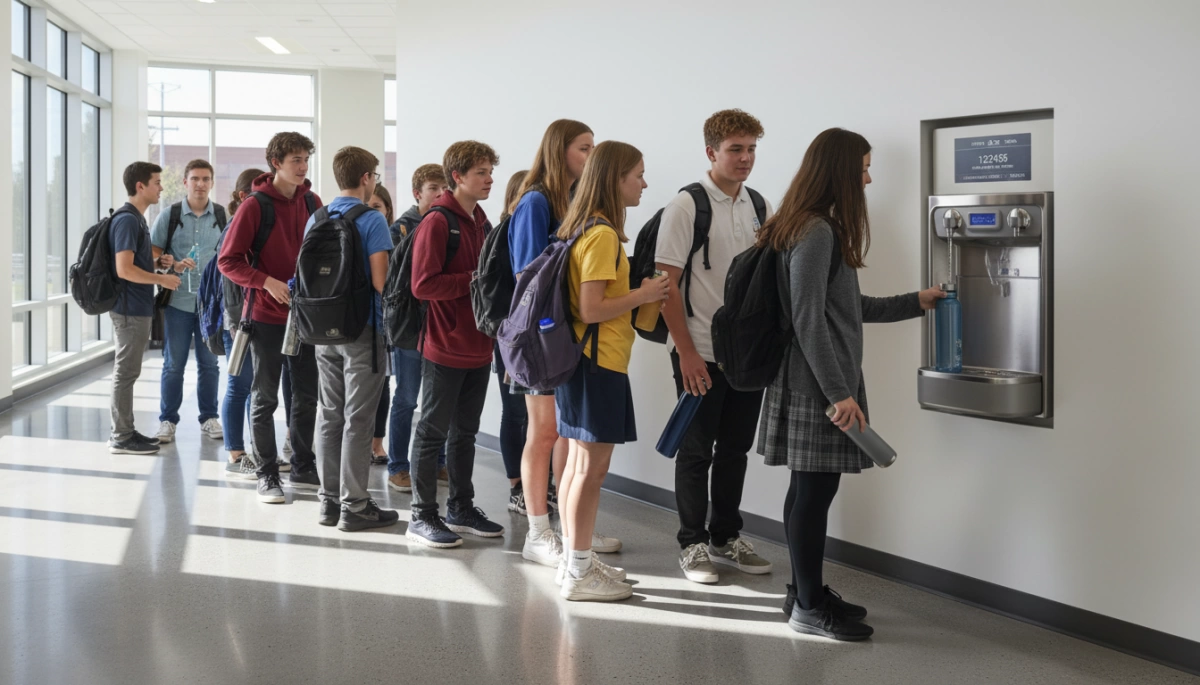
Proper placement of school corridor bottle filling stations must meet ADA accessibility and reach range requirements to ensure all students can hydrate easily. Installations should follow federal guidelines for height—usually between 36 to 38 inches—to accommodate wheelchair users without blocking hallway traffic.
Filter accessibility during class time is crucial. Choose stations with easily serviced filters that can be swapped quickly, avoiding disruption during peak periods. This minimizes downtime and keeps water fresh for students throughout the day.
Durability matters. Using vandal-resistant material helps protect bottle fillers from damage in busy corridors, reducing maintenance costs and downtime. Materials like stainless steel with antimicrobial nozzle guards improve hygiene and resist wear.
| Compliance Factor | Recommendation |
|---|---|
| ADA Reach Range | 36–38 inches (wheelchair accessible) |
| Filter Maintenance | Quick-change filters, no classroom disruption |
| Durability | Vandal-resistant, stainless steel build |
| Hygiene | Antimicrobial nozzle guards |
Choose hydration stations designed for heavy use and easy upkeep to keep student queues moving and hallways clear. For reliable solutions, consider models featured in our school drinking water fountains lineup, built for education and compliance.
The Driplife Advantage: Engineered for Education
Driplife offers custom solutions designed specifically for school environments, addressing unique challenges like peak traffic and student hydration needs. Our school corridor bottle filling station placement maximizes throughput during class changes by integrating OEM/ODM capabilities that adapt to local water quality standards. With tailored engineering, our water refill stations ensure efficient flow rates and reliable performance, backed by durable, vandal-resistant materials ideal for busy hallways. Driplife’s specialized design supports hassle-free maintenance and compliance with educational facility infrastructure planning, making hydration accessible and seamless for every student. Explore how our advanced filtration options provide clean, safe water optimized for schools at our high-performance bacteria water filter page.