
















Phase 1: Mechanical Engineering (The Bodyguards)
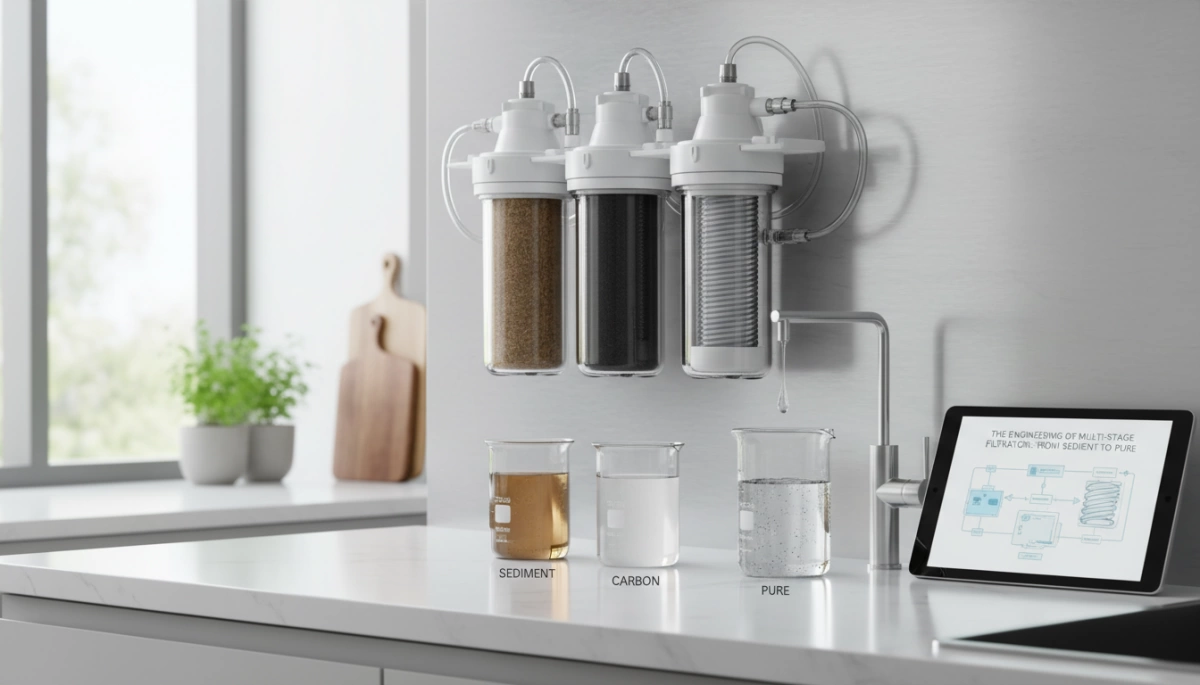
When we engineer a high-performance water system at Driplife, we don’t just stack filters randomly. We rely on strict sequential filtration logic. Before we can even talk about molecular hydrogen or ionization, we have to deal with the bulk contaminants. Phase 1 acts as the “Bodyguards” of the system—these stages take the heavy hits to protect the delicate, high-tech machinery downstream.
Stage 1: Polypropylene (PP) Sediment Filter
The first line of defense is the Polypropylene (PP) sediment filter. We don’t just skim the surface; we utilize micron depth filtration to trap physical particulates throughout the entire structure of the filter. This stage is critical for load protection, ensuring that larger debris doesn’t prematurely clog the more expensive filters that follow.
- Physical Barrier: Effectively blocks rust, sand, silt, and pipe scale.
- Micron Rating: We engineer these filters with a precise pore size to capture specific particulate dimensions.
- System Longevity: By stopping the “big” stuff here, we extend the life of the entire system.
Stage 2: Granular Activated Carbon (GAC) / Pre-Carbon
Once the physical debris is removed, we tackle the chemical intruders. The Granular Activated Carbon (GAC) stage is designed for maximum adsorption efficiency. This isn’t just about making the water taste better; it is a critical engineering step to neutralize chemicals that can damage internal components.
- Chlorine Protection: Chlorine is highly corrosive to Reverse Osmosis membranes. This stage absorbs it before it can cause damage.
- VOC Removal: Targets Volatile Organic Compounds, odors, and cloudiness.
- Layered Protection: Acts as the chemical bridge between raw sediment filtration and high-precision purification.
By combining these two stages, we achieve comprehensive contaminant removal at the macro level, ensuring the water is physically and chemically prepped for the molecular engineering phase.
Phase 2: Molecular Engineering (The Engine)
We have moved past the bodyguards; now we enter the operating room. This phase represents the core of The Engineering of Multi-Stage Filtration: From Sediment to Pure, where we transition from physical screening to molecular separation.
Stage 3: The Reverse Osmosis (RO) Membrane
This is the engine of the entire system. We utilize a high-grade Reverse Osmosis (RO) membrane that functions as a semipermeable barrier tight enough to reject contaminants at the atomic level. By applying significant hydraulic pressure, we force pure water molecules through the membrane while rejecting up to 99% of impurities.
- Micron Precision: With a pore size of 0.0001 microns, this stage handles what the naked eye cannot see.
- Cross-flow filtration: Instead of trapping contaminants inside the filter, the system sweeps them away down the drain, preventing clogging and extending the membrane’s life.
- TDS Removal: This is the critical step for Total Dissolved Solids (TDS) reduction, effectively stripping out heavy metals like lead, arsenic, and fluoride.
Alternative: Ultrafiltration (UF)
For applications where zero wastewater is a priority, we deploy Ultrafiltration. While it allows dissolved minerals to pass through, it serves as an impenetrable wall against bacteria and viruses. The mechanics are comparable to how efficient ceramic water filters work, relying on strict mechanical exclusion to ensure safety without the need for a drain line.
Phase 3: Biological & Chemical Refinement (The Polishing)
Once the heavy lifting of removing solids and dissolved contaminants is complete, we move into the refinement phase. This is where The Engineering of Multi-Stage Filtration: From Sediment to Pure transitions from simple purification to ensuring the water is palatable and biologically safe. We don’t just want clean water; we want water that tastes crisp and is absolutely sterile at the point of dispensing.
Stage 4: Post-Carbon (CTO) & Polishing
Even after passing through a membrane, water can sometimes develop a “flat” taste or pick up residual odors from storage tanks. To counter this, we engineer a dedicated polishing stage using an Activated Carbon Block (CTO). Unlike the pre-filters designed for load protection, this stage focuses on:
- Taste Correction: Adsorbing any lingering gases that affect flavor.
- Odor Removal: Eliminating the “stale” smell often associated with tank storage.
- Volatile Organic Compound (VOC) Cleanup: Catching any trace chemicals that might have slipped through earlier stages.
Stage 5: UV Sterilization
Mechanical filtration captures physical particles, but biological threats require a different approach. We integrate Ultraviolet (UV) sterilization as a final firewall before the water hits your glass. This technology uses specific light wavelengths to disrupt the DNA of bacteria and viruses, rendering them unable to reproduce.
This stage is critical for bio-film prevention inside the dispensing nozzle, ensuring that no bacterial colonies can establish themselves at the outlet. By combining advanced filtration with our continuous innovation and development strategies, we guarantee that the water is not just chemically pure, but biologically secure.
Phase 4: Bio-Active Engineering (The Driplife Advantage)
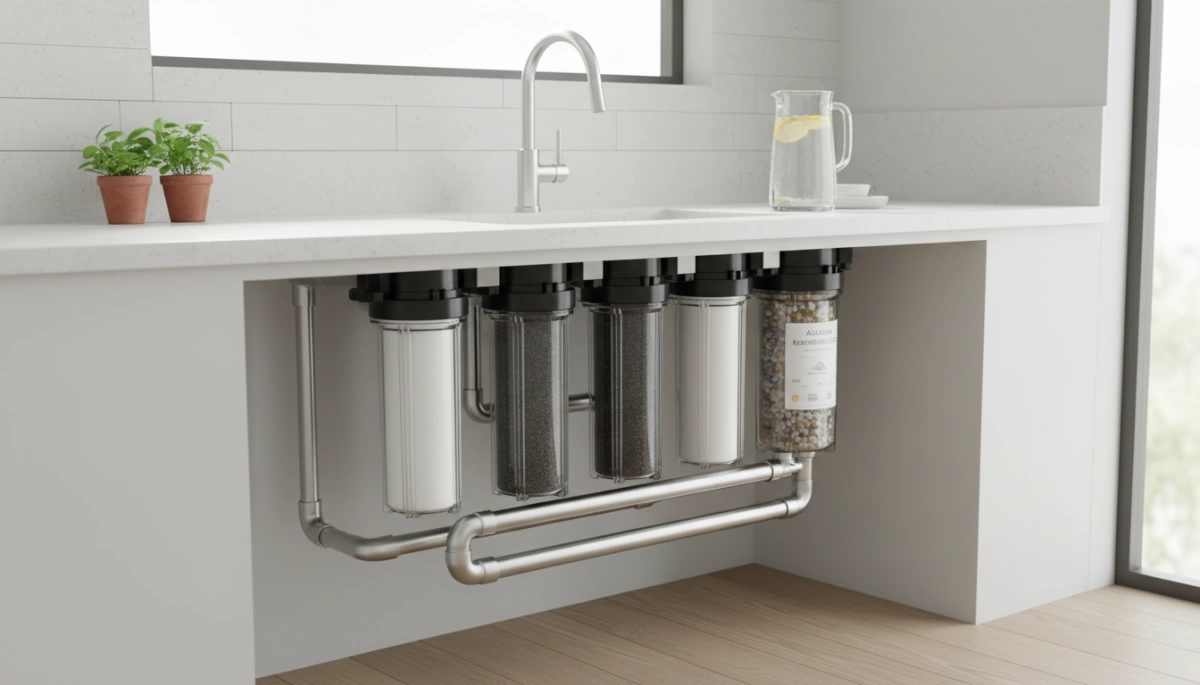
Most standard systems stop at “clean,” but we believe water should be functional. Once the contaminants are stripped away, the water can become slightly acidic and “empty.” This is where The Engineering of Multi-Stage Filtration: From Sediment to Pure shifts from removal to restoration. We utilize a dedicated Remineralization stage to transform sterile water into a health-supporting resource.
We engineer our post-filtration process to reintroduce the essential elements that standard RO systems remove:
- Alkaline Enhancement: We use specialized bio-ceramics to naturally infuse Calcium and Magnesium back into the supply. This stabilizes the water and raises the pH to an optimal alkaline level, combating the acidity of a modern diet.
- Copper Infusion: We integrate copper media for its dual-action properties. It acts as a natural antimicrobial agent to prevent bacterial growth within the system and provides trace copper, which is vital for metabolic health.
This bio-active engineering mimics the way water is naturally filtered and mineralized as it flows through mountain rocks. For customers who want to maintain this level of hydration quality while traveling, our hydrogen water bottle series applies similar advanced technology to deliver antioxidant-rich water on the go. We don’t just filter water; we engineer it to actively support your vitality.
The Vessel: Engineering the Storage (SS 304)
It makes absolutely no sense to engineer pristine water through a complex multi-stage filtration process only to store it in a container that degrades its quality. This is why we prioritize Food-grade Stainless Steel (SS 304) for our internal reservoirs rather than the standard plastic tanks found in cheaper alternatives. The engineering of multi-stage filtration: from sediment to pure must include the final holding vessel as a critical component of the purity chain.
We choose stainless steel to solve two major issues inherent to plastic storage:
- Prevention of Micro-Plastic Leaching: Plastic degrades over time, especially when holding water with varying pH levels or temperatures. SS 304 is chemically inert, ensuring no synthetic materials leach back into your purified water.
- Inhibition of Bacterial Growth: Plastic is microscopic and porous, offering a foothold for bio-film to develop. Stainless steel provides a smooth, sterile surface that is far more resistant to bacterial colonization.
For high-capacity units, such as our commercial drinking water fountains, using 304 stainless steel is non-negotiable. It ensures that the water remains exactly as the filtration system intended—clean, safe, and free from secondary contamination—until the moment it hits your glass.
Frequently Asked Questions About Multi-Stage Engineering
Why is sediment filtration first in the multi-stage process?
It comes down to sequential filtration logic. Think of the Polypropylene (PP) sediment filter as the bodyguard for the rest of the system. If we didn’t place this layer first, large particles like sand, rust, and dirt would immediately clog the finer, more expensive membranes downstream. By handling the heavy lifting with a larger micron rating upfront, we extend the life of the entire unit and ensure the hydraulic pressure remains stable.
How does reverse osmosis differ from ultrafiltration?
The main difference lies in the semipermeable barrier tightness and what it removes. Reverse Osmosis (RO) membrane technology is incredibly tight, removing almost everything from the water, including dissolved salts and heavy metals, resulting in significant Total Dissolved Solids (TDS) reduction. In contrast, Ultrafiltration (UF) removes bacteria and viruses but allows dissolved minerals to pass through. If you are looking for absolute purity, our under-sink reverse osmosis filtration system is the engineering standard for stripping water down to its molecular base.
What role does UV sterilization play in water purification?
Ultraviolet (UV) sterilization isn’t about catching particles; it’s about biological safety. We use UV light to disrupt the DNA of bacteria and viruses that might have survived the physical filters. This stage is crucial for bio-film prevention and ensures that the water sitting in your glass is biologically inert and safe to drink, acting as a final police check before consumption.
Why add minerals back after reverse osmosis?
While RO is great for purity, it strips out beneficial minerals like calcium and magnesium, leaving the water tasting flat and slightly acidic. We use a remineralization stage to correct this. By reintroducing these elements, we not only improve the taste but also raise the pH to create alkaline water that supports better hydration. It’s about turning “dead” pure water back into functional, living water.
How does stainless steel improve water quality compared to plastic tanks?
We prioritize SS 304 stainless steel because it is non-porous and hygienic. Plastic tanks develop micro-cracks over time, which become breeding grounds for bacteria and can lead to micro-plastic leaching into your clean water. Stainless steel offers superior hydrostatic resistance and ensures that the water you worked so hard to filter stays pure while it sits in the storage tank. You can see this commitment to quality materials in the breakdown of how a water filter works to maintain purity from intake to glass.