













Key Features of an 800 GPD RO System
An 800 GPD reverse osmosis system is designed for businesses, large households, and facilities demanding high-capacity purified water. With the ability to produce up to 800 gallons per day, it offers a steady and reliable supply of clean, great-tasting water without frequent downtime.
High Capacity Water Filtration
Unlike small residential units, an 800 gallon per day RO system can handle continuous heavy water demand. It’s ideal for:
- Restaurants, cafés, and catering services
- Office buildings and commercial kitchens
- Large households or shared living spaces
- Industrial applications where water purity is critical
High output means no shortage during peak hours, ensuring consistent pressure and flow rate.
Multi Stage Filtration Process
A commercial RO water filter 800 GPD typically uses a multi-layer filtration setup to ensure maximum contaminant removal:
- Sediment filter – Traps sand, silt, and rust
- Carbon block filter – Removes chlorine, odors, and harmful chemicals
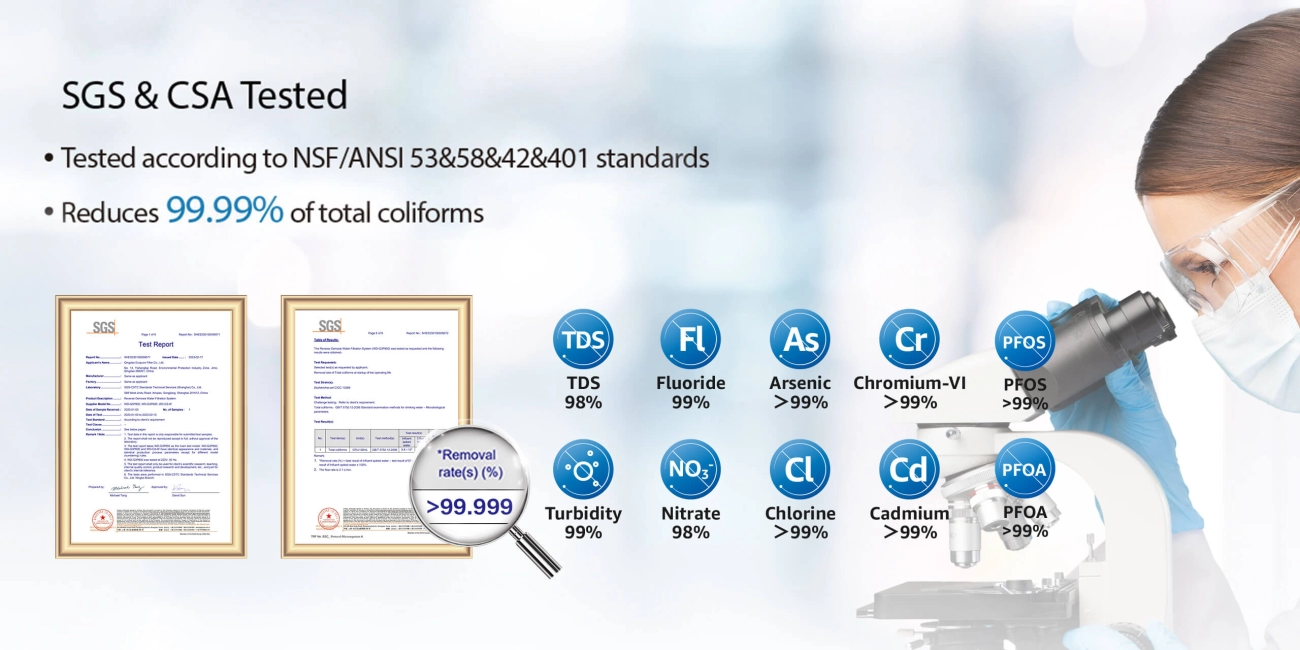
- RO membrane – Eliminates dissolved solids, heavy metals, and up to 99% of impurities
- Post-carbon filter – Polishes taste for drinking applications
- (Optional) UV sterilization – Destroys bacteria and viruses for extra protection
This structured process delivers consistently low TDS levels and improved water taste.
Energy Efficiency and Sustainability
Modern high capacity RO systems are built to minimize waste and reduce operating costs. Many come with:
- High-efficiency membranes requiring less pressure
- Low wastewater ratio designs for reduced water wastage
- Energy-saving pumps that lower electricity consumption
This makes them an eco-friendly and budget-conscious choice for businesses and households committed to sustainability.
Compact Design and Space Considerations
Despite its capacity, an 800 GPD water filtration system is often compact and modular. Key design benefits include:
- Vertical or horizontal mounting options
- Slim housings suitable for under-counter or utility rooms
- Modular filter cartridges for easy replacement
- Space-efficient frame suited for small commercial kitchens
Installation location planning is crucial to maintain easy access for maintenance.
Smart Controls and Ease of Monitoring
Advanced models integrate smart monitoring systems that make operation easier and safer:
- Digital TDS meters for instant water quality checks
- Automatic shut-off valves to prevent overflows
- Pressure gauges for quick troubleshooting
- Filter change alerts for timely maintenance
This ensures your industrial RO system 800 GPD always operates at peak performance with minimal guesswork.
Benefits of Choosing an 800 GPD RO System from Driplife

When you’re investing in a high capacity reverse osmosis system like the Driplife 800 GPD model, the benefits go well beyond clean water. It’s built for customers who need steady, high-volume purified water—whether that’s for a busy household, a small business, or commercial use.
Reliable Water Purity and Taste
Driplife systems use multi-stage filtration with RO membranes that remove contaminants like chlorine, lead, arsenic, and even microscopic particles. The result is consistently clean, safe, and great-tasting water—perfect for drinking, cooking, ice machines, or equipment that needs mineral-free water.
Consistent Output for Heavy Use
With a capacity of 800 gallons per day, this commercial-grade reverse osmosis system keeps up even during peak demand. That means:
- No slowdowns during high usage hours
- Suitable for restaurants, offices, schools, or large families
- Non-stop supply for equipment that can’t afford downtime
Long Lifespan and Low Maintenance
Driplife’s durable components and premium RO membrane quality help extend service life. Maintenance is simple, and filter replacements are straightforward thanks to the system’s design. Many find it needs fewer service calls compared to lower-end units.
Cost-Effective Choice
Compared to buying bottled water or running smaller RO units that can’t match your demand, the Driplife 800 GPD system offers:
- Lower cost per gallon over time
- Less waste from plastic bottles
- Reduced downtime or emergency water solutions
Here’s a quick comparison:
| Option | Daily Capacity | Estimated Cost Per Gallon | Maintenance Frequency |
|---|---|---|---|
| Bottled Water | N/A | $0.50–$1.00 | N/A |
| 200 GPD RO System | 200 gal | $0.12–$0.18 | Every 3–6 months |
| Driplife 800 GPD | 800 gal | $0.02–$0.05 | Every 6–12 months |
Local Support and Customer Service
One of the standout perks of choosing Driplife is reliable local support right here in the U.S. If anything needs troubleshooting, their team offers fast help, replacement parts, and advice. That means less waiting and fewer problems lingering.
How to Choose the Right 800 GPD RO System for Your Needs
Choosing the right 800 GPD reverse osmosis system isn’t just about picking the largest or most expensive model—it’s about matching the system to your actual water needs, space, and quality requirements. Here’s what to look at before you buy.
Assess Your Water Consumption
Before anything else, figure out how much water you really use.
- Homes with large families or commercial spaces like cafés, restaurants, or small offices often benefit from an 800 gallon per day reverse osmosis system.
- Factor in peak usage hours—a system that handles daily volume might still fall short during high-demand times.
Test Your Water Quality First
A water quality test is key before installing any RO system:
- Tells you what contaminants you need to remove (chlorine, heavy metals, bacteria, etc.).
- Helps you choose the right pre-filters or additional stages.
- Determines if your water is from municipal supply or well water, which affects filter choice and maintenance frequency.
Compare the Specs That Matter
Not all 800 GPD water filtration systems are built the same. Look closely at:
| Spec | Why It Matters |
|---|---|
| Flow Rate | Determines how fast you’ll get filtered water during peak use. |
| Filtration Layers | More stages often mean better contaminant removal and longer filter life. |
| Membrane Type | Impacts performance and ability to handle well vs. city water. |
| NSF Certification | Verifies performance and safety standards. |
| TDS Reduction Rate | Shows how effectively the system lowers dissolved solids. |
Check Installation Space and Plumbing
An 800 GPD commercial RO water filter has a bigger footprint than under-sink home units, so make sure:
- You have enough space for both the system and a proper water storage tank.
- Plumbing lines are compatible or can be adapted without costly upgrades.
- Location allows easy access for maintenance—filter changes, cleaning, and system checks.
- Nearby drain and power source are available (many units require both).
Installation Guide for an 800 GPD RO System
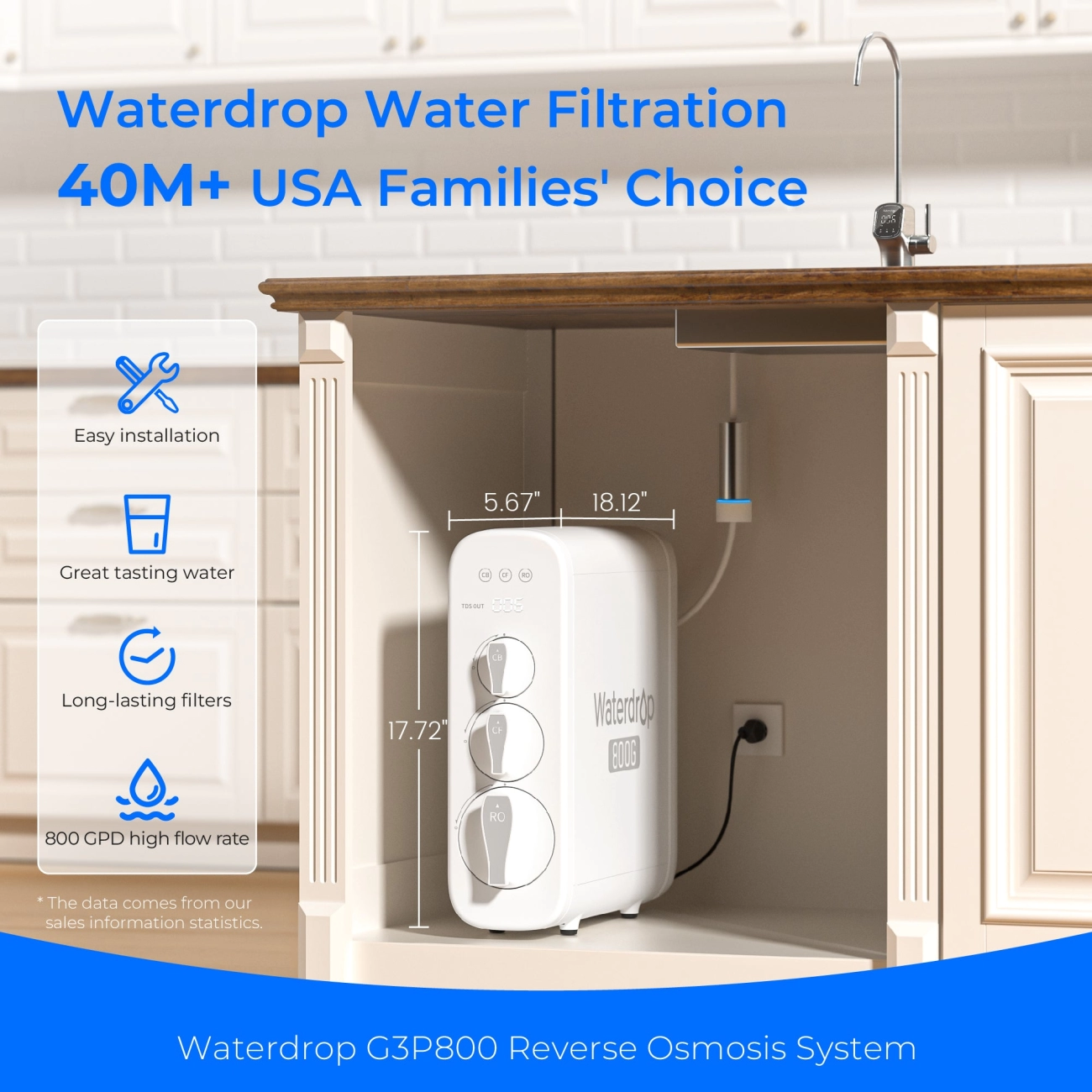
Installing an 800 GPD reverse osmosis water filtration system can be straightforward if you know what to expect. Whether you go with professional installation or a DIY setup, preparation is key to ensuring the system runs efficiently from day one.
Professional Installation Expectations
If you hire a pro, here’s what typically happens:
- Site inspection – The installer evaluates your plumbing, water source, and space availability.
- System placement – Most 800 gallon per day systems fit under counters, in utility rooms, or in commercial settings with dedicated filter space.
- Plumbing connection – They connect the feed water line, drain line, and tank, then check all fittings for leaks.
- Startup and testing – The system runs through a flush cycle, followed by a water quality test to confirm purity and flow rate.
A qualified technician will also walk you through filter changes, basic maintenance, and pressure checks before leaving.
DIY Installation Tips
If you have solid plumbing experience, you can install it yourself. Keep these tips in mind:
- Read the manufacturer’s manual before starting.
- Choose a location close to a water line, drain, and electrical outlet.
- Use food-grade tubing and proper fittings rated for RO pressure.
- Flush each filter and membrane before connecting to avoid initial cloudiness in water.
- Label filter housings to make replacements easier later.
Tools and Materials You Will Need
- Adjustable wrench & pliers
- Drill with bits for water line holes (if needed)
- Teflon tape for all threaded connections
- Tubing cutter for clean cuts
- Bucket or pan for catching water during installation
Common Installation Challenges and How to Avoid Them
Leaks at fittings – Make sure connections are tightened but not over-torqued to avoid cracking.
Low water pressure – 800 GPD systems need adequate feed pressure (often 50–80 PSI). You may need a booster pump if your source pressure is low.
Drain line noise – Secure the drain line to reduce vibration or gurgling.
Wrong orientation of filters – Double-check diagram to ensure stages are in the correct order for effective filtration.
If unsure about any step, it’s worth getting a licensed installer—especially for commercial setups where uninterrupted operation is critical.
Maintenance Best Practices for Your 800 GPD RO System

Keeping your 800 GPD reverse osmosis system in top condition comes down to a consistent maintenance routine. A high-capacity RO setup like this is built for long-term reliability, but only if the filters, membranes, and components get the right care.
Filter Replacement Schedule and Signs of Wear
For most Driplife 800 GPD RO systems, the filter changes are the most critical upkeep task.
- Sediment filter: Replace every 6–12 months to prevent clogging and protect other filters.
- Carbon filter: Swap every 6–12 months to remove chlorine, chloramine, and smells that can damage the RO membrane.
- RO membrane: Replace every 2–3 years depending on feed water quality and usage.
- Polishing/post-filter: Replace every 12 months for best taste.
Watch for these warning signs:
- Drop in water flow or pressure
- Change in water taste or smell
- Visible discoloration in filters
- Higher-than-normal TDS readings
Tip: Many users add a TDS meter at the RO faucet for quick quality checks.
Cleaning and Sanitization Tips
Even if your water tastes fine, bacteria or scale can build up over time.
- Sanitizing the storage tank and filter housing every 12 months is recommended.
- Use RO-safe sanitizing solutions—avoid bleach unless approved for the unit.
- Rinse housings thoroughly before putting in new filters.
- For areas with heavy mineral deposits, add scale control to protect the membrane.
Troubleshooting Common Problems
- Low water output: Usually caused by clogged pre-filters or low feed water pressure.
- High TDS levels: Can mean the RO membrane is reaching the end of its life.
- Constant draining: Check the auto shut-off valve and flow restrictor.
- Leaks: Replace worn O-rings and make sure fittings are tight, but don’t overtighten.
Driplife Customer Service Support
If you run into a problem, Driplife offers local U.S.-based support to help troubleshoot issues fast.
- Access to OEM replacement filters and RO membranes for guaranteed fit.
- Step-by-step help for both homeowners and professional users.
- Video guides and manuals specific to each model, like the Driplife Under Sink 800–2000 GPD RO Filtration System.
- Advice on upgrades, such as UV sterilizers for microbial safety (see our UV water treatment solutions).
Regular upkeep not only extends the lifespan of your commercial-grade RO system but also ensures you get consistent, crystal-clear water every day.
Cost Considerations and ROI of an 800 GPD RO System
When looking at an 800 GPD RO system, it’s smart to think about the full picture—what you’ll spend upfront, what you’ll save over time, and how efficient the system is in daily use. In the U.S., where both water quality and usage demands can vary a lot, this type of investment often pays for itself faster than expected.
Upfront Cost vs Long-Term Savings
An 800 gallon per day reverse osmosis system usually costs more upfront than smaller home units, but that’s because it delivers commercial-grade capacity and durability. For businesses, food service, or large households, the savings stack up quickly when you compare it to buying bottled water or using multiple smaller units.
- Initial Price Range: Typically in the mid-to-high four-figure range depending on brand and features.
- Life Expectancy: Many systems last 10+ years with proper maintenance.
- Payback Period: Often 6–18 months for heavy users replacing bottled water.
Bottled Water vs RO Purified Water Costs
If you’re buying bottled water regularly, the cost difference is huge over time.
| Water Source | Average Cost per Gallon | Monthly Cost (100 gallons/week) | Annual Cost |
|---|---|---|---|
| Bottled Water | $1.00 – $1.50 | $400 – $600 | $4,800 – $7,200 |
| RO Purified Water (800 GPD) | $0.03 – $0.05* | $12 – $20 | $144 – $240 |
*Includes filter replacement and water supply costs over time.
Energy and Water Efficiency
Modern high capacity reverse osmosis systems are much more efficient than older designs. An energy-efficient RO pump and low-waste membranes keep operating costs down. Many 800 GPD RO systems have recovery rates above 50%, meaning less wasted water. In commercial setups, this can mean thousands of gallons saved each month.
- Lower electric bills with energy-efficient pumps.
- Reduced water waste with higher recovery rate membranes.
- More consistent output so there’s no downtime refilling storage tanks.
Warranty and Service Plans
An industrial RO system 800 GPD is a long-term investment, so check what’s included in the warranty and ongoing service options.
- Warranty length: Many systems come with 1–3 years standard.
- Extended coverage: Some brands like driplife offer extended warranties for extra peace of mind.
- Service support: Access to local technicians, quick shipping of parts, and filter subscriptions is key for avoiding downtime.
A well-chosen 800 GPD water filtration system can make more financial sense than almost any other water solution if you’re running high volumes daily. It’s not just about cheaper water—it’s about reliable supply, better taste, and cutting waste at the same time.
Frequently Asked Questions About the 800 GPD RO System
Space requirements for an 800 GPD RO system
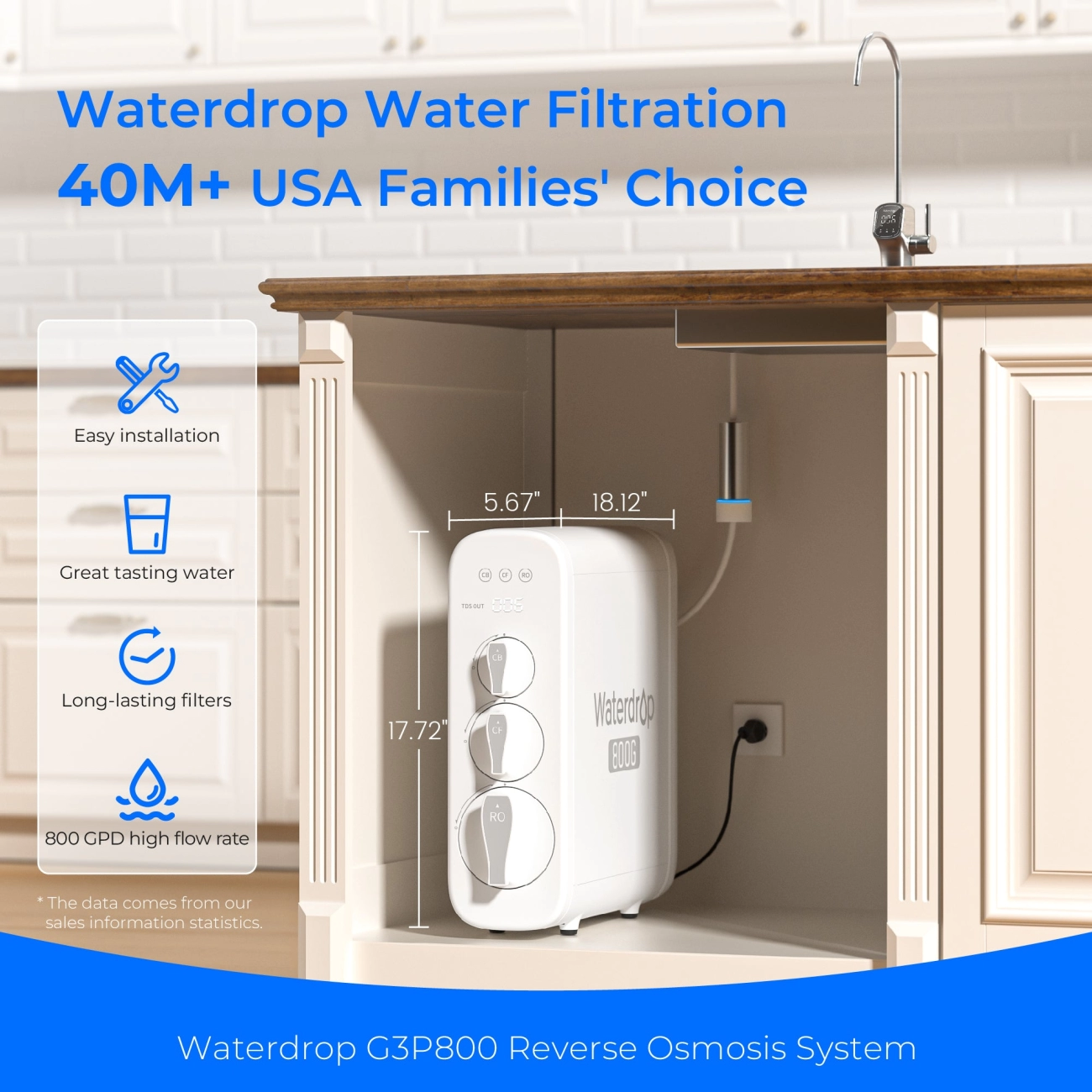
Most 800 gallon per day reverse osmosis systems are designed for compact commercial or high-demand residential setups. On average, you’ll need a footprint of about 2–4 square feet with a bit of clearance around it for service. If you’re using a tank, plan for additional space. Many driplife 800 GPD RO systems can be wall-mounted or stand-alone, giving flexibility for kitchens, utility rooms, or small commercial spaces.
Suitable water sources
An 800 GPD water filtration system works well with both municipal (city) water and properly treated well water. If using well water:
- Get a water quality test before installing
- Check for high sediment, iron, or hardness, as these may require pre-treatment
Contaminants removed
A quality reverse osmosis water purifier 800 GPD can remove:
- Fluoride
- Lead
- Arsenic
- Nitrates & heavy metals
- Chlorine, chloramine, and VOCs (with proper carbon filtration stages)
- Microorganisms (if paired with UV or post-filtration add-ons)
Membrane and filter materials
Most industrial-grade 800 GPD RO membranes use thin-film composite (TFC) materials, trusted for high rejection rates and durability. The pre-filters typically include:
- Sediment filters (polypropylene)
- Carbon block or GAC filters (coconut shell carbon for better taste and chemical removal)
These filters meet or exceed NSF/ANSI standards for safety.
Noise levels
An 800 GPD RO system runs quietly compared to smaller pump-driven home units. You may hear a low hum from the booster pump and a light trickle during operation, but it’s minimal. With proper installation and mounting, noise is rarely an issue for either commercial kitchens or home utility rooms.
Why Driplife is the Best Choice for Your 800 GPD RO System
Brand Values and Commitment to Quality
Driplife has built a reputation in the US market for delivering reliable, high-capacity water filtration systems that meet both residential and commercial needs. Every 800 GPD RO system is made with NSF-certified components, food-grade materials, and tested for performance before shipping. The focus is on long-term durability, not just quick sales, so you’re investing in a system that will last.
Key points:
- Strict quality control from manufacturing to delivery
- Compliance with US water safety standards
- Use of premium membranes and filters for consistent purity
Customer Testimonials and Proven Results
Feedback from US customers — from small restaurants to busy households — shows that Driplife’s 800 gallon per day reverse osmosis systems consistently deliver crisp-tasting, contaminant-free water without dips in flow rate. Many report that after switching from bottled water or smaller filtration units, they’ve seen significant cost savings and fewer maintenance headaches.
Real examples:
- Restaurant owner in Texas: Reduced bottled water costs by over 70% within six months
- Homeowner in California: Installed for well water; no more hard water scaling in appliances
- Cafe in New York: Customers noticed better coffee flavor due to improved water quality
Innovative Technology and Ongoing Improvements
Driplife doesn’t stick to old designs — their commercial RO water filters are upgraded regularly for higher efficiency, faster recovery rates, and lower wastewater ratios. Smart monitoring options allow users to track TDS levels, flow rates, and filter life in real time. The 800 GPD system is built to keep up with changing water regulations and user demands in the US.
Features that stand out:
- Low energy consumption pumps
- High-recovery membranes to save water
- Optional smart LED/TDS faucet indicators
Local Warranty and Fast Shipping
Unlike some brands that ship from overseas, Driplife offers local US warehouses for quick delivery — often within a few days. Their US-based warranty support means fast response times for parts or troubleshooting, with no long waits for replacements. Whether it’s a commercial RO system 800 GPD for a business or a high-output home unit, you can expect accessible, reliable service.
Benefits for US customers:
- 1–3 year warranty coverage depending on components
- Direct access to US customer service reps
- Fast parts replacement without long international delays