Managing a high-traffic facility implies making smart choices, and your strategy for hydration is no exception. You might already realize that the traditional drinking water fountain is evolving fast.
Gone are the days of basic bubblers. Today, employees, students, and visitors expect touchless sensor activation, integrated filtration, and hygienic bottle filling stations that reduce plastic waste.
In this guide, you’ll discover exactly how to select the perfect hydration solution for your space. We’ll cut through the noise on ADA compliance, vandal-resistant durability, and the critical shift toward advanced, multi-functional commercial water dispensers.
Ready to upgrade your facility’s water access?
Let’s dive right in.
What Role Drinking Water Fountains Play in Public Spaces
Have you ever walked through a busy airport, a bustling office, or a sprawling university campus parched, scanning the walls for relief? That is where the trusty drinking water fountain proves its absolute worth. In my experience running large-scale facility projects, these units are not just plumbing fixtures; they are the heartbeat of a building’s health and efficiency.
Providing centralized access to safe, potable water is non-negotiable for modern infrastructure. Whether it is for employees, students, or visitors, a reliable facility water dispenser ensures that hydration is always within reach. We aren’t just installing hardware; we are supporting daily health. Proper hydration links directly to cognitive function and energy levels, making these stations vital for productivity.
Why Public Hydration Solutions Matter
Beyond just quenching thirst, a sustainable drinking station is a massive driver for environmental responsibility. By offering a free, accessible refill point, we actively discourage the purchase of single-use plastic bottles.
Here is a quick breakdown of why these systems are essential for high-frequency shared spaces:
| Benefit | Impact on Facility |
|---|---|
| Centralized Access | Creates a reliable “hub” for safe hydration, reducing time wasted seeking water off-site. |
| Sustainability | Drastically reduces single-use plastic waste by encouraging the use of refillable bottles. |
| High-Volume Capacity | Designed to handle hundreds of users daily without the downtime of residential coolers. |
| Cost Efficiency | Eliminates the recurring expense of bottled water delivery and storage. |
In high-traffic areas, a standard residential cooler just won’t cut it. You need robust equipment designed for the rigors of public hydration solutions—systems that can handle constant use while maintaining hygiene and safety standards.
Common Challenges with Traditional Drinking Water Fountains
While public access to water is essential, the traditional drinking water fountain often falls short of modern expectations. For facility managers and users alike, older models present significant friction points that can discourage hydration and increase operational headaches.
Hygiene and Sanitation Concerns
The biggest barrier to usage today is the “ick” factor. Traditional bubblers often require close contact between the user’s mouth and the spout, raising valid fears about germ transmission.
- Direct Contact Risks: Users are increasingly wary of handles and buttons that hundreds of others have touched.
- Touchless Demand: In a post-pandemic world, there is a strong preference for a touchless drinking fountain to minimize cross-contamination.
Maintenance and Operational Downtime
For the facility manager, keeping an aging fleet of fountains operational is a constant battle.
- Frequent Cleaning: Exposed basins collect debris and require daily sanitization.
- Service Interruptions: Older mechanical valves and cooling units are prone to failure, leading to “Out of Order” signs in busy corridors.
Functional Limitations and User Frustration
Standard wall-mounted units were designed for a quick sip, not for filling the large reusable bottles people carry today.
- Slow Flow Rates: Filling a sport bottle takes too long, causing lines to form.
- Temperature Control: Many basic units lack consistent cooling, dispensing unappealing room-temperature water rather than the refreshing output of a chilled water fountain.
- Lack of Integration: Without a dedicated bottle filling station, users struggle to angle their bottles under shallow spouts, resulting in water waste and spills.
Safety and Water Quality Trust
Perhaps the most critical issue is the quality of the water itself. Older infrastructure often lacks adequate filtration, leading to complaints about taste and odor. Users now expect the same level of purification they get at home from a high-quality reverse osmosis water filter under sink, but traditional fountains rarely deliver that standard of contaminant protection.
Key Features to Look for in Modern Drinking Water Fountains
Gone are the days when a drinking water fountain was just a simple basin with a potentially lukewarm stream. Today, facility managers and business owners prioritize hygiene, speed, and sustainability. The expectation has shifted entirely toward units that function as a complete hydration hub rather than just a quick sip stop.
Here is what defines a high-performance modern unit:
- Touchless Sensor Activation: In a post-pandemic world, users prefer not to touch handles or buttons. A touchless drinking fountain uses infrared sensors to dispense water automatically, significantly reducing germ transmission in high-traffic areas.
- Built-in Filtration Systems: Quality matters. Users expect the water to taste good and be free of lead or chlorine. Integrating advanced filtration helps elevate your hydration with smart water purification tech, ensuring consistent taste and odor removal across all stations.
- Bottle Filling Stations: This is a non-negotiable for schools and gyms. A dedicated bottle filling station offers a rapid fill rate (often 3x faster than the bubbler) and usually includes a digital counter showing the number of plastic bottles saved, which boosts sustainability metrics.
- Chilled Water Options: Nobody likes drinking room-temperature water after a workout or on a hot day. A high-efficiency chilled water fountain utilizes a compressor to deliver refreshing, cold water instantly.
- Durable Construction: We build these to last. A stainless steel water fountain provides necessary vandal resistance and prevents rust, making it suitable for both indoor corridors and semi-outdoor environments.
Feature Comparison: Traditional vs. Modern Fountains
| Feature | Traditional Fountain | Modern Hydration Station |
|---|---|---|
| Activation | Manual Push-Button/Bar | Touchless / Hands-Free Sensor |
| Primary Use | Quick Sip (Bubbler) | Bottle Filling + Sip |
| Water Temp | Ambient / Slowly Chilled | Rapidly Chilled |
| Filtration | Often None | Integrated Filter & UV Options |
| Material | Porcelain / Basic Steel | Heavy-Gauge Stainless Steel |
Focusing on these features ensures the equipment meets ADA standards while handling the rough-and-tumble reality of public usage.
Types of Drinking Water Fountains and Hydration Stations
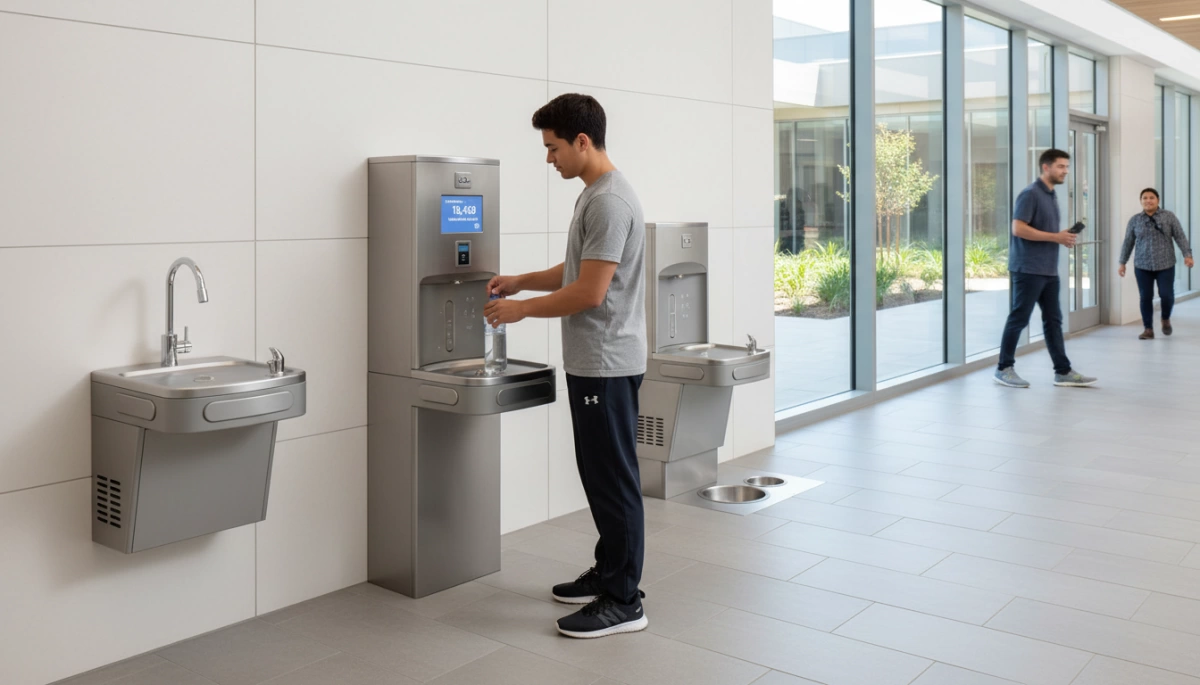
Selecting the right hydration hardware isn’t just about picking a design; it’s about matching the unit to the specific traffic flow and environmental conditions of the facility. We generally categorize these systems into distinct configurations to meet varying site requirements.
- Wall-Mounted vs. Freestanding: A wall mounted fountain is the industry standard for narrow corridors where floor space is at a premium. In contrast, freestanding or pedestal models—typically constructed from heavy-gauge stainless steel water fountain materials—serve as robust central hubs in large lobbies or open areas.
- Indoor vs. Outdoor: While indoor units prioritize efficient cooling and sleek aesthetics, an outdoor drinking fountain demands rugged weatherproofing. For clients in northern US states, freeze-resistant valves and finishes are non-negotiable to prevent damage during winter months.
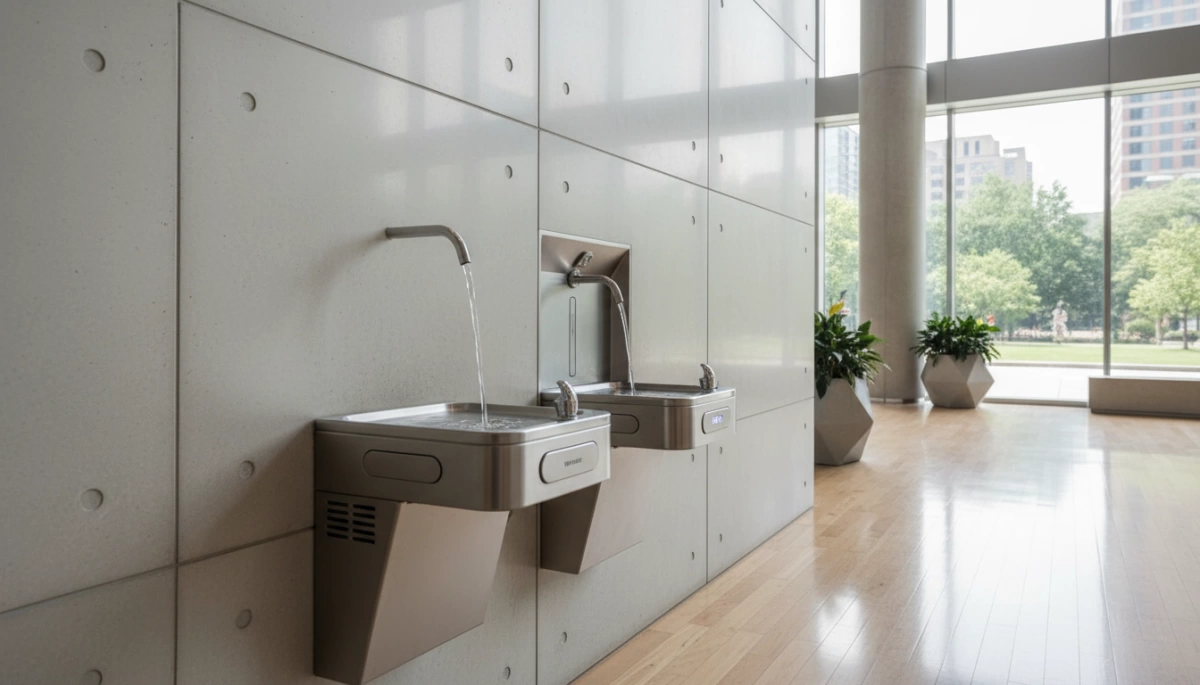
- Bi-Level and Multi-Station: To ensure compliance and usability, a bi-level hydration station (hi-lo design) is essential. This configuration allows simultaneous access for standing adults and wheelchair users or children. In high-traffic venues like stadiums, multi-station units are critical for reducing queues.
- Hybrid Bottle Fillers: The most significant shift in recent years is the “combo” unit: a traditional bubbler paired with a sensor-activated bottle filling station. This hybrid approach accommodates quick sips while supporting the massive user preference for refilling personal vessels.
- Advanced Multi-Functional Dispensers: Beyond standard chilled water fountain capabilities, modern demands are pushing for comprehensive purification. The latest evolution includes filtered water dispenser systems that offer chilled, sparkling, and hot water options in one interface. For facilities prioritizing versatility in compact spaces, this technology mirrors the efficiency of a countertop 3-in-1 RO cold and hot water purifier, bridging the gap between commercial volume and premium water customization.
Key Next Step
Would you like me to detail the specific ADA Compliance and Accessibility Requirements next, focusing on how spout heights and clearance spaces impact installation planning?
ADA Compliance and Accessibility Requirements
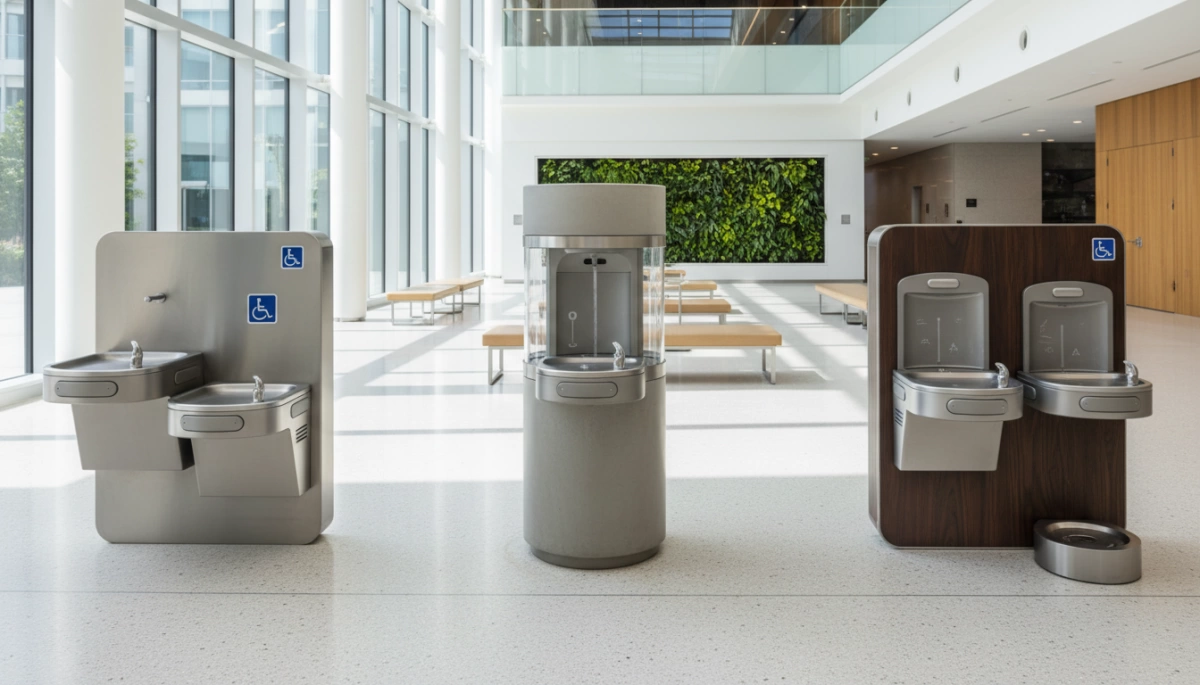
In the United States, installing a drinking water fountain involves more than just plumbing; it requires strict adherence to the Americans with Disabilities Act (ADA). For facility managers, ensuring your hydration stations are accessible isn’t just about avoiding fines—it’s about providing equitable access to water for everyone, including wheelchair users and those with limited mobility.
We see this as a critical design constraint. An ADA compliant fountain must meet specific physical dimensions to ensure usability. If you are retrofitting a school or outfitting a new corporate lobby, these metrics are non-negotiable.
Essential Guidelines for Accessibility
To pass inspection, a wall mounted fountain or recessed unit must adhere to precise measurements regarding spout height and legroom.
| Feature | ADA Requirement | Purpose |
|---|---|---|
| Spout Height | Maximum 36 inches from the floor | Allows easy access for wheelchair users. |
| Knee Clearance | Minimum 27 inches high, 8 inches deep | Ensures space for knees under the unit. |
| Spout Location | At front of unit, flow 4 inches high | Ensures water flow is reachable without leaning. |
| Operation | Requires < 5 lbs of force | Usable with one hand/closed fist (no tight grasping). |
The Role of Bi-Level Hydration Stations
You have likely seen the “Hi-Lo” design in almost every modern public building. This is the bi-level hydration station. It effectively kills two birds with one stone:
- The Lower Unit: Meets the 36-inch max height requirement for wheelchair accessibility.
- The Higher Unit: Provides a comfortable drinking height for standing adults (usually around 40-42 inches).
This configuration is the standard for high-traffic areas like airports and universities because it caters to the widest range of users simultaneously.
Integrating Accessible Bottle Fillers
Modernizing a facility often means adding a bottle filling station. When doing this, we have to ensure the filler mechanism itself is accessible.
- Reach Ranges: The sensor or activation button for the bottle filler must be within the compliant reach range (usually between 15 and 48 inches from the floor).
- Touchless Activation: A touchless drinking fountain or bottle filler is ideal for ADA compliance because it requires no physical force to operate, removing barriers for users with limited manual dexterity.
Integrating these features ensures that your facility remains compliant while upgrading to sustainable, plastic-reducing solutions.
Where Drinking Water Fountains Are Most Needed
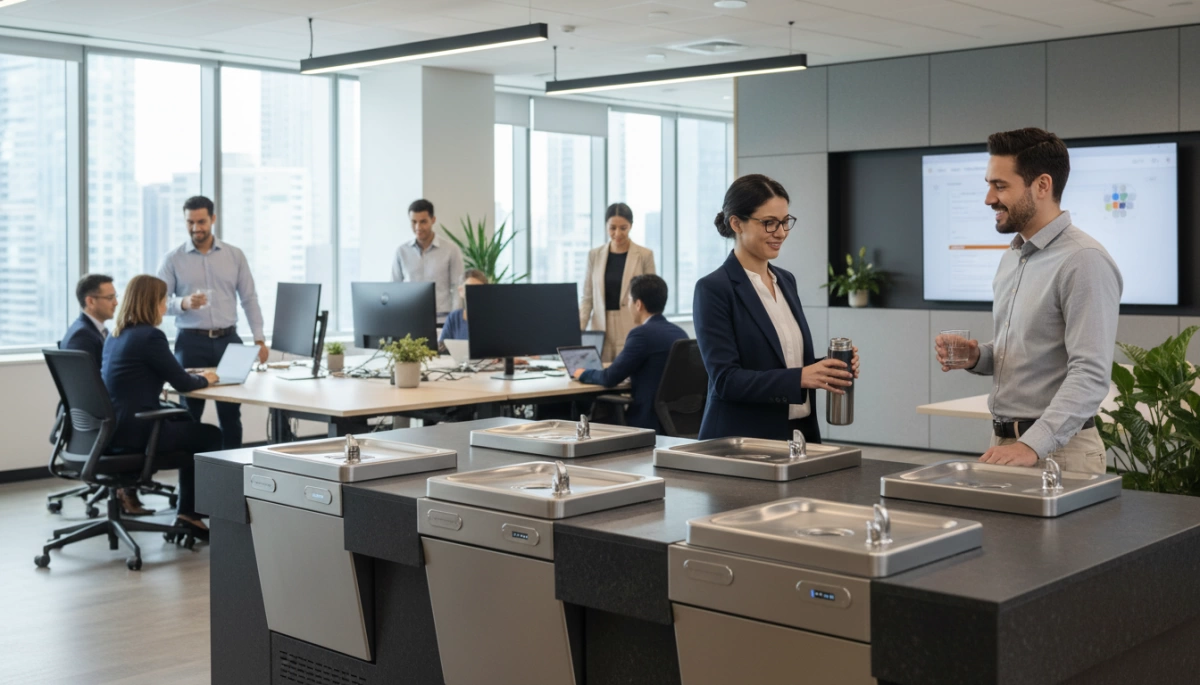
When we analyze market demand, certain environments stand out as absolute necessities for reliable hydration. It isn’t just about having water available; it’s about deploying the right drinking water fountain configuration to match the specific traffic patterns and safety standards of that space.
Educational Facilities and Schools
Schools and universities are high-traffic zones where hydration directly impacts student focus. In the US, the trend has shifted heavily toward the combo bottle filling station. Students carry reusable bottles, and traditional fountains can create bottlenecks during passing periods. Installing a touchless drinking fountain with rapid filling capabilities keeps lines moving and significantly reduces germ transmission—a top priority for facility administrators.
Offices and Corporate Buildings
In the modern workplace, quality amenities are expected. A standard commercial water cooler is being replaced by sleek, wall-mounted or recessed hydration stations in breakrooms and lobbies. Employees expect chilled, clean-tasting water. We often see a demand for units with built-in filtration here to ensure taste consistency, removing the chlorine or metallic notes often found in older city plumbing.
Parks, Recreation, and Transportation Hubs
These areas require rugged durability above all else. An outdoor drinking fountain in a public park or a busy bus terminal must withstand weather extremes and potential abuse. We typically recommend a vandal resistant fountain constructed from heavy-gauge stainless steel for these locations. These public hydration solutions need to be operational 24/7, providing a reliable source of water for travelers and athletes without requiring constant maintenance.
Healthcare and Industrial Settings
Hospitals and manufacturing plants have strict sanitation and volume requirements. In healthcare, purity is paramount. For these sensitive environments, integrating advanced purification measures is critical. Using a ultraviolet water purifier system within the dispenser setup helps ensure the water remains pathogen-free, protecting vulnerable patients and staff. Industrial sites, conversely, need high-capacity facility water dispensers that can handle the rough, high-frequency use of a shift change without failing.
Key Deployment Zones:
- Schools: High-volume, hands-free bottle fillers.
- Offices: Aesthetic, filtered chilled water units.
- Outdoors: Freeze-resistant, durable stainless steel models.
- Healthcare: Sterile, touch-free options with advanced safety features.
Next Step
If you are retrofitting a facility or planning a new installation, would you like me to outline the specific ADA compliance requirements you need to check for each of these location types?
How Drinking Water Fountains Are Evaluated During Procurement
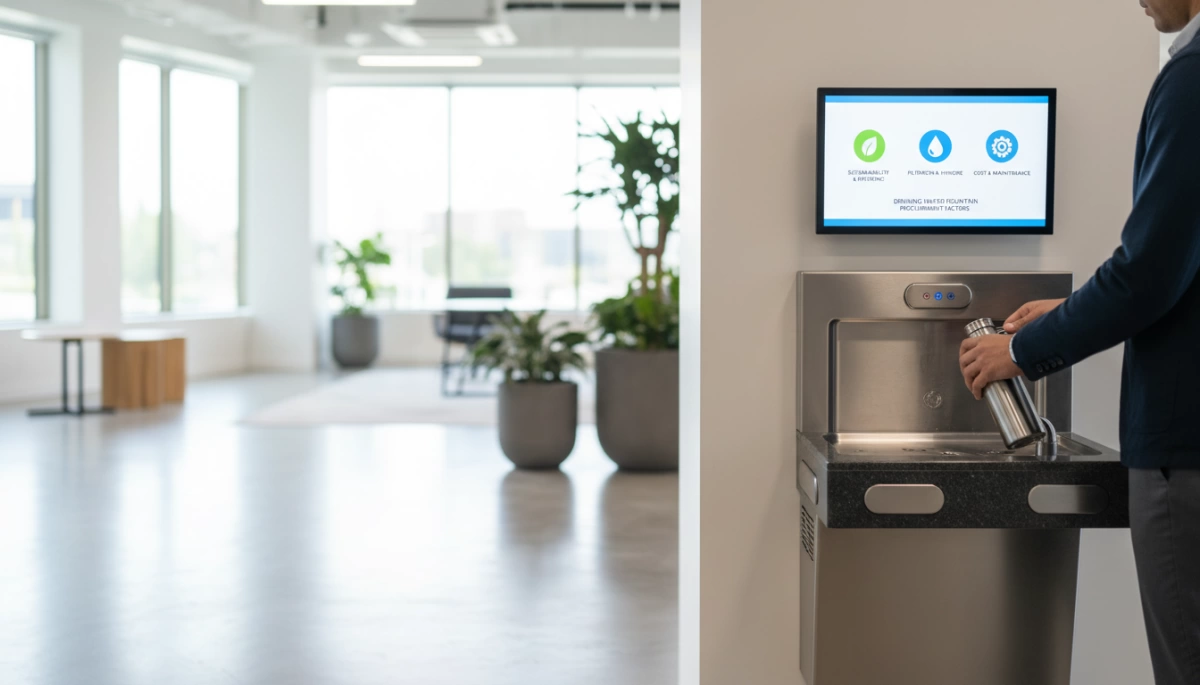
Sourcing the right facility water dispenser is about more than just picking a model from a catalog; it is a balancing act between strict compliance standards and the actual user experience. For facility managers, the decision often comes down to the long-term viability of the equipment rather than the initial sticker price. We need to look at how these units perform over five or ten years, not just on day one.
Here are the critical factors we evaluate when selecting a drinking water fountain:
- Total Cost of Ownership (TCO): The initial investment is just the start. We have to calculate the ongoing costs of energy consumption, filter replacements, and sanitation labor. A unit with high maintenance requirements can quickly blow the budget.
- Installation Complexity: Time is money. Whether we are installing a retrofitted wall mounted fountain or a new freestanding unit, the ease of plumbing integration and electrical setup is massive. Modular designs that fit standard rough-ins save significant contractor hours.
- Sustainability Credentials: Modern organizations have green goals. A sustainable drinking station that offers energy-saving modes and tracks plastic bottles saved helps buildings qualify for certifications like LEED.
In some zones, like dedicated breakrooms, managers might also compare standard fountains against a versatile hot water dispenser to cover a wider range of beverage needs. Ultimately, the goal is to secure a durable, low-maintenance system that keeps occupants hydrated without becoming a facility headache.
The Future of Commercial Hydration: Advanced Water Dispensers
While the traditional drinking water fountain has served us well for decades, the demands of modern facilities are shifting. We are moving beyond simple “bubblers” toward integrated hydration hubs that prioritize purity and versatility. Standard fountains often struggle with slow flow rates, lack of temperature control, and basic filtration that misses emerging contaminants. The industry is evolving into smart, filtered water dispenser systems that do much more than just hydrate.
Beyond the Standard Fountain
Today’s users expect more than room-temperature water. We are seeing a massive surge in demand for multi-functional units that offer high-capacity filtration (up to 150 GPD) and rapid dispensing speeds. Modern systems can deliver water at 5.2 L/min, significantly cutting down wait times in busy lobbies or breakrooms.
Key advancements include:
- Temperature Variety: Instant access to ice-cold, piping hot, and even sparkling water from a single facility water dispenser.
- Compact Design: High-performance tech compressed into sleek, space-saving footprints.
- Enhanced Hygiene: Touchless operations and sealed purification pathways.
For offices looking to upgrade, our Countertop Reverse Osmosis Hot and Cold Water Filter Systems represent this shift—delivering purified, temperature-controlled water without the bulk of old floor-standing units.
Comparison: Traditional vs. Advanced Systems
| Feature | Standard Drinking Water Fountain | Advanced Commercial Water Dispenser |
|---|---|---|
| Water Temp | Ambient / Mildly Chilled | Cold, Hot, Ambient, Sparkling |
| Filtration | Basic Carbon (Optional) | High-Efficiency RO / UV Purification |
| Flow Rate | Slow to Moderate | Rapid Flow (e.g., 5.2 L/min) |
| Hygiene | Exposed Spout | Touchless / Recessed Nozzle |
Driplife’s Role in Hydration Innovation
At Driplife, we aren’t just watching this evolution; we are driving it. With over 15 years of R&D and manufacturing experience, we specialize in OEM/ODM solutions that tailor these advanced technologies to specific commercial needs. We understand that a sustainable drinking station needs to be durable enough for public use while sophisticated enough to provide premium water quality. Whether it’s integrating a bottle filling station or customizing a high-flow filtration unit, our focus is on engineering reliability for the next generation of hydration.