














What Is a Reverse Osmosis Water Filter Under Sink?
If you’re worried about what’s really in your tap water—lead, PFAS, fluoride, weird taste, cloudy particles—an under sink reverse osmosis water filter is one of the most effective ways to clean it up at the point of use.
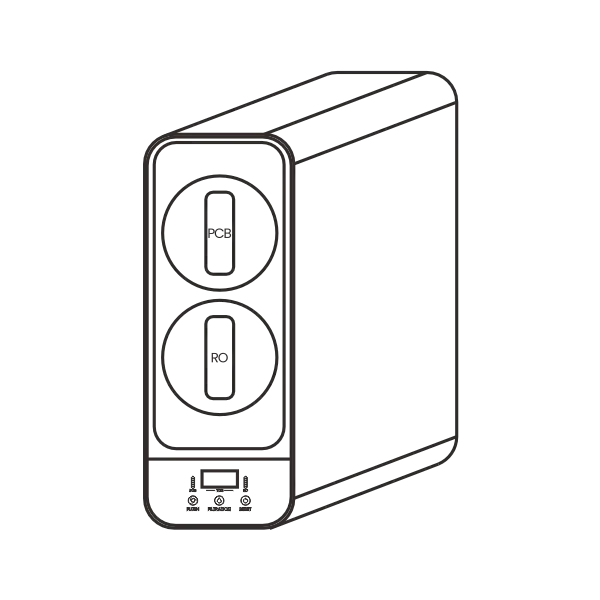
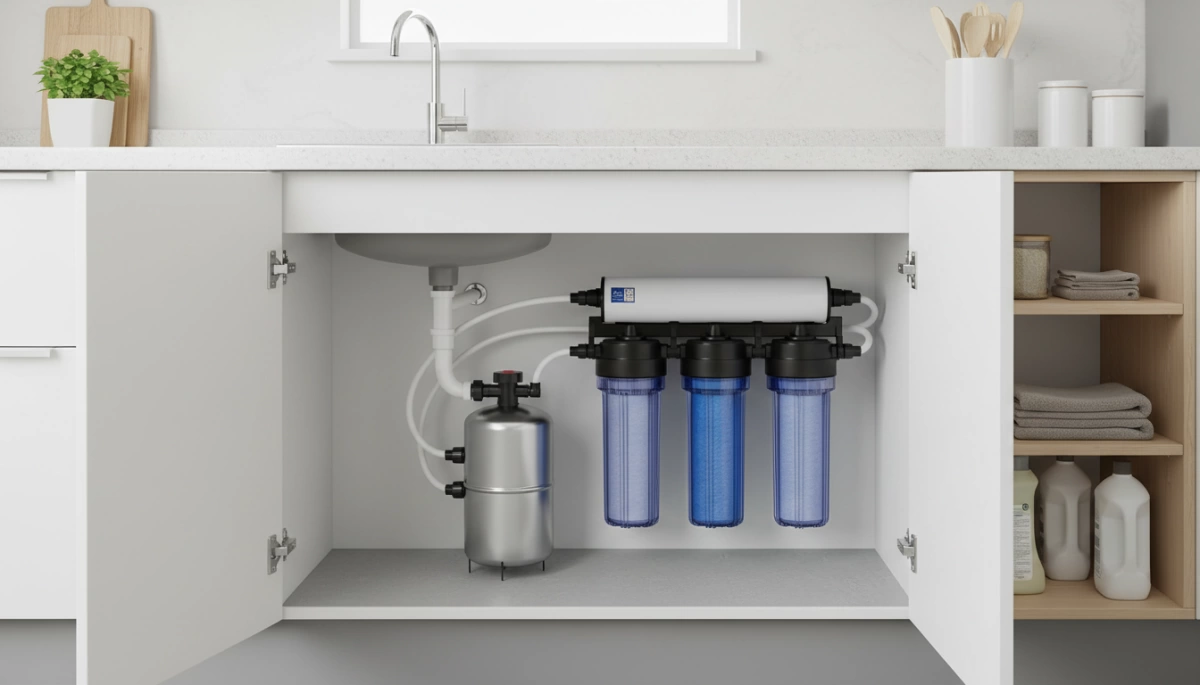
An under sink RO system is a compact, multi-stage water purifier installed in the cabinet under your kitchen sink. It uses a reverse osmosis membrane plus several pre- and post-filters to remove dissolved solids, heavy metals, chemicals, and bad taste/odor, then delivers clean drinking water through a dedicated RO faucet on your countertop.
You turn on the RO faucet, and you get filtered drinking water only, separate from your regular tap.
How an Under Sink RO System Works
At a high level, an under sink reverse osmosis system works like this:
- Pre-filtration
- Sediment pre filter catches sand, rust, and fine particles.
- Carbon block filter under sink removes chlorine, chloramine, and many chemicals that could damage the membrane or affect taste.
- Reverse Osmosis Membrane
- Water is forced through a semi-permeable RO membrane.
- This step does the heavy lifting: TDS reduction, heavy metals removal, and significant reduction of **fluoride, arsenic
Under-Sink RO vs Other Water Filtration Options
When I look at what actually works for everyday U.S. kitchens, an under sink reverse osmosis water filter is usually the most practical “set it and forget it” option. Here’s how it stacks up against other common systems.
Under-Sink Reverse Osmosis vs Countertop RO Systems
Both are true RO water purifiers and use a reverse osmosis membrane, but the experience is very different.
Under-sink RO system:
- Installed permanently under the sink
- Uses a multi-stage RO filter system (sediment, carbon, RO membrane, post filter)
- Dedicated RO faucet on the sink or countertop
- Cleaner look, no counter space taken
- Better for families and heavy daily use
Countertop RO system:
- Sits on the counter, usually plug-and-play
- Great for renters who can’t drill or modify plumbing
- Takes up valuable counter space
- Smaller capacity and slower output in many cases
Bottom line: If you own or have permission to install, an under sink reverse osmosis system is cleaner, higher capacity, and more convenient long term. Countertop RO fits dorms, rentals, and temporary setups.
Under-Sink RO vs Pitcher and Faucet Water Filters
Pitcher and faucet filters are easy to buy and quick to use, but they’re not in the same league as RO.
Pitcher / faucet filters (carbon-based):
- Mainly reduce chlorine, some taste and odor, and a few contaminants
- Do not reliably cut TDS, PFAS, nitrates, or many heavy metals
- Slow (pitchers) or awkward flow (many faucet units)
- Frequent cartridge changes, costs add up fast
Under-sink RO water filter:
- Cuts TDS and a wide range of contaminants (lead, arsenic, many PFAS, nitrates)
- Delivers cleaner, consistent water from a dedicated tap
Key Components of an Under-Sink Reverse Osmosis Water Filter
A solid under sink reverse osmosis water filter is all about how each stage works together. Here’s what actually sits under your sink and what it does.
Pre-Filters: Sediment & Carbon Stages
Most under sink RO systems start with 2–3 pre-filters:
- Sediment pre filter for RO – Catches sand, rust, and dirt so they don’t clog the RO membrane.
- Carbon block filter under sink – Reduces chlorine, chloramine, and some chemicals that affect taste, odor, and can damage the membrane.
These pre-filters are your “defense line,” protecting the main reverse osmosis membrane and helping it last longer.
RO Membrane: The Core of the System
The reverse osmosis membrane is where the real purification happens:
- Pushes water through a semi-permeable layer at high pressure
- Provides major TDS reduction and targets heavy metals like lead, arsenic, mercury, and chromium
- Also helps reduce many PFAS, nitrates, and other dissolved contaminants
If you’re tracking performance with a TDS meter, this is the stage that should make the biggest drop in readings; if you’re not sure how to read those numbers, a quick guide on using a TDS tester is useful.
Post-Filters: Taste & Odor Polishing
After the RO membrane, water usually passes through a post carbon filter:
- Polishes taste and removes any leftover odors
- Gives that “bottled water” clean flavor from your under sink drinking water filter
This stage doesn’t do heavy lifting on contaminants, but it’s a big deal for daily drinking and coffee/tea taste.
Optional UV, Remineralization & Alkaline Stages
Premium multi stage RO filter systems often add:
- UV sterilizer for RO system – Helps reduce bacteria and viruses; if you want to understand how UV actually works, check this breakdown of UV light in a water purifier
- Remineralization / alkaline filter – Adds back healthy minerals like calcium and magnesium, slightly raises pH, and improves mouthfeel and taste
- Extra specialty cartridges for specific needs (like higher PFAS reduction or fluoride tuning)
These optional stages are great if you’re picky about taste or worried about microbiological safety.
Dedicated RO Faucet & Under-Sink Connections
An under counter water purification system usually includes:
- A dedicated RO faucet mounted at your sink (separate from your regular tap)
- Tubing to and from the RO unit, storage tank (if used), and drain line
- A drain saddle that lets reject water go into your sink drain
- Simple shutoff valves to isolate the system for maintenance
This point-of-use RO setup keeps the system out of sight, gives you a clean, separate line for drinking and cooking, and makes upgrades or replacements straightforward.
Tank vs Tankless Under-Sink Reverse Osmosis Systems
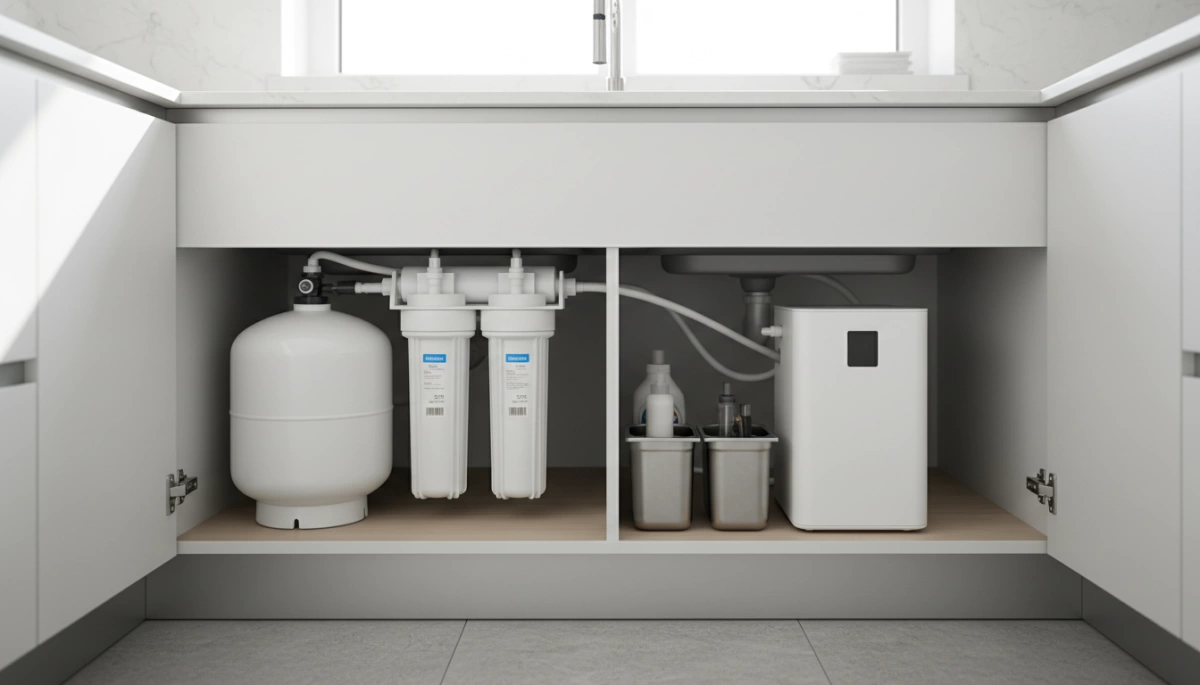
How Traditional Tank RO Systems Work
A traditional under sink reverse osmosis water filter with a tank stores purified water in a pressurized tank after it passes through the RO membrane and post-filters.
When you open the RO faucet, water comes from the tank first, so you get instant flow even if your home water pressure is low.
Key points:
- Multi-stage RO filtration → storage tank → dedicated RO faucet
- Great if your pressure is under 50 psi or you want steady flow for cooking
- Very common style for a home drinking water purifier in the U.S.
Pros and Cons of Tank-Style Under-Sink RO Filters
Pros:
- Stable flow rate even with weaker water pressure
- More forgiving on plumbing and pressure changes
- Often lower upfront cost than high-end tankless reverse osmosis systems
Cons:
- The tank takes up a lot of cabinet space
- Slight risk of stale taste if water sits too long
- More fittings and tubing = more potential leak points if poorly installed
If you’re already thinking about space, you’ll also want to see general under-counter water filter layouts and installation tips before you commit.
How Tankless Under-Sink RO Systems Work
A tankless under sink RO system filters water on demand, then sends it straight to the RO faucet—no storage tank. These units usually include a built-in pump and smart flow control to keep a strong, steady stream.
Key points:
- Direct-flow RO membrane + pump = high-flow under sink RO
- No tank, less chance of stagnant water
- Often includes real-time TDS display and leak detection in newer models
Pros and Cons of Tankless Reverse Osmosis Under Sink
Pros:
- Compact under sink water filter – frees up cabinet space
- Fresher water since it’s filtered as you dispense
- Many models have a better pure-to-drain ratio (low waste reverse osmosis system)
Cons:
- Higher upfront cost
- Needs good inlet pressure and power outlet under the sink
- Pump can add some noise while running
Which Is Better for Small Kitchens and Apartments?
For most U.S. apartments and small kitchens, I recommend:
- Tankless under sink RO if:
- Cabinet space is tight
- You cook often and want strong, continuous flow
- You’re okay paying more upfront for a cleaner, more compact setup
- Tank-style under sink RO if:
- Budget is the top priority
- Your water pressure is low and you don’t want to deal with pumps
- You don’t mind giving up some storage space under the sink
If you’re not sure whether you’re better off with an under sink RO system or something that sits on the counter, compare it with a compact countertop reverse osmosis setup before you decide.
What Contaminants Does an Under-Sink RO Water Filter Remove?
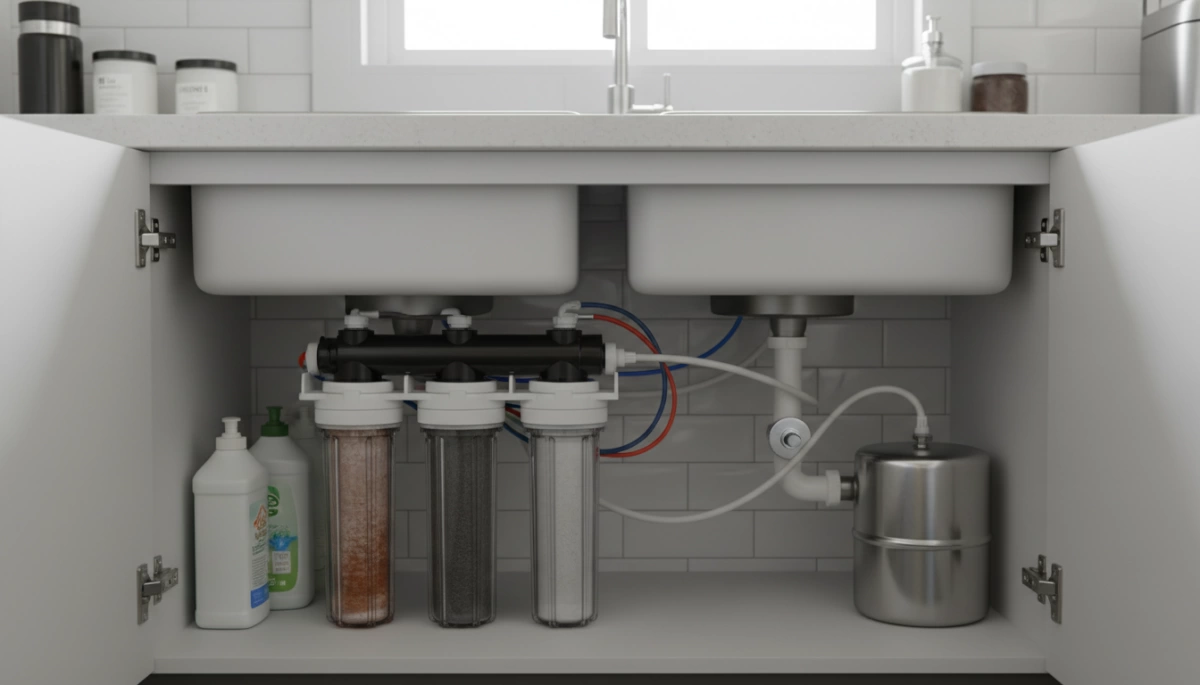
An under-sink reverse osmosis water filter is built to target what basic carbon filters can’t touch. A good under sink RO system combines sediment, carbon, and a reverse osmosis membrane to strip out a wide range of contaminants from U.S. tap water.
Dissolved Solids & TDS Reduction
Reverse osmosis is one of the most effective ways to cut total dissolved solids (TDS) in drinking water.
- Removes salts, hardness minerals, and many inorganic chemicals
- Typical TDS reduction RO filter performance: 90–98%+ (when new and properly maintained)
- Great for areas with high TDS, salty taste, or “mineral-heavy” water
If you want clean-tasting water with a low TDS reading, a reverse osmosis filtration system under the sink is the way to go.
Heavy Metals Removal (Lead, Arsenic, Chromium, More)
A quality under sink reverse osmosis water filter is one of the best options for heavy metals removal:
- Lead removal water filter performance: often 95%+
- Targets: lead, arsenic, chromium, mercury, cadmium, and more
- Critical for homes with older plumbing, lead service lines, or questionable local infrastructure
Always check for NSF/ANSI 58 or equivalent testing data to confirm real-world heavy metals reduction.
Chemical Contaminants: PFAS, Fluoride, Nitrates, Chlorine
A multi-stage RO water purifier under sink can handle a wide lineup of chemical contaminants that are growing concerns in the US:
- PFAS removal reverse osmosis: RO plus carbon stages can significantly reduce PFAS (“forever chemicals”)
- Fluoride removal RO system: RO membranes are highly effective for fluoride reduction
- Nitrates & nitrites: RO is one of the few home technologies that can reliably lower nitrates
- Chlorine and chloramine: Carbon block pre-filters protect the membrane and improve taste and odor
If PFAS or other chemicals are a concern in your area, go for a multi stage RO filter system with strong carbon stages like our under-sink reverse osmosis filtration system.
Microorganisms: Bacteria, Viruses, and Cysts
The RO membrane is a physical barrier with extremely tiny pores, which helps reduce:
- Many bacteria, cysts, and some viruses
- Protozoa like Giardia and Cryptosporidium (often a concern in well water)
However, most under-sink RO systems in the U.S. are not marketed as full microbiological purifiers unless they add a UV sterilizer or special certified stages. If you’re worried about boil-water notices or private well safety, pair RO with a dedicated UV water treatment system like the ones discussed in this guide to UV systems for microbial safety.
What RO Cannot Remove (and When You Need Extra Filtration)
Reverse osmosis is powerful, but it’s not magic. It:
- Does not remove all dissolved gases (like some VOCs) unless backed by strong carbon stages
- Does not fix extremely low or extremely high pH on its own
- Does not remove every microbe to sterilization levels without UV or extra disinfection
You should consider extra filtration if:
- You’re on a private well with known bacterial issues (add UV)
- You have strong odors from sulfur or specific VOC problems (upgrade carbon stages)
- You want minerals back in the water (add an alkaline remineralization filter)
In short, an under sink drinking water filter with reverse osmosis gives you a serious step up in safety and taste, and you can easily build on it with UV or remineralization if your water or health needs demand more.
How to Choose the Best Under-Sink Reverse Osmosis System
Match the RO System to Your Tap Water
Start with a water test. What’s in your water should decide your under sink reverse osmosis system, not the other way around.
Check for:
- High TDS (total dissolved solids)
- Lead, arsenic, chromium, nitrates
- PFAS, fluoride, chlorine/chloramine
- Hardness (scale), bad taste or odor
If you’re not sure, use a basic TDS meter and your local water report, then choose a multi-stage RO water purifier under sink designed for those issues.
NSF/ANSI 58 and Key Certifications
Always make sure the system is independently tested.
Look for:
- NSF/ANSI 58: Performance standard for reverse osmosis systems
- NSF/ANSI 42/53: Chlorine, taste, odor, and health-related contaminant reduction
- Clear performance claims (lead, PFAS, fluoride reduction with actual % numbers)
If a brand claims big results but shows no certificates or test reports, skip it and go with a certified reverse osmosis filtration system instead.
Pure-to-Drain Ratio & Water Efficiency
RO systems send some water to the drain when filtering. The ratio matters for your bill and the environment.
Typical ratios:
| Type of RO System | Pure:Drain Ratio (Approx.) | Notes |
|---|---|---|
| Older tank RO | 1:3 – 1:4 | Less efficient |
| Modern low-waste under sink RO | 1:1 – 1:2 | Good balance |
| High-efficiency tankless RO | Up to 2:1 or better | Best for water savings |
Look for a low waste reverse osmosis system with at least 1:2 or better if you live in states with high water costs.
Flow Rate, Pressure & Daily Output
You want strong, usable flow at the RO faucet, not a slow trickle.
Key specs to check:
- Minimum inlet pressure: Most systems need 40–60 psi
- Daily output (GPD):
- 50–75 GPD: small households, apartments
- 100–400+ GPD: families, coffee lovers, light commercial
- Instant flow rate: Higher GPD = faster filling of pots, bottles, and kettles
For high-demand setups or small offices, a high flow under sink RO or a compact 800 GPD RO system like our high-capacity under-sink RO unit is a better fit.
Filter Lifespan, Maintenance & Cost
Cheap systems with short-life filters cost more over time.
Compare:
- Sediment & carbon pre-filters: Usually every 6–12 months
- RO membrane: Typically 24–36 months (with normal use)
- Post filter / remineralization filter: 12 months on average
Ask yourself:
- How many filter stages?
- How much do full replacements cost per year?
- Is the RO membrane replacement schedule clear and easy to follow?
Tank vs Tankless: Fit Your Kitchen Layout
Tank-style under sink RO:
- Pros: Simple, proven, stable flow
- Cons: Takes more space under the sink, tank sanitation matters
Tankless reverse osmosis system:
- Pros: Space-saving, higher flow, fresher water
- Cons: Needs power, more complex inside, can be louder
In tight US apartment kitchens, an under sink tankless RO is often the smarter move if you want cabinet space and a modern look.
Noise, Leaks & Build Quality
Don’t ignore the “small stuff” – it’s what protects your home.
Check for:
- Integrated leak detectors or automatic shut-off
- Solid metal fittings vs. thin plastic quick-connects
- Pump noise levels (especially for tankless systems)
- Warranty and support from a real US-facing brand
A well-built under sink reverse osmosis water filter should run quietly, stay dry under the cabinet, and be easy to service without calling a plumber every time.
Installation and Setup Under the Sink
How Much Space You Really Need Under the Sink
For a typical under sink reverse osmosis water filter, I tell people to plan for:
- Tank-style under sink RO system
- Footprint: about 11″–14″ wide x 11″–14″ deep
- Height: 16″–18″ for the tank, plus a small bracket for the filters
- Tankless reverse osmosis system
- Footprint: roughly 5″–7″ wide x 15″–18″ deep
- Height: about 12″–18″
Quick space tips:
- Make sure you can open cabinet doors fully.
- Leave room to pull filters straight down or out for changes.
- Check for garbage disposals, pull-out trash cans, and water softener lines that might compete for space.
If you’re tight on room but still want a serious under sink drinking water filter, a compact under sink tankless RO is usually the better fit.
DIY Installation vs Hiring a Plumber
Under-sink RO systems are designed for DIY, but not everyone wants to drill into pipes or sinks. Here’s how I break it down:
DIY installation makes sense if:
- You’re comfortable using:
- A drill
- Adjustable wrench
- Screwdriver
- You have basic plumbing confidence (turning off water, tightening fittings).
- You’re okay drilling a hole in the sink or countertop (for the reverse osmosis faucet).
Hire a plumber if:
- Your sink/counter is granite, quartz, or stone and you don’t have the right bits.
- Your plumbing is old or crowded and you want zero risk of leaks.
- You’re installing a high-end kitchen setup with multiple connections (RO to fridge, ice maker, and maybe even a sparkling or soda water faucet).
Most U.S. homeowners can DIY in 1–2 hours, but paying a plumber for a clean, warrantied install is often worth it if you’re unsure.
Basic Steps to Install an Under-Sink RO Water Filter
Every under sink reverse osmosis system is slightly different, but the basic process is usually:
- Shut off cold water supply and open the kitchen faucet to relieve pressure.
- Mount the RO bracket (and tank, if included) to the cabinet wall or floor.
- Install the feed water adapter on the cold water line and connect the RO inlet tubing.
- Drill and mount the RO faucet on the sink or countertop.
- Run color-coded tubing between:
- Feed water
- Pre-filters
- RO membrane
- Tank (if tank-style)
- RO faucet
- Drain saddle
Always follow the manufacturer’s diagram — your multi-stage RO filter system will show every connection clearly.
Connecting the Drain Saddle and RO Faucet
These two steps are what most people worry about, but they’re straightforward if you go slow.
Drain saddle connection:
- Choose a straight, vertical section of the drainpipe above the P-trap.
- Drill the correct-size hole (usually 1/4″) into the drainpipe.
- Align the saddle fitting over the hole and tighten evenly (don’t overtighten and crush the pipe).
- Insert and secure the drain line from the reverse osmosis filtration system.
RO faucet connection:
- Drill a 1/2″–1 1/4″ hole (check your faucet spec).
- Install faucet with gasket and nut from underneath.
- Connect:
- Pure water line from the RO system to the faucet
- Optional line from a remineralization filter or last-stage carbon filter if included
If you’re also feeding a fridge or ice maker, use a T-fitting off the faucet line and run 1/4″ tubing to the appliance.
Flushing and Testing Your New RO System
Once everything is hooked up, it’s critical to flush and test your under sink RO system before daily use:
- Turn on the feed water and check for leaks at every fitting.
- Open the RO faucet to let air purge until water begins to trickle.
- For a tank system:
- Let the tank fill completely (2–3 hours).
- Then open the RO faucet and fully drain the tank.
- Repeat this flush cycle 1–2 times to rinse carbon fines and preservatives.
- For a tankless reverse osmosis system:
- Run the RO faucet for 10–20 minutes (or as the manual states) for a full system flush.
After flushing:
- Use a TDS meter to compare tap water vs RO water.
- Check that the pure water flow is steady and the RO drain line is running when the faucet is on.
- Confirm no slow leaks under the sink over the next 24 hours.
Once it’s flushed and tested, your under sink RO water purifier is ready for daily drinking, cooking, and ice — without relying on bottled water.
Daily Use, Maintenance & Troubleshooting for an Under-Sink RO System
How to use an under-sink RO faucet day to day
Using a reverse osmosis faucet is simple:
- Let it run a bit – open the RO faucet for 5–10 seconds to clear water that’s been sitting in the line.
- Use RO water for drinking, coffee/tea, ice, baby formula, and cooking – keep tap water for washing dishes and general cleaning.
- If you have a tankless reverse osmosis system, expect a steady but slightly slower flow than your main faucet.
- Don’t use the RO faucet for hot water; high heat can damage tubing and internal parts.
Filter change schedule & RO membrane replacement
For most under sink RO systems in the US (city water, average family):
- Sediment pre-filter & carbon filters: every 6–12 months
- RO membrane: every 2–3 years (sometimes 3–5 years with clean municipal water)
- Post-carbon “polishing” filter: every 12 months
- Optional UV, remineralization, or alkaline filters: usually 12 months
Always follow the schedule in your system’s manual and consider your local water quality. If you’re worried about contaminants like lead, this guide on top methods for lead removal with water filters is a useful reference alongside your RO setup.
How to know when RO filters need changing
You don’t have to guess. Watch for:
- TDS creeping up (measured with a TDS meter)
- Taste or odor changes – water starts to taste flat, chemical, or “musty”
- Slower flow from the RO faucet (often clogged sediment or carbon filters)
- Frequent tank refills or short bursts of flow from tank systems
- Indicator lights or app alerts on smart under sink RO systems
If any of these show up early, change filters sooner than the standard schedule.
Common under-sink RO problems & quick fixes
1. Low water flow
- Check if the tank is properly pressurized (typically 7–8 psi empty for tank systems).
- Replace clogged sediment/carbon filters.
- Make sure the feed valve and tank valve are fully open.
2. RO system constantly draining
- A failing auto shut-off valve or check valve can cause constant drain.
- Inspect and replace these parts if the drain line runs non-stop when the tank is full.
3. Leaks under the sink
- Tighten quick-connect fittings and push tubing all the way in.
- Check for cracked housings or damaged O-rings and replace as needed.
- Use a small tray or leak-sensor pad under the unit for peace of mind.
4. Bad taste even after filter change
- Make sure you flush new filters for the recommended time.
- Check for old water sitting in the tank after a long vacation and drain/refill the tank.
Using a TDS meter to check RO performance
A basic TDS meter is one of the easiest tools to keep your under sink RO system in check:
- Test tap water TDS first, then RO water TDS.
- A good under sink reverse osmosis water filter typically gives 70–95% TDS reduction.
- Example: Tap 250 ppm → RO 15–75 ppm.
- If your TDS reduction drops sharply (say from 90% down to 60% or less), it’s usually time to:
- Replace pre-filters if they’re overdue.
- Test again; if still high, replace the RO membrane.
Keep a simple log of TDS values and filter change dates. It makes maintenance predictable, keeps your under sink RO system efficient, and protects you from the inconsistent quality often found in UK-style tap water risk discussions that are now popping up in some US cities, too.
Benefits of an Under-Sink Reverse Osmosis Water Filter
Health & Taste Benefits of RO Drinking Water
With an under sink reverse osmosis water filter, I’m targeting what most U.S. households actually care about: cleaner, better-tasting water straight from the tap.
What you get:
- Less TDS (total dissolved solids) – cleaner taste, no “chemical” or metallic aftertaste
- Lower levels of heavy metals like lead and chromium (with a quality RO membrane)
- Chlorine and many chemicals reduced – water tastes smoother and smells neutral
| Benefit | What It Means for You |
|---|---|
| Cleaner flavor | No tap taste, easier to drink more water |
| Fewer contaminants | Peace of mind for daily drinking water |
| Better for kids | Consistent, filtered water at one faucet |
If you’re also worried about skin and hair in the shower, pairing RO drinking water with a filtered shower head system gives you full-home comfort without going to a huge whole-house system.
Better Cooking & Beverages
Under sink RO systems make a real difference in the kitchen:
- Coffee & tea taste cleaner and more consistent
- Soups, pasta, and rice cook in water without extra minerals or chlorine
- Ice cubes are clearer with no strange taste
You’ll notice it fastest in coffee, tea, and baby formula—less bitterness, more “pure” flavor.
Saving Money vs Bottled Water & Delivery
A reverse osmosis filtration system under the sink replaces cases of bottled water and jugs.
Typical savings:
| Item | Bottled/Delivery | Under-Sink RO System |
|---|---|---|
| Cost per gallon | $0.40–$1.50 | Often under $0.10 |
| Carrying & storage | Heavy + takes space | No carrying, no stacking |
| Consistency | Varies by brand | Same taste every day |
Over a year, most families save hundreds of dollars compared to bottled water or delivery, especially if everyone drinks from the RO faucet.
Under-Sink RO in Offices & Small Cafés
For offices, small cafés, and salons, a compact under sink RO system is one of the easiest upgrades:
- Office – cleaner drinking water at the breakroom sink; can also feed a water cooler or coffee machine
- Small café / bakery – consistent water for coffee, espresso, tea, and ice, without installing a huge commercial plant
- Studios & shops – professional impression when you offer clean-tasting water to clients
For smaller setups that want premium water without changing the whole plumbing, I often pair RO with a countertop or ultrafiltration faucet water filter for different stations in the same space.
Environmental Benefits: Less Plastic & Waste
Switching to an under sink RO system is a simple sustainability win:
- Fewer plastic bottles – cut out cases of single-use plastic every month
- Less transport & delivery – lower fuel use and packaging waste
- Long-life RO components – only filters and membranes get replaced periodically
You get high-quality drinking water at one tap, while cutting down on plastic waste, clutter, and the carbon footprint of bottled water.
Choosing a Reliable Under-Sink Reverse Osmosis Manufacturer or Brand
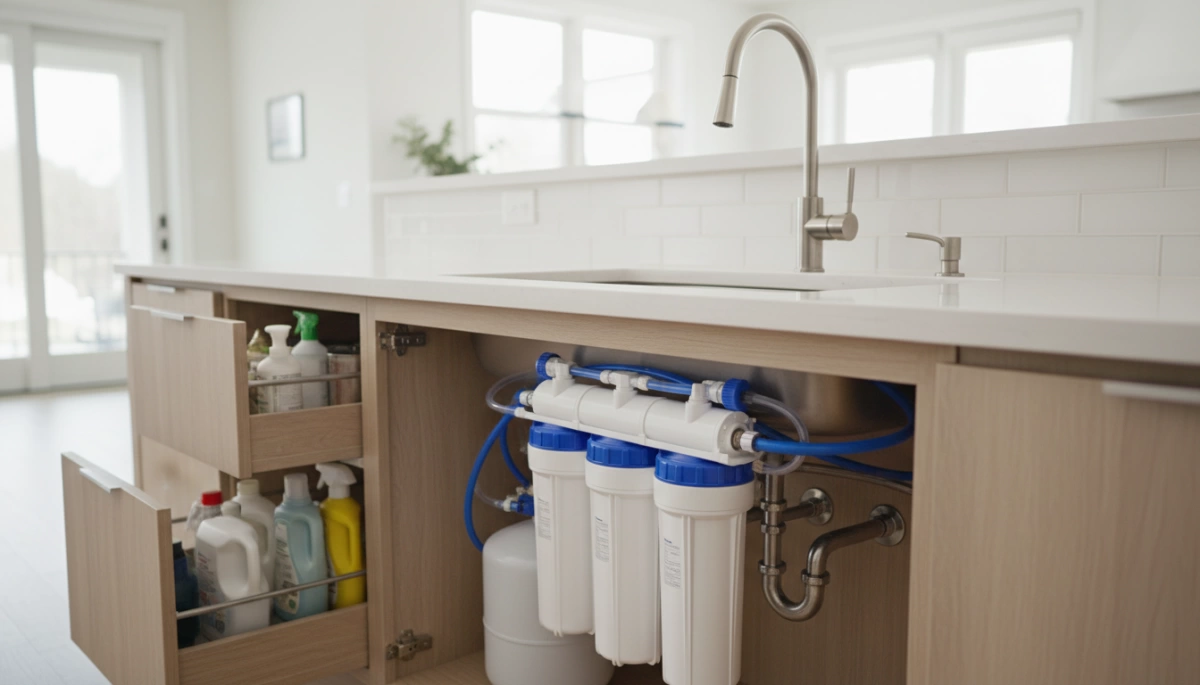
When I pick an under sink reverse osmosis water filter for my own projects or clients, I look at the brand and manufacturer first. A solid under sink RO system is only as good as the company standing behind it.
What to Look For in a Trusted RO Water Filter Brand
For a reliable under sink reverse osmosis water filter, I focus on:
- Certifications: NSF/ANSI 58 for RO performance, materials safety, and structural integrity. If a brand can’t show test reports, I move on.
- Real-world support: Clear manuals, responsive tech support, easy-to-find replacement filters, and a straightforward RO filter maintenance guide.
- Build quality: Reinforced fittings, quality tubing, sturdy RO faucet, and leak-prevention design. Cheap plastics are a red flag.
- Transparent performance data: Stated TDS reduction, pure-to-drain ratios, and filter life that match real usage—not just marketing.
If your tap water also has hardness issues, it’s worth reviewing how water filters differ from water softeners so you choose the right combo for your home: water softener vs water filter differences.
Why OEM and Private Label RO Systems Exist
A lot of the best under sink RO 2026 systems you see online are actually made by the same OEM factories. Brands use:
- OEM reverse osmosis systems to get proven designs without building a factory.
- Private label RO systems to put their own logo, manuals, and packaging on a standard or semi-custom platform.
This keeps cost down, speeds up development, and still allows strong performance if the OEM is solid.
Customizing Stages, Tankless Design, and Branding
When I work on a custom under sink RO system, I usually adjust:
- Filtration stages: Add sediment, dual carbon blocks, alkaline remineralization filters, or UV sterilizers depending on water quality.
- Tank vs tankless: Compact under sink tankless RO for small apartments, traditional tank systems for higher storage needs.
- Branding: Custom faucet style, logo on the housing, unique color scheme, and tailored user manuals for the target market.
The goal is a multi-stage RO filter system that fits U.S. kitchens, looks clean under the sink, and keeps parts and replacements simple.
Working With a Chinese RO Manufacturer for Bulk Orders
For bulk or project orders, I often work with a Chinese RO system manufacturer that already exports to the U.S. and understands NSF standards. To do it right:
- Audit the factory: Check production lines, test benches, and quality control process.
- Lock in specs: Pure-to-drain ratio, pump brand, tubing quality, RO membrane type, and packaging must be nailed down in writing.
- Test pilot units in the U.S.: Run real-world testing on several units before scaling.
- Plan after-sales: Spare parts, RO membrane replacement schedule, and warranty policy need a clear roadmap.
Done properly, OEM and private label under sink drinking water filters from China can deliver strong value, but I never sacrifice certification, quality control, or long-term support just to save a few dollars.
FAQ: Under-Sink Reverse Osmosis Water Filters
How often should I replace RO filters and the membrane?
For a typical under sink RO system I recommend:
- Sediment & carbon pre-filters: Every 6–12 months
- RO membrane: About every 2–3 years (sometimes up to 5 with clean city water)
- Post carbon / polishing filter: Every 12 months
Heavy use, high TDS, or well water usually means shorter cycles. A basic TDS meter and taste/odor changes are the easiest way to know if your reverse osmosis filtration system is slipping.
Does an under-sink RO filter waste a lot of water?
All reverse osmosis systems send some water to the drain to flush contaminants:
- Older units: 1:3–1:4 pure-to-drain ratio
- Newer low-waste RO systems: 1:1–1:2 ratio
If you want to cut waste, choose a low waste reverse osmosis system and consider a tankless reverse osmosis system with a built‑in pump for better efficiency.
Can RO water be too pure and do I need remineralization?
RO water is very low in minerals, which is why it tastes “flat” to some people. That’s not dangerous for most healthy people, but many of my U.S. customers prefer:
- Remineralization filter (adds calcium/magnesium for better taste)
- Alkaline filter (slightly raises pH)
If you care about taste, coffee, tea, or espresso, I strongly suggest adding a remineralization stage to your under sink reverse osmosis water filter.
Is a tankless RO system better than a tank system?
It depends on your kitchen and usage:
Tank RO system (storage tank):
- Pros: Simple, proven, steady flow
- Cons: Takes more under-sink space, more chance of stale water if rarely used
Under sink tankless RO:
- Pros: Compact, high flow, fresher water, usually more efficient
- Cons: Higher upfront cost, may be a bit louder when running
For small kitchens, condos, and apartments, I usually recommend under sink tankless RO if budget allows.
Can an under-sink RO filter run to my fridge or ice maker?
Yes. A point-of-use RO water purifier under sink can:
- Feed the dedicated RO faucet
- Tee off to your fridge water dispenser and ice maker
You’ll need:
- A fridge connection kit (¼” tubing and fittings)
- Enough pressure and flow (tankless and high-flow under sink RO systems do best here)
If you want a full under-counter upgrade, pairing RO with a dedicated under-counter water filter and dispenser setup is a popular choice in U.S. kitchens.
Is reverse osmosis safe for kids and long-term use?
Yes. A properly maintained, NSF/ANSI 58 certified RO system is safe for daily, long‑term use for both adults and kids. Key points:
- RO removes heavy metals, PFAS, and other harmful contaminants
- It doesn’t strip your body of minerals; it only removes them from the water
- For kids and families, I like to pair RO with a remineralization filter for better taste and a more “natural” mineral profile
As long as you keep up with filter changes and basic maintenance, an under sink reverse osmosis water filter is a solid long-term choice versus bottled water.