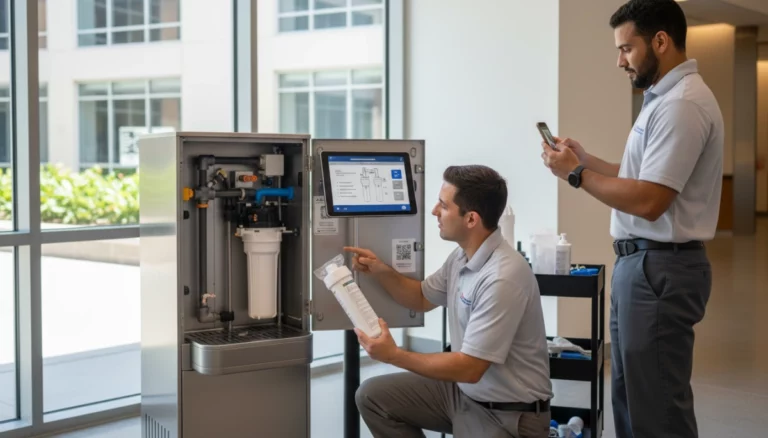


















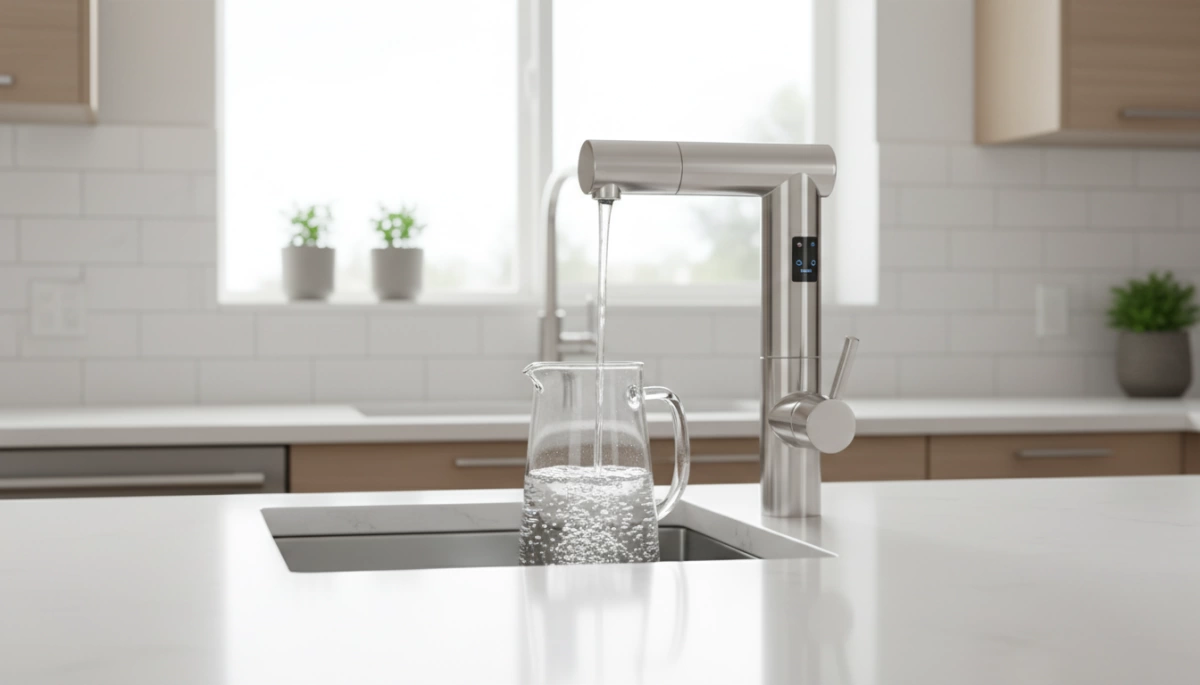
If your tap water tastes weird, smells like a swimming pool, or you’re worried about lead, chlorine, or PFAS, then a water filter for your sink isn’t a luxury—it’s a must-have.
The problem? There are dozens of options: faucet water filters, under sink water filters, countertop systems, and premium reverse osmosis sink filters that promise “99% contaminant removal.” Some improve taste only. Others tackle serious contaminants. Many look similar—but perform very differently.
In this guide, you’ll quickly learn:
- How a kitchen sink water purifier actually works (in simple terms)
- The real differences between faucet-mounted, under-sink, and RO systems
- What to check before you buy: NSF certifications, filter lifespan, flow rate, and cost
You’ll also see how a specialized RO manufacturer like driplife helps you get cleaner, safer, better-tasting water straight from your kitchen sink—without wasting money on the wrong system.
Let’s get your sink water filter choice right the first time.
What Is a Sink Water Filter and How It Works
If you’ve ever turned on your kitchen faucet and wondered what’s really in that glass of water, a sink water filter is the simplest way to take control right at the tap.
A sink water filter is a compact home water filtration system that installs:
- On the faucet (faucet-mounted kitchen faucet filter)
- Under the sink (under sink water filter with a dedicated drinking water filter tap)
- On the counter but connected to your sink (countertop kitchen sink water purifier)
The goal is straightforward: turn ordinary tap water into cleaner, better-tasting drinking water for you and your family.
Basic Filtration Path: From Tap to Glass
Here’s how a typical sink water filter system works in simple steps:
- Tap turns on → water flows from your cold-water line into the filter
- Water passes through multiple media → each stage targets different contaminants
- Filtered water exits → through a faucet water filter outlet or a separate drinking water tap
Main Filtration Stages (What’s Happening Inside)
Most quality sink water filter systems use several layers:
| Stage | Media Type | What It Targets |
|---|---|---|
| 1 | Sediment pre-filter | Sand, rust, dirt, silt that cloud your water |
| 2 | Activated carbon filter | Chlorine, bad taste, odor, some chemicals & VOCs |
| 3 | Advanced media (select models) | Lead, heavy metals, cysts, PFAS, specific chemicals |
| 4 | RO membrane (optional RO) | Dissolved solids, fluoride, nitrates, PFAS, TDS |
- The sediment pre filter protects the rest of the system
- The activated carbon sink filter is your main chlorine removal filter and taste improver
- Advanced media can be tuned as a lead removal water filter, heavy metal removal filter, or PFAS reduction sink filter
How a Reverse Osmosis Sink Filter Works
A reverse osmosis sink filter (under sink RO system) adds a powerful extra step:
- Water is pushed through a semi-permeable RO membrane
- The membrane blocks dissolved solids, heavy metals, PFAS, fluoride, nitrates, and other TDS
- Clean water goes to a tank or tankless RO water filter outlet
- Wastewater carrying the rejected contaminants goes to the drain (normal for RO systems)
Result: Up to 95–99% reduction of many impurities and a big jump in taste and safety—especially useful for old pipes, high TDS city water, or questionable well water.
Faucet Filter vs Under Sink Multi-Stage System
Not all sink filters are built the same. Here’s the quick reality:
| Type | Key Traits |
|---|---|
| Faucet-mounted water filter | Simple, cheap, easy install faucet filter, basic chlorine & taste improvement |
| Multi-stage under sink water filter | Higher flow, stronger contaminant reduction, better long-term solution |
| Under sink RO system | Best for serious water issues, broad contaminant removal, slightly more complex |
Faucet water filters:
- Great starter option and water filter for apartment sink
- Ideal if you mainly want better taste and chlorine reduction
Multi-stage under sink water filters:
- Better for lead, heavy metals, and PFAS
- More robust kitchen sink water purifier for everyday cooking and drinking
When a Sink Water Filter Is Enough (and When It’s Not)
A sink water filter is usually enough when:
- You mainly drink and cook with kitchen tap water
- You want clean water at one sink (kitchen, bar, or prep sink)
- You’re tackling taste, odor, chlorine, basic contaminants, or moderate lead/PFAS
You likely need a whole house home water filtration system when:
- You have staining, scale, or odor in showers, laundry, and toilets
- You’re dealing with extremely hard water, iron, or strong sulfur smell
- You want every tap—including bathrooms and laundry—filtered, then maybe add an under sink RO drinking water system at the kitchen for the final polishing
In short:
- Use a sink water filter system for targeted, high-quality drinking water at the kitchen.
- Step up to a whole house system + under sink RO if your entire home water has serious problems.
Types of Sink Water Filter Systems
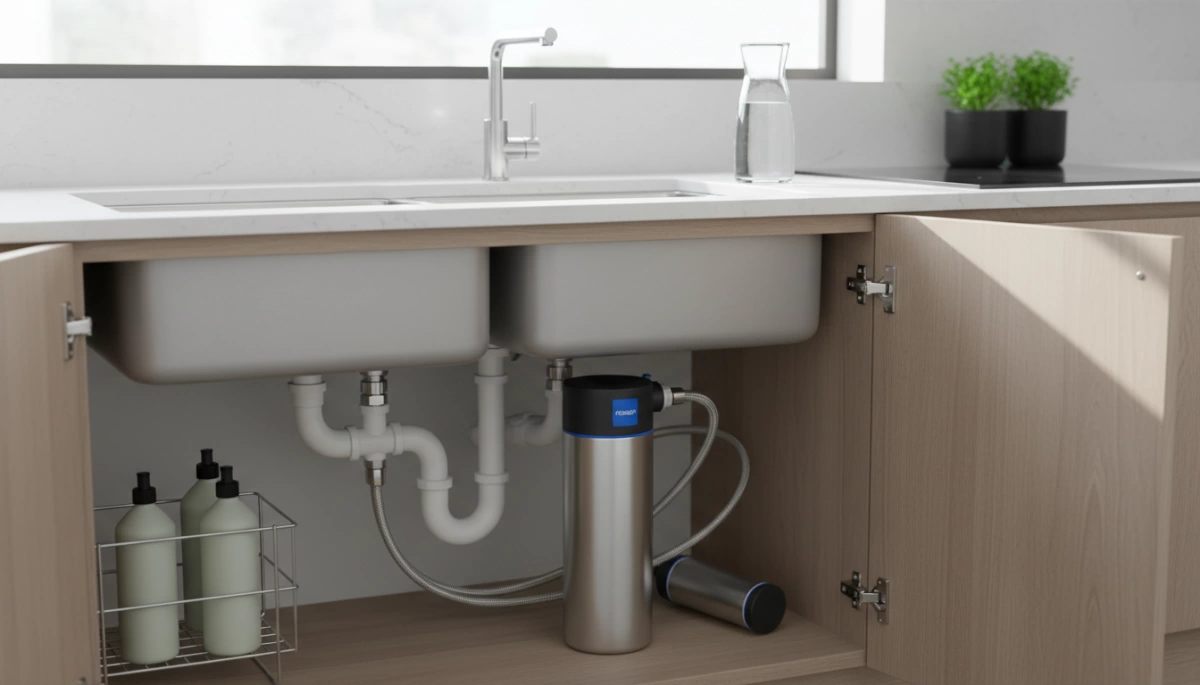
When you’re choosing a sink water filter system, it really comes down to how much filtration you need, how much space you have, and whether you rent or own. Here’s how the main options compare.
Faucet-Mount Water Filters
A faucet-mounted sink water filter screws directly onto the end of your kitchen faucet. Most come with a small diverter switch: flip it one way for regular tap water, flip it the other way to send water through the filter for drinking and cooking.
How it works:
- The filter replaces or attaches to your faucet aerator.
- A built-in diverter directs water through a small sediment and activated carbon cartridge.
- Filtered water comes out of a separate outlet on the front or bottom of the unit.
Pros:
- Low cost upfront and easy to find at big-box stores.
- Easy install faucet filter design — usually no tools, no drilling, no plumber.
- No plumbing changes, so it’s perfect for renters.
- Compact and compatible with most faucets when you use the included adapters.
Cons:
- Reduced flow rate compared with your normal tap.
- Smaller capacity, so cartridges need to be replaced more often.
- The unit adds bulk to the faucet and can be annoying on shorter or pull-down sprayers.
Best for:
- Basic taste and chlorine removal.
- Small households, apartments, and people who want a water filter for an apartment sink with zero hassle.
- Anyone who wants to try filtration before investing in a more advanced system.
Under-Sink Water Filters
An under-sink water filter installs on the cold water line under your kitchen sink and sends filtered water to either a small drinking water filter tap or your main faucet (depending on the design). This is what I generally recommend as the best water filter for kitchen sink for most U.S. homes.
Single-stage vs. multi-stage:
- Single-stage under-sink water filter
One cartridge (usually activated carbon). Good for taste, odor, and basic chlorine reduction. - Multi-stage under-sink water filter
Uses a sediment pre-filter, one or more activated carbon filters, and sometimes special media for lead and heavy metal removal or PFAS reduction. This is closer to a “high flow under sink filter” for serious contaminant reduction.
Pros:
- Hidden under the cabinet — no clutter on your counter or faucet.
- Better contaminant removal compared with basic faucet filters.
- Higher flow rate and larger capacity, so cartridges last longer.
- Great as a long-term home water filtration system for families.
Cons:
- Needs some under-sink space for housings, hoses, and possibly a small faucet.
- Requires basic DIY under sink filter installation skills (wrench, T-valve, maybe drilling for a dedicated faucet).
- Not as “plug-and-play” as faucet filters.
Best for:
- Families and anyone cooking at home daily.
- Homeowners who want a clean, permanent sink water filter system.
- Users who care about heavy metal removal filters and stronger protection than a simple faucet filter.
If you’re considering stepping up to a full under sink reverse osmosis filtration system, it’s worth looking at a proven system with solid performance and certifications, like this type of under-sink reverse osmosis filtration system.
Countertop Sink Filters
A countertop sink filter (or countertop water purifier) sits on your counter and connects to your faucet with a diverter valve and small hose. You turn the diverter on when you want filtered water; off for normal tap.
How it works:
- A diverter screws onto your faucet.
- When turned on, water flows through the hose into the countertop unit.
- Inside, you’ll usually find a sediment pre-filter plus activated carbon or multi-stage cartridges, similar to an under-sink unit but in a compact sink water filter housing.
Pros:
- Portable — you can take it with you when you move.
- No drilling, no permanent changes, perfect for rentals and small spaces.
- Larger cartridges than faucet-mount filters, so typically better performance and capacity.
Cons:
- Takes up counter space around your kitchen sink.
- Hoses and units can be in the way if you have a very small kitchen.
- May not keep up with large families or heavy daily use.
Best for:
- Temporary setups, small kitchens, dorms, RVs, and short-term rentals.
- Users who want more filtration than a faucet filter but can’t install under-sink systems.
- People who want a kitchen sink water purifier they can easily move.
Reverse Osmosis Under-Sink Systems
A reverse osmosis sink filter is the most advanced option. It’s still a point-of-use under sink RO system, but it goes beyond standard carbon filters to tackle dissolved solids, heavy metals, and PFAS.
How RO is different:
- Standard filters rely on sediment and activated carbon filtration to trap particles and adsorb chemicals.
- An RO membrane physically separates out tiny dissolved contaminants that carbon alone can’t remove, including TDS (total dissolved solids).
Typical multi-stage RO layout:
- Sediment pre-filter – Catches sand, rust, and grit.
- Carbon pre-filter – Reduces chlorine and protects the membrane.
- RO membrane – Removes lead, arsenic, nitrates, fluoride, PFAS, and most dissolved salts.
- Post carbon filter – Polishes taste before the water reaches your dedicated drinking faucet.
- Optional remineralization stage – Adds back healthy minerals for better taste and balanced pH.
Pros:
- Up to 99% impurity reduction when properly designed and certified.
- Best option for serious water quality issues, including older plumbing and questionable well water.
- Delivers ultra-clean water for drinking, coffee, baby formula, and cooking.
Cons:
- More complex install, especially when connecting the drain line and storage tank.
- Produces some wastewater as it flushes away concentrated contaminants.
- You’ll choose between tank-type systems (more stored water, slower recovery) and tankless RO water filters (faster flow, more compact, but usually higher cost).
Best for:
- Homes with well water or older homes with old pipes.
- Health-conscious users who want maximum reduction of lead, PFAS, heavy metals, nitrates, and TDS.
- Families mixing baby formula or anyone with compromised immune systems.
If you suspect hard water, it also helps to confirm it with a basic test or guide, like using these tips on how to determine if your water is hard or soft before deciding how to pair RO with softening: how to determine if your water is hard or soft.
Key Benefits of Installing a Sink Water Filter
Installing a sink water filter (faucet, countertop, or under sink water filter) is one of the simplest upgrades you can make to your kitchen. Here’s what you really get in day‑to‑day use.
Better Taste and Odor from Tap Water
Most U.S. city water is treated with chlorine and can pick up odors and off‑flavors in old pipes.
What hurts taste and smell:
- Chlorine & chloramine – pool‑like smell, bitter taste
- Sulfur compounds – “rotten egg” odor in some areas
- Organic compounds – earthy, musty, or plastic taste
How a sink water filter fixes it:
- Activated carbon sink filters trap chlorine and organ
How to Choose the Right Sink Water Filter
Choosing the right sink water filter comes down to your water quality, your space, and how much water your household really uses. Here’s how I’d walk through it step by step.
Check Your Water Quality First
Before buying any kitchen sink water purifier, know what you’re trying to fix.
1. City water vs. well water
City water (municipal)
- Usually chlorinated (taste/odor issues)
- May have lead, aging pipes, and disinfection byproducts
- Good match for activated carbon sink filters, and in some cities, RO sink filters for added protection
Well water
- Can have iron, manganese, sediment, bacteria, nitrates, and hardness
- Often needs sediment pre-filters, possibly RO plus maybe a softener or UV depending on test results
2. Read your local water quality report
Most U.S. water utilities post a Consumer Confidence Report (CCR) online. Search:
[Your City] + water quality report
Focus on:
- Lead
- PFAS
- Nitrates
- TDS (total dissolved solids)
- Chlorine / chloramine
If the report confuses you, you can cross-check it with general guidance on different water purification methods.
3. When to use a home water test kit
Use a DIY test kit (or lab test) if:
- You’re on well water
- You live in an older home with old pipes
- You taste metallic, earthy, or chemical flavors
- You suspect PFAS or local contamination issues
Match Filter Type to Your Main Problem
You don’t need the most expensive sink water filter system—you need the right one.
1. Taste and chlorine issues
- Main complaints: “water smells like a pool,” “flat taste”
- Best options:
- Faucet-mounted water filter
- Countertop sink filter
- Single or dual-stage under-sink water filter with carbon
- Look for: NSF/ANSI 42 (chlorine, taste, odor)
2. Lead, PFAS, heavy metals, serious contaminants
- If your report or test shows:
- Lead
- PFAS
- Chromium, arsenic, nitrates
- Best options:
- Multi-stage under-sink filter designed for lead removal
- Reverse osmosis sink filter (under-sink RO)
- Look for:
- NSF/ANSI 53 (lead, cysts, VOCs)
- NSF/ANSI 58 (RO performance, TDS reduction)
- PFAS-specific certifications where available
3. When to step up to reverse osmosis
Choose an under-sink RO system when:
- You’re on well water with unknown or mixed contaminants
- You want maximum reduction of TDS, lead, arsenic, nitrates, fluoride, and PFAS
- You’re very health-focused (baby formula, immune-compromised family members)
- Your tap water tastes very salty, metallic, or “thick”
4. Faucet vs. countertop vs. under-sink (usage-based)
| Situation | Best Choice |
|---|---|
| Renter, small household, low budget | Faucet water filter |
| Apartment / dorm / RV, no drilling | Countertop water purifier |
| Family home, daily cooking, long-term | Under-sink water filter or RO |
| Want “bottled water taste” at home | Reverse osmosis sink filter |
Installation and Space Considerations
Think about where everything will actually fit before you buy.
1. Measure your under-sink space
- Check:
- Height and width for filter housings or RO tank
- Space for hoses and a drinking water filter tap
- Existing garbage disposal or pull-out trash that may block space
2. Tools and DIY skill level
- Faucet-mounted filter
- Tools: usually no tools needed
- Difficulty: very easy
- Basic under-sink water filter
- Tools: adjustable wrench, Teflon tape, possibly drill (for new faucet)
- Difficulty: reasonable DIY project if you’re comfortable with plumbing
- Under-sink RO system
- Tools: drill (sink/counter & drain), wrench, screwdriver
- Extra connections: drain saddle, storage tank, multiple tubes
- Difficulty: more advanced; follow a clear sink filter installation guide like this step-by-step water filter faucet install walkthrough.
3. When to hire a plumber
Bring in a pro if:
- You’re not comfortable turning off the main water supply
- You need a new hole in a stone/steel countertop
- You’re installing a tankless RO or complex multi-stage system
- You see persistent leaks after install
Filter Lifespan, Flow Rate, and Capacity
You want a good balance between performance and convenience.
Typical replacement ranges
| Filter Type | Approx. Capacity / Lifespan* |
|---|---|
| Faucet water filter cartridge | 100–300 gallons / 1–3 months |
| Countertop carbon filter | 300–1,000 gallons / 3–6 months |
| Under-sink carbon cartridges | 600–2,000+ gallons / 6–12 months |
| RO pre-filters (sediment/carbon) | 6–12 months |
| RO membrane | 2–3 years (depends on water quality) |
*Heavy use, high sediment, or poor water quality will shorten these ranges.
Flow rate vs. filtration
- Higher filtration usually means slightly slower flow
- For most U.S. kitchens, a 0.5–1.0 GPM filtered line feels normal
- RO systems are slower; tankless RO can push higher flow but cost more
Right capacity by household
- Singles / couples
- Faucet filter, countertop, or small under-sink unit
- Families (3–5 people)
- High-flow under-sink water filter or RO system with decent tank size
- Heavy water drinkers / meal preppers
- Larger RO tank or tankless RO water filter plus maybe a fridge connection
Certifications and Safety Standards
Don’t just trust marketing claims—look for real testing.
Key NSF/ANSI standards
- NSF/ANSI 42 – Chlorine, taste, odor, and basic aesthetics
- NSF/ANSI 53 – Health-related contaminants (lead, cysts, VOCs, some heavy metals)
- NSF/ANSI 58 – Reverse osmosis system performance, TDS reduction
- NSF/ANSI 401 – Emerging contaminants (pharmaceuticals, some PFAS, etc.)
Why third-party testing matters
- Confirms your sink water filter system actually removes what it says
- Gives you real numbers: % reduction at specific gallons and pressures
Avoid untested or misleading filters
- Be careful with:
- Vague phrases like “removes 99.9% of impurities” with no standard listed
- No lab reports, no NSF/ANSI reference, or fake “style” badges
- If a lead removal water filter or PFAS reduction sink filter doesn’t show specific test data, skip it.
Budget and Long-Term Cost Planning
Think in yearly cost, not just purchase price.
1. Upfront cost vs. long-term
- Faucet-mounted filters
- Low upfront, more frequent cartridge changes
- Countertop filters
- Moderate upfront, medium running cost
- Under-sink carbon systems
- Higher upfront, better cost per gallon
- Under-sink RO systems
- Highest upfront, but very low cost per gallon long term if you use a lot of water
2. Typical yearly cost comparison (rough ranges)
| System Type | Upfront Cost | Yearly Filter Cost* |
|---|---|---|
| Faucet water filter | $20–$60 | $40–$120 |
| Countertop sink filter | $70–$200 | $60–$150 |
| Under-sink carbon filter | $100–$300 | $80–$200 |
| Under-sink RO system | $200–$700 | $100–$250 (incl. membrane) |
*Depends heavily on usage and water quality.
3. Factor in maintenance time and parts
- Choose brands that:
- Use standard-size cartridges
- Offer easy filter access (twist-and-lock instead of wrench-only)
- Have readily available replacement parts in the U.S.
- Look for features like:
- Filter life indicators
- Clear filter replacement schedule in the manual
If you match your water quality, usage, space, and budget to the right sink water filter system, you’ll get clean water, lower cost per gallon, and a setup you won’t regret in six months.
Installation Guide for Sink Water Filters
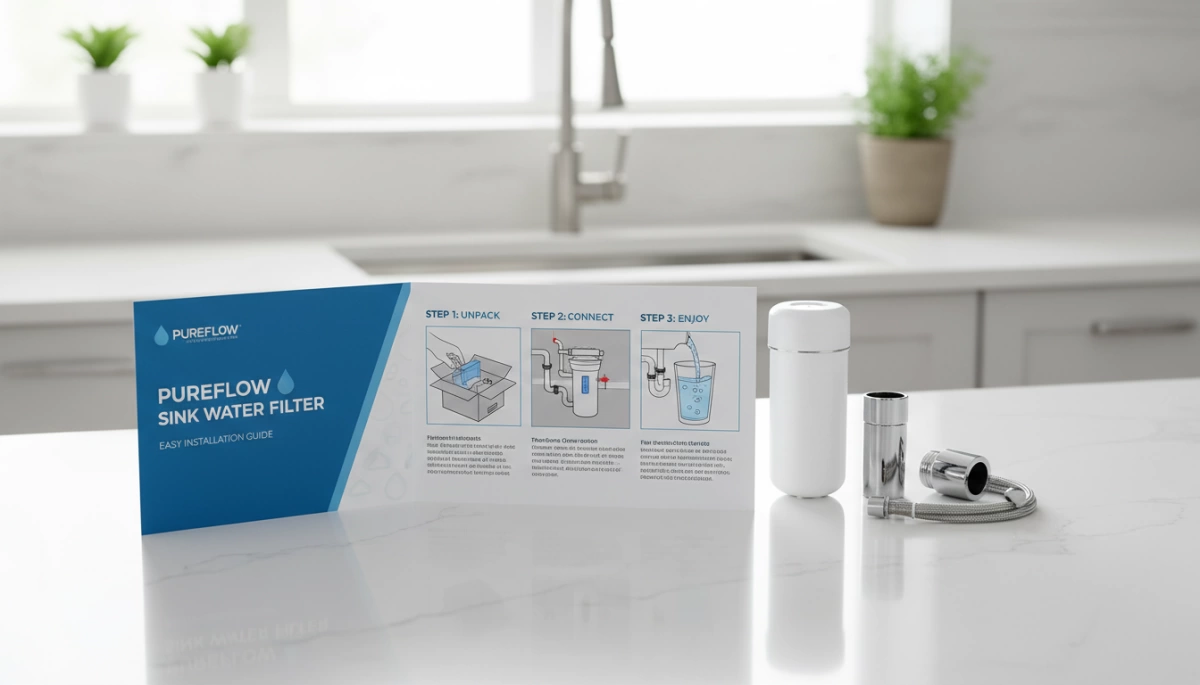
Installing a water filter for your sink is very doable for most U.S. homeowners and renters. Below is a simple, step‑by‑step guide for faucet-mounted, under-sink, and reverse osmosis (RO) under-sink water filter systems, plus how to stay on top of maintenance.
Faucet-Mounted Water Filter Installation
A faucet water filter is the easiest way to upgrade your kitchen tap with no major tools.
What you should see in the box
- Main faucet filter body
- Thread adapters (male/female)
- Rubber or silicone washers
- Diverter valve or built‑in selector switch
- Filter cartridge (sometimes pre-installed)
How to attach a faucet-mount water filter (no tools needed)
Remove the faucet aerator
- Unscrew the small tip at the end of your kitchen faucet.
- Keep the aerator in case you move or switch back.
Pick the right adapter
- Match the adapter threads to your faucet (male/female).
- Place the washer inside the adapter for a tight seal.
Screw on the faucet filter
- Hand-tighten the adapter and filter body to the faucet.
- Do not overtighten or you’ll damage the threads.
Install/lock the filter cartridge
- Insert the cartridge per the arrow or “UP” mark.
- Close the housing until it clicks or seals firmly.
Flush before drinking
- Run cold water through the filter for 3–5 minutes to flush carbon dust.
How to switch between filtered and unfiltered water
- Use the lever/knob on the side of the faucet filter:
- Filtered: for drinking, coffee, tea, baby formula.
- Unfiltered: for washing dishes, cleaning, or hot water (most faucet filters are for cold water only).
Common faucet compatibility issues and quick fixes
- Pull-down / pull-out sprayer faucets – Usually NOT compatible. Use a countertop sink filter or under sink water filter instead.
- Odd-sized threads – Use the included adapters or buy a small faucet adapter kit from a hardware store.
- Leaking at the joint – Check that the washer is in place, retighten by hand, and avoid cross-threading.
Under-Sink Water Filter Installation
An under-sink water filter gives you cleaner water with a cleaner look. It’s still DIY-friendly if you’re comfortable under the sink.
Basic layout
- Cold water line → T-valve → filter housing → dedicated drinking water tap (or back to your main faucet if it’s an inline design).
Tools you’ll usually need
- Adjustable wrench
- Drill (only if you need a new faucet hole)
- Teflon (plumber’s) tape
- Screwdriver and mounting screws
- T-valve and tubing (usually in the kit)
Step-by-step under-sink filter install
Shut off the cold water
- Turn the cold water shutoff valve clockwise under the sink.
- Open the faucet to relieve pressure.
Install the T-valve
- Disconnect the cold water line from the faucet.
- Wrap threads with Teflon tape.
- Attach the T-valve to the shutoff, then reconnect the faucet line to the T-valve.
Mount the filter housing
- Pick a spot on the cabinet wall with enough clearance for cartridge changes.
- Screw the bracket in place and hang the filter.
Connect the tubing
- From T-valve to “IN” port on the filter.
- From “OUT” port to the dedicated drinking water faucet or to your main faucet line (inline systems).
Install the dedicated faucet (if included)
- Use an existing sprayer hole or drill a new 1/2″–1″ hole in the sink or countertop.
- Mount the faucet per the kit instructions and connect the outlet tube.
Turn on water and flush
- Slowly open the shutoff valve.
- Check every joint for leaks.
- Flush the system for 5–10 minutes (or as the manual says).
How to avoid leaks and check connections
- Always use Teflon tape on threaded metal joints.
- Push plastic tubing all the way into quick-connect fittings until you feel it “seat.”
- After installation, dry all joints with a towel, then check again after a few hours.
If you’re also interested in advanced purification methods, it’s worth understanding how a reverse osmosis drinking water system changes the layout and components under your sink.
Reverse Osmosis Under-Sink System Installation
A reverse osmosis under-sink water filter is more complex but delivers some of the cleanest water possible from a kitchen sink filter.
Extra components in an RO under-sink system
- Sediment pre-filter and carbon pre-filters
- RO membrane housing
- Storage tank (for tank RO systems)
- Drain saddle and tubing
- Check valve and flow restrictor
- Post-carbon filter and sometimes a remineralization filter
Basic RO connections
- Feed line – From cold water T-valve to RO system “IN.”
- Pre-filters → RO membrane – Usually preassembled in the system.
- RO outlet to storage tank – Tube from the RO membrane to the tank “IN” port.
- Drain line – From RO system to drain saddle on the sink drainpipe.
- Clean water line – From post-filter to the dedicated RO faucet.
Connecting the RO system to drain and tank
Drain saddle:
- Clamp it onto the vertical sink drainpipe (above the P-trap).
- Drill a small hole in the pipe if required (follow the manual).
- Insert the drain tube and tighten the saddle.
Storage tank:
- Wrap the tank stem with Teflon tape.
- Install the tank ball valve.
- Connect the tube from the RO module to the tank.
Flushing and pressurizing a new RO sink filter
- Open the cold water shutoff and the tank valve.
- Open the RO faucet and let water run until it drips, then close it.
- Allow the tank to fill for 2–3 hours.
- Drain the full tank through the RO faucet to flush the system.
- Refill again before regular use.
When to consider professional installation
- If you’re uncomfortable drilling the sink or drainpipe.
- If your plumbing setup is older, corroded, or non-standard.
- If you’re installing a tankless RO water filter that needs power or more complex routing.
Routine Maintenance and Filter Replacement
No matter which sink water filter system you use, maintenance is what keeps performance high and your water safe.
Typical replacement timelines (average use)
- Faucet-mounted filter cartridges: every 2–3 months or 100–150 gallons
- Under-sink carbon filters: every 6–12 months
- Sediment pre-filters (in RO systems): every 6–12 months
- RO membrane: every 2–3 years (depending on water quality and usage)
- Post-carbon / polishing filters: every 12 months
Signs your sink water filter needs changing
- Water starts to taste or smell off (chlorine, musty, metallic).
- Noticeable drop in flow rate from the filtered tap.
- Filter life indicator (if included) shows “replace” or lights red.
How to clean and sanitize during filter changes
- Shut off the water supply and relieve pressure at the faucet.
- Open housings, remove used filters, and rinse housings with mild soap.
- For deeper cleaning, use a food-safe sanitizer or a manufacturer-recommended solution.
- Rinse thoroughly before installing new filters.
Keep a simple maintenance log
- Write replacement dates on:
- The filter housing with a marker, or
- A note on your phone/calendar.
- Set reminders for 3, 6, or 12 months depending on your system.
Staying on top of your filter replacement schedule protects performance and makes sure your kitchen sink water purifier actually delivers the clean, safe water you installed it for.
Top Sink Water Filter Recommendations and Comparisons
Faucet vs Countertop vs Under Sink Water Filters
Here’s a quick side‑by‑side to see which sink water filter system fits your kitchen and lifestyle best:
| Filter Type | Best For | Main Pros | Main Cons |
|---|---|---|---|
| Faucet‑mount water filter | Renters, small apartments | Lowest cost, tool‑free install, easy to remove | Lower flow, smaller capacity, looks bulky on tap |
| Countertop sink filter | Renters, dorms, RVs, small homes | No drilling, portable, better capacity than faucet | Uses counter space, visible hoses on the sink |
| Under‑sink water filter | Homeowners, families, food lovers | Hidden install, higher flow, multi‑stage filtration | Needs cabinet space and basic plumbing skills |
| Under‑sink RO system | Well water, old homes, PFAS/lead | Highest contaminant removal, best taste and safety | Higher cost, more parts, some wastewater |
Renters:
- Start with a faucet water filter or countertop sink filter – both are non‑permanent and easy to move.
- If your tap isn’t compatible, a countertop water purifier that uses a diverter or standalone connection is usually the easiest fix.
Homeowners:
- For city water, a multi‑stage under sink water filter is often the best balance of performance and cost.
- If you’re worried about lead, PFAS, or high TDS, step up to a reverse osmosis sink filter under the kitchen sink.
When to upgrade to under‑sink or RO:
Move beyond a faucet filter when:
- You’re changing cartridges every 1–2 months.
- You want stronger protection (lead, PFAS, nitrates, heavy metals).
- Your family relies on filtered water for cooking, coffee, tea, and kids’ bottles every day.
At that point, an under sink RO system or a high‑flow multi‑stage under sink filter makes more sense long term.
Key Features to Look For in Any Sink Water Filter
When I design or choose a sink water filter system, I always focus on these core features:
1. Filter stages and media quality
Look for a multi‑stage water filter layout, not just a single carbon block:
- Sediment pre‑filter: Catches sand, rust, and silt so the main filters last longer.
- Activated carbon sink filter: Reduces chlorine, bad taste, odors, and many chemicals.
- Advanced media: Targeted media for lead removal, PFAS reduction, and other heavy metals.
- RO membrane (if included): Cuts total dissolved solids (TDS) and serious contaminants.
2. Type of faucet: dedicated vs integrated
- Dedicated drinking water filter tap:
- Common on under‑sink and RO systems.
- Keeps filtered water separate and saves the main kitchen faucet for washing dishes.
- Integrated faucet filter:
- Clips directly to your kitchen faucet.
- Faster to install, but more clutter on the spout and lower flow.
For most U.S. kitchens, I like a dedicated drinking water filter tap on the sink – it keeps things clean and easy to use.
3. Smart and convenience features
Modern kitchen sink water purifiers can save you a lot of guesswork:
- Filter life indicators or app alerts – no more guessing when to replace cartridges.
- Built‑in TDS meter – lets you see how well your RO system is performing.
- Leak detection and auto‑shutoff – extra protection in case a fitting loosens under the sink.
You’re installing a home water filtration system to make life easier, not more complicated. Smart features help you stay on top of performance without babysitting the system.
If you want more background on why filtration matters at all, it’s worth checking a broader overview like this guide on why a home water filter is important.
Spotlight on Reverse Osmosis Sink Filters
When water quality is a real concern, a reverse osmosis sink filter is usually the go‑to solution.
Why RO systems stand out
RO under‑sink filters can reduce up to 95–99% of:
- Lead, arsenic, chromium
- PFAS, nitrates, fluoride
- Many pesticides and VOCs
- Total dissolved solids (TDS) that make water taste “off”
If you live in an older U.S. home with aging pipes, have well water, or are simply very health‑focused, a reverse osmosis drinking water system at the kitchen sink is one of the strongest lines of defense.
Tank vs tankless under‑sink RO systems
| RO Type | Pros | Cons | Best For |
|---|---|---|---|
| Tank RO system | Stable pressure, lower upfront cost, proven design | Needs more space, risk of tank stagnation | Most family kitchens |
| Tankless RO water filter | Saves space, higher flow, often higher recovery rate | Higher price, may need power, can be louder | Small cabinets, modern remodels |
Key specs to compare
When I evaluate an under‑sink RO system, I look closely at:
- Flow rate:
- Tank systems: ~0.5–0.8 GPM from the RO faucet.
- Tankless: often 400–800 GPD (gallons per day) and stronger real‑time flow.
- Recovery rate:
- Older systems: often 1:3 or 1:4 (1 gallon purified, 3–4 gallons waste).
- Newer high‑efficiency systems: 1:1 to 1:1.5 is common.
- Filter life:
- Sediment/carbon: typically 6–12 months.
- RO membrane: usually 2–3 years under normal use.
- Certifications:
- Look for NSF/ANSI standards (e.g., 42 for chlorine, 53 for lead, 58 for RO performance, 401 or specialized testing for PFAS).
- Third‑party‑tested RO units give you proof, not just marketing claims.
A well‑designed under sink RO system gives you bottled‑water quality straight from your drinking water filter tap, without the constant cost and plastic waste.
B2B Section — Partnering With a Sink Water Filter Manufacturer
Why Manufacturer Quality Matters
When you’re choosing a sink water filter manufacturer, build quality is everything. It decides how well the system performs, how long it lasts, and how many headaches you avoid after install.
How build quality impacts real-world use:
| Factor | Good Manufacturer (What You Want) | Cheap Generic OEM (What You Risk) |
|---|---|---|
| Leaks | Precision fittings, strong housings, pressure tested | Thin plastic, loose threads, frequent leaks |
| Filter performance | Consistent flow, real contaminant reduction | Big claims, weak media, little tested performance |
| Lifespan | Long-life cartridges, durable RO membranes | Short life, faster clogging, more service calls |
| Compliance | NSF/ANSI tested and verified | Vague “tested” claims, no proof |
Why branded, certified systems win over generic OEM:
- Use tested media for chlorine, lead, PFAS, and heavy metals.
- Offer clear specs and certifications, not marketing buzzwords.
- Provide stable supply of replacement filters so systems don’t go obsolete.
Who benefits:
- Homeowners: Safer water, fewer failures, better taste and fewer surprises.
- Installers & plumbers: Less call-backs, cleaner installs, stronger reputation.
- Distributors & retailers: Lower return rates, better reviews, repeat customers.
What to Look For in a Sink Filter Manufacturer
If you’re serious about faucet water filters, under sink RO systems, or countertop purifiers, your OEM partner has to be more than a factory.
Key boxes to check:
Deep RO and multi-stage experience
- Proven reverse osmosis sink filter lines (tank and tankless).
- Real-world success with multi stage water filters for lead and PFAS.
Global certifications & testing
- Familiar with NSF/ANSI standards for chlorine, lead, cysts, PFAS, TDS.
- In-house or partnered testing labs to validate performance before launch.
After-sales support
- Long-term replacement parts and cartridge availability.
- Clear manuals, install guides, and tech support for U.S. customers.
- Fast response for warranty and troubleshooting.
For example, our high-flow under sink RO system lineup is built around these standards, combining strong contaminant reduction with specs U.S. homeowners actually ask for.
RO Water Purifier OEM and Custom Options
A solid OEM sink water filter supplier should help you build your own brand, not just sell you a white-label box.
Custom options you should expect:
Branding & design
- Private label faucet water filter, under-sink systems, and countertop units.
- Custom logo, packaging, manuals, and marketing materials.
- Choice of dedicated drinking water faucet styles and finishes.
Technical customization
- Tailored cartridge design (sediment + carbon + specialty media combos).
- Different capacities and flow rates for apartments, family homes, or light commercial.
- Optional remineralization, TDS monitoring, or smart filter-life indicators.
Bulk purchase advantages
- Better unit pricing at volume, ideal for distributors and installers.
- Consistent production slots and inventory planning.
- Lower logistics cost per unit for nationwide U.S. distribution.
How direct partnership cuts long-term costs:
- You avoid middlemen and protect margins.
- You standardize SKUs, making service and stocking filters simpler.
- You build a long-term line of RO water purifiers and sink water filters that your customers trust and keep coming back for.
Sink Water Filter FAQs
How often should I replace a sink water filter?
For most U.S. homes, this is the usual replacement schedule:
| Filter Type | Typical Replacement Time | Typical Capacity (Approx.) |
|---|---|---|
| Faucet-mounted water filter | Every 2–3 months | 100–200 gallons |
| Under sink carbon cartridge | Every 6–12 months | 500–1,500+ gallons |
| Under sink sediment pre-filter | Every 6 months | Depends on sediment level |
| RO carbon pre/post filters | Every 6–12 months | 600–1,000+ gallons |
| RO membrane (under sink RO system) | Every 2–3 years | 2–5 years with normal use |
Filters wear out faster if:
- Your water has a lot of sediment (cloudy water, sand, rust)
- You have heavy daily use (large families, constant cooking)
- You’re filtering well water or water with high TDS / hardness
- You’re dealing with heavy chlorine, PFAS, or lead
If you notice worse taste, odor, or slower flow, change the filter even if it’s “not time yet.”
Does a sink water filter reduce water pressure?
Yes, a sink water filter will reduce flow a bit, but it shouldn’t feel unusable.
Normal flow changes:
- Faucet-mounted filter: Noticeably slower vs tap, but fine for drinking
- Standard under sink filter: Slight drop, usually still strong enough for daily use
- Under sink RO system: Slower flow from the RO faucet (especially tankless units), but very clean water
If your water pressure drops too much after installation, check:
Quick troubleshooting:
- Make sure shut-off valves are fully open
- Check for kinked tubing under the sink
- Confirm the aerator or faucet screen isn’t clogged with debris
- Replace a clogged sediment filter if you’re on well water or have rusty pipes
If your whole kitchen feels weak (hot and cold), the issue is likely the faucet or house plumbing, not the filter.
Are sink water filters compatible with all faucets?
Not all faucet types work with a faucet-mounted water filter.
Usually compatible:
- Standard threaded kitchen faucets with removable aerators
- Most older-style faucets with straight spouts
Usually NOT compatible:
- Pull-down or pull-out sprayer faucets
- Designer faucets with odd shapes or no threads
- Some modern touch or hands-free models
If your faucet doesn’t fit:
- Use an adapter if the threads are just a different size
- Swap to a basic compatible faucet if you own the home
- Choose a countertop sink filter or under-sink water filter so you’re not relying on faucet mounting at all
For renters, a countertop reverse osmosis system with a diverter line can be a smart workaround that avoids changing the faucet, similar to how many efficient countertop RO systems are set up.
Does reverse osmosis waste water?
Yes, every reverse osmosis sink filter sends some water to the drain. That’s how it pushes contaminants away from the clean water side.
How RO wastewater works:
- Tap water enters the RO membrane
- Clean water goes to the storage tank or RO faucet
- The “reject” water carries concentrated contaminants to the drain line
Ways to reduce RO waste:
- Choose a high-efficiency RO membrane (better recovery rate)
- Consider a tankless RO water filter with better water-saving design
- Use reject water for non-drinking uses (mopping, toilet flushing, some outdoor cleaning) if local codes and layout make it possible
If water conservation is a priority, compare:
- Waste ratio (e.g., 1:1 or 2:1 instead of older 3–4:1 designs)
- Certifications and performance data from the manufacturer
What is the best sink water filter for hard water?
Hard water is high in calcium and magnesium. It:
- Leaves white scale on faucets and kettles
- Can shorten the life of RO membranes and heating appliances
- Doesn’t usually harm health, but can hurt taste and soap performance
Best approach:
- If hardness is moderate and you just care about taste:
- A high-quality under-sink carbon filter or under sink RO system is usually enough
- If hardness is high:
- Use a whole-house water softener plus a sink water filter or RO system for drinking water
- For very hard well water:
- Soften first, then run an RO drinking water system at the kitchen sink for best results
If you’re not sure how hard your water is, check your area’s hardness or use a quick test and compare it to this guide on how to tell if your water is hard or soft.
Is a sink water filter enough for my whole house?
A sink water filter is a point-of-use system. It’s meant for:
- Drinking water
- Cooking, coffee, tea, baby formula
- Filling bottles and pitchers at the kitchen sink
It does not filter:
- Showers and baths
- Laundry
- Toilets and outside spigots
When a sink filter is enough:
- You mainly care about safe, good-tasting drinking water
- You’re in an apartment or rental
- Budget is tight and you want the biggest health impact per dollar
When you need a whole-house system:
- You have sediment, iron, or strong odors throughout the home
- You’re on well water with multiple issues
- You want to protect all fixtures and appliances
Many U.S. homeowners run a whole-house filter or softener for basic protection, then add an under-sink RO filter at the kitchen for maximum drinking water purity. This combination gives you both system-wide protection and premium water at the tap where you actually drink it.