















The Science: How Reverse Osmosis Works
When customers ask us, “what is ro water filter technology actually doing?” we like to explain it as the ultimate barrier between your tap water and the contaminants you can’t see. At its core, Reverse Osmosis (RO) isn’t just filtration; it is a molecular separation process. Unlike standard carbon filters that act like a sponge absorbing chemicals, an RO system functions more like a microscopic gatekeeper, using pressure to force water molecules through a barrier so tight that virtually nothing else can pass.
Understanding Osmosis vs. Reverse Osmosis
To grasp how our systems purify water, we first have to look at nature. In natural osmosis, water flows from a less concentrated solution to a more concentrated one to balance things out—think of how plant roots absorb water from the soil.
Reverse Osmosis flips this script entirely. By applying external pressure (overcoming natural osmotic pressure), we force water from the highly concentrated side (your tap water full of dissolved solids) through a membrane to the low concentration side (pure water). This process leaves the contaminants behind, isolating the clean water molecules for your glass while diverting the impurities down the drain.
The Semi-Permeable Membrane Explained
The heart of our technology is the semi-permeable membrane. This isn’t your average mesh screen; it is composed of high-rejection TFC layers (Thin Film Composite) engineered for extreme precision.
Here is the scale we are working with:
- Standard Filter Pore Size: ~1-5 microns (Good for sand and rust).
- Driplife RO Membrane: 0.0001-micron filtration accuracy.
To put that in perspective, a human hair is about 75 microns wide. Our membrane pores are hundreds of thousands of times smaller. This 0.0001-micron filtration is fine enough to block heavy metals, bacteria, viruses, and dissolved salts, ensuring that only pure H2O molecules make the cut.
The Cross-Flow Mechanism and Self-Cleaning
One of the smartest aspects of modern RO engineering is cross-flow filtration. In traditional “dead-end” filtration, dirt gets trapped directly in the filter media, clogging it quickly.
Our systems utilize a cross-flow design where the feed water sweeps across the surface of the membrane rather than just pushing straight through it.
- Turbulence: The flow creates turbulence that scrubs the membrane surface.
- Rejection: Contaminants are swept away into a waste stream (brine).
- Permeate: Only clean water permeates the membrane.
This self-cleaning action prevents immediate fouling, allowing our high-performance membranes to maintain their efficiency and flow rate over time, which is essential for the longevity of a tankless RO system.
The Multi-Stage Filtration Process
A modern Reverse Osmosis system isn’t just a single barrier; it is a coordinated defense system. We utilize a composite filtration approach that breaks the purification job into specific phases. This ensures that the delicate RO membrane isn’t overwhelmed by large debris, extending the lifespan of the entire unit while delivering the purest output. By combining multiple layers into streamlined cartridges, we maximize efficiency without cluttering your under-sink space.
Stage 1: Pre-Filtration (Sediment and Carbon Block)
The first line of defense is crucial for protecting the heart of the system. In our designs, we often combine these functions into a composite PAC (Pre-Activated Carbon) filter. This stage acts as the “bodyguard” for the RO membrane.
- Sediment Removal: A folded PP (polypropylene) layer physically traps visible contaminants like rust, sand, and suspended solids that can clog downstream components.
- Carbon Block: Activated carbon absorbs chlorine, volatile organic compounds (VOCs), and unpleasant odors.
Removing chlorine is particularly important because chlorine can damage the structure of an RO membrane over time. Understanding the distinction between a standalone carbon water filter vs reverse osmosis highlights why this pre-stage is essential for preparation, even if it doesn’t catch the microscopic contaminants on its own.
Stage 2: The RO Membrane (0.0001-Micron Precision)
This is where the heavy lifting happens. Water is forced through a semi-permeable membrane with a pore size of 0.0001 microns. To put that in perspective, a human hair is about 75 microns wide. This stage utilizes High-rejection TFC layers (Thin Film Composite) to separate water molecules from dissolved pollutants.
- Targeted Contaminants: This stage effectively removes heavy metals (like lead and arsenic), fluoride, bacteria, and viruses.
- TDS Reduction: This is the primary stage responsible for significantly lowering Total Dissolved Solids (TDS).
- Cross-Flow Action: Unlike standard filters that trap dirt, the RO membrane uses cross-flow filtration to sweep contaminants away into the drain line, keeping the membrane surface clean.
Stage 3: Post-Filtration and Remineralization
After passing through the RO membrane, the water is incredibly pure, but it can sometimes taste slightly flat because the minerals have been removed. The final stage, typically a CF (Carbon Fiber) or post-carbon filter, acts as a polishing unit.
- Taste Restoration: This filter removes any lingering tastes or odors acquired from the system itself, ensuring the water tastes crisp and fresh.
- Conditioning: While the primary goal is purity, this stage stabilizes the water for immediate consumption.
In many advanced setups, this stage may also function as a remineralization filter, adding back trace amounts of beneficial minerals like calcium and magnesium to balance the pH and improve the “mouthfeel” of the water. This ensures you get the safety of RO purification with the refreshing taste of natural spring water.
What Contaminants Does an RO Filter Remove?
When discussing what is RO water filter technology, the main conversation revolves around precision. Unlike basic filtration methods that only trap large particles, our Reverse Osmosis systems utilize a 0.0001-micron membrane. This level of filtration is fine enough to strip water down to its molecular base, removing over 1,000 different types of pollutants that standard filters simply let pass through.
Reducing Total Dissolved Solids (TDS)
The most immediate difference you will notice with an RO system is the drop in Total Dissolved Solids (TDS). TDS represents the total concentration of dissolved substances in your water, including inorganic salts and organic matter.
- Hard Water Minerals: Calcium and magnesium (limescale) are removed, protecting your coffee makers and kettles.
- Salts and Ions: Sodium, potassium, and nitrates are filtered out.
- Verification: Our smart faucets often feature real-time TDS monitoring, giving you visible proof that the system is working.
While a shower filter for hard water is excellent for preventing scale buildup on your skin and hair in the bathroom, an RO system is the necessary solution for actually removing those dissolved solids from the water you consume.
Eliminating Invisible Threats: Lead, PFAS, and Chemicals
The primary reason homeowners switch to RO is to tackle contaminants that have no taste or smell but pose serious health risks. The semi-permeable membrane acts as a definitive barrier against:
- Heavy Metals: Effectively removes up to 99% of Lead, Arsenic, and Mercury.
- Forever Chemicals: Drastically reduces PFAS and PFOA, which are becoming a major concern in US municipal water supplies.
- Chemical Additives: Removes Fluoride and Chlorine, ensuring the water is chemically neutral and safe for infant formula or cooking.
RO Filtration vs. Standard Pitcher Filters
Many people start with a standard water pitcher, but it is important to understand the technical gap. A standard pitcher relies primarily on activated carbon. This is great for improving taste and removing chlorine smell, but it acts like a net with large holes—dissolved solids, viruses, and heavy metals slip right through.
In contrast, an RO system uses osmotic pressure to force water through a membrane so tight that only pure water molecules can pass. If you are looking for water that isn’t just “tasty” but is actually stripped of harmful dissolved contaminants, the 0.0001-micron precision of Reverse Osmosis is the only reliable choice.
Traditional vs. Modern Tankless RO Systems
The Drawbacks of Old School Tank Systems
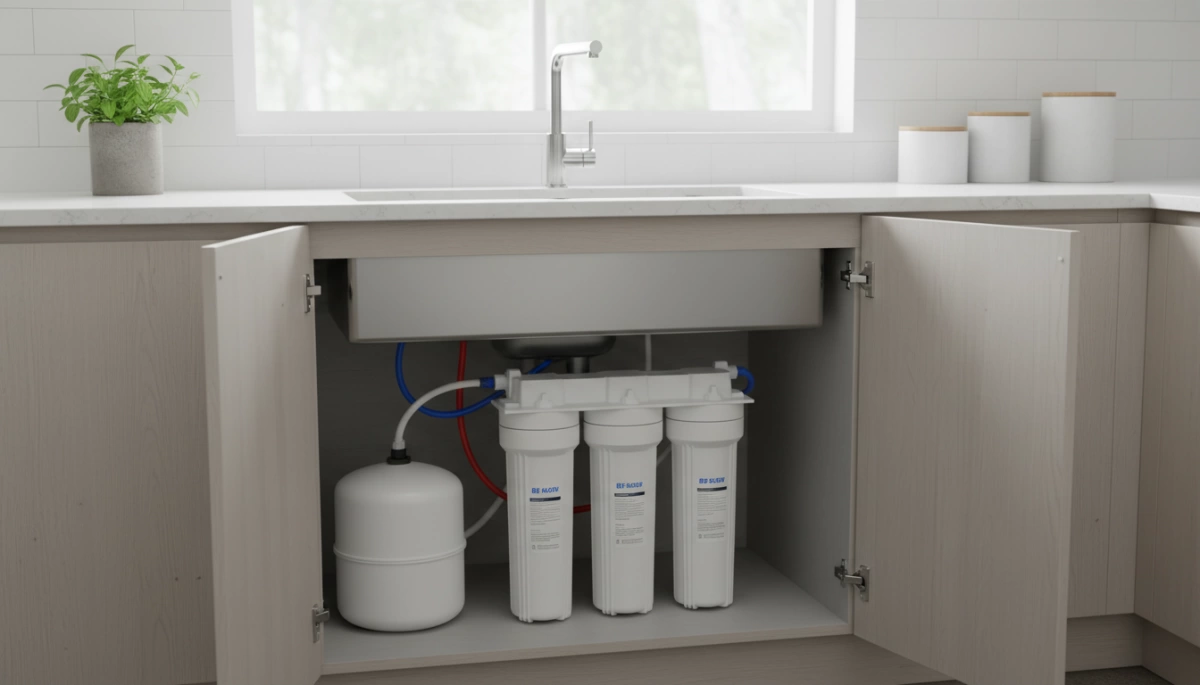
For years, the standard for reverse osmosis involved a bulky, pressurized storage tank that took up most of the cabinet space under the sink. While effective at filtration, these legacy systems come with significant frustrations. The primary issue is the “stale water” phenomenon; because the filtration process was slow, water had to sit in a rubber-lined tank for hours or even days before use. This stagnation creates a risk of secondary pollution, where bacteria can potentially grow inside the storage vessel. Furthermore, once you deplete the stored water, you are often stuck waiting quite a while for the tank to refill, making it impractical for families with high water consumption.
The Tankless Revolution: Space Saving and Freshness
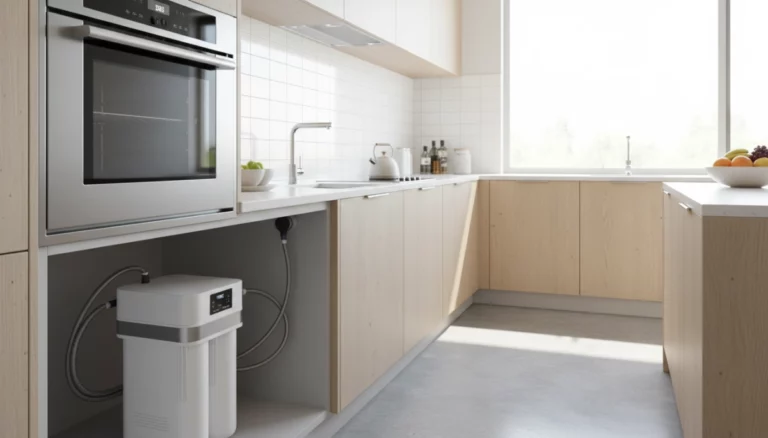
The industry has shifted decisively toward the tankless RO system, a design that addresses the hygiene and space limitations of older models. By eliminating the need for a storage tank, we can reduce the system’s footprint significantly, freeing up valuable under-sink real estate for cleaning supplies and other essentials. More importantly, going tankless means you get “fresh” water on demand. The system filters water the moment you turn on the faucet, ensuring that every drop is processed immediately through the membrane rather than sitting in a container. This direct-flow design guarantees that the water you drink meets the strict hygiene requirements of why 0.0001-micron filtration is the gold standard, preventing the flat taste associated with stored water.
Understanding GPD and High Flow Rates
The capability to go tankless relies entirely on the GPD flow rate (Gallons Per Day). Traditional systems typically operated at 50 to 75 GPD, a trickle that required a tank to buffer the supply. In contrast, modern high-efficiency units like the 600G and 800G models we develop are designed for speed. A rating of 800 GPD translates to a dispensing speed of roughly 2.1 liters per minute. This allows you to fill a cup in mere seconds, matching the convenience of standard tap water while delivering superior purity. High-flow technology ensures that you never have to wait for filtered water, making the transition to a tankless system a seamless upgrade for a busy modern kitchen.
Addressing Common Concerns: Waste and Maintenance
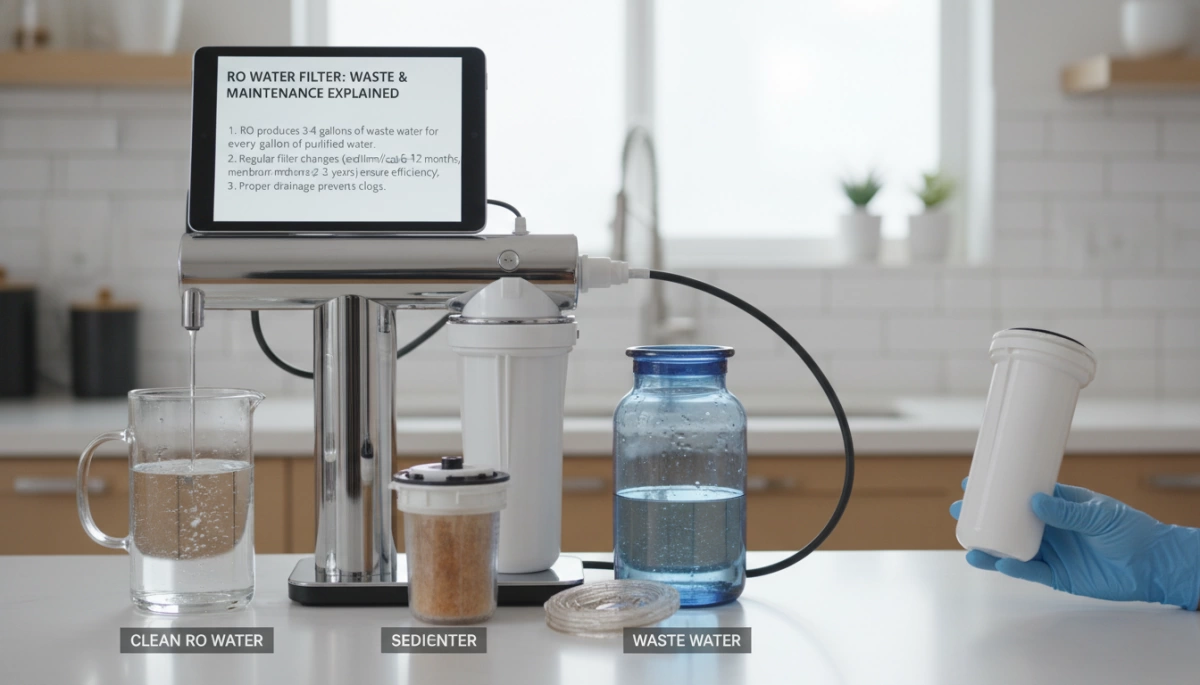
When homeowners ask “what is ro water filter” technology really going to cost them in terms of upkeep, the conversation usually turns to water waste and filter changes. In the past, Reverse Osmosis had a reputation for being wasteful and difficult to maintain. We have engineered our modern systems to solve these exact problems, making high-purity water both sustainable and user-friendly.
Busting the Water Waste Myth (Pure-to-Drain Ratio)
A major criticism of traditional RO setups was the high volume of wastewater, often dumping three or four gallons down the drain for every single gallon of drinking water produced. We tackled this inefficiency head-on with our tankless RO system designs.
By utilizing advanced internal pumps and a refined water circuit, we achieve a remarkable 2:1 pure-to-drain ratio. This means for every two cups of purified water you dispense, only one cup of wastewater is generated. This is a massive improvement over the industry average, ensuring you get the purity you need without the guilt of excessive waste. This efficiency is one of the major benefits of under-sink water purifier systems built for the modern eco-conscious home.
Filter Cartridge Lifespan and Replacement
Maintenance shouldn’t require a plumber or a toolbox. We designed our filtration units with a focus on convenience and longevity.
- Composite Technology: Instead of managing 5 or 6 separate canisters, we use composite filters (like a 5-in-1 unit) that combine stages. This extends the filter cartridge lifespan and simplifies inventory.
- 3-Second Swap: Our “twist-and-pull” design allows you to replace a filter in about three seconds. You simply twist the old one out and lock the new one in—no wrenches required.
- Cost-Effective: Because the pre-filters protect the expensive RO membrane, the core components last longer, reducing your long-term maintenance costs.
Smart Monitoring and Real-Time TDS Readings
Guesswork has no place in water safety. You need visible water quality verification to know your system is performing correctly. Our systems are equipped with smart sensors that provide Real-Time TDS Readings (Total Dissolved Solids) directly on the unit or a smart faucet.
- TDS Monitoring: You can see the purity level of your water instantly. If the number spikes, you know something needs attention.
- Filter Life Indicators: Smart LED lights change color to notify you exactly when a filter is nearing the end of its life.
This integration of technology ensures you are always drinking water that meets the 0.0001-micron standard, without having to manually track usage dates.
Buying Guide: Is an RO System Right for You?
Deciding to upgrade your home water supply is a big step toward better health. If you are still asking what is ro water filter technology going to do for my daily life, the answer lies in the balance between purity, convenience, and efficiency. We design our systems to meet the specific needs of modern American households, where water safety and kitchen space are both premium commodities.
Checklist for Homeowners: Water Quality and Space
Before investing in a filtration unit, run through this quick checklist to see if our technology aligns with your home environment:
- Water Quality Concerns: If your tap water has a high Total Dissolved Solids (TDS) reading, smells like chlorine, or if you are worried about invisible contaminants like PFAS and Fluoride removal, an RO system is the most effective solution. Standard filters just can’t hit that 0.0001-micron filtration standard.
- Kitchen Realities: Traditional RO units with massive storage tanks dominate under-sink cabinet space, often clashing with garbage disposals or cleaning supplies. We recommend a tankless RO system for compact kitchens. These units are sleek (often just 5-6 inches wide) and free up valuable room.
- Volume Needs: Consider how much water your family drinks. Our GPD flow rate (Gallons Per Day) options, such as 600G or 800G, ensure you get a cup of water in seconds, not minutes.
If you are ready to reclaim your cabinet space while upgrading your water quality, exploring our under-sink water filtration options is the best place to start.
Installation Realities and DIY Friendliness
Gone are the days when installing an RO system required a professional plumber and hours of labor. We have engineered our systems for the DIY homeowner.
- Integrated Waterways: We use advanced integrated water boards that reduce leakage points compared to the spaghetti-mess of tubing found in old systems.
- Twist-and-Pull Maintenance: Changing a filter should not require a wrench or shutting off the main water line for hours. Our filters feature a “twist-and-pull” design that lets you swap out a cartridge in about 3 seconds.
- Smart Faucets: Many of our units come with smart faucets that display real-time TDS readings, so you never have to guess if the installation was successful or if the water is pure.
FAQ: Common Questions About RO Ownership
Does RO remove healthy minerals?
Yes, the semi-permeable membrane is so effective it removes almost everything, including some minerals. However, we get the vast majority of our minerals from food, not water. For those who prefer the taste of mineral water, a remineralization filter stage can be added to restore beneficial calcium and magnesium.
Is the wastewater ratio wasteful?
Old systems wasted up to 4 gallons of water for every 1 gallon purified. We have optimized our wastewater ratio to an efficient 2:1 (2 cups of pure water for every 1 cup of drain water). This makes our systems environmentally friendly and lighter on your water bill.
How often do I change the filters?
Filter cartridge lifespan varies by usage and local water quality. Generally, the pre-filter (composite Sediment and Carbon Block) lasts 6–12 months, while the RO membrane lasts 12–24 months. Our systems feature smart indicators that turn from blue to red, telling you exactly when it is time to switch.