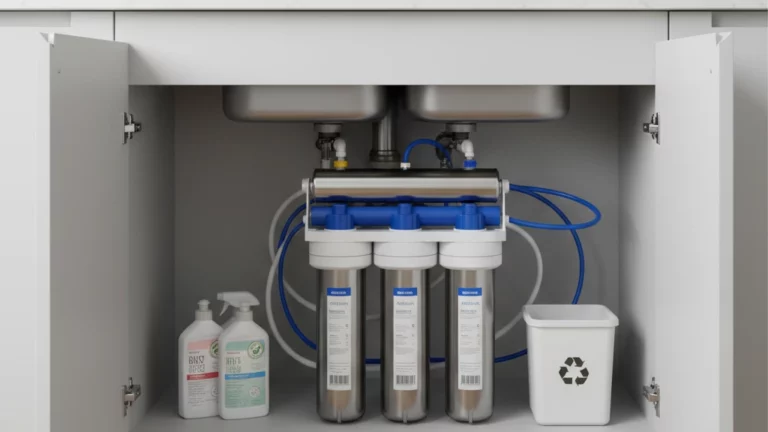


















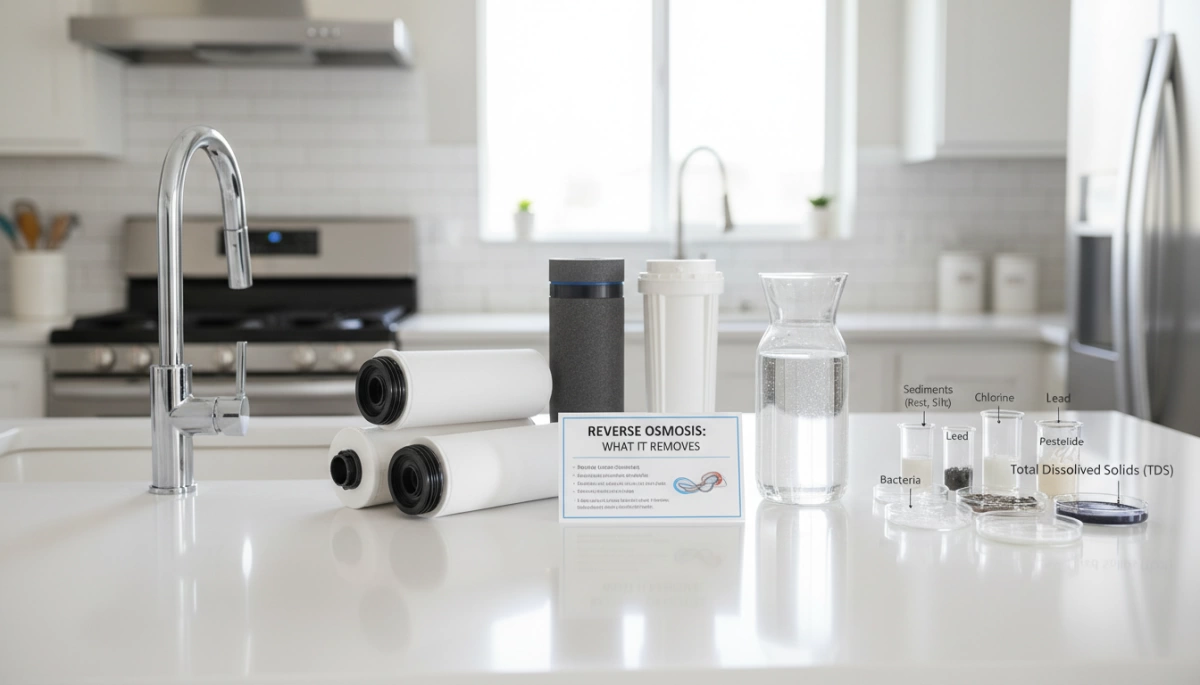
The Filtration Powerhouse: Understanding the 0.0001 Micron Barrier
At Driplife, we define water purity by precision. The core effectiveness of any reverse osmosis system lies in the 0.0001-micron semi-permeable membrane. To put this microscopic scale into perspective, consider that a single strand of human hair is approximately 75 microns wide. The pores in our RO membranes are roughly 750,000 times smaller than that hair. This creates a formidable barrier where even the smallest bacteria (typically 0.2 to 2 microns) and viruses are physically too large to pass through. It is not just filtration; it is molecular separation.
The Mechanism: Pressure-Driven Purification
Unlike standard carbon filters that rely on passive absorption, reverse osmosis is an active process. We utilize semi-permeable membrane technology that requires significant pressure to function. By applying force greater than the natural osmotic pressure, we push water molecules through the membrane while leaving dissolved salts, heavy metals, and organics behind. This process effectively splits the feed water into two streams:
- Permeate: The ultra-pure water that flows to your faucet.
- Concentrate: The wastewater carrying the rejected contaminants, which is flushed away.
Driplife Integration: High-Speed Flow in G6 and G2 Series
In the past, the density of an RO membrane meant slow filtration, requiring bulky storage tanks to accumulate water. We engineered the Driplife G6 and G2 series to overcome this limitation. By integrating high-efficiency internal pumps, our systems generate the immediate pressure needed to drive water through the membrane at a rate of 600 to 800 Gallons Per Day (GPD). This tankless design ensures you aren’t just getting filtered water; you are getting instant access to purification that fills a cup in just 6 to 8 seconds.
The Big Three Contaminants: Heavy Metals, Chemicals, and Pathogens
When customers ask us “what does a reverse osmosis water filter remove,” they are usually worried about the invisible threats lurking in their pipes. Our systems are engineered to target the most dangerous categories of impurities found in the US water supply, providing a defense line that standard carbon filters simply can’t match.
Heavy Metals: Eliminating Lead, Arsenic, Mercury, and Copper
Aging infrastructure across the country often leaches dangerous metals into household water. Our RO membranes utilize heavy metal sequestration to effectively strip away Lead, Arsenic, Mercury, and Copper. Because these metal ions are significantly larger than water molecules, they are trapped by the semi-permeable membrane and flushed down the drain, ensuring your family isn’t consuming cumulative toxins.
Volatile Chemicals: Removing PFAS, Chlorine, and Fluoride
Chemical runoff and municipal treatment byproducts are major concerns for modern households. We specifically target PFAS and forever chemicals removal, ensuring these persistent industrial toxins don’t end up in your body. Our composite filters also excel at Chlorine taste and odor removal, transforming harsh-smelling tap water into crisp, clean refreshment. Furthermore, our under-sink reverse osmosis filtration system is highly effective at Fluoride reduction in water, giving you control over what additives you consume.
Biological Contaminants: Blocking Bacteria, Viruses, and Cysts
Even treated city water can pick up pathogens if there is a break in the main line. The 0.0001-micron rating of our filters acts as an impenetrable physical barrier against Cryptosporidium and Giardia cysts, bacteria, and viruses. Since the pore size of our membrane is microscopic compared to these organisms, they are physically blocked from passing through to your faucet.
Beyond the Basics: Dissolved Solids and Aesthetic Improvers
Defining Total Dissolved Solids (TDS) and Water Hardness
While many filters catch the big stuff like dirt, Total Dissolved Solids (TDS) reduction is where reverse osmosis truly shines. TDS represents the combined total of organic and inorganic substances contained in a liquid, which includes minerals, salts, and metals dissolved in water. High TDS levels often indicate “hard water,” which leads to scale buildup in pipes and appliances.
Our RO membranes are engineered to tackle water hardness and limescale by stripping away the dissolved minerals that simple carbon filters leave behind. This process ensures that the water isn’t just clear, but chemically pure.
Common Dissolved Solids Removed:
- Inorganic Salts: Calcium, Magnesium, Potassium, Sodium, Bicarbonates, Chlorides, and Sulfates.
- Heavy Metals: Lead, Arsenic, and Mercury (often invisible to the naked eye).
- Organic Matter: Microscopic pollutants from agricultural runoff.
Smart Feature Tie-in: Real-Time Verification
We believe you shouldn’t have to guess about your water quality. That is why we integrated a Smart TDS monitoring faucet into our G6 and G2 series systems. This feature provides an instant, digital readout of your water’s purity levels every time you turn on the tap.
Unlike traditional systems that leave you wondering when the membrane is failing, our smart display gives you visible proof of filtration performance. You can verify the reduction of contaminants instantly, ensuring your family is always drinking safe water. For a deeper dive into modern filtration tech, explore the best under-sink RO system features that set high-performance units apart from standard models.
What Does RO Not Remove? (Addressing the Mineral Myth)
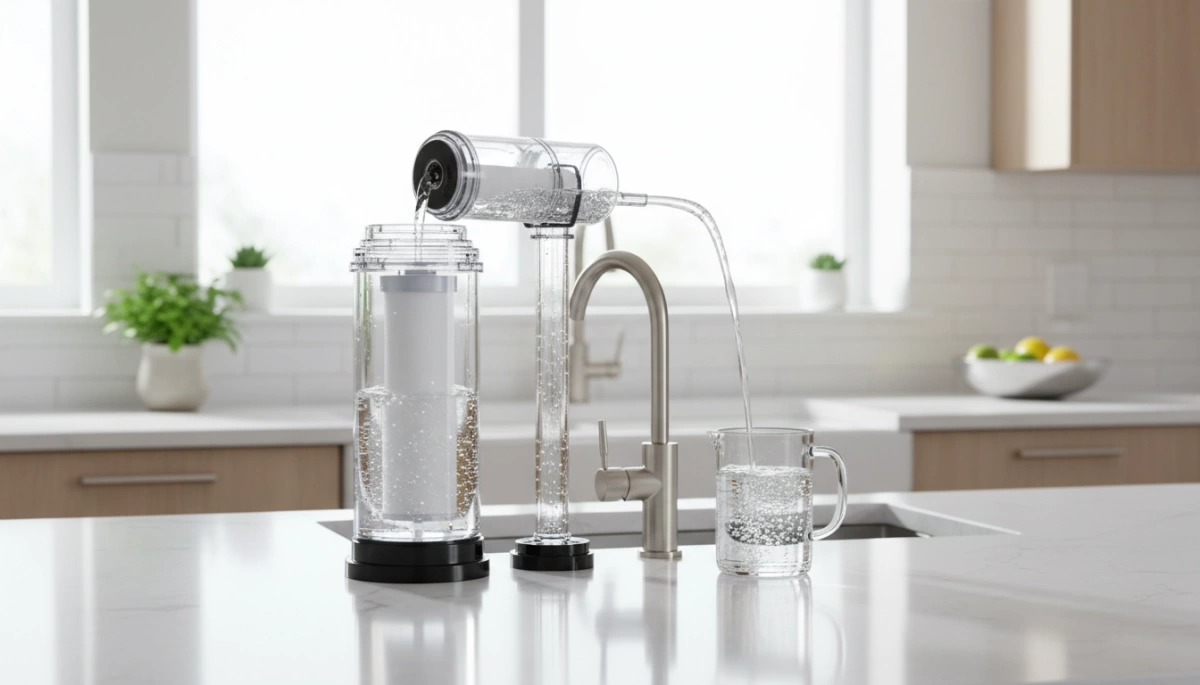
The Limitation: Why Beneficial Minerals Like Calcium Get Removed
When we analyze what does a reverse osmosis water filter remove, we have to be transparent: the process is non-discriminatory. The 0.0001-micron semi-permeable membrane is incredibly effective at stripping away harmful contaminants like lead and PFAS, but it also blocks beneficial minerals. While we utilize specific antiscaling technology in countertop filtration to manage hardness in other units, the RO membrane simply blocks these minerals entirely. Because dissolved minerals like calcium and magnesium have a molecular structure that the membrane filters out along with the toxins, the resulting water is ultra-pure but technically “empty.” This removal process can sometimes leave the water tasting slightly flat or acidic compared to natural spring water.
The Solution: Restoring Health with the Remineralization Alkaline Filter
We didn’t want to sacrifice taste for purity, which is why we integrated a solution to put the good stuff back in. After the filtration is complete, our systems utilize a remineralization alkaline filter. This stage reintroduces healthy amounts of calcium, magnesium, potassium, and sodium back into your glass.
Benefits of Remineralization:
- Balanced pH: Shifts acidic RO water to a healthy, alkaline state.
- Enhanced Taste: Eliminates the flat taste associated with pure RO water.
- Nutrient Restoration: Adds back the essential electrolytes your body appreciates.
By integrating this technology, we ensure you aren’t just drinking clean water, but water that supports your overall wellness.
Tankless vs. Traditional: Does Design Affect Contaminant Removal?
When we talk about water purity, the physical design of the system matters just as much as the filter media itself. Many homeowners don’t realize that secondary pollution is a major flaw in traditional reverse osmosis setups. Old-school systems rely on a bulky storage tank to hold filtered water. Over time, that stagnant water can become a breeding ground for bacteria and re-contamination, undoing the work of the membrane.
The Tankless Advantage: Fresh Filtration
We engineered the DripLife G6-800 and G2P600 models to eliminate this risk entirely. By removing the storage tank, we ensure that every drop of water is filtered at the exact moment you need it. This tankless RO system benefits your home by delivering fresh, oxygen-rich water immediately, preventing the “stale” taste and bacterial regrowth associated with storage tanks. Plus, the sleek design saves up to 70% of your under-sink space compared to traditional bulky units.
Efficiency of Composite Filtration
Instead of cluttering your cabinet with multiple separate canisters, our systems utilize advanced composite filters. These cartridges combine multiple layers of protection—including sediment removal, carbon block, and the RO membrane—into a single, efficient unit. This multi-stage process forces water through a 0.0001-micron barrier, effectively trapping contaminants without the complexity of maintaining older systems. With our “twist-and-pull” design, swapping these filters takes just three seconds, ensuring your water quality remains consistent without the hassle. While under-sink models provide high-volume capacity, those seeking portability often find that the top benefits of a countertop RO system also rely on similar compact, tank-free technology to maintain purity.
Checklist: What You Can Expect to Eliminate
When you ask what does a reverse osmosis water filter remove, the answer covers a vast spectrum of impurities that standard filters simply miss. At DripLife, we engineered our tankless systems to act as a comprehensive barrier against the invisible threats in your tap water. By utilizing 0.0001 micron filtration, we ensure that everything from large particles to microscopic ions is effectively stripped away.
Here is the breakdown of what our 5-in-1 composite filtration handles:
- Sediment and Physical Debris: We start by clearing out the visible junk. This includes rust, sand, dust, and even micro-plastics that travel through aging municipal pipes.
- Volatile Chemicals: Our carbon block stages specialize in adsorption, removing chlorine, benzene, herbicides, and pesticides. This is crucial for eliminating that harsh “pool water” taste and odor.
- Heavy Metals: Through heavy metal sequestration, our RO membrane targets dangerous elements like lead, mercury, and arsenic, which are significant health risks for families.
- Dissolved Solids: Finally, we tackle the hardest category—Total Dissolved Solids (TDS) reduction. This includes stripping out nitrates, sulfates, and achieving significant fluoride reduction in water.
For a deeper dive into the mechanics of how these layers interact, you can read about how a water purifier works to deliver that crisp, clean finish.
Frequently Asked Questions About RO Filtration
Does reverse osmosis remove good minerals from water?
Yes, standard reverse osmosis is non-discriminatory. Because the 0.0001 micron filtration barrier is so tight, it strips away virtually all Total Dissolved Solids (TDS), including beneficial minerals like calcium and magnesium. However, we don’t leave you with “dead” water. Our systems are compatible with a remineralization alkaline filter, which restores these healthy minerals after the purification process. This ensures you get the purity of RO water with the taste and health benefits of mineral water.
Can RO systems remove bacteria and viruses effectively?
Absolutely. The semi-permeable membrane we use has a pore size of 0.0001 microns. To put that in perspective, bacteria are generally 0.2 to 1 micron, and viruses are roughly 0.02 to 0.4 microns. They are simply too large to pass through the membrane. This physical barrier provides robust pathogen and cyst interception, effectively blocking biological contaminants like Cryptosporidium and Giardia from entering your glass.
Is a tankless system better for contaminant removal?
While the membrane technology is similar, the tankless RO system benefits lie in preventing re-contamination. Traditional systems store filtered water in a tank for hours, creating a risk of secondary pollution where bacteria can regrow. Understanding why tankless is the competitive edge against big box retailers helps clarify this: by eliminating the storage tank, we eliminate the breeding ground for stagnant water issues. With our G6 and G2 series, you get fresh filtration the moment you turn on the tap.