
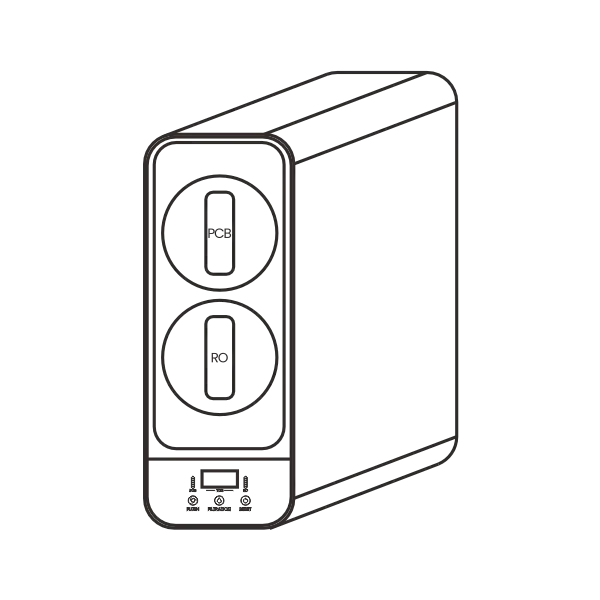

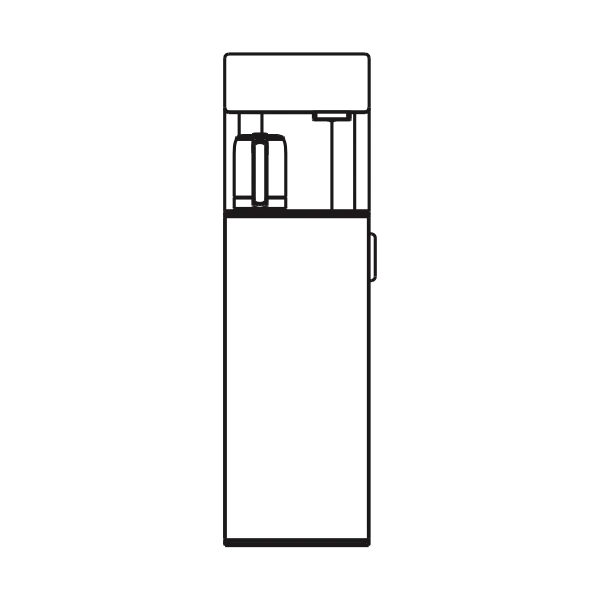













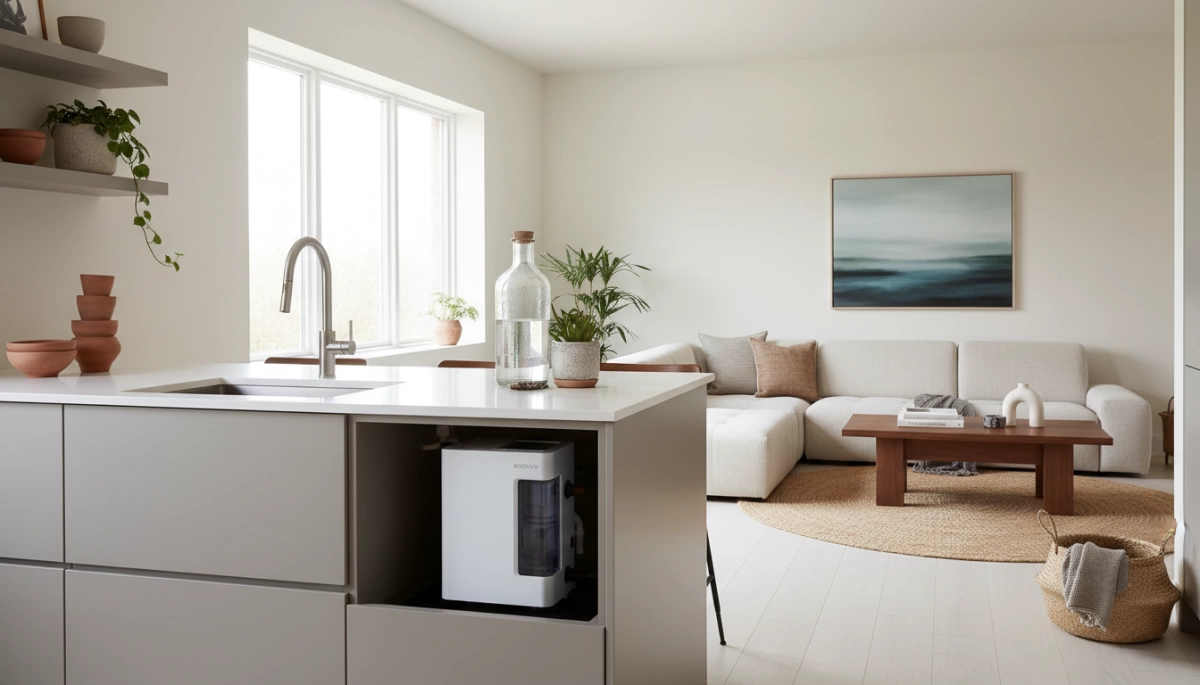
How Reverse Osmosis Works for Home Use
I’ve seen firsthand how much a high-quality home reverse osmosis water filter can transform a household’s health. While basic filters rely on gravity, an RO system uses household water pressure to push tap water through a semi-permeable membrane. This process strips away up to 99% of dissolved solids, leaving you with bottled-quality water right from your tap.
RO Filtration Stages: A Step-by-Step Breakdown
To achieve maximum purity, the best home water purifier typically utilizes a multi-stage process. Modern designs, especially a tankless reverse osmosis unit, streamline these steps for better efficiency and hygiene.
| Stage | Component | Function |
|---|---|---|
| Stage 1 | Sediment Pre-filter | Removes dust, rust, and large particles. |
| Stage 2 | Carbon Pre-filter | Eliminates chlorine, odors, and VOCs. |
| Stage 3 | RO Membrane | The core stage that filters lead, arsenic, and PFAS. |
| Stage 4 | Post-Carbon Filter | Polishes the water for a crisp, clean taste. |
| Stage 5 | Remineralization Filter | Adds back essential minerals and balances pH. |
Why RO is the Gold Standard
If you are currently using a carbon pitcher or a faucet mount, you are only scratching the surface of water filtration. While those methods improve taste by removing chlorine, they often leave behind heavy metals, fluoride, and nitrates. An under-sink RO system provides a much deeper level of protection.
- Precision: RO membranes filter down to 0.0001 microns.
- Consistency: Unlike pitchers that slow down as they clog, a high flow RO system provides a steady stream of purified water.
- Total Protection: It is the only residential technology effectively rated for significant PFAS removal.
Busting Common RO Myths
I often hear concerns that RO water is “dead water” or “too acidic” for daily consumption. It is true that the RO filtration stages remove almost everything, including some beneficial minerals. However, this is easily solved with a remineralization filter.
By adding a final stage that reintroduces calcium and magnesium, we create alkaline RO water that tastes better and supports your body’s mineral needs. This ensures your water is exceptionally pure without being “too hungry” or stripping minerals from your system.
Key Benefits of a Home Reverse Osmosis Water Filter
I believe every household deserves access to pristine water without the guesswork. Installing a home reverse osmosis water filter is the single most effective way to secure your family’s health and upgrade your daily lifestyle. From my experience, the peace of mind you get knowing your tap is safe is worth the investment alone.
Unmatched Health Protection
Standard filters often miss the “forever chemicals” and heavy metals that plague modern infrastructure. My RO systems provide high-performance PFAS removal, stripping away lead, arsenic, and bacteria that basic pitchers leave behind. If you are concerned about local water quality, using a dedicated water filter to remove PFAS ensures your drinking water meets the highest safety standards.
Better Taste for Everything You Brew
When you remove chlorine and dissolved solids, the flavor profile of your drinks changes instantly.
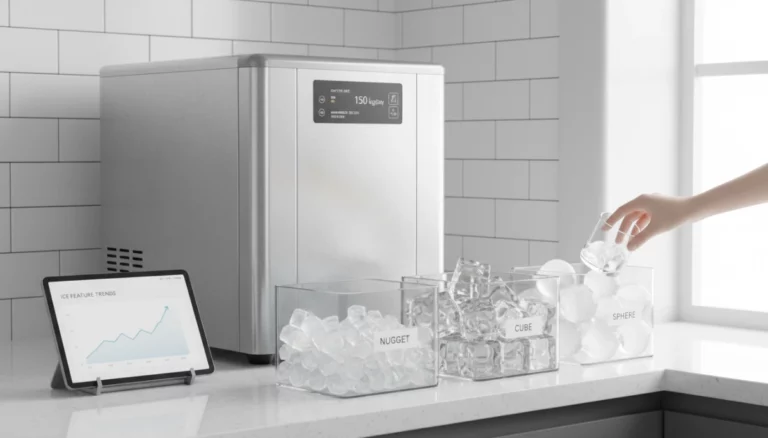
- Clearer Ice: No more cloudy, chemical-tasting cubes.
- Superior Coffee & Tea: Extract the true flavor of your beans and leaves, not the tap water chemicals.
- Crisp Drinking Water: Pure hydration that tastes better than expensive bottled brands.
Environmental and Financial Savings
Stop paying for plastic. A multi-stage RO system pays for itself quickly by eliminating the need for bulky bottled water cases. You’ll significantly reduce your carbon footprint while saving hundreds of dollars every year.
Reliable for Any Water Source
Whether you are on municipal city water dealing with heavy chlorination or private well water fighting high mineral content and sediment, RO technology is versatile enough to handle it all.
| Benefit Category | Impact on Your Home |
|---|---|
| Contaminant Removal | Filters out 99% of Lead, PFAS, and Chromium-6. |
| Eco-Friendly | Replaces up to 3,000 single-use plastic bottles per year. |
| Cost Efficiency | High-flow RO reduces the cost per gallon to mere pennies. |
| Maintenance | Simple annual filter swaps keep the system at peak performance. |
Popular Types of Home Reverse Osmosis Systems
When selecting a home reverse osmosis water filter, the first decision is where it fits into your kitchen layout. We’ve seen a massive shift in the US market toward designs that don’t just clean water but actually save space and improve convenience.
Under-Sink vs. Countertop Models
The choice between an under sink RO system and a countertop RO water filter usually comes down to your living situation and your plumbing skills.
| Feature | Under-Sink RO System | Countertop RO Water Filter |
|---|---|---|
| Installation | Permanent plumbing connection | Plug-and-play (No tools needed) |
| Space | Hidden out of sight | Occupies counter space |
| Output | High capacity for heavy use | Best for light to medium use |
| Best For | Homeowners & large families | Renters, apartments, & offices |
The Evolution of Tankless Reverse Osmosis
The biggest innovation in recent years is tankless reverse osmosis technology. Traditional systems rely on a 3-gallon storage tank that can take up your entire cabinet. Our tankless designs solve this by using high-performance pumps to provide instant water flow directly to your faucet.
- Better Hygiene: Since there is no storage tank, there is zero risk of secondary bacterial growth or “stale” water.
- Space Efficiency: These units are slim—often only 5 inches wide—freeing up nearly 70% more space under your sink.
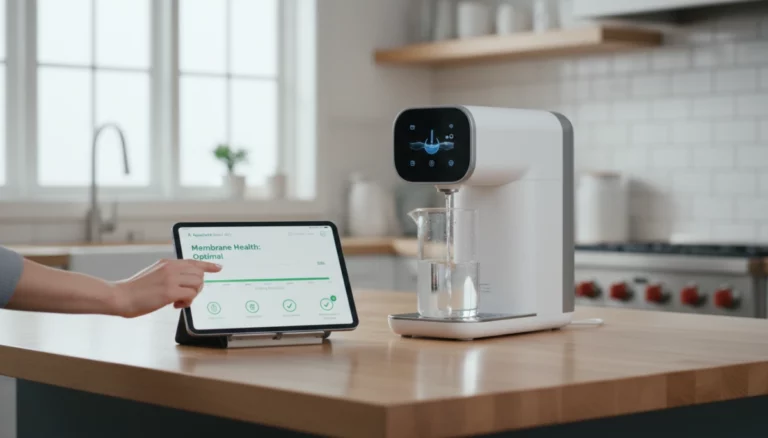
- Real-Time Monitoring: Many of our tankless models integrate smart tap benefits such as LED rings that change color when it’s time for a filter replacement.
High-Flow RO and All-in-One Solutions
For large American households, a standard filter isn’t enough. We specialize in high flow RO systems with gallons per day (GPD) ratings ranging from 600 GPD to 2000 GPD. A higher GPD means a faster fill rate, allowing you to fill a large pot for pasta in seconds rather than minutes.
We have also pioneered 4-in-1 units that act as the command center for your kitchen. These systems combine the best home water purifier technology with dedicated dispensers for:
- Boiling Hot Water: Instant tea, coffee, or oatmeal.
- Crisp Chilled Water: No more keeping bulky pitchers in the fridge.
- Crystal Clear Ice: Connects directly to your refrigerator’s ice maker to ensure your ice is free of chlorine and heavy metals.
- Pre-Filtration: These units often utilize advanced charcoal filter technology to protect the RO membrane and significantly improve the flavor profile of your drinking water.
Key Features of a High-Performance Home Reverse Osmosis Water Filter
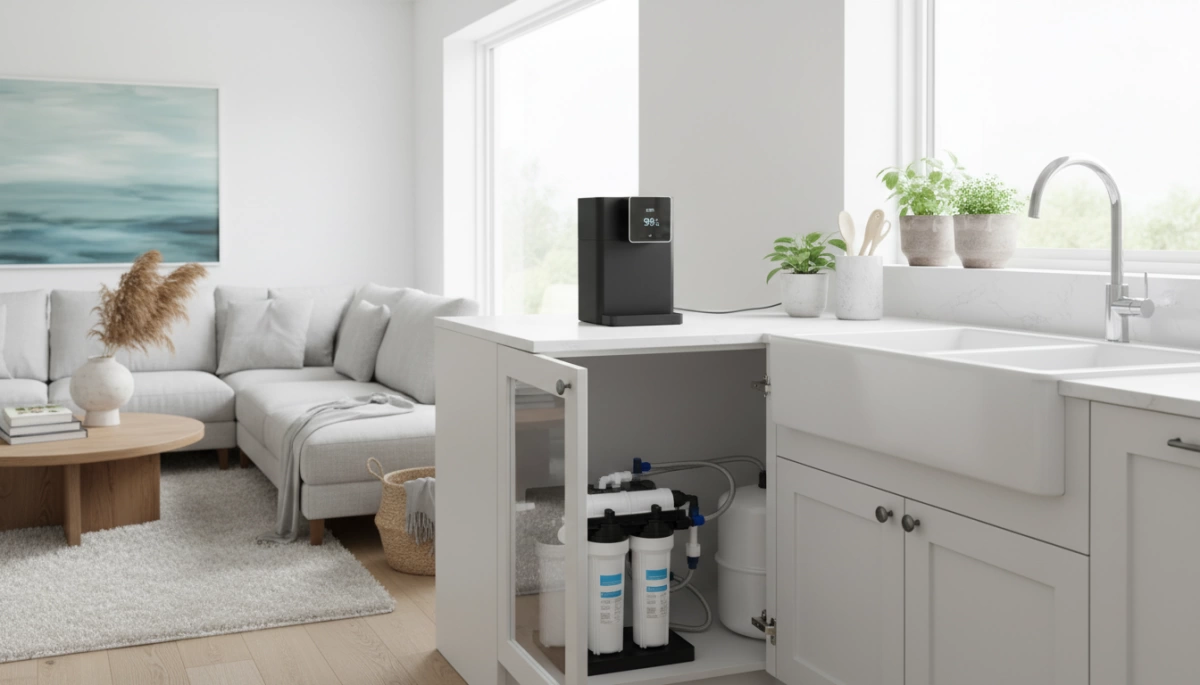
When choosing a home reverse osmosis water filter, you need to look at more than just the price tag. I’ve found that the best systems balance efficiency with high-quality output. Understanding the benefits of under-sink water purifier systems helps you see how these advanced features integrate directly into your modern kitchen setup.
Optimal Filtration Stages
A quality multi-stage RO system typically features 5 to 8 stages. While basic filters stop at 3, a 5-stage setup is the sweet spot for most American homes.
- Pre-filters: Catch sand, rust, and chlorine.
- RO Membrane: The heart of the system that blocks heavy metals and PFAS.
- Post-filters: Usually carbon-based to polish the taste.
- Remineralization: Adds back essential minerals for a balanced pH.
Decoding GPD and Flow Rates
The GPD (Gallons Per Day) rating tells you how fast the system produces water. For a family of four, I recommend at least a 600G or 800G unit to ensure instant water flow without the wait.
| Household Size | Recommended GPD | System Type |
|---|---|---|
| 1-2 People | 400G | Compact / Tankless |
| 3-5 People | 600G – 800G | High flow RO |
| Large Families | 1000G+ | Heavy-duty / Commercial grade |
Efficiency and Waste Ratio
Older systems were notorious for wasting water, sometimes at a 4:1 ratio. Modern, high-efficiency models prioritize a water waste ratio of 1:1 or 2:1. This improved recovery rate saves money on your utility bill and is much better for the environment.
Remineralization and Advanced Tech
Because RO is so effective, it can strip away everything. A remineralization filter is essential if you want alkaline RO water that tastes crisp and provides calcium and magnesium. Beyond the water itself, look for these “smart” features that make maintenance a breeze:
- Smart LED Display: Real-time TDS (Total Dissolved Solids) monitoring.
- UV Disinfection: An extra layer of protection against bacteria and viruses.
- Leak Protection: Built-in sensors that shut off the water if a drip is detected.
- IOT Monitoring: Connect the system to your phone to track filter life.
Top Considerations Before Buying a Home Reverse Osmosis Water Filter
Before you invest in a home reverse osmosis water filter, you need to look beyond the sleek design. I always tell my customers that the right choice depends entirely on your specific home environment and water chemistry. Buying a system without a plan usually leads to higher RO maintenance costs or a setup that doesn’t fit your lifestyle.
Test Your Water Source First
In the United States, water quality varies drastically from one city to the next. Before shopping, use a home test kit or check your local water report for specific contaminants like lead, nitrates, or high TDS (Total Dissolved Solids).
- City Water: Focus on chlorine and PFAS removal RO capabilities.
- Well Water: You may need a system with a UV stage to handle potential bacteria or iron.
- Targeting Contaminants: Ensure the system you choose is specifically rated to handle the “bad actors” found in your local pipes.
Installation and Long-Term Maintenance
I design my systems to be as DIY-friendly as possible, but you should evaluate your own comfort level with basic plumbing. Most modern under-sink RO system options use quick-connect fittings that click into place like Lego blocks, but you still need to account for the following:
- DIY vs. Pro: If you aren’t comfortable drilling a hole for the lead-free faucet, factor in the cost of a professional plumber.
- Filter Replacement Schedule: Calculate the cost of filters over a three-year period. Some systems use proprietary “twist-and-pull” filters that are easier to change but might cost more than standard canisters.
- Water Waste Ratio: Prioritize high-efficiency models with a 1:1 or 2:1 ratio to keep your monthly water bill low.
Look for Certified Performance
Don’t take a manufacturer’s word for it. Verification is everything in water filtration. I recommend looking for the NSF/ANSI 58 certification or WQA Gold Seals. These aren’t just stickers; they prove the unit has undergone rigorous testing for material safety and contaminant rejection rates. Choosing an NSF certified RO ensures that the system actually does what the box says it does.
Space Requirements and Noise Levels
Under-sink real estate is valuable. If you have a crowded cabinet, a tankless reverse osmosis unit is a game-changer, freeing up nearly 70% more space compared to traditional bulky tanks.
- Dimensions: Measure your cabinet height and depth before ordering, especially for high-flow units.
- Operating Noise: High-capacity systems often use internal pumps. Look for models with “whisper-quiet” technology or vibration-dampening pads to ensure your kitchen remains a peaceful environment.
- System Capacity: Choose a GPD (Gallons Per Day) rating that matches your family size. A 600 GPD system is perfect for a standard family, while a 1000 GPD unit is better for heavy cooking and ice-making needs.
Driplife Advanced Home Reverse Osmosis Water Filter Solutions
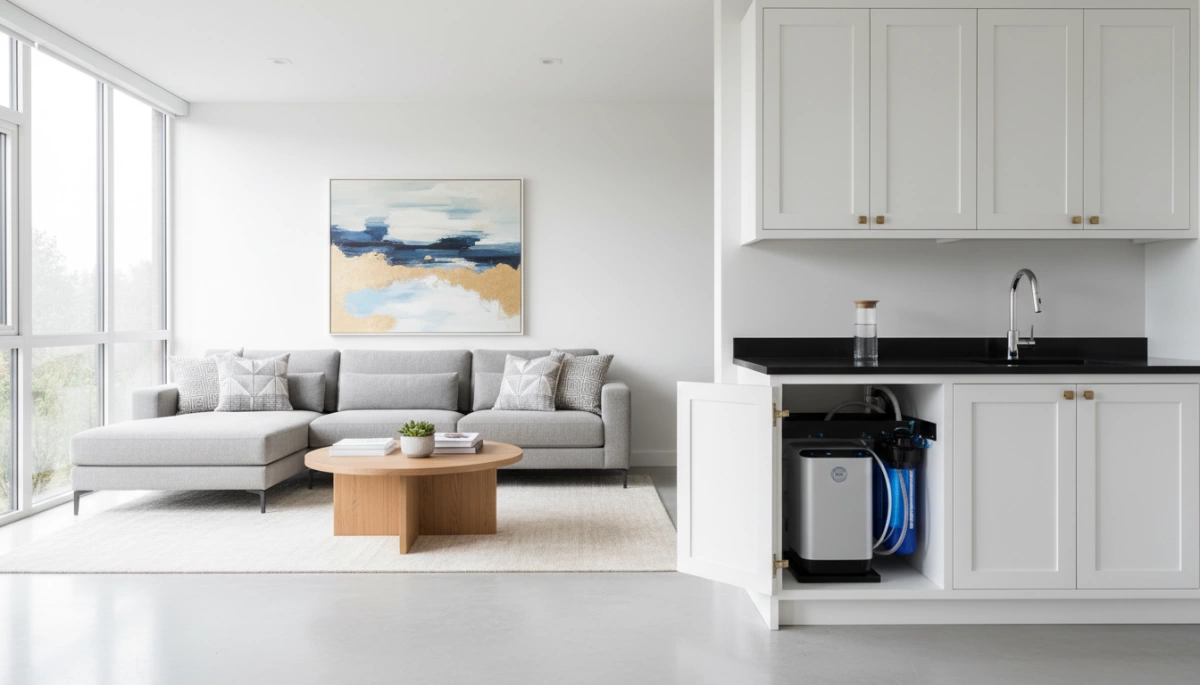
At Driplife, we’ve spent over 15 years perfecting the home reverse osmosis water filter. Our journey in R&D has been driven by a single goal: providing American households with the most reliable, high-performance purification technology on the market. We don’t just assemble parts; we engineer solutions that tackle the specific water quality challenges found across the United States, from heavy metal contamination to emerging “forever chemicals.”
High-Flow Under Sink RO System Technology
Our flagship under sink RO system lineup is designed for busy kitchens that can’t afford to wait. While standard systems struggle with slow trickles, our high-capacity units deliver an instant water flow that keeps up with large families and heavy cooking needs.
- 2000 GPD Powerhouse: Our top-tier systems reach up to 2000 GPD (Gallons Per Day), providing a virtually limitless supply of purified water.
- Tankless Design: By eliminating the bulky storage tank, we’ve solved the problem of secondary re-contamination and saved 70% of your cabinet space.
- High Recovery Rate: Our advanced membrane technology ensures a superior water waste ratio, often hitting 2:1 or even 3:1, making them some of the most efficient models available.
Countertop RO Water Filter Versatility
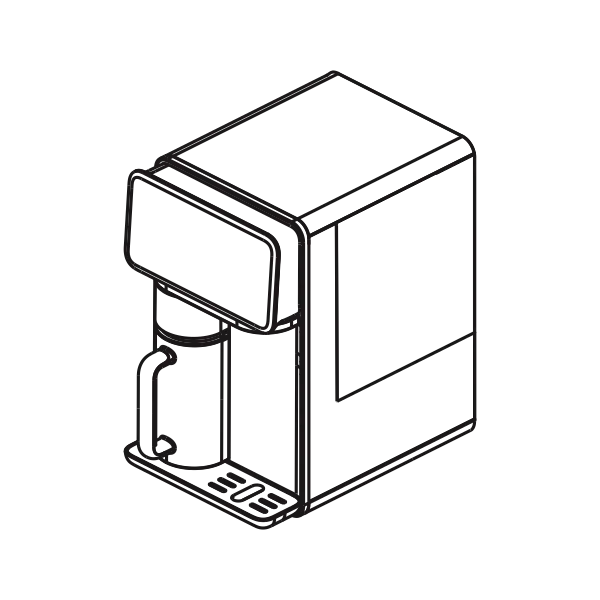
For renters or those with limited plumbing access, our countertop RO water filter units offer the same professional-grade filtration in a plug-and-play format. These multi-functional machines are perfect for modern kitchens, combining multi-stage RO system precision with instant heating or cooling capabilities. Our specialized under-counter water filter and countertop designs utilize composite filter technology to maximize lifespan while maintaining a sleek, minimalist aesthetic.
Manufacturing Excellence and Innovation
Every product we release undergoes strict quality testing to meet and exceed NSF/ANSI standard 58 requirements. We focus on the features that matter most to US homeowners:
| Feature | Driplife Advantage |
|---|---|
| Recovery Rate | Industry-leading efficiency with minimal wastewater. |
| Filtration | Effective PFAS removal RO and heavy metal rejection. |
| Build Quality | BPA-free materials and lead-free faucet components. |
| Smart Tech | Smart LED display for real-time TDS monitoring and filter life tracking. |
| Safety | Integrated leak protection and whisper-quiet operation. |
By prioritizing tankless reverse osmosis innovation, we’ve created a best home water purifier range that fits the fast-paced American lifestyle. Whether it’s a high-flow unit for a large suburban home or a compact system for an urban apartment, our focus remains on purity, efficiency, and long-term reliability.
Simple RO Installation Guide
Setting up a home reverse osmosis water filter is a straightforward weekend project. Most of our systems feature quick-connect fittings that eliminate the need for complex plumbing or professional help.
- Positioning: Choose a clear spot under the sink or on the countertop near your cold water supply.
- Water Connection: Use the included adapter to tap into your cold water line. Ensure the connection is tight to prevent leaks.
- Faucet Setup: Install the dedicated filtered water tap through the existing sink hole or drill a new one for a clean, professional look.
- Drain Connection: Attach the drain saddle to the sink’s drain pipe to handle the wastewater byproduct efficiently.
- System Flush: Always run the water for 15–20 minutes before first use to clear any manufacturing dust or carbon fines from the filters.
Maintenance and Filter Change Schedule
To keep your system running at peak efficiency and maintain high gallons per day RO output, following a strict replacement schedule is non-negotiable.
| Filter Type | Replacement Frequency | Why It Matters |
|---|---|---|
| Sediment & Carbon Pre-filters | 6 – 12 Months | Protects the RO membrane from chlorine and large debris. |
| RO Membrane | 2 – 3 Years | The core of the system; ensures the highest rejection rate. |
| Post-Carbon / Remineralization | 12 Months | Polishes the taste and adds healthy minerals back into the water. |
Troubleshooting Common RO Issues
Even the best under sink RO system might need a quick adjustment. Here is how to handle the most common hiccups and keep your RO maintenance costs low:
- Low Water Flow: Usually caused by clogged pre-filters or low incoming water pressure. If you have a tankless model, check for a kinked supply line.
- Constant Draining: This often indicates a faulty shut-off valve or that the water pressure is too low for the membrane to trigger the “off” switch.
- Vibrations or Noise: Ensure the unit is mounted securely. Whisper-quiet operation is standard, so any loud humming usually means air is trapped in the lines.
- Bad Taste or Odor: This is a clear sign that your carbon filters or remineralization stage have reached the end of their lifespan and need an immediate swap.
Staying on top of these small tasks ensures your best home water purifier continues to deliver bottled-quality water for years to frame.
FAQ: Common Home Reverse Osmosis Water Filter Questions
I get these questions all the time from homeowners looking to upgrade their tap water. Here are the straight answers on how a home reverse osmosis water filter actually works in a real American household.
How much water does an RO system waste?
Older systems were pretty inefficient, but modern engineering has fixed that. Our tankless reverse osmosis units feature an optimized water waste ratio, typically 1:1 or 2:1. This means for every gallon of purified water produced, only one gallon is discharged. This is a massive leap forward compared to traditional systems that used to waste four or five gallons for every one produced.
Is a remineralization filter necessary?
Because RO is the best home water purifier for removing 99% of contaminants, it also takes out natural minerals. This can make the water taste “flat” or slightly acidic. A remineralization filter is highly recommended because it:
- Restores essential minerals like calcium and magnesium.
- Balances the pH to create crisp alkaline RO water.
- Improves the overall flavor profile for coffee and tea.
- Helps you understand the still water vs. tap water key differences regarding mineral content and health.
Can I install an RO system if I am renting?
Yes, you have two great options. A countertop RO water filter is perfect for renters because it requires zero plumbing changes and sits right on your desk or counter. If you prefer an under sink RO system, our DIY-friendly kits can be installed and later uninstalled without leaving permanent damage to the cabinetry or plumbing, making it easy to take your investment to your next home.
How do I connect the system to my refrigerator?
Connecting your high flow RO system to an ice maker or fridge dispenser is a standard setup. You simply need a 1/4″ fridge connection kit to split the purified water line. This ensures that your ice cubes are crystal clear and free of the “cloudiness” caused by heavy metals and hard water minerals.
What are the expected maintenance costs?
Keeping your system at peak performance is straightforward. While the RO filtration stages vary, you can generally expect:
- Pre-filters: Replace every 6–12 months.
- RO Membrane: Replace every 2–3 years depending on your gallons per day RO usage.
- Post-filters/Remineralization: Replace annually.
- Smart LED displays: Most of our units include IOT monitoring to tell you exactly when a change is due.