

















What Is Activated Charcoal in Water Filtration?
If you’re worried about what’s actually in your tap water, activated charcoal (activated carbon) water filters are usually the first real upgrade people make at home—and for good reason.
Simple Definition
Activated charcoal for water filtration is:
- A highly processed form of carbon
- Ground into fine particles or blocks
- Engineered with millions of tiny pores that grab and hold contaminants from water
You’ll see it listed on packaging as “activated carbon” or “GAC / carbon block” in most home water purifier charcoal systems.
How Activation Creates a Porous Carbon Structure
Manufacturers take raw carbon materials like:
- Coconut shells
- Coal
- Wood
Then they “activate” them by:
- Heating them to very high temperatures
- Using steam or chemicals to open up internal pores
This turns normal carbon into a porous carbon structure with:
- Huge surface area (up to 1,000–2,000 m² per gram)
- Micropores that trap chemicals, chlorine, and organic compounds
Key point: More pores = more places for contaminants to stick = better filtration.
Activated Charcoal vs Regular Charcoal
| Feature | Regular Charcoal | Activated Charcoal (Activated Carbon) |
|---|---|---|
| Purpose | Fuel, grilling, heating | Water & air filtration, purification |
| Porosity | Low | Extremely high, microporous |
| Surface Area | Limited | Massive (up to thousands of m² per gram) |
| Filtration Performance | Poor | Engineered for adsorption of contaminants |
| Safe for Water Filtration? | No | Yes, when NSF-certified for drinking water |
Regular charcoal is for cooking.
Activated carbon is for water treatment and filtration.
Why Activated Carbon Is Used in Home Water Filters
In the U.S. market, activated charcoal water filters are everywhere—pitchers, faucet filters, under-sink systems, and whole-house units—because they:
- Remove chlorine that causes that pool-like taste and smell
- Reduce chemicals and VOCs (volatile organic compounds)
- Improve taste and odor without stripping beneficial minerals
- Work well as a point-of-use water filter at the kitchen sink
- Are affordable, low-maintenance, and eco-friendly compared with bottled water
When I design or select a kitchen sink water filter system for homeowners, activated carbon filtration is almost always the core layer. It’s the most practical balance of performance, taste improvement, and cost for everyday drinking water in American homes.
How Does Charcoal Filter Water?
Charcoal (activated carbon) doesn’t work like a sponge that “soaks” things up. It works through adsorption, not absorption.
- Absorption = something gets soaked into a material (like water in a sponge).
- Adsorption = contaminants stick to the surface of the carbon, like dust sticking to tape.
Adsorption: How Contaminants Stick
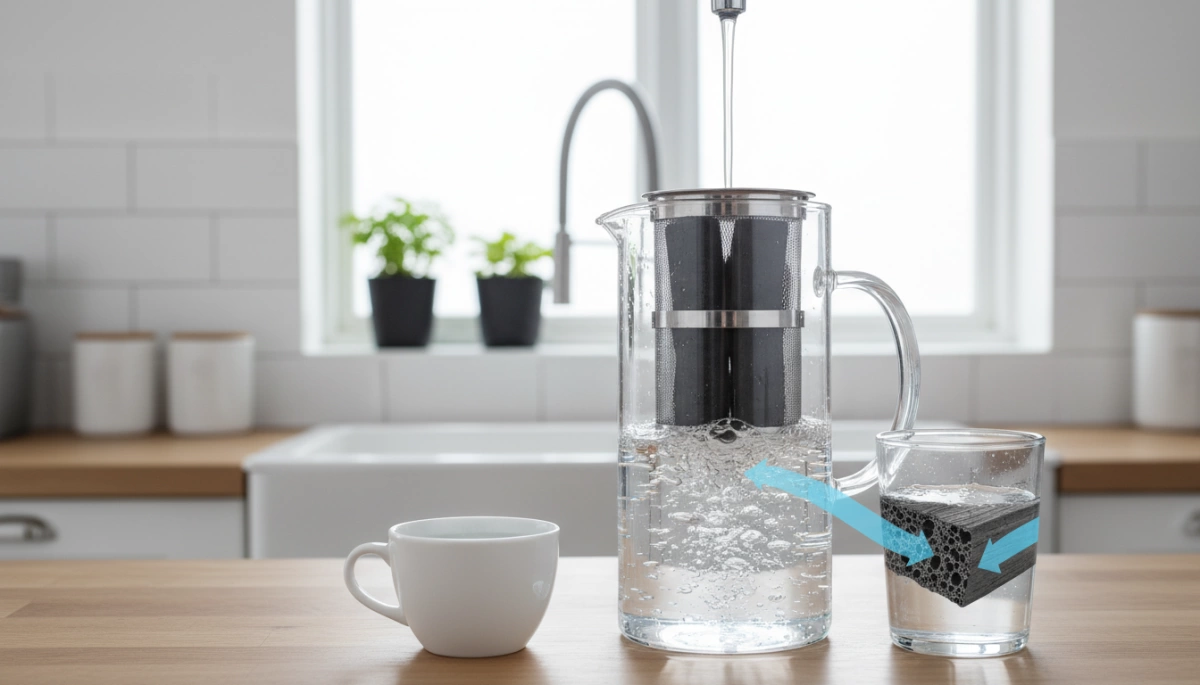
An activated charcoal water filter has a highly porous carbon structure with millions of tiny micropores. When water flows through:
- Organic chemicals, chlorine, chloramine, VOCs, and other contaminants are attracted to the carbon surface.
- These molecules bond to the carbon through weak electrical forces and chemical interactions.
- The cleaner water continues through the filter and out to your tap.
This adsorption process in water treatment is why activated carbon is so effective for taste and odor issues.
Micropores and Massive Surface Area
The real magic is the surface area:
- Just 1 gram of activated carbon can have hundreds of square meters of surface area.
- Micropores trap and hold tiny contaminant molecules as water passes through.
- More surface area = more space for contaminants to stick = better filtration performance.
This is why granular activated carbon and carbon block filters are used in most home water purifiers.
Step-by-Step: How Charcoal Purifies Water
Here’s the basic flow inside a charcoal water filter:
- Water enters the filter housing (pitcher, faucet-mounted, or under-sink carbon filter).
- Sediment and larger particles may be caught first (if there’s a sediment pre-filter).
- Water moves through the activated carbon media (GAC or carbon block).
- Chlorine, chloramine, VOCs, and organic chemicals are adsorbed onto the porous carbon surface.
- Filtered water exits with cleaner taste, fewer chemical odors, and improved clarity.
For example, many faucet and under-sink systems use this setup to remove chlorine from water and improve everyday drinking and cooking water at the kitchen sink. If you’re considering a faucet-style system, it’s the same basic tech used in dedicated faucet filtration systems for home kitchens.
Why Charcoal Improves Taste but Keeps Minerals
Charcoal filters are excellent for taste and odor, but they don’t strip your water like reverse osmosis:
- They target chemicals like chlorine, chloramine, and many organic compounds.
- They do not significantly remove dissolved minerals like calcium, magnesium, and potassium.
- That means your water still keeps a natural mineral taste and decent TDS levels, while losing the pool-like chlorine smell.
This balance—better taste, fewer chemicals, and natural minerals left in—is why an activated charcoal water filter is one of the most popular and practical options for households across the U.S.
Types of Charcoal Water Filters (and Where They’re Used)
When people ask how does charcoal filter water, they’re usually talking about one of these main activated carbon designs:
Granular Activated Carbon (GAC) Filters
Granular activated carbon (GAC) uses loose carbon granules inside a cartridge or housing.
Why GAC works well at home:
- Faster flow rate – Water moves easily through the loose media, so pressure drop is low.
- Great for taste and odor – Very effective at removing chlorine and improving basic tap water taste.
- Common formats – You’ll see GAC in pitcher filters, faucet-mounted filters, and basic under-sink carbon cartridges.
GAC is a simple, affordable way to get into activated carbon filtration if you mainly care about better taste and smell from city tap water.
Carbon Block Filters
Carbon block filters compress activated carbon powder into a dense “block.”
Why carbon block filters are popular under the sink:
- Longer contact time – Water is forced through a tighter structure, which improves removal of chlorine, VOCs, and many organic chemicals.
- Finer filtration – Smaller pores can catch finer particles compared to standard GAC.
- Ideal for under-sink and whole-house systems – They’re the core of many kitchen sink water filter systems and point-of-use drinking water setups.
If you’re serious about daily drinking water at the tap, you’ll typically find a carbon block under-sink filter built into a multi-stage system, often paired with sediment pre-filters.
Catalytic Carbon Filters
Catalytic carbon is an upgraded form of activated carbon treated to improve chemical reactions on the surface.
Best for tougher city water issues like:
- Chloramine (a chlorine + ammonia disinfectant many U.S. utilities now use)
- Certain industrial chemicals and more stubborn organic compounds
You’ll usually find catalytic carbon in whole-house or advanced under-sink systems, especially where chloramine removal is a must or where you’re stepping up from a basic pitcher or faucet filter.
Filter Formats: Pitcher, Faucet, and Under-Sink
Charcoal (activated carbon) filters show up in a few common formats, each with its own sweet spot:
- Pitcher charcoal filters – Low cost, no installation, good for renters and dorms. Mostly GAC.
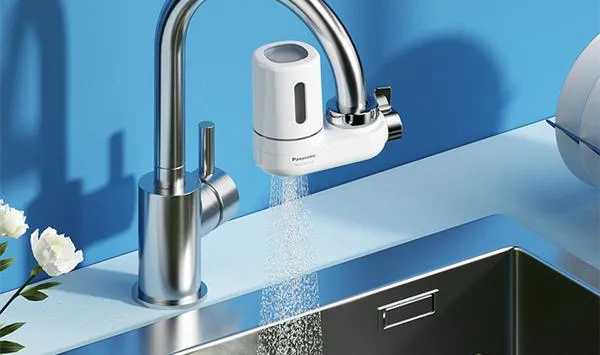
- Faucet-mounted filters – Easy install, on-demand filtered water for cooking and drinking. Usually GAC or small carbon blocks.
- Under-sink charcoal filters – Cleaner look, higher flow, and better performance. Commonly use carbon block or catalytic carbon cartridges as part of a multi-stage system.
If you’re already thinking beyond basic filtration, it’s worth comparing under-sink charcoal systems to options like a table-top RO water purifier so you can match the technology to your water quality and your kitchen setup.
What Contaminants Do Charcoal Water Filters Remove?
An activated charcoal water filter targets the most common tap water problems most U.S. households care about: chlorine, weird smells, and chemical aftertaste.
Chlorine and Chloramine Removal
Activated carbon is one of the most effective ways to remove chlorine from water. As tap water passes through the porous carbon, chlorine reacts with the carbon surface and gets significantly reduced.
Many modern city systems also use chloramine (chlorine + ammonia). For that, you’ll want a catalytic carbon water filter specifically labeled for chloramine removal, since standard carbon is less effective on its own.
Bad Taste and Odor Reduction
If your tap water smells like a pool or has a “metallic” or “musty” taste, a charcoal water filter can usually fix that fast. Activated carbon grabs:
- Chlorine smell
- Musty or earthy odors
- Chemical or plastic-like tastes
This is why most household water filtration systems use carbon as the main media for water taste improvement and bad odor removal.
VOCs and Chemical Reduction
Charcoal filtration shines with many organic chemicals. The adsorption process helps reduce:
- VOCs (volatile organic compounds)
- Many industrial solvents
- Some disinfection byproducts (like THMs)
If you’re in an area with older pipes or industrial activity nearby, a good activated charcoal water filter is a smart baseline for chemical reduction.
Pesticides, Herbicides, and Other Organics
A quality granular activated carbon or carbon block filter can also help reduce:
- Certain pesticides and herbicides
- Many organic contaminants from agriculture runoff
- Some fuel-related compounds
Look for filters that clearly list pesticide reduction and have NSF certifications for organic contaminant removal.
Real-Life Drinking Water Improvements
In daily use, people notice:
- Softer, cleaner taste from the kitchen sink
- No more “swimming pool” smell from tap water
- Better-tasting coffee, tea, and cooking water
- Kids and guests actually drinking more water
If you want a simple, point-of-use upgrade at the sink, pairing a carbon system with a filtered water tap is one of the most noticeable improvements you can make in your kitchen.
Limits of Charcoal Water Filtration
Charcoal water filters (activated carbon filters) are great, but they’re not magic. There are clear limits you need to know before you rely on them as your only home water solution.
What Charcoal Filters Cannot Remove
Activated charcoal is designed mainly for chemicals, chlorine, and taste/odor, not everything in the water. In most cases, a charcoal water filter cannot reliably remove:
- Fluoride
- Most dissolved inorganic salts
- High levels of nitrates
- Microbiological risks (unless combined with other technologies)
If you’re dealing with contaminated well water or questionable water sources, a carbon-only setup is not enough.
Limits With Minerals, TDS, and Hardness
Charcoal filters do not soften water and do not significantly change TDS (total dissolved solids). That means:
- Calcium and magnesium (hardness) stay in the water
- Healthy minerals like potassium and magnesium also stay (this is why water taste stays natural)
- TDS readings on a meter will barely change with carbon-only filtration
If you want lower TDS or softer water for appliances and spot-free dishes, you’re looking at water softeners or reverse osmosis, not just carbon.
Heavy Metals, Bacteria, and Viruses
Standard charcoal filters on their own are not guaranteed to remove:
- Heavy metals like lead, arsenic, mercury (unless the filter includes extra media specifically rated for this)
- Bacteria (E. coli, coliform, etc.)
- Viruses and protozoa
Some premium carbon block filters are certified for lead reduction, but you must verify that claim on the label (NSF/ANSI 53). Never assume any “charcoal filter” automatically handles heavy metals or pathogens.
When You Need Extra Filtration
You should add extra filtration stages or systems when:
- You’re on well water or have known microbial risk → pair carbon with UV, RO, or a certified microbiological filter
- You want maximum contaminant reduction (PFAS, heavy metals, fluoride, etc.) → combine carbon with a reverse osmosis system
- Your water has sediment or rust → add a sediment pre-filter before the carbon to protect it
For kitchens where people want both contaminant reduction and great taste, I usually recommend a combo system—carbon plus RO—like an under-sink reverse osmosis filtration system that uses activated carbon stages for taste and chemical reduction while the membrane handles TDS and heavy metals. A good example of this kind of setup is a high-capacity under-sink reverse osmosis system with integrated carbon stages, which covers the gaps a charcoal filter can’t.
Charcoal Filters vs Other Water Purification Methods
Charcoal Filter vs Reverse Osmosis at Home
For most U.S. households, an activated charcoal water filter is the “taste and chlorine” solution, while reverse osmosis (RO) is the “everything out” solution.
Charcoal (activated carbon) filters:
- How they work: Adsorb chemicals like chlorine, some VOCs, and many organic contaminants onto a porous carbon structure.
- Pros:
- Keep healthy minerals like calcium and magnesium
- Improve taste and smell fast
- No waste water
- Lower cost, easy install (pitcher, faucet, under-sink)
- Cons:
- Do not significantly lower TDS or hardness
- Limited for fluoride, nitrates, and many dissolved salts
Reverse osmosis:
- How it works: Pushes water through a semi-permeable membrane that blocks most dissolved solids.
- Pros:
- Removes a wide range of contaminants: fluoride, many heavy metals, nitrates, salts
- Excellent for very poor tap or well water
- Cons:
- Removes minerals, so water can taste “flat”
- Produces waste water during filtration
- Higher upfront cost and maintenance
In short: if your main issue is chlorine taste and basic chemical reduction, a charcoal water filter is usually enough. If you’re chasing very low TDS or need strong contaminant removal, RO is the better fit.
Charcoal vs UV, Ceramic, and Sediment Filters
Each technology does a different job:
- Charcoal (activated carbon):
- Targets: chlorine, chloramine (with catalytic carbon), many organic chemicals, bad taste and odor
- Best for: city tap water that “smells like a pool” or tastes off
- UV (ultraviolet) purification:
- Targets: bacteria, viruses, microorganisms
- Needs clear water to be effective
- Usually paired after sediment and carbon filters
- Ceramic filters:
- Targets: bacteria, cysts, and fine particles
- Work as a physical barrier, not a chemical adsorber
- Often used in gravity countertop systems and emergency setups
- Sediment filters:
- Targets: sand, rust, dirt, and visible particles
- Protect and extend the life of a downstream carbon or RO filter
Most high-performing home systems are multi-stage: sediment → charcoal → possibly RO or UV. If you’re wondering whether a countertop system is enough for your kitchen, it’s worth looking at how effective countertop water filters are and what features matter most in real-world use (countertop water filter benefits and features).
Taste, Minerals, and Waste Water
Here’s how the main methods compare at the sink:
- Taste:
- Charcoal: big improvement in taste and odor (especially chlorine)
- RO: very clean but can taste “flat” without remineralization
- UV/sediment/ceramic alone: minor to no taste improvement
- Mineral retention:
- Charcoal: keeps minerals (good for taste and feel)
- RO: strips most minerals
- UV, ceramic, sediment: don’t change minerals
- Waste water:
- Charcoal, UV, ceramic, sediment: no waste water in normal use
- RO: produces reject water during filtration
Best Use Cases for Each Method
Use this as a quick guide:
- Charcoal / activated carbon filter is best if:
- You’re on municipal tap water in the U.S.
- Your main issues are chlorine, chemical taste, and odor
- You want better water with simple, low-cost maintenance
- Reverse osmosis is best if:
- You want significant **T
Benefits of Using a Charcoal Water Filter
Why I Trust Charcoal Water Filters at Home
Charcoal (activated carbon) water filters are one of the simplest ways to upgrade your tap water without overcomplicating your setup or budget.
Better Taste and Smell
Activated carbon is excellent at grabbing chlorine, chloramine, and many odor-causing compounds, which is why restaurants and coffee shops rely on it.
What you’ll notice:
- Less “pool water” chlorine taste
- No more musty or chemical smell
- Cleaner flavor for coffee, tea, and cooking
Health and Comfort Perks
While a charcoal water filter isn’t a medical device, it does a solid job reducing everyday chemical exposure from tap water.
Common benefits:
- Reduces chlorine and many organic chemicals (VOCs, some pesticides)
- Makes water easier to drink, so you naturally stay better hydrated
- Gentler on skin and hair when used in point-of-use kitchen setups that feed cooking and beverage water
Low Maintenance & Long-Term Savings
Compared to more complex systems, an activated charcoal water filter is:
- Easy to maintain – just swap cartridges on schedule
- Affordable over time – far cheaper than bottled water
- Simple to install – especially pitchers and faucet/sink-mounted filters
Cost Snapshot (Typical Home Use)
| Option | Upfront Cost | Ongoing Cost | Effort Level |
|---|---|---|---|
| Pitcher charcoal filter | Low | Low (filters 2–3 mo) | Very easy |
| Faucet / under-sink carbon | Medium | Medium (6–12 mo) | Easy |
| Bottled water habit | None | High (monthly spend) | Inconvenient |
Eco-Friendly and Straightforward
If you want cleaner water without creating more plastic waste, a charcoal water filter is a smart move.
- Cuts down on single-use plastic bottles
- Uses a passive, non-electric filtration process
- Many cartridges are made from natural sources like coconut shell carbon
If you’re also comparing other home filtration styles (like UV or RO) for a full setup, I recommend checking a broader breakdown of different water purification methods so you can decide where a charcoal filter fits best in your kitchen.
Choosing the Right Charcoal Water Filter
Picking the right charcoal (activated carbon) water filter starts with knowing your water. I always tell people: test first, buy second.
Match the Filter to Your Water Issues
Start with a basic water report or test kit. Then choose:
- Chlorine taste/smell only
- Pitcher charcoal filter or simple faucet-mounted activated carbon filter is usually enough.
- Chloramine, VOCs, pesticides, stronger chemicals
- Go for a carbon block or catalytic carbon under-sink filter.
- Sediment + chlorine + chemicals
- Choose a multi-stage under sink carbon filter with a sediment pre-filter.
Know Your Certifications (NSF Standards)
If it’s drinking water, I treat NSF certification as non-negotiable:
- NSF/ANSI 42 – Chlorine, taste, and odor reduction.
- NSF/ANSI 53 – Health-related contaminants (certain chemicals, some heavy metals when combined with other media).
- NSF/ANSI 401 – Emerging contaminants (some pharmaceuticals, etc.).
Look for these on the box or product page, not just in marketing claims.
Pitcher vs Faucet vs Under-Sink Charcoal Filters
Each format fits a different lifestyle:
- Pitcher charcoal filters
- Pros: Lowest cost, no installation, good for apartments/dorms.
- Cons: Slow flow, small capacity, frequent cartridge changes.
- Faucet-mounted carbon filters
- Pros: Easy DIY install, on-demand filtered water.
- Cons: Can reduce faucet flow, shorter filter life than under-sink.
- Under sink carbon filters
- Pros: Best for families, high capacity, cleaner look, dedicated filtered faucet.
- Cons: Higher upfront cost, simple plumbing work required (you can follow a step-by-step guide similar to this water filter faucet installation process).
If you want set‑and‑forget convenience and strong chemical reduction, under‑sink is usually the best long-term play.
Key Specs: Flow Rate, Capacity, Filter Lifespan
Before buying any activated charcoal water filter, I always check:
- Flow rate (gallons per minute – GPM)
- Pitchers: measured as time per fill, often slow.
- Faucet/under-sink: look for 0.5–1.0 GPM for drinking water.
- Capacity (gallons per filter)
- Pitchers: ~40–120 gallons.
- Faucet filters: ~100–300 gallons.
- Under-sink carbon block: 500–2,000+ gallons, depending on model.
- Filter lifespan (months)
- Check both gallons OR time (for example, “up to 6 months or 300 gallons”).
- In U.S. households, I budget for 2–3 replacements per year for point-of-use carbon filters.
If you want fewer filter changes, a high-capacity under-sink charcoal water filter paired with a properly sized system (and even a reverse osmosis unit with a pressurized tank if you need deeper purification) gives the best balance of convenience, performance, and long-term cost.
Maintaining a Charcoal Water Filter
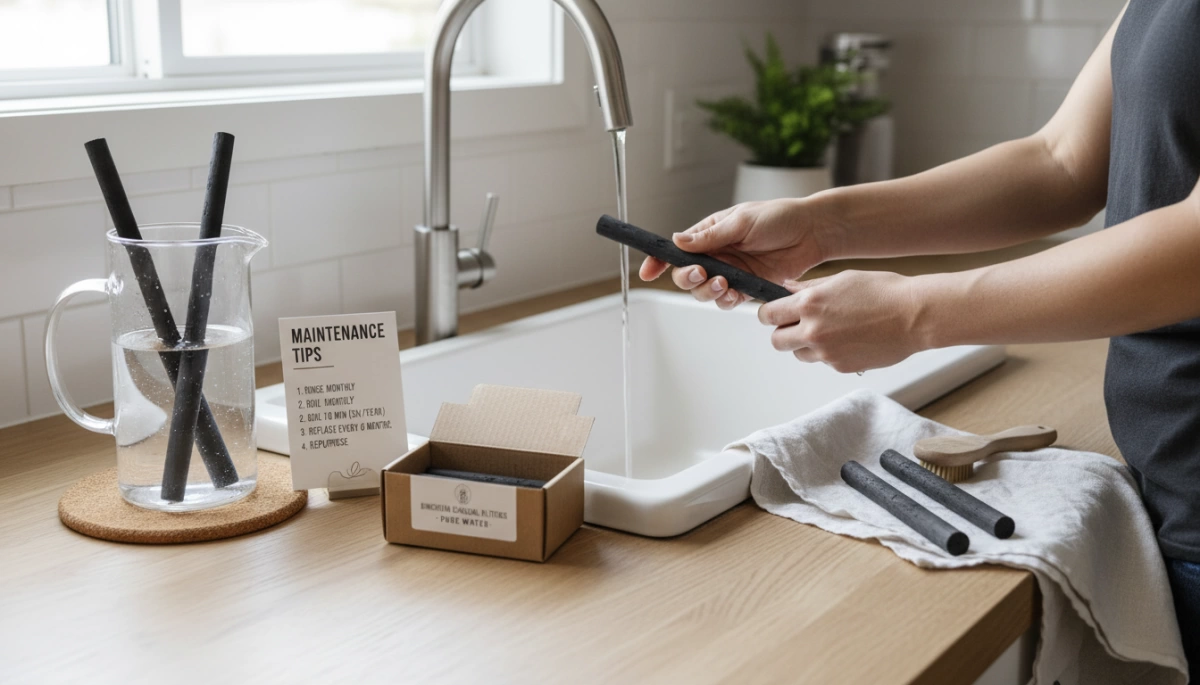
Keeping a charcoal (activated carbon) water filter in good shape is straightforward, but timing matters. If you push a filter too long, it stops removing chlorine, VOCs, and bad tastes, and can even start releasing trapped contaminants back into your water.
How Often to Replace a Charcoal Filter
Replacement depends on the type of activated charcoal water filter and your usage:
- Pitcher charcoal filters: usually every 2–3 months or 40–120 gallons
- Faucet and countertop filters: about every 3–6 months
- Under-sink carbon block filters: often every 6–12 months or a specific gallon rating (e.g., 600–1,500 gallons)
In a busy U.S. household where everyone drinks and cooks with filtered water, I always recommend following the shorter end of the schedule, not the marketing maximum. Many under-sink systems clearly list capacity and timing; you can see how that works in practice in our overview of under-sink water purification systems.
Signs Your Carbon Filter Needs Changing
Don’t wait until the water tastes bad. Watch for:
- Chlorine taste or smell coming back
- Musty or earthy odors
- Slower flow rate through the filter
- Cloudiness or particles in water that used to be clear
- You’re past the time or gallon rating on the filter label
If any of these show up, I treat it as: time to replace, even if the calendar says you have a little time left.
Tips to Extend Filter Life and Performance
You can’t “revive” charcoal, but you can help it last closer to its rated capacity:
- Use a sediment pre-filter (especially with well water or older pipes) so dirt doesn’t clog the carbon
- Flush new filters for a few minutes as directed to clear carbon dust and activate the media
- Avoid hot water through the carbon filter; stick to cold or room temperature
- Don’t run water at max blast; moderate flow gives better contact time and better filtration
- Replace on schedule, not only when you notice a taste change
Safe Use and Storage of Charcoal Filters
Activated carbon is safe for daily drinking water use when it’s properly made and certified, but you still need to handle it right:
- Store spare filters in a cool, dry place, sealed in their original packaging
- Don’t freeze or expose them to high heat or direct sun for long periods
- Once installed, keep the filter wet and in use; if it sits unused for weeks, bacteria can grow in the pores
- If you’ve been away for a while, flush the system for a few minutes before drinking
- Always choose NSF-certified charcoal filters for any point-of-use kitchen sink water filter system
Solid maintenance is what keeps an affordable, eco-friendly charcoal filter performing like a much more expensive system.
Under-Sink Charcoal Filter Options
Under-sink charcoal (activated carbon) filters are what I recommend most for U.S. kitchens. They’re hidden, powerful, and give you clean water right at the tap without changing your routine.
Why Under-Sink Charcoal Filters Are Popular
- Out of sight, always ready – No counter clutter like pitchers or countertop units.
- Dedicated faucet or main tap – One motion, clean drinking and cooking water on demand.
- Better performance – Larger carbon blocks = more contact time, better chlorine, taste, and odor reduction.
- Great for families – Higher flow and capacity than most pitcher charcoal water filters.
Features of Quality Carbon Block Under-Sink Systems
Most good under-sink systems use a carbon block filter (compressed activated carbon), which gives tighter filtration than basic granular activated carbon (GAC).
| Feature | What You Want in a Good System |
|---|---|
| Filter media | Carbon block or carbon block + extra media (for lead, PFAS, etc.) |
| Certifications | NSF/ANSI 42 & 53 for chlorine, taste, odor, and health contaminants |
| Flow rate | At least 0.5–1.0 GPM for normal kitchen use |
| Capacity | 500–2,000+ gallons per filter (3–12 months typical use) |
| Connections | Standard 3/8″ plumbing, easy DIY or plumber install |
| Housing | Solid construction, no cheap brittle plastic |
If you’re comparing a filter vs a more complex purifier, it’s worth checking out this breakdown of a water filter vs purifier for home use to see what fits your setup.
How Under-Sink Filters Deliver Clean Water on Demand
Here’s the basic flow:
- Cold water line in – Water from your supply line feeds into the under-sink carbon filter.
- Carbon block adsorption – Chlorine, VOCs, and many organic chemicals are adsorbed onto the porous carbon surface.
- Filtered water out – Clean, better-tasting water flows to a dedicated faucet or your main kitchen faucet.
Because the filter stays pressurized, you get instant filtration—no waiting like a pitcher.
What to Look For Before Installing an Under-Sink Filter
Before you buy, lock in these points:
- Know your water
- City water with chlorine? A standard activated carbon filtration system is usually enough.
- Older home, lead pipes, or suspect contaminants? Look for NSF 53-certified carbon block filters designed for lead, VOCs, or PFAS.
- Space under the sink
- Check you have room for the housing + tubing + possible separate faucet.
- Installation style
- Direct inline (uses your existing faucet) – simple, minimal hardware.
- Separate drinking faucet – cleaner look, dedicated filtered water tap.
- Maintenance
- Clear specs on filter lifespan, change schedule, and cost per replacement.
- Easy-access housing you can open without special tools.
If you’re planning a full kitchen setup with dispensers or soda systems, under-sink carbon filters also pair well with tabletop water dispensers and similar point-of-use gear for a complete home hydration station.
FAQs About Charcoal Water Filters
How does charcoal filter water in simple terms?
An activated charcoal water filter works like a magnet for many chemicals. As water passes through the porous carbon, contaminants stick to the surface (adsorption), while clean water keeps flowing through. This is why activated carbon filtration is so effective at removing chlorine, smells, and many chemical tastes from tap water.
Does charcoal remove fluoride and heavy metals?
On its own, a standard activated charcoal filter does not reliably remove fluoride or many heavy metals like lead or arsenic. For those, you usually need:
- Reverse osmosis
- Special carbon blended with metal-removal media
- Multi-stage filters designed and certified for fluoride or lead reduction
If fluoride is a concern for your home, look for systems specifically tested for fluoride removal, not just basic carbon filters.
Is a charcoal filter enough for well water?
Usually, no. Well water often needs extra treatment. A basic charcoal filter can:
- Improve taste and odor
- Reduce some chemicals and VOCs
But it may not handle:
- Bacteria, viruses, or parasites
- High iron, manganese, or hardness
- Nitrates or other problem contaminants
For well water, I’d pair an activated charcoal water filter with proper testing and, if needed, sediment, UV, or other treatment stages.
Are charcoal water filters safe for daily drinking?
Yes—when you use NSF-certified carbon filters as directed and replace them on schedule, they’re safe for daily drinking water. They’re widely used in U.S. homes to improve tap water taste, reduce chlorine, and cut certain chemical contaminants. The key is simple: don’t run them past their filter lifespan, or performance drops.
Can charcoal filters be used with other filtration systems?
Absolutely, and that’s often the best setup. Activated carbon is commonly combined with:
- Sediment pre-filters (to protect the carbon)
- Reverse osmosis systems (carbon before/after the RO membrane)
- UV disinfection (for microbes)
In many kitchens, a multi-stage under-sink carbon system is the sweet spot for great taste, strong chemical reduction, and everyday convenience.