

















Why Material Matters in Glass Water Filter Systems
When I design or choose a glass water filter system, I start with one core question: what is my water sitting in all day? That constant contact between water and the storage tank or pitcher walls is exactly why material choice matters more than most people realize.
With a typical plastic water filter pitcher, your drinking water is in contact with plastic 24/7. Over time, that can:
- Affect taste and odor – Plastics can absorb and then release smells from chlorine, food, and even your fridge, which is why some pitchers start to taste “plasticky” or stale.
- Increase the risk of chemical leaching – Heat, time, and wear can accelerate the release of unwanted compounds into your water.
Many households in the U.S. are now actively trying to avoid microplastics, BPA, and PFAS in their drinking water. Even BPA-free plastics can shed microplastics, and certain plastics can absorb PFAS and other contaminants over time, making it harder to keep water truly clean. If you’re already investing in a filter that reduces PFAS or heavy metals, it doesn’t make sense to store that filtered water in a material that can reintroduce new risks.
This is exactly why I favor a glass water filter system—especially borosilicate glass water purifiers and glass gravity water filter systems:
- Glass is inert and non-porous – It does not react with water, and it does not absorb or release flavors, odors, or chemicals.
- No plastic taste, no hidden absorption – What you taste is the water and the filtration quality, not the container.
- Stable over time – Glass doesn’t degrade the way many plastics do, even with daily use and temperature swings.
If your goal is microplastics-free water, fewer chemical variables, and a cleaner taste, a glass water filter pitcher or countertop glass water dispenser gives you a more predictable, stable environment for your filtered water. The filtration media does the cleaning; the glass simply holds it—without adding anything back in.
Key Advantages of Glass Water Filter Systems Over Plastic
When I design or choose a glass water filter system, I’m looking for four big wins: taste, visibility, durability, and sustainability. Here’s what glass gets you that plastic usually can’t.
1. No Off-Tastes or Odors
With a glass water filter pitcher or countertop glass water dispenser, the water only touches glass and the filter media—not plastic walls.
- Glass is non-porous and inert, so it doesn’t hang onto smells or flavors.
- You don’t get that “plastic taste,” even if the pitcher sits in the fridge for days.
- This is especially important if you’re using activated carbon glass filters that already improve taste by removing chlorine.
2. Clear View of Water Quality
Transparency is more than looks. A glass gravity water filter system makes it easy to:
- See water clarity at a glance
- Spot sediment, cloudiness, or air bubbles
- Check water level and filter status without opening the lid
For people switching from bottled water to a premium glass water jug filter, this visual peace of mind matters.
3. Durable Feel and Better Temperature Hold
Quality borosilicate glass water purifiers are built to handle daily use:
- Thick, hardened glass resists scratches far better than soft plastics
- Glass tends to hold cold temperatures longer, so your filtered water stays cooler and fresher in the fridge or on the counter
- No warping or discoloration over time like many plastic systems
4. Eco-Friendly and Non-Plastic
If you’re trying to cut down on plastic at home, a non-plastic water filter system is one of the easiest wins:
- Every reusable glass water filter tank replaces hundreds of plastic bottles
- You avoid ongoing contact with plastics that may shed microplastics into water
- A glass system aligns with a sustainable home water filtration setup—especially when paired with long-life filters that reduce waste
If you need deeper filtration (like full reverse osmosis for very contaminated water), I usually recommend pairing a main RO unit with glass storage; you can see how RO compares to other options in this guide to the best reverse osmosis water filter systems: best reverse osmosis water filter system.
How Glass Water Filter Systems Work
Glass water filter systems are built around a simple idea: let the glass hold and protect the water, and let the filter media do the heavy lifting. Most setups you’ll see in U.S. kitchens fall into two main designs:
Common Glass Filter Designs
Glass water filter pitchers
You pour tap water into the top reservoir, gravity pulls it through the filter, and clean water collects in the bottom glass tank. These are perfect for fridge storage or small households looking for a non-plastic water filter system.Glass gravity-fed countertop dispensers
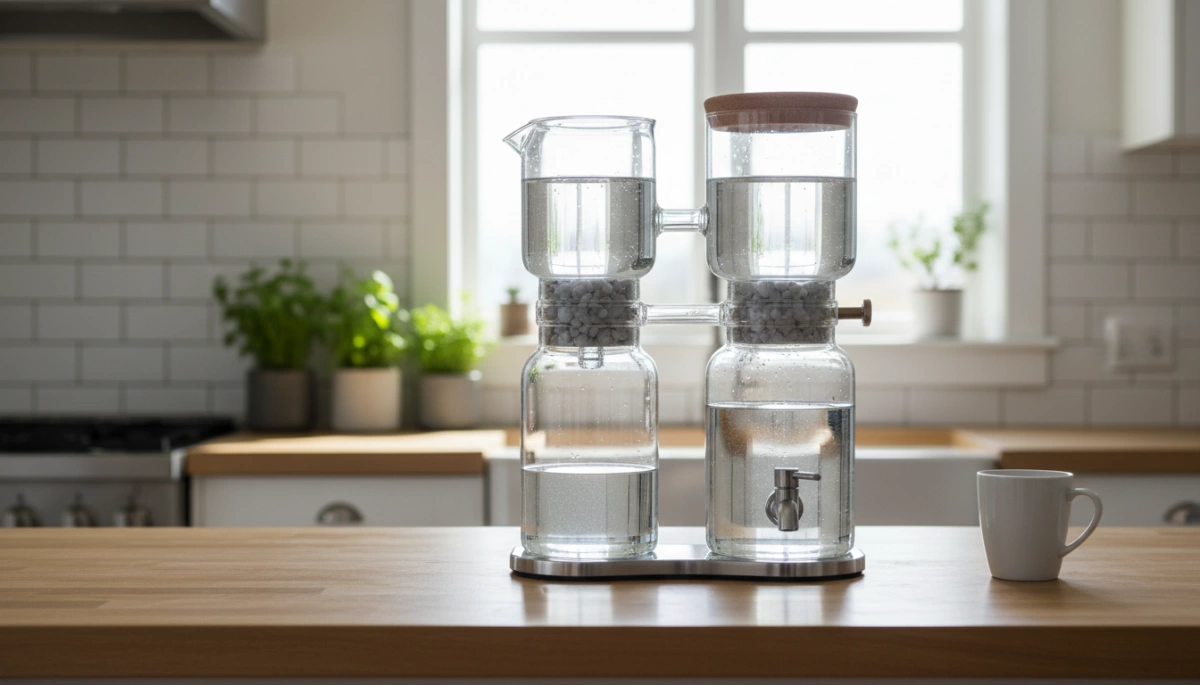
Think of a larger glass gravity water filter system that sits on your counter with a spigot. You fill the top chamber, water drips through one or more filters, and clean water is ready to dispense all day. This is ideal if you’re replacing bottled water for the whole family or a small office.
Both styles rely on gravity, not pressure, which is why they pair so well with activated carbon, ceramic, and other media that don’t need pumps or electricity.
Typical Filtration Stages Inside a Glass System
A quality glass water filter system is all about the filter stack inside. Depending on the brand and model, you’ll usually see a mix of:
Activated carbon filtration
The workhorse in most glass water filter pitchers. It targets:- Chlorine (for better taste and smell)
- Common chemical byproducts
- Many organic compounds
This is the main reason tap water suddenly tastes “clean” out of a chlorine removal glass filter jug.
Ceramic or fine mechanical filtration
A dense ceramic or membrane layer can:- Screen out bacteria and parasites
- Reduce sediment and rust
- Help trap larger microplastics
This is where a microplastics free water filter claim usually comes from.
Ion exchange and specialty media
Some premium glass water jug filters add extra media for:- Lead and other heavy metal reduction
- Partial fluoride reduction
- Targeted PFAS removal (where specifically designed)
When you see NSF certified glass water filter claims, they’re often tied to these performance-focused media.
Some systems also layer in alkaline media to slightly raise pH and add minerals, marketed as an alkaline glass water filter for people who prefer a smoother, less acidic taste.
Compatibility With Advanced Filters
The big win with glass isn’t just the material; it’s that the tank doesn’t limit you. Many of the better eco-friendly water purifier glass setups are designed to accept:
- Specialized PFAS removal glass pitcher cartridges
- Heavy metal reduction glass filter cartridges
- Advanced carbon blocks tuned for chlorine, VOCs, and emerging contaminants
So you get the benefit of modern filter tech while your water sits only in borosilicate glass and food-grade seals, not plastic. If you’re already using premium glass water bottles to avoid plastic contact on the go, pairing them with a countertop glass water dispenser at home keeps that same standard in your kitchen routine.
Top Filtration Technologies for Glass Water Filter Systems
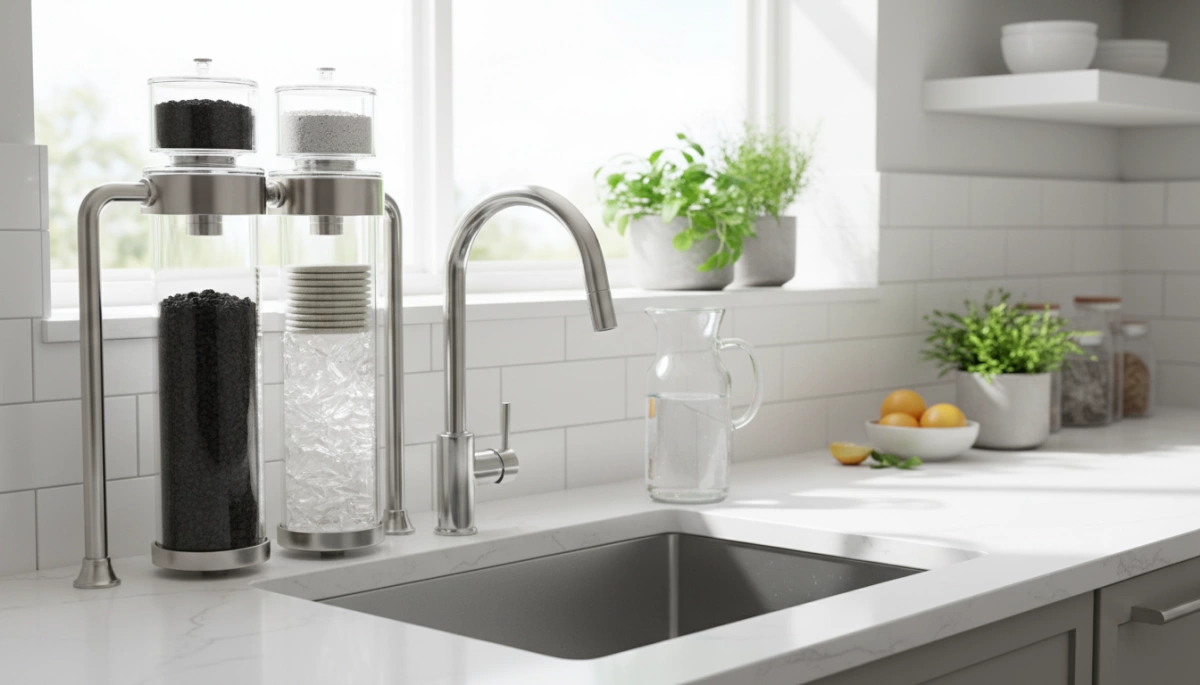
When I build or recommend a glass water filter system, I pair the glass body with proven filtration media. The goal is simple: clean, great-tasting water without plastic contact. Here’s how the main technologies work inside a glass water filter pitcher or gravity-fed glass dispenser.
Activated Carbon in Glass Water Filters
Most glass water filter systems start with an activated carbon filter because it fixes the problem most U.S. households notice first: taste and smell.
What activated carbon does well:
- Reduces chlorine and chloramine (major cause of “pool” taste in tap water)
- Cuts bad odors and improves overall flavor
- Adsorbs many organic compounds, VOCs, and some industrial byproducts
- Helps replace single-use plastic bottles by making tap water actually enjoyable to drink
In a glass water filter pitcher or glass gravity water filter system, carbon is usually the core stage. If you care about taste and basic chemical cleanup, a carbon-based non-plastic water filter system is the minimum you should accept.
Ceramic and Membrane Filters in Glass Systems
For people who worry about microplastics and microbes, I lean on ceramic and membrane filters paired with glass tanks or glass jugs.
Ceramic filters (often used in gravity fed water filter glass setups):
- Have tiny pores that physically block bacteria and parasites
- Can capture sediment and microplastics, improving clarity
- Are cleanable – you scrub the ceramic surface instead of throwing it away immediately
Membrane filters (including ultrafiltration):
- Target bacteria, cysts, and fine particles
- Great for homes that don’t want full reverse osmosis but still want stronger protection
- Often combined with carbon to handle both physical contaminants and chemicals
If you’re looking at advanced options beyond simple pitchers, it’s worth comparing with an ultrafiltration faucet water filter to understand how membrane filtration works at the tap versus in a countertop countertop glass water dispenser.
Ion Exchange and Specialty Media for PFAS, Lead, and Fluoride
To tackle tougher contaminants, the filter cartridge inside your borosilicate glass water purifier may add ion exchange resins and specialized media.
Ion exchange and specialty media can:
- Reduce lead and other heavy metals (important in older U.S. homes with legacy plumbing)
- Target PFAS (“forever chemicals”), depending on the resin and certification
- Help with fluoride reduction when combined with specific filter media
- Lower copper, cadmium, and other metals commonly found in some municipal and well systems
If you’re shopping for the best glass water filtration setup for an older house or questionable municipal water, look for:
- Clear claims on lead and PFAS removal
- NSF/ANSI-tested performance for specific contaminants
- A multi-stage cartridge combining carbon + ion exchange + specialty media
When done right, a premium glass water jug filter or glass gravity water filter system gives you bottled-water-level quality in your kitchen, without plastic contact and without stacking cases of disposable water bottles.
Comparing Glass Water Filter System Options
When customers ask me which glass water filter system to buy, I usually start with one simple question: “How much water do you actually drink in a day?” That drives whether a glass water filter pitcher or a gravity fed water filter glass dispenser makes more sense.
Pitcher vs. Gravity Dispenser (Quick Comparison)
| Feature | Glass Filter Pitcher | Glass Gravity Dispenser |
|---|---|---|
| Typical Capacity | 6–10 cups | 2–5 gallons |
| Best For | 1–2 people, apartments, small fridges | Families, small offices, heavy daily use |
| Placement | Fridge door or shelf | Kitchen countertop or table |
| Refill Frequency | More frequent | Less frequent |
| Primary Benefit | Cold filtered water on demand | All‑day “bottled-water replacement” at home |
| Portability | Easy to move, great for renters | Mostly stays in one place |
Where Glass Systems Really Shine
Glass water filter systems are ideal if you want:
- Countertop convenience – A countertop glass water dispenser with a gravity filter keeps clean water ready 24/7 without electricity or plumbing changes. It pairs nicely with a dedicated filtered water tap if you upgrade later.
- Bottled water replacement – A premium glass water jug filter lets you skip plastic cases from Costco and still get cleaner, better‑tasting water. Over a year, that’s a lot less plastic and a lot more savings.
- Health and eco benefits – You avoid contact with plastic, microplastics, and BPA while using a sustainable home water filtration setup that looks good on the counter.
Real Limitations You Should Know
Glass systems do have limits, and I’m upfront about them:
Not a whole-house solution
A non-plastic water filter system in glass is built for drinking and cooking water, not for showers, laundry, or every faucet in the house. For full-home coverage, you need a dedicated whole-house system, not a glass tank.Not for high-pressure or RO setups
Glass isn’t designed to handle high-pressure reverse osmosis the way metal and reinforced plastic housings are. If you’re shopping for a powerful RO system, check out a purpose-built countertop or under-sink RO unit instead of trying to adapt a glass gravity tank. Systems like modern countertop reverse osmosis water systems are engineered specifically for that higher pressure environment.
Bottom line:
Use glass gravity water filter systems and glass water filter pitchers as your everyday, low-pressure, countertop solution—especially if your main goal is to replace bottled water and avoid plastic contact. For complex treatment or whole-house filtration, pair them with more robust systems rather than forcing glass to do a job it wasn’t built for.
Buyer’s Guide: Choosing the Right Glass Water Filter System
When you’re picking a glass water filter system for your kitchen, you’re really choosing how you and your family drink water every single day. Here’s how I’d narrow it down if I were setting this up in a typical U.S. home.
Key Factors: Capacity, Lifespan, Certifications
1. Capacity (How much water you actually need)
Think about your household and habits:
- 1–2 people: a glass water filter pitcher (6–10 cups) usually works.
- 3–5 people: a glass gravity-fed water filter dispenser (1–3 gallons) is more realistic.
- If you host often or hate refilling, go bigger. It should comfortably cover a full day’s drinking water.
2. Filter lifespan
Don’t just look at months—look at gallons:
- Basic activated carbon glass filters: often 40–120 gallons.
- Multi-stage or fluoride / heavy metal reduction glass systems: typically longer but pricier.
- Make sure replacement filters are easy to buy and clearly labeled for your exact glass model.
3. Certifications (NSF/ANSI)
If you care about chlorine, lead, or PFAS, certifications matter more than marketing claims. Look for:
- NSF/ANSI 42 – chlorine, taste, odor.
- NSF/ANSI 53 – heavy metals (lead), some VOCs.
- NSF/ANSI 401 – “emerging contaminants” like some PFAS and pharmaceuticals.
- NSF/ANSI 58 – mostly for RO systems (less common with glass tanks, but relevant if paired with RO).
If you’re also interested in broader water quality for your home, I’d cross-check your needs with a simple tap test and then match that to a countertop water filter setup like those described in this guide on how countertop water filters work and how to maintain them.
Glass Build Quality, Cleaning, and Breakage Risk
A good glass gravity water filter system or premium glass water jug filter should feel solid, not fragile.
What I look for in the glass itself:
- Borosilicate glass (lab-grade) if possible: better thermal shock resistance.
- Even thickness: no thin “weak” areas near the bottom or spout cutout.
- Lead-free glass water pitcher labeling for peace of mind.
Design details that matter in daily use:
- Wide opening for easy hand cleaning and scrubbing around corners.
- Smooth interior, no weird ridges that trap gunk.
- Sturdy base and a protected spout area (where most cracks start).
If you’re accident-prone or have kids, I’d avoid super-tall, skinny designs and stick to low, wide countertop glass water dispensers that are harder to knock over.
Maintenance Tips for Long-Lasting Glass Systems
To keep a glass water filter system clean, safe, and performing like day one:
Wash the glass tank regularly
- Light use: every 1–2 weeks
- Heavy use / warm climates: weekly
- Use mild dish soap, soft sponge; avoid abrasive pads that can create micro-scratches.
Descale if you have hard water
- Rinse with a white vinegar + water mix, then rinse thoroughly.
- Prevents buildup around the spout, gasket, and filter seating area.
Protect against breakage
- Don’t slide it across stone or metal surfaces—lift it.
- Avoid sudden temperature swings (no ice-cold water right after a hot wash).
- Consider a silicone mat or wooden stand under a glass gravity system for shock absorption.
Stay on top of filter replacement
- Follow the gallon rating, not just time.
- If water slows way down, tastes off, or smells odd, swap the filter—even if it hasn’t “expired” on paper.
If you like the idea of reducing chemicals not only in drinking water but also around the home, you can pair your glass system with simple methods from this guide on how to filter water naturally to cut down on bottled water and plastic even further.
Bottom line: choose a NSF certified glass water filter with the right capacity, solid glass construction, and filters that match your local tap issues (chlorine, lead, PFAS, etc.). Maintain it lightly but consistently, and it’ll easily replace bottled water in your daily routine.
Manufacturing and Design of Glass Water Filter Systems

When I design a glass water filter system, the starting point is always material performance plus real-world use—not just looks.
Challenges and Innovations in Glass Design
Modern glass water filter systems rely on upgraded glass and smarter forming:
- Borosilicate glass: I use this in premium units because it’s more resistant to thermal shock and cracking than regular soda-lime glass. That’s key if you keep your glass water filter pitcher in the fridge and refill with tap water.
- Precision forming and thickness control: Stress points around the spout, filter seat, and base are reinforced so a gravity fed water filter glass dispenser can handle the weight of several gallons without bowing or fracturing.
- Secure sealing: Silicone or stainless-steel interfaces make sure the filter housing seals tight to the glass, preventing leaks and keeping filtered water separate from unfiltered water.
Reliability, Customization, and Safe Transport
For the U.S. market, I focus on reliability and practical customization over gimmicks:
- Custom fit for filters: The glass tank is shaped around the filter media we use—like activated carbon or multi-stage cartridges you’d also see in a high-end drinking water filter system. That keeps flow smooth and avoids bypass.
- Reinforced contact points: Anywhere the glass touches metal or plastic (spigot, lid ring, handles) gets extra attention to avoid chipping and micro-cracks.
- Protected packaging: Double-boxing, molded inserts, and drop-tested packaging make sure your countertop glass water dispenser arrives intact—not in shards.
Commitment to Quality Materials and Precision Engineering
My standard is simple: if it touches your drinking water, it needs to be inert, safe, and predictable.
- Lead-free glass only for any glass gravity water filter system I’d put my name on.
- Food-grade seals and spigots, with BPA-free and phthalate-free plastics (or stainless steel) where needed.
- Tight tolerances in glass and filter fitment so performance is repeatable—no guessing if today’s water is cleaner than yesterday’s.
That mix of quality glass, solid engineering, and careful manufacturing is what turns a nice-looking jar into a dependable non-plastic water filter system that can actually replace bottled water in a U.S. kitchen.
Real-User Insights and FAQs on Glass Water Filter Systems
Taste, Health, and Daily Convenience
From what I see across our U.S. customers, a glass water filter system usually changes three things right away:
Taste:
- Water tastes “cleaner” and “smoother” because there’s no plastic aftertaste.
- Glass doesn’t hold odors, so your chlorine removal glass filter jug keeps tasting fresh even after months of use.
Perceived health benefits:
- People switch to a non-plastic water filter system mainly to avoid microplastics, BPA, and PFAS contact from storage.
- Paired with a good activated carbon glass filter or PFAS removal glass pitcher, many users feel more confident about their long‑term tap water exposure.
Everyday use:
- A countertop glass water dispenser is easy to keep on the kitchen counter, refill, and pour from.
- A glass gravity water filter system often replaces cases of bottled water and cuts down weekly grocery runs.
If you’re still deciding whether a pitcher-style setup makes sense for your home, it’s worth checking how water filter jugs compare on benefits and costs in real-world use in guides like these evaluations of water pitcher filters.
Common Setup & Installation Questions
Most glass water filter pitcher and gravity fed water filter glass setups are plug‑and‑play:
Do I need tools or plumbing?
- For pitchers and countertop units: No tools, no plumbing. Just assemble, flush the filter, and fill.
- Just make sure seals are seated correctly so your reusable glass water filter tank doesn’t drip at the spigot.
How long is the first setup?
- Usually 10–20 minutes: unwrap, rinse the borosilicate glass water purifier parts, flush the filter (1–2 cycles), and you’re good.
Can I use it with well water or hard water?
- Yes, but choose filters rated for bacteria and heavy metals if you’re on a private well.
- In very hard water areas, expect more frequent cleaning of the glass and possible faster clogging of ceramic or fine membrane filters.
Filter Replacement & Water Source Compatibility
For most glass water filtration systems, replacement timing depends on gallons filtered and water quality:
Typical replacement windows:
- Carbon filters (chlorine, odor, basic organics): every 2–3 months or ~40–80 gallons.
- Heavy metal / PFAS media: every 3–6 months, depending on the NSF rating and tap quality.
- Ceramic / microplastics filters: can last longer but need regular scrubbing to maintain flow.
How to know it’s time to change filters:
- Noticeable drop in flow rate in your glass gravity water filter system
- Taste or smell slowly returning
- Hitting the manufacturer’s gallon limit (many users mark the calendar or track fills)
Matching to your tap water:
- City water: prioritize chlorine removal glass filter jugs with strong carbon and, if possible, lead reduction.
- Older homes / lead risk: look for NSF certified glass water filter systems specifically rated for lead.
- PFAS concerns (firefighting foam, industrial zones): choose a PFAS removal glass pitcher with ion exchange or specialized media.
- Fluoridated water: pick a fluoride reduction glass system with clearly stated fluoride performance.
If you want a quick refresher on how different filter media handle specific contaminants before you buy, it helps to review a basic breakdown of how water filters work and what each stage does like this guide on how water filters work.