















Understanding NSF Certified Water Filters
When I look at the water coming out of my tap, I want more than just a marketing promise; I want proof. That is where an NSF certified water filter becomes essential. NSF International is an independent, third-party organization that established the gold standard for public health and safety. Unlike manufacturers who might self-test their products, NSF performs rigorous, unbiased evaluations to ensure a filtration system actually removes the contaminants it claims to.
Independent Third-Party Testing
The role of NSF is to act as a watchdog for consumer safety. They develop strict protocols for water quality, material safety, and structural integrity. When a system is independently lab tested and certified by NSF, it means:
- Contaminant Reduction Claims: The filter effectively removes specific pollutants like lead, PFAS, or chlorine as advertised.
- Material Safety: The components of the filter—like the RO membrane or housing—do not leach harmful chemicals back into your drinking water.
- Structural Integrity: The system can handle household water pressure without leaking or bursting.
“Certified” vs. “Tested To” Standards
I often see products labeled as “tested to NSF standards,” which can be misleading. There is a critical distinction between these terms that every homeowner should know:
- Certified: The product has undergone formal audits by an accredited body (like NSF, WQA, or IAPMO). This includes regular factory inspections and re-testing to maintain the certification.
- Tested To: This usually means the manufacturer performed their own internal tests using NSF protocols. There is no outside oversight to verify these results or ensure the testing was performed correctly.
Verifying Product Safety
To ensure your home is protected, you should always verify certification via official databases. Genuine NSF certified water filters are listed on the NSF, IAPMO, or WQA websites. If a brand cannot provide a certification listing, their claims regarding lead or chemical reduction are not verified.
Relying on lab-backed data is the only way to guarantee your family is safe from “forever chemicals” and heavy metals. I prioritize these certifications because they provide the transparency and performance required for high-stakes health protection.
Key NSF/ANSI Standards Explained
I believe transparency is everything when it comes to the water you drink. Not all NSF certifications are the same; each one targets a specific set of pollutants. When you look for an nsf certified water filter, you need to know which standard handles the chemical or mineral issues present in your local tap water.
Essential Certification Categories
- NSF/ANSI 42 (Aesthetic Effects): This focuses on chlorine taste odor removal. It makes your water taste like high-end bottled water by scrubbing out treatment chemicals and particulates.
- NSF/ANSI 53 (Health Effects): This is a vital health standard for lead reduction and filtering out PFAS. It is specifically designed to reduce contaminants that have documented health risks.
- NSF/ANSI 58 (Reverse Osmosis): This is the specific certification for a reverse osmosis water filter. It verifies the membrane’s ability to achieve significant TDS reduction and handle over 1,000 impurities.
- NSF/ANSI 372 (Lead-Free Compliance): This ensures that every component touching your water—from the manifold to the faucet—is part of a certified lead-free water system.
- NSF/ANSI 401 (Emerging Contaminants): This standard covers “new” pollutants like detergents, pesticides, and trace pharmaceuticals that are increasingly found in municipal water supplies.
Standards vs. Common Water Pollutants
| Standard | Primary Focus | Targeted Contaminants |
|---|---|---|
| NSF 42 | Taste & Clarity | Chlorine, Iron, Particulates |
| NSF 53 | Health Risks | Lead, PFAS, Mercury, VOCs |
| NSF 58 | RO Performance | Fluoride, Arsenic, TDS, Nitrates |
| NSF 401 | Emerging Threats | BPA, Ibuprofen, Microplastics |
By choosing a system that hits these benchmarks, I ensure my customers receive a certified drinking water treatment solution that doesn’t just promise purity—it proves it through rigorous independent verification. This multi-standard approach is the only way to guarantee a truly lead-free water system for your home.
Why You Need an NSF Certified Water Filter
Choosing a water filter shouldn’t be based on guesswork or slick marketing. I prioritize transparency and performance, which is why an nsf certified water filter is the only standard that truly matters for your home. It represents a commitment to safety that has been independently lab tested to ensure it does exactly what it says on the box.
- Verified Health Protection: Unlike generic filters that only improve taste, our certified systems are proven to provide lead reduction and PFAS removal. These standards ensure that harmful substances are actually stripped from your drinking water, not just masked.
- Performance Beyond the Hype: Many brands make bold claims, but an NSF/ANSI 58 certified system has undergone rigorous stress testing. This means the housing won’t crack under pressure and the membrane will consistently deliver the filtration accuracy promised.
- Long-Term Value: Investing in high-quality under-sink water filtration helps you avoid the “maintenance trap” of cheap, uncertified units. You get a longer-lasting system that protects your plumbing and your family’s health without frequent, unexpected failures.
- Safety for Vulnerable Family Members: For households with infants, the elderly, or anyone with a compromised immune system, the 0.0001-micron precision of a reverse osmosis water filter provides an essential safety net against contaminants that are often invisible and odorless.
In the United States, where water quality can vary significantly by zip code, having a certified system is the only way to guarantee your tap water meets the highest purity standards. We focus on delivering technology that provides peace of mind through every glass.
Choosing the Right Type of NSF Certified Water Filter
When you start shopping for an nsf certified water filter, you’ll quickly realize there isn’t a one-size-fits-all solution. The best system for your home depends on your daily water usage, your living situation, and how much space you have under your sink or on your counter. I’ve broken down the most common types of certified drinking water treatment systems to help you decide which fits your lifestyle.
Portable and Entry-Level Filters
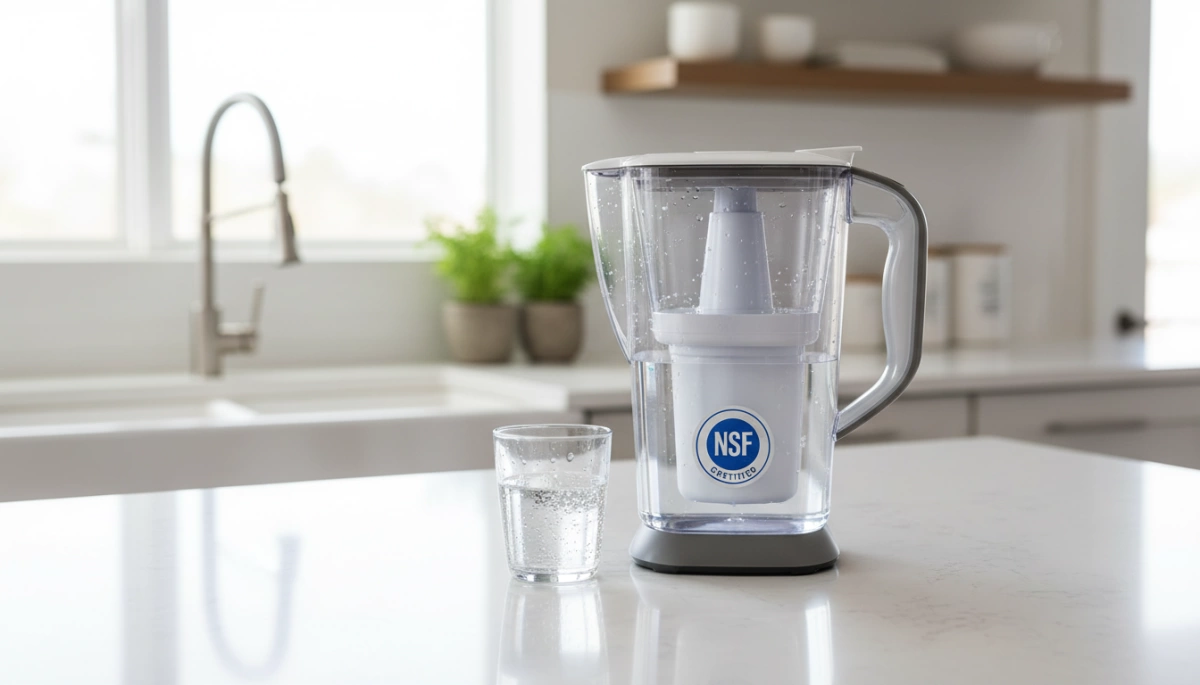
- Pitcher Filters: These are the most basic options. They are portable and require no installation, but they have slow flow rates and limited contaminant reduction. They are best for improving taste rather than removing heavy metals.
- Faucet-Mounted Filters: These snap directly onto your existing tap. If you’re looking for a water filter for apartment living that doesn’t require permanent plumbing changes, this is a common starting point, though they can be bulky and may not fit all designer faucets.
Advanced Residential Systems
- Countertop RO Systems: These provide high-capacity filtration without the need for under-sink plumbing. They sit right on your counter and are excellent for renters who want high-quality reverse osmosis water.
- Under-Sink Water Filtration: These systems are tucked away out of sight. They usually involve multi-stage filters that target a wide range of pollutants.
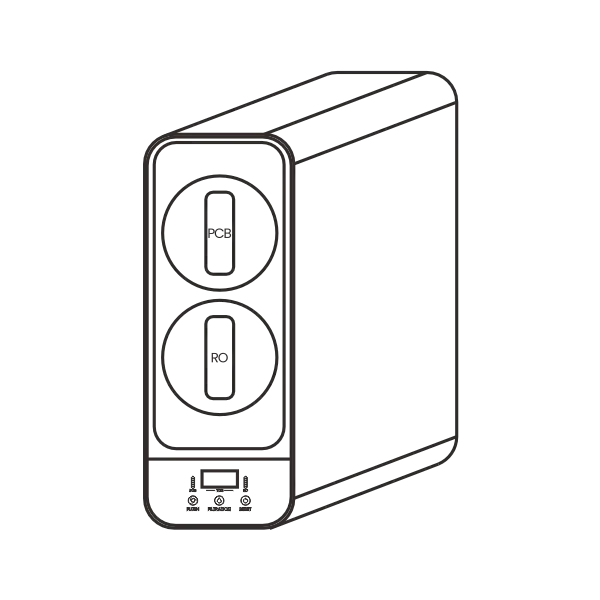
- Tankless RO System: This is the gold standard for modern homes. By removing the bulky storage tank, these systems provide a tankless reverse osmosis experience that delivers fresh water on demand, eliminates the risk of secondary tank pollution, and saves up to 70% of your cabinet space.
- Whole-House Systems: Also known as Point-of-Entry (POE) systems, these treat all the water entering your home. While great for protecting appliances from sediment and chlorine, they often lack the 0.0001-micron precision found in under-sink RO units.
Comparison of NSF Certified Systems
| System Type | Installation Ease | Flow Rate | Maintenance Level | Best For |
|---|---|---|---|---|
| Pitcher | Instant | Very Low | High (Frequent changes) | Single users, basic taste |
| Faucet-Mount | Easy | Medium | Medium | Renters, basic filtration |
| Standard RO | Complex | Low | High (Tank cleaning) | Large families with space |
| Tankless RO | Moderate | High | Low (Twist-and-pull) | Modern homes, high purity |
| Whole-House | Professional | Very High | Low | Total home protection |
Installation and Upkeep Considerations
Every nsf certified water filter comes with its own set of maintenance requirements. While pitchers are cheap upfront, the cost of frequent filter replacements adds up quickly. I always recommend looking at the long-term value. A tankless RO system might require a higher initial investment, but the ease of a “twist-and-seal” filter change that takes only three seconds—combined with the high flow rate of 600 or 800 GPD—makes it the most efficient choice for busy American households. When choosing, prioritize systems that offer easy DIY installation to save on professional plumbing fees.
Advantages of Switching to a Tankless Reverse Osmosis System
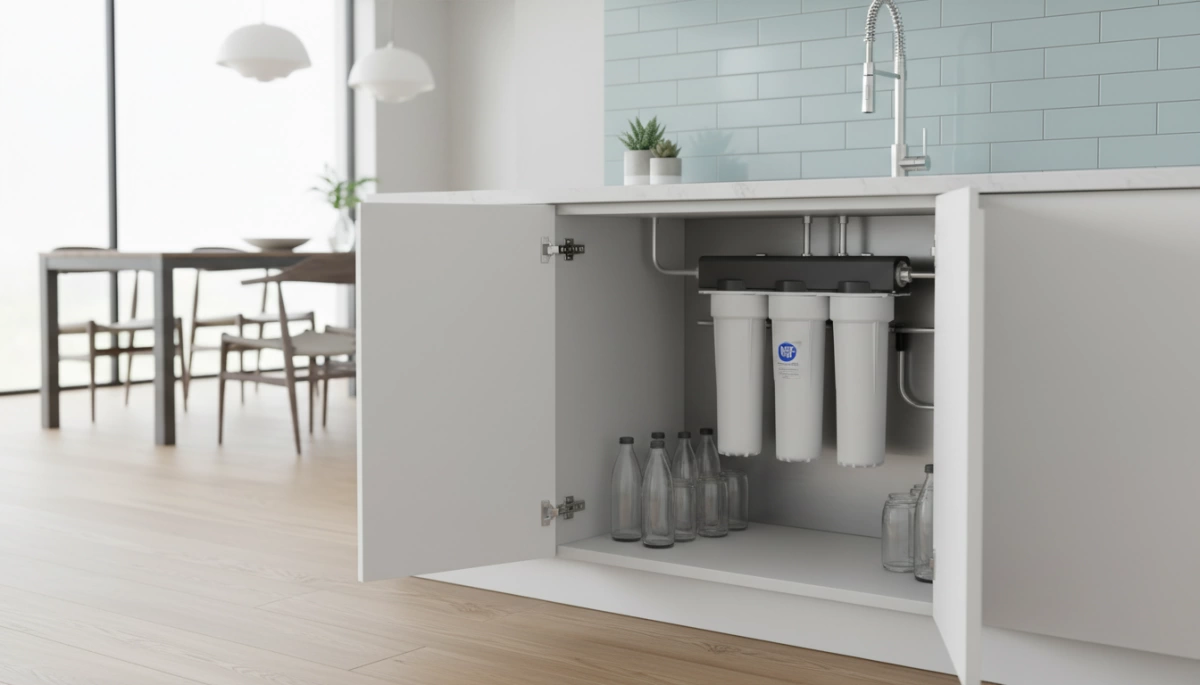
Traditional RO systems are often clunky and inefficient. We have redefined home filtration by removing the bulky storage tank, creating a more sanitary and streamlined experience. This tankless RO system design does more than just save space—it provides a safer, high-speed solution for your kitchen.
Unmatched Efficiency and Performance
- 70% More Space: By ditching the standard 3-gallon tank, you reclaim your under-sink storage for organizers and supplies.
- Instant High Flow: Our 800 GPD models deliver a high flow RO filter experience, filling a glass in seconds so you never have to wait.
- Eco-Friendly Design: We prioritize a superior water waste reduction ratio, reaching up to 3:1 efficiency, which saves thousands of gallons of water annually compared to older models.
- No Secondary Pollution: Without a storage tank, there is no place for stagnant water to sit or for bacteria to grow. Every drop is freshly filtered through the nsf certified water filter membrane on demand.
Smart Technology for Real-Time Peace of Mind
Our systems are built for the modern household, featuring integrated LED displays that take the guesswork out of water quality. You can track TDS reduction in real-time and see exactly when it is time for a 3-second “twist-and-pull” filter replacement. While some might consider a reverse osmosis filter pitcher for basic needs, an under-sink tankless system offers the ultimate high-capacity protection and convenience.
| Performance Metric | Traditional RO Systems | DripLife Tankless Systems |
|---|---|---|
| Installation Size | Large & Bulky | Compact & Slim |
| Pure-to-Drain Ratio | 1:3 or 1:4 (Heavy Waste) | 2:1 or 3:1 (Highly Efficient) |
| Water Quality Monitoring | Manual Testing Needed | Real-time TDS & Filter Life |
| Maintenance | Tools & Manual Flushing | 3-Second DIY Filter Change |
By choosing a system that eliminates the tank, you ensure that your drinking water remains as pure as the moment it passed through the filtration stages. Our focus on high-performance materials and smart monitoring makes it easier than ever to maintain a healthy home.
Spotlight on DripLife NSF Certified Tankless RO Systems
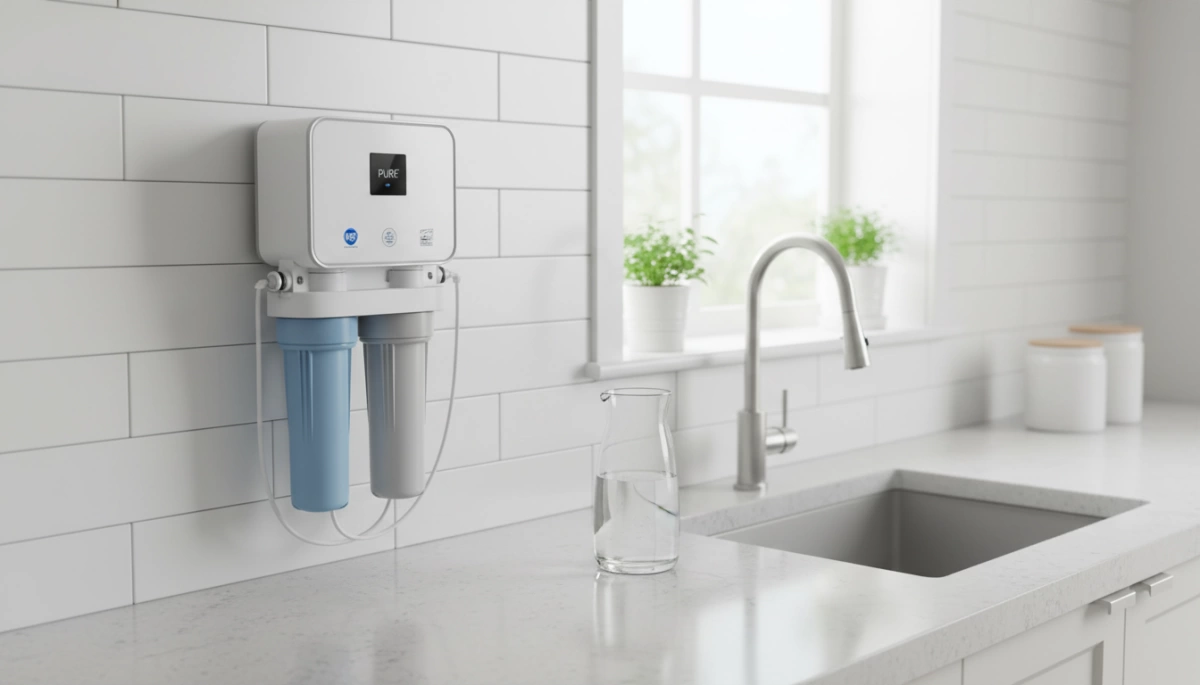
I designed the DripLife lineup to be more than just a basic filter; it is a professional-grade health solution for the modern American home. Every nsf certified water filter in our tankless collection is engineered to meet the rigorous NSF/ANSI 58 standard for contaminant reduction and the NSF/ANSI 372 standard for lead-free material safety. By utilizing a high-precision 0.0001-micron RO membrane, our systems effectively strip away 99.9% of over 1,000 harmful substances, including lead, fluoride, arsenic, and PFAS.
Understanding how a reverse osmosis water filter works helps highlight why this level of precision is the gold standard for home safety. Our technology focuses on high-performance output without the bulky, outdated storage tanks that often harbor bacterial growth.
Why DripLife Stands Out:
- Certified Protection: Fully compliant with NSF/ANSI 58 and 372 to guarantee a lead-free water system and superior TDS reduction.
- High-Flow Performance: Experience a high flow RO filter providing up to 800 GPD, ensuring you never wait for a glass of pure water.
- Smart Faucet Monitoring: Integrated LED displays provide real-time TDS levels and filter life tracking at a glance.
- 3-Second Maintenance: Our “twist-and-pull” design makes easy filter replacement a reality for any homeowner, requiring no tools or professional help.
- 30-Minute DIY Setup: The streamlined, tankless design fits into 70% less under-sink space and is ready for use in under half an hour.
This tankless RO system is a commitment to long-term health, providing a reliable certified drinking water treatment solution that adapts to your household’s daily demands. Whether you are dealing with municipal chlorine or complex heavy metals, our multi-stage filtration ensures every drop is crisp, clean, and safe.
Choosing the Best NSF Certified Water Filter
Finding the right filtration system for your home isn’t just about picking the first box you see on the shelf. I always tell my customers to start by looking at what is actually in their water and how much of it they use every day. An NSF certified water filter provides the baseline for safety, but the specific model needs to fit your lifestyle and your local water quality.
Match the System to Your Water Source
If you are on municipal city water, your main concerns are usually chlorine, fluoride, and potential lead from aging city pipes. However, modern contaminants like “forever chemicals” are becoming a major issue in many US suburbs. Choosing a high-quality water filter to remove PFAS is a smart move if you want to ensure your family’s long-term health. For those on well water, you might need a system that handles higher sediment levels or specific bacterial concerns.
Sizing for Your Household and Daily Use
The size of your family determines the flow rate you need. A small household might get by with a pitcher, but for a busy American kitchen, I recommend a tankless RO system. These provide a high flow RO filter experience, delivering pure water at 600 or 800 GPD (gallons per day) so you aren’t waiting around to fill a large pot for pasta.
- 1-2 People: A compact table-top RO water purifier is perfect for apartments or smaller counters.
- 3-5 People: An under sink water filtration system with at least a 600 GPD rating ensures no one runs out of clean water during peak hours.
- Large Families: Look for 800 GPD models with a high water waste reduction ratio to keep utility bills low.
Balancing Upfront Investment with Long-Term Value
Don’t just look at the price tag of the unit. I evaluate filters based on the “Total Cost of Ownership.” A cheaper filter that requires a $50 replacement every two months is far more expensive than a premium NSF/ANSI 58 certified system where the filters last a year or more.
The Essential Selection Checklist:
- Flow Rate: Ensure it meets your peak demand (look for 1.5L/min or higher).
- Certification: Verify it holds NSF/ANSI 58 for RO performance and NSF/ANSI 372 for lead-free materials.
- Maintenance: Prioritize “twist-and-seal” designs for easy filter replacement without calling a plumber.
- Footprint: Choose a tankless design to save up to 70% of your under-sink cabinet space.
- Warranty and Support: Stick with brands that offer a solid US-based warranty and clear installation guides.
Common Myths and FAQs About NSF Certified Water Filters
There is a lot of noise in the water filtration industry. As someone who builds these systems, I see homeowners get tripped up by marketing jargon every day. Let’s clear up the confusion so you can choose the right nsf certified water filter for your family’s health.
Debunking Filtration Myths
- Myth: All certified filters remove the same contaminants. This is the biggest mistake consumers make. A filter might be certified for chlorine taste odor removal (NSF 42) but do absolutely nothing for lead reduction or PFAS. You must verify the specific standard, like NSF/ANSI 58, for health-related contaminant removal.
- Myth: A higher price tag always means better certification. Price often reflects brand markup or retail overhead, not filtration power. My focus is on high-efficiency tankless RO systems that provide premium TDS reduction and lead-free water system components without the traditional middleman bloat.
Frequently Asked Questions
- How often do I actually need to replace the filters?
Standard carbon filters usually need a swap every 6 to 12 months. However, my systems feature smart LED monitoring and a “twist-and-pull” design, allowing for easy filter replacement in seconds. Our high-performance RO membranes are built to last up to 24 months, depending on your local water quality. - Can certified systems really remove PFAS and microplastics?
Yes, but only if they have the right membrane. An NSF/ANSI 58 certified reverse osmosis system with a 0.0001-micron filtration rating is the gold standard for eliminating “forever chemicals” like PFAS and microscopic plastic particles. If you prefer a setup that doesn’t require drilling under the sink, a countertop RO water filter system offers this same high-level protection with zero installation hassle. - RO vs. Carbon: Which certification do I actually need?
If you only care about the smell and taste of your water, a basic carbon filter is fine. But if you want a true certified drinking water treatment that tackles fluoride, arsenic, and heavy metals, a tankless reverse osmosis system is the only way to guarantee total safety.