
















Understanding Osmosis vs. Reverse Osmosis
To understand how our systems provide such high-purity water, we first look at the natural process of osmosis. In nature, water move across a semi-permeable membrane from a diluted solution to a more concentrated one. This continues until the osmotic pressure equalizes on both sides.
How External Pressure Reverses the Flow
At DripLife, we utilize advanced engineering to turn this natural process on its head. By applying high external pressure via a powerful internal pump, we force water in the opposite direction—moving it from a high-concentration area (contaminated tap water) through the membrane to a low-concentration area (pure drinking water).
- Pressure-Driven Filtration: The system uses mechanical force to overcome natural osmotic pressure.
- Contaminant Rejection: While water molecules are pushed through, dissolved solids and impurities are left behind.
- Pure Water Permeate: The result is high-quality, “permeate” water ready for immediate consumption.
The Precision of a 0.0001-Micron RO Membrane
The heart of our technology is the reverse osmosis membrane. We use a specialized membrane with a pore size of 0.0001 microns. To put this precision into perspective:
- Human Hair: Approx. 70 microns.
- Bacteria: Typically 0.5 to 5.0 microns.
- DripLife RO Membrane: 0.0001 microns.
At this microscopic scale, the membrane acts as a physical barrier that blocks virtually everything except the water molecule itself. This level of filtration is what allows our systems to effectively remove Total Dissolved Solids (TDS), heavy metals, and microscopic pathogens that standard pitcher filters simply cannot catch. By integrating this high-precision membrane into our tankless RO systems, we ensure you get the freshest purification possible without the risk of stagnant water.
Essential Components: How Does Reverse Osmosis Water Filter Work?
To fully grasp how does reverse osmosis water filter work, you must look at the specialized hardware that drives the process. A high-performance system is more than just a single filter; it is a coordinated multi-stage assembly designed to strip away impurities that standard filters leave behind.
Pre-Filtration: The Protection Layers
Before water reaches the sensitive core of the system, it passes through sediment and carbon block filters. These stages act as the frontline defense:
- Sediment Filter: Mechanically removes large physical particles such as rust, dirt, and sand.
- Carbon Block: Adsorbs chlorine, volatile organic compounds (VOCs), and unpleasant odors. This stage is critical because chlorine can chemically degrade the RO membrane over time.
The Heart of the System: The RO Membrane
The RO membrane stage is where the actual “reverse osmosis” occurs. Our systems utilize a membrane with a 0.0001-micron precision—a microscopic pore size that is virtually impenetrable to most contaminants. Under the force of a high-pressure pump, water is pushed through this semi-permeable membrane, leaving behind Total Dissolved Solids (TDS), heavy metals like lead and arsenic, and even nitrates. The result is a highly purified pure water permeate.
Post-Filtration and Final Polishing
The final stage typically involves a post-activated carbon filter. This “polishes” the water just before it reaches your faucet, removing any final traces of taste or odor to ensure the water is crisp and refreshing. For those who need high-quality filtration in a more portable format, our water filter pitcher with wooden handle provides an excellent secondary option for clean water throughout the home.
Hardware Evolution: Traditional Tanks vs. Modern Tankless
The industry has seen a massive shift in how these components are packaged, focusing on space and hygiene:
- Traditional RO Systems: These use a bulky storage tank to hold filtered water. However, standing water in a tank can lead to secondary pollution and takes up roughly 70% of your under-sink space.
- DripLife Tankless RO: We have pioneered high-capacity, tankless designs with 600 GPD to 800 GPD (Gallons Per Day) flow rates. By filtering water on demand, we eliminate the need for a tank, save space, and ensure the water you drink is always fresh. This advanced design also optimizes the pure water to drain ratio, achieving up to 2:1 efficiency, which significantly reduces wastewater compared to older models.
Step-by-Step: How the Reverse Osmosis Process Works
Understanding how does reverse osmosis water filter work requires looking at the specific journey water takes through our multi-stage systems. We’ve designed our tankless units to provide high-pressure filtration that ensures every drop is purified the moment you turn on the faucet. By comparing different types of water purification methods, it becomes clear that our systematic approach offers the highest level of safety and efficiency.
Stage 1: Sediment Pre-Filtration
The process begins by capturing the “heavy hitters.” Our sediment filter acts as the first line of defense, trapping large physical particles such as:
- Rust and sand from aging pipes.
- Dirt and silt that often cloud tap water.
- Large suspended solids that could clog the delicate RO membrane.
Stage 2: Carbon Block Filtration
Next, the water passes through a high-grade carbon block filter. This stage is critical for chemical removal. It adsorbs chlorine, chloramines, and volatile organic compounds (VOCs) that affect the smell and taste of your water. Removing chlorine here is also essential to protect the RO membrane from chemical degradation.
Stage 3: The RO Membrane Stage
This is the heart of the system. We use a high-pressure pump to force water through a semi-permeable membrane with a 0.0001-micron rating. At this level of precision, the system blocks virtually everything except pure water molecules.
- Contaminant Rejection: It effectively strips away Total Dissolved Solids (TDS), including lead, arsenic, fluoride, and heavy metals.
- Efficiency: Our advanced technology maintains a 2:1 pure-to-waste ratio, ensuring you get more clean water with significantly less waste than traditional systems.
Stage 4: Final Polishing and Monitoring
Before the water reaches your glass, it goes through a final polishing stage using activated carbon to ensure a crisp, refreshing taste. Unlike older systems that store water in a tank where it can stagnate, our tankless design purifies water on demand.
To give you peace of mind, our smart faucets include a real-time TDS display. This allows you to monitor the RO filtration stages directly, seeing the immediate difference in water quality before and after the purification process. For those looking for a versatile setup, our countertop RO water filter system offers the same high-precision filtration without the need for under-sink plumbing.
What Contaminants Does Reverse Osmosis Actually Remove?
When discussing how does reverse osmosis water filter work, the focus is always on the microscopic level. Our systems use a 0.0001-micron RO membrane, which is the gold standard for contaminant removal. This precision barrier is designed to stop virtually everything except pure water molecules from passing through to your faucet.
Heavy Metals and Forever Chemicals
We prioritize the removal of high-risk pollutants that are common in many American municipal and well water sources. Our multi-stage process effectively targets:
- Heavy Metals: Complete filtration of lead, arsenic, and mercury.
- Forever Chemicals: High-efficiency removal of PFAS and PFOA, industrial chemicals that traditional filters often miss.
- Inorganic Salts: Significant reduction in Total Dissolved Solids (TDS), including nitrates and sulfates.
Lead and Fluoride Reduction
Many households are specifically concerned about lead and fluoride reduction. While some basic filters only tackle taste and odor, our reverse osmosis membrane handles the heavy lifting, stripping away these stubborn elements. We also use high-grade carbon blocks to eliminate chlorine and volatile organic compounds (VOCs) that ruin the flavor and safety of your tap water.
RO vs. Standard Pitcher Filters
It is important to understand the difference between a high-pressure RO system and a standard water purifier pitcher. While pitchers are convenient for basic sediment and chlorine reduction, they lack the semi-permeable membrane and pressure required to remove dissolved solids and heavy metals. For a total household health solution, the RO process provides a level of purity that gravity-fed filters simply cannot match.
Real Benefits of Home Reverse Osmosis Filtration
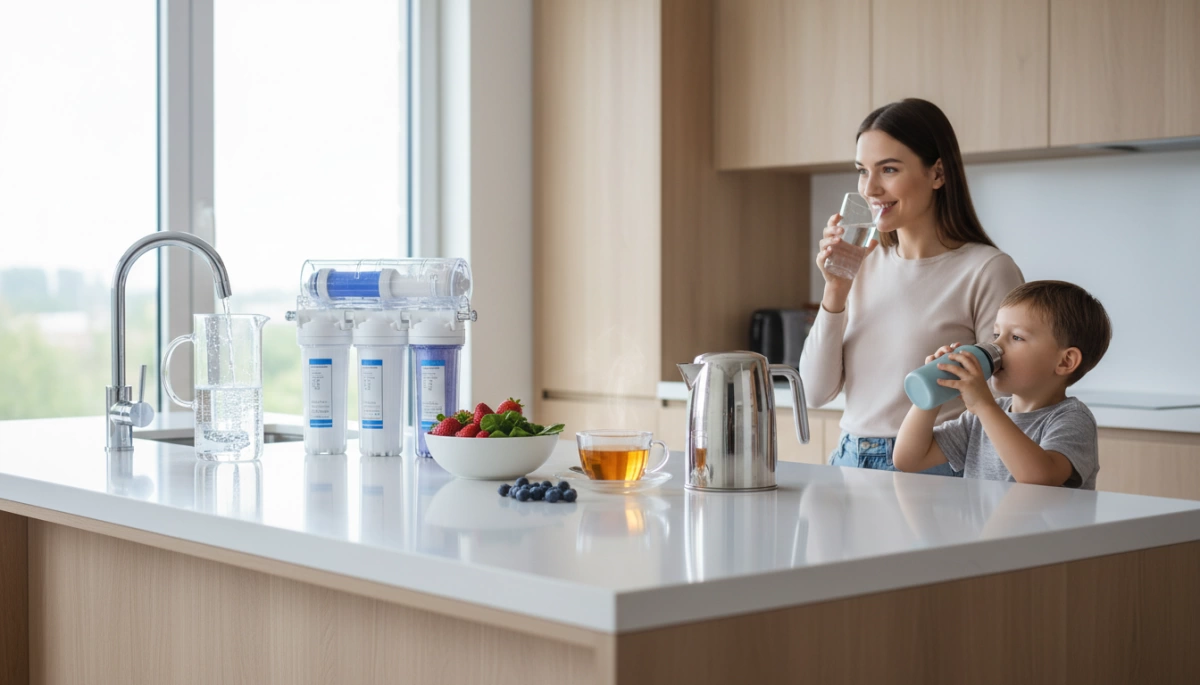
Installing a high-quality RO system does more than just clean your water; it completely changes how you experience hydration at home. When you understand how does reverse osmosis water filter work, you realize the primary benefit is the dramatic reduction in Total Dissolved Solids (TDS). By pushing water through a 0.0001-micron RO membrane, we ensure that your family is drinking pure water permeate that is free from heavy metals, “forever chemicals” like PFAS, and arsenic.
Health and Culinary Advantages
The impact on your kitchen is immediate. Because our tankless RO system removes chlorine and minerals that cause scale, your coffee, tea, and home-cooked meals taste exactly how they should.
- Better Flavor: Clearer ice cubes and crisp-tasting water without the “chemical” aftertaste of tap.
- Healthier Hydration: Significant contaminant removal provides peace of mind for households concerned about lead or nitrates.
- Convenience: Our 600 GPD and 800 GPD systems provide a cup of water in just 8 seconds, making it easy to ditch plastic bottles for good.
Efficiency and Sustainability
Modern engineering has fixed the flaws of older technology. Our systems are designed to be highly efficient, boasting a 2:1 pure-to-waste ratio. This means you get more clean water with significantly less “brine” going down the drain compared to traditional bulky units. By choosing an under-cabinet water filter system, you also reclaim up to 70% of your storage space.
| Benefit Category | Impact of DripLife RO Systems |
|---|---|
| Water Quality | Lowers TDS to near-zero levels using 0.0001-micron precision. |
| Waste Reduction | High 2:1 efficiency ratio minimizes wastewater. |
| Space Saving | Tankless design eliminates bulky, secondary-pollution-prone tanks. |
| Eco-Friendly | One filter set replaces thousands of single-use plastic bottles. |
The move to a high-flow, tankless setup ensures that your water is always fresh and moving, never sitting stagnant in a storage tank. This shift toward on-demand purification is the gold standard for modern American homes looking for safety and performance.
Common Myths and Facts About Reverse Osmosis Efficiency
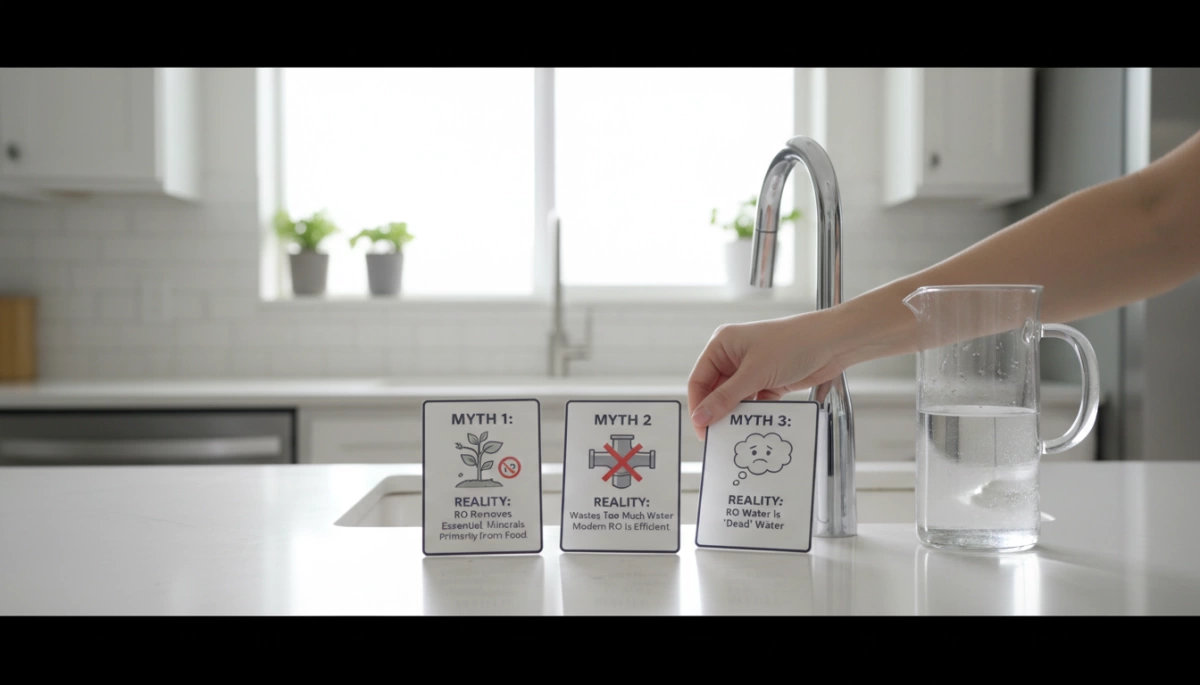
Many people hesitate to install a reverse osmosis water filter because of outdated information. I want to clear up the most common misconceptions regarding water waste, minerals, and overall health safety.
- The Wastewater Reality: Older RO units were notorious for wasting water. Modern DripLife technology has solved this with a superior wastewater ratio. Our systems achieve up to a 2:1 pure-to-waste ratio, which means you get twice as much pure water for every gallon of drain water. This is a massive improvement over traditional systems that often wasted four gallons for every one produced.
- Mineral Content and Health: It is a fact that an RO membrane removes minerals along with contaminants. However, the human body gets the vast majority of its essential minerals from food, not drinking water. Purifying your water ensures you aren’t consuming harmful Total Dissolved Solids (TDS) just to get a trace amount of minerals.
- Microbial Protection: Because our filtration accuracy is a precise 0.0001 microns, these systems are naturally effective against bacteria and viruses. This physical barrier is much more reliable for home safety than standard pitcher filters.
- Long-Term Safety: Drinking purified, low-TDS water is a healthy choice for the modern American home. It is the most effective way to ensure you aren’t consuming “forever chemicals” or heavy metals. Before choosing a system, how to tell if your water is hard or soft can help you understand the mineral load your system will be processing daily.
My focus is on providing high-pressure, high-flow purification that balances environmental efficiency with absolute water safety. By utilizing a high-pressure pump and advanced composite filters, we’ve made the reverse osmosis process more sustainable and effective for long-term health.
Maintaining Your Reverse Osmosis System for Peak Performance
To keep understanding how does reverse osmosis water filter work at its best, you have to stay on top of the maintenance. While traditional systems are a headache to service, our tankless, high-flow designs make upkeep a 30-second task. Consistent maintenance ensures the 0.0001-micron RO membrane continues to block heavy metals and TDS without losing water pressure.
Filter Replacement Schedules
Keeping your water pure means swapping out filters before they become clogged or saturated.
- Composite Filters: These usually need a swap every 12 months. They handle the pre-filtration, protecting the more expensive RO membrane from chlorine and large debris.
- RO Membrane Stage: The powerhouse of the system. Depending on your water usage, these high-capacity membranes last between 12 to 24 months.
- Tankless Advantage: Because there is no storage tank, you don’t have to worry about sanitizing a pressurized vessel or dealing with stagnant water.
Monitoring Total Dissolved Solids (TDS)
The easiest way to tell if your system is working is by checking the Total Dissolved Solids (TDS) levels. Our smart faucets feature real-time TDS displays so you can see the filtration efficiency instantly. A significant rise in the “Filtered TDS” number is your primary indicator that the RO membrane is reaching the end of its lifespan and its selective permeability is weakening.
DIY-Friendly Maintenance
We designed our systems for the modern homeowner. You don’t need a plumber for routine service.
- Twist-and-Pull Design: Our filters can be replaced with a simple twist—no tools or heavy scrubbing required.
- Leak Protection: The integrated water circuit reduces the number of connection points, significantly lowering the risk of leaks during a filter change.
- Microbial Safety: Ensuring effective UV water treatment is active during your regular maintenance checks adds an extra layer of protection against bacteria and viruses.
By following these simple steps, you ensure your 600 GPD or 800 GPD system maintains its high pure water to drain ratio and continues to provide instant access to clean, healthy water.
Choosing the Best Reverse Osmosis System for Your Home
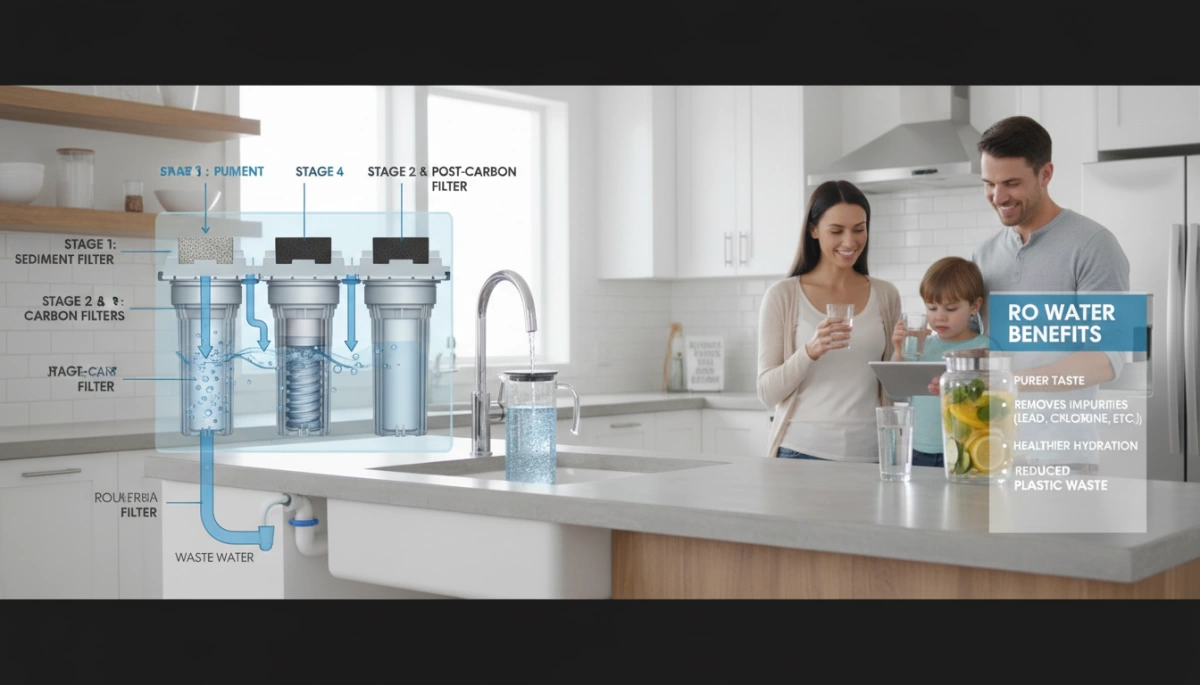
When deciding on a filtration setup, start by evaluating your daily water demand and the quality of your source water. For most American households, a high-capacity system is essential. We’ve engineered our units to deliver 600 GPD to 800 GPD (Gallons Per Day), ensuring you get a fresh glass of water in about 8 seconds without the lag common in older technology.
Why Tankless Designs Are the Superior Choice
Modern kitchens demand efficiency and space. Traditional RO units with bulky storage tanks take up massive amounts of room and pose a risk of secondary contamination from standing water. Our tankless RO system solves these issues by filtering water in real-time.
- Space Savings: These designs reclaim up to 70% of your under-sink storage area.
- Maximum Freshness: Because there is no tank, you are always drinking “moving” water rather than water that has sat for days.
- Superior Efficiency: Our systems offer up to a 2:1 pure-to-waste ratio, which is a significant upgrade over traditional systems that waste several gallons for every one gallon produced.
Essential Smart Features to Look For
A high-quality system should provide transparency. We include integrated TDS (Total Dissolved Solids) displays directly on the faucet, allowing you to see exactly how well the RO membrane is performing in real-time. Understanding the benefits of faucet filtration systems highlights how vital these smart indicators are for maintaining household health and knowing exactly when a filter needs replacing.
Simplified Installation and Safety
When you understand how does reverse osmosis water filter work, it becomes clear that the integrity of the water circuit is vital. We utilize an integrated water circuit design to minimize leak points and simplify the setup process.
- 30-Minute DIY Install: No professional plumber is required for our streamlined systems.
- Twist-and-Pull Maintenance: Changing the high-capacity composite filters takes seconds, ensuring your 0.0001-micron filtration stays effective for the long haul.
- Leak Detection: Built-in safeguards provide peace of mind for under-sink installations.
Frequently Asked Questions About How Reverse Osmosis Water Filters Work
Clear communication is part of the DripLife experience. Here are the most common questions we hear from homeowners looking to upgrade their water quality.
How long does a reverse osmosis system last?
A well-maintained system can provide pure water for a decade or more. The housing is built for durability, but the filters are the workhorses. Our high-capacity composite filters generally last 12 to 24 months, while the reverse osmosis membrane itself is designed for long-term precision. To keep everything running smoothly, it’s essential to understand how does a water purifier work and follow the integrated filter life indicators on your faucet.
Does reverse osmosis remove fluoride and lead?
Yes. Our 0.0001-micron filtration technology is specifically engineered for lead and fluoride reduction. Because the pores in the RO membrane are so incredibly small, they block over 1,000 types of contaminants, including heavy metals, arsenic, and nitrates. This process significantly lowers the Total Dissolved Solids (TDS) in your water, leaving you with nothing but H2O molecules.
Can I install an RO system by myself?
We’ve eliminated the need for expensive plumbing appointments. Our tankless RO system features an integrated water circuit design that minimizes leak points. Most users can complete the DIY installation in approximately 30 minutes. The twist-and-pull filter design also makes future maintenance a breeze, requiring no tools and no water shut-off.
Is the wastewater from RO safe for plants?
The “waste” water, or brine, is simply water that carries away the filtered-out contaminants. While it isn’t suitable for drinking, it is perfectly fine for:
- Watering your lawn or ornamental (non-edible) plants.
- Mopping floors or general outdoor cleaning.
- Flushing toilets.
Because our systems operate at a high 2:1 pure-to-waste ratio, you produce significantly less wastewater than traditional, bulky tank systems.
Does the system require a lot of space?
Not at all. By choosing a tankless RO system, you save up to 70% of the space under your sink. We’ve replaced the massive 3-gallon storage tank with a high-pressure pump that provides on-demand filtration at a 600 GPD to 800 GPD flow rate. You get fresh, purified water instantly without the clutter.

