















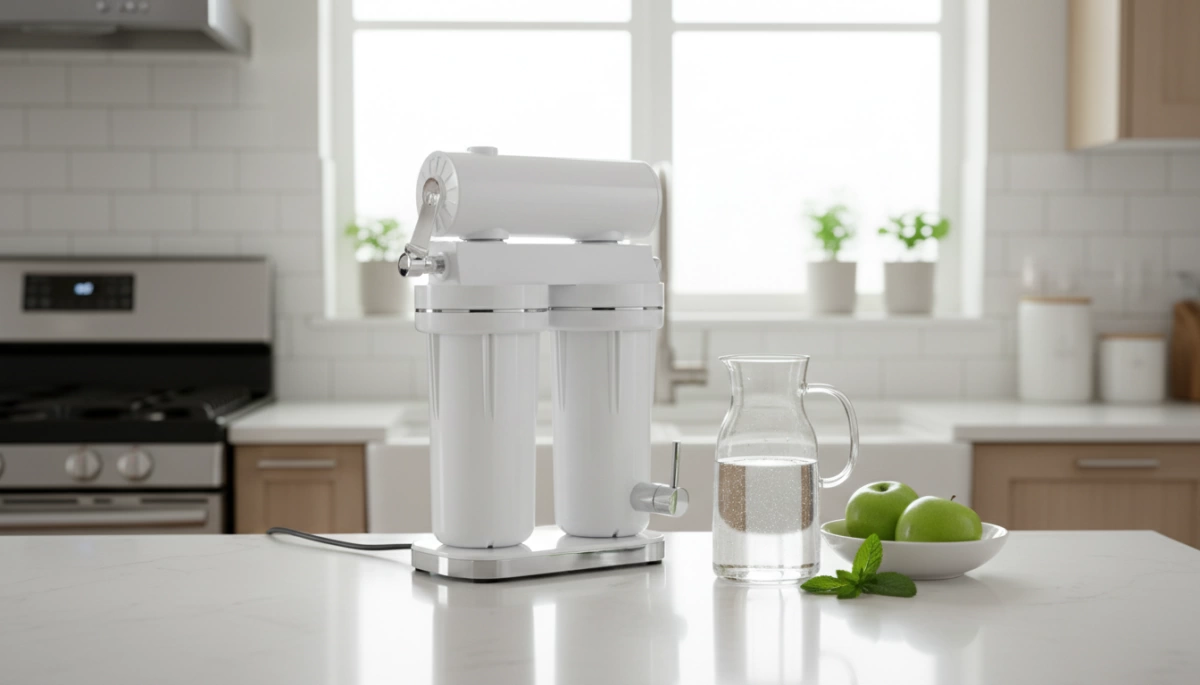
What Is a Countertop RO Water Filter System?
When people ask me about cleaner drinking water at home or in the office, they usually want three things: better taste, real contaminant removal, and zero plumbing hassle. That’s exactly where a countertop RO water filter system comes in.
A countertop reverse osmosis system is a compact RO water filter that sits on your kitchen counter, office breakroom, or small space and purifies tap water using reverse osmosis (RO) filtration—the same core technology used in many under-sink systems, but in a portable, plug-and-play format.
Quick Intro: How RO Water Filtration Works
Reverse osmosis uses a semi-permeable RO membrane with extremely tiny pores to remove dissolved contaminants from water. Under pressure, water is pushed through this membrane while most impurities are rejected and flushed away.
A typical countertop RO drinking water filter can reduce:
- Total Dissolved Solids (TDS) for cleaner taste
- Heavy metals like lead, arsenic, and chromium
- Chlorine and chloramine that cause bad taste and odor
- Fluoride, nitrates, some PFAS, and other chemicals
- Many microorganisms, depending on the system design
The result is low-TDS, fresh-tasting RO water that’s ideal for drinking, coffee, tea, and cooking.
What Makes It a “Countertop RO System”?
Not every countertop filter is truly RO. To count as a countertop RO water filter system, it must:
- Use a true RO membrane (not just carbon or basic sediment filters)
- Sit on the counter with no permanent under-sink installation
- Operate as a portable reverse osmosis water filter that can be moved easily
- Often plug into a standard outlet and/or connect to your faucet or use a manual-fill tank
In other words, it’s a compact RO system for small kitchens and rentals that gives you under-sink–level filtration without drilling holes or calling a plumber.
Who Is a Countertop RO System Best For?
From my experience, a countertop RO purifier is ideal if you:
- Rent an apartment and can’t modify plumbing
- Have a small kitchen with limited cabinet space
- Want a no-installation countertop water filter you can set up in minutes
- Need an office countertop RO water dispenser for staff or clients
- Live in a dorm, temporary housing, or RV and need portable, high-quality water
- Want better water but don’t want to commit to a built-in system yet
If you’ve been stuck between bottled water and basic pitcher filters, a plug-and-play RO water filter on your counter is usually the smartest middle ground.
Basic Parts of a Countertop RO Water Filter System
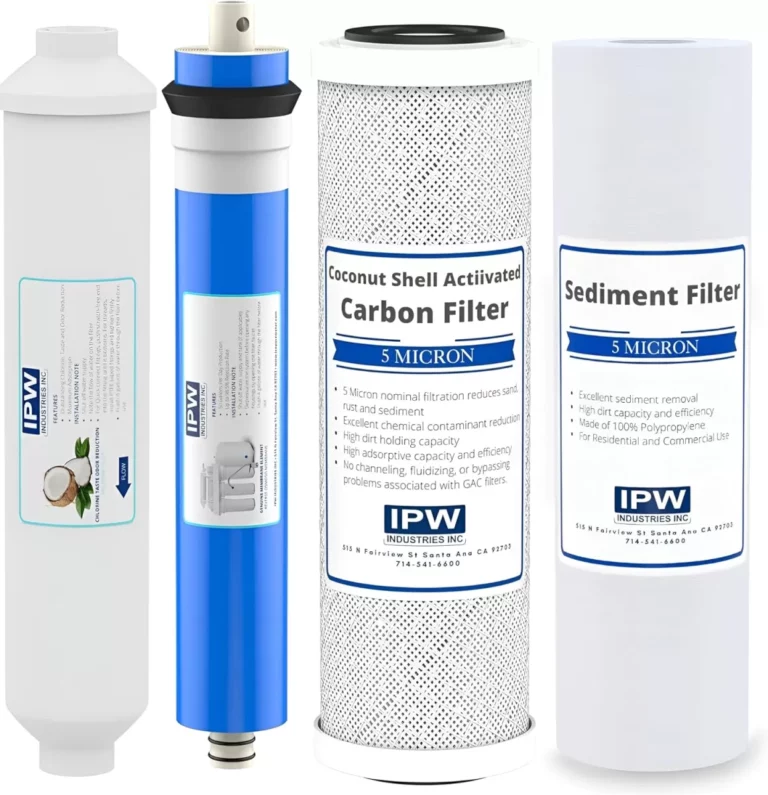
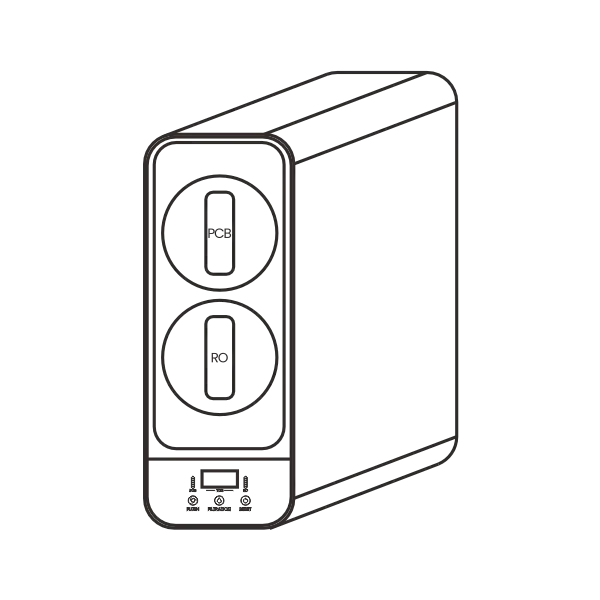
Most multi-stage countertop water filtration units share a similar structure. While designs vary, you’ll typically find:
Pre-filters (sediment & carbon)
- Remove sand, rust, dirt, and chlorine
- Protect the RO membrane from clogging and damage
RO membrane
- The core of the countertop water purifier with RO membrane
- Removes dissolved solids, heavy metals, and many contaminants
Post-carbon filter / polishing filter
- Improves taste by removing leftover odors and fine particles
- Some systems remineralize to adjust taste and pH
Water tank or tankless system
- Tank systems store purified water for on-demand use
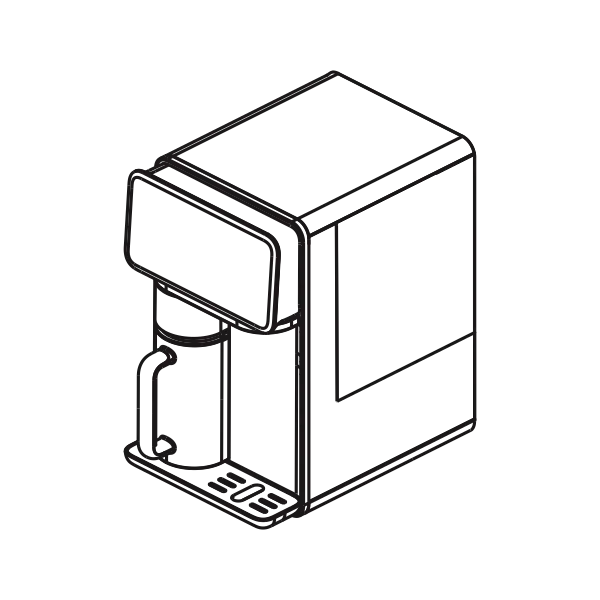
- Tankless countertop RO purifiers filter fresh water as you dispense
Feed connection or reservoir
- Manual-fill countertop RO purifiers: you pour tap water into a top or rear tank
- Faucet-connected countertop RO systems: attach to your kitchen faucet or a diverter
Control panel or “smart” indicators (on newer models)
- TDS display, filter life indicators, and status lights for user-friendly control
Put simply, a countertop RO water filter system gives you serious purification power in a compact, portable format, built specifically for modern US kitchens, offices, and rental spaces where convenience matters as much as performance.
How a Countertop RO Water Filter System Works
A countertop RO water filter system takes your tap water and runs it through several smart stages of filtration to give you clean, low-TDS drinking water without permanent plumbing.
Reverse osmosis membrane in a countertop RO system
At the core of every countertop reverse osmosis system is the RO membrane. This is a tight, semi-permeable sheet that only lets water molecules pass while blocking most dissolved solids and contaminants. In simple terms:
- Tap water is pushed through the RO membrane under pressure
- “Pure” water passes through to the clean side
- Rejected contaminants are flushed out with the wastewater
A good countertop water purifier with RO membrane can remove a huge portion of dissolved salts, heavy metals, and other invisible pollutants that regular carbon filters can’t touch.
Multi-stage filtration in countertop RO units
Most multi-stage countertop water filtration systems are built as a stack of filters, not just one membrane. A typical countertop RO drinking water filter uses:
- Sediment pre-filter – Catches sand, rust, dirt, and larger particles so they don’t clog the RO membrane
- Carbon pre-filter – Reduces chlorine, chloramine, and organic chemicals that affect taste and can damage the membrane
- RO membrane – Handles the heavy lifting, cutting dissolved solids and contaminants
- Post carbon or polishing filter – Fine-tunes taste by improving odor, flavor, and any leftover trace chemicals
This layered approach gives you better water quality and helps each stage last longer. If you want a deeper dive into similar multi-stage setups, you can compare them with under-sink reverse osmosis systems commonly used in the U.S. kitchen market, like the ones discussed in this guide to under-sink water purification systems.
What a countertop RO system removes from tap water
A quality countertop RO system is designed to reduce:
- Dissolved solids (TDS) – calcium, magnesium, sodium, and other minerals
- Heavy metals – lead, arsenic, chromium, cadmium
- Chemicals – chlorine, some pesticides, VOCs, PFAS (depending on the carbon stage)
- Fluoride – significantly reduced by the RO membrane
- Microorganisms – many bacteria and certain parasites (though for seriously contaminated well water, extra disinfection is still smart)
If your tap water has strong chlorine smell or a slight metallic taste, a countertop RO drinking water filter usually makes a noticeable difference after the first tank.
TDS reduction and taste improvement
Most TDS reduction countertop RO filter systems cut total dissolved solids by 90–95% when the membrane is in good shape. You’ll typically see:
- High-TDS tap water (e.g., 250–500+ ppm) → RO water in the 10–50 ppm range
- Softer, smoother taste with less bitterness or hardness
- Cleaner flavor for coffee, tea, and cooking
Many newer tankless countertop RO purifiers include built-in TDS meters so you can see the before-and-after numbers in real time. This gives you a quick way to confirm the system is doing its job and to know when it’s time to swap filters.
Countertop RO vs Under-Sink RO Systems
When you’re choosing between a countertop RO water filter system and an under-sink RO system, it really comes down to installation, space, maintenance, and long‑term value.
Plug-and-Play vs. Under-Sink Plumbing
A countertop reverse osmosis system is basically plug-and-play:
- No plumbing, no drilling – most units either:
- Connect to the faucet with a quick adapter, or
- Are fully no-installation countertop water filters you just plug into a power outlet and fill manually.
- Setup usually takes 5–15 minutes and you can remove it anytime (perfect for renters and short-term housing).
An under-sink RO system is different:
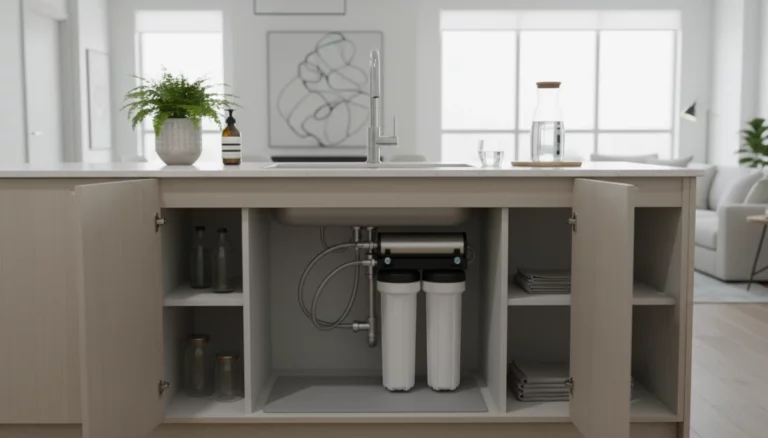
- Requires permanent plumbing changes under the sink.
- Often needs a drain saddle, separate RO faucet, and drilling through the countertop or sink.
- Many people hire a plumber, which adds to the upfront cost.
If you’re curious how a traditional system is installed and configured, you can see a typical setup in our guide to an under-sink RO system.
Space and Mobility for Small Kitchens, Offices, and Rentals
A compact countertop RO system works best when:
- You have a small kitchen in an apartment or condo.
- You need a portable reverse osmosis water filter for:
- Offices and shared workspaces
- Dorm rooms
- Rental apartments
- RVs and short-term rentals
You can move a tankless countertop RO purifier from home to office or take it with you when you move. Under-sink RO systems are basically fixed in place and stay with the property.
Ease of Maintenance and Filter Changes
With a countertop RO drinking water filter, maintenance is simple:
- Front-access panels or twist-lock cartridges.
- Filter changes usually take under 5 minutes, no tools.
- Built-in TDS reduction countertop RO filter monitors and change indicators on some smart models.
Under-sink RO setups:
- Filters are tucked away in the cabinet.
- You’re often on your knees, reaching around pipes.
- Some models use wrench-style housings that can be harder to open.
For most U.S. households that want convenience, a plug and play RO water filter on the counter is just easier to live with day to day.
Cost Comparison and Overall Value
Here’s how costs usually stack up:
Countertop RO water filter system
- Higher upfront than basic pitcher filters, but no plumber cost.
- Great value if you move often or want a portable, multi-stage countertop water filtration solution.
- You’re paying for flexibility, design, and ease of use.
Under-sink RO system
- Hardware cost can be similar, but:
- Add plumber installation,
- Plus any countertop drilling or faucet upgrades.
- Often better if you own your home long-term and want a higher, fixed daily output.
- Hardware cost can be similar, but:
If you want clean RO water now, without touching your plumbing, a countertop RO system gives you the best balance of upfront price, convenience, and real-world value for money.
Do Countertop RO Water Filter Systems Really Work?
Countertop RO water filter systems absolutely work when they’re built with a quality RO membrane and solid multi-stage filtration. In real homes and offices, I consistently see countertop reverse osmosis systems cutting TDS by 80–95%, often taking tap water in the 250–500 ppm range down to 10–40 ppm. That’s the clean, crisp-tasting water most people are looking for.
Real-World Performance of Countertop RO Filters
A good countertop RO drinking water filter will usually deliver:
- Noticeable TDS reduction (you can verify with a cheap TDS meter)
- Much better taste and smell (chlorine and “chemical” taste are basically gone)
- Clearer water with no visible particles or cloudiness
- Stable performance as long as you replace filters on time and keep the unit clean
Many of the same technologies used in larger under-sink units or a faucet-mounted purifier are built into compact RO systems now, just in a plug and play RO water filter format for your countertop.
What Countertop RO Systems Remove
Because of the RO membrane plus pre-filters, a quality countertop reverse osmosis system can reduce:
- Heavy metals: lead, arsenic, chromium, cadmium, mercury
- Chlorine and chloramine: removed by the carbon stages
- PFAS (“forever chemicals”): many systems significantly reduce them when the membrane and carbon are high quality
- Fluoride: RO is one of the most effective ways to cut fluoride levels
- Nitrates and nitrites
- Microorganisms: many bacteria, some viruses, and cysts are physically rejected by the membrane
- Sediment & rust: caught in pre-filters before they hit the RO membrane
If you want to be sure, look for lab test reports or NSF/ANSI 58 or related certifications that show actual contaminant reduction claims, not just marketing.
Limits of Countertop RO Systems
Even the best countertop RO water filter system has some limits you should know before you buy:
- Output speed: Most compact RO systems are slower than a standard faucet. You’re filling bottles and pitchers, not running a high-flow bar sink.
- Daily capacity: Check GPD (gallons per day). For a family that drinks a lot of water, a low-GPD unit can feel too slow.
- Wastewater ratio: RO always produces some reject water. Countertop units might be around 2:1 to 3:1 (2–3 gallons of waste for 1 gallon of purified), though some newer “tankless countertop RO purifiers” are more efficient.
- Not whole-house: These are point-of-use systems—meant for drinking and cooking water, not showers or laundry.
- Pressure sensitivity (for direct-connect types): If your home has very low water pressure, performance can drop unless the system has a built-in pump.
When a Countertop RO System Is Not the Best Fit
A countertop RO water filter system isn’t right for everyone. I’d look at other options if:
- You need high flow for multiple sinks or a big household
- You want filtered water for everything (showers, laundry, outdoor spigots)
- Your water has serious well water problems (iron, sulfur, extreme hardness) that need pre-treatment
- You have very limited counter space and can’t spare room for a compact RO system
- You’re okay with minor filtration only and just want a simple carbon faucet filter (a lower-commitment option from water purifier suppliers like this faucet filter line)
If what you care about is clean, great-tasting drinking water without calling a plumber, a no installation countertop water filter with RO membrane is one of the most effective and practical options for U.S. homes, rentals, and offices.
Types of Countertop RO Water Filter Systems
When you’re shopping for the best countertop RO water filter system, it really comes down to how you plan to use it every day. Here’s how the main types break down and who they fit best.
Manual-Fill Countertop RO Water Filter Systems
A manual-fill countertop RO water filter system has its own built‑in reservoir that you fill by hand.
What it’s like to use:
- You pour tap water into the top tank.
- The countertop reverse osmosis system pulls water through the RO membrane and stores clean water in a separate tank.
- You dispense purified water from a front spout or faucet.
Best for:
- Renters who can’t touch the plumbing
- Apartments, dorms, and RVs
- People who want a portable reverse osmosis water filter they can move or store away
This style is truly no installation—plug it in, fill it, and go.
Direct-Connect Faucet Countertop RO Systems
A direct-connect countertop RO system hooks up to your kitchen faucet using a simple adapter.
How it works:
- A small tube connects from the system to your faucet.
- Turn on the tap, switch the diverter, and water feeds straight into the countertop RO drinking water filter.
- Pure water comes out of the unit; wastewater usually goes down the sink.
Best for:
- Households that use a lot of drinking and cooking water
- Home offices or break rooms that need a faucet connected countertop RO system
- Users who want RO performance closer to an under‑sink system but still countertop and removable
It’s still “no plumber needed,” just a quick faucet hookup.
Tank vs. Tankless Countertop RO Systems
Both manual-fill and direct-connect units can be either tank or tankless.
Tank countertop RO systems:
- Store a set amount of purified water (for example, 1–2 gallons).
- Great for families that want water ready on demand.
- Slightly larger footprint but fewer “waiting” moments.
Tankless countertop RO purifiers:
- Filter water on demand with no storage tank.
- Slimmer design, more modern look—ideal for a compact RO system for a small kitchen.
- You may have a brief wait while it fills bottles or pitchers.
If you care more about always‑ready water, go tank. If you care more about a minimal footprint and fresh‑filtered taste every time, go tankless. If you’re curious how RO-treated water behaves over time in storage, you can also check how **pH of reverse osmosis water
How to Choose the Best Countertop RO Water Filter System
Picking the best countertop RO water filter system comes down to matching the unit to your water, your space, and your daily habits—not just the price tag.
Match the System to Your Water Quality
Start with your tap water:
- City water (chlorine, taste, odor)
- Focus on: strong carbon pre-filters, good TDS reduction, and a post-carbon filter for taste.
- Old pipes / lead risk / heavy metals
- Look for: certified reduction for lead and heavy metals, high-rejection RO membrane, and verified test reports.
- Hard water / well water
- Choose: models that accept pre-softening or pre-filtration, and check the max TDS/hardness the system can handle.
- Chloramine-treated water (common in US cities)
- You want: systems with catalytic carbon designed to handle chloramine.
If you’re not sure what’s in your water, grab a basic TDS meter or your city’s water report. Many brands (including us) use that data to guide you into the right countertop reverse osmosis system.
Key Specs to Compare
When you compare countertop RO drinking water filters, don’t just look at “4-stage” vs “5-stage”. Focus on concrete numbers:
| Spec | What It Means | What to Look For (Typical Home) |
|---|---|---|
| GPD (Gallons Per Day) | How much pure water the RO membrane can make | 50–100+ GPD for 1–4 people |
| TDS Reduction % | How much dissolved solids are removed | 90–95%+ TDS reduction countertop RO filter |
| Tank Size / Storage | How much ready-to-drink water is stored | 0.5–1.5 gallons (or fast tankless output) |
| Wastewater Ratio | Pure water vs drain water | 1:1 to 1:3 is solid for countertop RO |
| Stages of Filtration | How many steps the water passes through | At least: sediment + carbon + RO + post-carbon |
Also check RO membrane quality (brand, micron rating, rated life) and whether performance is backed by NSF/ANSI 58-style testing or equivalent lab reports.
Certifications and Safety
For US households, certifications are non‑negotiable if you care about safety:
- NSF/ANSI 58 – The gold standard for RO performance (TDS reduction and structural integrity).
- NSF/ANSI 42 & 53 – For chlorine, taste/odor, and certain health-related contaminants.
- Food-grade materials – BPA-free plastics, lead-free water paths, and certified tubing/connectors.
- Independent lab testing – Look for posted test reports, not just marketing claims.
If you’re working with an OEM reverse osmosis countertop manufacturer or thinking about private label countertop RO water filters, build these standards into your spec sheet from day one. It’s the same approach we follow in our own product development and water filtration innovation work.
Noise Level, Size, and Design
A countertop RO system sits in plain sight, so it has to live well in your kitchen or office:
Noise
- Pump-based RO units make some sound when running. Check:
- dB rating if listed
- User reviews about “hum” or “vibration”
- If your kitchen is open to your living room, quieter is better.
- Pump-based RO units make some sound when running. Check:
Footprint & Height
- Measure the space between your counter and cabinets.
- Make sure the lid can open fully for manual-fill units.
- For small kitchens, look for a compact RO system for small kitchens with a narrow footprint.
Design & Usability
- Front-facing controls and easy-to-read TDS display
- Simple cartridge access for quick filter changes
- Tankless countertop RO purifiers save space and avoid “stale tank water” if you don’t drink a lot.
If you balance water quality specs, certifications, and real-world usability (size, noise, design), you’ll end up with the best countertop RO water filter system for a US home, rental, or office—without overspending or overcomplicating your setup.
Ease of Use and Maintenance for Countertop RO Systems
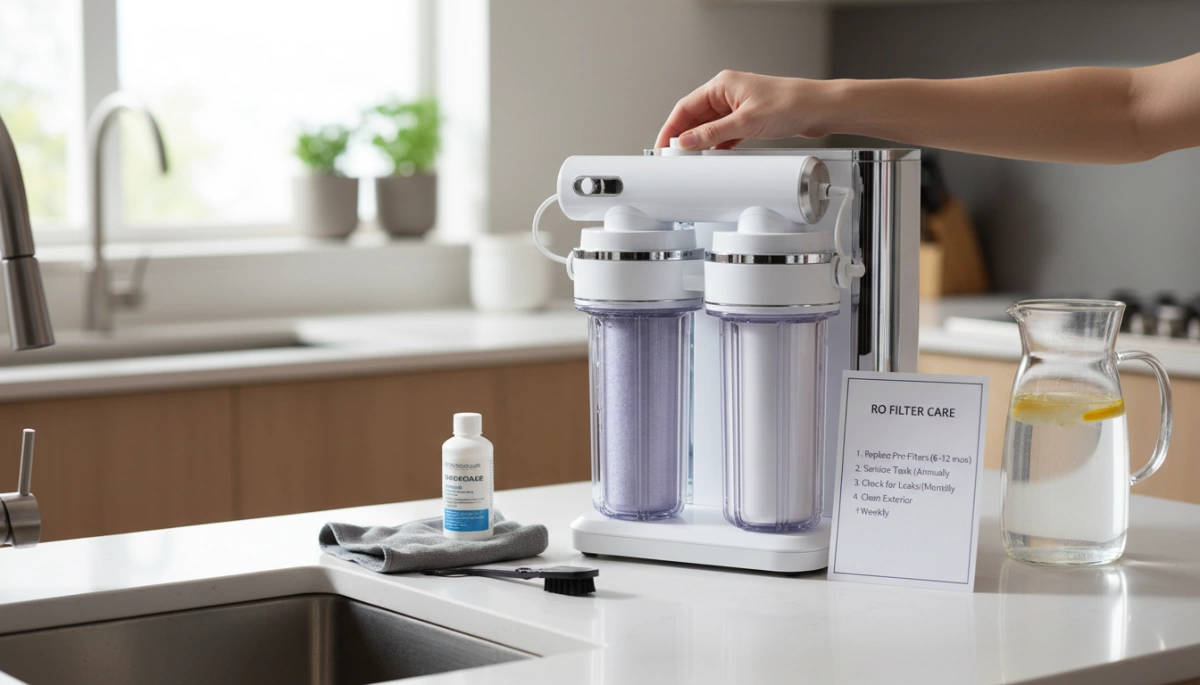
A good countertop RO water filter system should be simple to live with day to day. I design and choose units with one goal in mind: plug in, press a button, swap filters on time, and not think about it much.
Filter Change Schedule & Costs
Most countertop reverse osmosis systems use 3–4 filters:
- Sediment / carbon pre-filter:
- Change every 6–12 months
- Protects the RO membrane from chlorine, rust, and dirt
- RO membrane:
- Change every 18–36 months, depending on TDS and usage
- This is what does the heavy lifting on TDS reduction
- Post carbon / polishing filter:
- Change every 6–12 months
- Fine-tunes taste and odor
Typical annual cost for filters in the U.S. market:
- $60–$150 per year for a quality countertop RO drinking water filter
- Higher-use setups (office or big family) will be at the upper end of that range
To keep it simple, I recommend:
- Choosing a system with filter life indicators (time or volume-based)
- Buying filter packs (1–2 years at a time) to lock in lower cost per filter
- Marking change dates on the unit with a small sticker or on your phone calendar
DIY Installation & Daily Use Tips
For a no-installation countertop RO system or plug-and-play unit:
- Setup
- Unbox, remove packing materials, and flush as the manual shows (usually 2–3 full tanks)
- For faucet-connected countertop RO filters, use the included adapter, hand-tighten only, and check for drips
- Placement
- Keep it on a flat, sturdy countertop, close to an outlet
- Leave a little space behind and on the sides for ventilation
- Daily use
- Use cold tap water only (never hot)
- For manual-fill systems, empty leftover water every 1–2 days and refill with fresh
- If your unit has a TDS meter, check it once in a while so you know your RO performance is still on point
If you’re comparing this to something like a desktop water cooler, countertop RO units are similar in convenience, but with a focus on purification instead of chilling like a desktop water cooler for work.
Cleaning, Sanitizing & Descaling
To keep your countertop RO purifier safe and tasting clean:
- Weekly / bi-weekly wipe-down
- Wipe the exterior and touch points with a damp cloth
- Clean the dispense nozzle area so there’s no buildup
- Monthly cleaning
- Hand-wash removable tanks, trays, and reservoirs with mild dish soap
- Rinse thoroughly so there’s no soapy taste
- Sanitizing (every 3–6 months)
- Use a food-grade sanitizer or white vinegar solution (follow the brand’s instructions)
- Run a sanitizing cycle if your model supports it, then flush 1–2 tanks of water
- Descaling (for hard water, or well water use)
- If you see scaling (white mineral film), run a gentle descale cycle using a manufacturer-approved product
- Never put strong chemicals straight into the RO membrane; always follow the manual
Regular cleaning is just as important as filtration when you’re serious about high-quality purified drinking water, same as when you’re choosing a hydrogen water system.
Troubleshooting Common Countertop RO Issues
When a countertop RO water filter system acts up, it usually comes down to a few simple causes.
1. Leaks
Check:
- All quick-connect fittings are fully seated
- Faucet adapter or inlet hose is hand-tight (not overtightened)
- Tanks are aligned and not overfilled
Fix:
- Push tubing firmly into fittings until you feel a “click”
- Re-seat O-rings if visible and make sure they are clean and not twisted
- If a part is cracked, replace it immediately and stop using the system until it’s fixed
2. Slow Flow or Low Output
Likely causes:
- Clogged pre-filter or post filter
- RO membrane is at the end of its life
- Low water pressure on faucet-connected models
Fix:
- Replace the pre-filter and post-filter if they’re past the schedule
- Check TDS: if it’s still low but flow is slow, it’s usually a clogged filter
- For faucet-connected countertop RO systems, be sure the faucet is fully open and aerators aren’t blocked
3. Bad Taste or Smell
Check:
- Filter replacement cycle – especially post-carbon filter
- Whether the unit has been unused for a long time
- If the storage tank has not been cleaned in months
Fix:
- Replace the post-carbon filter first; taste often comes back to normal
- Fully drain the system and run 2–3 complete tanks of fresh water
- Deep clean and sanitize tanks and reservoir
4. High TDS After Filtration
- Confirm your TDS meter is accurate and clean
- If TDS is consistently high, the RO membrane may be worn out or damaged
- Replace the membrane and retest after a full flush
If you keep up with filters, cleaning, and basic checks, a compact RO system for a small kitchen or office will run for years with very little hassle.
Countertop RO Systems for Different Uses
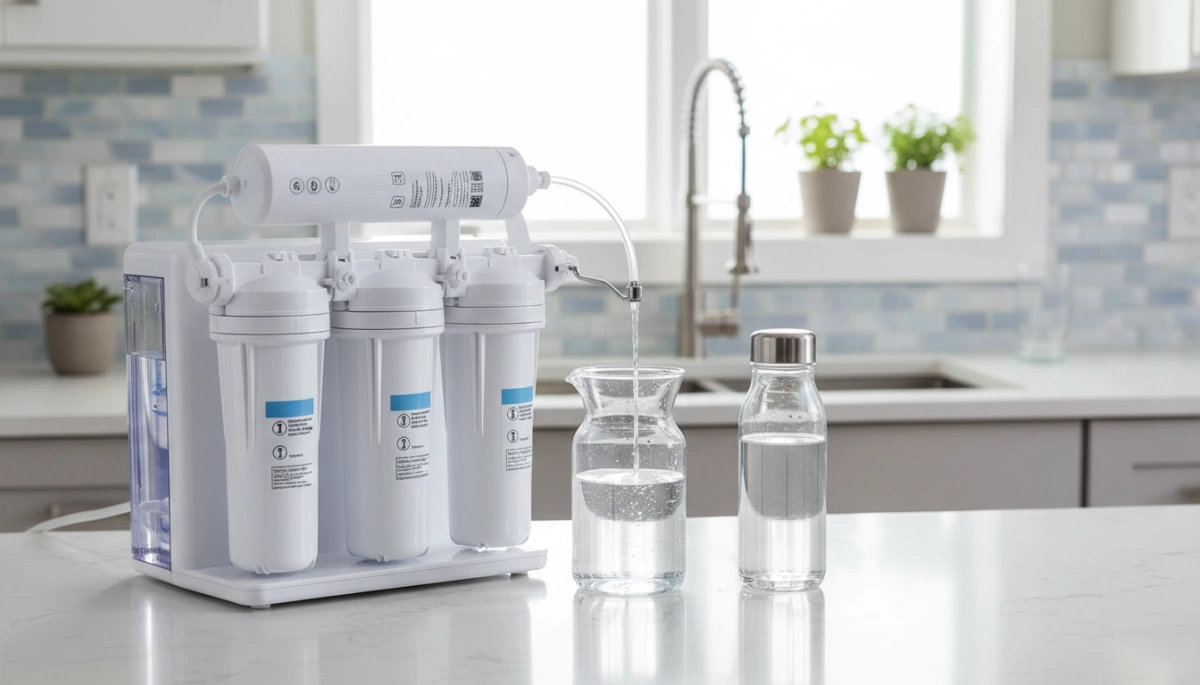
Home Kitchen Countertop RO Water Filter Setup
For most families, a countertop RO water filter system is the easiest way to get bottled-water taste straight from the kitchen without drilling or calling a plumber.
What works best at home:
Manual-fill tankless countertop RO purifier
- Just plug in, pour tap water in the top tank, and dispense purified water from the front.
- Great for apartments and small kitchens where under-sink space is tight.
Direct-connect faucet countertop RO system
- Hooks to your faucet with an adapter, no permanent plumbing.
- Lets you switch between normal tap and RO water fast.
Why it fits U.S. home use:
- Helps with chlorine taste, TDS reduction, and lead / heavy metal concerns
- Easy to place next to your coffee maker, soda water dispenser, or water cooler (if you’re into chilled or sparkling drinks, pairing it with a good water cooler system works really well)
- Simple filter changes you can do yourself in minutes
Office and Small Business Drinking Water Solutions
A compact countertop reverse osmosis system is a clean, professional-looking solution for offices that don’t want big jugs or a full plumbing install.
Best setups for offices and small businesses:
High-capacity countertop RO drinking water filter
- Larger internal tank or fast tankless flow
- Ideal near break rooms, waiting areas, or front desks
Office countertop RO water dispenser
- Hot/room/cold options (depending on model)
- Looks more “finished” than a basic pitcher or jug
Why offices like it:
- Better-tasting water → employees drink more and buy fewer bottled waters
- Quick install → plug and play RO water filter, no disruption to business
- Easy to maintain on a set filter schedule (quarterly/biannual swaps)
Countertop RO for Rentals, Dorms, RVs, and Temporary Housing
If you move a lot or have zero control over the plumbing, a portable reverse osmosis water filter is the safest bet.
Good options by situation:
| Use Case | Best Type | Key Benefit |
|---|---|---|
| Rental apartment | No-installation countertop RO | No holes, no landlord issues |
| Dorm room | Manual fill countertop RO purifier | Works with any tap, even shared bathrooms |
| RV / Camper | Compact RO system for small kitchen | Small footprint, light, 110V compatible |
| Temporary housing | Plug and play RO water filter | Easy to pack and move with you |
Why it works:
- Sits on the counter, plugs into a standard outlet
- Gives cleaner, more consistent water quality when local tap is questionable
- You can take it with you at the end of your lease
Using a Countertop RO Filter With Well Water
You can use a countertop RO water filter system on well water, but you need to be more careful with the setup.
Key checks before using RO on well water:
- Test your water first (bacteria, iron, manganese, hardness, TDS)
- If you have very hard water or high iron, add:
- A small pre-filter (sediment / iron)
- Descaling steps or a softener before the RO if hardness is extreme
- For microbiological risk (coliform, E. coli):
- Make sure there’s a UV stage or you disinfect the source first
- RO alone is strong, but well water can be unpredictable
What to expect:
- RO will help reduce nitrates, arsenic, fluoride, and many pesticides common in some rural wells
- Filters and membranes may need changing more often on tough well water vs city water
If you’re in the U.S. on private well water, I strongly recommend a proper lab test first, then matching the countertop RO system to your exact water conditions instead of guessing.
Countertop RO for Retail, OEM, and Private Label
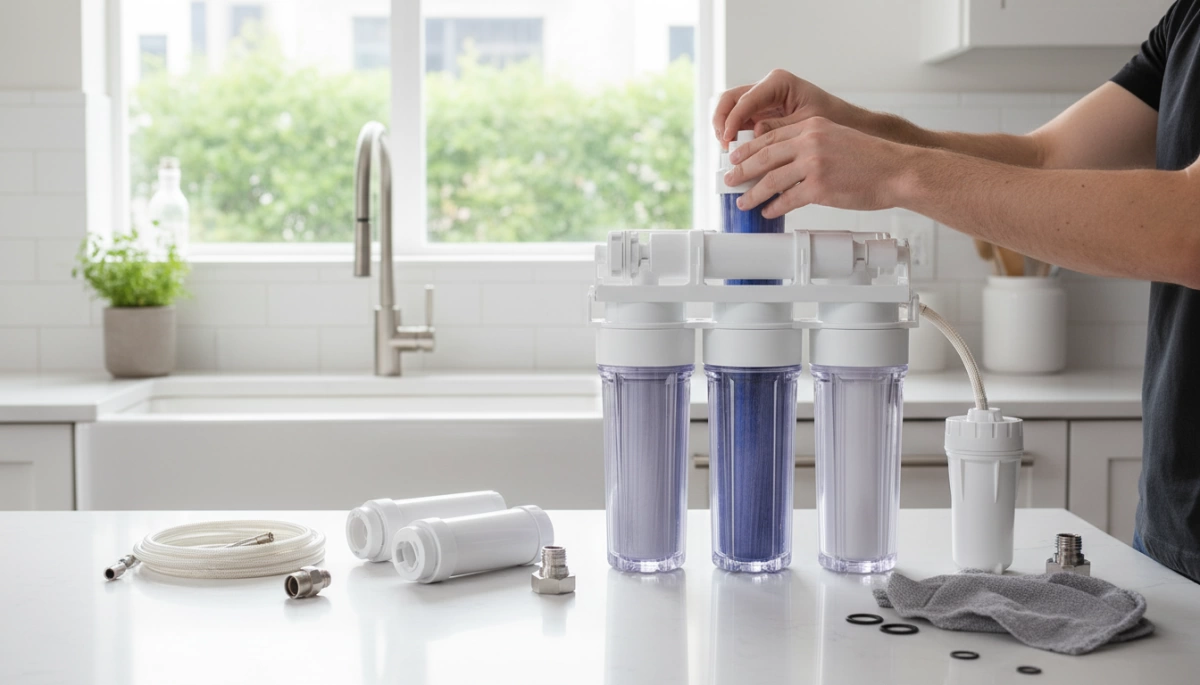
If you’re looking to launch or expand a water filtration line in the U.S. market, a countertop RO water filter system is one of the easiest ways to get in fast with strong margins and real consumer value.
Countertop RO Systems for Retail & DTC Brands
Countertop reverse osmosis systems are perfect for both brick‑and‑mortar retail and direct‑to‑consumer (DTC) channels because they’re:
- Plug-and-play: “No installation” countertop RO filters are an easy sell for renters, condo owners, and small offices.
- High perceived value: Multi-stage countertop RO water filtration with strong TDS reduction is something customers can instantly see and taste.
- Great for bundling: You can pair a compact countertop RO system with accessories or extended filter packs for higher AOV.
For DTC, we typically position a tankless countertop RO purifier as the hero SKU, with a more affordable manual-fill portable reverse osmosis water filter as the entry model.
Private Label Countertop RO Water Filter Options
We offer full private label countertop RO water filter solutions so you can build your own brand without building your own factory:
- Custom logo, packaging, and user manuals
- Housing colors and finishes matched to your brand style
- Branded filter cartridges and replacement filter packs
- Marketing assets (lifestyle photos, product detail shots, spec sheets)
This is ideal if you already sell home or kitchen products and want to add a best countertop RO water filter system under your own label.
OEM Countertop RO System Customization
If you need deeper customization, our OEM reverse osmosis countertop manufacturer capabilities cover:
- Branding & housing: Custom molds, display panels, touchscreens, and housing shapes for tankless countertop RO systems.
- Filtration setup: Custom multi-stage countertop water filtration (sediment, carbon, RO membrane grade, remineralization, UV).
- Electronics & “smart” features: Built-in TDS meter, filter life indicators, leak sensors, and smart fault codes.
We design OEM countertop RO water filter systems to match specific market needs, including areas with high hardness or heavy metals where RO is preferred over standard filtration. For harsher water conditions, we often reference solutions similar to a reverse osmosis water softener setup and tailor the system accordingly.
Bulk Supply, MOQ & Lead Time
For bulk and wholesale countertop RO units, we keep the numbers straightforward:
- MOQ: Flexible starting MOQs for new DTC brands and test runs; higher-volume price breaks for large chains and distributors.
- Lead time: Standard production cycles for repeat orders; extra time needed for new tooling or custom OEM housings.
- Logistics support: Help with labeling, certifications, and packaging optimization for U.S. shipping and warehousing.
Our goal is simple: deliver a compact RO system for small kitchens and offices that’s reliable, brandable, and profitable at scale—whether you’re selling on Amazon, your own DTC site, or through retail partners.
FAQ About Countertop RO Water Filter Systems
How long do countertop RO filters really last?
For most countertop RO water filter systems, here’s what I recommend as a realistic schedule (based on normal U.S. city water use for a family of 2–4):
- Sediment / pre-carbon filters: every 6–12 months
- RO membrane: every 18–36 months (depends heavily on TDS and hardness)
- Post-carbon / polishing filter: every 12 months
If your TDS starts creeping up, the water tastes flat or “off,” or the flow rate drops, it’s usually time to replace filters even if the calendar says you’re “not due” yet. Always follow the brand’s gallon or month rating and check any built‑in TDS meter or filter life indicator if your countertop reverse osmosis system has one.
Do countertop RO systems waste a lot of water?
All reverse osmosis systems create some wastewater, and countertop RO units are no different. Typical wastewater ratios:
- Older/basic countertop RO units: around 2–3 gallons waste : 1 gallon purified
- Newer high‑efficiency countertop RO systems: often 1.5:1 or even 1:1
To improve efficiency:
- Choose a high‑efficiency RO membrane and look for a clearly stated recovery rate.
- Don’t run tiny batches all day—fill the tank in full cycles.
- If possible, reuse reject water for mopping, toilet flushing, or plant watering (if your tap water is safe for that).
Can I install a countertop RO water filter without a plumber?
Yes. A big selling point of a no‑installation countertop RO water filter is that you don’t need a plumber at all.
- Manual‑fill systems: Just plug in the unit, pour tap water into the top tank, and you’re done.
- Faucet‑connected countertop RO systems: Usually come with a simple faucet adapter that you screw on by hand. No drilling, no under‑sink work.
If you’re in a rental apartment, dorm, or temporary housing, this is exactly why a plug and play RO water filter makes sense—you can take it with you when you move, same way you’d move a countertop appliance or even a compact water dispenser.
Can I use a countertop RO system with well water or hard water?
You can, but you need to be careful and choose the right setup:
- Moderately hard city water: Most countertop RO drinking water filters handle this fine.
- Very hard water (lots of scale): Add pre‑filtration or a softener to protect the RO membrane and keep it from clogging early.
- Well water:
- At minimum, you want sediment + carbon + RO + post‑filter.
- If you have iron, sulfur, or bacteria, you may need extra pre‑treatment (iron filter, UV, or disinfection) before the RO.
- Always test your well water so you know what you’re dealing with.
If your well has serious contamination or microbiological risk, a countertop RO alone may not be enough—test first, then size the system correctly.
Are countertop RO water filter systems safe? What about warranty and lifespan?
A high‑quality countertop reverse osmosis system is very safe when it’s built with:
- NSF/ANSI‑certified components (especially NSF/ANSI 58 for RO performance where applicable)
- Food‑grade plastics and housings
- Proper pressure and leak testing at the factory
In normal home or office use:
- System lifespan: around 5–10 years with regular filter changes and light cleaning.
- Warranty: most brands offer 1–2 years on the unit and shorter coverage on filters (they’re consumables).
For best safety and longevity:
- Change filters on time.
- Keep the system clean and dry on the outside and sanitize internally as recommended.
- If you see cracks, leaks, or damaged hoses, replace parts immediately.
If you care about full‑home water quality, you can also pair your countertop RO with other point‑of‑use solutions (for example, a shower head that filters chlorine and sediments) so you’re covered for both drinking and bathing.