














If you’re specifying hydration solutions for schools, hospitals, offices, or public spaces in 2025, understanding the value of a wall mounted drinking fountain is essential. Compared to traditional freestanding units, wall-mounted models save space, offer enhanced hygiene, and meet strict ADA-compliance standards—vital for today’s facility managers and architects. With growing demands for lead-free, vandal-resistant, and easy-to-maintain designs, this guide cuts through the noise: equipping you with clear insights on materials, certifications, installation best practices, and top manufacturers trusted in the industry. Whether you’re managing a new build or upgrading existing facilities, read on to discover how the right wall mounted drinking fountain delivers durability, safety, and long-term value.
What Exactly Is a Wall Mounted Drinking Fountain?
A wall mounted drinking fountain is a space-saving water cooler fixed directly to a wall, commonly used in schools, offices, healthcare facilities, and public spaces. Unlike pedestal or freestanding models, these fountains free up floor space, making them ideal for narrow corridors and high-traffic areas.
Core Components
- Bubbler: The spout through which water is dispensed, designed for hygienic, splash-free delivery.
- Basin: The catchment area below the bubbler that collects excess water, typically made of stainless steel or other durable materials.
- Valve: Controls water flow, usually activated by a push button or sensor, ensuring regulated water pressure.
- Waste Drain: Channels overflow and excess water safely into the plumbing system, preventing pooling or leaks.
Single-Height vs. Bi-Level (ADA-Compliant) Models
Wall mounted fountains come as:
- Single-height units, suitable for adults or specific user groups.
- Bi-level (high-low or dual-height) fountains, meeting ADA (Americans with Disabilities Act) accessibility requirements by providing one standard height and one lower fountain for wheelchair users or children.
Key Design Variations
- Recessed: Installed flush into the wall cavity, allowing a sleek, compact profile.
- Semi-Recessed: Partially embedded in the wall, balancing projection and space savings.
- Fully Exposed: Mounted on the surface of the wall, easier to service but with a larger footprint.
Indoor vs. Outdoor-Rated Versions
Wall mounted drinking fountains are available in models rated for indoor and outdoor use:
- Indoor versions focus on aesthetics, ease of maintenance, and compatibility with climate-controlled environments.
- Outdoor-rated fountains feature enhanced durability against weather exposure, corrosion-resistant materials (like 316 stainless steel), and vandal-resistant elements to withstand public park or recreational facility conditions.
Understanding these basics helps architects and facility managers specify the right wall mounted drinking fountain that meets spatial, accessibility, and environmental requirements. Brands like driplife specialize in delivering durable, NSF-certified wall hung water coolers designed specifically for the U.S. market standards.
Materials & Durability – Built to Last in Tough Environments
When it comes to wall mounted drinking fountains, materials matter a lot. Most units are made from stainless steel, but knowing when to choose 304 vs. 316 stainless steel can make a big difference. 304 stainless steel is great for most indoor settings like schools and gyms because it resists rust and wear well. However, if you need an outdoor drinking fountain or one exposed to harsh chemicals or salty air, 316 stainless steel offers better corrosion resistance.
Besides stainless steel, some fountains come with powder-coated finishes that protect the surface and offer color options. These finishes can include anti-graffiti coatings that make cleanup easier and keep the unit looking new longer—perfect for public spaces.
Vandal-resistant features are crucial in tough environments. Look for heavy-gauge steel construction paired with tamper-proof screws and secure mounting to prevent theft and damage. These features extend the service life of the fountain.
With proper care, a quality wall mounted drinking fountain will last anywhere from 15 to 25 years in high-traffic places like schools and gyms. Durable materials and vandal-resistant design keep maintenance lower and downtime minimal. For a challenging environment, combining the right materials with protective finishes ensures you get the best value and longevity out of your investment.
Safety & Certification Standards You Cannot Ignore
When selecting a wall mounted drinking fountain, safety and compliance with strict certification standards are non-negotiable. First, NSF/ANSI 61 and NSF/ANSI 372 certify that the fountain’s water pathways are lead-free, protecting users from harmful contaminants—a must-have for any public or private installation.
Legionella risk is another critical concern. The ANSI/ASHRAE 188-2025 standard helps minimize this risk through proper design and maintenance guidelines, ensuring your fountain stays safe against bacterial growth. For accessibility, compliance with ADAAG 2010 is essential. This covers specifics like mounting height, reach ranges, and knee clearance, making sure the fountain accommodates users with disabilities.
Finally, if your project is publicly funded, you’ll need to ensure your fountain meets Buy American Act and ARRA compliance requirements, which support U.S.-made products and fair procurement practices. Paying attention to these standards guarantees you install a wall mounted drinking fountain that’s not only durable but also safe and legally compliant for all users.
Where Wall Mounted Drinking Fountains Excel
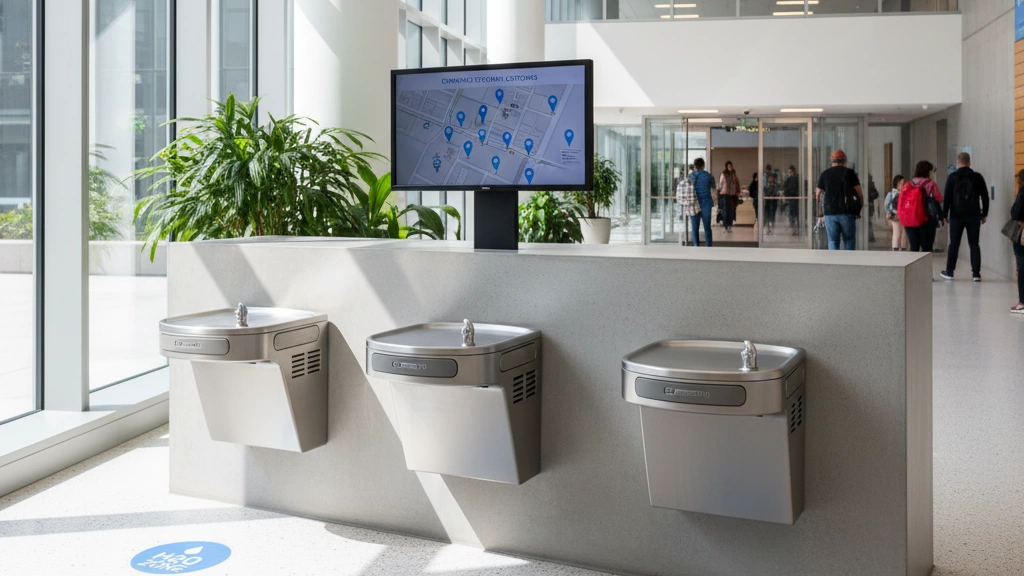
Wall mounted drinking fountains are a smart choice across many high-traffic settings thanks to their space-saving design and durability. Here are some of the top places where they really shine:
- K-12 Schools & Universities: These fountains meet ADA requirements and handle heavy use, making them perfect for classrooms, hallways, and cafeterias. Their vandal-resistant features keep maintenance low, even in busy student areas.
- Healthcare Facilities & Hospitals: Hygiene and accessibility are critical here. Wall mounted fountains with lead-free waterways and NSF 61 certifications ensure safe drinking water, while their compact design fits easily into tight hospital corridors and waiting rooms.
- Office Buildings & Corporate Campuses: Employees appreciate having easy access to clean water without cluttering the floor space. Combining fountains with touchless bottle fillers supports wellness initiatives and reduces waste.
- Airports, Train Stations & Transit Hubs: These locations demand durable, vandal-resistant fountains that can handle constant use. Outdoor-rated models are also handy at nearby park-and-ride zones or outdoor waiting areas.
- Gyms, Recreation Centers & Parks: Outdoor wall mounted drinking fountains built with corrosion-resistant stainless steel and vandal-proof features are ideal for rugged environments. Their robust design makes them reliable in public parks and sports facilities year-round.
For projects in these environments, it’s worth considering models that also include bottle filling stations or touchless options to meet modern hygiene expectations. Having the right fountain can improve user satisfaction and lower maintenance costs.
For tips on keeping your water cool and refreshing, check out our guide on desktop water coolers for workplace hydration.
Wall Mounted vs. Freestanding vs. Bottle Filler Combos – Real Comparison
Choosing between wall mounted drinking fountains, freestanding models, and bottle filler combos depends on your space, budget, and hygiene needs. Here’s a quick look at how they stack up.
Space Requirements (Square Feet Saved)
| Fountain Type | Approx. Floor Space Used | Notes |
|---|---|---|
| Wall Mounted Drinking Fountain | 1–2 sq ft | Saves floor space, ideal for narrow halls |
| Freestanding Drinking Fountain | 4–6 sq ft | Needs clear floor area, less space-efficient |
| Bottle Filler Combo | 1.5–3 sq ft | Wall mounted with added functionality |
Wall mounted units shine in tight spaces, freeing up important floor area especially in schools, offices, and transit hubs.
Cost Comparison: Initial + 10-Year Total Cost of Ownership (TCO)
| Type | Initial Cost | Maintenance Over 10 Years | Total TCO Estimate |
|---|---|---|---|
| Wall Mounted Drinking Fountain | $500–$900 | Low | $1,200–$1,500 |
| Freestanding Drinking Fountain | $1,000–$1,500 | Moderate to High | $2,000–$2,800 |
| Bottle Filler Combo | $700–$1,200 | Low to Moderate | $1,400–$1,800 |
Wall mounted fountains generally offer the best value, especially when factoring maintenance. Bottle filler combos add convenience and encourage refillable bottle use, reducing plastic waste.
Hygiene & Touchless Trends
- Wall Mounted: Available in sensor-activated models to reduce touch points
- Freestanding: Also adaptable for touchless upgrades but costlier to retrofit
- Bottle Filler Combos: Increasingly equipped with touchless sensors, making them popular in corporate and public settings
Touchless technology paired with bottle fillers supports better public health practices, cutting down germ spread.
Pros & Cons Matrix
| Feature | Wall Mounted | Freestanding | Bottle Filler Combo |
|---|---|---|---|
| Space Efficient | ✔️ Small footprint | ❌ Requires floor space | ✔️ Small footprint |
| Installation Cost | ✔️ Lower | ❌ Higher installation | ✔️ Moderate |
| Maintenance | ✔️ Easier and cheaper | ❌ More complex | ✔️ Moderate |
| Accessibility | ✔️ Easy for ADA compliance | ✔️ Often ADA compliant | ✔️ Best for multi-use |
| Hygiene & Touchless | ✔️ Common sensor options | ❌ Limited standard | ✔️ Integrated bottle filling |
| Durability | ✔️ Wall support adds stability | ❌ Vulnerable to nicks/dents | ✔️ Similar to wall mounted |
If space is tight or budgets limited, wall mounted drinking fountains are a smart choice. For high traffic or outdoor venues, freestanding or bottle filler combos add flexibility and promote hydration habits.
For more on selecting NSF-certified lead-free models, check out our guide on how water filters remove lead.
Professional Installation Guide & Common Mistakes to Avoid
Installing a wall mounted drinking fountain right the first time saves headaches later. Here’s what you need to keep in mind:
Mounting Height Guidelines
- Adult units: Typically installed between 36” and 38” from the finished floor to the spout.
- Child units: Lower models should be mounted around 30” high.
- Wheelchair accessible (ADA compliant): Spouts should be between 33” and 36” high, with clear knee and toe clearance complying with ADAAG 2010 standards.
Rough-in Dimensions & Chase Requirements
- Leave enough space behind the wall for plumbing chases—usually 4” to 6” depth. Check manufacturer specs to ensure clearance for valve access and future maintenance.
- The basin width generally ranges from 18” to 24”, so plan wall space accordingly.
Recommended Piping Materials
- PEX: Flexible, easier to install, resistant to corrosion—ideal for both indoor and outdoor units.
- Copper: Durable and proven but costlier and harder to work with.
- CPVC: Good for areas with chemical exposure, but less common for fountains.
Water Pressure & Flow Rate
- Water supply should maintain 0.5 to 1.5 gallons per minute (GPM) for an optimal drinking flow without splashing.
- Pressure above 80 psi requires pressure regulators to avoid valve damage or leaks.
Step-by-Step Installation Checklist
- Confirm water supply shutoff and drain nearby.
- Mark mounting heights based on ADA and user needs.
- Prepare rough plumbing—run PEX, copper, or CPVC lines to the chase.
- Rough in the valve and waste pipe per specifications.
- Secure mounting bracket or anchors in wall studs or blocking.
- Attach the fountain body with tamper-proof hardware.
- Connect water supply to valve; check for leaks.
- Flush lines before attaching bubbler to clear debris—this prevents clogging.
- Adjust valve flow rate to recommended specs.
- Test water flow, drainage, and basin stability.
- Post-install: educate maintenance staff on cleaning and filter care.
Avoid these common pitfalls:
- Installing at incorrect heights ignoring ADA rules.
- Using inadequate wall support leading to loose or wobbly units.
- Forgetting to flush pipes before use, causing valve jams.
- Overlooking water pressure limits, leading to poor flow or damage.
Following these steps ensures your wall mounted drinking fountain works reliably for years with minimal fuss. For more about hard water management tied to fountains, check out our guide on filtering hard water to protect your plumbing and improve taste.
Maintenance & Long-Term Ownership Costs
Keeping a wall mounted drinking fountain in top shape requires a simple but consistent maintenance routine:
- Daily/weekly cleaning: Wipe down the bubbler and basin with a mild detergent to remove dirt and prevent bacteria buildup. For busy schools or gyms, weekly deep cleaning is recommended.
- Filter replacement: Most drinking fountains use filters that should be replaced every 3,000 to 12,000 gallons depending on usage and water quality. Staying on schedule ensures clean, safe water.
- Seasonal winterization: Outdoor models need to be drained and insulated before freezing temperatures to prevent pipe damage and cracks.
- Repairs and parts: Typical issues include valve leaks or clogged bubblers. Part availability is generally good for 304 or 316 stainless steel models, keeping repair costs reasonable over a 15-25 year lifespan.
Regular upkeep keeps fountains safe and reduces costly breakdowns, ensuring consistent performance for schools, hospitals, offices, and parks. For those interested in improving water quality further, exploring activated charcoal in water filtration can be helpful for enhancing taste and odor control.
How to Choose the Right Manufacturer in 2025
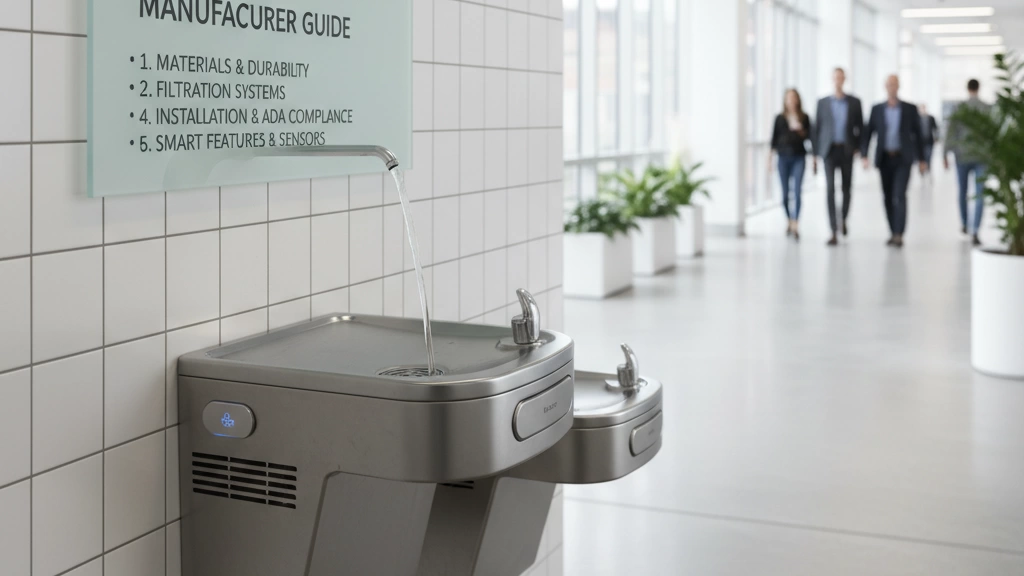
Picking the right manufacturer for your wall mounted drinking fountain is key to getting a quality product that lasts. Here’s what to consider:
| Factor | What to Look For |
|---|---|
| OEM vs. ODM vs. Custom | OEM offers standard models, ODM provides design modifications, and fully custom means tailor-made solutions for unique needs. Choose based on your project’s complexity and budget. |
| Lead Times & MOQ | Faster lead times and lower minimum order quantities (MOQs) help keep your project on schedule and reduce upfront costs. Factory-direct pricing often saves money by cutting out middlemen. |
| Warranty Length | Warranties vary from 5 to 15 years. Look closely at what’s covered—parts, labor, corrosion protection—to avoid surprises down the line. |
| Why Choose driplife | With 20+ years focused exclusively on stainless steel drinking fountains, driplife brings unmatched expertise. Their in-house NSF lab testing ensures strict compliance with NSF/ANSI 61 lead-free waterway standards. Plus, a fast U.S. stock program means quicker delivery for your project. |
Choosing a manufacturer like driplife who specializes in wall mounted drinking fountains guarantees you get durable, code-compliant products backed by reliable support. For complex water systems, exploring their detailed installation resources like this step-by-step water filter faucet installation guide can be a big help.
Making an informed choice early will save headaches later—whether you want off-the-shelf models or fully customized wall hung water coolers.
Top Wall Mounted Drinking Fountain Models for 2025
Choosing the right wall mounted drinking fountain means matching it to your specific needs. Here are the top models for 2025, each excelling in different areas:
Best for Schools:
Look for durable, easy-to-clean stainless steel fountains with ADA-compliant bi-level designs. These models are built to handle heavy daily use and meet accessibility standards, ensuring all kids and staff can drink comfortably and safely.
Best Vandal-Resistant Outdoor:
Outdoor fountains need heavy-gauge, tamper-proof construction with powder-coated or anti-graffiti finishes. The top vandal resistant water fountains feature strong stainless steel (often 316-grade), locking valves, and sensor-activated bubblers to reduce touchpoints and deter damage.
Best Bi-Level ADA + Bottle Filler Combo:
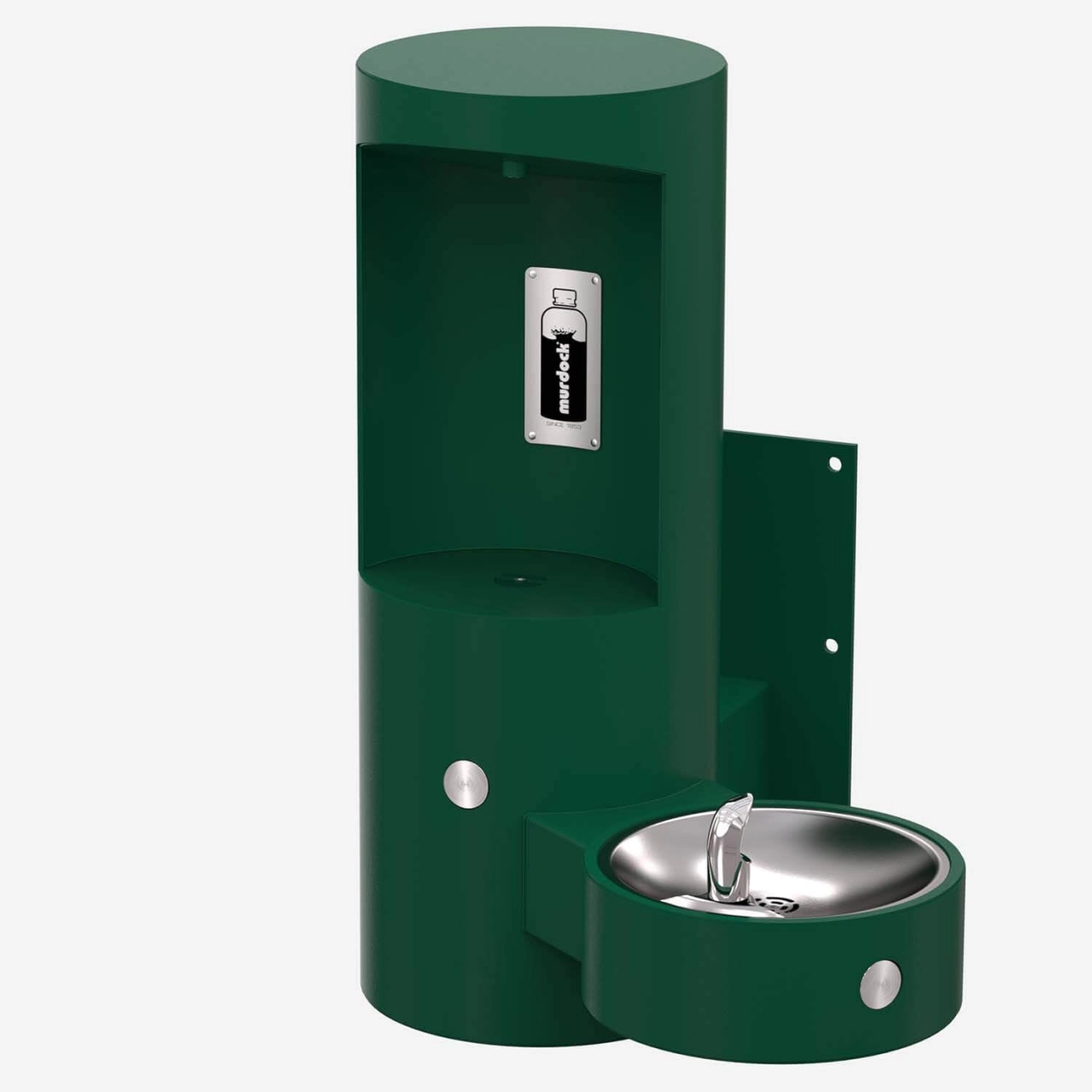
These combine ADA drinking fountains with touchless bottle filling stations, saving space while providing hygienic hydration options. Models with hands-free sensors and lead-free waterways are increasingly popular for offices, airports, and gyms.
Best Budget-Friendly Lead-Free Model:
For projects on a tighter budget, there are reliable wall hung water coolers with NSF 61 certification and lead-free materials. These focus on compliance and durability without extra bells and whistles, making them ideal for schools or community centers prioritizing safety and cost.
When selecting any model, consider durability, compliance with NSF and ADA standards, and features like anti-microbial coatings or UV water treatment to keep water cleaner and safer. For a deeper dive into water filtration, check out effective UV water treatment systems explained.
Frequently Asked Questions (FAQ)
Are wall mounted drinking fountains hygienic?
Yes, wall mounted drinking fountains are designed with hygiene in mind. Many models now feature touchless operation or sensor-activated bubblers to reduce contact and limit the spread of germs. Stainless steel surfaces are easy to clean and resist bacteria buildup, making them ideal for schools, hospitals, and offices.
Can wall mounted drinking fountains be installed outdoors?
Absolutely. There are outdoor-rated models built to handle weather exposure, often with vandal-resistant features and powder-coated finishes for durability. Outdoor fountains require proper winterization to prevent damage in freezing temperatures.
What is the standard height for ADA compliance?
ADA-compliant wall mounted drinking fountains usually have a spout height between 36 and 38 inches from the floor for adults, with bi-level or single low units accessible to children and wheelchair users at about 27 to 30 inches. This ensures proper knee clearance and reach ranges as per ADAAG 2010 guidelines.
Do wall mounted drinking fountains require electricity?
Most standard wall mounted drinking fountains operate without electricity, using simple valve mechanisms for water flow. However, touchless models or those combined with bottle fillers and filtration may need power for sensors and pumps.
How much water pressure is needed?
Typical wall mounted drinking fountains work best with water pressure between 20 to 80 psi, providing a flow rate of about 0.5 to 1.5 gallons per minute (GPM). Consistent pressure ensures a steady water stream without splashing or dribbling.
For more details on water quality and filtration options, check out our resources on under-sink water purification systems and how to identify hard or soft water.