















The Ultimate Guide to Choosing the Best Water Pitcher with Filter in 2025
You might already suspect that your tap water isn’t quite as clean as it looks…
But do you know exactly what’s floating in your glass?
From unpleasant chlorine tastes to invisible threats like lead, PFAS, and microplastics, the quality of your daily hydration matters more than ever.
The solution seems simple: invest in a water pitcher with filter. It is the most accessible, cost-effective way to secure cleaner, better-tasting water immediately.
However, not all pitchers are created equal.
Some are powerful purifiers that meet strict NSF standards, while others are little more than glorified strainers that cost you a fortune in frequent replacements.
In this guide, I’m going to walk you through exactly how to choose the best water filter pitcher for your home in 2025. We will cut through the marketing noise to cover real contaminant reduction, the hidden value of long-lasting filters, and how to stop buying bottled water forever.
Let’s dive in.
How Water Filter Pitchers Work
Ever wonder what actually happens inside that cartridge when you fill up your water pitcher with filter? It’s not magic; it’s a miniaturized version of a water treatment plant right in your fridge. Most pitchers rely on a gravity-fed filtration process. You pour tap water into the upper reservoir, and gravity slowly pulls it down through the filter media into the clean storage tank below. It’s simple, effective, and requires no electricity—just a little patience.
Inside the Cartridge: The Tech Explained
To turn tap water into something crisp and clean, these filters use a mix of proven technologies. Here is the breakdown of the heavy lifters inside:
- Activated Carbon: This is the workhorse. It acts like a magnet for impurities. Through a process called adsorption, it grabs onto chlorine, organic compounds, and bad odors, locking them away so your water tastes fresh.
- Ion Exchange Resin: Think of this as a molecular swap. These tiny beads attract heavy metals (like lead and copper) and “exchange” them for harmless ions like sodium or potassium. This is crucial for water softening and reducing toxic metals.
- Membrane Microfilters: Found in more advanced units, these act as a physical net to catch microscopic particles, including cysts and sediment that carbon might miss.
The Multi-Stage Filtration Breakdown
A quality filter isn’t just a bag of charcoal; it’s engineered in layers to maximize contact time and efficiency:
- Pre-Filter: Usually a fine mesh or non-woven fabric that catches large particles like sand, rust, and sediment before they clog the main filter.
- The Core (Carbon Block or Granules): The water moves through the activated carbon and ion exchange resin bed, where the chemical reduction of chlorine and heavy metals happens.
- Post-Filter: A final polishing layer that ensures no filter media escapes into your water and catches any remaining fine particulates.
Why NSF Certifications Matter
Not all filters are created equal. When browsing for a NSF certified water pitcher, you are looking for independent validation that the filter does what it claims.
- NSF/ANSI 42: Certified to reduce aesthetic impurities like chlorine taste and odor.
- NSF/ANSI 53: The heavy hitter. This certifies the reduction of health-related contaminants like lead, mercury, and VOCs.
- NSF/ANSI 401: Covers emerging contaminants, such as trace pharmaceuticals and pesticides.
Always check the label. If a filter isn’t certified, you’re essentially guessing at what’s being removed from your glass.
Would you like me to detail the specific health benefits and contaminant reductions in the next section?
Benefits of Using a Filtered Water Pitcher
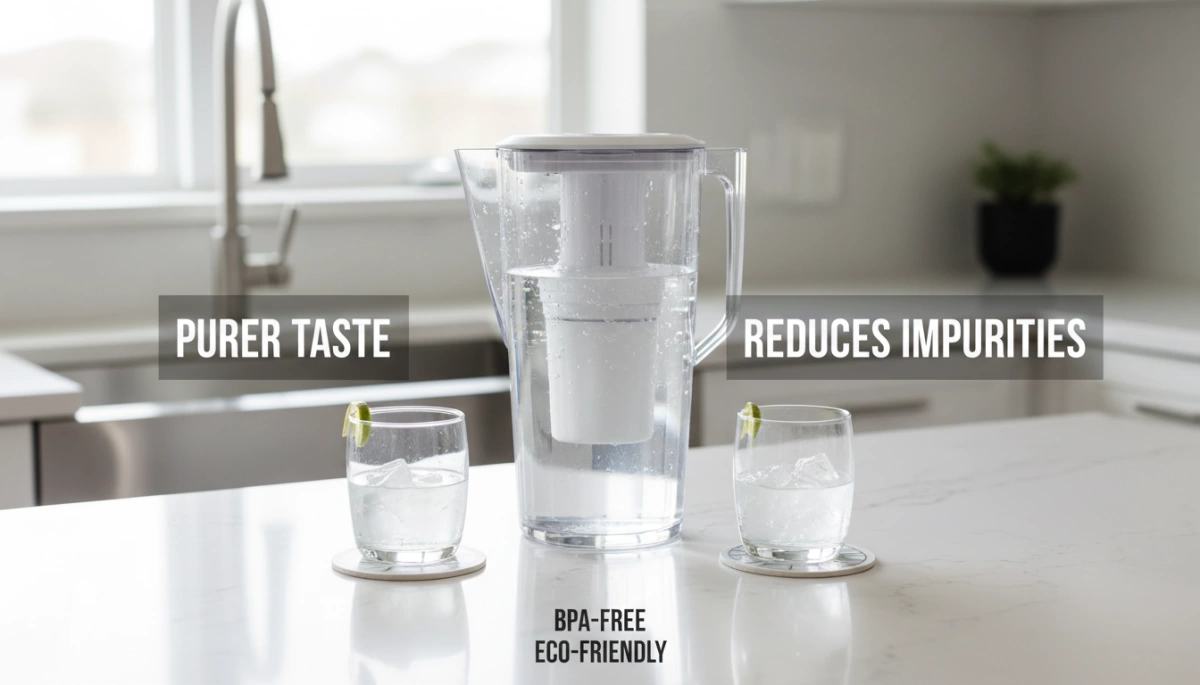
Investing in a high-quality water pitcher with filter is one of the simplest upgrades you can make for your home health and daily routine. We often take tap water for granted, but once you switch to a filtered water pitcher, the difference in quality and convenience is undeniable. It isn’t just about hydration; it’s about knowing exactly what is—and isn’t—in your glass.
Taste, Safety, and Purity
The immediate benefit most people notice is the taste. Municipal water treatment often leaves behind a strong chlorine aftertaste and odor. A solid chlorine reduction pitcher strips that chemical bleachy flavor, leaving you with crisp, clean water that makes your coffee and tea taste significantly better.
However, the benefits go deeper than flavor:
- Contaminant Removal: Advanced filters act as a shield against invisible threats. A dedicated PFAS removal pitcher addresses “forever chemicals,” while specialized media works to remove lead from water that may leech from aging pipes.
- Targeting Microplastics: We are seeing more evidence of microplastics in municipal supplies. A good filter catches these physical particles before they reach your body.
- Tech-Driven Safety: Our continuous focus on innovation and development allows us to engineer filtration media that targets these specific heavy metals and emerging contaminants without stripping essential minerals.
Cost vs. Convenience: Pitcher or Bottles?
Beyond health, this is a massive win for your wallet and the planet. Relying on single-use bottled water is the opposite of cost effective water filtration.
Here is a breakdown of why the pitcher wins:
| Feature | Filtered Water Pitcher | Bottled Water |
|---|---|---|
| Annual Cost | Low (pennies per gallon) | High ($ hundreds per year) |
| Convenience | On-demand at your fridge | Heavy lifting from the store |
| Waste | 1 Filter = ~300+ bottles | Massive single-use plastic waste |
| Water Quality | Consistent & Certified | Varies by brand/source |
By switching to a pitcher, you eliminate the chore of lugging heavy cases of water from the grocery store and drastically reduce your household’s plastic footprint. It is a smart, sustainable choice that pays for itself in just a few weeks.
Key Factors to Consider When Buying a Water Pitcher with Filter
Choosing the right water pitcher with filter isn’t just about picking the one that looks nicest on your counter; it’s about matching the specs to your daily routine and water quality. I always tell people to look beyond the sticker price and focus on the long-term value and performance.
Here is what you need to evaluate before making a purchase:
- Filtration Performance: Not all filters are created equal. If your local water report shows high levels of heavy metals or “forever chemicals,” you need a PFAS removal pitcher or one capable of to remove lead from water pitcher systems. Always check for NSF/ANSI certifications to ensure the claims are backed by science.
- Filter Lifespan & True Cost: This is where the hidden costs lie. A cheap pitcher might require a pitcher water filter replacement every 40 gallons, while a premium long lasting water filter can go up to 150 gallons or more. Calculate the “cost per gallon” to find the most cost effective water filtration solution.
- Capacity & Design: Do you have a large family or a cramped fridge? A standard filtered water pitcher typically holds 6–10 cups. If you prefer avoiding plastics, look for a sleek glass water filter pitcher, but ensure any plastic components are a BPA free water pitcher to keep chemicals out of your drink.
- Flow Rate: Waiting ten minutes for a glass of water is frustrating. Look for designs that balance thorough filtration with a reasonable pouring speed. While an installed unit offers instant flow—and you can compare the benefits of under-sink water purifier systems if volume is your main concern—a good pitcher should still fill a cup quickly.
- Usage Features: Small details make a big difference. Electronic filter change indicators take the guesswork out of maintenance, and ergonomic handles are essential when lifting a full, heavy pitcher.
ly, consider compatibility. Some of the best water filter pitcher models allow for universal filter usage, meaning you aren’t locked into a single proprietary brand. This flexibility often saves money and ensures you can upgrade to superior filtration media, like our driplife filters, without tossing the whole pitcher.
Common Contaminants in Tap Water and How Pitchers Address Them
Let’s get real about what comes out of the faucet. While municipal water treatment plants do a decent job, the water often picks up unwanted passengers on its journey through aging infrastructure to your glass. A high-quality water pitcher with filter acts as your final line of defense, but it is crucial to understand exactly what it is tackling.
Chlorine and Taste Issues
If your water smells like a swimming pool, that’s chlorine. Municipalities add it to kill bacteria, which is necessary, but it leaves a harsh chemical aftertaste.
- The Fix: A chlorine reduction pitcher uses activated carbon. The carbon acts like a magnet, adsorbing chlorine molecules and significantly improving the taste and odor of your water instantly.
Heavy Metals: The Silent Threat
This is the big concern for many households, especially those with older plumbing. Lead and mercury can leach into water from corroded service lines.
- The Fix: To effectively remove lead from water pitcher filters rely on ion exchange resin. This technology swaps harmful heavy metal ions with harmless ones (like sodium or potassium), locking the lead away so you don’t drink it.
PFAS and Microplastics
We are hearing more about Per- and Polyfluoroalkyl Substances (PFAS), known as “forever chemicals,” and microplastics. These are tougher to catch.
- The Fix: You need a PFAS removal pitcher or a microplastics filter pitcher with a dense carbon block. Standard, loose-fill filters often let these pass through. Advanced filtration structures are required to physically trap these microscopic particles.
Comparative Effectiveness
Not all filters are created equal. Here is a breakdown of what typical filters handle versus advanced multi-stage options.
| Contaminant | Standard Pitcher Filter | Advanced/Multi-Stage Filter |
|---|---|---|
| Chlorine/Taste | Excellent | Excellent |
| Lead & Mercury | Limited (Check Certification) | High Efficiency (99%+) |
| Microplastics | Low | High |
| PFAS/PFOA | None | High (Specific models) |
| Fluoride | None | Moderate (Requires special media) |
Limitations: Standard vs. Advanced Options
It is important to manage expectations. A basic, budget-friendly filter is great for taste, but it won’t sterilize water. Most filtered water pitcher models do not remove fluoride or kill bacteria/viruses unless they are specifically designed with UV technology or ultra-fine membranes. For those looking for more comprehensive protection beyond the pitcher, you might want to elevate your hydration and discover the benefits of smart water purifiers that handle a wider spectrum of biological contaminants.
Key Takeaway: Always check the label. If your goal is safety rather than just taste, ensure your pitcher is NSF/ANSI 53 certified for health effects, not just NSF 42 for aesthetics.
Top Recommendations and Comparisons for the Best Water Filter Pitcher
Finding the right water pitcher with filter isn’t just about grabbing the first box you see on the shelf. It’s about matching the filtration capability to your specific water quality and household needs. After testing extensively and analyzing market data, I’ve broken down the top contenders to help you decide which filtered water pitcher belongs in your fridge.
Best Overall for Everyday Use
For most American households, the “Goldilocks” option is a standard 10-cup pitcher. These models strike a balance between fitting easily on a refrigerator shelf and holding enough water for a family dinner. They typically focus on chlorine reduction to improve taste and smell. If you are just looking to fix the flavor of your city water, this is your go-to.
Best for Comprehensive Contaminant Removal
If your local water report lists lead, PFAS, or other heavy metals, you need a heavy-hitter. Look for a NSF certified water pitcher specifically rated for NSF/ANSI 53 (health effects) and P473 (PFAS). These pitchers often use denser filters, meaning the flow rate is slower—gravity takes time to do the job right—but the peace of mind is worth the wait. If you are unsure if you need this level of protection, it helps to understand the distinction between a standard water filter vs. purifier before buying.
Best Budget-Friendly Option
The entry-level 5-to-6 cup pitchers are perfect for dorm rooms or singles. The upfront cost is incredibly low. However, keep an eye on the long-term math; smaller filters often need replacing more frequently, which can drive up the cost per gallon over a year.
Best for Large Households (Dispensers)
If you have a family of four or more, refilling a standard pitcher five times a day is a hassle. A water pitcher dispenser (usually 18–30 cup capacity) sits on the shelf and utilizes a spigot. These are excellent for high-volume hydration and allow you to keep plenty of cold, filtered water on tap.
Best Premium/Glass Design
For those trying to eliminate plastic entirely, a glass water filter pitcher is the superior choice. They are heavier and more fragile, but they offer zero plastic leaching and look elegant on a dining table. They are ideal for serving guests who appreciate the nuanced taste differences compared to plain tap water. You can read more about those key differences between still and tap water to see why material and filtration matter.
Quick Comparison: Capacity, Life, and Cost
Below is a breakdown of how these different categories stack up. Note that “Annual Cost” estimates are based on average filter replacement schedules for standard brands.
| Pitcher Category | Typical Capacity | Filter Life (Avg.) | Key Certifications to Look For | Est. Annual Filter Cost |
|---|---|---|---|---|
| Everyday Standard | 10 Cups | 40 Gallons (2 mos) | NSF 42 (Taste/Odor) | $35 – $50 |
| Contaminant Pro | 10-12 Cups | 20-30 Gallons | NSF 53 (Lead), P473 (PFAS) | $60 – $80 |
| Budget Compact | 5-6 Cups | 40 Gallons | NSF 42 | $30 – $45 |
| Large Dispenser | 18-30 Cups | 40-120 Gallons | NSF 42, NSF 53 | $40 – $60 |
| Premium Glass | 7-10 Cups | 40 Gallons | NSF 42, NSF 53 | $50 – $70 |
Would you like me to analyze the specific “hidden costs” of those 40-gallon filters to show you how much money you might be wasting?
The Hidden Cost of Short-Lived Filters – Why Longevity Matters
When you grab a standard water pitcher with filter off the shelf, the low sticker price feels like a win. However, most entry-level pitchers operate on the “razor and blade” business model—selling you a cheap unit to lock you into a cycle of frequent, expensive maintenance.
The Breakdown: Standard vs. Extended-Life
Most generic cartridges tap out after just 40 gallons (about two months for an average household). This forces you into a constant loop of pitcher water filter replacement. Contrast this with high-performance, long lasting water filter alternatives designed to handle significantly higher volumes before needing a swap.
Here is how the economics shake out:
- Standard Filters (40 Gallons): You replace these 6 times a year. At roughly $7–$10 per pop, the annual cost adds up, and you are constantly managing inventory.
- Extended-Life Filters (100+ Gallons): These often last 3 to 6 months. While the upfront cost per cartridge is slightly higher, the cost effective water filtration per gallon drops dramatically.
Real-World Cost & Value
It isn’t just about volume; it’s about what you are paying for. Cheap filters often only address taste and odor, forcing you to spend more if you want serious purification. If you are concerned about specific toxins, you might end up researching the best fluoride water filters only to realize your budget pitcher can’t handle the job, rendering that initial investment wasted.
Impact on Convenience and Waste
Beyond the wallet, short-lived filters are a hassle. Remembering to prime and swap a cartridge every few weeks is a chore that is easy to forget, leading to overuse and poor water quality.
Environmentally, the difference is stark:
- High Waste: Tossing 6+ plastic cartridges a year contributes to single-use plastic buildup.
- Eco-Friendly: A longer lifespan means fewer casings in the landfill.
Next Step: Would you like me to detail the specific specifications of our 800-gallon universal filter to show you exactly how much you could save?
A Superior Upgrade: Long-Lasting Pitcher Filter Replacements
If you are tired of swapping out cartridges every month, we have engineered a solution that fundamentally changes the game. Our driplife long-lasting replacement filters are designed to address the biggest pain point in cost effective water filtration: longevity. While standard filters tap out after 40 gallons, our advanced model delivers an exceptional 800-gallon lifespan. For the average household, that means up to six months of continuous, clean hydration without a single filter change.
We built this specifically for the US market, ensuring universal compatibility. Whether you own a Brita, PUR, or other popular models, this pitcher water filter replacement fits seamlessly into your existing setup. As one of the top water filter manufacturers driving industry innovations, we utilized 5-stage filtration technology backed by NSF/ANSI 42 & 53 certifications. This isn’t just about lasting longer; it is about filtering better.
Here is why this upgrade is essential for your home:
- Elite Contaminant Reduction: We achieve a 99% reduction in lead and 97.4% reduction in chlorine, ensuring you remove lead from water pitcher systems effectively.
- Eco-Friendly Impact: One filter replaces thousands of single-use plastic bottles, significantly lowering your plastic footprint.
- Safety First: Crafted from BPA-free, food-grade materials that filter out the bad stuff while retaining beneficial minerals like calcium and magnesium.
Why Longevity Equals Better Water
A long lasting water filter provides consistent performance. Many standard filters degrade quickly, allowing contaminants to bypass the media once they reach saturation. Our high-capacity design ensures that the first gallon and the 800th gallon meet the same rigorous safety standards.
Would you like me to help you compare the cost savings of this 800-gallon filter versus standard monthly replacements for your specific household usage?
Proper Care for Longevity
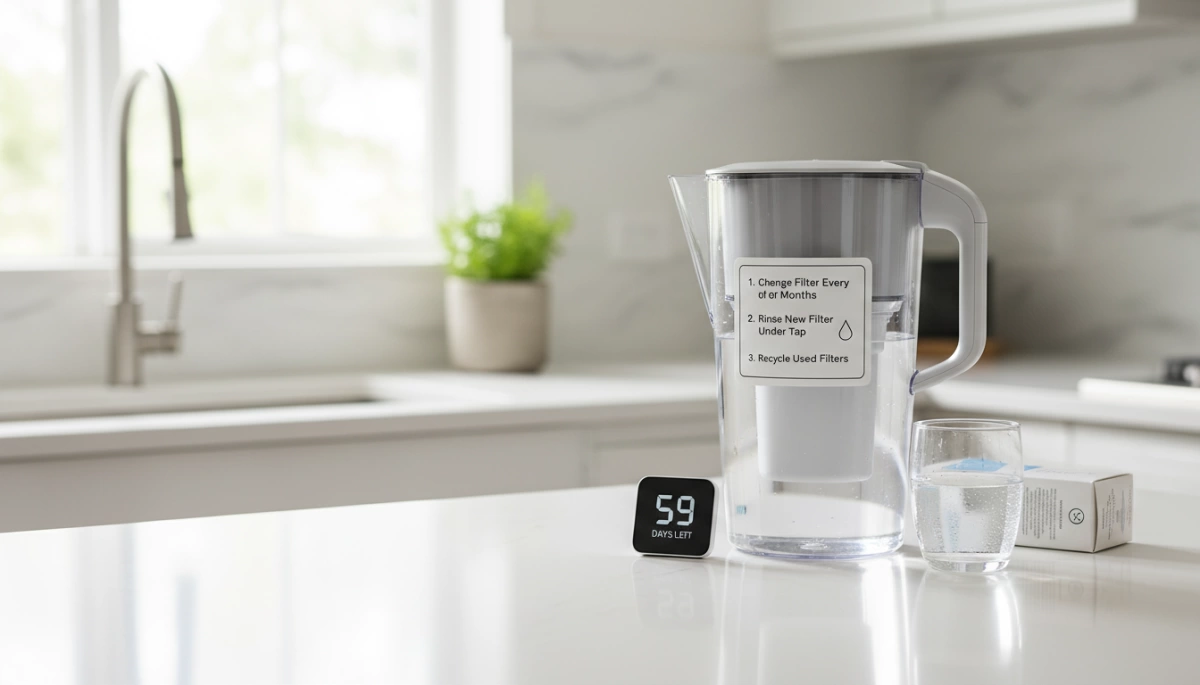
Owning a water pitcher with filter is one of the easiest ways to upgrade your daily hydration, but it’s not a “set it and forget it” device. To keep your water tasting crisp and free of contaminants, you need a solid maintenance routine. Neglecting this leads to bacteria buildup or a clogged filter that does nothing but slow you down.
Priming the Filter and Initial Setup
Before you fill up that pitcher for the first time, you have to prep the filtration media. Most filters, especially those using activated carbon, contain loose dust that needs to be flushed out.
- Soak it: Submerge the new filter in cold water for about 15 minutes (check your specific manual).
- Flush it: Run cold tap water through the filter two or three times. Discard this water or use it for your plants—it might look grayish, which is just harmless carbon dust.
- Seat it: Ensure the filter is clicked firmly into the reservoir to prevent unfiltered water from leaking down the sides.
Cleaning Routine and Prevention of Algae
Even if you have a high-quality BPA free water pitcher, moisture and light can eventually lead to algae growth or biofilm. I recommend washing the pitcher body, reservoir, and lid with mild soap and warm water at least once a week.
Crucial Note: Never wash the actual filter cartridge with soap. Remove it and set it aside on a clean surface while you scrub the rest of the unit. To prevent green algae spots, keep your pitcher out of direct sunlight; storing it in the fridge is usually the safest bet.
When to Handle Pitcher Water Filter Replacement
Sticking to a schedule is key for effective cost effective water filtration. A filter that has exceeded its lifespan can actually release trapped contaminants back into your water.
- Watch the Flow: If the water starts trickling through significantly slower than usual, the pores are likely clogged with sediment.
- Taste Test: If that chlorine taste creeps back in, the carbon is exhausted.
- Timeline: Standard filters last about 2 months (40 gallons). If you upgrade to a long lasting water filter, you might only need to swap it every 6 months.
Unlike a countertop water cooler which may have internal tanks requiring different sanitization cycles, a pitcher is manual and tactile—you are in full control of the cleanliness every time you refill.
Storage Tips for Longevity
If you plan to go on vacation or won’t use the pitcher for a few days, don’t leave the water sitting stagnant. Empty the pitcher and store the filter in a sealed bag in the refrigerator to keep the media moist but stop bacterial growth. For long-term storage, it is often best to let the filter dry out completely or simply start fresh with a new one when you return.
Next Step: Would you like me to write the Frequently Asked Questions section to address common concerns about fluoride removal and water testing?
Frequently Asked Questions
Understanding the nuances of your water pitcher with filter ensures you get the cleanest hydration possible. Here are the answers to the most common questions we get from US households.
Do water filter pitchers remove fluoride or bacteria?
Most standard pitchers utilize activated carbon, which is excellent for chlorine and taste but typically does not remove fluoride or microbiological contaminants like bacteria and viruses. If your goal is specifically removing fluoride or ensuring safety from untreated water sources, you need to check the specific certifications. When evaluating the effectiveness of water pitcher filters, always look for NSF P473 (for PFAS) or P231 (for microbiologics) if you have those specific concerns. However, a high-quality filtered water pitcher will effectively target the most common municipal issues: chlorine, sediment, and heavy metals.
How often should I change the filter?
This depends entirely on the filter’s rating and your household usage.
- Standard Filters: usually require a pitcher water filter replacement every 40 gallons or approximately every two months.
- Long-Lasting Filters: Advanced options, like our universal replacements, function as a long lasting water filter, handling up to 800 gallons or 6 months of use.
Ignoring replacement intervals leads to “breakthrough,” where previously trapped contaminants can leak back into your water.
Are glass pitchers better than plastic?
It comes down to lifestyle preference.
- Glass Water Filter Pitcher: Offers a premium aesthetic and ensures zero plastic contact, making it a favorite for those avoiding all polymers. However, they are heavier and breakable.
- BPA Free Water Pitcher: High-quality plastic models are lightweight, durable, and safe. They are generally the best water filter pitcher choice for busy families with kids.
Can I use third-party replacement filters?
Absolutely. In many cases, third-party filters are a more cost effective water filtration solution than big-brand OEM filters. Many universal filters are engineered to fit popular brands (like Brita or PUR) but utilize denser carbon blocks or multi-stage technology to remove lead from water pitcher systems more effectively than the original filter that came in the box.
What’s the best way to test my filtered water quality?
Many users grab a TDS (Total Dissolved Solids) meter. While a zero TDS water pitcher will show a reading of 000, keep in mind that TDS meters measure everything dissolved, including healthy minerals like calcium. A low TDS reading doesn’t always guarantee the absence of lead or PFAS, and a moderate reading doesn’t mean the water is dirty (it might just be mineral-rich). For a true analysis of contaminants like lead or chlorine, a home water testing kit or a certified lab test is more accurate.
Would you like me to draft a comparison chart highlighting the specific contaminant reduction rates of standard vs. long-lasting filters for the next section?