












Why Choose a Filtered Water Bottle?
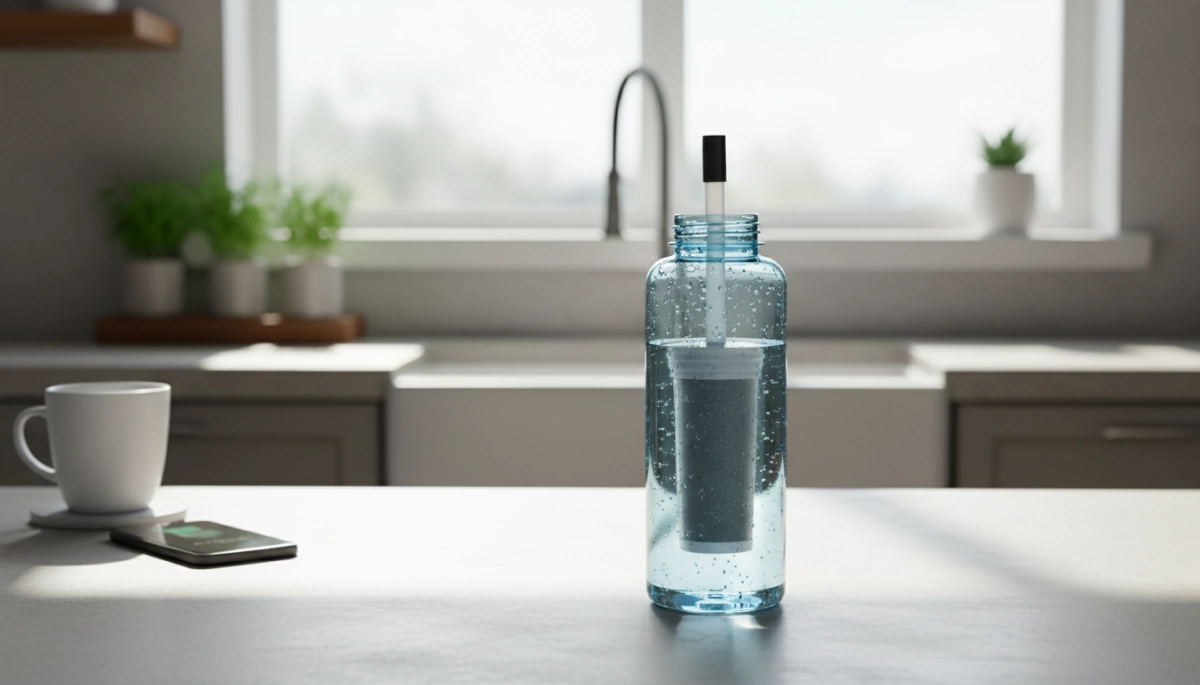
Let’s be real: we have all hesitated before taking a sip from a public fountain or a tap in an unfamiliar hotel room. Whether it is the overwhelming taste of chlorine, the fear of old, lead-lined pipes, or simply the uncertainty of unsafe sources, unfiltered water is a gamble I prefer not to take.
Switching to a filtered water bottle changes the game. It bridges the gap between the convenience of tap water and the purity of premium bottled water.
Health & Environmental Impact
Beyond improving taste, a portable water filter acts as your personal defense system. It strips away common contaminants while keeping you hydrated. More importantly, it is the single best way to reduce your carbon footprint. We are moving away from the “buy and toss” culture of single-use plastics toward a sustainable, reusable solution that pays for itself in weeks.
Where a Water Purifier Bottle Shines
A travel water bottle filter isn’t just for backpackers; it is an everyday essential. Here is where I see the most value:
| Scenario | Why You Need It |
|---|---|
| Daily Commute / Office | Eliminates the “chlorine cocktail” taste of municipal tap water. |
| Gym & Fitness | High-flow hydration without the metallic taste of old gym fountains. |
| Hiking & Camping | Turns stream water into safe drinking water (requires a heavy-duty water purifier bottle). |
| International Travel | Protects against local bacteria and viruses in regions with questionable water quality. |
The bottom line: You shouldn’t have to guess if your water is safe. With the right bottle, you never will.
How Filtered Water Bottles Work
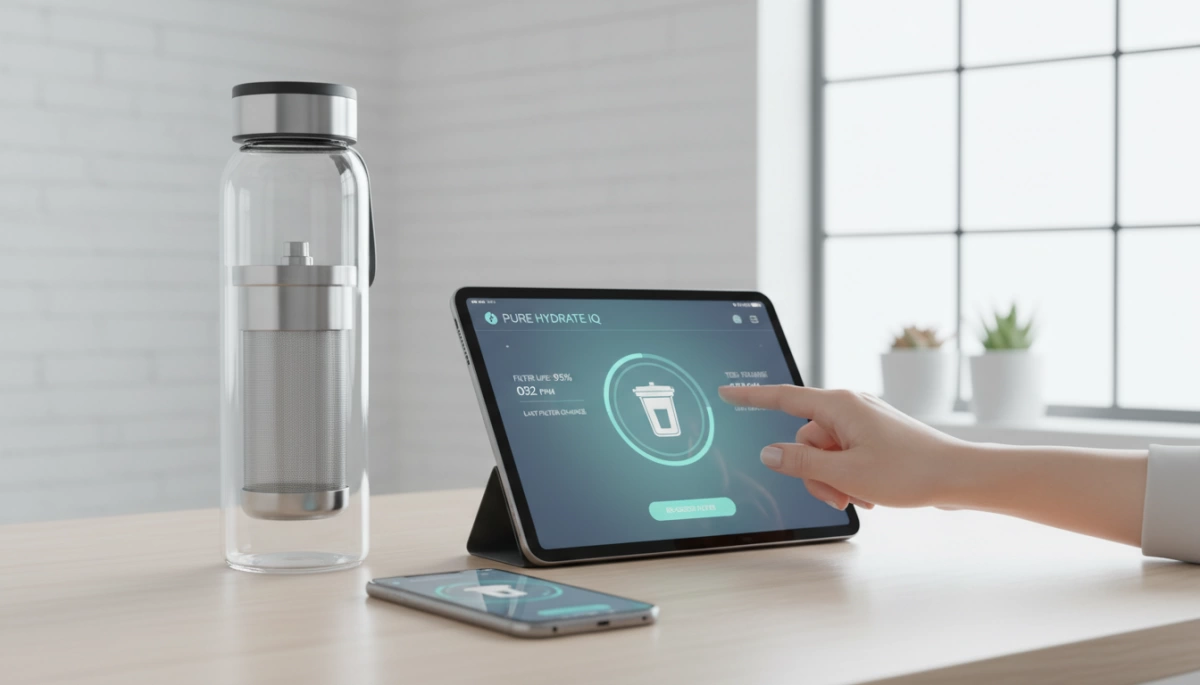
When you invest in a drink bottle with water filter, you aren’t just buying a container; you are carrying a miniature water treatment plant in your backpack. Understanding the mechanics helps you choose the right tool for the job, whether you are commuting to an office in Chicago or backpacking through the Rockies.
Filtration Technologies Breakdown
Different bottles use different methods to clean your water. Most portable water filter options rely on one (or a combination) of these core technologies:
- Activated Carbon: This is the most common type found in everyday bottles. It acts like a magnet, using adsorption to trap contaminants. It is excellent for improving taste by reducing chlorine and odors from municipal tap water.
- Membrane Microfilters: Often seen in straw-style bottles (like the LifeStraw Go style), these use hollow fibers with microscopic pores (usually 0.2 microns). They physically block bacteria and parasites like Giardia and Cryptosporidium.
- Press-Style & Purifiers: For serious travel or backcountry use, bottles like the Grayl GeoPress utilize pressure to force water through electroadsorptive media. This removes viruses, heavy metals, and chemicals.
- UV Purification: Instead of filtering, this uses UV-C light to neutralize the DNA of bacteria and viruses, stopping them from reproducing. Note that this doesn’t remove sediment or chemicals.
What Gets Removed?
Not all filters are created equal. A standard carbon filter won’t protect you from a murky stream, and a heavy-duty hiking water purification system might be overkill for the gym. Generally, high-quality filters target:
- Sediment & Microplastics: A reliable microplastics removal bottle keeps physical debris out of your system.
- Chemicals: significantly reduces Chlorine, pesticides, herbicides, and emerging threats like PFAS (forever chemicals).
- Pathogens: Membrane and press filters handle 99.99% of bacteria and protozoa. Only purifiers can handle viruses.
- Heavy Metals: specialized media is required to pull out lead, mercury, and arsenic.
While these bottles are designed for mobility, the underlying technology often mirrors the principles used in a robust under-sink reverse osmosis filtration system, just scaled down for personal use.
Certifications to Trust
In the US market, claims need backing. When looking for a best water bottle with filter, ignore the marketing fluff and look for NSF/ANSI standards:
- NSF 42: Aesthetic effects (Chlorine taste and odor).
- NSF 53: Health effects (Lead, VOCs, PFAS).
- NSF P231: Microbiological purifiers (Bacteria, viruses, parasites).
Always check the replacement filter cartridge specs to ensure the bottle meets the specific needs of your environment.
Key Features to Consider When Buying
Choosing the right drink bottle with water filter isn’t just about grabbing the first one you see on the shelf. It is about matching the specs to your lifestyle. Here is the breakdown of what actually matters when you are looking for reliable hydration.
Capacity and Portability
Size dictates how often you need to refill. For most users in the US, the sweet spot falls between 18 oz and 32 oz.
- 18-24 oz: Fits standard cup holders; ideal for commuting and short gym sessions.
- 32 oz+: Necessary for long hikes or all-day desk use, though it adds weight to your pack.
Material Choices: Plastic vs. Stainless Steel
Your choice here affects durability and temperature.
- BPA-Free Plastic: Lightweight and cost-effective. This is the go-to for ultralight backpackers.
- Stainless Steel Water Filter: Durable and often insulated. An insulated filtered bottle is a game-changer if you want your water to stay ice-cold for 24 hours during a summer heatwave.
| Feature | Plastic (Tritan™) | Stainless Steel (Insulated) |
|---|---|---|
| Weight | Featherlight | Heavy / Sturdy |
| Temperature Control | None (Ambient) | Excellent (Keeps Cold) |
| Durability | Scratch-prone | Dent-resistant |
| Best For | Hiking & Travel | Office & Daily Carry |
Flow Rate and Drinkability
Nobody wants to fight their bottle for a sip. Suction-based straw filters can sometimes feel like a workout. If you need speed, look for press-style purifiers or squeeze bottles that offer a high flow rate with minimal resistance.
Filter Lifespan and Replacement Costs
Always check the gallon rating of the replacement filter cartridge before buying.
- Standard Filters: Usually last 40–100 gallons.
- Purifiers: often have shorter lifespans (25–60 gallons) because they do heavy lifting against viruses.
It is vital to know what you are paying for—understanding the difference between purified water and filtered water helps you decide if you need a heavy-duty purifier or a standard filter for taste and odor.
Durability and Extras
A leak-proof design is non-negotiable if you plan to toss this in a bag with your laptop. Look for double-threaded caps and integrated carry loops or carabiner clips for easy transport.
Top Filtered Water Bottles of 2026: Reviews and Recommendations
Navigating the market for a drink bottle with water filter can feel overwhelming with so many hydration brands vying for attention. As experts in the water purification industry, we judge these products not just by their marketing, but by the filtration technology inside. Whether you are looking to improve the taste of city tap water or need a survival tool for the backcountry, specific bottles lead the pack this year.
Here is a breakdown of the top performers in 2026, categorized by how they fit into your lifestyle.
Best for Everyday & Tap Water Improvement: Brita Filtering Bottle
For the average American commuter or student, the primary concern isn’t usually parasites—it’s the harsh taste of chlorine. The Brita filtering bottle remains the king of casual hydration. It uses a straightforward activated carbon block filter that sits inside the straw.
- Performance: It excels at removing chlorine taste and odor, making municipal tap water taste crisp. However, it does not filter out bacteria or viruses, so stick to treated water sources.
- Real-User Insight: The “sip” requires a bit of suction, which some users find surprising at first. The 26 oz capacity is perfect for cup holders.
- Why it wins: It’s affordable and filters are available at almost any grocery store in the US.
Pros:
- Inexpensive upfront cost
- Dishwasher safe (top rack)
- Reduces single-use plastic waste substantially
Cons:
- Not effective against heavy metals or microbes
- Filter life is shorter (roughly 40 gallons)
Best Insulated Option: LifeStraw Go Series Stainless Steel
If you hate lukewarm water, an insulated filtered bottle is non-negotiable. The LifeStraw Go series combines vacuum-insulated stainless steel with their famous two-stage filtration. It keeps your water ice-cold for hours while ensuring it’s safe to drink.
- Performance: It features a membrane microfilter (removes bacteria/parasites) and an activated carbon filter (reduces chlorine/chemicals).
- Real-User Insight: It is heavier than plastic alternatives, but the durability is unmatched. The double-wall insulation prevents sweating on your desk.
- Why it wins: It bridges the gap between a gym bottle and a hiking tool.
Pros:
- Keeps water cold for 24+ hours
- Protects against 99.999% of bacteria and parasites
- Durable stainless steel construction
Cons:
- Heavier to carry
- Higher price point
Best for International Travel: Grayl GeoPress
When you are traveling internationally to places where tap water is questionable, you need a travel water bottle filter that acts as a purifier. The Grayl GeoPress is widely considered the gold standard for global travel because it removes viruses (like Hepatitis A and Rotavirus), which most standard filters miss.
Understanding why water filtration is important becomes critical when traveling, as local water systems vary drastically in quality and safety standards.
- Performance: It uses electroadsorption and ion exchange. You fill the outer cup, insert the inner press, and push down. In 8 seconds, you have 24 oz of purified water.
- Real-User Insight: The pressing action requires some muscle force, but the peace of mind is worth it. It’s essentially a portable water treatment plant.
- Why it wins: Speed and viral protection.
Pros:
- Removes viruses, bacteria, and protozoa
- Filters particulates and microplastics rapidly
- No sucking required; you can pour the water into a cup
Cons:
- Bulky and heavy
- Replacement cartridges are expensive
Best Heavy-Duty Purifier for Backcountry: Epic Nalgene OG
For hikers who love the classic wide-mouth look but need serious filtration, the Epic Nalgene OG is a powerhouse. It pairs the legendary durability of a Nalgene bottle with an “Outdoor Adventure” filter.
- Performance: The depth filter targets biological contaminants found in rivers and lakes, including Giardia and Cryptosporidium, as well as heavy metals like lead.
- Real-User Insight: It’s virtually indestructible. Since it uses a straw filter, the flow rate is slower than a squeeze bottle, but it fits perfectly in backpack side pockets.
- Why it wins: It turns a bottle you likely already love (Nalgene) into a survival tool.
Pros:
- USA-made filters
- Interchangeable filter system (switch to “Urban” filter for city use)
- High capacity (32 oz)
Cons:
- Requires strong suction to drink
- Not insulated
Best Budget-Friendly Choice: Philips GoZero Active
You don’t need to spend a fortune to get decent water. The Philips GoZero Active is a squeeze bottle designed for gym-goers and light hikers.
- Performance: It offers a simple “Fitness” filter for tap water improvement and an “Adventure” filter option for reducing contaminants in natural water sources.
- Real-User Insight: The squeeze design allows for a faster flow rate than straw-only bottles. It’s lightweight and tossable.
- Why it wins: Versatility at a low entry price.
Pros:
- Very affordable
- Dust-proof cap keeps the mouthpiece clean
- Fast flow rate due to squeeze mechanism
Cons:
- Plastic can feel less premium
- “Adventure” filter has a shorter lifespan
Comparison Table: 2026 Market Leaders
| Brand / Model | Capacity | Filter Tech | Best For | Est. Price Range |
|---|---|---|---|---|
| Brita Filtering Bottle | 26 oz | Activated Carbon Block | Office, Home, City | $20 – $30 |
| LifeStraw Go Stainless | 24 oz | Membrane + Carbon | Hiking, Daily Carry | $55 – $65 |
| Grayl GeoPress | 24 oz | Electroadsorptive Media | Int’l Travel, Survival | $90 – $100 |
| Epic Nalgene OG | 32 oz | Depth & Adsorption | Backcountry, Camping | $45 – $55 |
| Philips GoZero | 20 oz | Activated Carbon | Gym, Sports | $15 – $20 |
Pro Tip: When choosing a portable water filter, always check the “pore size” of the filter. If it is not rated for bacteria (usually 0.2 microns or smaller), do not use it on backcountry streams or rivers.
Compare the Top Filtered Water Bottles
Choosing the right drink bottle with water filter isn’t just about grabbing the most expensive option; it’s about matching the tech to your lifestyle. Whether you are dealing with sketchy tap water at the gym or drinking from a stream while backpacking, the specs matter. As a manufacturer, I look at flow rates, micron ratings, and filter longevity.
Below is a quick breakdown of how the market leaders and customizable solutions stack up against each other. If you are serious about water quality, understanding these differences—and perhaps learning how to use a TDS tester to verify results—is crucial.
Quick Spec Comparison
| Brand / Model | Capacity | Filter Tech & Lifespan | Primary Contaminants Removed | Best Use Case |
|---|---|---|---|---|
| Brita Filtering Bottle | 26 oz / 36 oz | Activated Carbon Block *(Replaces every 40 gallons(Replaces every 40 gallons) | Chlorine (taste & odor), Class I Particulates | Office & Home: Improving municipal tap water taste. |
| LifeStraw Go Series | 22 oz / 1L | Membrane Microfilter + Carbon (Membrane lasts 1,000 gal) | Bacteria, Parasites, Microplastics, Chlorine, Silt | Hiking & Travel: reliable for outdoor streams and airport taps. |
| Grayl GeoPress | 24 oz | Electro-adsorptive/Ion Exchange *(Replaces every 65 gallons(Replaces every 65 gallons) | Viruses, Bacteria, Protozoa, Heavy Metals, Chemicals | International Survival: High-risk areas where viruses are a concern. |
| Larq Bottle PureVis | 17 oz / 25 oz | UV-C LED Light (Battery rechargeable) | Neutralizes E.coli/Salmonella (DNA disruption), Odor | Self-Cleaning: Keeping the bottle stink-free (does not remove particulates). |
| **CustomCustom OEM Solutions | Customizable | Configurable (UF, Carbon, Alkaline) *(Tailored to brand specs(Tailored to brand specs) | Customizable: From heavy metals to basic taste improvement | Retail Brands: Creating a unique product for your specific customer base. |
Key Takeaways:
- For Taste: A simple carbon filter (like Brita) works wonders on city water but fails against bacteria.
- For Safety: You need membrane or press filters (like LifeStraw or Grayl) to tackle biological threats in the wild.
- For Business: If you are looking to launch a brand, opting for a customizable OEM portable water filter allows you to combine the best features—like stainless steel durability with advanced ultrafiltration—without being locked into off-the-shelf constraints.
Custom and OEM Options: Elevating Your Hydration Brand
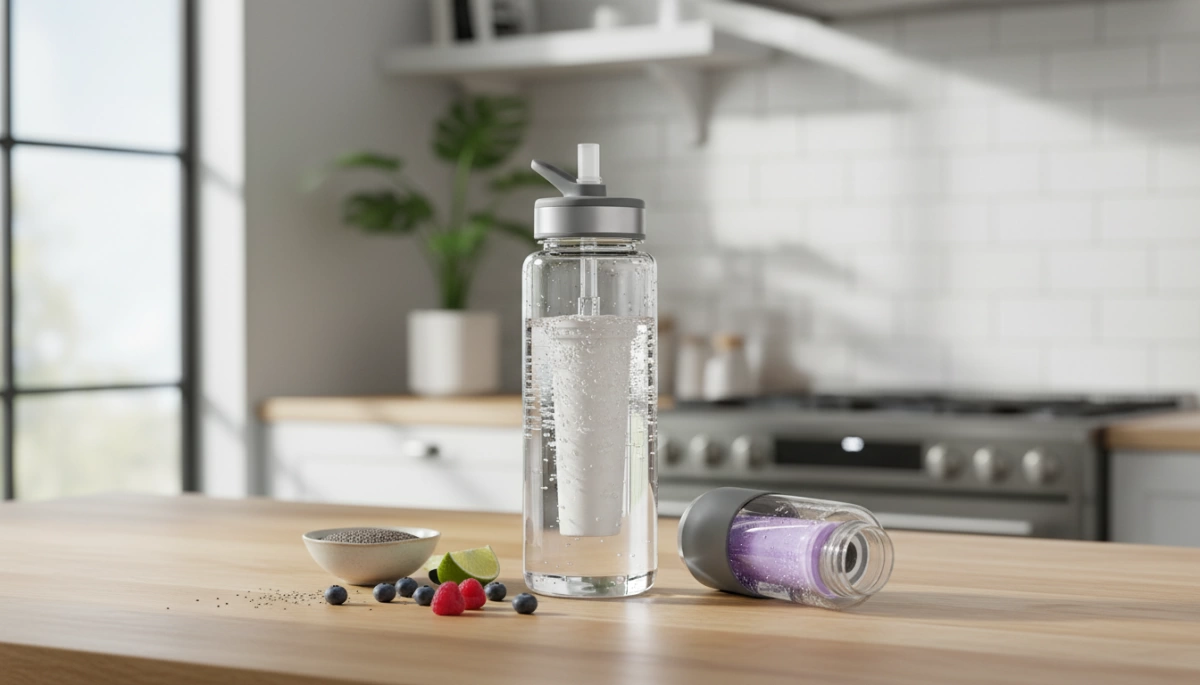
The Power of Private-Label Filtered Bottles
The market for portable hydration is booming, and consumers are demanding more than just a container; they want performance. For retailers, distributors, and emerging lifestyle brands, launching a private-label drink bottle with water filter is a strategic way to capture this demand. It allows you to build brand loyalty with a product that solves a daily problem: access to clean water anywhere. Instead of reselling existing brands with thin margins, creating a custom OEM solution puts you in control of the pricing and the features.
Partnering with Manufacturing Experts
Success in the private-label space relies heavily on the quality of your manufacturing partner. At Driplife, we leverage over 15 years of deep expertise in water purification to support your brand. We understand that a filtered water bottle must be durable, leak-proof, and effective. Unlike generic sourcing agents, we operate with high-capacity production lines and rigorous quality assurance protocols to ensure every unit meets United States safety standards.
Deep Customization Possibilities
We don’t believe in “one size fits all.” Our ODM (Original Design Manufacturer) services allow you to tailor every aspect of the bottle to your target demographic. From choosing between lightweight Tritan™ plastic or vacuum-insulated stainless steel to selecting the core filtration technology—such as Ultrafiltration (UF) or alkaline mineralization—we make it happen. We can even explore advanced integrations similar to the tech found in our 300ml hydrogen-rich water bottle, helping you stand out in the competitive wellness market.
Why Top Brands Choose Driplife for OEM:
| Feature | Generic Factory | Driplife OEM/ODM |
|---|---|---|
| Experience | General manufacturing | 15+ Years specialized in water filtration |
| Customization | Limited (Logo only) | Full Custom (Materials, Filters, Molds) |
| Quality Control | Random sampling | Strict QA & Certification Support |
| Innovation | Outdated designs | Cutting-edge Tech (UF, Alkaline, UV) |
By handling the complexities of R&D and manufacturing, we allow you to focus on what you do best: marketing and selling your unique hydration solution.
Maintenance and Care Tips
Owning a drink bottle with water filter is about more than just hydration; it’s about keeping your water source clean and safe. Proper maintenance ensures you aren’t just drinking from a dirty container and that the filtration technology continues to block contaminants effectively. Here is how I recommend managing your gear to keep it running like new.
How to Clean and Replace Filters
Hygiene is non-negotiable. While the bottle itself might be durable, the internal components need specific care.
- Separate the components: Always remove the filter unit before cleaning the bottle. Most stainless steel and Tritan plastic bodies are top-rack dishwasher safe, but the high heat can ruin a filter cartridge.
- Rinse only: generally, you should never use soap on the filter medium itself. A gentle rinse with clean tap water is usually enough to clear off surface debris.
- The Swap Schedule: Don’t wait until the water tastes like a swimming pool. Most manufacturers suggest a replacement filter cartridge every 2 months or 40 gallons, though this varies by heavy usage.
Understanding what a carbon filter does for water helps you realize why they eventually get saturated. Once the activated carbon pores are full of contaminants, the water flows through untreated, which is why sticking to a schedule is vital.
Extending Filter Life
You want to get the most mileage out of every filter. Here is how to avoid burning through them too quickly:
- Stick to Water: Never put sports drinks, juices, or flavor powders through the filter. Sugar and additives will clog the pores instantly and ruin the cartridge.
- Pre-Filter Turbid Water: If you are hiking and the source water is full of silt or mud, try to pre-filter it through a bandana or let the sediment settle before filling your bottle. This prevents the physical clogging of the membrane.
- Let it Breathe: If you aren’t using the bottle for a few days, take the filter out and let it air dry (unless your specific manual says to keep it wet) to prevent mold growth.
Storage and Troubleshooting
Sometimes, you might run into flow issues or leaks. Here is a quick troubleshooting checklist:
- Hard to Draw Water: If it feels like you are trying to suck a golf ball through a garden hose, the filter might be clogged with sediment or air-locked. Try re-soaking the filter for 15 minutes or gently tapping it to release trapped air bubbles.
- Leaking: Check the O-ring or silicone gasket inside the cap. If it is pinched or dirty, the seal won’t hold. A quick realignment usually fixes this.
- Long-Term Storage: If you are putting the bottle away for the season, remove the used filter and discard it. It is always safer to start with a fresh replacement filter cartridge when you bring the bottle back into rotation.
Ready to upgrade your hydration line?
If you are looking for a manufacturer that prioritizes easy maintenance and durable designs, contact us today to discuss custom options for your brand.
Frequently Asked Questions About Filtered Water Bottles
Are filtered water bottles worth the investment?
Absolutely. If you buy bottled water daily, a drink bottle with water filter pays for itself in about two weeks. Beyond the cash savings, you’re getting consistent flavor and safety without microplastics leaching from cheap disposable bottles. It is the smartest upgrade for your daily carry.
Can they remove viruses?
It depends on the technology. Most standard bottles use activated carbon to tackle chlorine, taste, and basic contaminants—it helps to understand exactly what carbon filters remove from your water before buying. However, for viruses (like Hepatitis A or Rotavirus), you need a water purifier bottle equipped with UV-C light or a press-style membrane purifier, especially for international travel.
How do I choose between a gym bottle and a hiking bottle?
- For the Gym: Prioritize high flow rate and a straw lid. You want to sip quickly between sets without suction resistance. A simple carbon filter is enough to make city tap water taste great.
- For Hiking: You need a portable water filter rated for bacteria and protozoa (Giardia/Cryptosporidium). Look for durable materials like stainless steel or Tritan™ plastic that can take a beating on the trail.
How often should I buy a replacement filter cartridge?
For a standard carbon filter used daily, replace it every two months or after 40 gallons of water. If you notice a slow flow rate or the taste of chlorine returning, it’s time to swap it out. Membrane microfilters (hollow fiber) usually last longer, often up to 1,000 gallons, but require backwashing.
What is the eco-impact compared to plastic bottles?
The impact is massive. One filtered water bottle filter typically replaces 300 standard 16.9 oz single-use plastic bottles. By making the switch, you keep hundreds of pounds of plastic out of landfills and oceans every year. It’s a small change with a huge environmental ROI.