














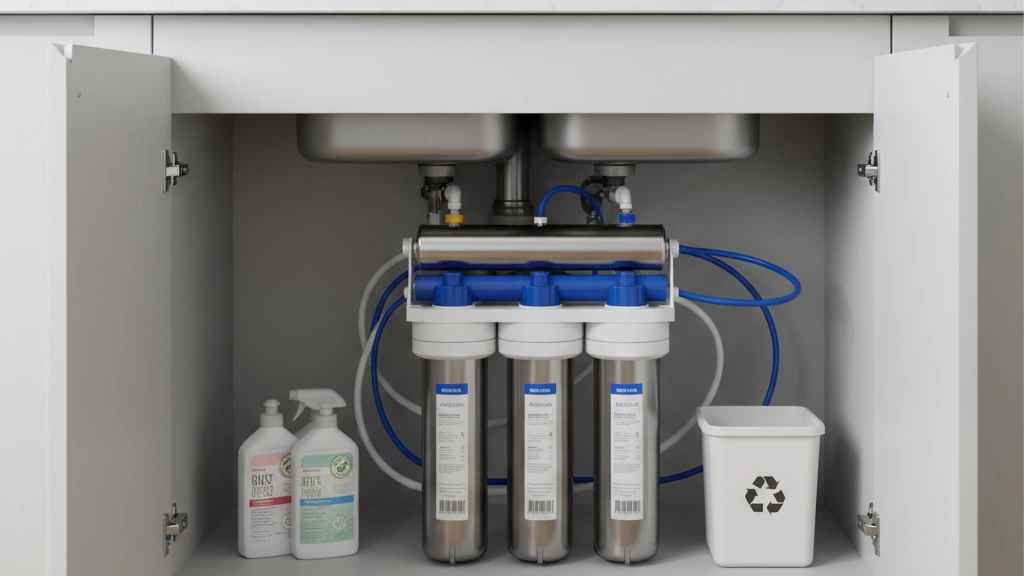
What Is an Under Sink Water Filter?
An under sink water filter is a filtration system installed beneath your kitchen sink. It connects directly to your cold water line, providing clean, filtered water from a dedicated faucet or your existing tap. Unlike pitchers or countertop filters, under-sink systems offer higher capacity and more advanced purification without taking up counter space.
How Under Sink Filtration Differs from Other Types
| Filter Type | Location | Filtration Strength | Space Needed | Typical Use |
|---|---|---|---|---|
| Under Sink Filter | Under kitchen sink | Multi-stage, including sediment, carbon, RO membranes | Minimal counter space | Whole kitchen use |
| Countertop Filter | On countertop | Usually carbon-based, sometimes multi-stage | Requires countertop space | Small batch, portable water |
| Pitcher Filter | Pitcher on table | Basic carbon filtration | Portable, no installation | Occasional drinking water |
| Whole-House Filter | Main water line | Sediment + carbon, sometimes UV | Outside or basement | All water sources in home |
Direct-Connect vs. Tankless vs. RO with Storage Tank
Direct-Connect Systems
Use a filtered flow that connects directly to the faucet without storage. These provide filtered water on demand with minimal waste but may have lower flow rates.
Tankless Under Sink Filters
Similar to direct-connect but often include advanced membranes like ultrafiltration or RO without storing water. They save space and improve flow but may increase water waste slightly.
RO with Storage Tank
Reverse osmosis (RO) systems use a semi-permeable membrane to remove contaminants. Since filtration is slower, these systems store filtered water in a small tank for immediate use. They offer superior contaminant removal but take up more under-sink space and produce some wastewater.
| System Type | Flow Rate | Footprint | Water Waste | Filtration Level |
|---|---|---|---|---|
| Direct-Connect | Moderate | Compact | Low | Moderate (carbon + sediment) |
| Tankless | Moderate to High | Small | Moderate | High (RO or ultrafiltration) |
| RO with Storage Tank | High (via tank) | Larger | Higher (3-4 gallons per gallon produced) | Very high (RO membranes) |
Under sink water filters suit homeowners wanting clean, reliable drinking water without clutter. By choosing between direct-connect, tankless, or RO options, you can optimize based on space, flow preference, and contaminant reduction needs.
How an Under Sink Water Filter Actually Works
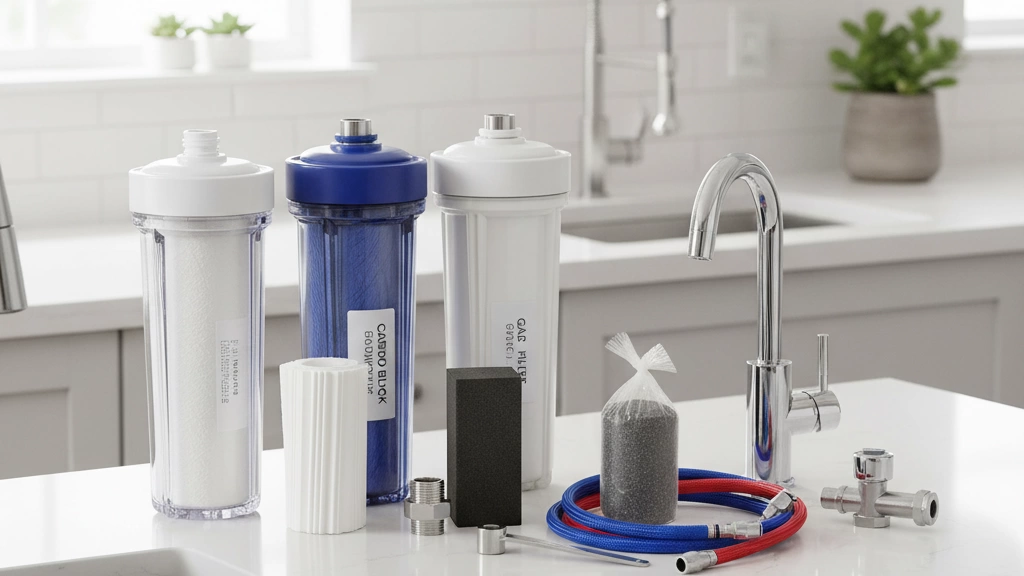
An under sink water filtration system typically works through multiple stages to ensure your tap water is clean, safe, and tastes great. Here’s a simple breakdown of how most systems filter water:
Stage 1: Sediment Pre-Filter
This first step removes large particles like dirt, rust, and sand. It protects the finer filters down the line and improves the system’s lifespan.
Stages 2–3: Activated Carbon Block
The water then passes through activated carbon filters. These reduce chlorine, bad tastes, odors, and volatile organic compounds (VOCs), which are often responsible for the “off” smell or flavor in tap water.
Stage 4: Reverse Osmosis Membrane or Ultrafiltration (Optional)
Many under sink filters include a reverse osmosis (RO) membrane to remove dissolved solids, heavy metals, PFAS, cysts, and other microscopic contaminants. Some systems opt for ultrafiltration instead, which uses a differently sized membrane to achieve similar results but without as much water waste. You can find systems designed as direct-connect water filters or tankless under sink RO models, depending on your preference for storage and flow.
Stage 5: Post-Carbon Polishing + Remineralization (If Present)
After filtration, water may go through a post-carbon filter to polish the taste further. Some units add a remineralization stage that restores healthy minerals like calcium and magnesium, improving the water’s flavor and balancing pH.
Additional components like flow restrictors regulate water pressure through RO membranes to maximize filtration efficiency. Auto shut-off valves stop water flow once the storage tank is full, saving water and energy. Meanwhile, permeate pumps push filtered water through the system, reducing wastewater and improving output—especially useful for low-pressure setups.
If you want a deeper dive into each step’s science, check out our detailed guide on how water filters work, which covers these stages and more.
Are Under Sink Water Filters Worth It? Real Performance Data
Under sink water filters deliver real, measurable improvements in your tap water quality. Many systems can remove over 99.6% of lead, significantly reduce PFAS chemicals, chlorine, cysts, and various heavy metals. This level of contaminant reduction isn’t just marketing hype—it’s backed by independent lab tests that often outperform generic claims.
Most quality under counter water filters carry trusted NSF/ANSI certifications like:
- 42 for chlorine, taste, and odor removal
- 53 for health-related contaminants such as lead and cysts
- 58 for reverse osmosis systems
- 401 and P473 for emerging contaminants like PFAS
These certifications ensure your filter meets strict standards for safety and performance.
Drinking filtered water from an under sink system can significantly reduce exposure to harmful chemicals and contaminants compared to unfiltered tap water. This makes a noticeable difference in taste, odor, and long-term health benefits, especially in areas with known water quality issues.
If you want to dive deeper into how water quality changes after filtration, check out our detailed guide on pH of RO water levels testing and adjustment, which helps understand the benefits of post-filtration water optimization.
Under Sink vs Countertop vs Pitcher vs Whole-House – 2025 Comparison
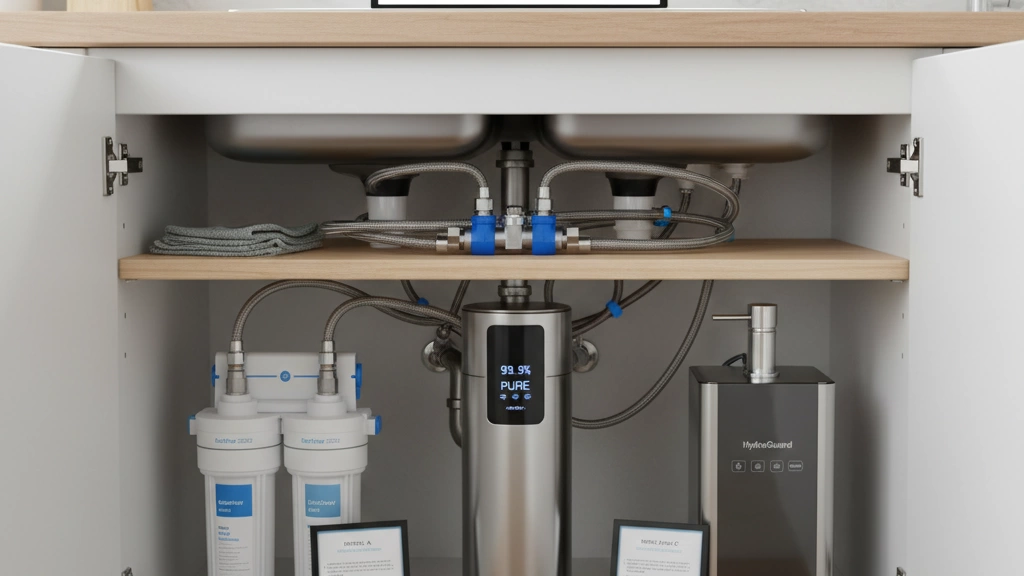
Choosing the right water filtration system depends on your needs, space, and budget. Here’s a quick comparison table highlighting key factors for under sink water filters, countertop units, pitchers, and whole-house systems in 2025.
| Feature | Under Sink Water Filter | Countertop Water Filter | Water Filter Pitcher | Whole-House System |
|---|---|---|---|---|
| Filtration Capability | High (multi-stage, RO options) | Moderate to high (carbon, UV) | Basic (carbon filters) | Moderate (sediment + carbon) |
| Flow Rate | Medium to High (0.5–1.5 GPM) | Medium (0.3–1 GPM) | Low (fill time: several mins) | High (whole house supply) |
| Waste Water | Some (especially RO systems) | Minimal | None | Minimal |
| Filter Lifespan | 6–12 months per filter stage | 3–6 months | 2–3 months | 6–12 months |
| Cost per Gallon | $0.005 – $0.02 | $0.01 – $0.05 | $0.05 – $0.10 | $0.002 – $0.01 |
| Space Required | Under sink (cabinet space) | Countertop space | Portable, fits in fridge | Typically outdoor/basement |
| Installation | Moderate (DIY or plumber) | Easy (plug and play) | Very easy (no tools) | Complex (professional needed) |
| Remineralization Option | Often available | Rare | No | Rare |
Quick Takeaways:
- Under sink water filtration systems offer robust filtration with good flow, ideal for families wanting high-quality water at the tap without countertop clutter.
- Countertop filters work well for renters or smaller kitchens but take up space and usually don’t remove as many contaminants.
- Water filter pitchers are the most affordable and portable but best for light use and basic chlorine, taste, and odor removal.
- Whole-house systems protect all water outlets but typically don’t offer advanced contaminant removal like under sink RO units.
For more on the benefits of under sink filtration and system types, check out our detailed guide on under sink water purification systems. If you’re considering whole-house options, this comparison helps decide what suits your home’s needs.
This snapshot can help you narrow down the filtration style that fits your space, budget, and water quality goals for 2025 and beyond.
7 Key Factors to Consider Before Buying an Under Sink System in 2025
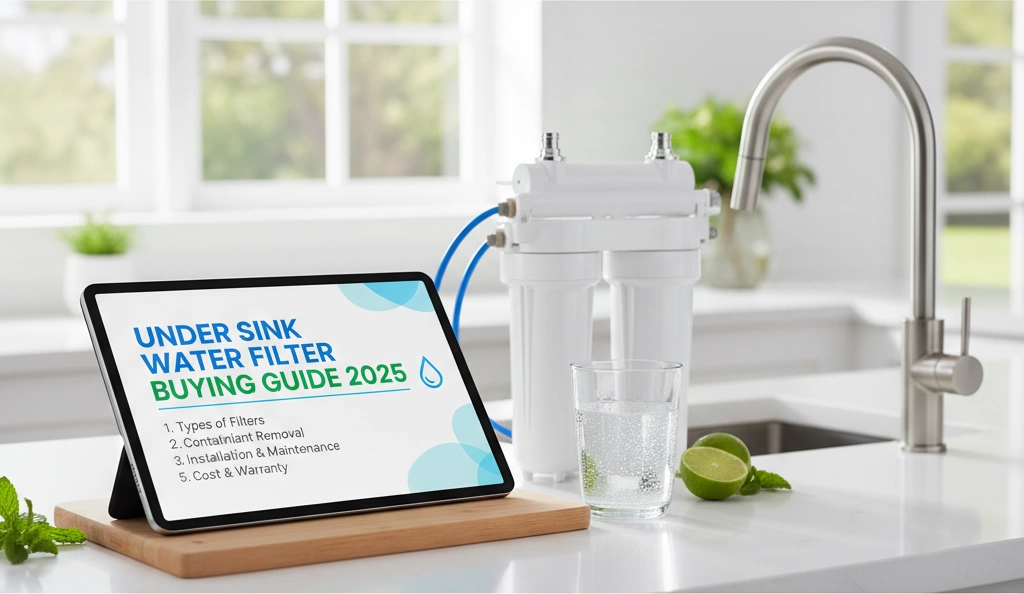
Choosing the right under sink water filtration system means paying attention to a few must-know details. Here are the key factors to keep in mind before buying:
Check Your Water Quality Report
Know exactly what contaminants you need to filter out, whether it\’s lead, PFAS, chlorine, or heavy metals. This helps you pick a system designed for your specific water issues.
Daily Water Usage & Flow Rate
Consider how much filtered water your household uses every day and what flow rate you need. Some systems slow water down more than others, which might be a dealbreaker if you want fast faucet access.
Space Available Under Your Sink
Measure the height, depth, and overall cabinet layout. Under sink filters come in tank and tankless designs—tank systems often take up more room.
Tank vs Tankless Design
Tank systems store filtered water for quick access but need more space. Tankless systems filter water on demand, saving space but sometimes slowing down flow.
Filter Replacement Cost & Frequency
Find out how often filters need to be replaced and how much replacements cost. Some filters last 6 months, others up to a year—this affects your long-term budget.
Installation Complexity
Are you comfortable with a DIY under sink water filter installation, or will you need a plumber? Some models install in 30 minutes with simple tools, while others require professional help.
Warranty Length & Customer Support
Look for solid warranties and responsive customer service. A good warranty covers filter faults and parts, giving peace of mind over time.
Thinking about these factors makes picking the right under sink water purification system easier and ensures you get the best fit for your home. For those curious about installing a filtration system without hassle, our DIY under sink water filter installation guide can be a helpful resource.
Top 9 Under Sink Water Filters of 2025 (Reviewed & Ranked)
Choosing the best under sink water filter can be tough with so many options available in 2025. To make it easier, here’s a quick look at the top 9 systems—including driplife® flagship models and eight major competitors—based on real user ratings, performance, and value.
| Brand & Model | Filtration Stages | Key Features | Pros | Cons | User Rating (out of 5) |
|---|---|---|---|---|---|
| driplife® 7-Stage RO System | 7 | Direct-connect, remineralization, NSF certified | Excellent contaminant removal, customizable stages, great flow rate | Filter replacement cost slightly higher | 4.8 |
| PurePro® UF & Carbon Combo | 5 | Ultrafiltration, compact design | Tankless, good taste improvement | Less effective on heavy metals | 4.5 |
| AquaSafe® RO with Tank | 6 | Storage tank, auto shut-off valve | High capacity, consistent flow | Needs more space under sink | 4.4 |
| ClearWater Plus 5-Stage | 5 | Sediment + activated carbon | Affordable, easy install | Does not remove fluoride | 4.3 |
| EcoPure Direct Connect | 4 | Quick install, NSF certified | Compact, low-maintenance | Limited filtration stages | 4.2 |
| WaterPure™ Advanced RO | 6 | RO membrane, remineralization | Great for heavy contaminants | Higher upfront cost | 4.4 |
| H2O Deluxe Carbon + UF | 5 | Carbon + ultrafiltration | Good balance of cost & efficiency | Flow rate slightly reduced | 4.1 |
| FreshFlow Tankless RO | 7 | Tankless RO, permeate pump | Saves space, eco-friendly | Installation trickier | 4.3 |
| PureH2O 3-Stage Basic Filter | 3 | Sediment and carbon filters only | Budget-friendly | Limited contaminant removal | 3.9 |
Why driplife® Stands Out
driplife® grabs attention with its versatile 3 to 7-stage customizable systems that suit almost any water quality need. Their products feature direct-connect and tankless options, blending convenience with top-notch filtration technology. Plus, their NSF-certified lab backs every system, ensuring that what’s promised on the label holds true in real tests.
For professionals and homeowners looking for reliability and factory-direct pricing, driplife® offers a balanced mix of efficiency, durability, and support. This makes them a go-to manufacturer amid fierce competition in 2025’s under sink water filter market.
If you want more details on how under sink water filters compete with other types like pitchers or countertop units, check out our comprehensive comparison on countertop ice water purifiers. This can help you make sure the under sink option fits your kitchen and lifestyle perfectly.
driplife® – Why Professional Buyers & Homeowners Choose Us
For over 20 years, driplife® has been a trusted name in under sink water filtration systems. Here’s why so many professional buyers and homeowners rely on our products:
| Feature | What It Means for You |
|---|---|
| 20-Year Manufacturing History | Proven expertise and consistent quality |
| In-House NSF-Certified Lab | Rigorous testing ensures safety & performance |
| OEM / ODM / Private Label | Customizable solutions for brands and projects |
| 3–7 Stage Customizable Systems | Tailored filtration to target your specific water concerns |
| Direct-From-Factory Pricing | Competitive prices without middlemen |
| Global Shipping | Fast delivery anywhere you are in the U.S. or beyond |
We offer a full range of options from simple direct-connect water filters to advanced reverse osmosis under sink systems with remineralization. Our versatility and commitment to quality make driplife® a leading choice for anyone serious about clean water.
Explore more about our premium reverse osmosis under sink systems designed for highest efficiency and durability here.
Installation Guide: How to Install an Under Sink Water Filter in Under 45 Minutes
Installing an under sink water filter doesn’t have to be complicated. With the right tools and clear steps, you can have clean, filtered water in less than 45 minutes. Here’s a simple guide to help you through the process.
Tools Needed
- Adjustable wrench
- Drill with drill bits (usually 1/4\” or 3/8\”)
- Screwdriver (Phillips and flathead)
- Bucket or towels (to catch water drips)
- Utility knife or scissors
- Teflon tape (optional, for tight seals)
Step-by-Step Installation
- Turn off the cold water valve under your sink to stop the water supply. Open the faucet to relieve pressure.
- Disconnect the cold water supply line from the faucet using the adjustable wrench. Place a bucket underneath to catch any remaining water.
- Install the filter’s feed water adapter onto the cold water valve. Some systems use a direct connect fitting that screws on easily; make sure it’s tight but be careful not to overtighten.
- Mount the filter system on the cabinet wall or base, using screws or adhesive brackets included in the kit. Position it so you have easy access for future filter changes.
- Connect the tubing: Attach the input tube from the feed water adapter to the filter’s inlet and the output tube from the filter to the faucet or dedicated filter tap.
- Check for any additional parts such as flow restrictors or auto shut-off valves and install according to the instructions included with your system.
- Turn the water back on slowly and check for leaks at every connection point. Tighten fittings slightly if needed.
- Flush the system: Let water run through the filter for 5 to 10 minutes (or as per the manufacturer’s instructions) to clear out any carbon dust or impurities before using the water.
Common Mistakes & How to Avoid Leaks
- Overtightening fittings: This can crack plastic parts or damage threads. Tighten securely but gently.
- Not flushing the filter: Skipping this step can lead to cloudy water or bad taste.
- Incorrect tubing connections: Double-check input vs output ports.
- Ignoring leaks: Even small drips can cause bigger problems over time. Inspect your installation carefully before finishing.
With these simple steps and tips, installing your under sink water filtration system will be quick and hassle-free. For more details on how water purification works, check out our guide on types of water purification methods.
Maintenance, Filter Replacement Schedule & Lifetime Cost Calculator
Keeping your under sink water filter in top shape means regular maintenance and timely filter changes. Most systems use multiple filters, each with its own lifespan, so knowing when and how to replace them ensures clean water and avoids costly repairs.
When to Replace Each Filter
- Sediment Pre-filter: Replace every 6–12 months to prevent clogging and protect downstream filters.
- Activated Carbon Block: Change every 6–12 months to maintain chlorine, taste, odor, and VOC removal.
- Reverse Osmosis (RO) or Ultrafiltration Membrane: Typically lasts 2–3 years but depends on water quality and usage.
- Post-Carbon Polishing Filter: Change every 12 months for optimal taste and final contaminant reduction.
- Remineralization Filter (if applicable): Replace annually to keep water balanced and fresh.
Most under sink filters come with easy twist-and-lock cartridges or quick-connect fittings for hassle-free DIY replacement.
Lifetime Cost Calculator: Real-World Cost per Gallon in 2025
When factoring in filter replacements, your upfront cost is just part of the picture. Here’s an overview based on current 2025 data:
| Filter Type | Average Replacement Cost | Lifespan | Cost per Gallon* |
|---|---|---|---|
| Sediment Pre-filter | $15 | 6–12 months | $0.01 – $0.02 |
| Activated Carbon Block | $20 | 6–12 months | $0.02 – $0.03 |
| RO Membrane | $50 | 2–3 years | $0.01 – $0.02 |
| Post-Carbon Filter | $25 | 12 months | $0.02 |
| Remineralization Filter | $30 | 12 months | $0.02 |
*Cost per gallon is an estimate based on average daily usage (~15 gallons/day).
Tips to Maximize Filter Life & System Performance
- Regularly check for visible dirt or discoloration.
- Avoid skipping replacement schedules; dirty filters reduce flow and filtration quality.
- Use a water quality report of your local area to determine if filters need to be replaced more frequently.
- Consider filter subscription plans for cost savings and timely delivery.
Proper maintenance keeps your under sink water filtration system running efficiently and ensures you get the best water quality per dollar spent. For details on installation and common DIY tips, check our DIY under sink water filter installation guide.
Frequently Asked Questions About Under Sink Water Filters
Do I need a separate faucet for an under sink water filter?
Most systems require a dedicated faucet installed on your sink or countertop. This keeps filtered water separate from regular tap water and ensures the best flow and taste.
Will an under sink filter remove fluoride?
Standard carbon filters won’t remove fluoride, but reverse osmosis systems or specialized filters designed for fluoride reduction will. For more about fluoride removal, check out our detailed guide on the best water filters to remove fluoride.
Will using an under sink filter reduce my water pressure?
Some systems might slightly reduce water pressure due to filtration resistance, especially reverse osmosis with storage tanks. Tankless models and permeate pumps help maintain good flow rates.
How often do I need to replace the filters?
Filter life varies by stage—sediment and carbon filters usually every 6-12 months, RO membranes every 2-3 years. Always follow manufacturer recommendations for optimal performance.
Can I install the system myself, or do I need a plumber?
Many under sink water filtration systems are designed for DIY installation and can be set up in under 45 minutes with basic tools. More complex RO systems might be easier with professional help.
Does the under sink filter remove lead and PFAS?
High-quality systems certified under NSF standards can reduce lead, PFAS, chlorine, and other common contaminants effectively, often by more than 99%. Look for NSF/ANSI 53, 58, and P473 certifications.
Is there waste water with reverse osmosis systems?
Yes, RO systems use some water to flush contaminants down the drain, typically about 3-4 gallons wasted per 1 gallon filtered. Tankless RO models tend to be more water-efficient.
Will installing an under sink system affect my kitchen space?
Under sink filters are compact but require some cabinet space—depth, height, and layout matter. Tankless models save space by cutting out the storage tank.
Are under sink filters safe and NSF certified?
Reputable brands use lead-free, food-grade materials and have NSF/ANSI certifications to confirm safety and contaminant removal claims.
How do I know which system fits my water quality?
Start with a local water quality report to identify your main contaminants. Match those needs with filter capabilities—some systems specialize in chlorine and taste, others in heavy metals or PFAS.
Can I customize or private label my under sink filtration system?
Yes, many manufacturers, including OEM and ODM providers, offer customizable options and private label services for both homeowners and businesses.
If you want to dive deeper into installation or comparing top-rated under sink filters, check our reverse osmosis system manufacturers guide or the top water filter systems for well water for specialized needs.
Still have questions? Contact your local dealer or the manufacturer directly for specific advice tailored to your home’s water.