Are you tired of wondering exactly what is swimming in your tap water?
From PFAS to microplastics, the list of invisible contaminants is growing, but tearing up your kitchen plumbing for a solution isn’t always an option—especially if you rent.
That is exactly why the Benchtop Water Filter has become a massive game-changer for modern, healthy homes.
But with so many options flooding the market, how do you distinguish a high-efficiency Portable RO system from a glorified water pitcher?
I’ve cut through the marketing noise to bring you the data that actually matters.
In this guide, you’re going to discover the top-rated Countertop water purifiers of 2025 that deliver clinical-grade hydration with Zero installation.
Let’s get your water clean.
Why Choose a Benchtop Water Filter Over Other Systems?
Let’s face it: getting access to high-quality, purified water shouldn’t require a master’s degree in plumbing or a fight with your landlord. As someone deeply invested in water quality, I’ve seen the frustration that comes with traditional filtration systems. That is exactly why the countertop water purifier has become the go-to choice for modern households. It hits that sweet spot between performance and convenience.
The Ultimate Rental-Friendly Solution
If you are renting, drilling a hole in a granite countertop for a dedicated faucet is usually a lease violation waiting to happen. This is where a no-install water filter shines.
- Zero Drilling: There are no holes to drill and no pipes to cut. You simply plug it in or divert the faucet, and you are good to go.
- Plug-and-Play Setup: Most zero installation purifiers are up and running in less than 5 minutes.
- Security Deposit Safe: When you move, you unplug it and take it with you. You don’t leave your investment behind.
Portability and Space-Saving Design
Not everyone has a massive kitchen island. A benchtop water dispenser is designed with a compact footprint, making it perfect for:
- Small apartments and condos.
- Dorms or office breakrooms.
- RVs and tiny homes.
Because these units are self-contained, you have the flexibility to move them from the kitchen to a home office or even pack them up for a weekend trip.
Benchtop vs. Traditional Alternatives
Why not just buy a cheap pitcher or go all-in on a whole-house system? Here is a breakdown of why a portable RO system or benchtop unit often wins the day.
| System Type | Installation Level | Filtration Performance | Best For |
|---|---|---|---|
| Benchtop / Countertop | None (Plug & Play) | High (Often Multi-stage/RO) | Renters, RVs, & Ease of Use |
| Under-Sink | Hard (Requires Plumbing) | High | Homeowners with space |
| Water Pitcher | None | Low to Medium | Basic taste improvement |
| Faucet Mount | Easy (Screws on) | Low | Minor sediment/chlorine |
| Whole House | Professional Only | Medium (General Purpose) | Treating all household water |
While pitchers are cheap, they often lack the pressure required for deep filtration like Reverse Osmosis. On the flip side, under-sink systems are powerful but permanent. A benchtop water filter gives you the heavy-duty purification of an under-sink unit with the portability of a pitcher. It is simply the smartest investment for versatile, clean water.
How Benchtop Water Filters Work: Filtration Technologies Explained
Understanding the mechanics inside a benchtop water filter helps clarify why these compact units are so effective. It’s not just about pouring water through a mesh screen; modern systems use sophisticated engineering to strip away contaminants at a molecular level. Let’s break down the technologies that power these units.
Overview of Main Filtration Types
Not all countertop units are built the same. Generally, you will encounter four main categories in the US market:
- Reverse Osmosis (RO): This is widely considered the gold standard for purity. A reverse osmosis countertop system forces water through a semi-permeable membrane, removing up to 99% of dissolved solids, including heavy metals and salts.
- Carbon Filtration: These rely on activated carbon to absorb chemicals like chlorine and VOCs. They are great for improving taste but less effective against dissolved inorganic solids.
- Gravity-Fed Systems: These are the simple “pour-through” pitchers or dispensers. They rely on gravity to pull water through a filter cartridge. They are affordable but typically have a slower flow rate and lower filtration precision.
- Multi-Stage Systems: The most robust units combine several technologies into one multi-stage countertop filtration process, often layering sediment filters, carbon blocks, and RO membranes to tackle every type of contaminant.
Stage-by-Stage Breakdown of Effective Systems
To understand how a high-end system delivers pure hydration, we need to look at the specific stages of filtration. A comprehensive portable RO system usually follows this path:
- Sediment Pre-Filter: Think of this as the bouncer. It catches the large particles—sand, rust, and dirt—that would otherwise clog the more delicate filters downstream.
- Activated Carbon Block: This stage acts like a sponge for chemicals. It targets chlorine, chloramines, pesticides, and unpleasant odors, protecting the RO membrane from chemical damage.
- RO Membrane: This is the heart of the operation. With pore sizes around 0.0001 microns, it acts as a microplastics removal system and blocks virtually all dissolved solids, viruses, and bacteria. If you are serious about purity, investing in a high-quality reverse osmosis water filter system is the most reliable way to ensure these microscopic threats are neutralized.
- Post-Carbon Polishing: After passing through the membrane, the water gets one final “polish” to ensure a crisp, fresh taste before it hits your glass.
- UV Sterilization: Many advanced benchtop models now include UV water sterilization benchtop technology. This uses UV-C light to scramble the DNA of any remaining bacteria or viruses, providing a final layer of safety, especially useful if the water sits in a tank.
Key Performance Metrics
When we design or select these systems, we look at hard data to ensure performance matches the hype. Here are the metrics that matter:
- Contaminant Reduction Percentages: A solid system should be certified to reduce specific contaminants (like lead, fluoride, and PFAS) by 90% to 99%.
- Flow Rate: This determines how fast you get your water. Older RO systems were agonizingly slow, but modern benchtop units utilize internal pumps to dispense water almost instantly.
- Water Waste Ratio: Traditional under-sink RO systems used to waste 4 gallons of water for every 1 gallon produced. Today, a high efficiency RO filter on your countertop often boasts a 1:1 or even 2:1 pure-to-drain ratio, making them far more sustainable and economical for daily use.
Critical Factors to Consider When Buying a Benchtop Water Filter
When you are in the market for a countertop water purifier, it is easy to get distracted by sleek designs and marketing buzzwords. But as someone who knows this industry inside out, I can tell you that the real value lies in the technical specifications and usability features. You are not just buying a device; you are investing in your long-term health and daily convenience. Here is exactly what you need to scrutinize before clicking “add to cart.”
Contaminant Removal Capabilities and Certifications
The most critical job of any filter is to clean your water. However, not all filters are created equal. In the United States, water quality varies drastically by zip code, so you need a system proven to handle tough contaminants. Do not just take the manufacturer’s word for it—look for independent validations, specifically NSF/ANSI standards.
A truly effective PFAS removal water filter should meet or exceed specific benchmarks. If a brand claims to remove “impurities” without citing these standards, run the other way.
- NSF/ANSI 42: This covers aesthetic effects. It ensures the filter removes chlorine taste and odor, making the water pleasant to drink.
- NSF/ANSI 53: This is the health standard. It certifies the reduction of specific health-related contaminants like lead, cysts, and volatile organic chemicals (VOCs).
- NSF/ANSI 58: This is the gold standard for reverse osmosis countertop systems. It verifies the reduction of total dissolved solids (TDS) and contaminants like arsenic, fluoride, and heavy metals.
- NSF/ANSI 401: This addresses “emerging contaminants” such as microplastics, prescription drugs, and new herbicides that are increasingly finding their way into municipal water supplies.
Filter Lifespan and True Cost of Ownership
A cheap upfront price often hides expensive maintenance costs. When evaluating a system, you have to calculate the “annual cost of ownership.” Some filters might only cost $50 initially but require cartridge changes every two months, costing you hundreds a year.
I always recommend looking for a high efficiency RO filter with extended lifespans. High-quality systems generally follow a schedule like this:
| Filter Stage | Typical Lifespan | Role |
|---|---|---|
| Pre-Sediment/Carbon | 6–12 Months | Protects the main membrane; removes rust and chlorine. |
| RO Membrane | 12–24 Months | The workhorse; removes 99.9% of dissolved solids. |
| Post-Carbon/UV | 12 Months | Polishes taste and ensures sterility. |
By choosing a system with long-lasting filters, you reduce plastic waste and save significantly over 3–5 years.
Daily Output and Dispensing Speed
There is nothing more frustrating than standing in your kitchen waiting for a trickle of water to fill your glass. Flow rate is a huge quality-of-life factor. A robust benchtop water dispenser should be able to deliver water quickly—ideally around 300–400ml per minute or faster.
You also need to consider daily capacity. If you have a family of four, a system that only produces 2 gallons of pure water a day will not cut it. Look for systems rated for at least 50–75 gallons per day (GPD) to ensure you never run dry during dinner prep.
Smart Features: TDS Monitoring and Instant Heating
Modern filtration has moved beyond simple gravity pitchers. The best units on the market now function as a TDS monitoring water system. This feature displays the Total Dissolved Solids levels of your tap water versus your filtered water in real-time, giving you visual proof that the system is working.
Another game-changer is the instant hot water dispenser filter capability. Instead of waiting for a kettle, premium benchtop RO systems can dispense purified water at specific temperatures—room temp, warm for formula, hot for coffee, or boiling for tea—in just seconds. This consolidation of appliances saves counter space and time.
Build Quality, Aesthetics, and Noise Levels
Since this unit will be visible on your countertop 24/7, aesthetics matter. You want a compact, modern design that complements your kitchen, not a bulky eyesore.
ly, pay attention to noise. Multi-stage countertop filtration systems, especially those with Reverse Osmosis, use internal pumps to force water through the membrane. While a low hum is normal during filtration, high-quality units are designed with sound-dampening materials to keep operation quiet, similar to a modern refrigerator. Avoid units that rattle or vibrate excessively, as this usually indicates cheap assembly.
Top Benchtop Water Filter Recommendations for 2026
When you’re looking to upgrade your home’s water quality without remodeling your entire kitchen, the market can feel a bit crowded. But after testing and analyzing what’s available this year, I’ve broken down the top contenders. We’re focusing on convenience, purity, and that all-important “plug-and-play” factor that makes benchtop systems so appealing for renters and homeowners alike.
Best Overall: Driplife Countertop RO System
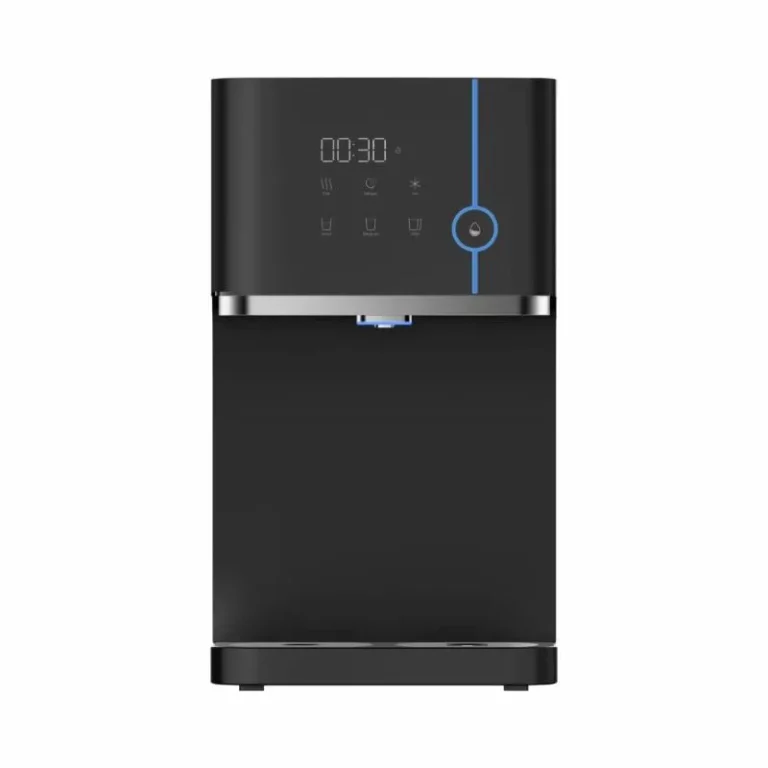
If you want the absolute best balance of performance and ease, our Driplife Countertop RO System is the standout choice for 2026. We designed this unit specifically for the modern US household—meaning zero installation headaches. You literally just plug it into a standard outlet, fill the feed tank, and you’re good to go. It’s perfect for anyone who hates the idea of drilling holes in granite countertops or messing with under-sink plumbing.
For those needing comprehensive protection, our 4-stage RO + UV model is a beast. It combines a 0.0001-micron Reverse Osmosis membrane (which tackles heavy metals like lead and arsenic) with UV-C sterilization to ensure your water isn’t just clean, but biologically safe. Plus, if you’re a tea or coffee drinker, our instant heating models are a game-changer—delivering piping hot water in just 3 seconds with multiple temperature presets. If you are looking for a versatile table top RO water purifier, our systems strike the perfect balance between high-tech purification and user-friendly design.
How Other Brands Compare
While I stand by our technology, I believe in transparency so you can make the right call for your specific needs.
- AquaTru: A strong runner-up and very popular in the States. They are well-known for their “Classic” model which has solid NSF certifications. The downside? The design can be a bit clunky with its external tanks, and it generally lacks the instant heating features found in newer tech.
- Waterdrop: Another solid competitor offering sleek, tankless designs. They have good flow rates and modern aesthetics, though some users find their filter replacement costs a bit steep over time compared to the efficiency you get.
- ZeroWater: Great if you are on a strict upfront budget. It’s a gravity-fed pitcher, so no electricity is needed. However, be warned: while it drops TDS to zero, the filters clog fast if you have hard water, making the long-term cost of ownership surprisingly high.
Quick Comparison: Benchtop Systems at a Glance
Here is how the top players stack up when you look at the specs side-by-side.
| Feature | Driplife RO System | AquaTru Classic | Waterdrop K19 | ZeroWater Pitcher |
|---|---|---|---|---|
| Filtration Type | 4-Stage RO + UV Sterilization | 4-Stage RO | 4-Stage RO | 5-Stage Ion Exchange |
| Installation | None (Plug & Play) | None | None | None |
| Instant Hot Water | Yes (3-Second Heat) | No | Yes (Some models) | No |
| Filtration Accuracy | 0.0001 Micron | 0.0001 Micron | 0.0001 Micron | N/A (Gravity) |
| Waste Ratio | Low Waste (High Efficiency) | Moderate | Low Waste | Zero Waste (No RO) |
| Best For | All-in-one convenience & Purity | Certified purity | Compact design | Low upfront cost |
Choosing the right system comes down to your daily habits. If you want the top benefits of a countertop RO system—like removing 99.99% of contaminants while having boiling water on demand for your morning brew—Driplife is built to serve that exact lifestyle.
Spotlight on Driplife Benchtop RO Systems
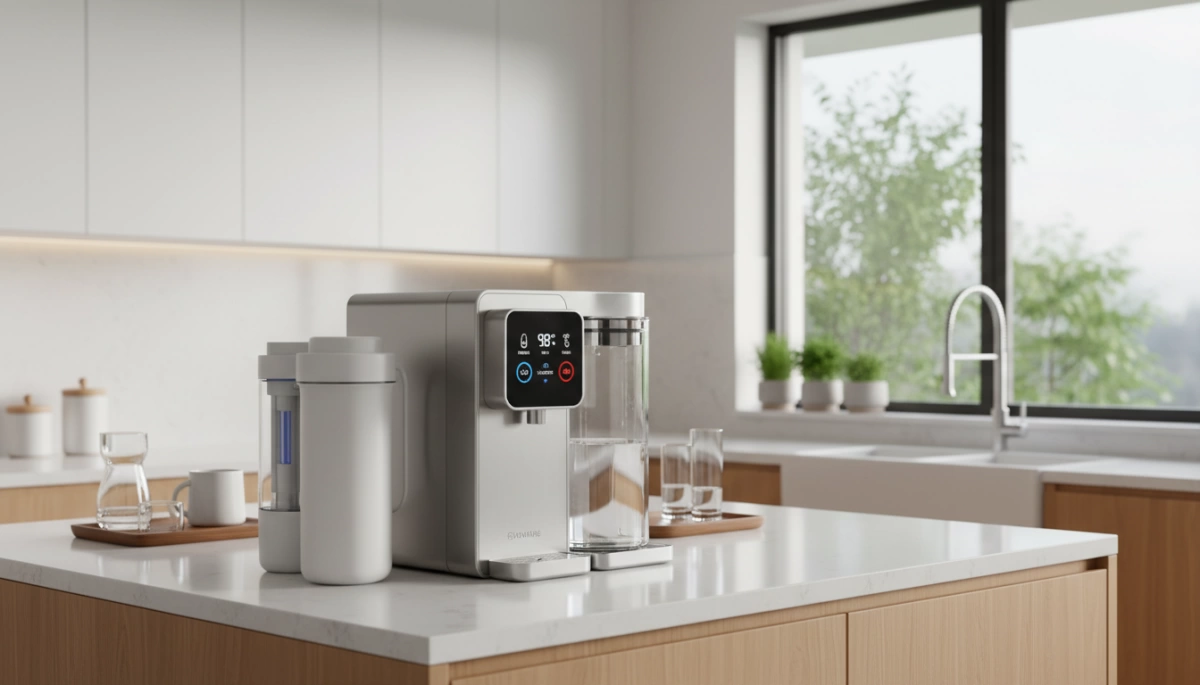
As a manufacturer deeply invested in water purification technology, we understand that modern households in the US demand convenience without compromising on purity. That’s why we engineered our driplife benchtop RO systems to address the most common pain points of traditional filtration: complicated setups, water waste, and bulky designs. We have moved beyond basic filtration to create a smart, all-in-one hydration station that fits perfectly in any apartment or home office.
Zero-Installation, Plug-and-Play Design
The biggest barrier to owning a reverse osmosis system has always been the plumbing. We removed that hurdle entirely. Our no-install water filter requires absolutely no drilling, no complex pipework, and no calls to the plumber. You simply unbox it, plug it into a standard outlet, fill the feed tank, and you are ready to go. It is the ultimate rental-friendly water purifier, offering complete flexibility to move the unit from your kitchen to your bedroom, or even to a new home.
High-Efficiency Filtration & Monitoring
Traditional RO systems are notorious for wasting gallons of water for every cup of pure water produced. We optimized our technology to achieve a high-efficiency 1:1 pure-to-drain ratio, significantly reducing waste compared to older models. To ensure you always know exactly what you are drinking, our systems feature a real-time dual TDS display. This smart monitoring shows you the water quality levels before and after filtration, providing immediate visual proof of the system’s performance.
Advanced Safety and Instant Heating
We didn’t stop at just removing contaminants. Our portable RO system integrates UV water sterilization benchtop technology, using UV-C light to keep the internal water tank free from bacteria and viruses. Furthermore, we know Americans value speed. Our units function as a versatile instant hot water dispenser countertop solution, delivering water ranging from room temperature to boiling in just 3 seconds—perfect for your morning coffee, tea, or instant oatmeal.
User-Centric Maintenance
- Quick-Twist Replacement: No tools required. You can swap out filters in seconds with a simple twist-and-pull motion.
- Compact Footprint: Sleek, modern aesthetics designed to save valuable counter space.
- Smart Indicators: Automatic alerts tell you exactly when to change filters, removing the guesswork.
Installation, Maintenance, and Long-Term Ownership
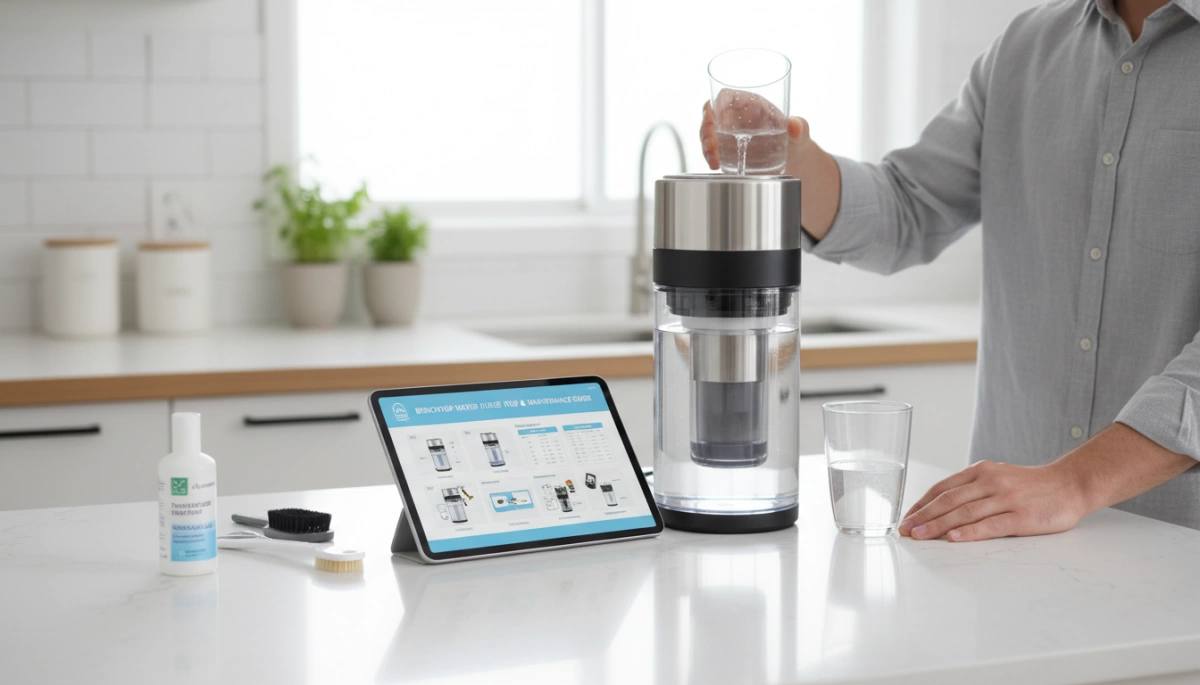
One of the biggest selling points of a benchtop water filter is that it doesn’t require a master plumber or a drill to get started. We designed these systems to be the ultimate rental friendly water purifier, giving you high-quality hydration without modifying your kitchen plumbing. Here is exactly how to manage the setup, maintenance, and long-term care of your unit to keep it running efficiently for years.
Step-by-Step Setup Guide for Benchtop Units
Getting a no-install water filter up and running usually takes less than 10 minutes. Since these are plug-and-play systems, the process is incredibly straightforward.
- Unbox and Position: Place the unit on a flat, stable surface near an electrical outlet. Ensure there is enough clearance above the tank to easily remove it for refilling.
- Flush the Filters: Before drinking the first glass, you need to flush the loose carbon fines and preservatives from the new filters. Fill the feed tank to the max line and run a full cycle, discarding the filtered water. Repeat this 2–3 times (check your specific manual for the exact number).
- Prime the System: For a portable RO system, the pump needs to prime. You might hear some vibration or gurgling initially—this is normal as air is pushed out of the internal tubing.
- Taste Test: Once the flushing cycles are complete, dispense a glass. The water should be crystal clear and taste crisp.
Filter Replacement Schedule and Costs
Maintenance is crucial for performance, but we’ve made it hassle-free. Most modern benchtop water dispensers feature a “twist-and-pull” design, allowing you to swap cartridges in seconds without turning off your main water supply.
- Pre-Filters (Sediment/Carbon): Typically replaced every 6–12 months. These protect the delicate RO membrane from large particles and chlorine.
- RO Membrane: The heart of the reverse osmosis countertop system. It usually lasts 12–24 months depending on your local water hardness.
- Post-Carbon/UV Lamp: Replaced annually to polish the taste and ensure sterility.
Cost Breakdown:
While the upfront cost of a zero installation purifier is higher than a simple pitcher, the long-term cost is significantly lower than bottled water. You are looking at roughly $0.10 to $0.15 per gallon over a 3-year period, compared to the dollars you’d spend on single-use plastics.
Cleaning and Troubleshooting Common Issues
To keep your instant hot water dispenser filter hygienic, a little regular cleaning goes a long way.
- Descaling: If you live in a hard water area, mineral scale can build up in the heating element or lines. Run a descaling cycle with a citric acid solution or white vinegar every 3–6 months.
- Tank Cleaning: Wash the raw water tank and the pitcher with warm soapy water weekly to prevent algae growth or biofilm, especially if the unit sits in direct sunlight.
- Troubleshooting Low Flow: If the dispensing speed drops, it’s usually a sign that filters are clogged or the system needs a reset. Check the filter life indicators on the front panel.
How to Monitor Water Quality at Home
A major advantage of a high-tech TDS monitoring water system is the ability to see exactly how pure your water is in real-time. Many of our units display the TDS (Total Dissolved Solids) of both the tap water going in and the filtered water coming out, giving you instant verification of the system’s efficiency.
For those who want to go deeper than just TDS readings, understanding the chemistry of your water is helpful. You might want to explore testing and adjusting RO water pH levels to ensure your water isn’t just clean, but also balanced for your taste preference and health needs. While the machine handles the heavy lifting of purification, keeping an eye on these metrics ensures you are always getting the best possible hydration.
Health Benefits of Using a Quality Benchtop Water Filter
When I talk to customers about upgrading their kitchen setup, the conversation almost always starts with convenience, but it ends with health. Investing in a high-quality benchtop water filter isn’t just about skipping the bottled water aisle; it is a fundamental step toward better daily wellness. Let’s be real—if your water tastes like a swimming pool due to chlorine, you aren’t going to drink enough of it.
improved Taste and Odor Removal
The immediate difference you will notice with a countertop water purifier is the taste. Municipal water treatment facilities in the United States often use heavy amounts of chlorine and chloramines to disinfect the supply. While this kills bacteria during transport, it leaves a harsh chemical aftertaste and odor.
A robust filtration system strips away these chemicals, leaving you with crisp, clean refreshment. This simple improvement often leads to a natural increase in water consumption. It is much easier to stay hydrated when your water actually tastes good.
Reduced Exposure to Harmful Contaminants
Beyond taste, the primary job of these systems is protection. We are seeing more reports about aging infrastructure and industrial runoff affecting city supplies. Since at present water pollution is serious in various regions, relying solely on basic tap water can be a gamble.
A comprehensive multi-stage countertop filtration unit, especially those equipped with RO membranes, acts as a barrier against invisible threats.
Key contaminants effectively reduced include:
- Heavy Metals: Lead, mercury, and arsenic that can leach from old pipes.
- PFAS: A PFAS removal water filter is essential for tackling these “forever chemicals.”
- Microplastics: A distinct microplastics removal system ensures you aren’t drinking tiny plastic particles.
- Cysts and Bacteria: Essential if your area is prone to boil-water advisories.
Enhancing Nutrition and Culinary Quality
Water is the foundation of your kitchen. It’s not just for drinking glasses; it’s for cooking, rinsing produce, and brewing beverages. Using purified water from a benchtop water dispenser elevates the quality of everything you make.
If you are a coffee aficionado or a tea lover, you know that water quality is responsible for a huge percentage of the final flavor profile. Unfiltered water with high mineral content or chemical notes can flatten the bright acidity of a good coffee bean or cloud the delicate notes of tea. Furthermore, using clean water for washing fruits and vegetables ensures you aren’t adding contaminants back onto your organic produce.
Health Impact Comparison Table
| Feature | Standard Tap Water | Quality Benchtop Water Filter |
|---|---|---|
| Taste Profile | often chemical/metallic (Chlorine) | Crisp, neutral, and fresh |
| Contaminant Load | May contain lead, PFAS, rust | Removes up to 99% of dissolved solids |
| Hydration Incentive | Low (due to poor taste) | High (palatable and accessible) |
| Cooking Suitability | Can alter food flavors | Enhances natural ingredient flavors |
| Safety Assurance | Varies by municipality | Consistent, monitored reduction |
Frequently Asked Questions About Benchtop Water Filters
When switching to a benchtop water filter, several common questions arise regarding performance, compatibility, and long-term value. Here are the answers to the most frequent inquiries we receive from US homeowners and renters.
Do benchtop filters remove fluoride and PFAS?
Not all filters are created equal. Basic pitcher filters often struggle with dissolved minerals and microscopic chemicals. However, a high-quality reverse osmosis countertop system is extremely effective at removing up to 99% of difficult contaminants, including fluoride and “forever chemicals” like PFAS. If your priority is ensuring you have filtered water with fluoride removed, an RO-based benchtop unit is the gold standard for protection.
How much electricity do they use?
Energy consumption is generally very low. Unlike a refrigerator that runs a compressor 24/7, a no-install water filter typically only consumes significant power when it is actively filtering water or dispensing.
- Filtration Mode: Very low wattage (often less than a lightbulb).
- Standby Mode: Negligible power draw.
- Heating Mode: Models with instant heating will spike in power usage only for the few seconds they are dispensing hot water, which is often more efficient than boiling a full kettle.
Are they suitable for tank or rainwater?
Most benchtop water dispensers are designed and rated for municipally treated tap water. If you are using rainwater or well water, you must be careful about microbiological contaminants (bacteria and viruses).
- Town Water: Perfect for all benchtop models.
- Rain/Well Water: Look specifically for a system with a UV water sterilization benchtop feature or a certified purifier rating to ensure it can handle biological threats.
What is the real cost of ownership over 3–5 years?
While the upfront cost of a premium countertop water purifier is higher than a simple pitcher, the long-term savings are substantial compared to buying bottled water.
- Year 1: Purchase price + 1 filter change.
- Years 2-5: Annual filter replacements only.
For a family of four, the cost per gallon usually drops to pennies within the first year. In contrast, bottled water costs thousands of dollars over the same period, not to mention the environmental impact of plastic waste.
Can they provide hot water instantly?
Yes, this is one of the most popular features of modern systems. Advanced models function as an instant hot water dispenser filter, allowing you to select specific temperatures for tea, coffee, or baby formula. A versatile countertop 3-in-1 RO cold and hot water purifier can replace your kettle entirely, clearing up even more counter space while delivering purified water at the exact heat you need in seconds.