What Is a Water Filter for Tap?
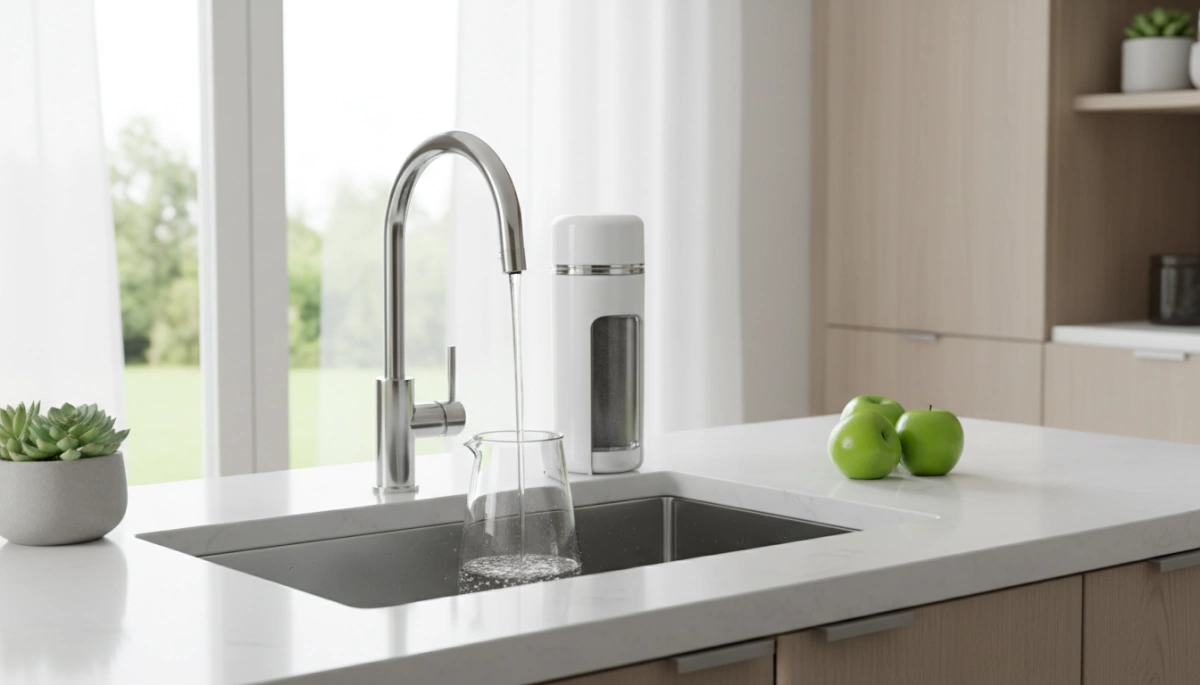
A water filter for tap (or faucet water filter) is a compact device that connects directly to your kitchen faucet to clean your tap water as it flows. Instead of filling a pitcher or installing a big system, the filter sits on the tap and gives you on-demand filtered water for drinking, cooking, and coffee.
How a Faucet-Mounted Water Filter Works
A tap mounted water filter is simple:
- You attach it to the end of your kitchen faucet using a small adapter
- When you open the tap, water passes through the filter cartridge (usually activated carbon + other media)
- The media helps reduce chlorine, odors, and sediment, and can also target lead and some other contaminants (depending on the model)
- Many units include a switch so you can choose filtered or unfiltered water
Faucet Filter vs Pitcher, Under-Sink, Whole-House
| System Type | Where It Installs | Best For | Key Trade-Offs |
|---|---|---|---|
| Faucet water filter | On the kitchen faucet | Daily drinking & cooking water | Limited flow, only at that faucet |
| Pitcher filter | On the counter / fridge | Small households, occasional use | Slow, needs frequent refilling |
| Under-sink filter | Under the sink | Higher volume, cleaner look | Needs more space, basic tools/plumbing |
| Whole-house system | At main water line | All taps, showers, appliances | Highest cost, requires pro install |
Key Advantages of a Tap Water Filter
A sink tap water filter hits a sweet spot between cost, convenience, and performance:
- No plumbing changes – Tool-free or simple install, great for renters
- On-demand clean water – No refilling, no waiting like a pitcher
- Compact design – Perfect for small kitchens and apartments
- Affordable – Lower upfront cost than under-sink or whole-house systems
If you want a kitchen sink water purifier that’s easy to install, renter friendly, and ready to use in minutes, a faucet mount filtration system is usually the most practical starting point.
Why Use a Water Filter for Tap?
A water filter for tap is one of the fastest ways to fix the most common issues we see in U.S. tap water. City water is usually safe, but it often comes with:
- Chlorine taste and odor (like a swimming pool)
- Sediment and rust particles from old pipes
- Possible heavy metals like lead in some areas
- Musty or “chemical” aftertaste
A good faucet water filter cleans that up fast. By running water through activated carbon and sediment media, you get:
- Better taste and smell for drinking, cooking, coffee, and tea
- Less exposure to chlorine byproducts and certain contaminants
- Clearer, fresher water right from your kitchen faucet filter
If you’re buying bottled water every week, a tap mounted water filter is an easy way to cut that habit:
- You get on-demand filtered tap water instead of hauling cases from the store
- You throw away fewer plastic bottles, which is more eco-friendly
- Cost per gallon drops dramatically once you switch to a sink tap water filter
Over a year, most U.S. households spend far more on bottled water than on a faucet water filtration system and a few replacement cartridges. If you care about taste, health, and saving money, a renter friendly tap water filter is one of the smartest upgrades you can make to your kitchen.
Types of Water Filters for Tap
Standard Faucet-Mounted Tap Filters
A standard faucet water filter attaches directly to your kitchen faucet and sends water through an internal cartridge (usually activated carbon). It’s compact, easy to install, and gives you filtered tap water straight from the spout—no extra pitcher or tank on the counter.
Best for: everyday drinking water, cooking, and quick upgrades in busy kitchens.
Tap-Mounted Filters with Filtered/Unfiltered Switch
These tap mounted water filters work like standard faucet filters but add a simple switch or lever. You can flip between:
- Filtered water for drinking, coffee, and baby formula
- Unfiltered water for rinsing dishes or washing hands
This saves filter life and keeps your flow rate higher when you don’t need purified water.
Inline Faucet Filtration Systems
An inline faucet water filter sits under the sink and connects directly to the cold-water line feeding your faucet. There’s no bulky device on the spout, so the kitchen stays clean and uncluttered.
Key perks:
- Hidden under-sink design
- Higher flow and longer filter life than many on-tap water purifiers
- Great for families that use a lot of filtered tap water for cooking
Multi-Stage Tap Water Filters
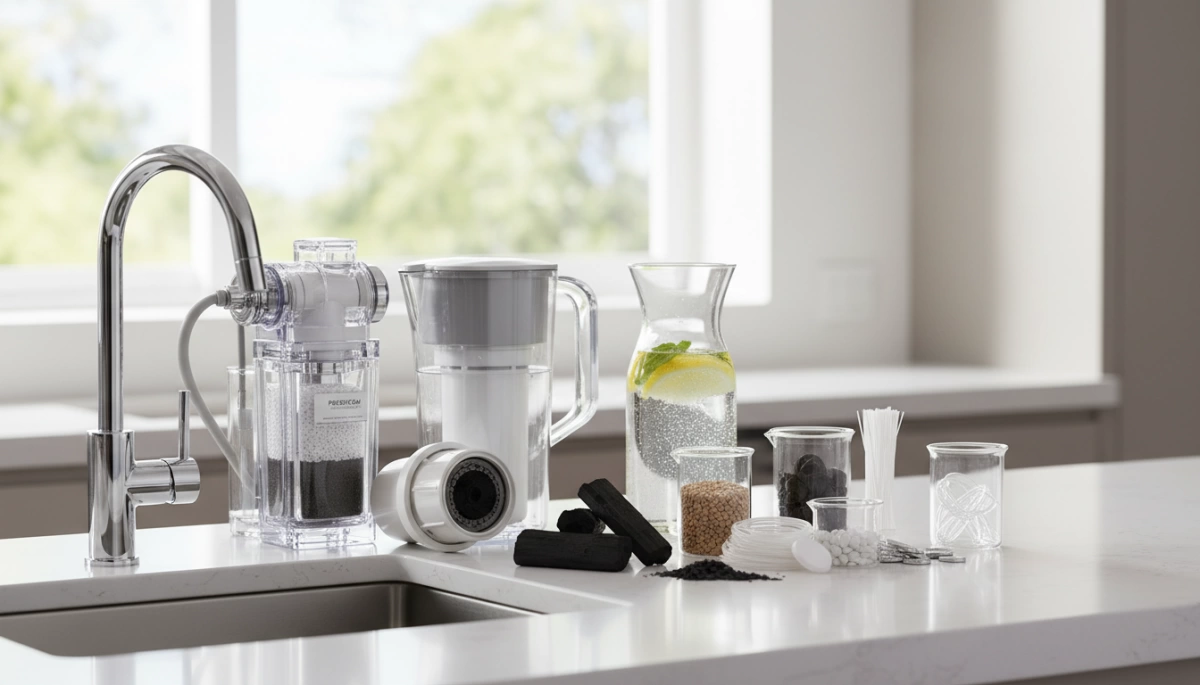
A multi stage tap water filter combines several filter media inside one system, often including:
- Sediment filter – captures sand, rust, and fine particles
- Activated carbon tap filter – reduces chlorine, bad taste, and odor
- Special media – in some models, targets heavy metals or VOCs
This is the “best faucet water purifier” style setup if you want stronger overall performance from a compact faucet mount filtration system.
Materials and Build Quality for Kitchen Faucet Filters
For a reliable kitchen faucet filter, I focus on:
- Food-grade plastics and BPA-free housings
- Durable faucet connectors that don’t crack or leak
- Corrosion-resistant metal parts where needed
A solid build means fewer leaks, less hassle, and safer drinking water from your sink tap water filter. If you’re also thinking about whole-home protection (like for showers), it’s worth comparing with options such as a shower head that filters chlorine and sediment to cover all water points in your home.
What a Tap Water Filter Can and Can’t Remove
A water filter for tap is great for everyday protection, but it does have limits. Here’s the quick breakdown so you know exactly what a faucet water filter can and can’t do.
What a Tap Water Filter Usually Removes
Most kitchen faucet filters and tap mounted water filters use activated carbon plus a sediment layer. A good unit will typically:
- Remove chlorine – cuts that pool-like smell and harsh taste
- Improve taste and odor – from organic compounds and disinfectant byproducts
- Trap sediment – sand, rust, dirt, and visible particles
- Reduce some chemicals – depending on the media, certain pesticides and VOCs
If you care about the difference between filtered and purified water, it’s worth checking out this breakdown of purified water vs filtered water.
Advanced Contaminant Reduction (Lead, Cysts, VOCs)
Higher‑end drinking water faucet filters and lead reducing faucet filters can also:
- Reduce lead – only if the filter is specifically rated for it
- Reduce cysts – like Giardia and Cryptosporidium, if the micron rating is tight enough
- Cut VOCs – some models target volatile organic compounds from industrial or household sources
Always look for exact claims on the box or spec sheet. Don’t assume every faucet water filtration system handles lead or cysts.
What Faucet Filters Usually Can’t Handle
Even the best faucet water purifier has limits. Most tap water filter systems:
- Do NOT remove fluoride – that usually needs reverse osmosis or special media
- Do NOT fully handle bacteria/viruses – not a replacement for a true purifier in unsafe water areas
- Do NOT soften very hard water – they might catch some scale, but they don’t act like a water softener
If you need whole-home treatment, you’re generally looking at a larger household water purifier system rather than just a faucet mount.
Why NSF/ANSI Certifications Matter
NSF/ANSI certification is non‑negotiable if you’re serious about water quality:
- NSF/ANSI 42 – covers chlorine, taste, and odor reduction
- NSF/ANSI 53 – covers health-based contaminants (lead, cysts, some VOCs)
- NSF/ANSI 401 – covers certain emerging contaminants (like some pharmaceuticals)
When I design or source a tap water filter system, I only trust performance claims backed by these standards. NSF/ANSI marks tell you the faucet mount filtration system has been independently tested and does what the label says—nothing more, nothing less.
How to Choose the Best Water Filter for Tap
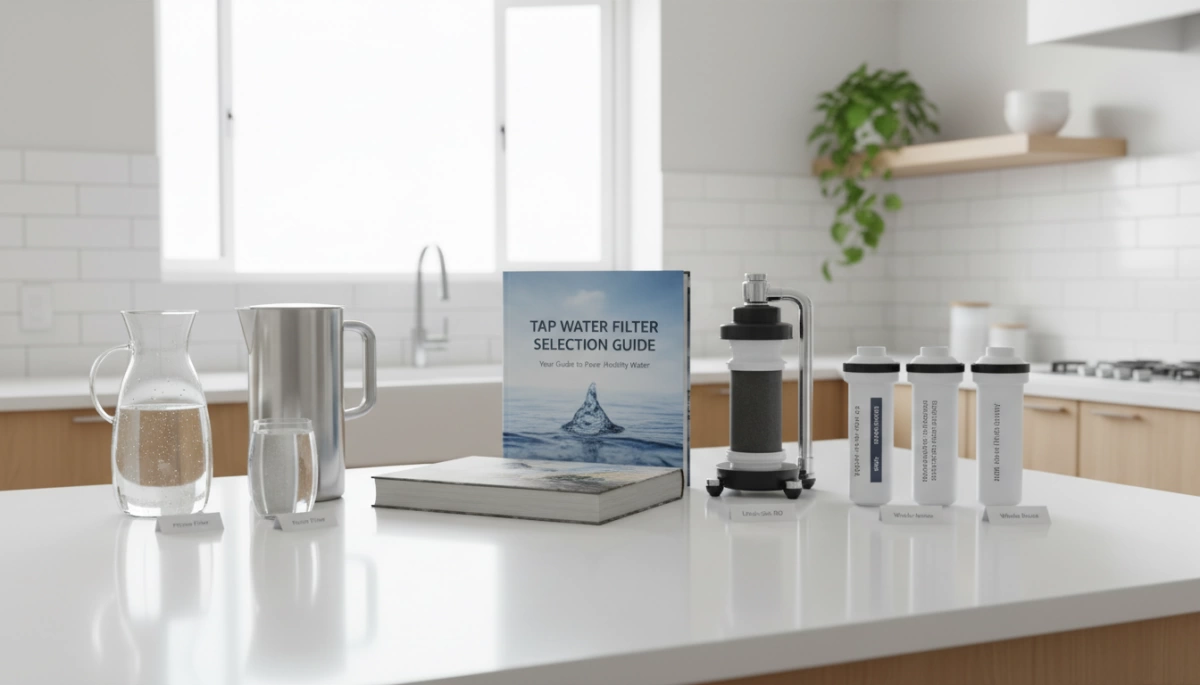
1. Tap Compatibility & Adapters
Start with the faucet, not the filter.
- Check if you have:
- Standard threaded faucet – most faucet water filters fit these.
- Pull-out / pull-down sprayer – usually not compatible.
- Odd-shaped or square spout – you’ll likely need a universal tap adapter.
- Look for:
- Clear compatible faucet filter lists on the box or page.
- Included adapters for different thread sizes (M22, M24, etc.).
- If you’re renting, pick a renter-friendly tap water filter that installs and removes with no tools and no marks.
2. Filtration Performance & Certifications
Don’t guess. Check the numbers and the labels.
- Look for:
- NSF/ANSI certifications (like 42, 53, 401) for specific claims:
- 42 – chlorine, taste, odor
- 53 – lead, cysts, some heavy metals
- 401 – some pharmaceuticals, VOCs, etc.
- Clear claims like chlorine removal water filter or lead reducing faucet filter.
- NSF/ANSI certifications (like 42, 53, 401) for specific claims:
- Ignore vague “purifies water” marketing if there’s no standard or test data behind it.
- For deeper filtration comparisons, I usually point buyers to more advanced systems and guides, like our breakdown of under-sink water purifier systems at Driplife: benefits of under-sink water purifier systems.
3. Filter Media & Cartridge Lifespan
Filter media and replacement cost matter just as much as the purchase price.
Common media in a kitchen faucet filter:
| Filter Media | Main Job |
|---|---|
| Activated carbon tap filter | Cuts chlorine, taste, odor, some VOCs |
| Sediment filter layer | Traps sand, rust, and visible particles |
| Additional specialty media | Targets lead, heavy metals, specific VOCs |
Key points to check:
- Rated capacity (in gallons or months) for each carbon filter cartridge.
- Realistic tap filter replacement schedule:
- Light use (1–2 people): often 3–4 months.
- Family use (3–5 people): often closer to the rated gallon limit.
- Make sure replacement cartridges are:
- Easy to find.
- Priced fairly.
- Simple to swap without tools.
4. Flow Rate, Pressure & Everyday Use
A good faucet water filter should not destroy your water pressure.
- Look for:
- Clearly stated flow rate (e.g., 1.5–2.0 L/min).
- Minimal drop in pressure for normal city water.
- Everyday usability:
- Filtered / unfiltered switch for washing dishes vs drinking.
- Simple lever or knob you can flip with one hand.
- No splashing or weird spray patterns.
5. Installation & Renter-Friendly Design
For most US households, tool-free faucet filter installation is a must-have.
- Choose a tap mounted water filter that:
- Installs in minutes with hand-tightened adapters only.
- Doesn’t require drilling or permanent changes.
- Comes with clear diagrams or QR code video instructions.
- Ideal for:
- Apartments.
- Short-term rentals.
- Anyone moving often and wanting a portable apartment faucet water filter.
6. Budget: Upfront vs Cartridge Cost
Always calculate the “true” cost per gallon.
Simple cost comparison template:
| Item | Budget Brand | Driplife Faucet Filter* |
|---|---|---|
| Upfront unit price | $$ | $$–$$$ |
| Cartridge price (each) | $ | $–$$ |
| Cartridge capacity (gallons) | Lower | Medium–High |
| Cost per gallon | Often higher | Designed to be lower |
*Example positioning: we design our faucet mount filtration system to keep cost per gallon low for US households that use filtered water for both drinking and cooking.
Tips:
- Compare annual cartridge cost, not just unit price.
- Heavy bottled water users in the US usually save hundreds per year once they switch to a good eco friendly tap water filter.
7. Comparing Popular Brands & Driplife Options
When you stack brands side by side, look at:
- What they actually remove (not just marketing).
- NSF testing, or at least clear third-party lab reports.
- Cartridge availability on Amazon, big box stores, or direct from the brand.
- Build quality – metal connectors and strong plastics last longer on busy kitchen sinks.
Where Driplife fits in:
- We’re a water filter for tap manufacturer focused on:
- Reliable faucet mount filtration systems tailored for US kitchen habits.
- Strong OEM and private label faucet water filter partnerships for retailers and online brands.
- If you’re on the B2B side and need a bulk tap water filter or private label tap water filter, you can dig into our capabilities as one of the more specialized water purifier suppliers in China: water purifier suppliers.
In short: match the filter to your faucet, your water issues, and your real monthly budget. If those three line up, you’ve picked the right water filter for tap.
Installation and Maintenance for Faucet Water Filters
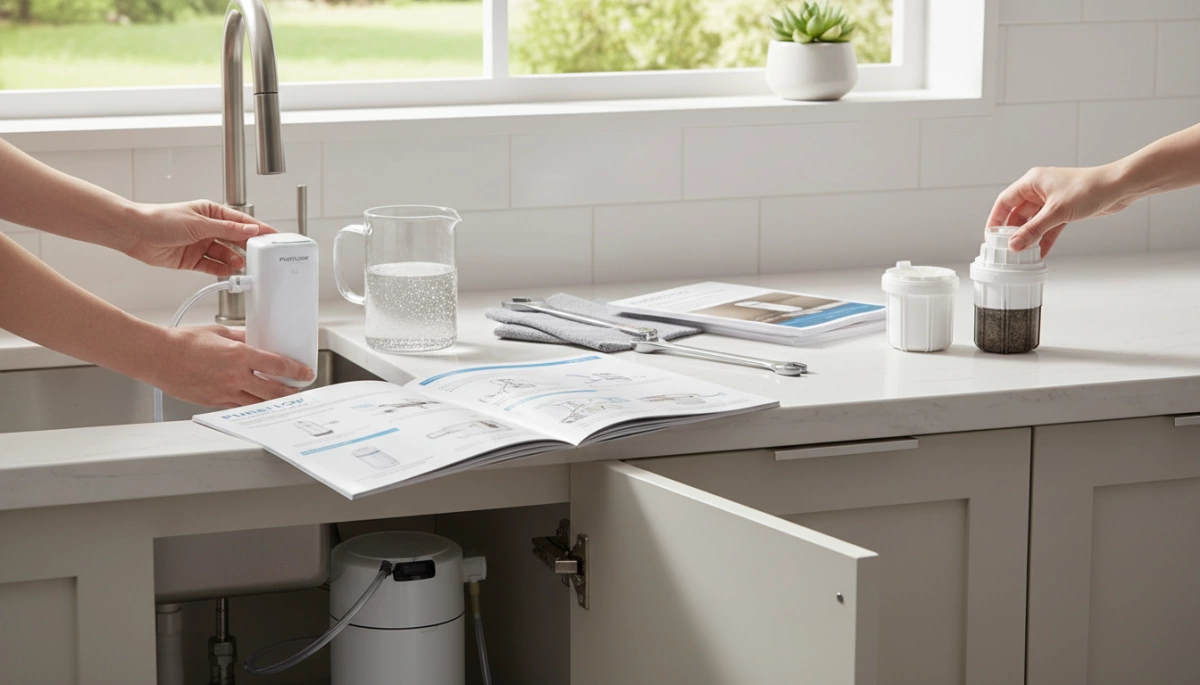
Installing and maintaining a water filter for tap is simple if you follow a few basics. A good faucet water filter should be easy to mount, easy to flush, and easy to maintain without tools.
Step-by-step installation on a standard kitchen tap
Most tap mounted water filters follow a similar setup:
- Remove the aerator
- Unscrew the small tip on your kitchen faucet (the aerator).
- Keep the rubber washer; you may need it.
- Choose the right adapter
- Most kitchen faucet filters include multiple adapters.
- Match the threads (internal/external) to your faucet.
- Hand-tighten the adapter—no wrench needed in most cases.
- Attach the faucet filter
- Align the faucet mount filtration system with the adapter.
- Twist until snug. Do not overtighten to avoid damaging threads.
- Check for leaks
- Turn on cold water gently and inspect all connections.
- If it leaks, tighten by a quarter turn and test again.
Dealing with non-standard or pull-out faucets
Not every kitchen sink water purifier is compatible with every faucet:
- Pull-out / pull-down faucets: Most faucet water filtration systems are not designed for them. In those cases, consider an inline faucet water filter or an under-counter water filter system like this under-counter water filter solution.
- Square or waterfall faucets: These usually can’t accept a standard universal tap water filter.
- Non-standard threads: Use the correct adapter from the kit or a universal adapter from a hardware store.
If you’re renting, stick with a renter friendly tap water filter that doesn’t require plumbing changes and removes easily when you move out.
How to flush the filter before first use
Every activated carbon tap filter needs flushing:
- Switch the faucet to filtered mode.
- Turn on cold water at low–medium flow.
- Let it run for 3–5 minutes (follow your manual).
- It’s normal to see black/gray water at first—that’s carbon dust.
After flushing, your drinking water faucet filter is ready for daily use.
When and how to replace a tap filter cartridge
A tap filter replacement schedule depends on your water quality and usage:
- Typical carbon filter cartridges last 2–3 months or 100–200 gallons.
- Heavy use (big families, lots of cooking/coffee) = more frequent changes.
To replace the replacement cartridge tap filter:
- Turn off the water.
- Switch to unfiltered mode (if your model has it).
- Open the filter housing (usually a twist-off cap).
- Remove the old cartridge and insert the new one firmly.
- Close the housing and run water to flush the new filter for a few minutes.
Never push a cartridge past its rated life—performance drops and bacteria can build up inside.
Troubleshooting leaks, low flow, and strange tastes
Common faucet mount filtration system issues are easy to fix:
- Leaks at the connection
- Check the rubber washer is in place.
- Re-seat the adapter and tighten gently.
- Make sure threads are not cross-threaded.
- Low flow rate
- Cartridge may be clogged—time for a tap filter replacement.
- Check your aerator for debris.
- Make sure the valve is fully open on the tap mounted water filter.
- Strange taste or odor
- Flush the filter for several minutes.
- If taste remains, the cartridge is likely expired.
- If it persists after replacing, the issue may be in your plumbing—consider pairing with a multi-stage tap water filter or a ceramic water filter system like those described in this guide on efficient ceramic water filters and how they work.
Once installed correctly, a quality water filter for tap should run smoothly with quick cartridge swaps and simple, tool-free maintenance.
Tap Water Filters for Different Homes and Lifestyles
Best Tap Filters for Kitchens and Family Use
For most U.S. families, a faucet water filter on the main kitchen sink is the sweet spot: easy, fast, and always ready.
What works best for families:
| Need | Best Tap Filter Type | Why It Fits |
|---|---|---|
| Everyday drinking water | Faucet-mounted water filter | On-demand, no waiting like pitchers |
| Cooking & washing produce | Multi-stage kitchen faucet filter | Better taste, fewer odors and sediment |
| Kids & guests | Filtered/unfiltered switch | Quick to use, no confusion |
Look for a multi-stage tap water filter with activated carbon for taste/odor and a good sediment stage to keep pasta water, soups, and drinks clean and consistent.
Water Filter for Tap in Apartments and Rentals
If you rent, you usually can’t touch the plumbing. A renter-friendly tap water filter solves that.
What I recommend for apartments:
- Tool-free faucet filter installation (hand-tighten only)
- Universal tap adapter for odd-sized faucets
- Compact, light apartment faucet water filter that you can remove when you move out
| Renter Priority | What to Look For |
|---|---|
| No damage | Clamp-on or screw-on design, no drilling |
| Easy move-out | Quick removal, reusable adapters |
| Small kitchens | Compact faucet water filter body |
On-Tap Water Purifier for Drinking, Cooking, and Coffee
If you care about taste, especially for coffee and tea, a kitchen sink water purifier on the faucet is a big upgrade over plain tap.
You’ll want a carbon-based drinking water faucet filter that:
- Reduces chlorine taste and odor
- Improves water for coffee, tea, and cooking
- Keeps a decent flow rate so filling pots doesn’t feel slow
| Use Case | Why a Tap Filter Helps |
|---|---|
| Drinking | Cleaner, better-tasting water on demand |
| Coffee & tea | More consistent flavor, less chlorine |
| Cooking | Better base for soups, rice, pasta, and baby food |
Using Faucet Filters as a Backup System
A tap water filter system also works great as a backup to other filtration like RO or whole-house filters.
You can:
- Use a faucet water filtration system as a second stage for taste polishing
- Keep an on-tap water purifier on the main sink in case your main system is down
- Pair it with tech like UV water treatment if you’re dealing with microbiological concerns (see how UV water treatment systems work for context)
| Setup | How the Faucet Filter Helps |
|---|---|
| Whole-house filter | Adds extra taste and chlorine reduction at the tap |
| RO system | Acts as backup on another faucet |
| Well water + pre-treatment | Final polishing for drinking and cooking |
A compact, affordable faucet water filter gives you flexibility: daily convenience, better taste, and a simple safety net if your main system ever has issues.
driplife Water Filters for Tap
At driplife, we design and manufacture faucet water filters and tap water filter systems built for everyday use in U.S. kitchens. As a China-based water filter for tap manufacturer, we focus on compact, easy-install faucet mount filtration systems that deliver clean, better-tasting water right from the sink.
Our Faucet Filter Product Range
We offer a full range of kitchen faucet filter solutions, including:
- Standard faucet-mounted water filters for quick, tool-free installation
- Multi-stage tap water filters with activated carbon and sediment media
- Inline faucet water filter options for a cleaner, built-in look
- Lead-reducing faucet filters and chlorine removal tap filters for city water
- Universal tap water filter designs with adapters for most U.S. faucets
All systems are compact, renter friendly, and built to make filtered tap water for drinking and cooking as convenient as turning on the tap.
Quality Control & Certified Performance
We run strict quality control on every faucet water filtration system we produce:
- Multi-stage activated carbon tap filters for chlorine, odor, and taste reduction
- Sediment removal faucet filters to protect against rust, sand, and visible particles
- NSF/ANSI test-based performance (per customer spec) for chlorine, lead, and other key contaminants
- Consistent flow, stable housing, and leak-resistant connections for everyday kitchen use
For brands that want to pair faucet filters with more advanced systems, we also support bundled programs that include premium options like a countertop RO water purifier with hot, cold, and ice functions.
OEM & Private Label Faucet Filter Options
We specialize in OEM faucet water filter and private label tap water filter projects for U.S. brands:
- Custom exterior design, logo, and packaging
- Tailored filter media (chlorine-focused, lead-reducing, high-capacity, eco-friendly)
- Custom replacement cartridge tap filter SKUs to build repeat sales
- Product documentation and marketing materials support
You get a ready-to-sell faucet water purifier line under your own brand, with our manufacturing behind it.
Bulk Supply for Retailers, Brands & Distributors
For retailers, e-commerce sellers, and distributors, we offer:
- Bulk tap water filter supply with flexible MOQs
- Fast-moving SKUs like apartment faucet water filters and universal tap adapters
- Stable replacement cartridge programs to drive long-term repeat orders
- Support for both online storefronts and brick-and-mortar retail
If you’re looking to launch or expand a faucet water filter product line with reliable manufacturing in China and specs that fit U.S. customer needs, driplife is built for that.
FAQ About Water Filters for Tap
Do faucet water filters really work?
Yes—faucet water filters for tap are very effective when they’re properly designed and certified. A good faucet water filtration system can:
- Cut chlorine taste and odor
- Reduce sediment, rust, and sand
- Improve smell and overall taste for drinking and cooking
Always look for NSF/ANSI-certified faucet filters so you know exactly what contaminants the system is tested to reduce.
How often should I change the faucet filter cartridge?
Most tap filter replacement cartridges last about 2–3 months or 100–300 gallons, depending on the model and your water quality. Change the carbon filter cartridge when:
- Water starts to taste or smell off again
- Flow rate drops noticeably
- You reach the time or gallon limit listed in the manual
Using a cartridge longer than recommended means weaker filtration and possible contaminant breakthrough.
Are tap filters compatible with all kitchen faucets?
Not all, but most standard US faucets can use a universal tap water filter with the right adapter. Keep in mind:
- Standard threaded faucets are usually plug-and-play
- Pull-out or pull-down sprayer faucets often need inline faucet water filters or an under-sink water purifier instead
- Check the product’s compatible faucet filter list and included adapters before buying
If you have a more complex setup, an under-sink water purification system may be a better fit than a faucet mount.
Can a tap water filter remove lead and chlorine?
Many can, but not every model. Check the specs:
- For lead: look for a lead reducing faucet filter and NSF/ANSI 53 certification for lead reduction
- For chlorine: most activated carbon tap filters with NSF/ANSI 42 certification handle chlorine taste and odor removal
If lead is a concern in your area, do not assume—verify the exact claim and certification on the package.
Faucet filter vs pitcher filter: which should I pick?
Both improve taste, but they fit different lifestyles:
Choose a faucet water filter if you want:
- On-demand filtered water straight from the kitchen faucet filter
- No refilling or waiting
- Easy, tool-free faucet filter installation that’s renter friendly
Choose a pitcher filter if you want:
- Something you can store in the fridge
- A small solution for 1–2 people with low daily use
For most US families who cook, make coffee, and drink a lot of water at home, a tap mounted water filter is usually more convenient and cost-effective long term than a basic pitcher.