

















Understanding Calcium in Your Water Supply
Ever notice that stubborn, chalky white crust on your faucet or those annoying spots on your freshly washed glassware? That’s not dirt—that’s calcium. Before we dive into how a calcium water filter can solve your problems, we need to understand what we’re actually dealing with.
What Is Hard Water?
At its core, hard water is simply water that has picked up high mineral content. As rainwater filters through the ground, it dissolves minerals from rocks like limestone and chalk. The two main culprits are calcium and magnesium. While these minerals are natural, having too much of them turns your water “hard,” leading to the frustration known as scale buildup.
Measuring Water Hardness Levels
How do you know if your water is actually hard? We measure hardness in two ways:
- Parts Per Million (PPM): This measures the concentration of dissolved minerals.
- Grains Per Gallon (GPG): This is the industry standard for sizing softeners.
If your water tests above 7 GPG (or 120 PPM), you are dealing with hard water. In the US, regional levels vary wildly, but a significant portion of the country—especially the Midwest and Southwest—deals with extremely hard water straight from the tap.
The Double-Edged Sword: Good vs. Bad
Calcium isn’t inherently “bad.” In fact, it’s essential for life. However, when it comes to household water, it’s a balancing act between health benefits and plumbing nightmares.
The Positive Effects:
- Health: Dissolved calcium contributes to your daily intake, supporting bone health.
- Taste: A moderate amount of minerals gives water a crisp, refreshing taste (distilled water often tastes “flat” because it lacks this).
- pH Balance: Calcium helps neutralize acidity, preventing water from becoming corrosive.
The Negative Effects (Why You Want a Filter):
- Limescale Buildup: This is the killer for appliances. Scale accumulates on heating elements in kettles, boilers, and dishwashers, forcing them to work harder and burn out faster.
- Soap Scum: Calcium reacts with soap to form a sticky scum that clings to tiles and tubs, making cleaning a chore.
- Skin and Hair Issues: Hard water strips natural oils from your skin and leaves hair feeling dry, brittle, and frizzy.
If you are tired of scrubbing scale or replacing coffee makers every year, understanding this mineral balance is the first step toward choosing the right calcium water filter solution.
When to Remove Calcium from Water
If you are constantly scrubbing white crust off your faucets or wondering why your glassware looks cloudy right out of the dishwasher, you are dealing with hard water. While calcium is a natural mineral, too much of it wreaks havoc on your home. A calcium water filter isn’t just a luxury in these cases; it’s a necessity to protect your property.
Identifying the Signals
You don’t always need a lab test to know your water is hard. The physical signs are usually obvious and frustrating. If you notice these red flags, it is time to look into limescale prevention:
- Stubborn White Residue: That chalky buildup (scale) on showerheads and faucets that is impossible to scrub away.
- Spotted Glassware: Dishes that come out of the dishwasher looking dirty or “foggy.”
- Dry Skin and Hair: Hard water prevents soap from lathering correctly, leaving a film on your skin.
- Low Water Pressure: Scale buildup can actually clog your pipes over time, reducing flow.
Protecting Your Appliances
The biggest hit usually comes to your wallet through appliance repairs. Calcium accumulation acts like cholesterol in your home’s “arteries,” clogging up heating elements and valves. This is most common in:
- Kettles and Coffee Makers: High heat accelerates scale formation, killing these machines quickly.
- Water Heaters and Boilers: Efficiency drops drastically when heating elements are coated in rock.
- Washing Machines: Clothes wear out faster, and the machine has to work harder.
To save your expensive kitchen gadgets, many homeowners opt for specialized filtration. You can check out our guide on choosing under-sink water filters to see how point-of-use systems protect these specific appliances.
Health vs. Taste Considerations
A common worry I hear is, “Is it safe to drink water without calcium?” The short answer is yes. Removing calcium via a hard water filter does not make water unsafe. In fact, most of our daily calcium intake comes from food (like dairy and leafy greens), not tap water.
However, removing minerals can affect the “mouthfeel” of the water, sometimes making it taste slightly acidic or flat. If you prefer that crisp mineral taste, you don’t have to sacrifice your appliances—modern systems allow for remineralization after the cleaning process.
Key Takeaway: If your appliances are dying young or you are tired of scrubbing scale, the benefits of calcium reduction far outweigh the minor change in water taste.
When to Add Calcium Back (Remineralization)
It might sound contradictory after discussing limescale, but there are times when you absolutely want calcium in your water. While high-tech filtration methods like Reverse Osmosis (RO) are the gold standard for removing contaminants, they are indiscriminate. They strip away up to 99% of dissolved solids, including healthy minerals like calcium and magnesium.
This creates “hungry” or acidic water that can leach metals from pipes and simply tastes flat. For us at Driplife, the goal isn’t just pure water; it is healthy, balanced water. This is where a post-RO remineralization stage becomes essential.
Why We Use a Calcium Magnesium Filter Post-RO
If you are using an RO system, understanding that a household water purifier is a device used to treat household drinking water for safety is step one. Step two is ensuring that water is actually enjoyable and beneficial to drink.
Benefits of Remineralized Water:
- Taste Enhancement: Calcium neutralizes the slight acidity of pure RO water, providing a crisp, mountain-spring taste.
- Alkaline pH Balance: A remineralization filter raises the pH level, turning acidic water into alkaline water, which many health enthusiasts prefer for reducing body acidity.
- Electrolyte Replenishment: It reintroduces essential trace minerals that your body needs for hydration.
Comparing Standard RO vs. Remineralized RO
| Feature | Standard RO Water | Remineralized (Alkaline) Water |
|---|---|---|
| pH Level | Slightly Acidic (5.0 – 6.5) | Alkaline (7.5 – 9.0) |
| Mineral Content | Near Zero | Rich in Calcium & Magnesium |
| Taste Profile | Flat / Bland | Smooth / Crisp |
| Hydration | Basic | Enhanced with Electrolytes |
For health-focused households, adding an alkaline water filter stage ensures you get the purity of RO without sacrificing the mineral benefits. It’s the perfect balance between aggressive filtration and nutritional value.
Key Technologies for Managing Calcium in Water
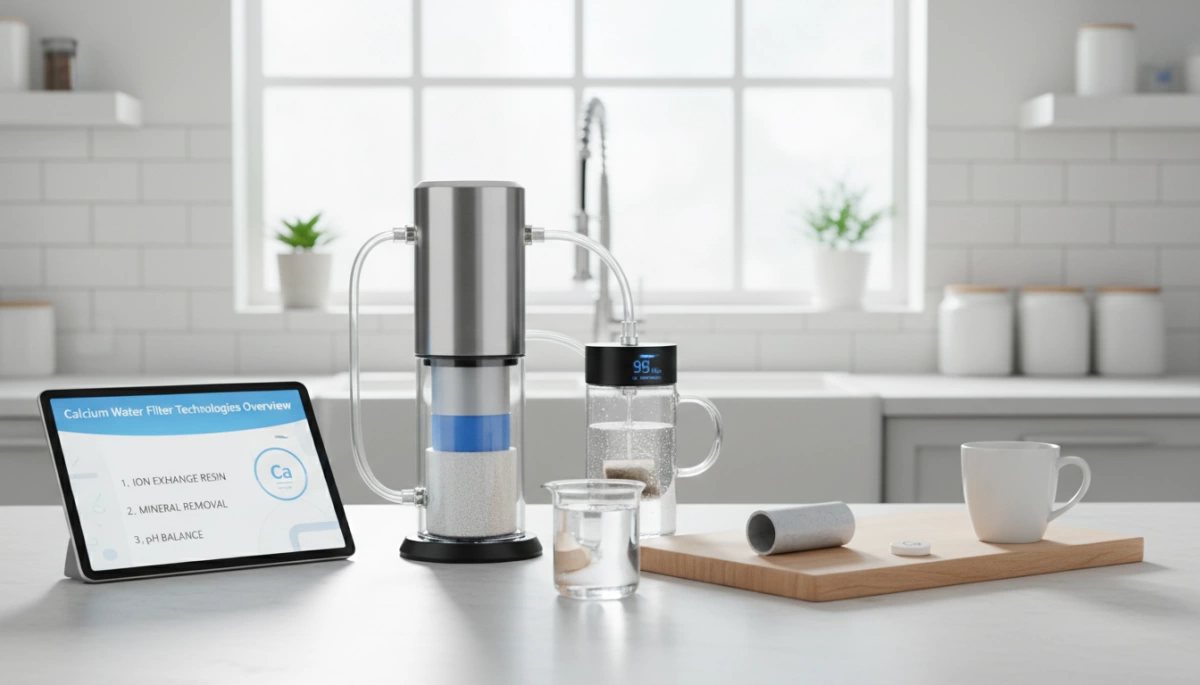
Choosing the right calcium water filter depends entirely on whether you are trying to strip minerals out to stop scaling or put them back in for health and taste. As a manufacturer, we see a variety of methods used across the US market, each with specific strengths. Here is the breakdown of the core technologies we utilize and recommend.
Reverse Osmosis (RO) and Ion Exchange
For total control, these are the heavy hitters.
- Reverse Osmosis (RO): This is the gold standard for purity. Reverse osmosis calcium removal is absolute; the semi-permeable membrane strips water molecules down to their core, removing calcium, magnesium, and virtually all contaminants. It is effective, but it leaves water slightly acidic and “empty.”
- Ion Exchange Water Softeners: This is your traditional water softener system. It uses resin beads to swap hard calcium and magnesium ions for sodium ions. It physically removes the minerals that cause hardness, completely eliminating limescale, though it does add a small amount of sodium to your supply.
Salt-Free and Conditioning Technologies
Not everyone wants to haul bags of salt or deal with wastewater.
- Template Assisted Crystallization (TAC): Often called a salt-free water softener, this technology doesn’t actually remove calcium. Instead, it transforms dissolved calcium into microscopic crystals. These crystals cannot stick to pipes or heaters, effectively acting as a powerful limescale prevention method without altering the water chemistry.
- Polyphosphate and Magnetic Conditioners: These are budget-friendly scale inhibitors. Polyphosphates coat minerals to prevent them from clumping. This tech is common in compact point-of-use applications, such as a specialized shower filter for hard water, where protecting skin and hair from mineral buildup is the priority without needing a massive tank.
Remineralization and Alkaline Enhancement
Once you have stripped the water clean (usually via RO), you often need to build it back up.
- Remineralization Cartridges: These are crucial for post-RO remineralization. We use these to dissolve trace amounts of calcium and magnesium back into the water, neutralizing the pH and restoring that crisp, refreshing taste.
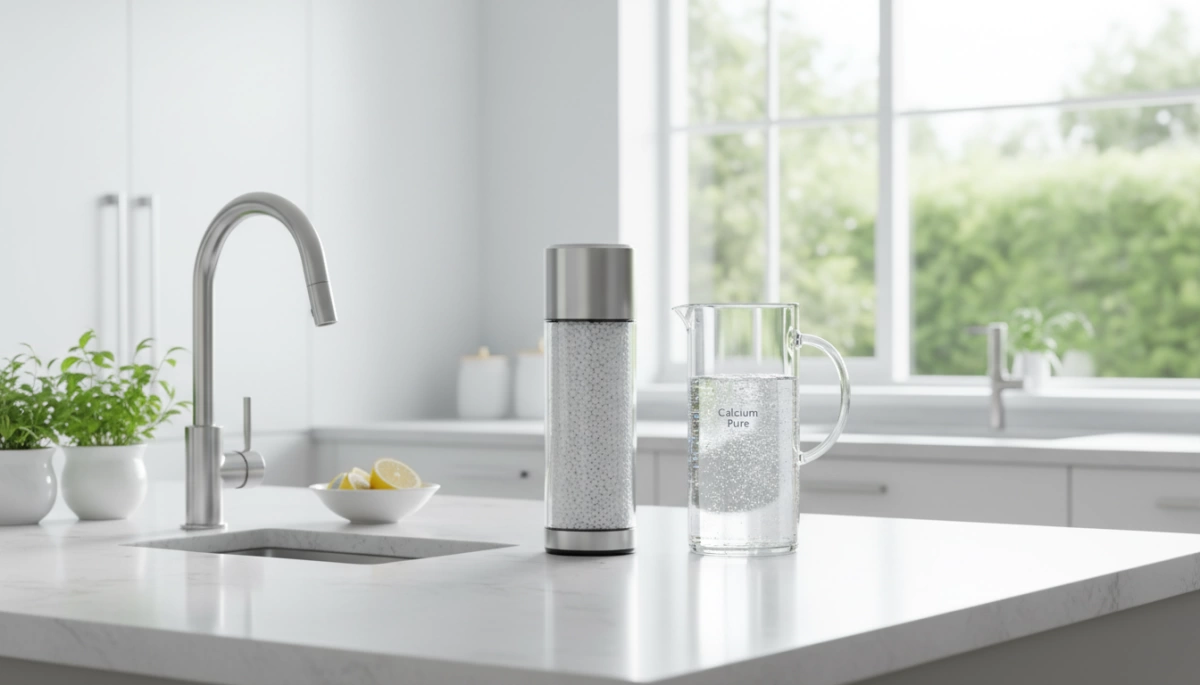
- Alkaline Filters: Taking it a step further, an alkaline water filter raises the pH level (often above 7.5 or 8.5) and introduces beneficial minerals. You can find this technology integrated into complex under-sink systems or even simple countertop units like a transparent glass water purifier pitcher, providing an accessible way to get calcium-rich hydration.
Types of Calcium Water Filter Systems
Choosing the right calcium water filter isn’t a “one size fits all” situation. The best solution depends entirely on whether you are trying to protect your plumbing from scale or simply trying to improve the taste of your morning coffee. Here is a breakdown of the primary systems available on the market today.
Whole-House (Point-of-Entry)
If you are dealing with significant scale buildup in your pipes, water heater, and washing machine, you need a Point-of-Entry (POE) solution. A whole house water conditioner is installed at your home’s main water line, treating every drop of water before it enters your plumbing.
- Salt-Based Softeners: These physically remove calcium ions and replace them with sodium. They are the most effective at totally eliminating hardness but require regular salt refills.
- Salt-Free Systems (TAC): These act as a scale inhibitor rather than a remover. They crystallize the calcium so it can’t stick to pipes, preserving the minerals in the water while preventing damage.
Under-Sink RO Systems
For drinking and cooking, an under sink calcium filter utilizing Reverse Osmosis (RO) is the gold standard. These systems provide hyper-pure water by forcing it through a semi-permeable membrane.
Standard RO removes virtually all calcium, which prevents kettle scaling but can leave water tasting flat. That is why I always recommend systems with a remineralization filter stage. This adds beneficial calcium and magnesium back into the water post-filtration, ensuring you get the health benefits without the limescale. Understanding the specific benefits of under-sink water purifier systems can help you decide if this targeted approach is right for your kitchen.
Countertop Units
Not everyone can drill holes in their granite countertops or mess with plumbing. Countertop RO units are the perfect hard water filter solution for renters or those who want a hassle-free setup. Most modern countertop models are tankless and plug-and-play, offering the same reverse osmosis calcium removal and subsequent remineralization as under-sink models, but in a portable form factor.
Shower and Bathroom Filters
Hard water is notorious for causing dry skin and brittle hair because calcium minerals react with soap to form a film that is hard to rinse off. A dedicated shower filter for hard water usually attaches directly to your shower arm.
While these small filters rarely remove calcium entirely (as they lack the contact time of a softener), they often use KDF media or polyphosphates to alter the structure of the minerals, making the water feel softer and reducing soap scum buildup.
Pitcher and Faucet Filters
These are the entry-level options for small households. While a standard carbon pitcher is great for chlorine, it often struggles with high mineral content. However, specific ion-exchange pitchers are designed to reduce hardness. They are an affordable way to prevent tea scum, though the filter lifespan is significantly shorter in areas with very hard water.
| System Type | Best Application | Calcium Strategy |
|---|---|---|
| Whole-House | Protecting pipes & appliances | Removal (Salt) or Inhibition (TAC) |
| Under-Sink RO | Pure drinking & cooking water | Removal + Remineralization |
| Countertop | Renters & apartments | Removal + Remineralization |
| Shower Filter | Skin & hair health | Structural Alteration/Inhibition |
How to Choose the Best Calcium Water Filter for Your Needs
Selecting the right calcium water filter isn’t just about picking the most expensive unit; it is about matching the technology to your specific water profile and lifestyle. Here is how we break down the decision-making process to ensure you get exactly what your home needs.
Assess Your Water Hardness Level
Before buying anything, you need data. You cannot treat what you do not measure.
- DIY Test Kits: These are affordable and give you a quick “yes/no” on whether you have hard water.
- Lab Reports: For a precise breakdown of calcium (ppm) and other contaminants, a professional lab test is best.
- Visual Inspection: If you see white crust on faucets or dry skin is a constant issue, you likely have high grains per gallon (GPG).
Household Size and Installation
A studio apartment has different needs than a four-bathroom house. If you are renting or have limited space, a bulky whole-house tank isn’t viable.
- Renters: Look for countertop units or faucet attachments.
- Large Families: High-capacity whole-house systems or high-flow under-sink units are necessary to keep up with demand.
- Budget & Maintenance: Don’t just look at the upfront price tag. Calculate the cost of replacement cartridges over a year. Some generic options seem cheap initially but have short lifespans. Browsing through top water sink purifiers for all budgets can help you balance performance with long-term affordability.
Define Your Calcium Goal: Reduction vs. Remineralization
Are you fighting limescale, or are you trying to improve the taste of stripped water?
| Feature | Hard Water Reduction (Scale Prevention) | Remineralization (Adding Calcium) |
|---|---|---|
| Primary Goal | Protect appliances and plumbing from limescale. | Improve taste and raise pH balance. |
| Best Technology | Ion Exchange, TAC (Salt-Free), Reverse Osmosis. | Alkaline Filters, Mineral Cartridges. |
| Ideal For | Homes with “rock hard” water (10+ GPG). | Homes using RO systems or with naturally acidic water. |
| Key Certifications | Look for NSF/ANSI 44 (Softening). | Look for NSF/ANSI 42 (Aesthetic Effects). |
If your primary goal is health and flavor enhancement rather than scale protection, opting for a system that provides alkaline water filter benefits ensures you are drinking mineral-rich water rather than just empty H2O.
Key Features to Prioritize:
- Flow Rate: Ensure the GPM (gallons per minute) matches your household pressure.
- Filter Lifespan: Longer life means fewer changes and less hassle.
- Ease of Installation: Quick-change cartridges are a must for modern systems.
Top Recommendations for 2026: Smart Calcium Management
As we move into 2026, the approach to handling calcium in water has shifted from simple removal to intelligent management. It is no longer just about preventing limescale; it is about ensuring the water you drink is pure, safe, and pleasant to taste. The best calcium water filter systems today don’t just strip everything out—they refine the water profile to give you the best of both worlds.
High-Flow Tankless RO: The Driplife Advantage
At Driplife, we recognized that traditional tank-based systems were prone to secondary contamination and took up way too much space under the typical American sink. That’s why our focus for 2026 is heavily on high-flow tankless reverse osmosis systems.
These units are game-changers for hard water areas. They utilize reverse osmosis calcium removal technology to strip away virtually all hardness minerals that cause scale, but they don’t stop there. Many of our advanced models feature an integrated remineralization filter stage. This post-filtration step reintroduces beneficial calcium and magnesium, ensuring your water isn’t “dead” or acidic, but crisp and balanced.
If you are looking for a permanent solution that protects your plumbing while providing bottle-quality hydration, installing efficient under-sink RO systems is the most robust investment you can make for your home.
Comparing Leading Approaches: Real-World Performance
To help you decide between a standard softener and a purification system, here is how the leading technologies stack up in daily use:
| Feature | Traditional Salt Softener | Standard Reverse Osmosis | Driplife RO with Remineralization |
|---|---|---|---|
| Calcium Removal | Replaces Calcium with Sodium | Removes >95% of Calcium | Removes >95% of Calcium |
| Limescale Prevention | Excellent (Whole House) | Excellent (Point of Use) | Excellent (Point of Use) |
| Drinking Quality | Salty taste; not ideal for drinking | Flat, slightly acidic taste | Crisp, alkaline, mineral-rich |
| Maintenance | Heavy salt bags required | Filter changes only | Filter changes only |
| Best For | Protecting pipes & appliances | Cooking & pure water | Drinking, health, & taste |
The Rise of Modern Multi-Stage Systems
For renters or those who cannot modify their plumbing, the standout recommendation for 2026 is the 4-in-1 countertop model. These compact units are not just simple filters; they are portable powerhouses.
These systems typically combine sediment filtration, carbon blocks, and RO membranes into a single footprint. What makes our Driplife countertop solutions unique is the alkaline water filter stage. By raising the pH and adding healthy minerals back into the water, we solve the two biggest complaints about filtered water: the flat taste and the lack of electrolytes.
Why these modern systems win:
- Plug-and-Play: No installation or drilling required.
- Scale Inhibitor: Effectively stops scale from ruining your coffee maker or kettle.
- Balanced Nutrition: You get the protection of a hard water filter with the health benefits of mineral water.
Whether you choose a robust under-sink unit or a versatile countertop dispenser, the goal for 2026 is clear: remove the damaging calcium scale, but keep the healthy calcium minerals in your glass.
Installation and Maintenance Tips for Optimal Performance
Buying the right calcium water filter is only half the battle; how you install and maintain it determines whether you’ll actually banish limescale for good. I always tell my customers that even the most expensive water softener system will fail if you neglect the basics of care. Here is how to keep your water quality high and your appliances safe.
DIY vs. Professional Installation Guidelines
For most point-of-use systems, you don’t need a plumber. Countertop units and under sink calcium filters are generally designed for DIY installation with standard connections. For example, upgrading your bathroom with a charcoal water filter shower head is usually as simple as unscrewing the old fixture and hand-tightening the new one.
However, for a whole house water conditioner or complex salt-free water softener involving main line cuts, I strongly recommend hiring a professional unless you are very comfortable with plumbing. A bad installation can lead to leaks or pressure drops that affect the entire home.
Filter Replacement Schedules and Costs
The most common reason for limescale prevention failure is an exhausted filter. When the media is saturated, calcium passes right through.
- Sediment Pre-filters: Change every 3–6 months. These protect the finer filters from clogging.
- Carbon/Resin Cartridges: Change every 6–12 months depending on water hardness.
- RO Membranes: Typically last 24 months.
- TAC/Scale Inhibitor Media: Can last 3–5 years but requires a higher upfront cost.
Budget Tip: Factor in the annual cost of cartridges when buying. A cheaper system with short-lived filters often costs more in the long run.
Troubleshooting Common Issues
If you notice your system isn’t performing like it used to, check these common culprits:
- Reduced Water Flow: This almost always means the sediment filter or the calcium magnesium filter stage is clogged with debris. Replace the cartridge immediately to prevent pressure buildup.
- Scale Return (White Spots): If you see spotting on glassware again, your ion exchange resin or salt supply (if applicable) is depleted.
- Strange Taste: If the water tastes stagnant, you may need to sanitize the storage tank or replace the post-filter.
Extending System Lifespan Through Proper Care
To get the most out of your hard water filter, keep the system clean. For salt-based units, check for “salt bridges” (hard crusts) in the brine tank that prevent proper regeneration. For reverse osmosis calcium removal systems, sanitize the housing annually to prevent bacterial growth. Regular maintenance doesn’t just improve water quality; it protects your investment and ensures your plumbing remains scale-free for years.
Health and Environmental Considerations
When we talk about removing minerals from our water, it’s not just about protecting appliances; we have to look at the bigger picture regarding our health and the planet. As manufacturers, we balance efficient filtration with environmental responsibility.
Is Demineralized Water Safe for Long-Term Consumption?
A common concern with powerful filtration like Reverse Osmosis (RO) is that it strips water of everything, including beneficial calcium and magnesium. Is drinking this “empty” water safe?
- Nutrient Intake: The reality is that the vast majority of your daily mineral intake comes from a balanced diet (dairy, nuts, leafy greens), not your tap water. Drinking demineralized water won’t cause a deficiency if you are eating well.
- Taste and pH: However, completely pure water can taste “flat” and is slightly acidic. This is why understanding the difference in composition, similar to the debate between spring water vs. purified water sources, is crucial. Many users prefer adding a remineralization stage to restore alkalinity and that crisp, refreshing taste.
The Environmental Impact of Salt-Based Softeners
Traditional ion exchange softeners have been the go-to calcium water filter solution for decades, but they come with heavy environmental baggage.
- Brine Discharge: These systems require bags of salt to regenerate the resin beads. The resulting salty wastewater (brine) is flushed into the sewage system, which can harm aquatic ecosystems and make recycled water difficult to use for farming.
- Water Waste: Standard softeners use significant gallons of water just to clean themselves during the regeneration cycle.
- Regulatory Bans: Due to these issues, several regions in the United States, particularly in drought-prone areas like California, have started restricting or banning salt-based softeners.
Eco-Friendly Alternatives: Salt-Free and Low-Waste RO
We are seeing a massive shift toward greener technologies that manage calcium without the waste.
- Salt-Free Conditioners (TAC): A salt-free water softener (or conditioner) uses Template Assisted Crystallization. It neutralizes the scale-forming ability of calcium without actually removing the mineral or adding sodium. The result? No wastewater, no electricity, and no salt bags to haul.
- High-Efficiency RO: Older RO systems used to waste 4 gallons of water for every 1 gallon produced. Modern designs, like the ones we engineer, have drastically improved this ratio (often 1.5:1 or better), making reverse osmosis calcium removal a sustainable option for eco-conscious households.
FAQ Section
You’ve got questions about managing hard water, and we’ve got the answers. Here is the lowdown on how to handle calcium in your water supply effectively.
Does a water filter remove calcium completely?
Not all filters are created equal. A standard carbon pitcher or fridge filter won’t touch calcium. If you want reverse osmosis calcium removal, that technology removes almost 100% of minerals, including calcium. However, a salt-free water softener or scale inhibitor doesn’t actually remove the calcium; it just changes its structure so it doesn’t stick to your pipes. It depends entirely on whether you want the mineral gone or just want to stop the limescale.
Are calcium-free water filters bad for health?
Generally, no. While calcium is good for your bones, the amount you get from drinking water is relatively small compared to what you get from a balanced diet (dairy, leafy greens, etc.). However, some people prefer the taste of mineral-rich water. If that’s you, we recommend a remineralization filter that adds beneficial minerals back in after filtration.
What is the difference between a water softener and a scale inhibitor?
This is a common mix-up.
- Water Softener System: Uses ion exchange (usually with salt) to physically pull calcium and magnesium out of the water and replace them with sodium. This gives you that “slick” water feel.
- Scale Inhibitor (TAC Water Treatment): Uses Template Assisted Crystallization to neutralize the minerals. The calcium stays in the water, but it won’t form scale on your heating elements. It’s a great eco-friendly, maintenance-free option.
Can I add calcium back after reverse osmosis?
Absolutely. This is standard practice for modern health-focused systems. Since RO removes everything, the water can taste a bit flat and become slightly acidic. Installing a post-RO remineralization cartridge solves this instantly by dissolving trace amounts of calcium and magnesium back into the purified water, giving you an alkaline water filter effect with improved taste.
How often should I replace calcium filter cartridges?
For a standard under sink calcium filter, the rule of thumb is every 6 to 12 months, depending on your local water hardness and usage. If you are using a salt-based softener, you just top up the salt. As a water purifier company, we always advise checking the manufacturer’s spec sheet—letting a filter run too long can lead to bacterial growth or scale returning with a vengeance.
Are salt-free calcium filters effective?
Yes, but you need to manage your expectations. A salt-free water softener (conditioner) is highly effective at limescale prevention. It will protect your boiler and kettle. However, it will not change the slippery feel of the water or reduce soap usage the way a salt-based system does. If your main goal is protecting appliances without hauling bags of salt, they are an excellent choice.
Which filter is best for limescale in showers?
For the bathroom, you need a high-output shower filter for hard water, typically using KDF (Kinetic Degradation Fluxion) media or polyphosphate spheres. These are designed to work in hot water and high flow rates where standard carbon filters fail. They effectively reduce chlorine and prevent scale buildup on glass doors and tiles, saving your skin and hair from drying out.
Next Step: Are you unsure which filtration method fits your local water quality? Contact our engineering team today to discuss a custom solution tailored to your specific hardness levels.