

















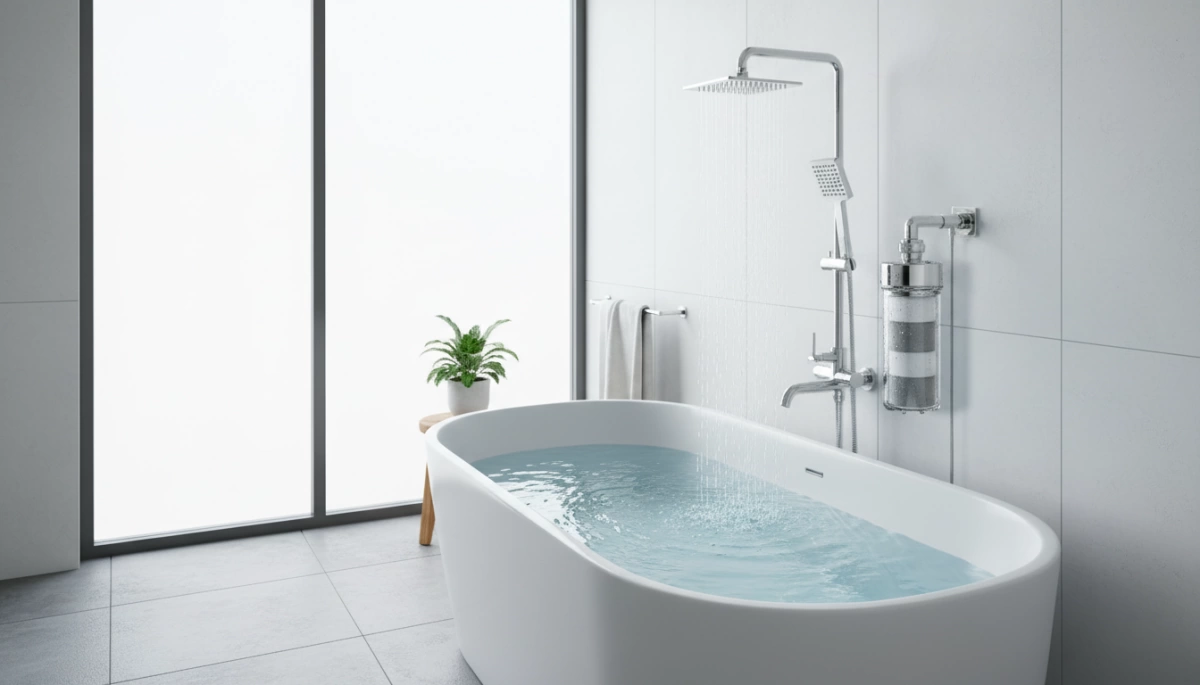
You probably cherish your evening soak as a time to unwind…
But did you know your tap water might actually be stripping your skin of moisture?
Well, you’re not alone.
In fact, hidden contaminants like chlorine and harsh minerals are often the real culprits behind dry skin, eczema flare-ups, and brittle hair.
In this guide, you’re going to discover exactly how a bath water filter can transform your tub into a safe, restorative sanctuary.
From effective chlorine removal to the spa-like benefits of Vitamin C filtration, we’re breaking down the science and the solutions that actually work.
Let’s dive in.
The Real Impact of Unfiltered Bath Water on Skin, Hair, and Overall Wellness
We need to have an honest conversation about what is actually filling up your tub. It is comforting to think it is just pure H2O, but the reality is often a cocktail of chemicals and minerals that can wreak havoc on your body. Before we even discuss a bath water filter, we have to understand the invisible elements causing the damage.
Chlorine Absorption and Inhalation Risks
Most of us know our city water is treated, but we rarely consider the dosage. Municipalities use chlorine and chloramine to sanitize water pipes. While this kills bacteria during transit, it acts as a harsh irritant once it hits your bathroom.
- Dermal Absorption: When you soak in hot water, your pores open wide. This effectively turns your skin into a sponge, allowing it to absorb chlorine and disinfection byproducts rapidly.
- The Steam Factor: It isn’t just about what you touch. As heat creates steam, these volatile chemicals vaporize. You end up inhaling them, which can irritate sensitive lung tissue and aggravate respiratory issues.
The “Hard Water” Scum Effect
If you have ever battled a stubborn ring around your bathtub, you have seen hard water in action. High levels of calcium and magnesium interact with your soap to create a sticky “curd” or scum.
- Stripped Oils: Instead of washing away cleanly, this residue clings to the dermis, stripping away the natural oils your skin needs to stay elastic.
- Dryness: This leaves your skin feeling “squeaky” clean—which is actually a sign of extreme dehydration and barrier disruption.
Why Sensitive Skin and Eczema Flare Up
For families dealing with skin conditions, unfiltered water is often a silent antagonist. Babies and children have thinner, more absorbent skin than adults, making them highly susceptible to chemical irritants in the water supply.
- Eczema & Psoriasis: Chlorine dries out skin patches that are already compromised, often leading to severe post-bath itching (pruritus) rather than relief.
- Redness & Irritation: Even adults with “normal” skin can emerge looking red or blotchy due to the harsh nature of heavy metals and sanitizers.
The Science of “Stripping” Your Hair
Your hair often takes the hardest hit from unfiltered water. If you invest in color treatments or expensive conditioners, untreated bath water can undo that effort in minutes.
- Color Fade: Oxidizing chemicals like chlorine penetrate the hair shaft, bleaching out artificial color significantly faster than normal.
- Brittle Texture: Hard water minerals build up on the strands, blocking moisture absorption. This results in hair that feels like straw—brittle, tangled, and dull.
Why Standard Bath Filters Aren’t Always Enough
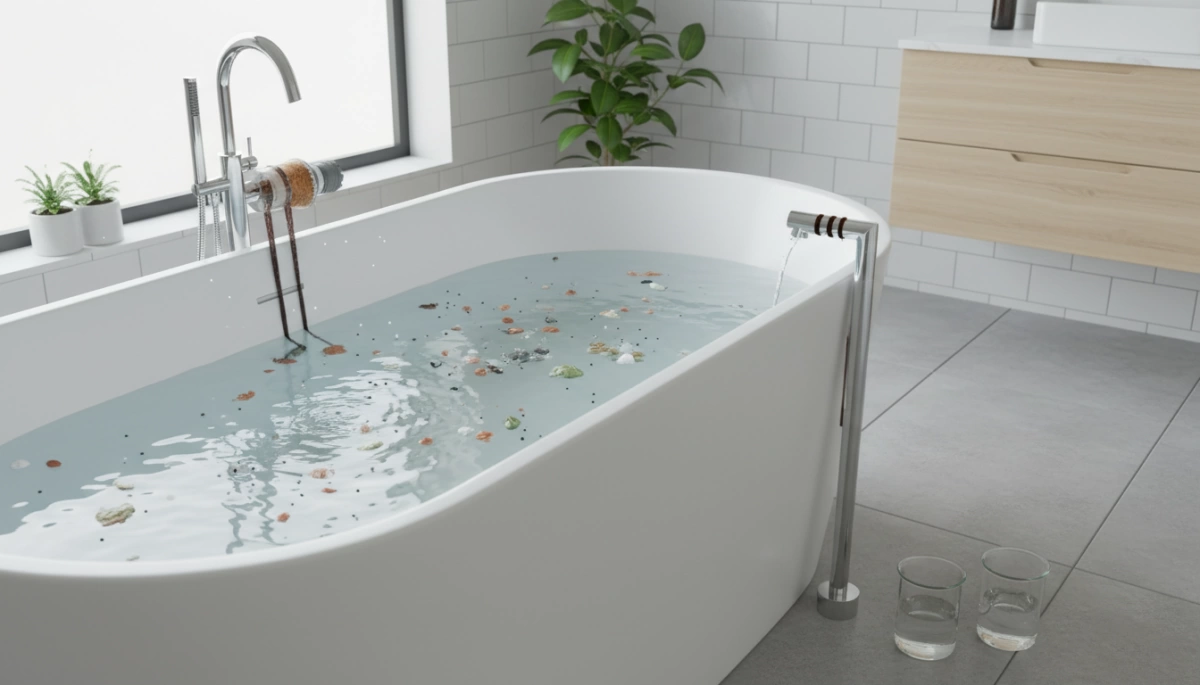
I’ll be straight with you—not all filtration gadgets are created equal. When you pick up a generic bath water filter, you are often getting a device designed for basic tasks, not heavy-duty purification. While standard options are decent at basic chlorine removal for bath water to improve the smell, they frequently struggle with the invisible, tougher contaminants.
We need to distinguish between simply reducing chlorine odor and actually filtering out heavy metals in bath water, rust sediment from aging infrastructure, or microscopic pollutants like PFAS. Understanding the gravity of current water pollution issues makes it clear why a simple mesh screen often falls short for families looking for genuine protection.
The “Flow Rate vs. Contact Time” Dilemma
The biggest engineering challenge for any bath ball filter or compact attachment is physics.
- Contact Time: For filtration media (like activated carbon) to work, the water needs to sit in contact with it long enough to trap toxins.
- High Flow Requirements: We all want our tubs to fill quickly.
- The Conflict: When water rushes through a small filter at high speed, it doesn’t spend enough time inside to get cleaned effectively. This is why many small units fail to provide a true hard water bath solution.
When to Pivot to Bigger Systems
Sometimes, a point-of-use filter just isn’t the right tool for the job. If you are battling extreme mineral hardness that crusts up your fixtures or facing unsafe lead levels, a simple spout attachment might be a mere band-aid. In these intense scenarios, realizing when a bath water filter helps versus when you need a whole-house filtration system or industrial-grade water softener is the only real fix for your home’s wellness.
Types of Bath Water Filters – Which One Fits Your Tub and Needs?
When you start looking for a bath water filter, you’ll quickly realize the market is flooded with gadgets ranging from simple mesh bags to advanced hardware. Not every filter fits every spout, especially with the variety of tub designs in American homes—from modern soaking tubs to standard shower-tub combos.
Here is a no-nonsense look at what is actually available so you don’t buy something that doesn’t fit.
Hanging and Faucet Ball Filters
These are the most common entry-level options. You’ve likely seen the white plastic “bath ball filter” that hangs from the faucet like a basket.
- The Pros: They are affordable and require zero plumbing tools. Just loop it over the spout.
- The Cons: They can look bulky and often get in the way. More importantly, the “contact time” is variable; if the water rushes through the ball too fast, the media inside doesn’t have enough time to grab contaminants.
Inline and Spout Attachment Systems
These screw directly onto your tub’s diverter or spout threads. They offer a cleaner look than the hanging bag but require your plumbing to have compatible threading, which isn’t always standard in older US homes.
Vitamin C-Based Filters
This is where we see a shift from physical blocking to chemical neutralization. A vitamin C bath filter uses ascorbic acid to instantly neutralize chlorine and chloramine.
- Why it works: It doesn’t restrict water flow because it doesn’t force water through a dense physical block.
- The Bonus: It creates a spa like bath experience by often including aromatherapy elements, benefiting the skin rather than just cleaning the water.
Multi-Stage Filtration Units
For those worried about heavy metals in bath water or rust sediment, multi-stage units are heavy hitters. These usually combine KDF-55 (Kinetic Degradation Fluxion) and activated carbon. If you want to understand the deeper mechanics of filtration layers, it is worth reading about how a water purifier works to see why combining media matters.
Quick Comparison: Finding Your Perfect Match
To make this easy, here is how the hardware stacks up:
| Filter Type | Installation Ease | Primary Focus | Flow Rate Impact | Best For |
|---|---|---|---|---|
| Faucet Ball Filter | Very Easy (Hangs on) | Chlorine | Low | Renters & Standard Tubs |
| Vitamin C Filter | Easy (In-line/Drop-in) | Chlorine/Chloramine + Skin Health | None | Sensitive Skin & Aromatherapy |
| Multi-Stage Unit | Moderate (Screw-on) | Heavy Metals, Rust, Chlorine | Moderate | Old Pipes & Well Water |
| Dechlorinating Tablets | Easiest (Drop in water) | Chlorine Only | None | Traveling & Occasional Use |
Choosing the right bathtub water filter comes down to balancing your water quality issues with how much hassle you are willing to deal with during installation. If you have severe hard water issues, a simple ball filter likely won’t cut it.
Key Features to Prioritize for Effective Bath Filtration
When shopping for a bath water filter, it is easy to get distracted by fancy packaging. However, performance is what actually counts. To ensure you do not waste money on a device that acts more like a decoration than a tool, you need to verify specific specs right on the box.
High Chlorine and Chloramine Removal Rates
The primary job of these filters is chemical neutralization. If a unit does not promise at least 90-95% removal efficiency, it is likely not worth the investment. While standard chlorine is relatively easy to filter, you need to check for chloramine reduction bath capabilities if your municipality uses this harder-to-remove disinfectant. Understanding the key reasons why water filtration is crucial helps highlight why settling for partial filtration often fails to prevent skin irritation.
Impact on Fill Time
A standard bathtub holds anywhere from 40 to 80 gallons of water. If a filter restricts the water pressure too much, your bath will be lukewarm by the time it is full. You need a system designed for high volume that maintains a strong flow rate, ensuring a bath water filter doesn’t turn a quick 10-minute fill into a 30-minute wait.
Universal Compatibility and Wellness Add-ons
Most U.S. homes feature standard tub spouts, but shapes can vary from wide waterfalls to narrow diverters. A high-quality faucet hung bath filter or bath ball filter should feature a universal harness or adjustable strap that requires no tools to install.
Beyond basic utility, modern filters are incorporating wellness tech. We are seeing major industry innovations where manufacturers integrate Vitamin C for skin health and essential oils for an aromatherapy bath filter experience.
Quick Buyer’s Cheat Sheet:
| Feature | What to Look For | Why It Matters |
|---|---|---|
| Filtration Media | Vitamin C, KDF-55, or Calcium Sulfite | Effectively neutralizes chlorine in hot water without clogging. |
| Flow Rate | High GPM (Gallons Per Minute) | Prevents the water from cooling down while the tub fills. |
| Installation | Tool-free, Universal Strap | Fits rental properties and diverse spout shapes easily. |
| Replacement Cost | Long cartridge life (3-6 months) | Keeps maintenance affordable and hassle-free. |
Maintenance Reality
ly, check the maintenance requirements. You want a system where swapping the cartridge takes seconds, not hours. Avoid units that require complex disassembly or expensive, proprietary tools just to change the filter media. Simplicity is key for long-term use.
The driplife Difference – Vitamin C Filtration Meets Everyday Luxury
At driplife, we know that a bath should be more than just a cleaning routine; it should be a restorative experience. While many standard filters rely solely on physical barriers like carbon blocks, we have engineered a solution that combines advanced chemistry with genuine wellness benefits. Our Vitamin C bath filter technology targets the harshest municipal water additives without sacrificing water pressure or ease of use.
The Science: Why Vitamin C Works Better
We don’t just trap contaminants; we neutralize them. Using high-grade Ascorbic Acid (Vitamin C), our filters engage in a rapid chemical reaction with chlorine and chloramine. Unlike physical filters that can struggle with the high flow rates of a bathtub faucet, Vitamin C is effective almost instantly upon contact.
- 99%+ Efficiency: Neutralizes chlorine and chloramine faster than traditional activated carbon can in high-flow scenarios.
- No Flow Restriction: Because we aren’t forcing water through a dense block, your tub fills up just as quickly as it would without a filter.
- Safe Byproducts: The neutralization process converts harmful chlorine into harmless chlorides, safe for even the most sensitive skin bath water.
Aromatherapy and Skin Barrier Support
We believe in turning your bathroom into a personal sanctuary. Our filters do double duty: they strip away the bad stuff and infuse the water with soothing botanicals. By removing the harsh chemicals that strip your skin’s natural lipid barrier, we provide relief for those suffering from dry skin or eczema.
Aromatherapy Options for a Spa-Like Bath Experience:
| Scent Profile | Best Used For |
|---|---|
| Lavender | Deep relaxation and stress relief before bed. |
| Lemon/Citrus | Energizing morning baths to wake up the senses. |
| Rose | Soothing irritation and promoting a calm mood. |
| Unscented | Pure filtration for hyper-sensitive skin or infants. |
Designed for Universal Use
We designed our systems with the American home in mind. Whether you have a standard spout or a modern diverter, our faucet hung bath filter options are built for universal compatibility. Setup is tool-free and takes minutes, meaning you don’t need to call a plumber to start enjoying cleaner, softer water. We ensure our housings are durable enough to handle high-volume hot water without leaking or cracking, giving you consistent performance fill after fill.
Real Results: Skin, Hair, and the Spa-Like Bath Experience

We can talk about filtration media and chemical reduction rates all day, but what actually matters is how you feel when you step out of the tub. Once you switch to a high-quality bath water filter, the difference isn’t subtle—it is immediate and tangible. We aren’t just removing contaminants; we are upgrading your daily ritual.
The “Post-Bath Feel” vs. The “Tight” Skin Effect
If you are used to that tight, itchy sensation after a long soak, you are feeling the effects of chlorine stripping your natural oils. With chlorine removal for bath water, that “squeaky” dryness disappears.
- Skin Hydration: Users consistently report skin that feels softer and retains moisture longer without needing heavy lotions immediately.
- No More Itch: The reduction in harsh chemicals means you aren’t scratching the moment you dry off.
- Cleaner Aromatics: We eliminate that overwhelming “public swimming pool” bleach smell. Instead of inhaling chlorine fumes, you get a truly clean, spa like bath experience.
Protecting Your Hair Color and Texture
Your hair is incredibly vulnerable when wet and hot. Unfiltered hard water and chlorine act like bleach, fading expensive color treatments and turning texture brittle. A bathtub water filter prevents these minerals and chemicals from depositing on your hair shaft. The result? Color stays vibrant longer, and hair feels silky rather than straw-like.
Relief for Eczema and Sensitive Families
For households dealing with skin conditions, water quality is non-negotiable. While a filter isn’t a medical cure, using an eczema friendly bath filter removes the primary irritants that trigger flare-ups. Parents often tell us that their children sleep better because their skin isn’t irritated after bath time. It is a crucial step in managing sensitive skin bath water needs.
Pro-Tip for Maximum Wellness:
To get the most out of your filtered soak, keep the water temperature warm rather than scalding hot, which can dehydrate skin regardless of water quality. Pair your clean water with a high-quality moisturizer immediately after drying off to lock in hydration.
Installation and Maintenance: Hassle-Free Bath Water Filter Care
Let’s be clear right off the bat: you do not need to be a plumber or own a heavy-duty toolbox to install a bath water filter. We designed these systems for real life, meaning they are generally “plug-and-play” solutions that renters and homeowners alike can set up in minutes. Whether you are using a simple bath ball filter or a more advanced Vitamin C unit, the goal is to get you soaking in clean water without the headache.
Step-by-Step Guide for Faucet Hung Bath Filters
Most universal filters are designed to hang directly from the bathtub spout. Here is how to get a secure fit on a standard setup:
- Prep the Filter: If your unit has a cartridge, ensure it is seated correctly inside the housing. For Vitamin C filters, check that the seal is removed from the aroma gel.
- Adjust the Strap or Harness: most faucet hung bath filter models use a harness or a plastic hanger. Loosen it enough to slide over your tub’s diverter (the little knob you pull to switch to the shower).
- Position and Tighten: Slide the filter up so the water outlet sits directly inside the filter’s cup or mesh. Tighten the strap securely so the water force doesn’t push the filter off.
- The Initial Flush: Turn on the hot water. Let it run through the filter for about 60 seconds before filling the tub. This flushes out any loose carbon dust or activates the Vitamin C gel.
Recognizing When to Replace Your Cartridge
The tricky thing about water filtration is that you often cannot see when it stops working. However, your body knows the difference. Here are the tell-tale signs that your bath water filter media is depleted:
- The Smell Returns: The most obvious sign is the return of that distinct “swimming pool” chlorine odor.
- Dryness and Itch: If your skin starts feeling tight or your eczema flares up again after a bath, the chemical removal capacity has likely dropped.
- Visual Check: For Vitamin C units, the cartridge is usually transparent. Once the gel is gone or completely clear, it is time for a refill.
- Reduced Flow: If the water starts backing up or spraying sideways, sediment may have clogged the mesh.
Troubleshooting Common Fitment and Flow Issues
Sometimes, the hardware in our bathrooms just doesn’t want to cooperate. Here is how to handle the most common snags:
- Leaks at the Spout: If water spills over the top of the filter instead of going through it, the water pressure might be too high. Try reducing the flow rate at the handle slightly to allow the water to pass through the media properly.
- Unique Spout Shapes: If you have a waterfall faucet or an ultra-wide square spout, a standard hanging filter might not stay in place. In these scenarios where point-of-use filters physically won’t fit, upgrading to a whole-house water filter is often the most reliable solution to ensure every tap delivers treated water.
- Slow Fill Times: High-quality filtration creates some resistance. A slight delay is normal—it means the water is actually spending time in contact with the filter media to remove contaminants. If it becomes a trickle, clean the intake mesh to remove sediment buildup.
Is a Bath Water Filter Right for You?
Let’s cut through the noise. You don’t need every gadget on the market, but if you rely on municipal water for your nightly soak, a filter isn’t just a luxury—it is often a necessity. Here is a quick breakdown to help you decide if a bath water filter belongs in your home.
Who Needs One Most?
If you fit into one of these categories, this small upgrade can make a massive difference in your daily routine:
- City Water Residents: If your tap water smells faintly of bleach, you are bathing in chemicals. A filter is the quickest way to handle chlorine removal for bath water without complex plumbing.
- Sensitive Skin & Eczema: For families managing flare-ups, removing irritants is non-negotiable. An eczema friendly bath filter prevents the chemical drying that turns a relaxing soak into an itchy nightmare.
- New Parents: Infants have much thinner skin than adults. Using a baby safe bath filter ensures they aren’t absorbing harsh chloramines during bath time.
- Bath Enthusiasts: If you love bath bombs and long soaks, you want a spa like bath experience, not a chemical bath.
When to Upgrade to a Whole-Home Solution
While filters are great for contaminants, they have limitations with mineral content. If you are constantly scrubbing stubborn limescale off your tub or battling soap scum that refuses to rinse away, you are likely dealing with high mineral density. A spout filter cannot physically remove all dissolved calcium and magnesium. In these cases, understanding the difference between hard and soft water is crucial, as you might need a dedicated water softener to truly soften bath water and protect your plumbing.
Budget Ball vs. Premium Vitamin C
Your choice comes down to what you want to achieve:
- The Basic Fix: A standard bath ball filter is affordable and handles basic chlorine reduction effectively. It is a good entry point.
- The Wellness Upgrade: If you want to improve skin hydration and neutralize chloramine entirely, a vitamin C bath filter is the superior choice. It costs a bit more but delivers noticeable benefits for hair texture and skin barrier health.