














Understanding Survival Water Filter Types
When the grid goes down, your hydration strategy must adapt instantly. A single survival water filter rarely covers every scenario—from sprinting through the woods to sheltering in place for months. Knowing the difference between these filtration architectures is your first line of defense against dehydration and disease.
Portable Straws & Squeeze Filters
For the solo survivalist or ultralight prepper, speed is everything. Systems like the LifeStraw Personal or Sawyer Squeeze are the standard for portable water purifier technology. You drink directly from the source or squeeze a pouch into your mouth.
- Pros: Extremely lightweight, no moving parts to break, instant access.
- Best For: Bug out bag water filters, 72-hour kits, and solo evasion.
Gravity-Fed Bag Systems
When you reach basecamp, stop pumping and let physics take over. Gravity fed water filters (seen in Platypus or Waterdrop models) utilize hanging reservoirs to push water through the filtration medium automatically.
- Efficiency: Filters multiple liters while you set up camp or tend to other tasks.
- Best For: Small groups, families, and temporary static campsites.
Pump & Bottle-Attached Filters
Classic reliability meets precision. Units from MSR and Katadyn allow you to draw water from shallow puddles where bags can’t be filled. While they require manual effort, these emergency water filters offer robust protection against sediment.
- Control: You manage the flow rate and intake source directly.
- Best For: Turbid water sources and difficult access points.
Stationary High-Capacity Systems
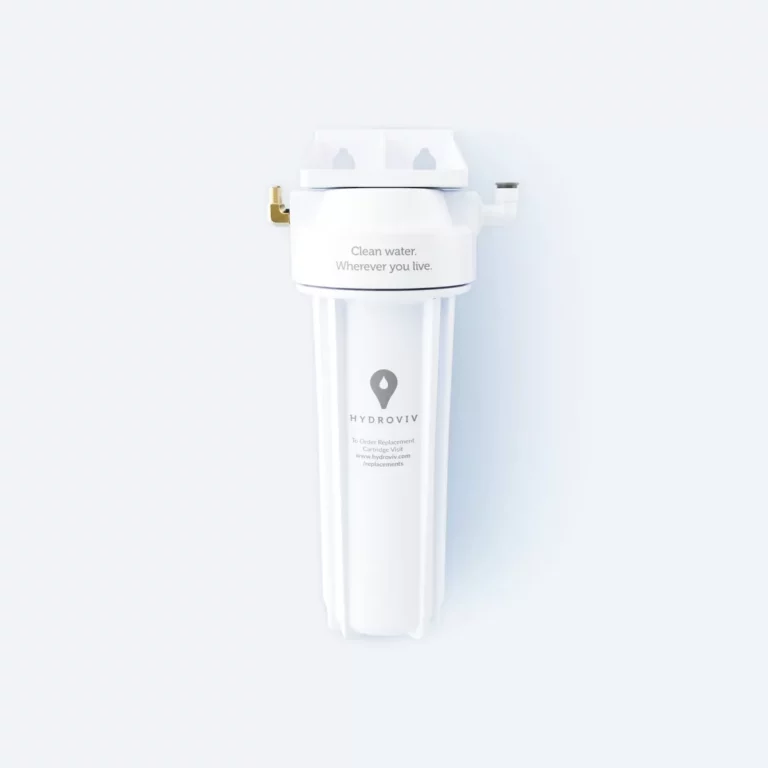
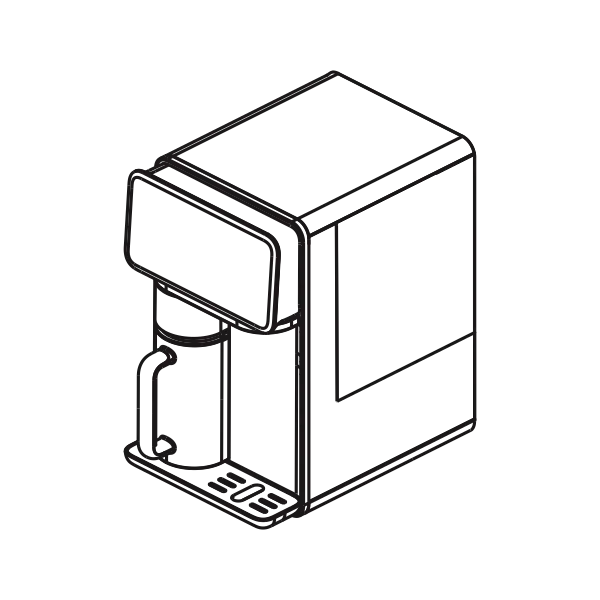
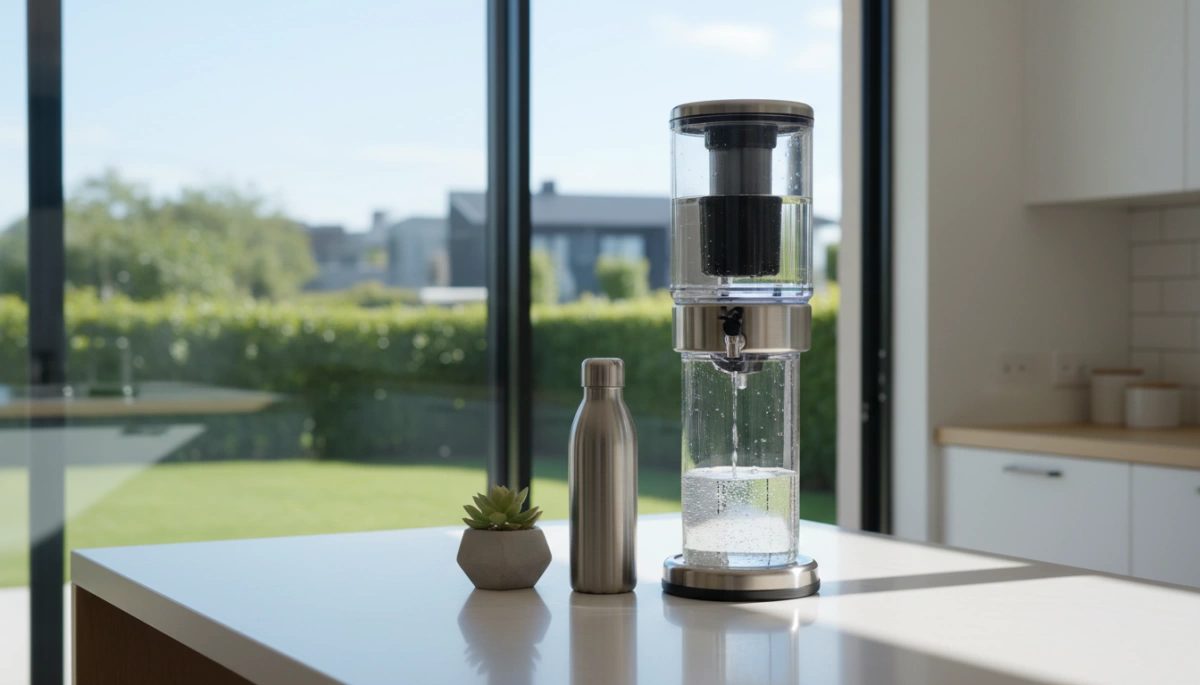
This is where we change the game for long-term water storage filtration. Portable filters eventually clog or hit capacity limits. For true off-grid water filtration, you need high-output under-sink or countertop units—like our specialized high capacity emergency water systems. These function entirely without electricity and are built to process thousands of gallons, ensuring your household survives indefinitely during a prolonged grid-down event.
Key Specifications Every Survival Filter Must Meet
When the grid goes down, you cannot afford to second-guess your gear. I always tell my customers that a survival water filter is only as good as its specs. You need to look past the marketing fluff and focus on the numbers that actually keep you safe.
The Micron Rating: Bacteria vs. Viruses
This is the most critical number on the box. It defines the pore size of the filter membrane.
- 0.1 Micron (μm): The industry standard for backpacking and general survival. It physically blocks bacteria (like E. coli and Salmonella) and protozoa (like Giardia and Cryptosporidium).
- 0.01 Micron (μm): This is required for virus protection. If you are dealing with water contaminated by sewage or operating in developing regions, you need this tighter weave to block viruses like Hepatitis A and Rotavirus.
The Flow Rate Rule
In an emergency, time is a luxury you don’t have. The flow rate determines how fast you can fill canteens or cooking pots.
- Personal Use: A flow rate of roughly 1 Liter per minute is acceptable for straws and squeeze bags.
- Group/Home Use: You need faster output. For stationary setups, high-performance under-sink water filter systems or gravity bags should deliver significantly higher flow rates to support a family without constant waiting.
Filter Lifespan and Durability
A survival situation could last days or months. You need a filter rating that goes the distance. Look for hollow fiber membranes rated for 100,000+ gallons. Unlike carbon filters that expire quickly, these physical filters can be backflushed to restore flow, making them a “buy once” investment.
Quick Spec Comparison Guide:
| Feature | Minimum Requirement | Ideal Survival Standard |
|---|---|---|
| Pore Size | 0.2 Micron | 0.1 Micron (0.02 for viruses) |
| Flow Rate | 0.5 Liters/min | 1.5+ Liters/min |
| Capacity | 200 Gallons | 100,000+ Gallons |
| Housing Material | Standard Plastic | Impact-Resistant ABS |
ly, consider shelf life and storage. A true survival filter must handle freeze-thaw cycles (dry) and long-term storage without the materials degrading. If the housing cracks in your bug-out bag, the filter inside is useless.
Top Portable Survival Filters: Field-Tested Picks
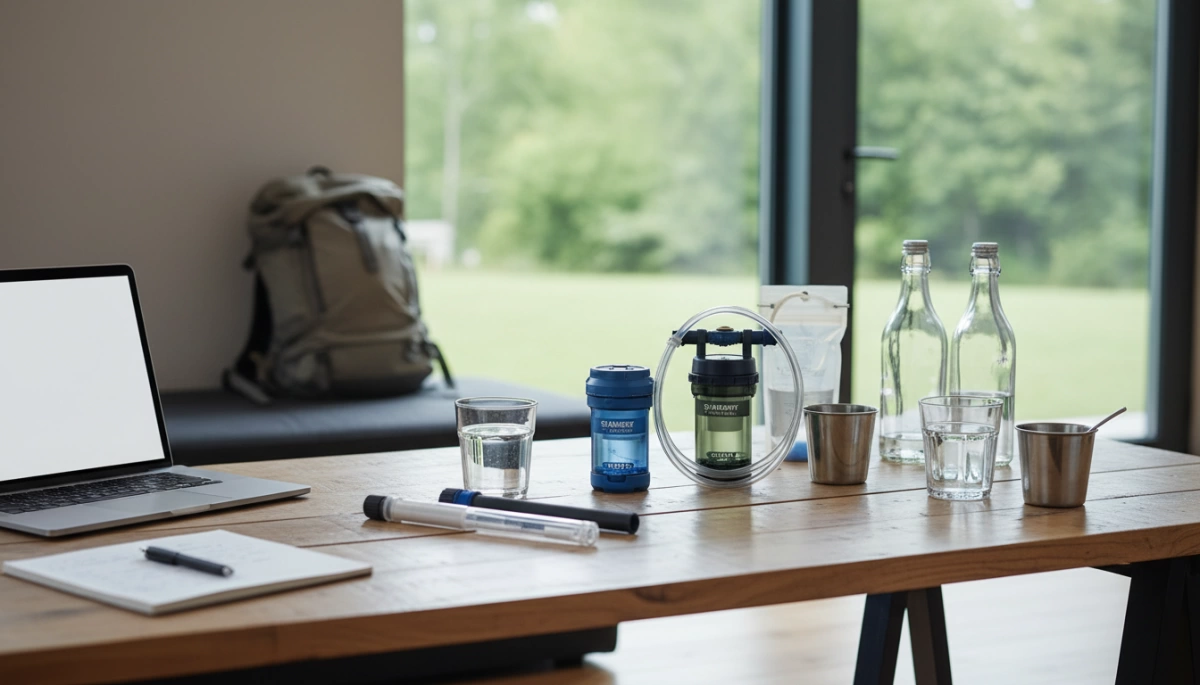
When the grid goes down or you are miles deep into the backcountry, your gear makes the difference between hydration and sickness. I’ve tested extensively to separate the gimmicks from the life-savers. While we specialize in high-capacity systems, we recognize the vital role these portable units play in a layered defense strategy. Here is a breakdown of the top performers currently dominating the market for survival water filter needs.
Best Overall: Sawyer Squeeze
For a balance of durability, flow rate, and weight, the Sawyer Squeeze remains the undisputed king. It is widely regarded as the best backpacking water filter because it offers a 0.1 micron absolute rating, effectively removing 99.99999% of bacteria and protozoa.
- Why it wins: It comes with a lifetime warranty and is incredibly versatile. You can squeeze it into a bottle, drink directly from the source, or hook it up to a hydration pack.
- Best For: Solo hikers, bug-out bags, and general preparedness.
Best Virus Protection: MSR Guardian Purifier
Most standard filters stop at bacteria. The MSR Guardian is a beast that goes further. It is a true virus protection water filter using advanced hollow fiber technology to filter down to 0.02 microns.
- The Standout Feature: It self-cleans on every stroke, meaning it rarely clogs even in the murkiest water. It was originally designed for the military to handle the worst water conditions on earth.
- Best For: International travel, high-risk contamination zones, and “buy once, cry once” preppers.
Best Budget Straw: LifeStraw Personal
The LifeStraw is the entry-level standard for portable water purifier for hiking backups. While I don’t recommend relying on a straw as your primary method for long-term survival (since you can’t easily store filtered water with it), it is unbeatable for its size and price point.
- Pros: Ultra-lightweight, requires no batteries, and perfect for a “last resort” kit.
- Cons: You must lay on your belly to drink from the source, and it lacks a virus filter.
Best Gravity System for Groups: Platypus GravityWorks 4L
Pumping water for a family of four is exhausting. This is where a gravity fed water filter shines. The Platypus GravityWorks lets physics do the work. You fill the “dirty” bag, hang it up, and let it flow into the “clean” bag.
- Capacity: It filters 4 liters in about 2.5 minutes without a single pump stroke.
- Best For: Basecamps, families, and stationary off-grid scenarios.
Quick Comparison: Choosing Your Portable Defense
| Filter Model | Primary Use Case | Filter Media | Removal Capability |
|---|---|---|---|
| Sawyer Squeeze | Solo / Backpacking | 0.1 Micron Hollow Fiber | Bacteria, Protozoa, Microplastics |
| MSR Guardian | High-Risk / Viral | 0.02 Micron Advanced Fiber | Viruses, Bacteria, Protozoa, Particulate |
| LifeStraw | Emergency Backup | Hollow Fiber Membrane | Bacteria, Protozoa |
| Platypus Gravity | Group / Basecamp | 0.2 Micron Hollow Fiber | Bacteria, Protozoa |
Pro Tip: If you are building a complete kit, pair a portable unit with a dedicated pre-filter (like a bandana or coffee filter) to extend the life of these devices when dealing with heavy sediment.
The Rise of High-Capacity Home & Basecamp Survival Systems
When Portable Isn’t Enough: Scaling for Family Survival
Let’s be real—while a straw filter is a lifesaver in a bug-out bag, it is a nightmare if you are trying to support a family of four during a two-week power outage. Relying on a device that produces a trickle of water to cook, clean, and hydrate multiple people creates a bottleneck you can’t afford in a crisis. When you are sheltering in place or setting up a basecamp, you need a high capacity emergency water system that delivers volume without the manual labor of pumping or squeezing every single ounce.
High-Output Systems That Don’t Need the Grid
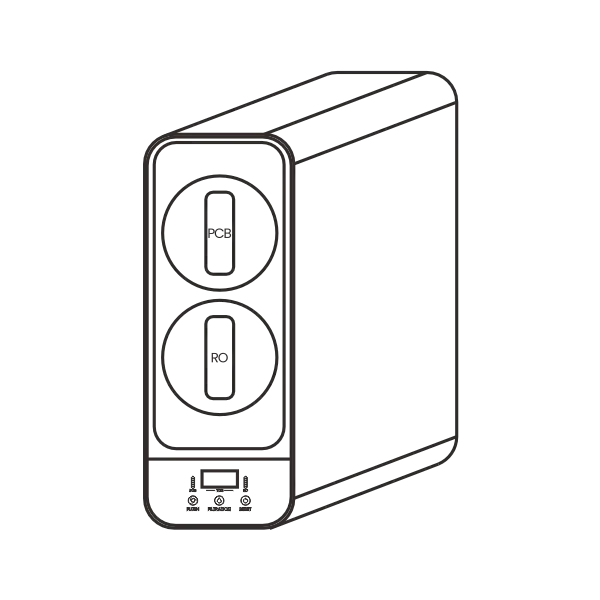
For home defense or long-term sheltering, I always recommend moving away from camping gear and toward semi-permanent infrastructure. We are looking at systems rated for 150–800 GPD (Gallons Per Day). The critical factor here is that these systems must function without electricity. Standard reverse osmosis systems often require electric booster pumps and waste a lot of water, which is a dealbreaker in a survival scenario.
Instead, you want to look at robust under-counter water filtration systems that operate purely on existing line pressure or can be adapted for gravity feed. These units provide the barrier protection you need against pathogens while maintaining a flow rate that feels like a normal faucet.
The Driplife Standard: Speed and Longevity
We designed our high-output UF (Ultrafiltration) systems specifically to bridge the gap between daily convenience and emergency reliability. In a survival situation, time is a resource. Our systems deliver a flow rate of 5.2 liters per minute. To put that in perspective, you can fill a large stockpot for cooking in seconds, not the ten minutes it takes with a gravity bag.
Key Performance Specs:
- Flow Rate: 5.2 L/min (High-speed hydration)
- Capacity: 2,000+ Gallons (Long-term sustainability)
- Micron Rating: 0.01 Micron (Blocks bacteria and viruses effectively)
- Power Requirement: None (Works on hydro-static pressure)
Integration with Bulk Storage and Rain Catchment
A great filter is useless without a water source. The beauty of these larger systems is their versatility in off-grid water filtration setups. They can be plumbed directly into a municipal line that may be compromised, or rigged up to purify water from 55-gallon blue barrels and rain catchment cisterns.
By elevating your storage tank slightly, you create enough gravitational pressure to push water through our high-flow membrane. This allows you to turn a collected rainwater harvest into a safe, continuous supply of potable water for the whole house, ensuring your “grid-down” plan is as comfortable as possible.
Handling Dirty & Turbid Water in Real Emergencies
In a disaster scenario, you rarely find crystal-clear mountain streams. You are usually dealing with floodwater, muddy puddles, or stagnant ponds. This is turbid water—water filled with suspended sediment, silt, and muck. Dumping this directly into your survival water filter is the fastest way to ruin your gear. The microscopic pores (0.1 micron) that trap bacteria will get clogged instantly by mud, reducing your flow rate to a useless drip.
Pre-filtering Techniques for Clog Prevention
You must separate the “big stuff” before purification begins. If you are drawing from a source that resembles an untreated well water system full of sediment, pre-filtering is mandatory.
- Settling: Let the dirty water sit in a bucket for an hour. Gravity pulls heavy sediment to the bottom; scoop clear water from the top.
- Physical Barriers: Pour water through a bandana, coffee filter, or Millbank bag to catch debris before it hits your main filter.
- The “Sacrificial” Stage: In home setups, use a cheap spun-PP sediment filter as the first stage to protect your expensive UF membrane or ceramic elements.
Backflushing and Field Maintenance Tips
Even with pre-filtering, your flow rate will eventually slow down. This is the filter telling you it’s doing its job.
- Regular Backflushing: Force clean water backward through the filter (using the provided syringe or pump mechanism) to blast out trapped contaminants.
- Don’t Let it Dry Dirty: Never store a filter after use without backflushing first. Dried gunk can permanently calcify inside the fibers.
- Sanitize Before Storage: If storing for the long term, run a mild bleach solution through the unit to prevent mold growth inside the housing.
Addressing Chemical Contamination
Most standard survival filters (hollow fiber or ceramic) are designed for biological threats—bacteria and protozoa. They do not remove chemicals, pesticides, or heavy metals often found in urban floodwaters.
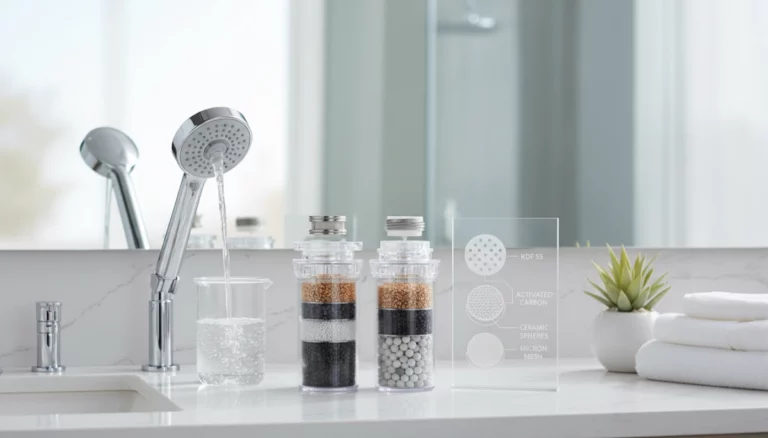
To handle these invisible threats, you need a stage of activated carbon (charcoal). Carbon acts like a sponge, adsorbing volatile organic compounds (VOCs) and improving taste. While a basic straw filter keeps you safe from E. coli, a system that integrates carbon—similar to the technology found in a comprehensive under cabinet water filter system—is required to strip out the toxic chemical runoff typical in grid-down scenarios.
Building a Layered Water Security Plan
Relying on a single device for every scenario is a rookie mistake. A robust grid-down water solution requires redundancy. You need a layered approach that scales from immediate mobility to indefinite sustainability. I always advise structuring your preparedness into three distinct phases to ensure you never run dry.
Short-Term (0–72 Hours): The “Get Home” Phase
In the initial chaos or during a rapid evacuation, speed and weight are king. Your priority here is hydration on the move.
- Gear: Portable straw filters or compact squeeze pouches.
- Goal: Immediate drinking access from questionable sources like creeks or urban puddles while moving toward safety.
- Strategy: Keep a lightweight survival water filter in your vehicle, office desk, and everyday carry (EDC) bag. These don’t need to filter thousands of gallons; they just need to keep you alive for three days.
Medium-Term (2–4 Weeks): The “Basecamp” Phase
Once you have established a temporary shelter or are sheltering in place during a utility outage, you need more volume for cooking and hygiene, not just sipping.
- Gear: Gravity-fed bags or robust pump filters.
- Goal: Processing 5–10 gallons daily for a small group without exhausting yourself manually pumping.
- Strategy: This stage bridges the gap between fleeing and settling. A gravity system allows you to hang the bag and let physics do the work while you focus on other survival tasks.
Long-Term (Months+): The “Homestead” Phase
If the infrastructure doesn’t come back online, portable camping gear will eventually fail or clog. You need a high-capacity, static solution capable of handling long-term water storage filtration and rainwater harvesting.
- Gear: High-output countertop units or under-sink Ultrafiltration (UF) systems.
- Goal: Sustainable, daily water production for an entire household (cleaning, cooking, drinking).
- Strategy: This involves integrating filtration into your home’s plumbing or rain catchment barrels. For a semi-permanent shelter, how to install an under-sink water filter becomes a vital skill, allowing you to convert stored or harvested water into a potable supply directly at the tap without electricity.
How to Choose the Right Survival Water Filter for Your Scenario
Selecting a survival water filter isn’t about buying the most expensive gadget on the market; it’s about matching the specs to your specific survival plan. A straw that works perfectly for a solo hiker is useless for a family trying to cook dinner and hydrate simultaneously. Here is how I break down the decision process based on realistic emergency situations.
Solo Backpacking vs. Family Needs
If you are moving alone, weight and speed are your priorities. You want a portable water purifier for hiking—typically a straw or squeeze pouch—that lets you drink directly from the source. However, for a family of 4–6, the math changes. Relying on a straw filter means someone is constantly squeezing or sucking water, which is exhausting.
For groups, you need a high-flow gravity system or a pump filter. These systems do the work for you, filtering liters at a time while you set up camp. If you are preparing for a static home emergency, looking into reliable countertop water filter manufacturers can provide robust, high-volume options that don’t require plumbing pressure.
Vehicle Bug-Out vs. Shelter-in-Place
- Vehicle-Based (Bug Out Bag): Space is limited, but weight is less of a concern than on foot. I recommend a sturdy pump filter or a compact gravity bag. It needs to fit in your bug out bag water filter slot but be durable enough to handle rough handling.
- Shelter-in-Place: If you are staying home during a disaster water purification scenario, you want capacity. A whole house survival filter or a large countertop gravity system is ideal here. You aren’t carrying it, so prioritize filter life (gallons) and flow rate over portability.
The “Buy Once, Cry Once” Philosophy
Budget constraints are real, but water filtration is a critical fail point. Cheap, off-brand filters often lack rigorous testing or fail to seal properly after a few uses. I always advise adopting a “buy once, cry once” mindset. Spending a bit more upfront for a filter with a cleanable ceramic element or a high-quality hollow fiber membrane ensures your emergency water filter lasts for years, not just a weekend.
Quick Selection Guide:
| Scenario | Primary Constraint | Recommended Solution |
|---|---|---|
| Solo Hiker / Scout | Weight & Speed | Straw or Squeeze Pouch (0.1 micron) |
| Family (4+ People) | Volume & Effort | Gravity-Fed Bag System (4L+) |
| Bug-Out Vehicle | Durability | Robust Pump Filter or Stainless Steel Gravity |
| Shelter-in-Place | Capacity | High-Capacity Countertop / Under-sink (Grid-Free) |
FAQ
Do survival filters remove viruses or just bacteria?
Most standard backpacking water filters use a 0.1 or 0.2-micron hollow fiber membrane. This is excellent for removing bacteria (like Salmonella) and protozoa (like Giardia and Cryptosporidium). However, viruses are much smaller. To remove viruses, you need a virus protection water filter (often called a purifier) with a 0.02-micron rating or a system that incorporates chemical treatment or UV light. If you are prepping for international travel or areas with poor sanitation, ensure your device is rated for viruses.
How long do emergency water filters really last?
Lifespan varies significantly by design:
- Straw filters: Typically rated for 1,000 liters (264 gallons).
- Pump filters: Often feature replaceable cartridges good for 2,000 liters.
- Hollow fiber squeeze/gravity systems: Can be rated for 100,000 gallons or more if properly maintained.
- Maintenance is key: Regular backflushing extends the life of the unit.
Can I use a backpacking filter on muddy puddle water?
You can, but it isn’t recommended without prep. Highly turbid water will clog the pores of your filter almost instantly, drastically reducing the flow rate.
- Pre-filter first: Use a bandana, coffee filter, or Millbank bag to remove large sediment and silt.
- Settling: Let the water sit in a container so dirt sinks to the bottom before filtering.
- Contaminants: While filters handle biology and some even filter microplastics from water sources, they do not remove dissolved chemicals or heavy metals unless they have an activated carbon stage.
Are there survival filters that don’t need pumping or squeezing?
Yes. Gravity fed water filters are the best option for groups or basecamps. You simply fill a “dirty” bag, hang it from a tree or elevated point, and let gravity push the water through the hose into a clean container. It is a hands-free off-grid water filtration method that saves you significant physical energy.
What’s the shelf life of an unused filter?
- Hollow Fiber/Ceramic: Indefinite shelf life if they have never been used and are stored in a temperature-controlled environment. Crucial Warning: Never let a wet filter freeze; the expanding ice will crack the internal fibers and ruin the filter.
- Carbon Elements: If your system uses activated carbon, those specific filters should be replaced every 1-2 years even if unused, as they absorb moisture and odors from the air.