

















Worried about what’s actually coming out of your tap—and stuck between a countertop vs under-sink water filter for your kitchen?
You’re not alone.
More homeowners and renters than ever are trying to cut chlorine, lead, PFAS, and heavy metals out of their drinking water. But once you start researching, you quickly hit the big question:
Do you go with a simple, portable countertop filter—or a powerful, hidden under-sink system?
In this guide, you’ll see a clear, no-nonsense countertop vs under-sink water filter comparison that covers:
- Which option is better for renters vs homeowners
- How each handles installation, space, and daily convenience
- What really matters for contaminant removal, filter life, and long-term cost
- When a countertop system wins—and when an under-sink filter is the smarter long-term move
If you want clean, great-tasting water in 2025 without wasting money on the wrong setup, keep reading.
Countertop Water Filters
What countertop water filters are
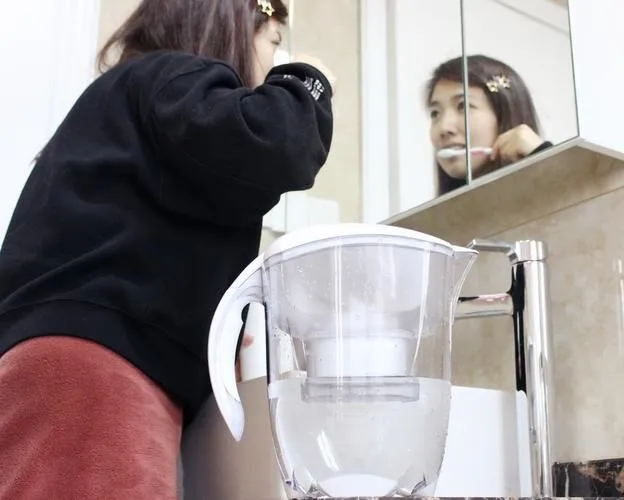
When I say countertop water filter, I’m talking about a compact, point-of-use system that sits next to your kitchen sink and connects directly to your faucet or has its own refillable pitcher/tank. Water flows through the filter and comes out cleaner from a dedicated spout, without any permanent changes to your plumbing.
Most countertop vs under-sink water filter comparison discussions start here, because countertop units are:
- Installed on the countertop or screwed onto the faucet
- Tool-free or low-tool, with no drilling or pipe cutting
- Easy to unplug and take with you when you move
How countertop filters work
The basic working principle is simple:
- Tap water enters the filter housing (either by faucet diverter or manual filling).
- Water passes through one or more filtration media (carbon, resin, RO membrane, etc.).
- The filtered water is dispensed from a spout, nozzle, or storage tank.
Inside, different technologies handle different contaminants:
- Activated carbon: Adsorbs chlorine, bad taste and odor, many chemicals (VOCs).
- Ion exchange resins: Target specific ions like lead or hardness minerals.
- Sediment filters: Trap sand, rust, and visible particles.
- RO membrane (in countertop RO): Pushes water through a semi-permeable membrane to reduce TDS and dissolved contaminants like heavy metals and PFAS.
Main types of countertop systems
When you look at a countertop water purifier comparison, you’ll typically see three main categories:
- Carbon countertop filters
- Most common and affordable
- Great for chlorine, basic taste and odor improvement, some VOCs
- Good “everyday” upgrade for city water
- Multi-stage countertop filters
- Combine sediment, carbon, and often specialty media (e.g., lead, PFAS, or heavy metal reduction)
- Stronger contaminant removal comparison versus simple carbon units
- Better choice if you want more than just taste improvement
- Countertop RO systems
- Use reverse osmosis plus carbon and sediment stages
- Significantly reduce TDS, many heavy metals, fluoride, nitrates, and PFAS
- Often include a small tank or on-demand pump, and may waste some water during filtration
Who countertop filters are best for
Countertop systems shine when you need a portable water filter vs permanent solution. I recommend them if you are:
- A renter or living in an apartment where you can’t modify plumbing
- In a small household (single user, couple, or light kitchen use)
- Setting up a temporary kitchen (short-term lease, vacation home, office)
- Testing water filtration before committing to a more permanent under sink filtration system
They’re also a great fit if you want a kitchen water filter for renters that you can install yourself in minutes.
Typical performance, flow rate, and convenience
In real-world daily use, countertop water filters tend to behave like this:
- Flow rate
- Standard carbon or multi-stage countertop units: often around 0.3–0.75 GPM (gallons per minute), depending on your faucet pressure and cartridge type.
- Countertop RO systems: slower, often 0.1–0.3 GPM or batch-style with a tank that fills over time.
- Convenience
- No need to crawl under the sink
- Simple diverter valve or refill system
- Easy visual access to the unit and filters
- Everyday use
- Ideal for drinking, coffee, tea, and light cooking
- Some high-end models can keep up with daily usage for small families, but most are designed for modest flow, not heavy kitchen demand
From a flow rate water filter standpoint, countertop systems lean more toward convenience and flexibility than raw output.
Common limitations and trade-offs
Countertop filters have clear pros, but there are trade-offs you should know before choosing them in a countertop vs under-sink water filter comparison:
- Counter space usage
- They occupy valuable counter space, which can be a deal-breaker in small kitchens.
- Visible hoses and housings impact aesthetics compared to a hidden vs visible water filter under the sink.
- Limited capacity and flow
- Smaller cartridges mean more frequent filter replacement than many under-sink systems.
- Flow can slow down as filters clog, especially with sediment-heavy water or well water.
- Not ideal for high-demand families
- For large families, heavy cooking, or constant water use, a countertop unit can feel too slow or undersized.
- Plumbing compatibility
- Faucet diverter models may not fit some modern pull-down or special faucets.
- Some users have to switch to a different faucet or choose a tank-style, non-faucet-connected unit.
If you need apartment friendly water filter performance with minimal installation and don’t mind a visible unit on your counter, a countertop system is usually the most practical starting point before upgrading to a more permanent under sink water filter later.
Under-Sink Water Filters: What They Are and Who They’re For
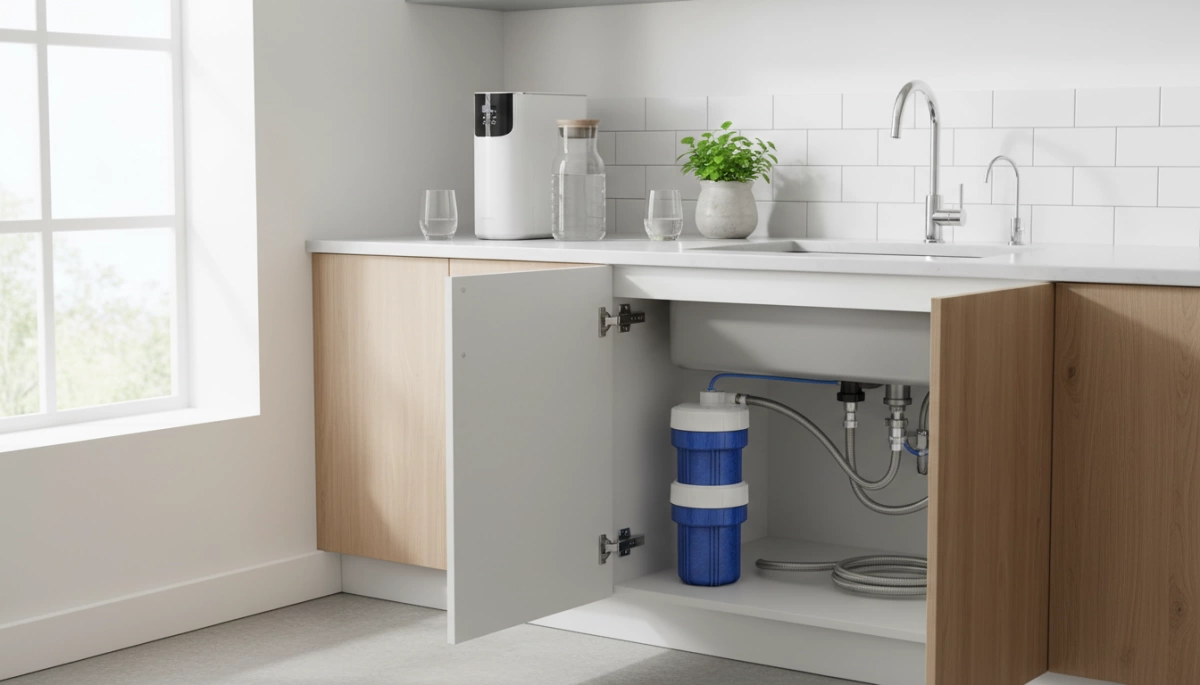
Under-sink water filters sit inside the cabinet under your kitchen sink and connect directly to your cold-water line. The filtered water usually comes out of either:
- A dedicated drinking water faucet, or
- Your main faucet if the system is designed inline.
Once installed, they work in the background—no moving them, no attaching to the faucet every time you want clean water.
Types of Under-Sink Systems
Under-sink filtration comes in a few main styles:
- Single-stage under-sink filters
- One cartridge (often carbon block)
- Targets chlorine, taste, odor, and some sediments
- Good “basic upgrade” for city water
- Multi-stage under-sink filters
- 2–4+ cartridges in series
- Can include sediment, carbon, KDF, and specialty media
- Better for lead, PFAS, VOCs, and heavy metals depending on the configuration
- Ideal for people serious about contaminant removal without going full RO
- Under-sink reverse osmosis (RO) systems
- Membrane plus multiple pre/post filters
- Can cut TDS, fluoride, nitrates, and many dissolved solids
- Often include a storage tank for on-demand drinking water
- Better suited for tough water issues or when you want bottled-water quality at home
Who Under-Sink Filters Are Best For
Under-sink systems make the most sense if you:
- Own your home or plan to stay put a while
- Have a family or higher water use (cooking, coffee, baby formula, pets)
- Want a clean, uncluttered countertop
- Prefer a “install once, then forget” style solution
- Need stronger contaminant reduction than most countertop filters provide
For U.S. households comparing a portable water filter vs permanent option, under-sink is the “permanent” side of that decision—better for long-term setups and resale-friendly kitchen upgrades.
Typical Performance, Flow Rate, and Convenience
Compared to countertop filters, under-sink water filter performance is usually:
- More robust filtration
- Multi-stage and RO systems often remove a wider range of contaminants
- Many are certified for lead and PFAS removal, chlorine, and heavy metals
- Better flow rate
- Standard under-sink (non-RO) systems commonly run around 1.0–2.0 GPM
- That’s plenty for filling pots, water bottles, and cooking without feeling slow
- Higher daily capacity
- Designed for family use and heavy kitchen traffic
- No need to lift pitchers or wait for gravity-fed filters to drip
- Low visual impact
- Everything is hidden in the cabinet, keeping your kitchen clean and modern
- Great if you’re aiming for a clutter-free space or already use other point-of-use water filter systems like a tub faucet filter for whole-home convenience.
Common Limitations and Trade-Offs
Under-sink water filter pros and cons come down to convenience vs flexibility:
Trade-offs to expect:
- Installation required
- You’ll be tying into existing plumbing
- Not all renters can modify cabinets or drill for a separate faucet
- Less portable
- This is not an apartment-friendly “take it when you move” solution
- Better seen as a permanent or semi-permanent upgrade
- Cabinet space usage
- Filters, housings, and especially RO tanks eat under-sink storage
- Important if you already have limited space
- Higher upfront cost
- More expensive than most countertop water purifiers
- Over 3–5 years, though, cost per gallon can be very competitive if you’re using a lot of water
Overall, if you’re comparing countertop vs under-sink water filter options and you want stronger filtration, cleaner aesthetics, and family-ready flow rate, an under-sink system is usually the smarter long-term move.
Countertop vs Under-Sink Water Filter Key Differences
When you compare a countertop vs under-sink water filter, you’re really choosing between plug-and-play convenience and a more permanent, built-in upgrade. Both are point-of-use systems, but they fit very different lifestyles, especially for U.S. renters vs homeowners.
Installation and Setup Comparison
Tools, Time, and Skill Needed
Countertop water filters
Most countertop water purifier systems are designed for quick DIY setup:
- Tools: Usually none, maybe a small wrench or pliers at most
- Time: About 5–15 minutes for a basic faucet-connected unit
- Skill level: Beginner-friendly – screw on an adapter, connect the hose, and you’re ready
- Risk: Very low. If something leaks, you just disconnect it
Under-sink water filters
Under-sink systems are more involved but feel “built-in” once installed:
- Tools: Adjustable wrench, drill (sometimes), Teflon tape, screwdriver
- Time: About 45–120 minutes depending on the system and your experience
- Skill level: Moderate. You’re tapping into the cold-water line and sometimes drilling for a dedicated faucet
- Risk: Higher than countertop. Incorrect installation can cause leaks or minor plumbing issues
If you’re nervous about plumbing, under-sink filters are often worth having a plumber install once and then just swapping filters yourself.
Portability and Renter-Friendliness
Countertop = best for renters and short-term setups
If you live in an apartment or move often, a countertop water filter is usually the smarter play:
- No holes drilled, no permanent changes to plumbing
- Easy to pack and take to your next place
- Great for college students, renters, and short-term leases
- Works well when landlords don’t allow modifications under the sink
This is also why many renters look at a table-top RO water purifier as a portable alternative to a fully plumbed RO system. For example, a compact table-top RO water purifier can give you RO-level filtration without touching the plumbing at all.
Under-sink = best for long-term homes
Under-sink systems favor homeowners and long-term renters:
- Not ideal if you move every year – you generally leave it behind
- Better for people who want a “set it and forget it” solution
- Adds a more “finished” feel to the kitchen, especially in owned homes
Impact on Warranties and Plumbing
Countertop filters
- Rarely affect any plumbing or appliance warranties
- No permanent modifications, so landlords almost never object
- If there’s an issue, you simply disconnect the unit – zero impact on pipes
Under-sink filters
- You are modifying the plumbing (even if slightly), which:
- Can matter for strict landlords or condo associations
- Might require approval in some rentals
- Poor installation can:
- Cause slow leaks in the cabinet
- Put stress on cheap fittings or older plumbing
To stay safe, especially in older U.S. homes:
- Use quality fittings and follow the manufacturer’s instructions
- Consider a licensed plumber for the initial install
- Check whether the filter manufacturer mentions anything about plumbing or product warranties tied to DIY vs professional installation
If you’re concerned about potential leaks but still want serious filtration, countertop RO or high-grade countertop carbon units can deliver strong contaminant removal without touching your plumbing – especially useful in rentals where you can’t risk altering pipes.
Space, Layout, and Aesthetics Comparison
When you compare a countertop vs under-sink water filter, space and how your kitchen looks matter just as much as performance.
Countertop Space and Visual Impact
Countertop water filters sit next to the sink and are always visible. That can be a plus or a minus depending on your kitchen:
- Takes up counter space – You’ll lose room for food prep, coffee gear, or small appliances. In smaller U.S. kitchens and apartments, this can feel cramped fast.
- Always in sight – Some units look clean and modern, others just look bulky. If you care about a minimalist kitchen, a countertop water purifier might feel like clutter.
- Faucet attachment visibility – Faucet-connected models add a diverter and hose that stay on display. It’s convenient but not exactly “designer kitchen” friendly.
- Best fit – Works fine if you’ve got extra counter space or a secondary prep area where the unit won’t be in the way.
If you want to see what a compact, modern setup looks like, check out the design of a faucet-style under-counter purifier like this UF kitchen faucet water purifier system and imagine the opposite: all the hardware on top of the counter instead of hidden.
Under-Sink Cabinet Space and Hidden Install
Under-sink water filters move everything out of sight, but they do take over cabinet space:
- Cabinet space trade-off – Cartridges, housings, and possibly a tank (for RO) sit in the base cabinet. You’ll lose storage for cleaning supplies or trash bins.
- Clean countertop look – The main win is aesthetics. Only a small dedicated faucet or upgraded main faucet is visible, so the kitchen stays uncluttered.
- Better for modern kitchens – If you’ve invested in stone countertops, open shelving, or a clean-line design, a hidden under-sink filtration system fits that look.
- Plan your layout – If your under-sink area already holds a garbage disposal, pull-out trash, or a water softener, you’ll need to measure carefully.
Hidden vs Visible Filters in Modern Kitchens
For most U.S. homeowners, the choice often comes down to this:
- Visible (countertop):
- Easy to understand and use at a glance
- Looks “temporary” or “renter-style”
- Can clash with stainless or built-in appliances
- Hidden (under-sink):
- Keeps a high-end kitchen looking clean
- Looks and feels like a permanent upgrade
- Better for resale and long-term installs
If you’re building or remodeling and want a “nothing extra on the counters” vibe, an under-sink system almost always wins the hidden vs visible water filter debate.
How Layout and Sink Type Affect Your Choice
Your kitchen layout and sink type quietly decide what actually works:
- Single-bowl vs double-bowl sinks:
- Single-bowl with limited counter space? Under-sink is usually smarter.
- Double-bowl with extra counter space? A countertop unit may not feel as intrusive.
- Counter depth and footprint:
- Shallow counters (common in older homes and small apartments) get crowded fast with a countertop filter.
- Deeper counters can handle a compact countertop RO or multi-stage filter without feeling tight.
- Existing faucet setup:
- If you have room for an extra hole or are willing to swap in a faucet with a built-in filtered outlet, under-sink is smooth.
- If you’re renting and can’t modify the faucet or countertop, a faucet-connected countertop filter is safer.
- Under-sink obstacles:
- Garbage disposal, pull-out organizers, or tight plumbing can limit space for large under-sink housings or tanks.
- In those cases, a slim under-sink cartridge system or a countertop vs under-sink RO compromise (like a compact countertop RO) can make more sense.
For a deeper look at how under-sink units fit into real kitchen setups, guides like this breakdown of top under-counter water filters and installation tips are useful when you’re planning around cabinets, disposals, and tight spaces.
In short:
- Small kitchen, limited cabinet space, and no permission to drill? Countertop.
- Value clean counters, long-term setup, and a modern look? Under-sink is the better move.
Filtration Performance and Contaminant Removal
When you compare a countertop vs under-sink water filter, performance is really about what’s in your water and how aggressively you want to treat it.
Common Tap Water Contaminants (What You’re Actually Removing)
Most U.S. homes deal with some mix of:
- Chlorine & chloramine – added by city utilities for disinfection, causes bad taste and odor.
- Lead – from old pipes, solder, and fixtures.
- PFAS (“forever chemicals”) – increasingly found in both city and well water.
- Heavy metals – like mercury, arsenic, chromium, copper.
- VOCs & industrial chemicals – solvents, fuel residues, agricultural runoff.
- Microbes – bacteria, cysts, and in some well systems, viruses.
- Disinfection byproducts – THMs, HAAs from chlorinated city water.
Before you choose any point-of-use water filter system, I always recommend pulling your local water quality report or testing a private well, so you’re not guessing.
Countertop Water Filter Performance & Best Use Cases
Most countertop water filters use carbon or multi-stage cartridges, with a few higher-end countertop RO systems on the market.
Typical performance:
- Good at:
- Reducing chlorine, bad taste, and odors
- Cutting sediment and visible particles
- Moderately reducing some VOCs and some heavy metals (if certified)
- Mixed at:
- Consistent lead reduction (depends on certification and cartridge quality)
- PFAS and more stubborn industrial contaminants (only some advanced models)
Best use cases:
- City water where the main issues are taste, smell, and chlorine
- Renters and apartment users who can’t modify plumbing
- People who want a portable water filter vs permanent solution (small households, students, short-term rentals)
If you’re only trying to make your tap water taste better and remove basic chlorine, a high-quality countertop system is usually enough.
Under-Sink Water Filter Performance & Best Use Cases
Modern under-sink water filters usually offer multi-stage filtration with more media volume, and they stay out of sight. Performance is typically stronger and more consistent than countertop setups.
Typical performance:
- Strong at:
- Significant chlorine/chloramine reduction
- High-level lead and heavy metal removal (when properly certified)
- Better handling of VOCs, pesticides, and industrial chemicals
- Targeted PFAS reduction with the right cartridges
- Options for:
- Adding microbial protection (ultrafiltration, UV, or specialty cartridges)
- Integrating with reverse osmosis for more aggressive treatment
Best use cases:
- Homeowners and families who want a long-term, hidden solution
- People dealing with older plumbing and possible lead or metal issues
- Households that cook a lot, drink lots of water, and want stronger protection
If your goal is serious contaminant removal, especially for kids or long-term health, a quality under-sink system is usually the better move.
Reverse Osmosis: Countertop vs Under-Sink RO
Reverse osmosis (RO) is the go-to when you want deep contaminant reduction, including TDS (total dissolved solids).
Countertop RO systems:
- Pros:
- No plumbing modification
- Good TDS reduction and broad contaminant removal
- Ideal for renters who still want RO-level water
- Cons:
- Bulkier on the counter
- Smaller tank and slower output
- Usually less capacity and flow than under-sink systems
Under-sink RO systems:
- Pros:
- Strong TDS and contaminant reduction across chlorine, lead, PFAS, heavy metals, and more
- Higher capacity and more stable flow
- Completely hidden, with a dedicated faucet at the sink
- Ideal as a best under-sink filtration system choice for families
- Cons:
- Needs a direct plumbing and often drain connection
- More permanent install (better for owners than short-term renters)
If you’re looking at higher capacity or commercial-style setups, systems like an under-sink 800–2000 GPD RO filtration system are built to deliver serious flow and are popular for both residential and light commercial use.
For a deeper look at what makes a strong RO setup, I’d benchmark features against a guide to the best under-sink RO system features so you’re comparing performance, not just marketing.
Better for City Water vs Well Water?
Here’s how I’d split it:
City water (municipal):
- Main issues: chlorine, disinfection byproducts, possible lead, PFAS, VOCs
- Good fits:
- Countertop carbon or multi-stage filters if taste + basic safety are the priority
- Under-sink multi-stage or RO if you want max protection, especially for families
Well water (private):
- Main issues: sediment, hardness, iron, manganese, microbes, possibly arsenic or nitrates
- Good fits:
- Often needs whole-house or pre-treatment first (softener, sediment filter, UV, etc.)
- At the tap, a high-performance under-sink RO system is usually smarter than a simple countertop unit, especially when you don’t fully trust the well.
In simple terms:
- For basic taste and chlorine on city water, a countertop filter works.
- For bigger contaminant concerns, kids, or well water, I strongly lean toward a robust under-sink system or RO, especially for long-term U.S. households.
Flow Rate, Capacity, and Daily Convenience
When you compare a countertop vs under-sink water filter, daily convenience comes down to three things: flow rate, capacity, and how you actually use water in your kitchen.
Typical Flow Rate: Countertop Water Filters
Most countertop water filters are slower and more “batch-style” in real life:
- Non-RO countertop systems (carbon / multi-stage)
- Flow rate: usually around 0.3–0.75 GPM (gallons per minute)
- Feels fine for filling a glass or a coffee maker, but a bit slow for big pots
- Countertop reverse osmosis (RO) systems
- Often 0.1–0.3 GPM because of the RO membrane
- Many use a small storage tank, so once the tank is empty, refilling takes time
For a single person or a couple in an apartment, this is usually enough, especially if you mainly drink filtered water and occasionally cook with it.
Typical Flow Rate: Under-Sink Water Filters
Under-sink water filters are built for more permanent, everyday use:
- Standard under-sink carbon / multi-stage systems
- Flow rate: typically 0.5–1.5 GPM at the dedicated faucet
- Feels much closer to normal tap pressure
- Under-sink RO systems
- Use a pressurized storage tank, so practical flow is faster at first
- Good units deliver plenty of water for back-to-back glasses and cooking
- If you’re interested in RO performance and convenience, it’s worth looking at the benefits of under-sink RO systems as a long-term upgrade for a family kitchen
For families in the U.S. who cook a
Maintenance, Filter Life, and Long‑Term Costs
When you compare a countertop vs under-sink water filter, the biggest real-world difference isn’t just performance—it’s maintenance, filter life, and what you actually spend over a few years.
Filter Change Frequency: Countertop vs Under-Sink
Most countertop systems are designed for light to moderate use and usually need more frequent filter changes:
- Countertop water filters
- Basic carbon: about 3–6 months or 200–500 gallons
- Multi-stage / countertop RO: typically 6–12 months for pre-filters, 1–2 years for membranes
- Heavy use (big coffee drinkers, lots of cooking) will shorten those timelines
- Under-sink water filters
- Single-stage carbon: usually 6–12 months
- Multi-stage systems: individual stages often last 6–18 months depending on the media
- Under-sink RO: pre-filters about 6–12 months, RO membrane 2–3 years, post-filter 1–2 years
Under-sink systems are generally built for higher capacity and heavier daily use, so they tend to spread filter costs out over a longer period.
Ease of Replacing Filters and Basic Maintenance
From a day-to-day user standpoint:
- Countertop systems
- Typically tool-free filter changes
- Filter housing is above the counter and easy to reach
- Great if you hate crawling into cabinets or messing with plumbing
- Cleaning is simple: wipe down the housing, occasionally flush the system
- Under-sink systems
- Filters are hidden under the cabinet, so access takes a bit more effort
- Modern designs use quick-change cartridges that twist off and on in seconds
- You might need to shut off a dedicated valve, but it’s still a straightforward DIY job
- Annual maintenance often includes checking connections and sanitizing housings, especially for RO
If you know you’re not the “maintenance type,” a simple countertop system or a quick-change under-sink unit is your safest bet.
Upfront Costs vs Ongoing Filter Replacement Costs
Here’s how costs usually shake out in a countertop vs under-sink water filter comparison in the U.S. market:
- Countertop filters
- Upfront: roughly $40–$300 depending on type (basic carbon vs countertop RO)
- Replacement filters: usually $20–$80 per set
- Lower entry cost, but per-gallon cost can be higher if filters are small or changed often
- Under-sink filters
- Upfront: roughly $80–$600+ (multi-stage and RO systems at the higher end)
- Replacement filters: $40–$200 per year depending on stages and brand
- Higher initial spend, but typically better cost per gallon over time, especially for family use
If you’re trying to keep cash flow light right now, countertop is more budget-friendly. If you’re staying put and care about long-term value, an under-sink system starts to make more financial sense.
Total Cost of Ownership Over 3–5 Years
When you stretch things out over a few years, the “cheaper” option at checkout can cost more long term:
- For single users or couples with modest water use:
- A quality countertop filter can be cost-effective over 3–5 years
- Expect total costs (unit + filters) in the low hundreds of dollars, depending on your usage
- For families and high-use kitchens:
- Under-sink systems usually win over 3–5 years
- Higher-capacity filters and RO membranes spread cost over more gallons
- Total cost might be higher in absolute dollars, but cost per gallon is lower
If you’re considering an under-sink RO setup, it’s worth understanding how TDS relates to filter life, and a simple TDS tester (explained in detail in this guide on how to use a TDS tester properly) can help you track performance and avoid changing filters too early or too late.
How Maintenance Habits Affect Real-World Performance
No matter how good the specs look, your water quality is only as good as your maintenance routine:
- Replace filters on time
Overused filters can:- Stop removing contaminants effectively
- Affect taste and odor
- Create flow restrictions or clogs
- Follow factory guidelines
Especially for RO and multi-stage systems—each stage is designed with a specific life span. - Use a simple schedule
- Mark filter change dates on a calendar or phone reminder
- Tie maintenance to something you won’t forget (tax season, daylight saving, etc.)
- Watch your usage
If your family grows, you start cooking more at home, or you use filtered water for pets and plants, you might hit the gallon limit sooner than the time-based estimate.
If you keep up with basic maintenance, both countertop and under-sink systems can deliver consistently clean, good-tasting water. If you know you’ll neglect filter changes, prioritize ease of access and clear replacement reminders when choosing your system.
Pros and Cons: Countertop vs Under-Sink Water Filters
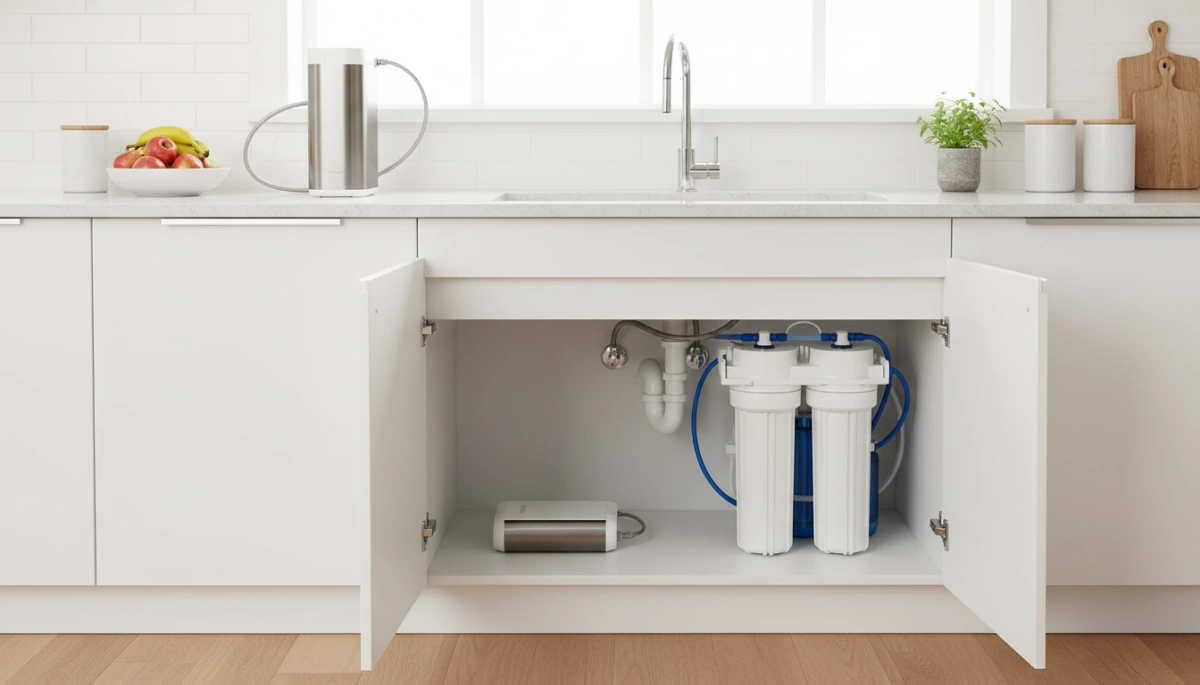
When you compare a countertop vs under-sink water filter, it really comes down to space, lifestyle, and how much water you actually use every day. Here’s a clear breakdown.
Countertop Water Filter Pros and Cons
Pros of countertop water filters
- Zero or low-installation
- Usually connects directly to the faucet or has its own pitcher/tap
- No drilling, no plumbing changes, ideal for renters and apartments
- Portable & easy to move
- Great if you’re moving often, renting, or using it in RVs, dorms, or offices
- Can take it with you when you relocate
- Lower upfront cost
- Most countertop water purifiers are cheaper than full under-sink systems
- Good entry-level option to improve tap water taste and reduce chlorine
- Simple to use
- Easy for kids and guests to understand
- Good for small households or single users who don’t need high flow
Cons of countertop water filters
- Takes up counter space
- Can crowd smaller kitchens and make the sink area feel cluttered
- Visible hoses and units may not match modern kitchen aesthetics
- Limited flow rate and capacity
- Slower water flow vs under-sink filters, especially with multi-stage or RO countertop units
- Not ideal for larger families that cook and drink a lot of water daily
- Performance ceiling
- Many basic countertop filters focus on chlorine, taste, and some heavy metals
- Fewer options with serious lead, PFAS, or wide-spectrum contaminant removal compared with high-end under-sink systems
Under-Sink Water Filter Pros and Cons
Pros of under-sink water filters
- Cleaner look, hidden setup
- System sits in the cabinet, not on your counter
- Only a small faucet or connection is visible, fits modern kitchen designs
- Better flow and capacity
- Higher flow rate than most countertop systems
- Handles the water needs of couples and families who cook, make coffee, and drink a lot of water
- Stronger filtration options
- More multi-stage systems and reverse osmosis (RO) options
- Better suited for lead and PFAS removal, VOCs, and a broader range of contaminants
- Great for people serious about long-term health and water quality
- More “set it and forget it”
- Longer filter life on many under-sink filtration systems
- Less day-to-day fuss once it’s installed
Cons of under-sink water filters
- Requires installation
- Needs a connection to your cold water line, sometimes a dedicated faucet
- May require a plumber if you’re not handy with tools
- Less portable
- Not ideal if you move frequently or can’t modify plumbing (some rentals, short-term leases)
- Higher upfront cost
- System and installation typically cost more than a basic countertop water purifier
- Better long-term value, but more cash up front
Countertop vs Under-Sink Water Filter Comparison Table
| Feature / Factor | Countertop Water Filter | Under-Sink Water Filter |
|---|---|---|
| Installation ease | Tool-free or very simple | Needs plumbing connection, semi-permanent |
| Best for | Renters, small households, travelers, offices | Homeowners, families, long-term setups |
| Portability | High – easy to move | Low – fixed under the sink |
| Space usage | Uses counter space, visible hoses/units | Uses cabinet space, hidden from view |
| Aesthetics | Visible on the counter | Clean, minimal look at the sink |
| Flow rate | Generally slower | Generally faster, especially non-RO systems |
| Filtration performance range | Basic to mid-level; some countertop RO options | Mid to high-level; more multi-stage and RO |
| Contaminant removal potential | Great for chlorine, taste, some metals | Strong for lead, PFAS, VOCs, wide contaminant mix |
| Upfront cost | Lower | Higher |
| Filter replacement cost | Typically lower per filter but shorter life | Higher per filter but longer life |
| Ideal daily water volume | Low to medium usage | Medium to high usage (families, heavy cooking) |
| Renter-friendly | Yes – no plumbing changes | Sometimes restricted by lease rules |
| Long-term value (3–5 years) | Good for light users | Better for stable homes and higher usage |
Best Use Cases by Lifestyle and Budget
Here’s how I’d match countertop vs under-sink water filters to real-world situations:
Choose a countertop water filter if:
- You’re renting and can’t or don’t want to modify plumbing
- You live alone or with one other person and don’t use a ton of water
- You want something cheap, simple, and portable
- Your main goals are better taste, chlorine reduction, and basic contaminant control
Choose an under-sink water filter if:
- You’re a homeowner or in a long-term rental where plumbing changes are allowed
- You have a family or higher daily water use (cooking, coffee, tea, baby formula, pets)
- You care about strong contaminant removal – lead, PFAS, VOCs, heavy metals
- You prefer a clean, uncluttered kitchen with a hidden water filtration system
- You want better long-term cost per gallon and a more permanent upgrade
Both systems can massively improve tap water taste and quality. The right pick comes down to how permanent you want the setup to be and how serious your water quality goals are.
Real-World Use Cases: Countertop vs Under-Sink Water Filter Comparison
Best Option for Renters and Apartments
If you rent or move often, a countertop water filter is usually the smarter play:
- No drilling or plumbing – it connects to the faucet or sits standalone.
- Totally portable – take it with you when you move.
- Fast setup – ideal if your landlord doesn’t allow under-sink changes.
For most apartment users, a portable water filter vs permanent system debate ends quickly: countertop wins on flexibility, even if under-sink offers a cleaner look.
Best Option for Homeowners and Long-Term Setups
If you own your place and plan to stay put, an under-sink water filter is the better long-term upgrade:
- Hidden, space-saving water purifier – nothing sitting on your counter.
- Higher flow rate and better multi-stage filtration options.
- Best under sink filtration system 2026 models can easily handle family use and cooking demands.
You pay more upfront, but as a homeowner, the long-term water filter cost and convenience usually justify the install.
Best Option for High Water Usage Families
For families who drink and cook a lot:
- Under-sink systems (especially multi-stage or under-sink RO) handle:
- Higher flow rate water filter needs.
- Bigger daily capacity for cooking, coffee, tea, and meal prep.
- Countertop filters work for smaller households, but heavy use can mean:
- More frequent filter replacement cost.
- Slower flow that feels annoying during busy dinner prep.
In most high-usage homes, under-sink wins on convenience and consistency.
City Tap Water vs Private Well Water
Your countertop vs under-sink water filter comparison should change based on water source:
- City water
- Main issues: chlorine, taste, lead, PFAS, VOCs.
- High-quality countertop or under-sink multi-stage filtration systems can both work.
- If you want a cleaner look and better flow, under-sink is ideal.
- Private well water
- Often has sediment, iron, manganese, bacteria, heavy metals.
- Usually needs stronger under-sink systems or under sink vs countertop RO system with pre-filters.
- Countertop units may not handle heavy contamination as reliably.
How Local Water Quality Reports Guide Your Choice
Before you pick anything, pull your local water quality report (or get a basic lab test if you’re on a well):
- Look for: lead, PFAS, nitrates, chlorine, hardness, heavy metals.
- Match the contaminants to certified point-of-use water filter systems (NSF/ANSI standards).
- Choose:
- Countertop for moderate city water issues and easy setup.
- Under-sink for more serious contaminant removal and long-term reliability.
If you’re comparing brands and setups, I’d also study lists like the top countertop water filter manufacturers to understand how different systems approach contaminant removal and filter life, then decide which format fits your home and lifestyle best.
How to Choose Between Countertop vs Under-Sink Water Filters
When you’re deciding between a countertop vs under-sink water filter, think less about “which is better” and more about “which fits my life right now.” Here’s how I’d break it down.
Step-by-Step Decision Checklist
Use this quick checklist before you buy any kitchen water filter:
- Test or check your water
- Look up your local water report or get a basic water test.
- Confirm if you’re dealing with:
- Chlorine or bad taste/odor
- Lead, PFAS, or heavy metals
- Well water issues (sediment, hardness, bacteria)
- Check your space and layout
- Do you have free counter space near the sink?
- Do you have open cabinet space under the sink for canisters or a tank?
- Is your faucet standard, or some special pull-down/custom design?
- Set a realistic budget
- Upfront budget for the system
- Ongoing budget for filter replacement cost every 6–12 months
- Decide if you want a temporary fix or a long-term upgrade
- Clarify your goals
- Better taste only?
- Strong contaminant removal (lead, PFAS, VOCs, heavy metals)?
- High flow and convenience for cooking and coffee?
- Hidden, clean look vs visible system?
- Decide how permanent you want this
- Are you renting or planning to move soon?
- Are you remodeling or settling into a long-term home?
Key Questions to Ask Before Buying Any Water Filter
Before you lock in a countertop vs under-sink water filter comparison, ask these:
- What contaminants is this system certified to reduce?
(Look for NSF/ANSI standards and clear contaminant lists.) - What’s the flow rate?
Will it keep up with your typical cooking and meal prep? - How often do filters need to be replaced, and what do they cost?
- Is installation tool-free, DIY, or likely to need a plumber?
- Is this system compatible with my faucet and plumbing?
- Does it fit my family size and daily water usage?
- What’s the warranty, and does DIY installation affect it?
If you want more background on selecting point-of-use filters, a guide like this on choosing the right tap-mounted water filter can help you think about performance, certifications, and real daily use.
When a Countertop Water Filter Makes More Sense
Choose a countertop water filter if:
- You’re renting or moving often
- No drilling, no permanent plumbing changes
- Easy to disconnect and take with you
- You want plug-and-play setup
- Typically connects directly to the faucet or sits standalone
- Minimal tools, near-zero install risk
- You have a smaller household
- Great for single users or couples
- Good fit if most use is drinking water, coffee, tea, and light cooking
- You’re focused on budget and flexibility
- Lower upfront cost than many under-sink systems
- Ideal “trial run” before committing to a permanent installation
- You don’t mind seeing the filter on your counter
- Visual presence is the trade-off for portability and simplicity
If you’re looking for an apartment friendly water filter or a portable water filter vs permanent setup, countertop is usually your best starting point.
When an Under-Sink Water Filter Is the Smarter Upgrade
Go with an under-sink water filter if:
- You’re a homeowner or long-term renter
- You’re okay with a more permanent, plumbing-connected system
- You want a “set it and forget it” kitchen water filter setup
- You have a family or high water usage
- Better suited for families and heavy cooking households
- Higher flow rate and capacity for cooking, coffee, meal prep, and filling bottles
- You want a clean, hidden look
- No equipment on the counter
- The system lives out of sight in the cabinet
- You need stronger contaminant removal
- Multi-stage under-sink systems and under-sink RO often provide:
- Better lead and PFAS removal
- Strong reduction of chlorine, heavy metals, VOCs
- More comprehensive city water or well water treatment
- Multi-stage under-sink systems and under-sink RO often provide:
- You’re thinking long-term value
- Higher upfront cost, but more efficient as a long term water filter solution
- Often better total cost of ownership over 3–5 years if you use a lot of water
If you’re looking for the best under sink filtration system 2026 style solution, under-sink is the category to focus on.
How to Switch from Countertop to Under-Sink Later
You don’t have to get this perfect on day one. A lot of people in the U.S. start with a countertop system and upgrade later. Here’s how to plan for that:
- Start with a countertop as a low-risk test
- Learn your real usage: how much water you drink, how often you cook, how picky you are about taste.
- This helps you spec the right under-sink system later (flow rate, tank vs tankless, RO vs standard, etc.).
- Keep your faucet and layout in mind
- When you buy a countertop system, choose one that doesn’t lock you into a weird adapter or permanent modification.
- Think ahead:
- Is there enough cabinet space for future under-sink canisters or a tank?
- Is there room for a dedicated filtered water faucet if you want one later?
- Use your water testing results as your upgrade roadmap
- If your test shows serious contaminants (lead, PFAS, nitrates, heavy metals), plan to move from basic countertop to multi-stage or RO under-sink in 6–18 months.
- City water users often move to under-sink carbon + sediment systems; well water users may jump to under-sink RO with pre-treatment.
- Budget in stages
- Stage 1: Affordable countertop filter (proof-of-concept, solves taste and basic chlorine reduction).
- Stage 2: Permanent under-sink system once you know what performance you actually need and how much water you really use.
- Reuse what you can
- If your countertop system uses standard cartridges or supports the same filter media as your future under-sink brand, you may be able to keep using similar filter tech when you upgrade.
If you’re planning a brand or OEM line and want to cover both segments (portable countertop and OEM under sink water filters), this staged approach mirrors the path many U.S. customers take—from starter countertop system to a permanent under-sink solution as their budget and home situation stabilize.
High-Quality Under-Sink Water Filter Options from driplife
When you’re comparing countertop vs under-sink water filter solutions for serious, long-term use, under-sink almost always wins—and that’s the space we focus on at driplife.
Professional Under-Sink Water Filter Manufacturer
driplife is a China-based OEM manufacturer that builds under-sink water filters specifically for brands, distributors, and retailers in the US and global markets. We don’t sell gimmicks—we design point-of-use under-sink filtration systems that hit real-world needs: lead and PFAS reduction, better taste, solid flow rate, and low hassle maintenance.
We already supply private label and OEM under-sink systems to partners who target city water and well water users. Our engineering team is focused on stable performance, long service life, and compliance with international standards, so you get a system that’s ready for the U.S. market out of the box.
Key Features of driplife Under-Sink Filtration Systems
Our under-sink systems are built to outperform basic countertop water purifiers while staying easy to live with:
- Multi-stage filtration – Sediment, activated carbon, and specialty media for chlorine, heavy metals, VOCs, and more. We also engineer solutions targeting arsenic and other groundwater contaminants, which is critical in regions where levels can exceed WHO standards, similar to what’s been documented in the Pearl River Delta in China (arsenic content in groundwater reference).
- High flow rate & stable pressure – Designed to feel like a normal faucet, not a slow trickle, even with multi-stage filtration.
- Compact, space-saving design – Optimized for modern US kitchen cabinets where trash bins, disposals, and organizers already compete for space.
- Easy filter replacement – Quick-change cartridges, clear replacement cycles, and front-facing access to keep maintenance simple.
- RO and non-RO options – From high-capacity carbon multi-stage to under-sink reverse osmosis (RO) systems that compete directly with “best under sink filtration system 2026” category leaders.
OEM and Private Label Under-Sink Water Filter Solutions
If you’re building or expanding a kitchen water filter line, driplife offers:
- OEM under-sink water filters – Built to your spec: stages, filter media, capacity, flow rate, TDS reduction targets, and branding.
- Private label under-sink systems – Our proven platforms, customized with your logo, packaging, and marketing requirements, ideal for retailers, e-commerce brands, and plumbing distributors.
- Flexible configurations – Single-stage, multi-stage, and RO; standard under-sink faucet connection or paired with dedicated filtered water faucets similar to the options outlined in our guide on types of kitchen sink filtered water faucets.
We help partners position systems for city tap water, well water, family-size use, and apartment installs where permanent plumbing is still allowed.
Why Choose driplife for Long-Term, Reliable Water Filtration
If you’re targeting serious users comparing portable water filters vs permanent under-sink solutions, you want a supplier that can back you up long term. Here’s why brands work with us:
- Built for reliability – Components, seals, and housings are selected for multi-year service, not just lab testing wins.
- Consistent quality – Tight production control so your customers get the same performance from unit to unit.
- Scalable supply – From test runs to container-level orders, we support growth without cutting corners.
- Market-ready design – Systems engineered for US consumer expectations: clean look, hidden under-sink install, strong flow rate, straightforward install and service.
If you’re looking to own your niche in under-sink water filter pros and cons comparisons—rather than just resell generic imports—driplife gives you the backend manufacturing strength to build a real brand in the under-sink filtration space.