

















Most shower filters work fine with cold tap water.
But when you turn the handle to hot, everything changes.
At higher temperatures, chlorine doesn’t just stay in the water — it volatilizes into the air, forming gases like chloroform that you inhale with every deep breath of steam. Standard activated carbon can lose efficiency, suffer thermal desorption, and even release what it already captured. In other words, the hotter your shower, the more traditional filters struggle.
That’s where thermal stable filtration media come in.
In this guide, you’ll see exactly how high-performance shower filters use KDF-55, calcium sulfite, and vitamin C to neutralize chlorine in hot water conditions through precise redox reactions and high-speed dechlorination – without sacrificing flow, safety, or structural integrity.
If you need shower systems that actually protect users in real-world hot showers (not just lab-temperature tests), this breakdown is for you.
Why Shower Filters Struggle With Hot Water
When customers ask why their shower still smells like chlorine even with a filter installed, it usually comes down to one issue: the filter was never engineered for hot water conditions.
How Hot Water Changes Chlorine Behavior
Hot water doesn’t just feel different; it changes chlorine chemistry and how it moves through a filter:
- As temperature rises, free chlorine becomes more volatile, moving into the air as gas with the shower steam.
- Higher heat speeds up reactions and diffusion, so chlorine passes through weak media faster, reducing removal efficiency.
- In high-temperature water purification, you also see more chlorine byproducts forming in the mist and steam, increasing exposure in the breathing zone.
Why Cold-Water Filter Tech Fails In Showers
Most basic filters are designed and tested for cold tap water, not a 100 °F+ shower:
- Standard granular activated carbon is optimized for cold, low-flow drinking water, where contact time is long and stable.
- In a high-flow shower filtration system, water moves too fast, so cold-water designs lose capture efficiency in hot water.
- Media that performs well on a bench test at room temperature can degrade, swell, or channel under continuous hot water use.
Common Failures Of Standard Carbon Filters In Hot Water
Conventional carbon-only shower filters show predictable weaknesses under heat:
- Thermal desorption in activated carbon can release previously adsorbed contaminants back into the stream.
- Low-density carbon beds can channel, letting hot water bypass most media with minimal contact time.
- Non–temperature resistant filter media and housings may crack, leach, or deform, cutting chlorine removal in hot water conditions and shortening service life.
This is why I design hot water shower filter technology around thermal stable filtration media from the start, not as an afterthought.
Chlorine In Hot Showers
When chlorinated water heats up, the chemistry changes fast. Free chlorine becomes more volatile, so hot water and steam drive chlorine and its byproducts into the air you breathe. In a closed bathroom, that “pool smell” is often a mix of chlorine compounds and disinfection byproducts, not just harmless steam.
As temperature rises, chlorine can react with natural organics in the water and plumbing to form volatile byproducts like chloroform. Those light molecules are easily carried in shower steam, so you’re not just getting skin contact—you’re standing in a warm cloud of inhalable chemicals. This is why chlorine gas inhalation in showers can feel irritating to your nose, throat, and chest, even when the tap water itself tests within legal limits.
Inhaling chlorine byproducts is usually riskier than drinking them because:
- Your lungs offer a huge surface area with very thin tissue, so gases from bathroom steam enter your bloodstream quickly.
- Hot water opens pores and boosts blood flow, increasing dermal chlorine absorption at the same time you’re breathing it in.
- You’re getting a dual hit: direct lung exposure plus skin contact in a small, unventilated space.
For customers in the U.S. who take long, hot showers, this combination makes chlorine removal in hot water conditions a real health priority, especially for families with asthma, allergies, or eczema-prone skin looking for eczema friendly shower heads and high-flow shower filtration systems that actually handle steam exposure—not just cold tap performance.
Why Standard Shower Filters Fail In Heat
Most “normal” shower filters use granular activated carbon (GAC), which is great for cold drinking water but weak in hot water chlorine removal. Once your shower hits typical U.S. temps (100–120°F), standard carbon media starts to struggle and your real‑world protection drops fast.
- Limits of GAC in hot water: Granular activated carbon is optimized for cooler, slower flows. In hot water shower filter technology, the pores in GAC don’t hold onto chlorine and other volatile contaminants as well. You get less adsorption just when you need more performance.
- Thermal desorption and contaminant dumping: At higher temperatures, you can get thermal desorption in activated carbon. That means some contaminants that were previously trapped can be released back into the water and steam, instead of removed. In an enclosed bathroom, that works against chlorine gas reduction in shower steam and can actually spike exposure during long, hot showers.
- Contact time in high‑flow showers: High‑flow shower filtration systems move water fast. With basic carbon cartridges, contact time is too short for effective high‑temperature water purification. Water blasts through the media, so you still smell chlorine and feel the dryness on your skin and hair after.
For hot water contaminant filtration, I focus on thermal stable filtration media instead of relying only on standard GAC. If you’re also building a broader water product lineup, it’s worth looking at how performance testing on hot water compares to cold water products like a high-quality water filter jug so you’re not overpromising what a basic shower filter can do in real bathroom conditions.
Chemistry Of Hot Water Dechlorination
When we talk about how shower filters remove chlorine in hot water conditions, we’re really talking about chemistry, not just “stuff sticking to a sponge.” At shower temps, high temperature shower filtration has to rely on redox reactions and fast chemical neutralization, because simple adsorption falls apart.
How hot water chlorine removal actually works
In hot water, effective shower filters don’t just trap chlorine – they convert it:
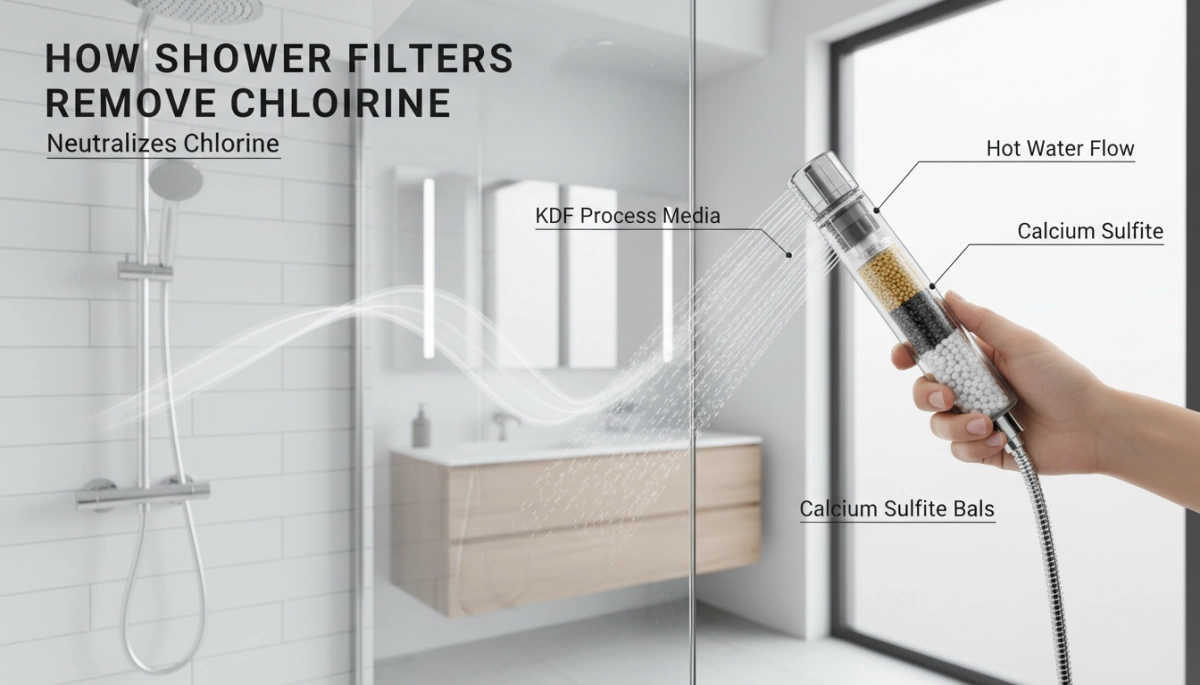
- Redox media (like KDF 55) swap electrons with free chlorine, turning it into harmless chloride ions, which stay dissolved in the water instead of gassing off into your shower steam.
- Calcium sulfite reacts almost instantly with chlorine and chloramines, even in near‑boiling water, which makes it a strong choice for hot water chlorine removal where contact time is short.
- Vitamin C media use a mild acid–base reaction to neutralize chlorine and chloramines fast, which is why a vitamin C shower filter for chlorine and sensitive skin can still work in hotter showers.
Hot vs cold water filtration mechanisms
Cold‑water filters mainly rely on adsorption:
- Granular activated carbon works best in cooler water with long contact time, like in a countertop or home reverse osmosis water filter system.
- In a high‑flow shower, hot water speeds up molecules and reduces adsorption efficiency, so standard carbon alone often can’t keep up.
- That’s why hot water shower filter technology leans on thermal stable filtration media and fast chemical reactions, not just carbon beds.
Why chemistry beats simple adsorption at high temperatures
At higher temperatures:
- Adsorption capacity drops and thermal desorption in activated carbon can actually release trapped contaminants back into the water and shower steam.
- Redox reaction water filtration (KDF 55, calcium sulfite, vitamin C) stays effective as water heats up, giving more reliable chlorine and chloramine removal in real shower conditions.
- A well‑designed, temperature resistant shower filter housing packed with heat resistant shower filter media is the only way to consistently cut chlorine gas reduction in shower steam and lower bathroom steam chlorine exposure.
KDF-55 In Hot Water Showers
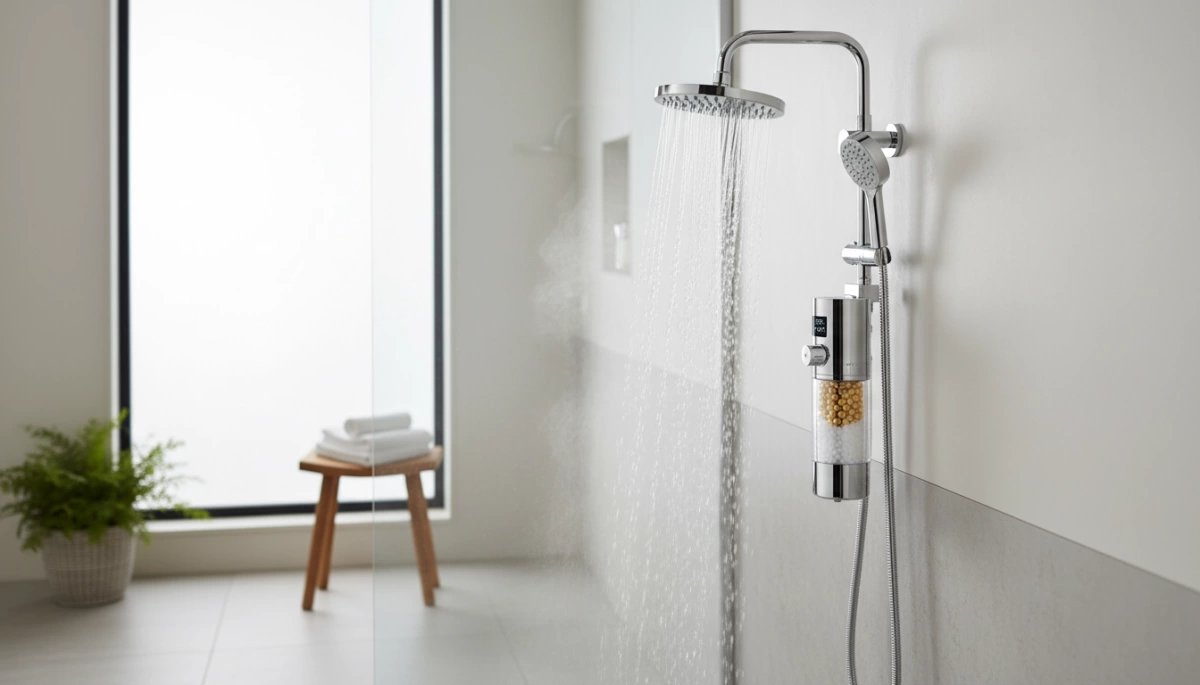
KDF-55 is one of my go‑to thermal stable filtration media choices for hot water shower filter technology because it actually performs better as temperature rises. Through a Kinetic Degradation Fluxion (KDF) redox reaction, KDF-55 transfers electrons to free chlorine (Cl₂), converting it into harmless chloride ions (Cl⁻). That means instead of just “trapping” chlorine like basic carbon, it changes the chemistry of the water so chlorine can’t turn into irritating chlorine gas in your shower steam.
In real hot water conditions, KDF 55 shower filter benefits become very clear. Warmer water speeds up the redox reaction, so chlorine removal in hot water conditions stays strong even at high flow rates. At the same time, KDF-55 helps with heavy metal reduction in hot water, targeting contaminants like lead, mercury, and nickel that can leach from older U.S. plumbing systems. Because KDF is a heat resistant shower filter media, it doesn’t break down or dump contaminants the way standard carbon can during thermal desorption in activated carbon.
For U.S. households that run long, hot showers, a multi-stage KDF shower filter is one of the most reliable options for high-temperature water purification. It cuts chlorine exposure in shower steam, supports eczema friendly shower heads for sensitive skin, and keeps performance stable across a wide temperature range. If you want a deeper dive into how KDF media works across different systems, I break down the redox reaction water filtration process in our guide to KDF water filter technology.
Calcium Sulfite For Hot Water Chlorine Removal
Calcium sulfite is one of my go‑to thermal stable filtration media when I’m dealing with real hot showers, not just lukewarm tap tests. It’s built for high temperature shower filtration and keeps working where standard carbon taps out.
How Calcium Sulfite Removes Chlorine Fast
Calcium sulfite doesn’t just “hold” chlorine – it reacts with it.
- It uses a redox reaction to convert free chlorine and chloramines into harmless sulfate and chloride.
- The reaction is almost instant, so it works even in high‑flow shower filtration systems.
- Because it’s a chemical reaction, not just adsorption, it stays effective in chlorine removal in hot water conditions.
Performance In Near‑Boiling Water
Calcium sulfite is extremely heat resistant and keeps its structure in very hot water.
- Works reliably in near‑boiling water (often tested up to 176°F / 80°C).
- No thermal desorption issues like standard carbon; it won’t dump trapped contaminants back into the stream.
- Ideal for hot water chlorine removal in U.S. homes that run long, hot showers.
Benefits vs Standard Carbon In Showers
Compared to regular granular activated carbon, calcium sulfite is simply better suited to shower use:
| Feature | Calcium Sulfite | Standard Carbon (GAC) |
|---|---|---|
| Hot water performance | Stable in near‑boiling water | Efficiency drops as temp rises |
| Chlorine reaction speed | Milliseconds (very fast) | Needs long contact time |
| Chloramine reduction | Strong, even in hot water | Often limited, especially in heat |
| Risk of thermal desorption | Very low | Higher at elevated temperatures |
| Best use case | Hot water shower filter technology | Cold/room‑temp drinking water filters |
In my own designs, I use calcium sulfite as a core heat resistant shower filter media to cut chlorine and chloramines quickly, then pair it with other stages for polishing and taste, similar to how we tune carbon stages in our carbon-based drinking water systems.
Vitamin C Shower Filters In Hot Water
Vitamin C shower filters use ascorbic acid to neutralize chlorine and chloramines fast, even in hot water conditions. In simple terms, the vitamin C donates electrons to convert free chlorine and chloramine into harmless chloride, so you’re washing in high‑temperature water that’s much gentler on your skin and lungs.
How Vitamin C Neutralizes Chlorine And Chloramines
In hot water showers, vitamin C reacts directly with disinfectants instead of just “catching” them like carbon:
- It converts free chlorine and chloramines into chloride salts that don’t gas off into the steam.
- The redox reaction works quickly, which is ideal for high‑flow shower filtration systems.
- This helps cut chlorine gas reduction in shower steam and lowers bathroom steam chlorine exposure while you’re under the spray.
Pros And Cons In High‑Temperature Water
Vitamin C has clear benefits in high‑temperature shower filtration, but it’s not perfect:
- Pros:
- Fast hot water chloramine reduction and chlorine removal in hot water conditions.
- Great for sensitive skin users who react to harsh disinfectants.
- Works well as a final polishing stage after KDF or calcium sulfite.
- Cons:
- Media can dissolve faster in near‑boiling water, shortening filter life.
- Cartridges often need more frequent replacement than thermal stable filtration media like KDF‑55 or calcium sulfite.
If you’re already using faucet filters or pitchers, you’ll see vitamin C as a more targeted option for shower use than broad whole‑home systems, similar to how a dedicated water filter for rusty water tackles a very specific issue at the tap.
When Vitamin C Filters Make Sense For Sensitive Skin
For many U.S. households, a vitamin C shower filter is a smart add‑on when:
- You or your kids have eczema, dry skin, or scalp irritation and need an eczema friendly shower head setup.
- You notice strong chlorine odor or throat irritation from chlorine gas inhalation in showers.
- You want a compact, easy‑install shower filter for sensitive skin that can pair with other hot water contaminant filtration stages.
Used correctly, a vitamin C shower filter for chlorine acts as a skin‑first upgrade, reducing shower chlorine exposure without changing your normal hot shower habits.
Health Impact Of Chlorine In Hot Showers
When we talk about hot water chlorine removal, the real concern isn’t just what’s in the water you’re touching – it’s what you’re breathing and absorbing every day.
Chlorine gas inhalation in enclosed bathrooms
In a hot shower, chlorine and chloramine can convert into gas and mix into the steam. In a small, enclosed U.S. bathroom with the door shut and the fan off, that means:
- You breathe in chlorine byproducts with every deep breath of shower steam.
- Chlorine gas inhalation in showers can irritate the nose, throat, and lungs, especially for kids, older adults, and anyone with asthma or allergies.
- Because you’re inhaling those compounds directly into your lungs, the exposure can be more intense than drinking the same tap water.
This is exactly why high temperature shower filtration and chlorine gas reduction in shower steam are so important, not just “nice-to-have” features.
Dermal chlorine absorption with open pores
Hot water opens up your pores and strips your skin’s natural oils. When chlorine is still in that water:
- Dermal chlorine absorption goes up because your pores are wide open.
- The longer you stand under an unfiltered hot shower, the more chlorine has a chance to interact with your skin barrier.
- Sensitive skin, kids’ skin, and aging skin tend to react faster and stay irritated longer.
A temperature resistant shower filter housing paired with thermal stable filtration media is designed to keep performance high even under typical American hot water temps (often 105–115°F).
Links to dry skin, eczema flare-ups, and brittle hair
For many U.S. families, the pattern is familiar: great municipal water quality on paper, but constant dry skin and hair issues at home. Persistent chlorine exposure in hot showers can:
- Make dry skin worse and trigger eczema flare-ups, especially on areas hit hardest by the spray (arms, legs, back, scalp).
- Leave hair feeling rough, dull, and brittle, stripping color-treated hair faster and making curls frizzier.
- Increase day-to-day irritation for people already battling eczema, psoriasis, or contact dermatitis, who often need a shower filter for sensitive skin just to stay comfortable.
If you already care about what’s in your drinking water and maybe run a reverse osmosis system or another form of high-temperature water purification in your kitchen, it’s worth giving your shower the same level of protection. For example, understanding how different filter media work in systems like a reverse osmosis water purifier makes it easier to see why thermal stable shower filter technology matters so much for your daily hot showers.
Shower Filter Design For Hot Water Conditions
Designing a shower filter for hot water conditions is totally different from building a cold‑water under‑sink filter. If I want real chlorine removal in hot showers, I have to engineer around heat, pressure, and high flow instead of just packing in more carbon.
Thermal stable filtration media selection
For hot water shower filter technology, I start with thermal stable filtration media that can handle 120–140°F without breaking down or dumping contaminants back into the stream. That usually means:
- KDF‑55 and calcium sulfite as the primary thermal stable filtration media for high temperature chlorine reduction and hot water chloramine reduction.
- High‑temperature carbon blocks or specially treated granular carbon only as a polishing stage, not the main workhorse, to reduce thermal desorption in activated carbon.
- Media that’s certified for hot water chlorine removal and safe for shower steam contaminant removal, not just drinking temperature ranges.
Heat‑resistant housing and internal flow engineering
A hot water shower filter also needs temperature resistant shower filter housing that won’t warp, crack, or leach plastic at high temperatures. I focus on:
- Heat‑resistant polymers and seals that stay stable in high‑temperature water purification and bathroom steam.
- Internal baffles and flow channels that slow the water slightly and spread it across the full media bed, instead of a straight “pipe‑through” design.
- A compact, eczema friendly shower head design that still fits standard US shower arms and doesn’t add bulk or weight that stresses the plumbing.
If you’re also concerned about skin and hair, pairing the right housing with shower water filters for healthy skin makes a big difference in day‑to‑day comfort:
shower water filters for healthy skin
Maintaining water pressure while maximizing contact time
The hard part is balancing contact time in shower filtration with the high flow Americans expect from high‑flow shower filtration systems. To keep pressure strong while cutting chlorine gas reduction in shower steam:
- I size the internal channels so water spreads across the media but doesn’t choke the line.
- I layer fast‑acting media like KDF and calcium sulfite upfront so they work even at 2.0–2.5 GPM.
- I test under real hot water conditions to confirm we’re getting actual shower chlorine exposure reduction, not just decent lab numbers at slow flow.
Done right, a temperature resistant filter media setup with smart internal flow gives you hot water contaminant filtration without killing your shower feel.
Driplife Thermal Stable Filtration Approach
When I build a hot water shower filter, thermal stable filtration media is non‑negotiable. For Driplife’s high temperature shower filtration, I source KDF‑55, calcium sulfite, and high‑grade carbon from audited suppliers only, and I batch‑test for purity, particle size, and heavy metal control so the filter media isn’t adding new contaminants into your water.
Multi‑stage KDF + Calcium Sulfite + Carbon
To get real chlorine removal in hot water conditions, I use a multi‑stage KDF shower filter layout:
- A KDF‑55 layer up front for redox reaction water filtration and heavy metal reduction in hot water
- A calcium sulfite layer for ultra‑fast calcium sulfite chlorine removal and hot water chloramine reduction
- A final thermal stable carbon stage to polish taste, odor, and support shower steam contaminant removal
This stack lets me cut chlorine gas reduction in shower steam while still keeping good flow for high‑flow shower filtration systems and eczema friendly shower heads.
Tested For Temperature And Lifespan
Every Driplife thermal stable shower filter design is tested across a wide temperature range so the temperature resistant shower filter housing and media don’t crack, swell, or dump contaminants under repeated hot/cold cycles. I run long‑term flow and pressure tests to confirm contact time in shower filtration stays consistent as the media ages, so customers get steady hot water chlorine removal instead of performance that falls off in a few weeks. If you’re dealing with well water too, pairing this approach with a dedicated shower filter for well water gives better protection against sediment and extra metals.
Choosing A Hot Water Shower Filter For Your Market
When I choose a hot water shower filter for the U.S. market, I treat it like a high‑temperature water purification system, not just a simple cartridge.
Key specs for hot water performance
I always lock in a few non‑negotiables:
- Effective temperature range: Look for a clearly stated hot water range (for example, 40–140°F or higher). If a spec sheet only lists “max temperature” with no tested range, I treat that as a red flag for hot water chlorine removal.
- Thermal stable filtration media: Prioritize KDF‑55, calcium sulfite, and high‑temp carbon that are proven for high temperature chlorine reduction and hot water chloramine reduction. Avoid filters that rely only on basic GAC.
- Flow rate vs. contact time: Check rated flow (GPM) at shower temperatures. A good high‑flow shower filtration system keeps pressure while still giving enough contact time in hot water conditions.
- Housing and seals: Make sure it’s a temperature resistant shower filter housing with high‑temp O‑rings and no cheap plastics that can warp near 120–140°F.
How to read “effective temperature range”
Most spec sheets are written for cold drinking water, so I read them with a critical eye:
- I look for “tested performance at X–Y°F”, not just “operating temp.” Actual test data in hot water proves the thermal stable filtration media won’t dump contaminants from thermal desorption in activated carbon.
- If the same cartridge is used in cold water units like a pH‑balance water filter system, I confirm there’s separate testing for hot water shower filter technology.
- I always check if chlorine/chloramine reduction claims are certified at shower temperatures, since performance can drop sharply once water gets hot.
Matching the right setup to each customer
Different U.S. customers need different hot water shower filter technology:
- Sensitive skin / eczema friendly shower heads: I prefer multi‑stage KDF + calcium sulfite, sometimes with vitamin C, to cut chlorine gas inhalation in showers and dermal chlorine absorption as much as possible.
- Hard water + older plumbing: A multi‑stage KDF shower filter gives both chlorine removal in hot water conditions and heavy metal reduction in hot water, which is key for older U.S. homes.
- Rental units / short‑term stays: I go with easy‑install, compact, temperature resistant filter media setups with moderate lifespan to keep costs down while still reducing shower chlorine exposure.
By checking temperature range, media type, and real hot water performance data, I can source B2B shower filter solutions that actually deliver chlorine gas reduction in shower steam and protect everyday shower habits in the U.S. market.
B2B Buying Guide For Thermal Stable Shower Filters
When I vet a hot water shower filter OEM, I focus on how their tech really performs in high-temperature water purification, not just on the brochure.
Questions To Ask OEM Shower Filter Manufacturers
I always press OEM shower filter manufacturers hard on the details:
- What is the certified effective temperature range, and how was hot water chlorine removal tested (lab, third-party, real shower conditions)?
- Which thermal stable filtration media do you use (KDF 55, calcium sulfite, high-temp carbon), and how do you prevent thermal desorption in activated carbon?
- What’s the tested flow rate and contact time in high-flow shower filtration systems at 104–140°F (40–60°C)?
- How do you control heavy metal reduction in hot water, and do you use NSF-compliant brass or plastic components?
- Can you customize multi-stage KDF shower filter configurations for eczema friendly shower heads or sensitive skin markets?
Certifications And Test Reports To Request
For temperature resistant shower filter housing and hot water chloramine reduction, I always ask for:
- NSF/ANSI 42 or 177 test reports that specifically include high temperature chlorine reduction data.
- Material safety reports for heat resistant shower filter media and housing (no BPA, phthalates, or cheap recycled plastics).
- Third-party test data on calcium sulfite chlorine removal, KDF 55 shower filter benefits, and shower chlorine exposure reduction in hot water conditions.
- Flow and pressure test curves at typical U.S. residential pressures (45–80 psi) with near‑maximum water heater settings.
If you’re also positioning your line for beauty and wellness, it helps to align this with how hard water and chlorine impact skin and hair, similar to how we look at hard water’s effect on product performance and sales.
Balancing Cost, Performance, And Lifespan
For B2B shower filter sourcing in the U.S. market, I look at total value, not just unit price:
- Prioritize stable hot water shower filter technology (KDF + calcium sulfite + carbon) over cheap carbon-only cores that fail in heat.
- Match media load and cartridge size to realistic U.S. shower habits: long, hot showers and high flow rates.
- Compare cost per gallon of effective hot water chlorine removal, not just months on the box.
- Plan tiered SKUs:
- Entry-level carbon-heavy units for budget buyers.
- Premium thermal stable filtration media builds for health-focused and shower filter for sensitive skin customers.
Done right, you get a high temperature shower filtration line that actually reduces chlorine gas inhalation in showers and stands up to U.S. hot water conditions without killing water pressure or margins.