


















Understanding pH Balanced Water Chemistry
Water quality is defined by more than just purity; it is defined by chemical balance. When we discuss a pH balance water filter, we are addressing the fundamental chemistry of what we consume daily. The term “pH” stands for “potential of hydrogen,” a measure of the acidity or alkalinity of a solution. Understanding this balance is the first step toward upgrading your home hydration system from simple filtration to true water restoration.
The pH Scale 101: Acidic vs. Alkaline
The drinking water pH scale ranges from 0 to 14, with 7 being neutral.
- Acidic (0–6.9): Water with a high concentration of hydrogen ions. Common liquids like lemon juice or soda fall here.
- Neutral (7): Pure, distilled water sits right in the middle.
- Alkaline (7.1–14): Water rich in alkalizing minerals like calcium and magnesium.
In the context of filtration, standard Reverse Osmosis (RO) water often drops to a slightly acidic pH (around 5.0 to 6.0). This happens because the membrane is so effective at removing dissolved solids that it strips away natural buffering minerals, leaving the water vulnerable to absorbing carbon dioxide from the air, which forms mild carbonic acid. This is why acidic water correction is a critical feature in our advanced systems.
Why Tap Water pH Fluctuates
You might wonder why your tap water tests differently from day to day or city to city. Municipal water is chemically treated to protect pipes and kill bacteria, but these treatments cause significant pH volatility.
- Source Variance: Groundwater typically has a higher mineral content (higher pH) than surface water reservoirs.
- Pipe Corrosion: Cities often adjust pH artificially to prevent lead and copper from leaching out of aging infrastructure.
- Chemical Additives: Chlorine and chloramine, used for disinfection, can alter the water’s chemical profile.
Because of these variables, relying on the city’s treatment plant for pH balance is inconsistent. A dedicated point-of-use system ensures you control the chemistry of every glass.
The Ideal Range for Optimal Hydration
We believe the sweet spot for drinking water lies between pH 7.5 and 8.5. The human body maintains a blood pH of approximately 7.35 to 7.45. Consuming water that aligns with or slightly exceeds this natural alkalinity supports the body’s equilibrium.
While pure H2O is essential, water devoid of minerals (“dead water”) does not hydrate as effectively as water containing electrolytes. By targeting this specific alkaline range, we ensure the water is not only free of contaminants but also optimized for absorption and taste. This is the core purpose of healthy hydration minerals—turning purified water into a functional health tool.
The Clean Water Paradox: Why RO Needs Balancing
We often face a dilemma in high-performance water purification. To get the cleanest water possible, we have to strip everything out—including the good stuff. This creates a specific need for a pH balance water filter that can clean the water without leaving it “dead” or acidic. Standard filtration is great for safety, but we need to go a step further for quality.
How Reverse Osmosis Membranes Work
Our Reverse Osmosis (RO) technology is incredibly precise. We force water through a semi-permeable membrane with pores as small as 0.0001 microns. This process is the gold standard for TDS reduction, blocking up to 99% of over 1,000 contaminants. If you are worried about heavy metals, you can rest easy knowing that reverse osmosis effectively removes lead and arsenic from your supply. The pressure forces pure water molecules through while rejecting larger contaminant molecules, flushing them down the drain.
The Side Effect: Stripping Essential Minerals
The problem is that the membrane acts as a barrier to everything. It doesn’t distinguish between harmful toxins and healthy minerals. It removes beneficial calcium, magnesium, and potassium right along with the chlorine and fluoride. Without these minerals acting as a buffer, the water’s pH level naturally drops, often resulting in slightly acidic water (pH below 7.0). This requires acidic water correction to bring the water back to a neutral or alkaline state, which is why standard RO systems often fall short without a remineralization stage.
Impact on Taste, Health, and Cooking
Pure, de-mineralized water behaves differently than natural spring water in your home.
- Taste: Water without minerals can taste flat, “empty,” or even slightly sharp. A proper pH balance water filter restores that crisp, refreshing mouthfeel we associate with premium bottled water.
- Cooking: Your culinary results depend on water chemistry. Coffee and tea require mineral interaction to extract flavor properly. Acidic water can make your morning brew taste bitter or sour.
- Health: Calcium and magnesium restoration is vital for long-term wellness. Drinking acidic water creates an imbalance, whereas alkaline water supports better hydration and mineral absorption.
Deep Dive: Remineralization Technology
To create a true pH balance water filter, purification is only half the battle. Once our 0.0001-micron RO membrane strips the water clean, it leaves the liquid in a slightly acidic, “hungry” state. This is where our engineering shifts from subtractive (removing contaminants) to additive (restoring health). We don’t just leave you with pure H2O; we rebuild the water profile to match what you’d find in a pristine mountain spring.
The Post-Carbon + Calcium (PCC) Stage
The final step in our process is the Post-Carbon + Calcium (PCC) filter. This isn’t a standard charcoal filter. It combines high-grade coconut shell carbon to polish the taste with a specialized mineral core. This stage performs reverse osmosis remineralization, effectively neutralizing the acidity caused by the RO process. By raising the pH to a slightly alkaline level (typically above 7.5), we ensure the water is smooth on the palate and optimized for absorption.
Natural Media: Maifan Stones and Calcite
We avoid artificial chemicals when adjusting pH. Instead, we rely on calcium and magnesium restoration through natural media. Our cartridges are packed with:
- Maifan Stones: Ancient mineral rock known for releasing trace elements like zinc and selenium while oxygenating the water.
- Calcite Media: Naturally dissolves calcium carbonate into the water to correct low pH levels instantly.
This mimics the natural cycle where rainwater filters through bedrock, picking up electrolytes along the way. Whether you are using a high-capacity under-sink unit or one of our top desktop water dispensers, this natural interaction ensures every glass provides essential minerals rather than just empty hydration.
Remineralization Filters vs. Electric Ionizers
There is often confusion between a post-carbon pH balancing filter and an electric water ionizer. It is crucial to understand the difference in water ionizer vs. remineralization filter technology:
- Electric Ionizers: These machines use electrolysis plates to electrically shock water molecules, splitting them to create artificial alkalinity. They are expensive (often $2,000+) and do not add minerals if the source water is already soft or stripped.
- DripLife Remineralization: We physically add the minerals back in. This creates stable alkaline water rich in electrolytes without requiring electricity for the ionization process.
Our approach delivers the health benefits of alkaline water—like improved hydration and acid buffering—at a fraction of the cost, using a method that is biologically natural rather than electrically forced.
Must-Have Features in a pH Balance Water Filter
When you are investing in a ph balance water filter, the remineralization stage is only half the story. The core filtration engine determines the purity of the water before we restore those healthy minerals. We engineer our systems to solve the common headaches of traditional filtration—space, speed, and waste—while delivering alkaline water that tastes crisp.
Tankless Design vs. Traditional Tanks
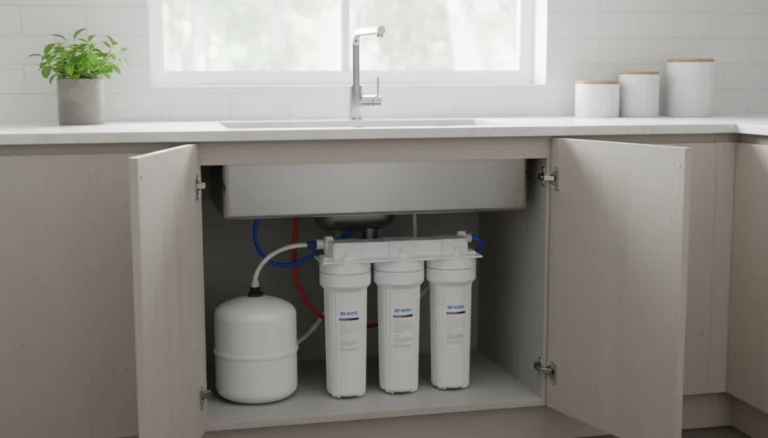
We moved away from bulky storage tanks years ago. Traditional RO systems store water in a tank where it can sit for hours, potentially leading to bacterial growth or “stale” taste before it even hits your glass. A tankless water filter with alkaline stage produces water on demand. This design frees up massive amounts of space under your kitchen cabinet and ensures that every drop passing through the remineralization filter is fresh. If you are looking to upgrade your kitchen setup, our top water sink purifiers offer compact, tankless profiles that fit almost anywhere.
High Flow Rate Requirements (600-800 GPD)
Speed is non-negotiable for modern households. You shouldn’t have to wait minutes to fill a pot for pasta. We focus on high-capacity systems ranging from 600 GPD to 800 GPD (Gallons Per Day).
- 600 GPD: Delivers approximately 0.42 gallons per minute.
- 800 GPD: Pushes up to 0.6 gallons per minute.
This high flow rate ensures that water moves efficiently through the dense RO membrane and the mineral cartridge without pressure drops, giving you a steady stream of pH-balanced water instantly.
Smart Monitoring and Real-Time TDS
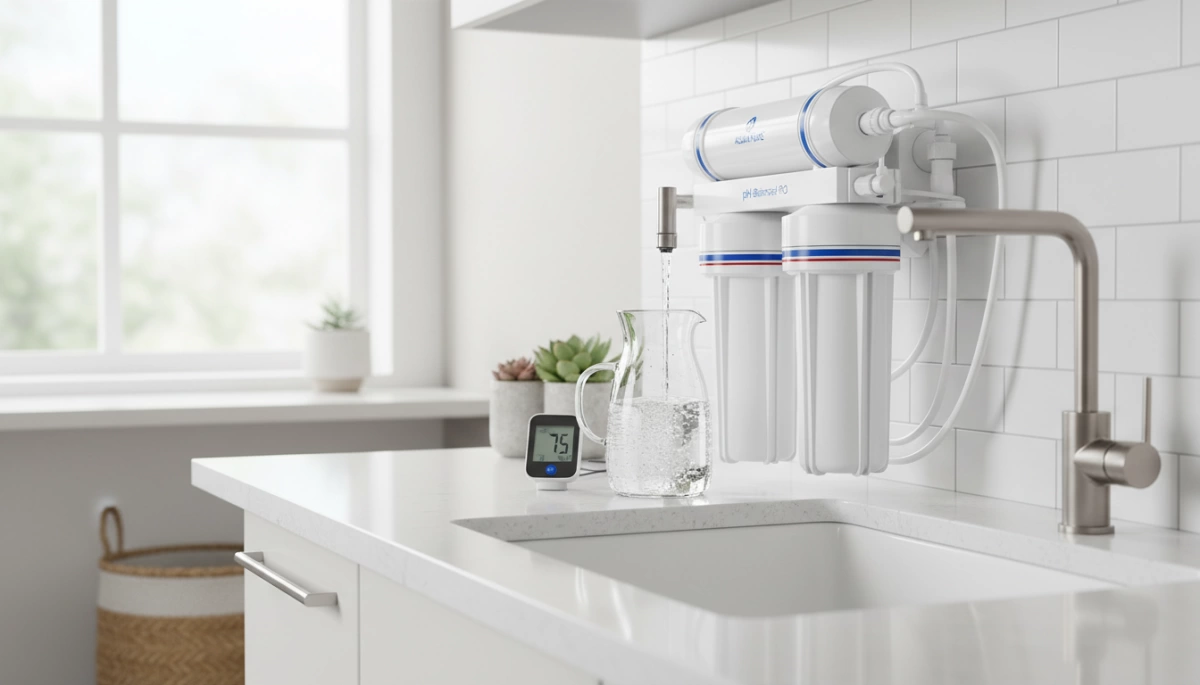
Guesswork has no place in water filtration. Our systems integrate a smart faucet water quality monitor that displays your TDS (Total Dissolved Solids) levels in real-time. This lets you see the filtration performance immediately. You will know exactly when the RO membrane is effectively removing contaminants and when the post-filter is adding beneficial minerals back in. We also include filter life indicators on the unit or faucet, so you know precisely when to swap cartridges to maintain that ideal alkaline pH.
Water Efficiency and Drain Ratios
Old-school reverse osmosis units were notorious for wasting water, often dumping 3 or 4 gallons down the drain for every 1 gallon of clean water produced. We utilize advanced internal pumps and membrane technology to achieve a superior 2:1 pure-to-drain ratio. This means for every 2 cups of pure, mineral-rich water you drink, only 1 cup of wastewater is generated. It is a much more sustainable approach to acidic water correction that keeps your utility bills low.
| Feature | Traditional RO System | Modern DripLife pH Balanced RO |
|---|---|---|
| Design | Bulky Storage Tank | Compact Tankless |
| Flow Rate | Slow (50-100 GPD) | Fast (600-800 GPD) |
| Waste Ratio | 1:3 (High Waste) | 2:1 (High Efficiency) |
| Monitoring | None / Manual Testing | Real-Time TDS Display |
| pH Level | Acidic (pH 5-6) | Balanced Alkaline (pH 7.5+) |
Health and Lifestyle Benefits
Switching to a pH balance water filter isn’t just about fixing water chemistry; it is about upgrading your daily wellness routine. When we restore the natural balance of water after the rigorous Reverse Osmosis (RO) process, we transform “dead” water into a functional beverage that supports your body’s needs.
Enhanced Hydration and Micro-Clustering
Standard tap water often contains clumps of water molecules that can be harder for cells to absorb. Our systems focus on producing electrolyte enhanced water that is easier for the body to utilize. Many users report that alkaline water feels “wetter” and more refreshing, allowing for faster rehydration after a workout or a long day.
For those who want this hydration boost without complex plumbing, a countertop alkaline water filter offers an immediate solution to get high-quality, absorbable water anywhere in the kitchen.
Daily Calcium and Magnesium Intake
The primary downside of standard RO is that it strips away everything, including the good stuff. We solve this with calcium and magnesium restoration. By reintroducing these essential minerals, every glass of water contributes to your daily dietary intake.
- Calcium: Supports strong bones and teeth.
- Magnesium: Vital for muscle function and cardiovascular health.
- Potassium: Helps maintain healthy blood pressure levels.
Installing a robust under-cabinet water filter system ensures that your entire family has constant access to mineral-rich water for drinking and cooking, turning your kitchen tap into a health source.
Detoxification and Kidney Support
Your kidneys are the body’s natural filtration system. Feeding them clean, high pH drinking water reduces the workload required to filter out heavy metals like lead and arsenic found in municipal supplies. Furthermore, maintaining a balanced internal pH may help the body flush out acidic waste products more efficiently. While water isn’t a medical cure, drinking ultra-pure, mineralized water is one of the simplest ways to support natural detoxification pathways.
The Smooth Taste Factor
Taste is the most immediate difference you will notice. Acidic water (common in standard RO systems without remineralization) often tastes flat or slightly sour. Healthy hydration minerals like calcium and magnesium neutralize this acidity, resulting in a silky, sweet finish.
Taste Comparison: Standard RO vs. pH Balanced RO
| Feature | Standard RO Water | pH Balanced (Remineralized) Water |
|---|---|---|
| pH Level | 5.0 – 6.5 (Slightly Acidic) | 7.5 – 8.5+ (Alkaline) |
| Mouthfeel | Thin, sometimes “dry” | Smooth, silky, satisfying |
| Flavor Profile | Flat, metallic, or sour | Sweet, crisp, refreshing |
| Coffee/Tea | Can increase bitterness | Enhances natural aromas |
This improved taste profile encourages everyone in the household to drink more water, naturally reducing the consumption of sugary sodas and juices.
Installation and Maintenance Realities
We know the biggest hesitation with upgrading to a pH balance water filter isn’t usually the price—it’s the perceived hassle of installation and upkeep. That is why we engineered our systems to be completely DIY-friendly, eliminating the need for expensive plumbing calls. Most of our tankless RO units are designed with a compact, integrated waterway that minimizes leak points and fits neatly under standard US kitchen cabinets, leaving you plenty of storage space.
Twist-and-Pull Filter Replacement
Gone are the days of wrestling with housing wrenches and spilling water all over your cabinet floor. We utilize a front-loading Twist-and-Pull Filter Replacement design that makes swapping out cartridges as easy as changing a lightbulb. You simply twist the old filter, pull it out, and snap the new one in—all in about three seconds. This user-centric design encourages timely maintenance, ensuring your system consistently delivers the high-quality hydration that distinguishes purified water vs filtered water.
Cartridge Lifespan and Cost Analysis
Maintaining a pH balance water filter shouldn’t break the bank. Our systems use high-capacity composite filters to extend service life and reduce waste. Instead of monthly changes, our maintenance schedule is designed for the modern homeowner:
- Composite Pre-Filters (PCB): Last 6–12 months depending on usage.
- RO Membrane: Lasts up to 24 months.
- Post-Filter/Remineralizer: Typically replaced every 12 months to ensure consistent alkalinity.
When you crunch the numbers, the ph balancing filter cartridge replacement cost averages out to pennies per gallon. Compared to buying bottled alkaline water, which can cost upwards of $2-$3 per bottle, a home system pays for itself rapidly while offering the convenience of on-demand mineralized water right at your sink. Plus, our smart faucets and unit indicators alert you exactly when a change is needed, removing the guesswork entirely.
FAQ: Common Questions About pH Water Filters
When upgrading to a pH balance water filter, it is normal to have a few questions about how the water changes and how to manage the system. Here are the answers to the most frequent inquiries we receive from homeowners looking to improve their water quality.
Does alkaline water taste different?
Yes, and most people find it significantly better. Standard reverse osmosis water is incredibly pure, but because it lacks minerals, it can sometimes taste “flat” or slightly acidic. By using a post-carbon pH balancing filter, we restore essential minerals like calcium and magnesium. This process eliminates that flat sensation, resulting in a smoother, sweeter, and crisper taste often compared to premium bottled mountain spring water.
Is remineralization safe for pets?
Absolutely. Just like humans, pets need clean, hydrated cells to function properly. The calcium and magnesium restoration provided by our systems is beneficial for cats and dogs. It is far superior to giving them tap water loaded with chlorine or heavy metals. However, if your pet has specific health issues or dietary restrictions regarding mineral intake, it is always a good idea to consult your veterinarian.
How do I test my water pH level?
While our smart faucets provide real-time data on TDS reduction (Total Dissolved Solids), testing pH usually requires a separate tool.
- Digital pH Meter: The most accurate method. It gives you a precise numerical reading (e.g., 7.5 or 8.5).
- Reagent Drops: A liquid solution that changes color based on acidity or alkalinity. This is often more reliable than paper strips for water testing.
- Litmus Strips: Quick and cheap, but sometimes difficult to read precisely for drinking water ranges.
For the most consistent results, we recommend testing your water directly from the faucet of your home reverse osmosis water filter after letting it run for a few seconds.