















What Is a Countertop Reverse Osmosis System and How Does It Work?
If you have ever wanted the purity of bottled water without the plastic waste or the hassle of plumbing, a reverse osmosis water filter countertop system is likely the solution you’ve been hunting for. Unlike standard carbon pitchers that rely on gravity and simple chemical adsorption, these systems are essentially miniaturized, high-tech water treatment plants that sit right next to your coffee maker.
I often tell people that these are “plug-and-play” powerhouses. A portable reverse osmosis purifier is a standalone unit that requires electricity but zero plumbing. You simply fill a feed tank with tap water, plug it in, and let the internal high-pressure pump force the water through a series of advanced filters.
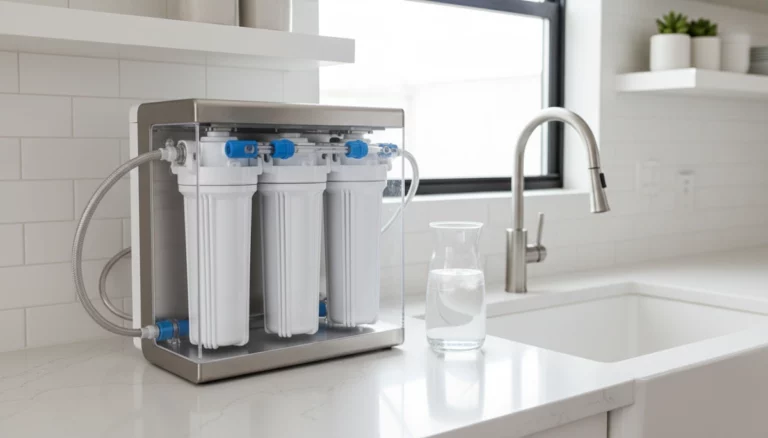
The Core Components of a Countertop RO Unit
To understand why these systems are so effective, we need to look under the hood. A high-quality no installation RO system is engineered with several critical components working in harmony:
- Internal Booster Pump: This is the heart of the system. Unlike under-sink models that rely on your home’s water pressure, countertop units use an electric pump to create the optimal pressure needed to push water through the tight membrane.
- The Filter Cartridges: Most modern units consolidate these into a single, easy-to-change cylinder or separate stages involving sediment and carbon blocks.
- The RO Membrane: The “engine” of purification (more on this below).
- Feed Tank & Pure Water Pitcher: A dual-tank design where you pour raw tap water into the back, and the clean water is dispensed into a carafe or internal reservoir.
Step-by-Step Filtration Process
While models vary, a typical multi-stage countertop purifier generally follows a rigorous 4-to-7 stage cleaning process. Here is how the magic happens once you press the “start” button:
- Pre-Filtration (Sediment & Carbon): The water first passes through a sediment filter to catch rust, dust, and sand. Next, a carbon block removes chlorine, volatile organic compounds (VOCs), and odors that affect taste.
- Reverse Osmosis ( The Heavy Lifting): The pump forces the pre-filtered water through the semi-permeable RO membrane. This is where the separation happens—pure water molecules pass through, while contaminants are rejected and flushed away as wastewater.
- Post-Filtration (Polishing): ly, the water often goes through a final carbon polishing stage or a remineralization filter to balance pH and ensure a crisp, refreshing taste before it hits your glass.
The Power of the 0.0001-Micron Membrane
The real reason we recommend a reverse osmosis water filter countertop over a standard filter is the membrane precision.
These membranes are rated at 0.0001 microns. To put that in perspective, a human hair is about 75 microns wide. This microscopic filtration is tight enough to block virtually everything except pure water molecules.
Here is what this membrane effectively removes:
- Dissolved Solids (TDS): Salts, minerals, and metals that standard filters miss.
- Heavy Metals: Lead, arsenic, and mercury are physically too large to pass through the membrane pores.
- Emerging Contaminants: It creates a barrier against fluoride, bacteria, viruses, and even microplastics.
By utilizing this technology, you aren’t just improving the taste; you are fundamentally stripping the water down to its purest form.
Why Choose a Countertop RO System Over Other Water Filters?
When I look at the current water filtration market in the U.S., the shift toward countertop reverse osmosis water filter systems is undeniable. You might be wondering why you should upgrade from a standard fridge pitcher or why you shouldn’t just install a permanent system under the sink. The answer usually comes down to a balance of purification power and flexibility.
Superior Contaminant Removal vs. Standard Pitchers
The biggest misconception I see is that all filters do the same job. They don’t. Most standard gravity-fed pitchers rely on simple activated carbon. They are great for removing chlorine taste and odors, but they often let the dangerous stuff pass right through.
A PFAS removal countertop filter equipped with RO technology works on a molecular level. It uses pressure to force water through a semi-permeable membrane, capturing contaminants that standard filters miss. If you are serious about understanding reverse osmosis (RO) water and the health benefits it brings, the difference in purity is night and day.
Here is how they stack up against common alternatives:
| Feature | Standard Carbon Pitcher | Countertop RO System | Under-Sink RO System |
|---|---|---|---|
| Filtration Level | Basic (Taste & Odor) | Premium (0.0001 micron) | Premium (0.0001 micron) |
| Removes TDS? | No | Yes (90-99%) | Yes (90-99%) |
| Removes PFAS/Lead? | Varies (Often No) | Yes | Yes |
| Installation | None | Plug-and-Play (Zero Plumbing) | Complex (Drilling required) |
| Portability | High | High | None |
No-Install Convenience: The Renter-Friendly Choice
For many of us living in apartments, renting homes, or staying in dorms, drilling a hole in the countertop for a faucet is simply not an option. This is where the no installation RO system shines. It is a completely renter friendly water purifier because it requires zero modifications to your plumbing.
You simply unbox it, plug it into a standard electrical outlet, fill the feed tank, and you have purified water. This zero plumbing water filter design also makes it a portable reverse osmosis purifier. If you move apartments or want to take pure water with you in an RV or to a vacation home, the system moves with you.
Ideal Scenarios for Countertop RO
Based on user feedback and market trends, these systems are the “goldilocks” solution for specific situations:
- Renters and Students: Get top-tier water without risking your security deposit.
- RVs and Van Life: Compact models fit on small counters and ensure safe drinking water from questionable campground hookups.
- Older Homes: If you have old pipes that might leach lead but don’t want to pay for a whole-house repiping, this is a point-of-use safety net.
- Small Kitchens: Eliminates the need for bulky under-sink tanks that eat up storage space.
Limitations to Consider
While I am a huge advocate for these systems, I believe in total transparency regarding the trade-offs. A countertop reverse osmosis water filter is a standalone appliance, which means it has constraints that a plumbed-in system does not:
- Daily Capacity: You have to manually refill the feed tank. It’s not “endless” water like a faucet.
- Power Requirement: Unlike gravity pitchers, these systems need electricity to run the internal pump.
- Wastewater Generation: All RO systems produce wastewater (brine) containing the rejected contaminants. On a countertop unit, this stays in the tank and must be discarded before refilling.
However, for those prioritizing health and mobility, these minor maintenance steps are a small price to pay for clinical-grade hydration.
Would you like me to detail the specific features you should look for, such as pure-to-drain ratios and smart monitoring, in the next section?
Key Features to Evaluate When Shopping for a Countertop RO System
When you are in the market for a reverse osmosis water filter countertop unit, the spec sheet can look like alphabet soup. I’ve seen plenty of flashy marketing terms that don’t mean much in the real world. To get the best value and performance, you need to focus on the features that actually impact your daily water quality and convenience. Here is the breakdown of what really matters.
Filtration Power and Verified Certifications
Don’t just look for “RO.” Look for a multi-stage countertop purifier that goes beyond the basic membrane. The best systems typically feature 4 to 7 stages of filtration.
- Pre-filters: Sediment and carbon blocks to stop large particles and chlorine.
- RO Membrane: The heart of the system (look for 0.0001-micron rating).
- Post-filters: Usually activated carbon or remineralization stages to polish the taste and balance pH.
Crucially, check for third-party validations like NSF/ANSI 58 (specific to RO performance) or Gold Seal certification from the WQA. These aren’t just stickers; they are proof that the system removes the lead, PFAS, and dissolved solids it claims to.
Water Efficiency: The Pure-to-Drain Ratio
Old-school RO systems were notorious water wasters, sometimes dumping 4 gallons down the drain for every 1 gallon of pure water. In 2026, you should demand a low waste RO system.
Look for a ratio of 2:1 or even 3:1 (pure-to-drain). This means for every 3 cups of clean water you drink, only 1 cup is discarded as brine. High efficiency doesn’t just lower your water bill; it means you spend less time refilling the feed tank.
Smart Monitoring and User Interface
We live in a digital age, and your water filter should keep up. A smart countertop water filter takes the guesswork out of maintenance.
- Real-time TDS Monitoring: A TDS monitoring water filter displays the “Total Dissolved Solids” of your water instantly. You can see the number drop from 300+ (tap water) to under 20 (purified) in real-time.
- Filter Life Indicators: Avoid the “guessing game” or calendar reminders. Smart indicators track actual usage and alert you exactly when a swap is needed.
Advanced Tech: UV Sterilization and Temperature
For those who want extra peace of mind, a UV countertop RO is a game changer. These systems use ultraviolet light in the storage tank or dispensing nozzle to prevent bacteria growth—a common concern with standing water.
Additionally, consider if you need temperature control. While basic models just dispense ambient water, premium units offer instant hot water (great for tea/coffee) or chilled water.
Maintenance and Build Quality
ly, consider the long-term ownership. You want an easy filter replacement RO design—ideally, “twist-and-pull” cartridges that take seconds to change without tools. Unlike complex under-sink setups where you might need a reverse osmosis storage tank guide to troubleshoot pressure issues, countertop units should be self-contained and user-friendly.
Feature Evaluation Checklist
| Feature | Standard Requirement | Premium/Ideal Spec |
|---|---|---|
| Filtration | 3-Stage RO | 5-in-1 Composite with Remineralization |
| Drain Ratio | 1:1 | 3:1 (High Efficiency) |
| Monitoring | Basic LED Light | Real-time TDS Display & App Connectivity |
| Sterilization | None | UV-C LED Sterilization |
| Filter Change | Requires Wrench | Quick-Twist (3 seconds) |
Selecting the right unit comes down to balancing these features with your budget and kitchen space. Prioritize the membrane quality and waste ratio first; everything else is a luxury that adds convenience.
Top Countertop Reverse Osmosis Systems in 2026 – Reviewed and Compared
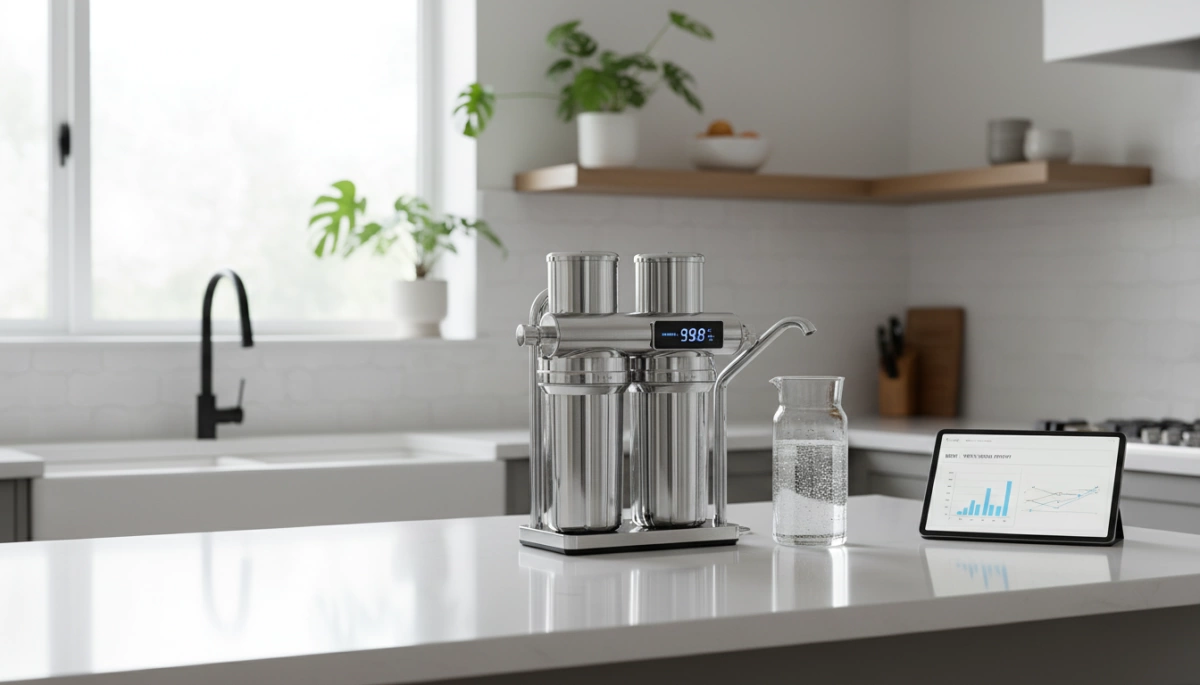
As a manufacturer deeply embedded in the water filtration industry, I’ve seen the technology evolve from bulky, slow units to sleek, high-tech appliances. When we look at the best countertop RO 2026 candidates, we aren’t just looking at who has the prettiest design. We judge these systems based on three non-negotiable criteria: performance (how much junk it actually removes), usability (how easy it is to set up and change filters), and value (long-term cost of ownership).
In the current US market, the top contenders all share a few traits: they require zero plumbing, offer rapid water dispensing, and effectively reduce TDS (Total Dissolved Solids). However, the real difference lies in the details—specifically, water efficiency and smart features.
Spotlight on Driplife M-Series: The Smart Choice
I am incredibly proud to highlight our own Driplife M-series, which we designed specifically to address the common complaints users have with older reverse osmosis water filter countertop models. We know that American households hate water waste and complicated maintenance, so we engineered the M-series to be a truly smart countertop water filter.
Here is why the M-series is leading the pack in 2026:
- Ultra-Low Waste (3:1 Pure-to-Drain Ratio): Most older systems waste 3 cups of water for every 1 cup of pure water they make. We flipped that script. Our 3:1 drain ratio RO technology means you get 3 cups of pure water for every 1 cup of wastewater. It is one of the most efficient ratios on the market.
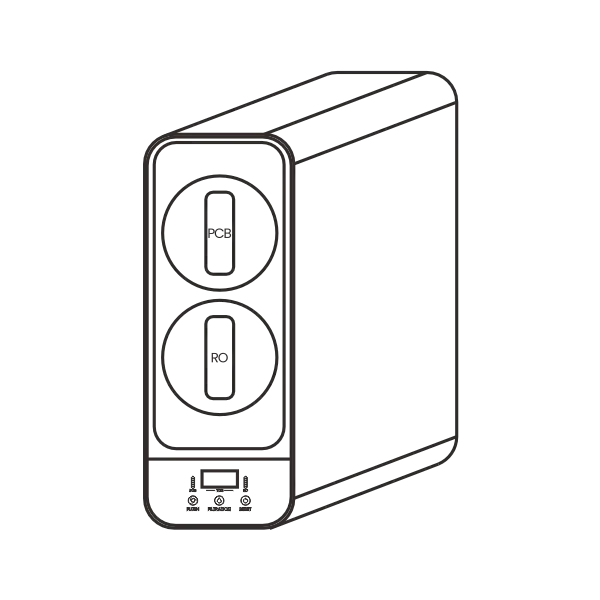
- 5-in-1 Integrated Filter: We consolidated the filtration process. Instead of juggling multiple cartridges, you get a single, powerful composite filter that handles sediment, carbon, and the RO membrane. This simplifies changes and ensures broad-spectrum protection, similar to how a dedicated chlorine removal filter works but with added filtration layers for heavy metals and dissolved solids.
- UV Countertop RO Protection: Stagnant water can be a breeding ground for bacteria. We integrated UV sterilization to ensure the water in your tank stays pristine until the moment you pour it.
- Smart TDS Monitoring: You shouldn’t have to guess if your water is clean. The M-series features a built-in display that shows you the water quality in real-time. If you are new to water metrics, learning how to use a TDS tester can help you verify just how effectively these systems are working.
Side-by-Side Comparison: How We Stack Up
To help you decide which portable reverse osmosis purifier fits your lifestyle, here is a comparison of the Driplife M-series against standard market alternatives found in big-box stores.
| Feature | Driplife M-Series | Standard Countertop RO | Gravity-Fed Filters |
|---|---|---|---|
| Filtration Technology | 5-in-1 RO + UV Sterilization | Multi-stage (Separate filters) | Carbon / Ion Exchange |
| Pure-to-Drain Ratio | 3:1 (High Efficiency) | 1:1 or 1:3 (High Waste) | N/A (No waste, but less pure) |
| Setup Required | Plug & Play (No Install) | Plug & Play | Pour-through |
| Smart Monitoring | Real-time TDS & Filter Life | Simple Light Indicator | None |
| Contaminant Removal | 99% (PFAS, Lead, Fluoride) | 90-99% | Reduces Chlorine/Taste |
| Filter Lifespan | Long-lasting (12-24 months) | 6-12 months | 2 months |
When choosing a no installation RO system, look beyond the initial price tag. A system with a high pure-to-drain ratio and long-lasting filters, like our M-series, will save you significant money and hassle over just a year of use. We built this system to be the ultimate renter friendly water purifier—powerful enough for pure water, but portable enough to take with you when you move.
Countertop RO vs. Under-Sink RO: Which Is Right for You?
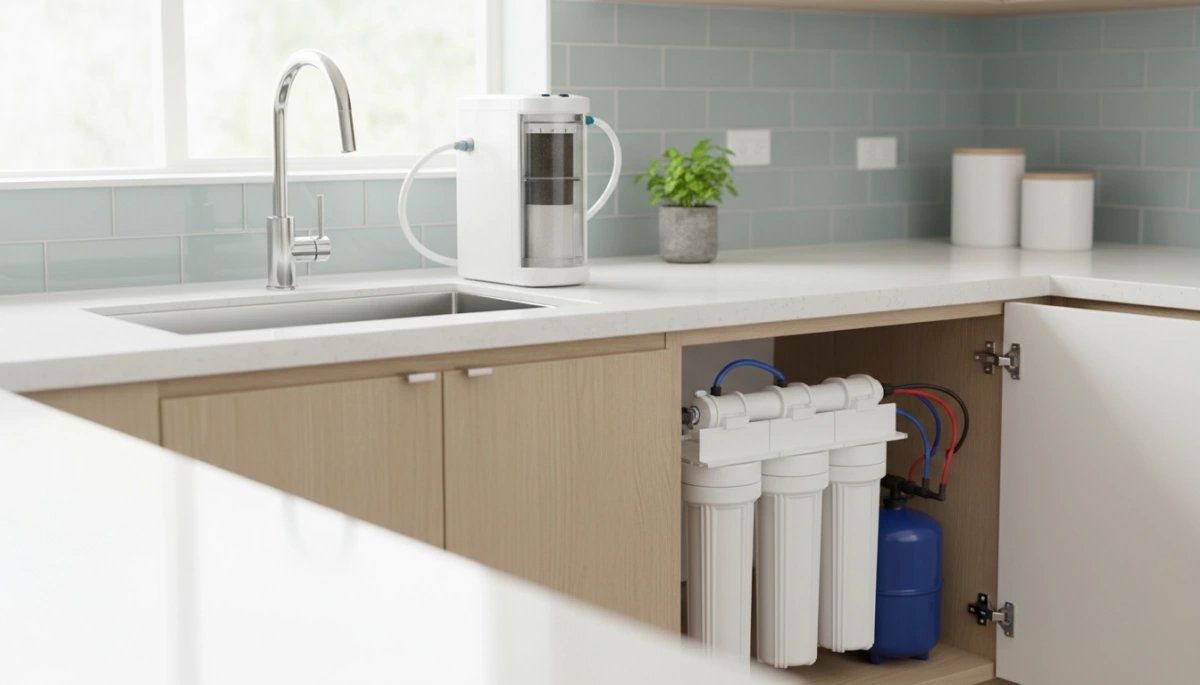
Choosing between a reverse osmosis water filter countertop unit and a traditional under-sink system isn’t just about water quality—it’s about your lifestyle. I’ve seen customers struggle with this decision constantly. Both methods deliver exceptional purity, stripping away contaminants that standard pitchers leave behind. However, the ownership experience is completely different.
To help you decide, let’s break down the realities of living with a portable reverse osmosis purifier versus a permanent plumbing fixture.
Portability and Setup: The “Zero Plumbing” Advantage
The biggest selling point for a countertop model is right in the name: it requires absolutely no installation. For anyone living in an apartment, dorm, or RV, this is a game-changer. A traditional under-sink RO system requires drilling into your countertop for a dedicated faucet and tapping into your cold water line. If you are renting, that is usually a lease violation.
A no installation RO system is truly plug-and-play. You unbox it, plug it into a standard electrical outlet, fill the feed tank, and you have purified water. It is the ultimate renter friendly water purifier. If you move to a new house next year, you simply unplug the machine and take it with you. Under-sink systems, by contrast, are generally considered permanent fixtures that you leave behind or pay a plumber to uninstall.
Performance and Output Comparisons
Historically, under-sink systems had the edge on speed because they use a pressurized storage tank. However, modern countertop technology has closed that gap significantly. While a zero plumbing water filter might require you to fill a feed tank manually (unless you get a model that hooks to a faucet diverter), the dispensing speed on top-tier models is now incredibly fast.
Here is how the performance stacks up:
- Under-Sink: unlimited capacity (as long as the tank refills), generally higher flow rate at the faucet, but requires cabinet space for a bulky tank and filters.
- Countertop: Limited by the size of the feed tank (usually 1–1.5 gallons), but offers features under-sink units lack. For instance, many of these units function as advanced smart water purifiers, giving you real-time TDS (Total Dissolved Solids) readings and heating options that hidden under-sink tanks cannot provide.
Cost of Ownership Over Time
When we look at the financials, the reverse osmosis water filter countertop often wins on upfront costs because there are no installation fees. You don’t need to buy extra tubing, fittings, or hire a professional.
However, consider the long-term consumables:
- Filter Changes: Countertop units typically use “all-in-one” composite filters. These are incredibly easy to change (taking about 30 seconds) but can sometimes be slightly more expensive than the generic cartridges used in old-school under-sink systems.
- Efficiency: Look for a high-efficiency unit. Older RO technology wasted a lot of water. A modern countertop water dispenser RO should aim for a low drain ratio, saving you money on your water bill compared to inefficient traditional systems.
Quick Comparison: Which Fits Your Home?
| Feature | Countertop RO System | Under-Sink RO System |
|---|---|---|
| Installation | None (Plug & Play) | Complex (Drilling required) |
| Portability | High (Move it anywhere) | Low (Permanent fixture) |
| Water Source | Manual refill of feed tank | Direct water line connection |
| Space Required | Counter space | Cabinet space |
| Best For | Renters, RVs, Small Kitchens | Homeowners, Large Families |
If you own your home and have a large family consuming gallons of water an hour, an under-sink system might make sense. But for versatility, ease of use, and zero hassle, the countertop route is the clear winner for the modern household.
Next Step: Are you curious about how the wastewater ratio impacts your daily usage? I can break down exactly how to manage the “drain water” efficiently in the next section.
Countertop RO vs. Other Countertop Alternatives

When you start shopping for water filtration, the sheer number of options can get overwhelming. You’ll see $30 pitchers sitting next to $400 machines, and it’s not always immediately clear where that extra money goes. As someone who deals with water quality daily, I can tell you that not all “countertop filters” are created equal. The difference between a standard filter and a portable reverse osmosis purifier is night and day regarding what actually gets removed from your water.
RO vs. Gravity-Fed Pitchers
We’ve all owned a gravity-fed pitcher at some point. They are inexpensive, easy to find at any big-box store, and they do a decent job of improving taste by reducing chlorine. However, they rely entirely on gravity to pull water through a granular activated carbon filter.
Because there is no pressure forcing the water through a dense membrane, these pitchers act more like a sieve than a purifier. They generally cannot remove dissolved solids (TDS), heavy metals, or bacteria. A multi-stage countertop purifier using RO technology, on the other hand, uses an internal pump to force water through a semi-permeable membrane. This process strips away contaminants that gravity filters simply let pass through.
RO vs. Ultrafiltration and Carbon-Block Systems
Stepping up from pitchers, you have solid carbon block filters and ultrafiltration (UF) units. These are definitely better than standard pitchers. They are effective at removing sediments, chlorine, and volatile organic compounds (VOCs). They can even filter microplastics from water, which is a growing concern for many American households.
However, neither carbon blocks nor UF membranes are tight enough to stop dissolved minerals or the smallest chemical compounds. If your goal is a PFAS removal countertop filter that also tackles arsenic, fluoride, and nitrates, carbon and UF usually fall short. They improve water quality, but they don’t purify it to the molecular level like RO does.
When Basic Filters Suffice and When True RO is Essential
So, do you really need a zero plumbing water filter with a reverse osmosis engine? Here is a quick breakdown to help you decide:
Stick with a Carbon/Gravity Filter if:
- Your local municipal water report is clean, and you just hate the taste of chlorine.
- You are on a very tight budget (under $50).
- You want to retain hard minerals like calcium and magnesium in the water and don’t mind the higher TDS.
Upgrade to a Countertop RO System if:
- Safety is paramount: You live in an area with old pipes (lead risk) or agricultural runoff (nitrates).
- Total purity: You want to reduce TDS to near zero and remineralize the water yourself.
- Emerging contaminants: You are concerned about “forever chemicals” (PFAS) or pharmaceuticals in the water supply.
- Soft water taste: You prefer the crisp, light taste of completely pure water for coffee, tea, or cooking.
Quick Comparison: Filtration Capabilities
| Feature | Gravity Pitcher | Carbon/Ultrafiltration | Countertop RO System |
|---|---|---|---|
| Removes Chlorine/Taste | Yes | Yes | Yes |
| Removes Microplastics | Limited | Yes | Yes |
| Removes Heavy Metals (Lead) | Limited/No | Varies | Yes (High Efficiency) |
| Removes Dissolved Solids (TDS) | No | No | Yes |
| Requires Electricity | No | No | Yes (for pump) |
Would you like me to help you create a comparison guide for the “Installation and Maintenance” section next?
Installation, Maintenance, and Long-Term Ownership Tips
Buying a reverse osmosis water filter countertop model is often driven by one major factor: convenience. Unlike under-sink units that require drilling into pipes and complex plumbing, these systems are designed for immediate use. However, to keep that water tasting crisp and contaminant-free for years, you need to handle the setup and maintenance correctly.
Unboxing and Setup: The “No Installation” Advantage
The beauty of a zero plumbing water filter is the speed of setup. For most modern units, you can go from unboxing to dispensing water in under five minutes. Since these systems are self-contained, there is no need to shut off your main water valve or hire a professional.
- Placement: Find a flat surface with access to a standard electrical outlet. Ensure there is enough clearance above the unit to remove the water tank.
- Flushing: Before drinking the first glass, flush the system. Fill the feed tank, let the machine filter it, and discard the full batch of purified water. Repeat this 2–3 times to rinse the new filters and internal tubing.
- Calibration: If your unit has a smart screen or TDS monitoring water filter features, this is the time to sync it or set your preferred dispensing volume.
Easy Filter Replacement and Lifespan
Long-term ownership costs depend heavily on filter longevity. A high-quality reverse osmosis water filter countertop unit usually utilizes a multi-stage process condensed into one or two cartridges for an easy filter replacement RO experience.
Typical Replacement Schedule:
- PPC (Composite Pre-filter): Every 6–12 months. This protects the delicate RO membrane from large particles and chlorine.
- RO Membrane: Every 12–24 months. This is the heart of the system that handles the heavy lifting. If you are concerned about specific heavy metals, it is crucial to understand how water filters filter out lead to ensure your membrane is functioning correctly.
- Post-Carbon: Often integrated with the RO or PPC filter to polish the taste.
Pro Tip: Always reset the filter life indicator on the display after swapping a cartridge to ensure accurate tracking.
Wastewater Handling and Efficiency
Every true RO system generates wastewater (brine) containing the concentrated contaminants rejected by the membrane. While older systems wasted a lot of water, a modern low waste RO system typically boasts a 2:1 or even 3:1 pure-to-drain ratio.
Do not pour the wastewater back into the feed tank. Recirculating concentrated contaminants will rapidly clog your filters and ruin the internal pump. Instead, use this “grey water” to water non-edible plants, mop floors, or pre-rinse dishes.
Troubleshooting Common Issues
To get the most out of your compact RO system, keep an eye on performance indicators.
- Slow Flow Rate: Usually indicates a clogged pre-filter or low water temperature (RO membranes work slower in cold water).
- High TDS Readings: If the Total Dissolved Solids reading creeps up significantly, your RO membrane has likely reached the end of its life.
- Unusual Taste: If the water tastes stagnant, empty the storage tank and run a fresh cycle. If the taste persists, the post-carbon filter may be saturated.
For a broader look at how different purification methods compare before you commit to a maintenance schedule, you might want to read our guide on what defines the best water filter for your specific household needs.
Frequently Asked Questions: Countertop Reverse Osmosis Insights
Does a countertop RO remove PFAS, fluoride, and lead?
Absolutely. This is the main reason people upgrade to a reverse osmosis water filter countertop unit. Unlike standard carbon pitchers that mostly target taste and chlorine, a true RO membrane has a pore size of 0.0001 microns. This acts as a microscopic gatekeeper. It effectively blocks up to 99% of dissolved solids, including:
- Persistent chemicals: Like PFAS (“forever chemicals”).
- Heavy metals: Lead, arsenic, and mercury.
- Additives: Fluoride (which is very difficult for standard filters to remove).
If you are looking for a reliable PFAS removal countertop filter, RO technology is the gold standard.
What is a good pure-to-drain ratio for these systems?
In the world of RO, efficiency is everything. Older systems wasted a lot of water (often 4 gallons wasted for every 1 gallon made). Today, a high-quality low waste RO system should offer a drain ratio of at least 2:1 or 3:1.
- 3:1 Ratio: You get 3 cups of pure water for every 1 cup of wastewater.
- Why it matters: Since countertop units use a refillable feed tank, a better ratio means you aren’t constantly running back and forth to the sink to refill the tank and dump the wastewater.
How often should filters be replaced?
Maintenance on a portable reverse osmosis purifier is generally straightforward, but timelines vary by component:
- Pre-filters (Sediment/Carbon): Every 6 to 12 months.
- RO Membrane: Every 12 to 24 months (depending on your water hardness).
- Post-filters: Every 12 months.
Most modern “smart” units take the guesswork out of this by including an easy filter replacement RO indicator light that tells you exactly when to swap them out.
Can it produce hot or cold water?
Many premium models are now 3-in-1 dispensers. They provide ambient, boiling hot, and chilled water instantly. This all-in-one convenience is a major selling point for compact kitchens; you get temperature control without needing to install a separate under-sink water chiller or boil a kettle. However, basic entry-level models typically only dispense water at room temperature.
Is electricity required, and how much does it consume?
Yes, virtually every zero plumbing water filter using RO requires electricity.
- The Pump: RO needs pressure to force water through the membrane. Gravity isn’t enough. The internal pump provides this pressure.
- Consumption: The energy usage is very low (similar to a lightbulb) when filtering. If the unit has heating or cooling features, power consumption will be higher, comparable to a coffee maker or small water cooler.
Are countertop RO systems suitable for well water?
They can be, but you need to be careful. A renter friendly water purifier works great on municipal water, but well water often has high levels of iron, manganese, or extreme hardness.
- The Risk: These minerals can clog the RO membrane very quickly.
- The Solution: If your well water is heavily contaminated with sediment or iron, pre-filtering the water before pouring it into the countertop tank is recommended to protect the machine’s lifespan.
of Key Considerations
| Feature | Expectation |
|---|---|
| PFAS/Lead Removal | Yes (90-99%) |
| Efficiency | Look for 2:1 or 3:1 (Pure:Waste) |
| Installation | None (Plug and Play) |
| Maintenance | Annual filter changes typically |