















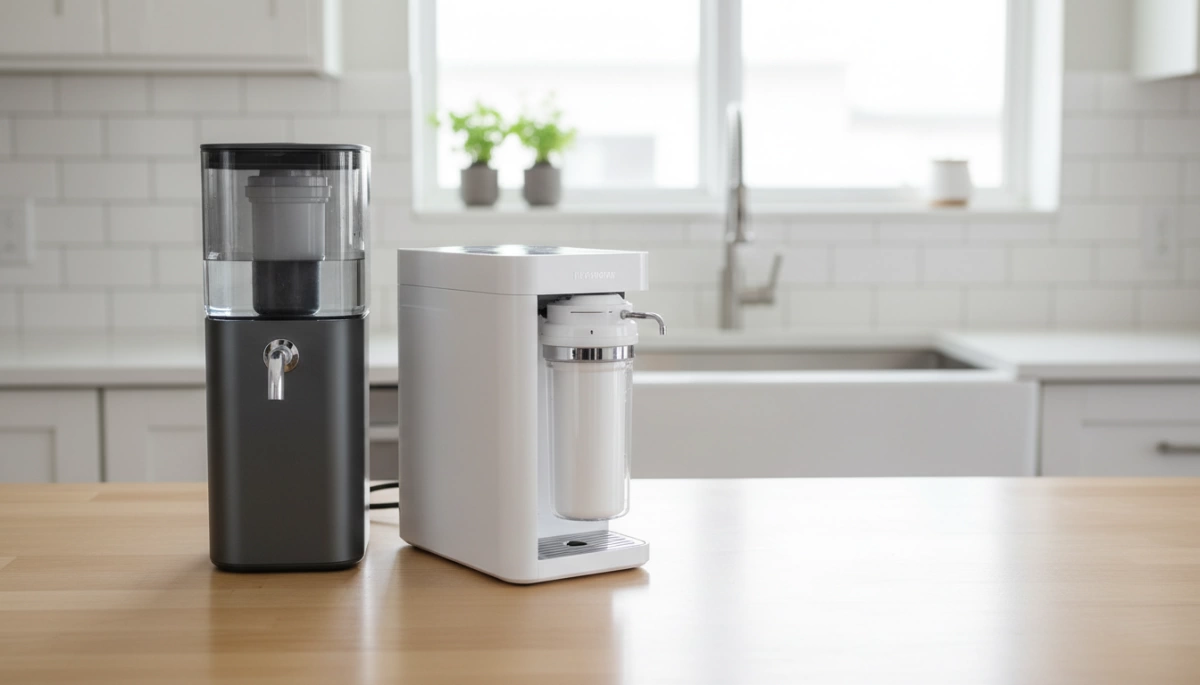
Understanding the Basics: Water Filter Dispenser vs Countertop RO
If you’re worried about what’s really in your tap water—but also watching your budget and counter space—it helps to first understand the basics of a water filter dispenser vs countertop RO system. Both improve water quality, but they do it in very different ways.
Water Filter Dispenser Basics (Gravity + Carbon)
A water filter dispenser is the simple, set-it-on-the-counter solution most people start with. It usually combines gravity flow with carbon-based filtration.
Most countertop water filter dispensers use:
- Gravity-fed flow – You pour tap water into the top, and gravity pulls it through the filters into a lower tank. No electricity, no pressure line.
- Carbon filter stages – Activated carbon reduces chlorine, bad taste, and odor, and captures basic sediments like rust, sand, and some micro‑particles.
- Simple multi-stage design – Some units add a sediment pre-filter or a small resin layer to target scale, but they’re still carbon filter dispenser systems at the core.
What they’re generally good at:
- Making city water taste and smell better
- Reducing chlorine and visible particles
- Giving you “cleaner‑tasting” water for everyday drinking
What they usually don’t do well:
- Deep TDS reduction (Total Dissolved Solids like salts, heavy metals, and many dissolved contaminants)
- Reliable removal of fluoride, PFAS, nitrates, many heavy metals, or microbes
Think of a water filter dispenser as a basic countertop water purifier: good for comfort and taste, but not a full barrier against more serious contaminants.
Countertop RO Basics (Membrane + Pre/Post Filters)
A countertop RO system is more advanced. RO stands for reverse osmosis—a process that forces water through a semi-permeable membrane that blocks most dissolved substances.
A typical countertop water purifier comparison looks like this on the RO side:
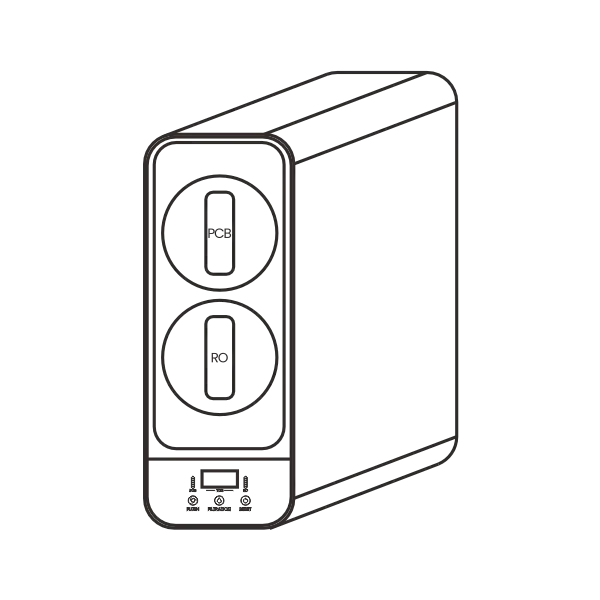
- Pre-filters – Sediment and carbon stages that protect the RO membrane by removing chlorine, bigger particles, and organic compounds.
- RO membrane – The core stage. This is where you see big TDS reduction in countertop systems, cutting out a wide range of dissolved contaminants.
- Post-filters – Often carbon or remineralization stages to polish taste, add back healthy minerals, or adjust pH.
What countertop RO can remove (when properly certified):
- Up to 90–99% of TDS, including many heavy metals, fluoride, arsenic, nitrates
- Many PFAS, pesticides, and industrial chemicals (depending on the exact membrane and certifications)
- A high percentage of bacteria and some viruses (though for full microbiological safety, you want proven, tested systems and ideally UV add-ons)
So while a carbon-based dispenser smooths out taste, reverse osmosis vs carbon filter dispenser is a different category of protection. RO is a purification step, not just basic filtration.
Key Differences in How They Work and What They Remove
Here’s the core contaminant removal comparison RO vs dispenser in plain terms:
Filtration method
- Dispenser: gravity + carbon; mostly surface-level adsorption and basic capture
- Countertop RO: pressure-driven membrane + multiple stages for deeper purification
What they mainly target
- Dispenser: chlorine, taste, odor, some sediments
- Countertop RO: TDS, heavy metals, fluoride, PFAS, many chemicals, plus better microbial reduction
Water quality outcome
- Dispenser: Better-tasting tap water, but similar mineral content and TDS
- Countertop RO: Much lower TDS, “lighter” tasting water, closer to purified or bottled water quality
If your main worry is “my water tastes like a swimming pool”, a dispenser can help. If your worry is “what invisible stuff is in my water that I can’t see or taste?”, countertop RO is the stronger tool.
When a Basic Dispenser Is “Good Enough” vs When RO Wins
From a buyer preference analysis perspective, you don’t always need the most advanced tech. I position my own countertop solutions around actual needs, not just specs.
A basic water filter dispenser is usually “good enough” when:
- You’re on treated city water that already meets standards, but you hate the taste.
- You’re renting, on a tight budget, and want no-install water filter options.
- You need something light, portable, and simple for a small household or dorm.
- You mainly care about taste, odor, and convenience, not maximum contaminant removal.
A countertop RO water purifier makes more sense when:
- Your city or well water has known issues: high TDS, heavy metals, fluoride, or PFAS.
- You have kids, are health-focused, or drink a lot of water daily and want a deeper safety margin.
- Someone in your home is pregnant, immunocompromised, or particularly sensitive to contaminants.
- You want a premium vs basic countertop filters experience—clear TDS drop, cleaner taste, and more tech-forward features.
In short: a water filter dispenser is a smart, low-commitment starter. A countertop RO is a long-term, higher-protection solution when water quality and health are top priorities.
Installation and Setup Convenience: Water Filter Dispenser vs Countertop RO
When I compare installation convenience in a water filter dispenser vs countertop RO, the first big win goes to the simple dispenser. Most gravity-fed or carbon filter dispensers are truly plug-and-play: you unbox, rinse the reservoir and filter, snap the cartridge into place, fill the top tank with tap water, and let gravity do the work. There’s no plumbing, no tools, and no landlord approval. For renters, students, or anyone in an apartment with strict rules, a basic countertop water filter dispenser is one of the easiest no-install water filter options you can get.
Countertop reverse osmosis units are still countertop-friendly, but they do ask for a bit more effort on day one. With a typical countertop RO system, you’ll:
- Connect a short feed line to a faucet adapter or a dedicated inlet on your sink
- Run a flushing cycle to clean out carbon fines and air from the filters
- Prime the RO membrane and any post-filters, usually by filling and draining the tank once or twice
Good units walk you through this with clear labels and simple step-by-step instructions, and modern tankless countertop RO designs (like what we focus on in our next-generation tankless RO roadmap) reduce the hassle by using quick-connect tubing and color-coded ports. Once you’ve done that first setup and flush, everyday use is basically as easy as pressing a button or setting a dispensing volume.
If you want the least commitment possible, both categories now offer no-install countertop water purifier options. On the dispenser side, you’ve got self-contained pitchers and dispensers that live anywhere on the counter or in the fridge. On the RO side, there are fully self-contained, tankless countertop RO purifiers that draw from a refillable internal reservoir instead of hard-plumbing to your tap—ideal if you can’t modify your faucet or you move often. Here, details like quick-change filter cartridges and secure connection types (the kind we compare in our guide to filter cartridge connection types) make a big difference in how “easy” the system feels over time.
In day-to-day life, setup time and effort directly affect your satisfaction. If the system is a pain to hook up, you’ll use it less, skip filter changes, or revert to bottled water. For many U.S. households, a low-friction, renter-friendly dispenser is enough to boost daily hydration and cut plastic waste. For families or health-focused buyers willing to spend a bit more time up front, a countertop RO system with intuitive installation and simple maintenance delivers a stronger performance payoff without feeling like a mini construction project.
Space Efficiency and Countertop Footprint: Water Filter Dispenser vs Countertop RO
When I compare a water filter dispenser vs countertop RO for U.S. kitchens, space is usually the deal-breaker. Most gravity-fed water filter dispensers are pretty simple: a vertical pitcher or tank that sits on the counter or in the fridge, taking up about the same footprint as a coffee maker. They’re light, easy to move, and you can tuck them into a corner or next to the fridge without reworking your whole layout. That makes them a strong fit for renters, studio apartments, or anyone trying to keep clutter off already packed countertops.
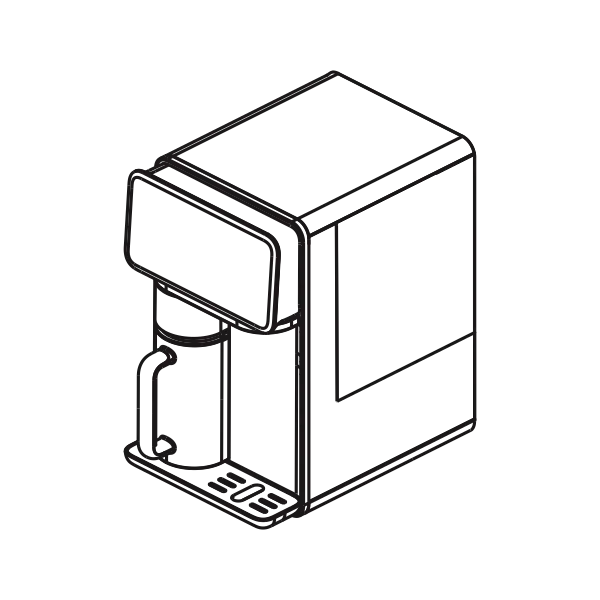
Countertop RO systems are bulkier, but newer designs are getting smarter about space. A traditional countertop RO unit might be closer to a compact espresso machine, with a housing for filters, a built-in tank, and sometimes a hot/cold water feature. Tankless countertop RO benefits are clear here: by removing the internal storage tank, we can shrink the depth, slim down the body, and still deliver fast flow and strong TDS reduction in countertop systems. That’s how modern countertop water purifiers fit comfortably between a stove and sink or under upper cabinets without feeling oversized.
Layout matters just as much as size. Vertical water filter dispensers work well when you have more height than width, like in narrow galley kitchens or on skinny apartment counters. Horizontal-style RO units, especially ones with a lower, wider profile, can slide under cabinets or share space with a microwave or toaster oven. For many renters looking at space-saving water purification, the best choice comes down to this:
- If you want something you can lift and store away, a basic gravity dispenser wins.
- If you want a permanent “water station” that replaces a kettle, pitcher, and bottled water, a compact countertop RO is the better fit.
My goal with our own countertop water purifier designs is to balance compact size with real-world capacity, features, and usability. That means enough tank volume or flow rate to serve a family, intuitive touch controls, and smart internal routing so filtration stages don’t eat up extra inches. When I add features like taste-boosting post-filters, I lean on space-efficient tech similar to the post-filtration taste optimization technology in countertop RO systems, so you’re not trading half your counter for better water.
Filtration Performance and Contaminant Removal Comparison
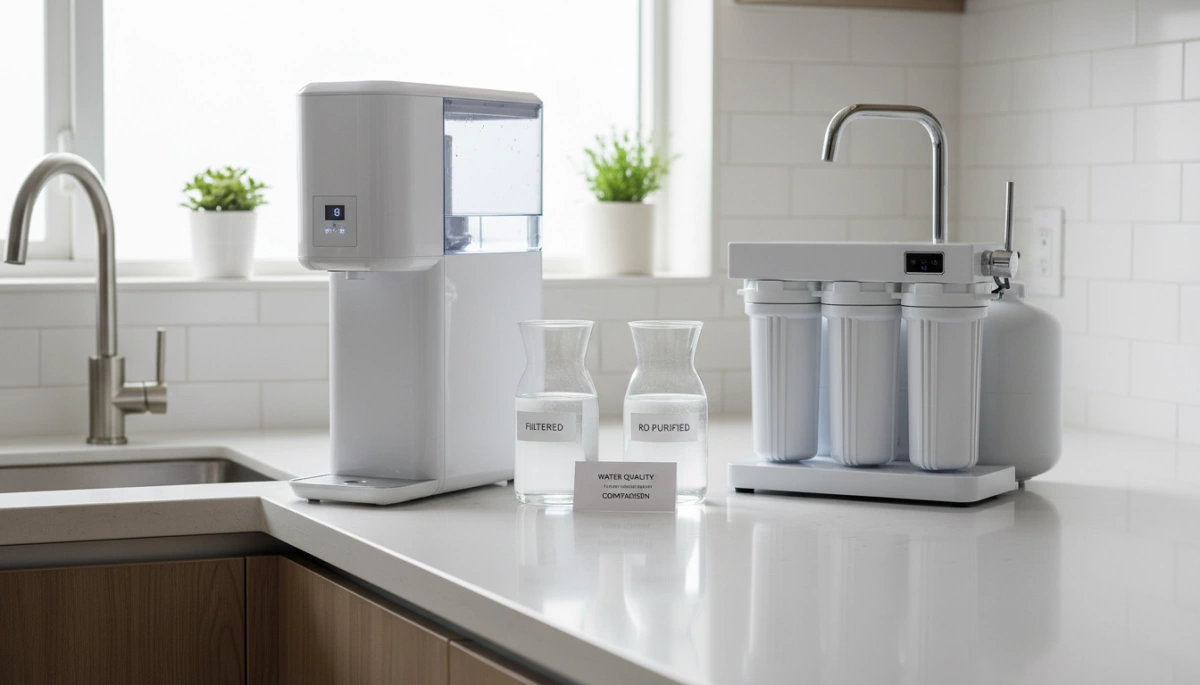
When I compare a water filter dispenser vs countertop RO in real-world use, the gap in filtration performance is big. Here’s the simple breakdown.
What A Water Filter Dispenser Usually Handles
Most countertop water filter dispensers use gravity and carbon-based cartridges:
- Targets: chlorine, bad taste, odor, some sediment, and rust
- Helps with: basic particulates (sand, dirt), some volatile organic compounds (VOCs)
- Often rated for: improving taste and smell, not deep purification
- TDS: usually does not reduce Total Dissolved Solids (TDS) in a major way
In short, a dispenser is about “make tap water taste better,” not “strip out most contaminants.”
What A Countertop RO System Removes
A countertop RO system is a different category. It uses a reverse osmosis membrane plus pre- and post-filters:
- Targets: TDS reduction, heavy metals (lead, arsenic, chromium), fluoride
- Also handles: PFAS, nitrate, some pharmaceuticals, pesticides, and many microbes (bacteria, cysts)
- With UV (on some units): added protection against microbes in stored water
- With carbon post-filters: polishes taste and odor after the membrane
If you want a premium, tech-forward setup with serious contaminant removal, a tankless countertop RO sits at the top of the countertop water purifier comparison. You can see typical benefits in guides like the top benefits of a countertop RO system.
Why NSF/ANSI Standards Matter
For U.S. buyers, NSF/ANSI certifications are the easiest way to cut through marketing claims:
- NSF/ANSI 42: taste, odor, and chlorine reduction (common on dispensers)
- NSF/ANSI 53: health-based contaminants like lead, cysts, some VOCs
- NSF/ANSI 58: reverse osmosis performance, including TDS reduction and specific contaminant claims
- NSF/ANSI 401: “emerging contaminants” (some pharmaceuticals, chemicals)
When you compare reverse osmosis vs carbon filter dispenser systems, I always tell customers:
- Check the exact NSF/ANSI standard number, not just “NSF tested” wording.
- Match that standard to the contaminants you actually care about in your tap water.
Water Waste, Recovery Ratios, and Efficiency
RO systems used to have a bad reputation for waste, but countertop designs are getting much more efficient:
- Traditional RO: often 1:3 to 1:4 (1 gallon clean, 3–4 gallons waste)
- Modern countertop RO: common 1:1 to 1:2 recovery ratios
- Some tankless designs: optimized flow and pressure to reduce waste further
By contrast, a gravity water filter dispenser is zero-waste from a water perspective:
- All the poured-in water becomes drinkable water
- No drain line, no reject water
Here’s a quick snapshot:
| System Type | Main Tech | What It Excels At | Water Waste |
|---|---|---|---|
| Water filter dispenser (carbon-based) | Carbon + sediment | Taste, odor, basic particulates | None (zero-waste) |
| Countertop RO system (tank/tankless) | RO membrane + stages | Deep TDS reduction, metals, fluoride | 1:1–1:4 typical |
If you want maximum contaminant removal and are okay with some reject water, countertop RO wins. If you want simple, zero-waste filtration for decent city water, a basic dispenser can be “good enough” for many U.S. households.
Water Quality, Taste, and Everyday Drinking Experience
When we compare water filter dispenser vs countertop RO in day-to-day life, the real difference shows up in taste, texture, and how the water behaves in coffee, tea, and cooking.
RO Water Taste vs Filtered Dispenser Taste
A basic carbon filter dispenser mainly improves chlorine, taste, and odor, so the water usually:
- Tastes cleaner and less “pool-like” than straight tap
- Still has some dissolved solids and minerals, which can make it feel a bit “heavier”
- Can vary a lot depending on your local tap water quality
Countertop RO systems strip out a big chunk of dissolved solids (TDS), so RO water:
- Tastes lighter, smoother, and more neutral, with almost no aftertaste
- Often feels “silkier” and more refreshing for people who dislike strong tap flavors
- Shows clear TDS reduction on simple TDS meters, which many countertop RO units now include or support
If you’re sensitive to taste, you’ll typically notice RO water as “cleaner” and more consistent than carbon-filtered dispenser water.
Mineral Content, TDS, and Flavor
Mineral content and total dissolved solids (TDS) change how your water tastes and how it behaves:
- Dispenser (carbon-based) systems: Keep most calcium, magnesium, and other minerals. TDS stays closer to your original tap water, which can keep flavor fuller but may also carry some “hard water” edge.
- Countertop RO systems: Remove most dissolved solids, including hardness minerals, heavy metals, and other contaminants. TDS usually drops dramatically, so the water is very neutral.
Many modern countertop water purifiers use remineralization cartridges to add back a controlled level of calcium and magnesium. This helps:
- Improve taste so it doesn’t feel “flat”
- Support better mouthfeel and more balanced flavor for daily drinking
Some premium tankless countertop RO systems also add UV sterilization and built‑in TDS readouts, so you can see your water quality at a glance and trust what you’re drinking. Solutions like a countertop 4‑in‑1 RO cold and hot water purifier with ice maker show how far this category has come in combining taste, safety, and convenience in one unit:
Countertop 4-in-1 RO cold and hot water purifier with ice maker](https://driplifecorp.com/product/countertop-4-in-1-ro-cold-and-hot-water-purifier-with-ice-maker/).
Daily Hydration, Coffee, Tea, and Cooking
For everyday use, both systems improve your drinking experience, but they do it at different levels:
Hydration
- Dispenser: A big step up from straight tap in most U.S. cities; better taste helps you drink more water.
- Countertop RO: Very clean, consistent flavor that encourages higher water intake, especially for health-focused households.
Coffee and Tea
- Dispenser water: Can still carry minerals and off-notes that add bitterness or scale up your kettle and coffee maker.
- RO water (especially with light remineralization): Gives cleaner flavor separation, smoother finish, and less equipment scale. Barista-level users often prefer low‑TDS water for this reason.
Cooking
- Dispenser water: Good enough for boiling pasta, rinsing veggies, and general kitchen use; it reduces chlorine that can impact flavor.
- Countertop RO: Great when you want clean, neutral water for soups, broths, baby formula, and ice; it keeps flavors pure and avoids carrying tap water odors into your food.
If you just want better-tasting water for casual drinking, a dispenser can do the job. If you care about premium taste, strong TDS reduction, and consistent quality for everything from daily hydration to coffee, tea, and cooking, a tankless countertop RO system positions itself clearly as the higher-end, performance-focused choice in this water filter dispenser vs countertop RO comparison.
Cost Comparison: Water Filter Dispenser vs Countertop RO
Upfront Price: Dispenser vs Countertop RO
If we keep it simple, here’s what most U.S. shoppers see right now:
| System Type | Typical Upfront Price (USD) |
|---|---|
| Basic water filter dispenser | $30 – $120 |
| Premium gravity / multi-stage dispenser | $120 – $250 |
| Countertop RO system (entry level) | $250 – $450 |
| Tankless / smart countertop RO | $450 – $900+ |
- Water filter dispenser is the clear budget pick.
- Countertop RO looks expensive up front, but the value shifts once you factor in bottled water or high filter use.
Filter Replacement Schedules and Costs
Filter cost and timing matter more than the sticker price. In real households, people don’t always change filters on the exact month, so I think in ranges:
| System Type | Typical Filter Cost | Change Frequency (Realistically) |
|---|---|---|
| Water filter dispenser (carbon) | $15 – $40 / cartridge | Every 2–3 months or 40–80 gallons |
| Countertop RO pre/post filters | $25 – $60 / set | Every 6–12 months |
| RO membrane (countertop RO) | $40 – $120 | Every 18–36 months |
- If your tap water is very hard or full of sediment, expect to replace filters sooner; a quick check using a simple guide on how to determine if your water is hard or soft helps set realistic expectations.
- RO systems have more parts, but you don’t touch the membrane often; most of your yearly cost is pre/post filters.
Long-Term Cost Per Gallon vs Bottled and Jugs
Once you look at cost per gallon, countertop water purifier comparison shifts heavily in favor of both dispensers and countertop RO:
| Option | Approx. Cost per Gallon (USD) |
|---|---|
| Bottled water (single-serve) | $0.50 – $1.50 |
| Pitcher / jug filter | $0.15 – $0.35 |
| Water filter dispenser | $0.05 – $0.15 |
| Countertop RO system | $0.08 – $0.25 |
- A basic dispenser usually wins on pure cost if your tap water is already safe and you mainly care about taste.
- A countertop RO costs a bit more per gallon, but you’re getting deeper contaminant removal and much lower TDS reduction compared to a simple carbon filter.
When Paying More for Countertop RO Saves Money
Countertop RO starts to make real financial sense over time in a few common U.S. scenarios:
- You’re buying a lot of bottled water (families, heavy gym users, home offices).
- Your local water report shows issues like high TDS, heavy metals, or PFAS and you want something more serious than a jug filter.
- You want one dedicated source for drinking, coffee, tea, and cooking instead of buying cases of bottled water.
For many buyers, the payback window on a good countertop RO is around 12–24 months versus bottled water, depending on usage. After that, you’re mostly paying for filters, while enjoying premium water quality that a basic water filter dispenser or jug can’t match.
Who Should Choose a Water Filter Dispenser vs Countertop RO?
Best Fit: Water Filter Dispenser Buyers
A basic water filter dispenser is usually enough if you want simple, low-commitment filtration and you’re not dealing with extreme tap water issues.
You’re a great match for a water filter dispenser if you:
- Want the lowest upfront cost and cheap filter refills
- Rent your place and can’t mess with plumbing or permanent installs
- Live in a city with “OK” municipal water but hate chlorine taste or odor
- Have a small household (1–2 people) or light water use
- Prefer a portable, no-install, no-tools solution you can take when you move
Typical strengths:
- Handles chlorine, taste, odor, and basic sediments
- Zero wastewater and no connection to a drain
- Works well for everyday drinking water and basic cooking
Best Fit: Countertop RO System Buyers
A countertop RO system makes more sense if water quality is a priority, not just taste. If you’re concerned about TDS, heavy metals, or long-term health impact, this is your lane.
You’re a strong fit for countertop RO if you:
- Live in an area with questionable water reports or old pipes
- Want serious contaminant removal (TDS reduction, heavy metals, fluoride, PFAS, microbes)
- Have kids, elderly family, or health-focused lifestyles at home
- Go through a lot of drinking water daily (families, work-from-home, home gym)
- Are willing to pay more upfront for a premium countertop water purifier
Many newer tankless countertop RO designs are made for urban apartments and renters, especially where tankless and space-saving water systems fit modern kitchen layouts.
How To Decide: Water Quality, Usage, Kitchen Setup
Use this quick comparison to decide between a water filter dispenser vs countertop RO:
| Factor | Water Filter Dispenser | Countertop RO System |
|---|---|---|
| Main goal | Better taste, basic filtration | Maximum contaminant removal, TDS reduction |
| Water quality | Decent municipal water | Poor tap water, old pipes, heavy contamination risks |
| Household size | 1–2 people, low usage | Families, high daily water use |
| Install flexibility | Zero-install, renter- and dorm-friendly | Light setup, some models no-install but more involved |
| Space | Small footprint, fridge or counter | Larger footprint, but tankless models save space |
| Budget | Low upfront, low commitment | Higher upfront, stronger long-term value per gallon |
If your local tap water regularly fails taste or smell tests, shows high TDS on a meter, or your city report flags contaminants, a countertop RO system is usually the smarter long-term play. If your water is generally safe but just unpleasant to drink, a dispenser is often enough.
When To Upgrade From Dispenser To Countertop RO
You’ll know it’s time to move beyond a basic water filter dispenser when:
- You still don’t trust your tap water, even after filtering
- You start buying a lot of bottled water “just in case”
- Your household grows and the dispenser can’t keep up
- You’re worried about fluoride, PFAS, lead, or unknown contaminants
- You want measurable TDS reduction and more premium-tasting water
Many buyers start with a simple dispenser, then upgrade to a countertop RO once they see their real water usage, review their city’s water report, or want an upgrade path that still avoids drilling or full under-sink installs.
Market Positioning: Water Filter Dispenser vs Countertop RO in 2026
In 2026, the way brands position a water filter dispenser vs countertop RO is pretty clear. Basic countertop water filter dispensers sit in the “simple, affordable, good-enough” category. They’re marketed as no-install, renter-friendly, and easy to use, usually built around carbon filters and a few simple stages. The focus is on better taste, chlorine reduction, and everyday convenience at a low price point. This is the entry-level option for people who want cleaner water without changing their whole kitchen setup.
Countertop RO systems, on the other hand, are positioned as premium, tech-forward countertop water purifiers. The messaging leans into “reverse osmosis vs carbon filter dispenser” performance, highlighting deeper contaminant removal, big TDS reduction, and protection against things like heavy metals and PFAS. In the U.S. market, brands push countertop RO as the smarter long-term choice for families and health-focused buyers who want bottled-water quality on demand. Many of these brands also educate customers about the difference between a water filter and a purifier, similar to the breakdown in this guide on the difference between water filters and purifiers.
A major trend in 2026 is tankless countertop RO with smart features. Tankless designs cut down on bulk, improve flow, and solve the “stale tank water” issue. On top of that, smart RO units now offer app control, filter life tracking, TDS readouts, and even usage analytics. Hot and cold water dispenser RO models are gaining traction too, because they combine filtration with ready-to-drink hot water for tea, instant noodles, and baby formula, plus chilled water for summer. This turns a countertop RO system into a full-blown hydration station instead of just a filter.
As a manufacturer, I see where a brand like Driplife fits into this countertop water purifier landscape. We’re not trying to compete with the cheapest plastic pitcher on the shelf. Instead, we focus on space-saving water purification that feels premium but still approachable: compact, tankless countertop RO units, strong contaminant removal, and smart options that match U.S. kitchen habits. Our positioning is simple: for renters, small households, and families who want the performance of the best countertop RO system 2026 can offer—without a complicated under-sink install—Driplife becomes the natural upgrade path from a basic water filter dispenser.