
















If you’re comparing KDF vs. Activated Carbon in shower filters, you’ve probably already noticed something confusing:
Every brand claims their media is “the best” for chlorine removal, dry skin, and hair damage—but almost nobody explains what actually happens when that filter meets hot shower water.
Here’s the reality:
- Standard Activated Carbon (GAC) is excellent in cold water… but its efficiency drops sharply in hot water, and it can even start releasing previously adsorbed contaminants.
- KDF 55 media, on the other hand, uses a redox process that actually performs better at higher temperatures and targets chlorine and heavy metals like lead and copper.
- The result? Your customer either inhales chlorinated steam every morning—or showers in water that’s been properly treated for a high-temperature environment.
In this guide, you’ll see a clear, technical comparison of KDF vs. Activated Carbon in shower filters, how each media behaves under real shower conditions (temperature, flow rate, contact time), and why the most reliable cartridges for skin and hair protection often use a multi-stage blend instead of carbon alone.
Understanding Activated Carbon (GAC) in Shower Filters
If you’re worried about chlorine, chemical odors, and dry skin from shower water, granular activated carbon (GAC) is probably the first filtration media you’ll run into. In my own shower filter designs, I rely on high-quality coconut shell activated carbon because it offers strong performance with a compact footprint.
How Activated Carbon (GAC) Works
Activated carbon works through adsorption, not absorption:
- Its surface is full of microscopic pores that trap chlorine, volatile organic compounds (VOCs), and chemical byproducts on the carbon surface.
- As water flows through the GAC bed, these contaminants stick to the media, helping reduce odors, bad taste, and many organics that can irritate skin and hair.
- This makes GAC a proven option for chlorine removal in cold water and low to moderate flow applications.
Why Coconut Shell GAC Is Used in Shower Filters
For shower filters, coconut shell granular activated carbon has key advantages over coal-based carbon:
- Tighter pore structure that targets smaller organic molecules and improves chlorine reduction.
- Higher hardness, so it sheds less dust and maintains flow better in compact shower cartridges.
- More sustainable sourcing, which many US customers now prefer.
That’s why when I specify media with a water filter media supplier (including OEM partners in China), I push for premium coconut shell GAC for my KDF vs activated carbon shower filter lines.
Strengths of Activated Carbon in Cold Water
In the right conditions, GAC is extremely effective:
- Excellent for organics and odors: Helps cut chemical smells, synthetic fragrances, and some disinfection byproducts.
- Strong chlorine removal in cold or room-temperature water, improving comfort for sensitive skin and color-treated hair.
- Works well as a polishing stage to improve the feel and smell of water after initial treatment.
For users mainly focused on chlorine taste and odor in cooler water, a high-flow GAC filter can be a very cost-effective upgrade.
Limitations in Hot Shower Water
However, there are real limits when you put activated carbon in hot water shower filters:
- Thermal sensitivity: As water temperature rises, GAC’s chlorine removal efficiency drops, especially above typical shower temperatures.
- Desorption risk: Heat can cause some previously adsorbed compounds to release back into the water (desorption), especially when the media is nearing exhaustion.
- Shorter lifespan: Hot water and high flow rates can wear out carbon faster, meaning more frequent shower filter cartridge replacement.
This is why a hot water compatible shower filter can’t rely on GAC alone if you want stable performance.
Bacteria Growth Risks in Carbon-Only Filters
Another concern with carbon-only shower filters is microbiological:
- GAC can act like a food source and shelter for bacteria, especially if the filter sits warm and wet between showers.
- Over time, biofilm can build up inside the media bed, reducing performance and potentially releasing bacteria downstream.
- Without a bacteriostatic water filter media (like KDF) in the mix, carbon-only designs are more vulnerable to this growth in typical US bathroom conditions.
In short, granular activated carbon is excellent for organic and chlorine reduction in cooler water, but in hot shower water it needs help from other media to stay stable, hygienic, and effective.
Understanding KDF vs Activated Carbon in Shower Filters
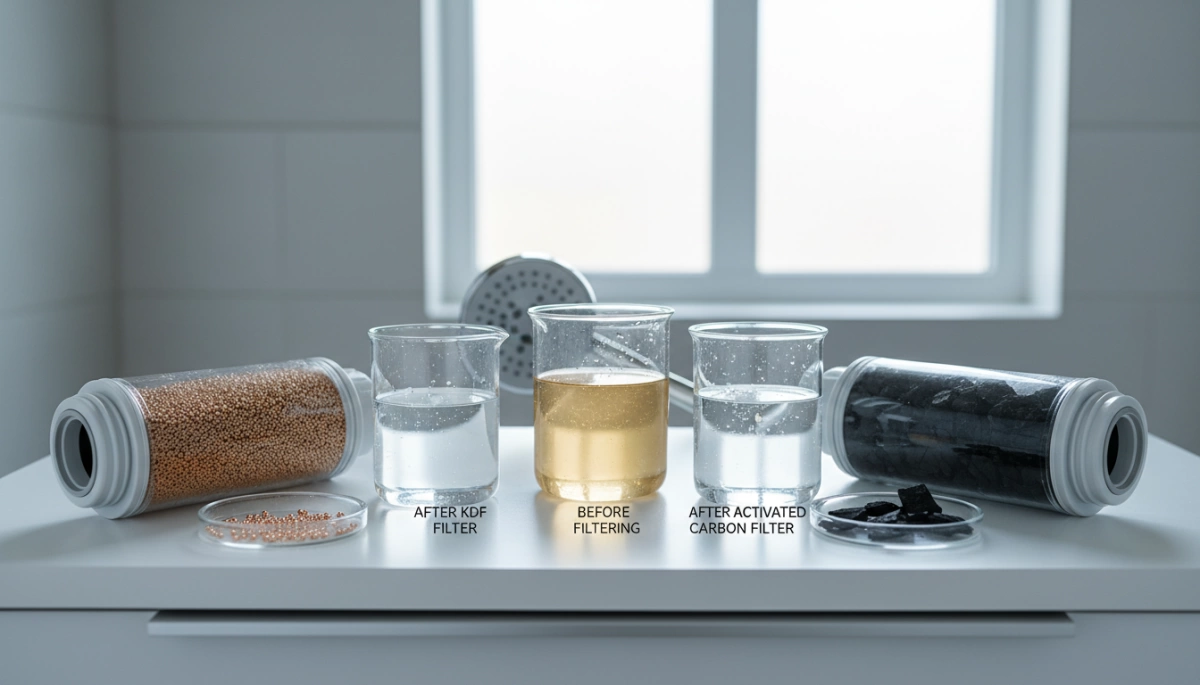
When we talk about a premium KDF vs activated carbon shower filter, KDF (Kinetic Degradation Fluxion) is the heavy lifter for hot water, metals, and bacteria control. It’s a copper–zinc alloy media that works very differently from granular activated carbon (GAC).
How KDF Works: Redox Process Filtration
KDF uses a redox (oxidation–reduction) reaction to change contaminants into safer forms or pull them out of the water stream. When hot shower water passes through the KDF 55 media, electrons move between the copper–zinc surface and dissolved substances such as chlorine and metals. This electrochemical oxidation in water filters helps:
- Convert free chlorine into harmless chloride ions
- Reduce dissolved metals like lead, mercury, and copper
- Limit scale and hardness impact when paired with a hard water shower head filter
This redox process water filtration is stable at higher temperatures, which is a big advantage over carbon-only cartridges in hot water compatible shower filters.
KDF 55 vs KDF 85 for Shower Use
Not all KDF media are the same:
- KDF 55 – Designed mainly for chlorine and heavy metal reduction. This is the go‑to KDF 55 media for showers and most high flow shower filter performance designs in the U.S.
- KDF 85 – Better for iron and hydrogen sulfide (rotten egg odor). It’s used more in well water and whole‑house systems than in compact shower filter cartridges.
In our own OEM shower filter manufacturing, we rely on KDF 55 for chlorine removal in hot water and pair it with coconut shell granular activated carbon (GAC) when we want extra polishing for taste and odor, similar to what wellness‑focused brands look for in premium shower gift sets.
KDF Performance in Hot Shower Conditions
Unlike standard carbon-only media, KDF is built for hot water:
- Maintains performance at typical U.S. shower temperatures
- Resists desorption, so it doesn’t easily release what it already captured
- Supports stable chlorine removal efficiency in hot water compared to GAC alone
That’s why any serious hot water compatible shower filter will lean on KDF as the core media, especially when users care about chlorine vapor inhalation risk and skin irritation from chlorinated shower water.
Bacteriostatic Protection in KDF Cartridges
A big win for KDF vs activated carbon is its bacteriostatic behavior. The copper–zinc surface makes it harder for microbes to grow inside the shower filter cartridge:
- Helps prevent bacteria growth in carbon filters when KDF is blended in
- Keeps the filter media fresher between uses
- Supports a longer, more reliable shower filter cartridge lifespan
For U.S. families that don’t want stagnant, warm water sitting in a purely carbon bed, KDF 55 adds an extra level of hygiene inside the housing.
Heavy Metal Shower Filter Benefits with KDF
From a water filter media supplier and OEM perspective, KDF is one of the most effective compact media for heavy metal reduction in shower applications:
- Targets dissolved lead, mercury, and copper
- Helps protect against metal pickup from older plumbing
- Works well in multi‑stage shower filtration systems with carbon block vs GAC combinations
If you’re comparing water purification media types for a premium shower filter for chlorine and metals, KDF 55 is the backbone for heavy metal reduction, while activated carbon handles fine polishing. This balance keeps skin and hair healthier and supports a clear filter replacement schedule for showers that U.S. customers can actually follow.
KDF vs Activated Carbon Shower Filter: Head‑to‑Head
Chlorine Removal in Hot Shower Water
In real showers, water is hot, fast‑flowing, and often chlorinated.
- KDF 55 media:
- Uses a redox process, so it keeps removing chlorine even in hot water.
- More stable under high temperature and high flow.
- Granular activated carbon (GAC):
- Excellent for chlorine in cold water, but performance drops as temperature rises.
- Hot water can cause desorption, releasing what’s already been adsorbed.
If you care most about chlorine removal in hot showers, KDF vs activated carbon is not close – KDF handles heat much better.
Heavy Metal Filtration Performance
KDF is the clear winner for heavy metals in shower filters.
- KDF (especially KDF 55)
- Strong at reducing lead, mercury, and copper.
- Works well under typical U.S. city water pressure and temperature.
- Activated carbon
- Great for organic chemicals and odors.
- Only limited, inconsistent effect on heavy metals in a high‑flow shower head filter.
For a heavy metal shower filter, I always build around KDF first, then use carbon to polish taste and odor.
Lifespan and Durability Comparison
Hot water beats up filtration media quickly, so lifespan matters.
| Media Type | Typical Lifespan* | Heat Resistance | Notes |
|---|---|---|---|
| Pure GAC (coconut shell) | ~3–4 months | Fair in hot water | Can clog and lose capacity faster |
| KDF‑only cartridge | ~6–12 months | Excellent in hot water | Stable, low degradation |
| KDF + GAC blend (premium) | ~6 months (balanced) | Very good | Better performance over time |
*Actual life depends on water quality and daily shower time.
KDF media holds up better under hot water and high flow, so filter lifespan comparison usually favors KDF or KDF blends over carbon‑only designs.
Maintenance Cost and Media Price
On a per‑pound basis, KDF media is more expensive than standard coconut shell GAC. But total cost is about replacement frequency, not just raw media price.
- Activated carbon‑only filters
- Lower upfront price.
- Need to be replaced more often.
- KDF or KDF–carbon filters
- Higher initial cost.
- Longer service life and more stable performance in hot water.
Over a year, maintenance cost often evens out, and KDF blends usually deliver better chlorine and metal reduction per dollar.
Best Use Cases: KDF, Carbon, and Blends
Here’s how I match media to real‑world U.S. shower habits:
| Need / Use Case | Best Choice | Why |
|---|---|---|
| Hot water chlorine reduction + metal control | KDF 55 + GAC blend | Strong redox + polishing adsorption |
| Concerned about lead, mercury, or copper | KDF‑focused shower filter | Targeted heavy metal reduction |
| Only odor/taste and light chlorine in mild temps | Coconut shell GAC | Budget‑friendly option |
| Premium protection for skin and hair in hard, chlorinated water | Multi‑stage KDF + activated carbon | Balanced performance and lifespan |
For my own product line, I use multi‑stage KDF + carbon shower filters in aluminum or high‑grade housings to balance high‑flow performance, durability, and comfort. If you want an example of a hot water compatible shower filter designed for hard water and chlorine, take a look at our aluminum alloy shower filter for dechlorination and hard water, which uses a KDF–carbon blend to hit all of these points.
Why the Best Shower Filters Use Both KDF and Activated Carbon
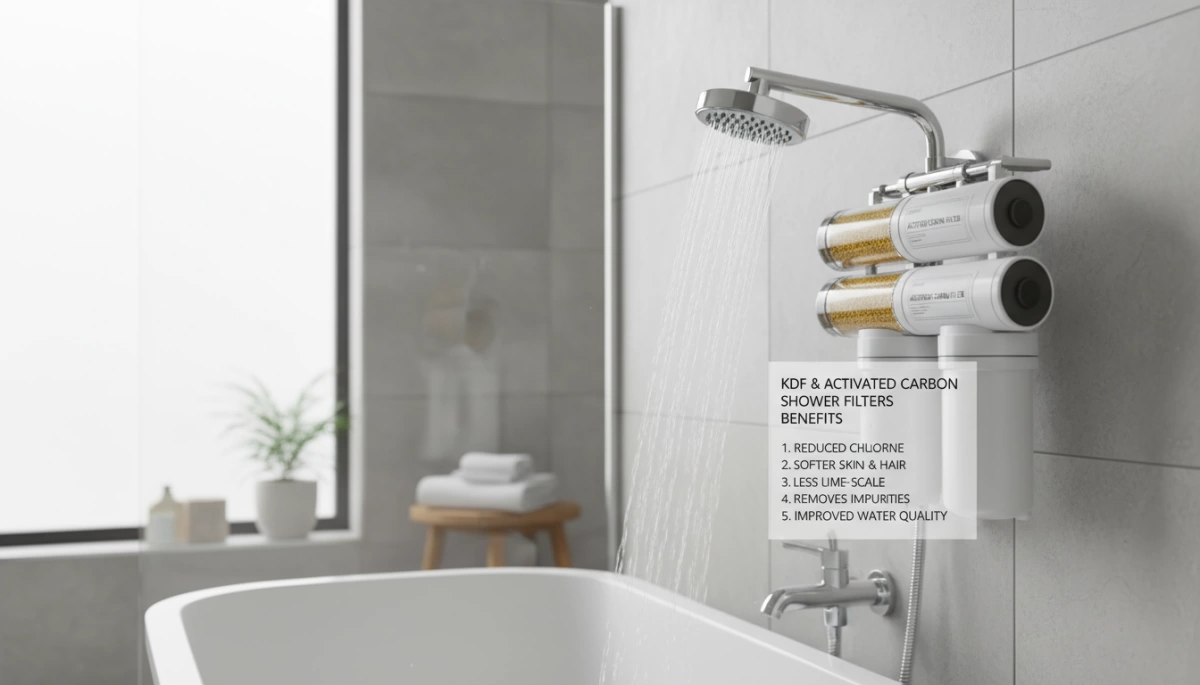
When I design a premium KDF vs activated carbon shower filter for the U.S. market, I always pair both media in one multi‑stage system. That’s how we keep performance high in real hot shower conditions, not just in lab tests.
How Multi-Stage Shower Filtration Systems Work
A solid high flow shower filter usually runs like this:
- Stage 1 – KDF pre-filter (redox process water filtration): Targets chlorine, heavy metals, and bacteria control in hot water.
- Stage 2 – Coconut shell granular activated carbon (GAC): Polishes taste, odor, and chemical byproducts.
- Optional extra stages for hard water shower head filter performance (sediment, scale, etc.).
This same step-by-step approach is what we use in our faucet filters, like our multi-stage faucet tap water filter, just tailored for higher temperature and flow in showers.
KDF Pre-Filtration + Activated Carbon Polishing
Kinetic Degradation Fluxion does the heavy lifting up front:
- KDF 55 media for showers reduces chlorine and protects the carbon from early overload.
- The redox process water filtration step helps limit bacteria growth before water reaches GAC.
- Coconut shell GAC then focuses on adsorption of organics, odors, and remaining chlorine byproducts.
This synergy keeps the granular activated carbon (GAC) adsorption stage more efficient and extends overall filter lifespan.
Benefits for Skin and Hair
In U.S. homes with chlorinated and sometimes slightly hard water, a KDF + activated carbon blend helps:
- Cut chlorine vapor inhalation risk from hot showers.
- Reduce dry skin and hair water treatment issues like itchiness, flaking, and dull hair.
- Minimize irritation for kids, people with eczema, and anyone with color-treated hair.
By reducing both chlorine and metals, a heavy metal shower filter design like this gives a more “softened” feel without adding salt.
Blended Media in Hot Water Showers
Pure carbon filters struggle with:
- Desorption in activated carbon at high temperature
- Faster chlorine breakthrough
- Higher bacteria growth in carbon filters
KDF shower head filter media is hot water compatible, so it:
- Stabilizes performance in hot water
- Protects GAC from thermal stress
- Maintains higher chlorine removal in hot water over the full shower filter cartridge lifespan
How I Design KDF + Carbon Shower Filters (Manufacturer View)
When we build OEM systems for U.S. brands, we focus on:
- The right KDF ratio (usually KDF 55 for chlorine reduction, limited KDF 85 unless iron/sulfur is a big issue).
- High-quality coconut shell carbon vs coal carbon for better taste and VOC reduction.
- A multi-stage layout that keeps pressure loss low but still qualifies for NSF certified filtration media use.
- Media sourcing from a reliable water filter media supplier China partner without compromising performance.
If you’re building your own line, pairing KDF and carbon is non-negotiable for a true premium shower filter for chlorine and metals in the U.S. market.
Maintenance and Lifespan of KDF vs Activated Carbon Shower Filters
Keeping a KDF vs activated carbon shower filter in good shape isn’t complicated, but it does matter if you want real chlorine and heavy metal reduction—not just a nice-looking shower head.
How to tell when a shower filter needs replacement
I recommend watching for a few clear signs your shower filter cartridge is done:
- Noticeable drop in water pressure or uneven spray pattern
- Chlorine smell or “pool water” odor coming back, especially in hot water
- Dry or itchy skin and dull hair returning after showers
- Visible discoloration of the filter media (if your housing is clear)
If you’re already using a whole‑home or faucet water filter system, your shower cartridge may last longer, but I still follow the time-based schedule below.
Typical lifespan: activated carbon vs KDF blends
In real U.S. home conditions, I see these averages:
- Pure granular activated carbon (GAC) shower filter: about 3–4 months in daily hot showers
- KDF + activated carbon blend: about 6–9 months, because the KDF handles hot water and heavy metals while protecting the carbon
- High-usage homes (3+ people): expect the low end of those ranges
KDF media is more stable in hot water, so a KDF shower head filter usually holds its performance longer than a carbon‑only design.
How water quality and usage affect performance
Filter lifespan is never one-size-fits-all. It depends heavily on:
- Chlorine level: Higher city chlorine burns through activated carbon faster
- Hardness & iron: More scale and iron means KDF 55 / KDF 85 work harder
- Daily shower time: Long, hot showers load the media faster
- Incoming sediment: Sand/rust can clog media and reduce flow
If your area has very hard or heavily chlorinated water, you’ll want to lean toward a multi‑stage KDF vs activated carbon shower filter with a shorter, more conservative replacement schedule.
Simple maintenance tips for better filtration
To keep any hot water compatible shower filter performing:
- Replace cartridges on time, not just when the water feels “off”
- Backflush or reverse the filter (if supported) every few weeks to clear trapped debris
- Wipe or soak the showerhead face in vinegar to remove surface scale buildup
- Avoid extremely high temperatures beyond the filter’s rating to protect both KDF and carbon media
- Keep a simple filter replacement schedule on your phone calendar so chlorine removal efficiency and heavy metal filtration don’t slowly drop off without you noticing
Handled this way, a quality KDF 55 media and coconut shell granular activated carbon blend will give you consistent chlorine, odor, and metal reduction—and better skin and hair comfort—for the full intended shower filter cartridge lifespan.