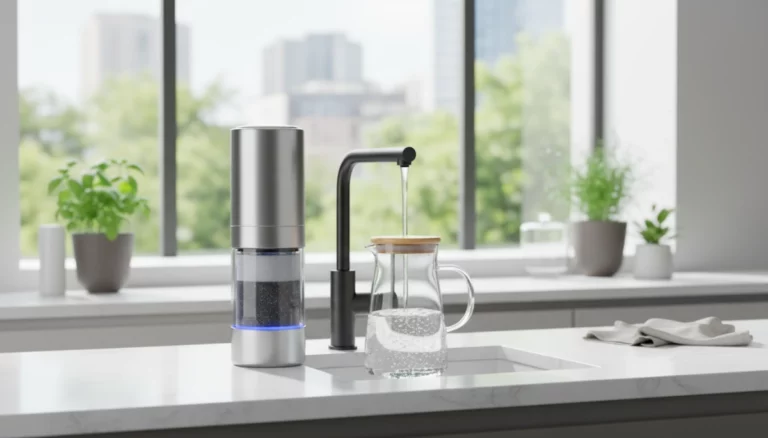
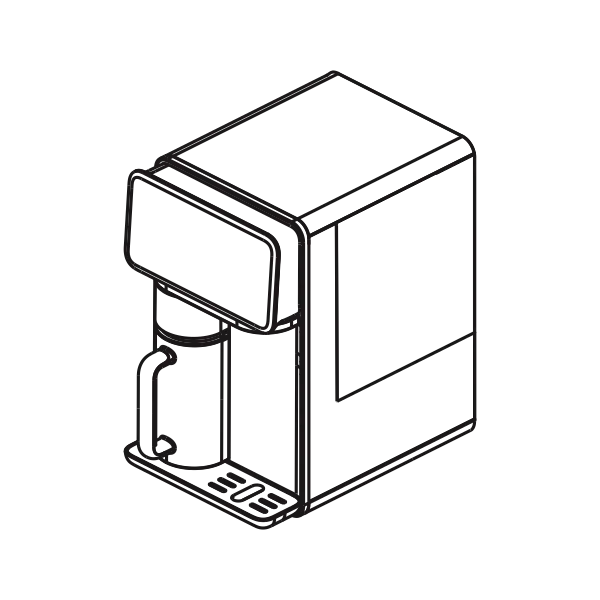

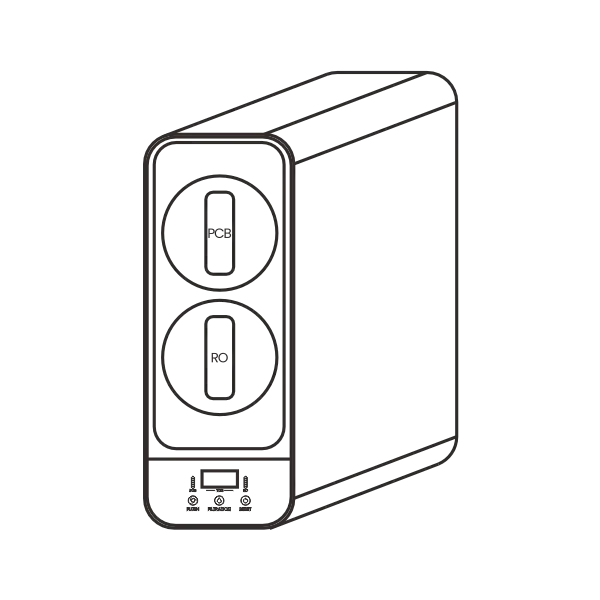














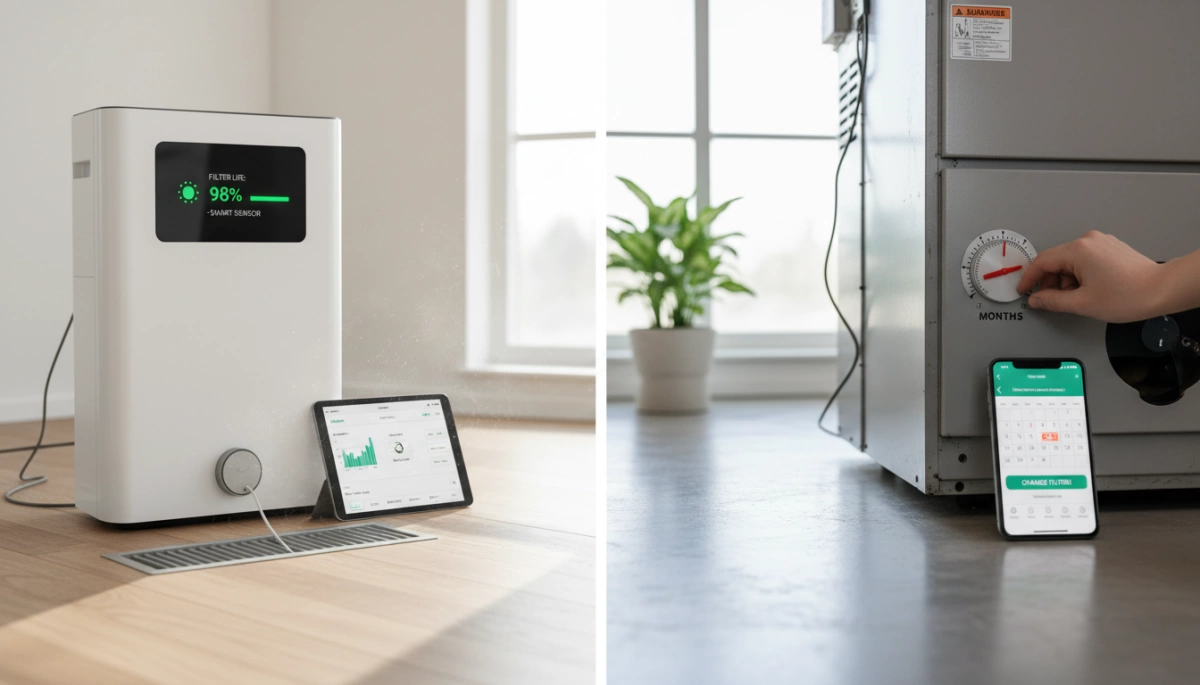
You might assume that when the “Change Filter” light blinks, your water is actually dirty.
But often, that light is lying to you.
Most standard systems rely on basic Timers—simple countdown clocks that ignore reality.
The result? You’re either throwing away money on premature replacements or serving unsafe water from an exhausted filter.
True Filter Life Monitoring isn’t a guessing game; it’s a science.
In this post, we are going head-to-head: Smart Sensors vs. Timers.
I’m going to show you exactly why volumetric and quality-based data is the only way to optimize your maintenance budget and ensure hydration safety.
Let’s dive into the data.
How Timer-Based Monitoring Fails
The “Blind” Countdown Mechanism
We often see consumers relying on standard water pitchers that feature a simple digital timer or a sticker on the lid. This is static monitoring at its most basic. These devices function exactly like a kitchen egg timer; they count down a pre-set number of days—usually 30 or 60—regardless of how much water actually passes through the system. This mechanism ignores the two most critical variables in filtration: the volume of water consumed and the contamination level of your tap water.
The Low Usage Trap: Wasting Money
For single-person households or light users, the standard timer creates a cycle of waste. If we follow the manufacturer’s schedule strictly, we end up replacing filters that are still perfectly capable of removing contaminants.
- Premature Disposal: Throwing away a filter that is only 50% depleted.
- Increased Costs: Buying replacements more often than necessary.
- Environmental Impact: Adding unnecessary plastic waste to landfills.
The High Usage Risk: Drinking Dirty Water
The more dangerous scenario involves heavy usage or source water with high sediment levels. In a large family or an office setting, a filter might reach filter cartridge saturation in just two weeks. However, the timer will misleadingly indicate that the filter is “Good” for another month.
- Contaminant Breakthrough: Once saturated, the filter can no longer trap pollutants like Lead or Chlorine.
- False Security: Users continue drinking water they believe is clean, but is actually re-contaminated.
- Health Hazards: Exposure to accumulated toxins that leach back into the water flow.
Timers Measure Days, Not Efficiency
Ultimately, a timer is a marketing tool, not a safety device. It cannot detect filtration efficiency metrics or changes in water chemistry. It assumes that every drop of tap water in the country is identical and that every household drinks the exact same amount. By relying on time rather than real-time water quality monitoring, we leave the safety of our drinking water to pure guesswork.
How Smart Sensors Monitor Filter Life
We have moved past the era of sticking a calendar reminder on the fridge. True filter life monitoring relies on hard data, not assumptions. Unlike static timers that blindly count down days regardless of whether you filtered one gallon or a hundred, smart sensors actively track the physical state of your filtration system. This shift from “predictive” to “actual” monitoring ensures you never overuse a depleted filter or throw away a perfectly good one.
Volumetric Flow Metering: Counting the Gallons
The first step in intelligent monitoring is volumetric flow metering. Instead of assuming “average usage,” this technology tracks the exact volume of water passing through the media.
- Precision Tracking: It logs every ounce dispensed.
- Usage Variations: It accounts for heavy usage in summer versus light usage in winter.
- Saturation Logic: It calculates life based on the filter’s rated gallon capacity (e.g., 100 gallons) rather than an arbitrary 2-month timeline.
Water Quality Sensors (TDS & Turbidity)
For the highest level of safety, we integrate Total Dissolved Solids (TDS) readings directly into the workflow. This is the core technology behind the Drip Life Smart Pitcher.
- TDS Sensors: These measure the conductivity of the water to determine the concentration of dissolved substances (PPM). When the filtered water’s TDS levels begin to creep up near the source water’s levels, we know the filter media is saturated.
- Turbidity Sensors: In more complex IoT water filtration systems, optical sensors detect cloudiness or suspended particles, signaling that the physical barrier is compromised.
Our water dispenser products and smart pitchers utilize these real-time water quality monitoring metrics to provide a digital safety net that analog timers simply cannot match.
Differential Pressure Monitoring
In high-performance setups, specifically Reverse Osmosis (RO) systems, we look at differential pressure sensors.
- The Mechanism: Sensors measure pressure before and after the filter.
- The Trigger: As the filter traps contaminants, it gets clogged, causing a pressure drop on the output side.
- The Result: The system alerts you exactly when the flow restriction hits a critical point, ensuring the pump and membrane function efficiently.
Real-Time Data vs. Guesswork
The difference between a smart sensor and a timer is the difference between knowing and guessing. Filtration efficiency metrics displayed on the Drip Life App allow users to visualize their water quality history. This creates a “set and forget” environment where maintenance is driven by actual filter cartridge saturation, not a calendar date.
| Monitoring Type | Mechanism | Accuracy | Primary Benefit |
|---|---|---|---|
| Volumetric | Counts actual gallons filtered | High | Prevents waste in low-use households. |
| TDS Sensor | Measures dissolved solids (PPM) | Very High | Detects chemical breakthrough immediately. |
| Pressure | Measures flow resistance | High | Protects hardware in RO systems. |
| Timer | Counts days elapsed | Low | Simple, but often inaccurate. |
Smart Sensors vs. Timers: The Showdown
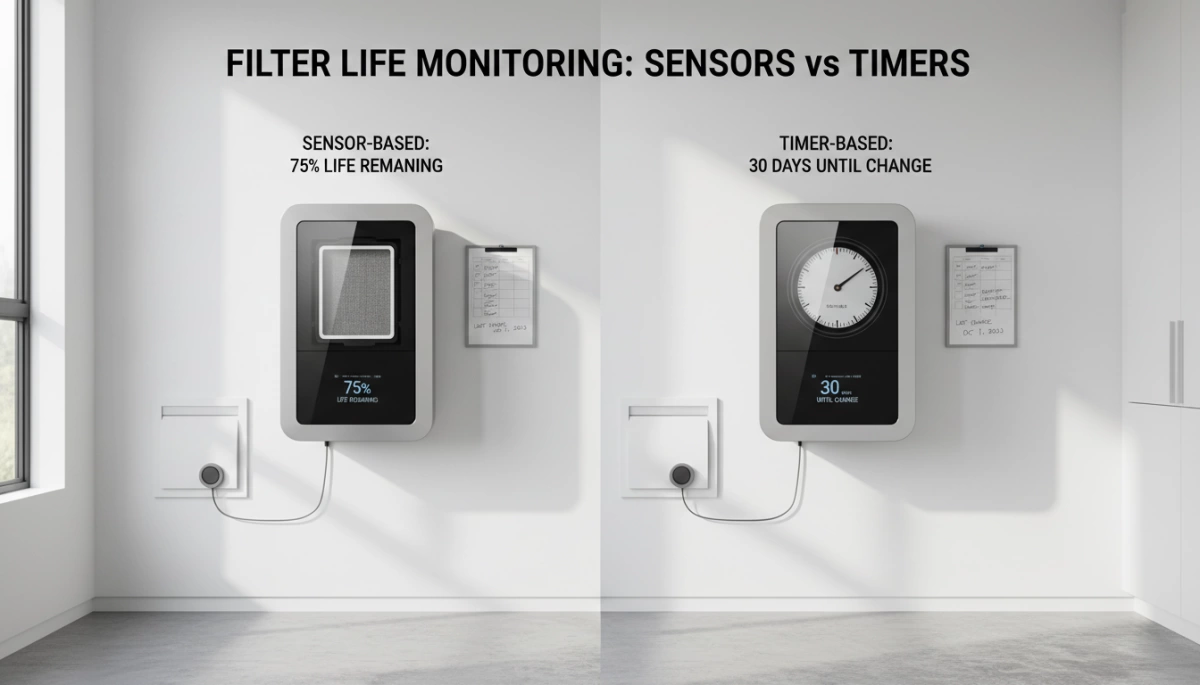
Let’s be real—relying on a simple timer to change your water filter is like changing your car’s oil every three months regardless of whether you drove 10 miles or 10,000. It is an outdated method that ignores reality. In the battle of Smart Sensors vs. Timers, accurate data always wins over guesswork. When evaluating the effectiveness of water pitcher filters, the difference between a blind countdown and physical measurement is the difference between safe hydration and drinking contaminated water.
Here is why real-time water quality monitoring is superior to static timers:
- Accuracy and Safety: Timers are blind; they cannot see filter cartridge saturation. A smart system uses Total Dissolved Solids (TDS) readings to detect exactly when the filter media is exhausted. This prevents “breakthrough,” ensuring you never drink water from a filter that has stopped working.
- Cost Efficiency: Static vs. dynamic monitoring makes a massive difference in your wallet. If your tap water is relatively clean or you travel often, a timer forces you to throw away a perfectly good filter. Smart sensors improve preventative maintenance ROI by ensuring you only buy replacements when the filter is actually depleted.
- Sustainability: By maximizing the lifespan of every cartridge based on filtration efficiency metrics, we significantly reduce the amount of plastic casing ending up in landfills.
- Maintenance Management: We utilize automated filter replacement alerts through the Drip Life App. This creates a “set and forget” automation where you get a precise notification based on data, not a calendar guess.
Why Public Filling Stations Need Smart Monitoring
Managing water quality in high-traffic zones like airports, schools, or gyms is a nightmare with static timers. Traffic patterns in these facilities are rarely consistent. A school hallway fountain might see near-zero usage during summer break but works overtime during the fall semester. Relying on a standard 6-month timer means you are likely replacing perfectly good filters during downtimes or, far worse, letting students drink from a depleted cartridge during peak usage periods. This inconsistency creates a massive blind spot in water bottle filling station maintenance.
We solve this by integrating IoT water filtration systems that rely on actual volumetric data and contaminant sensing. For facility managers, this shifts the focus from guessing to knowing. It is about reducing liability through transparency. When you have a digital paper trail of real-time water quality monitoring, you have proof that the water being dispensed is safe. This level of precision is crucial for public safety and mirrors the advanced filtration logic we engineer into our hot water dispenser with filter units, ensuring consistent quality across different applications.
The Driplife Advantage: Intelligent Logic Interfaces
We don’t just install a filter; we install a brain. Our intelligent logic interfaces handle the complex variables of public water access so you don’t have to.
- Handling Variable Traffic: Our sensors track gallons poured, not just days passed. If the gym is closed for renovations, the filter life reading stays stable.
- User Confidence: A digital display showing a “Good” status or a low TDS reading builds immediate trust with the user. People are more likely to refill their bottles if they see visual proof of filtration.
- Automated Alerts: Automated filter replacement alerts notify maintenance teams exactly when saturation occurs, eliminating the need for manual checks.
- Liability Protection: By maintaining a digital log of filter performance, facilities protect themselves against claims of negligence regarding water safety.
Signs Your Current System is Outdated

If you are still relying on a manual dial or a simple calendar reminder to manage your water quality, you are operating in the dark. Traditional filtration methods often rely on static vs. dynamic monitoring, meaning they track time rather than actual contamination levels. Here is how to tell if your current hydration setup is falling behind modern standards:
- Discarding “Clean” Filters: If you pull out a filter cartridge after 30 days and it still looks pristine white, you are likely throwing away money. Without volumetric flow metering or usage data, you are replacing filters based on a guess rather than their actual capacity.
- Taste and Odor Breakthrough: The most dangerous sign is when your water starts tasting off before your “change filter” light turns on. This indicates filter cartridge saturation has occurred, allowing contaminants to pass through because the timer hasn’t caught up to your heavy usage.
- Zero Sustainability Data: Modern consumers want to know their impact. If your system cannot tell you how many plastic bottles you have saved, you lack the filtration efficiency metrics needed to track your environmental footprint.
- Unpredictable Maintenance Costs: “Dumb” systems lead to erratic spending. You either buy too many filters out of caution or stress your system by waiting too long. Upgrading to a countertop water cooler dispenser with integrated smart sensors stabilizes these costs by providing maintenance alerts only when necessary.
We built the Drip Life ecosystem to eliminate these blind spots. When you rely on real-time water quality monitoring via TDS sensors, you stop guessing and start managing your health with precision.
Frequently Asked Questions
Do smart sensors require a Wi-Fi connection?
Not necessarily. While many IoT water filtration systems utilize Wi-Fi for cloud data storage, our devices primarily rely on Bluetooth 5.0 integration. This allows the system to track real-time water quality monitoring data locally and sync it directly to your smartphone app when you are nearby. You get the benefit of granular data without complicating your home network or worrying about connectivity downtime interrupting the filtration logic.
Can I retrofit a smart sensor onto an old timer system?
Generally, no. Smart sensors like volumetric flow meters and TDS probes are integrated directly into the internal fluid channels of the device to ensure accuracy. You cannot simply attach an external sensor to a standard gravity-fed pitcher and expect reliable results. For precise tracking, you need a dedicated unit like our counter water filter system, which is engineered from the ground up with internal sensors to monitor exact usage and contaminant levels.
How much money do smart sensors actually save in the long run?
The savings come from maximizing filter utility. Standard timers force you to replace cartridges based on a calendar date, often throwing away filters that still have 30-40% capacity remaining. By switching to a data-driven approach, you achieve a better preventative maintenance ROI because you only pay for replacements when the filter is actually depleted. Over a year, avoiding premature disposal significantly lowers the total cost of ownership compared to “dumb” timer-based systems.
Are TDS readings the only metric that matters for safety?
Total Dissolved Solids (TDS) readings are a critical indicator of filter performance, specifically for detecting “breakthrough”—the moment a filter stops trapping minerals and metals. However, safety also depends on the specific certifications of the media. While the sensor alerts you to saturation, our NSF-certified media handles the heavy lifting for lead, PFAS, and chlorine. For high-volume areas, upgrading to a robust sink water filter dispenser ensures you have both the sensor technology to track life and the heavy-duty filtration capacity to handle diverse contaminants.