














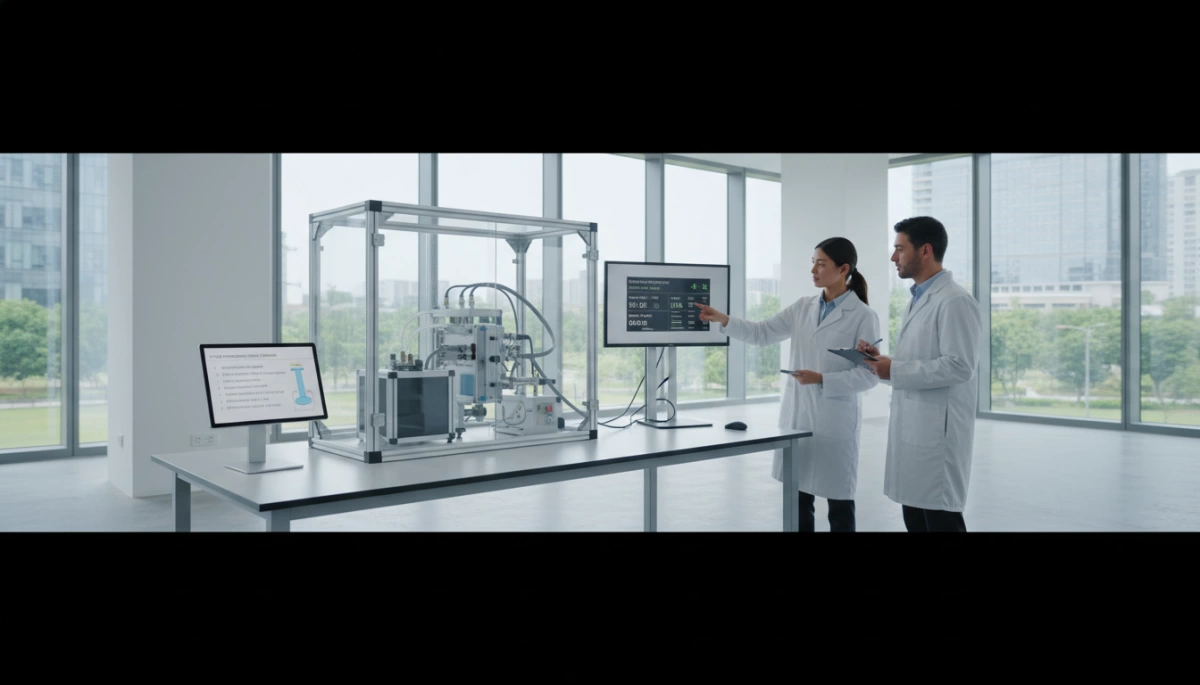
When you invest in water filtration, you aren’t just buying hardware; you are buying the promise of cleaner water. But how do you verify that a filter actually does what the box claims? In the water treatment industry, we rely on rigorous filter performance testing standards to separate marketing hype from proven science. These benchmarks ensure that every drop of water passing through the media meets strict safety and aesthetic requirements.
NSF/ANSI Standards Explained
The most recognized names in water quality are NSF International and the American National Standards Institute (ANSI). We adhere to these specific protocols to ensure our products meet the highest US expectations for safety and performance.
- NSF/ANSI 42 (Aesthetic Effects): This is the baseline for most filters. It verifies the reduction of non-health-related contaminants, primarily chlorine, taste, and odor, as well as particulate matter.
- NSF/ANSI 53 (Health Effects): This standard is more stringent. It requires the filter to reduce specific health-related contaminants such as lead, mercury, cysts, and VOCs.
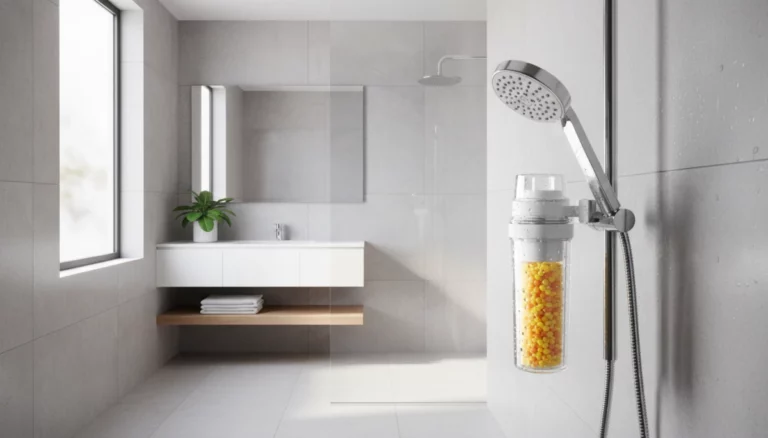
- NSF/ANSI 177 (Shower Filtration): Specifically designed for point-of-use shower systems, this standard validates the reduction of free available chlorine in high-temperature, high-flow environments.
WQA Gold Seal: A Mark of Reliability
The Water Quality Association (WQA) provides the Gold Seal certification, which is a professional signal of product excellence. When a product carries this seal, it has passed a comprehensive evaluation that goes beyond simple filtration.
| Feature | What the Gold Seal Validates |
|---|---|
| Performance | The filter removes the contaminants it claims to remove. |
| Material Safety | No harmful chemicals leach from the filter components into your water. |
| Structural Integrity | The housing can withstand water pressure spikes without leaking or bursting. |
| Labeling Accuracy | All marketing claims are backed by verified laboratory data. |
The Role of Independent Third-Party Testing
We believe that internal testing is never enough. To maintain absolute transparency and consumer trust, we utilize independent lab testing for water filters. Third-party laboratories provide an unbiased environment where our products are pushed to their limits.
This water filter performance verification ensures that our data is not skewed by brand bias. By using accredited facilities like IAPMO or UL, we provide our B2B partners and end-users with documented proof that our filtration media—whether KDF, Calcium Sulfite, or Activated Carbon—performs consistently under real-world conditions. These certifications are the backbone of industry compliance and the primary reason our filtration solutions are trusted in the American market.
Standardized Shower and Bath Filter Performance Testing
Bathing water requires a different level of scrutiny than drinking water. When you step into a hot shower, your pores open up and you begin inhaling steam, which can contain vaporized chlorine and synthetic chemicals. This is why standardized shower filter tests focus heavily on high-temperature stability and the reduction of volatile organic compounds (VOCs) that become airborne in a bathroom environment.
Why Bathing Water Requires Specific Testing
Drinking water standards often focus on ingestion, but bath filter performance testing must account for dermal absorption and inhalation. Our testing protocols ensure that the filtration media remains effective even when subjected to the thermal stress of a 105°F shower. Without these specific checks, a filter might work in a lab with cold water but fail completely in your actual bathroom.
Flow Rate vs. Contact Time
In the world of filtration, “contact time” is king. The longer water stays in contact with the media (like KDF-55 or Calcium Sulfite), the cleaner it gets. However, American households demand high pressure.
- The Challenge: Maintaining a 2.0 to 2.5 GPM (gallons per minute) flow rate while effectively removing contaminants.
- The Solution: We optimize the internal geometry of the filter to maximize surface area, ensuring the water is scrubbed clean without killing your water pressure.
Material Safety Testing and Chemical Leaching
It’s not just about what the filter takes out; it’s about making sure the filter itself doesn’t add anything harmful. Under high heat, low-quality plastics can leach chemicals back into the water. We perform rigorous material safety testing to verify that every component—from the O-rings to the housing—is free of BPA, lead, and phthalates. This level of care is especially vital for specialized units like a vitamin C water filter for shower, where the objective is to promote healthier skin and hair through pure, non-toxic water.
Key Performance Indicators
- Temperature Resistance: Ensuring structural integrity up to 120°F.
- Burst Pressure: Testing the housing to withstand sudden pressure spikes in the plumbing.
- Media Integrity: Confirming that the filtration granules don’t pulverize or “channel” over time.
Laboratory Filtration Testing: Contaminant-Specific Protocols
In our facility, laboratory filtration testing protocols are the backbone of product development. We don’t just guess; we validate every claim through rigorous, contaminant-specific stress tests to ensure our filters meet the highest performance standards.
Chlorine Reduction Validation
Chlorine is the most common chemical in municipal water, and its removal is a top priority for skin and hair health. Our chlorine reduction validation process measures the efficacy of media like KDF-55 and Calcium Sulfite against Free Available Chlorine (FAC). Unlike standard carbon, these materials are tested specifically for high-temperature stability, ensuring they don’t lose potency mid-shower.
Heavy Metal Removal Lab Testing
We conduct extensive heavy metal removal lab testing to target specific threats often found in aging infrastructure across the United States:
- Lead: Testing for reduction in both soluble and particulate forms.
- Mercury: Ensuring high-percentage removal rates.
- Iron: Validating the filter’s ability to prevent “orange staining” on bathroom fixtures.
Scale Control Testing Methodology
Hard water is a major concern for many homeowners. Our scale control testing methodology focuses on how sequestering agents like polyphosphates and magnetic inhibitors alter mineral structures. This is essential for anyone looking for a shower filter for hard water that actually prevents limescale buildup on showerheads and glass doors without stripping away beneficial minerals.
| Contaminant | Testing Media | Target Outcome |
|---|---|---|
| Chlorine (FAC) | KDF-55 / Calcium Sulfite | >90% Reduction |
| Heavy Metals | Ion Exchange / KDF | Lead & Mercury Neutralization |
| Hardness/Scale | Polyphosphates | Reduced Limescale Adhesion |
By adhering to these strict Filter Performance Testing Standards, we guarantee that our products deliver consistent results from the first gallon to the last. We focus on the science so you can focus on the experience.
The Lifecycle Test: Capacity and Performance Verification
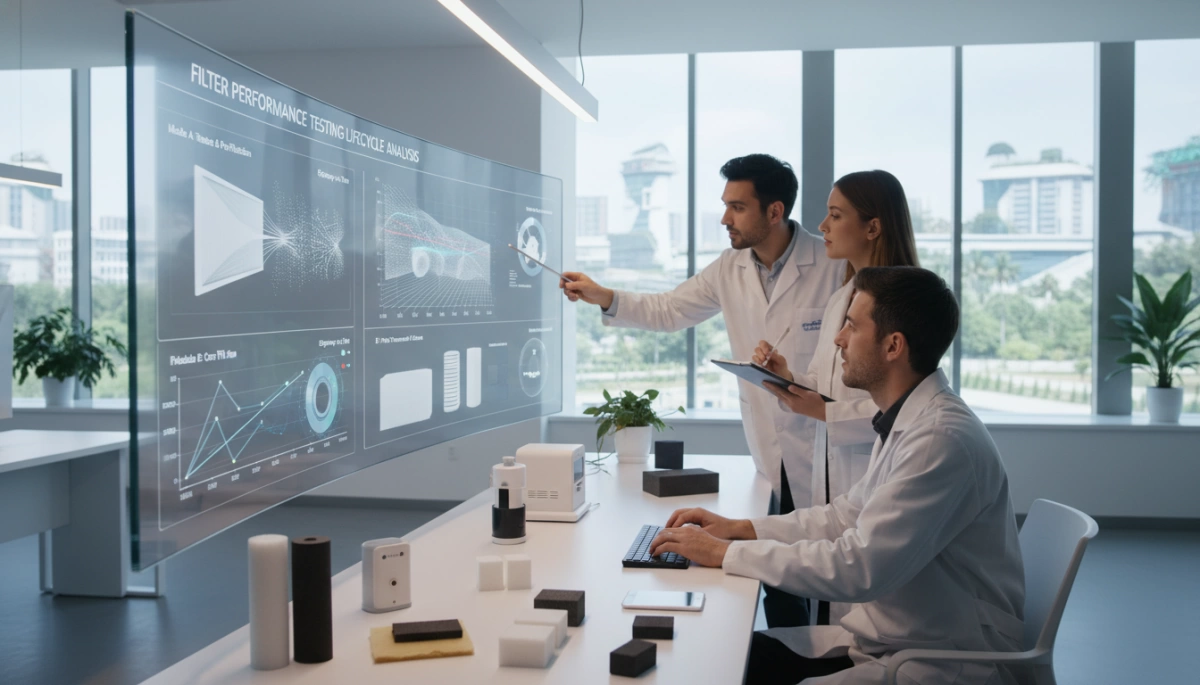
A filter might work perfectly on day one, but what happens six months down the line? That is exactly why strict filter performance testing standards exist. We focus heavily on filter media lifespan validation to ensure our systems hold up over time, delivering the same water quality on day 180 as they did on day one.
Testing the 10,000 Gallon Lifespan
It is not enough to test a brand-new filter out of the box. We push our units to their absolute limits, verifying performance well past the standard 10,000-gallon mark. This guarantees that your water remains clean and safe from the first drop to the last before a replacement is needed. For components like a reliable 5 micron water filter, maintaining consistent filtration efficiency over thousands of gallons without degrading is non-negotiable.
Spike Testing Contaminant Loads
Real-world municipal water quality fluctuates. To simulate worst-case scenarios, we rely on spike testing. This involves injecting massive, concentrated doses of contaminants into the water supply to see how the filter reacts under sudden stress.
- Heavy metal surges: Ensuring no sudden spikes of lead or iron slip through the media.
- Chlorine spikes: Validating immediate chemical reduction even during municipal water treatment flushes.
- Sediment overload: Checking if the media clogs prematurely when hit with high turbidity.
Pressure Drop and Structural Integrity
A filter must clean the water without destroying your home’s water pressure or bursting under stress.
- Pressure Drop Analysis: We measure the flow rate continuously throughout the filter’s life. If a filter reduces water pressure to an unusable trickle, it fails the test.
- Structural Integrity: We subject the filter housing to extreme pressure cycles. Understanding exactly how a water purifier works under intense hydrostatic pressure ensures the unit will not crack, leak, or fail under your sink or in your shower.
Quality Assurance in Manufacturing: The Driplife Standard
Bridging the Gap Between Lab and Production
It is one thing to ace a test in a controlled lab environment with a hand-picked prototype. It is a completely different challenge to replicate that success across thousands of units on a high-speed production line. At Driplife, we understand that filter performance testing standards are only valuable if they apply to every single unit we ship. We bridge the gap by integrating lab-grade precision directly into our manufacturing workflow. This ensures there is no disconnect between the engineering design specs and the final product that ends up in your customer’s home.
Driplife’s QA Protocols and Batch Testing
We don’t leave quality to chance. Our water filter quality assurance process is built on a multi-stage inspection system designed to catch potential issues before they ever leave the factory floor. We treat every production run with the same scrutiny as a certification audit.
Our protocols include:
- Raw Material Verification: We test media purity and grade before production begins to prevent chemical leaching issues later.
- Random Batch Sampling: Units are pulled directly from the line to undergo rigorous stress tests and flow rate checks.
- Lifespan Validation: We ensure that the specific carbon fiber filter lifespan and performance analysis aligns perfectly with our technical data sheets.
- Structural Integrity Checks: Filters are subjected to pressure spikes to ensure housings won’t crack under typical US household water pressure.
The B2B Advantage of Partnering with a Certified Manufacturer
For our partners in the United States market, consistent performance verification is the key to building a trustworthy brand. When you work with a certified manufacturer like Driplife, you aren’t just buying hardware; you are buying risk mitigation. We eliminate the nightmare of product recalls and negative reviews caused by inconsistent quality. By adhering to strict standards, we handle the heavy lifting of compliance, delivering a product that is safe, reliable, and ready to dominate the market.
FAQs: Understanding Filter Performance Testing Standards
Navigating the world of water purification compliance can be confusing. We regularly field questions from partners and customers about what these ratings actually mean. Here are the most common questions we get regarding laboratory filtration testing protocols.
What is the difference between NSF 42 and NSF 53?
- NSF 42 (Aesthetic Effects): This standard proves a filter reduces non-health-related impurities like chlorine, bad taste, and odor.
- NSF 53 (Health Effects): This verifies the reduction of harmful, health-threatening contaminants like lead, mercury, and VOCs. For complete water filter performance verification, premium filters often carry both.
How often should a certified filter be re-tested?
Certification is never a one-and-done deal. To maintain strict WQA certification standards or NSF marks, manufacturing facilities must pass unannounced annual audits. Products undergo continuous re-testing to guarantee long-term quality assurance and material safety.
Does a “tested to NSF standards” claim mean it is certified?
Absolutely not. We always warn buyers about this marketing trick. “Tested to” just means a company paid a lab to run a single test following an NSF guideline. It lacks the official seal, the ongoing audits, and the rigorous independent lab testing water filters require for true certification. If you value real proof, look for the official mark—just like how a real-time TDS display faucet gives you immediate, undeniable proof of your RO water quality transparency.
Why is NSF 177 important for shower filters?
Shower water behaves differently than drinking water. NSF/ANSI 177 certification is the benchmark for standardized shower filter tests. It specifically validates chlorine reduction validation under tough conditions—namely, high flow rates and hot water. This ensures your bath filter actually works when the water heats up, protecting your skin and hair from chemical exposure.