

















Why Choose a Glass Water Filter Dispenser Over Plastic?
Let’s be honest: we obsess over the quality of our water, but we often overlook the vessel holding it. For years, I relied on standard plastic pitchers, ignoring the subtle plastic aftertaste and the nagging worry about what exactly was leaching into my family’s hydration. The shift to a glass water filter dispenser isn’t just an aesthetic upgrade—it is a fundamental choice for health and purity.
The Hidden Health Risks of Plastic Storage
Storing water in plastic isn’t as benign as it seems. Over time, plastic degrades, especially when exposed to sunlight or heat. This creates a breeding ground for issues that a plastic-free water filtration system eliminates entirely:
- Microplastics: Tiny particles shed from containers that end up in your body.
- Chemical Leaching: Potential exposure to BPA, BPS, and other endocrine disruptors.
- Off-Tastes: Plastic is porous; it absorbs fridge odors and imparts a stale flavor to the water.
The Purity of Lead-Free Borosilicate Glass
This is where the borosilicate glass water dispenser shines. Unlike standard glass, borosilicate is incredibly durable and thermal-resistant. More importantly, it is non-porous and completely inert. When you use a lead-free glass dispenser, the water touches nothing but glass (and the filter). The result is microplastics-free hydration that tastes exactly as water should: crisp, clean, and refreshing.
Environmental Impact: A Sustainable Choice
Switching to an eco-friendly water purifier made of glass is a direct vote against the disposable culture. It’s not just about filtering tap water; it’s about reducing the reliance on single-use plastic bottles and short-lived plastic pitchers that eventually crack and end up in landfills.
Here is a quick breakdown of why glass is the superior material for your home:
| Feature | Standard Plastic Pitcher | Premium Glass Water Filter Dispenser |
|---|---|---|
| Material Safety | Risk of BPA/BPS leaching | 100% Non-leaching & Lead-free |
| Taste Quality | Can absorb odors/stale taste | Pure, crisp taste retention |
| Durability | Scratches easily, porous | High thermal & scratch resistance |
| Hygiene | Hard to sanitize fully | Non-porous & easy to clean |
| Sustainability | Short lifecycle, plastic waste | Long-lasting, eco-friendly design |
Why Borosilicate Glass? The Superior Choice for Filtration
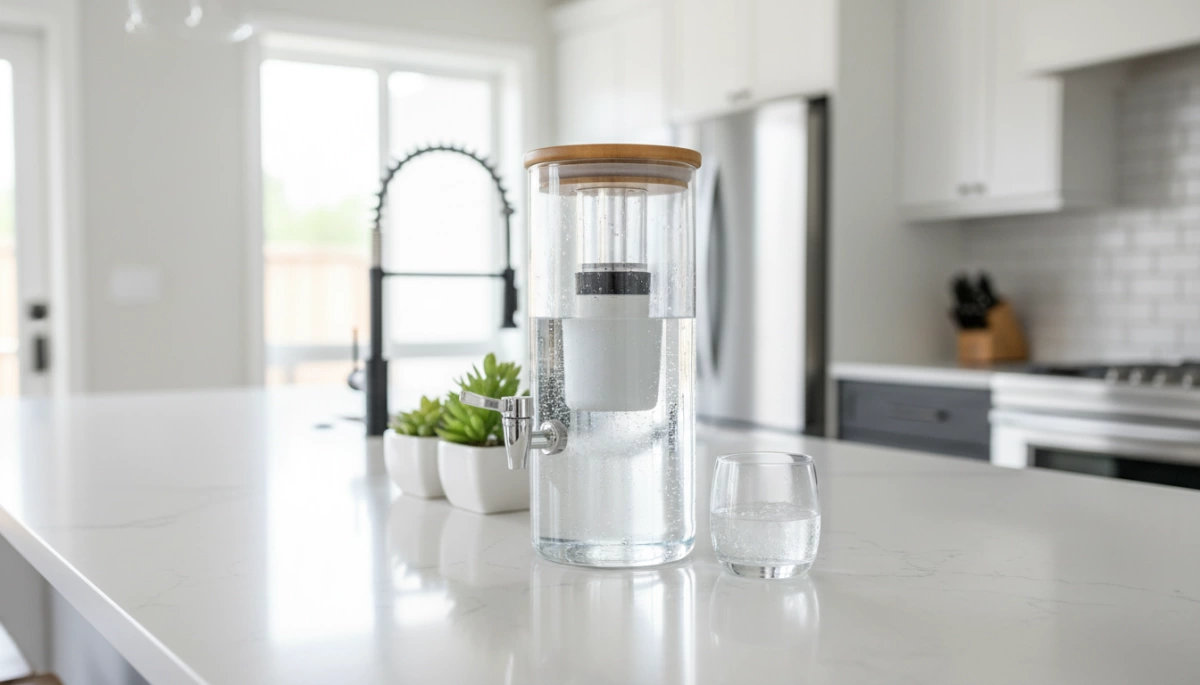
When I look at the options for countertop filtration, the material of the reservoir is just as critical as the filter media itself. We prioritize the borosilicate glass water dispenser because it solves the biggest pain points of traditional plastic and standard glass pitchers. It isn’t just about holding water; it’s about maintaining the purity of every drop.
Here is why a lead-free glass dispenser made from borosilicate is the standard for a premium kitchen water dispenser:
- Thermal Shock Resistance: Unlike standard soda-lime glass, borosilicate handles extreme temperature changes without cracking. You can wash it in hot water or fill it with ice-cold water immediately without fear of shattering.
- Unmatched Hygiene: The surface is completely non-porous. This means bacteria, odors, and residual flavors cannot cling to the walls. You get microplastics-free hydration that tastes crisp every time, unlike plastic containers that degrade and hold onto “fridge smells.”
- Crystal-Clear Aesthetics: A borosilicate filtration jug offers high-end clarity that elevates your kitchen decor. Seeing fresh, sparkling water through clear glass actually acts as a visual cue, encouraging the whole family to drink more throughout the day.
Comparison: Borosilicate vs. Common Materials
| Feature | Borosilicate Glass | Standard Glass | Plastic |
|---|---|---|---|
| Heat Resistance | High (Thermal shock resistant) | Low (Prone to cracking) | Low (Can warp/leach) |
| Durability | High (Harder, less brittle) | Medium | Medium (Scratches easily) |
| Purity | 100% Inert (No leaching) | Inert | Low (Risk of BPA/Microplastics) |
| Weight | Lightweight but Strong | Heavy/Bulky | Lightweight |
Choosing a glass water filter dispenser crafted from this material ensures you are investing in longevity, safety, and style for your home.
How Glass Water Filter Dispensers Work
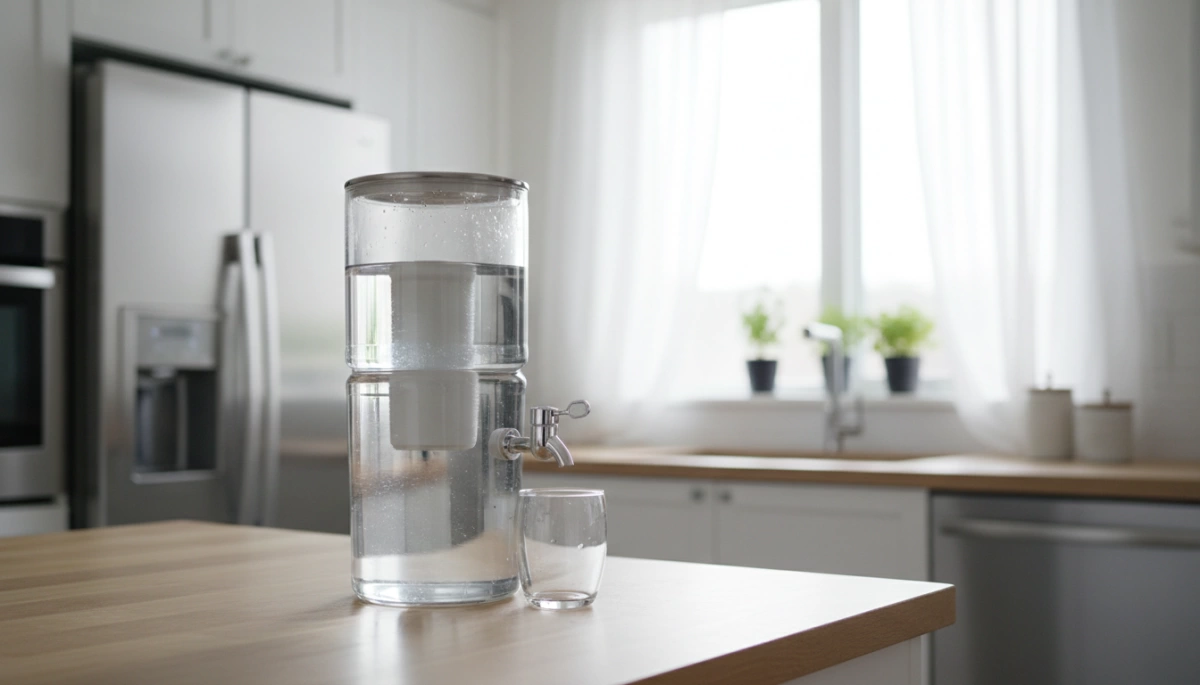
At the core of our glass water filter dispenser is a design that embraces simplicity and reliability. We utilize a gravity-fed water filter system, which means you don’t need electricity, pumps, or complicated plumbing to get pure water. You simply fill the upper reservoir, and natural gravity pulls the water down through the filtration cartridge. This eliminates mechanical failure points often found in electric dispensers.
Dual-Stage Filtration Power
The real magic happens inside the filter cartridge. Most high-quality eco-friendly water purifiers use a dual-stage process to ensure every drop is safe and delicious:
- Activated Carbon Filtration: This layer acts like a sponge for chemicals. It is highly effective at absorbing chlorine, volatile organic compounds (VOCs), and removing unpleasant odors or tastes.
- Ion-Exchange Resin: This stage targets dissolved solids. It works to reduce heavy metals like lead and copper while preventing limescale buildup.
Efficient Contaminant Removal & Flow
We design these systems to balance purity with speed. While the water moves through the filter media, it effectively strips away contaminants without leaving you waiting all day. To fully understand the mechanics behind this, it helps to see how countertop water filters function and maintain quality.
With a high-capacity water filter reservoir, you get a consistent flow rate that keeps up with family demand. The result is crisp, clean water that is free from microplastics and heavy metals, ready to pour whenever you need it.
Top Features to Look for in a Premium Glass Dispenser
When we decide to upgrade our kitchen setup, we aren’t just looking for something that looks good on the counter; we need it to work hard for us every day. Choosing the right glass water filter dispenser comes down to a few specific specs that separate the “okay” options from the truly premium ones. In my experience, focusing on capacity, hardware quality, and material purity ensures you get a system that fits a busy American lifestyle.
Capacity and Convenience
First, size matters. A standard pitcher might work for a dorm room, but for a family or a home office, you need a high-capacity water filter. Look for a reservoir that holds at least 2 gallons (approx. 7.5 liters). This “sweet spot” volume means you aren’t running to the sink to refill it five times a day, but it’s still compact enough to fit under most standard kitchen cabinets. A larger volume encourages better hydration habits simply because the water is always ready and waiting.
Hardware and Ergonomics
The most overlooked feature is the spigot. Many budget dispensers use cheap plastic taps that trickle slowly and eventually leak. A premium kitchen water dispenser should feature a high-flow spigot, preferably made from stainless steel (304 grade). This ensures a fast pour when you’re filling a pot for pasta or a large gym bottle, and it eliminates one more point of plastic contact.
Filtration Power and Purity
We buy these systems for clean water, so the filter itself must be top-tier. You want a system that goes beyond basic taste improvement. Look for filters that handle heavy metals, chlorine, and if you are concerned about specific additives, you should understand how to reduce fluoride in water using advanced filtration media. Additionally, ensure the design offers minimal plastic contact—ideally, the water should only touch glass and stainless steel after passing through the filter, ensuring a true plastic-free water filtration experience.
Here is a quick checklist to use when evaluating a new dispenser:
| Feature | Why It Matters |
|---|---|
| Borosilicate Glass Body | Withstands temperature changes and prevents “plastic taste” leaching. |
| 2.2+ Gallon Capacity | Reduces refill frequency; perfect for families and offices. |
| Stainless Steel Spigot | Provides a high flow rate and superior durability compared to plastic taps. |
| Long-Lasting Filters | search for filters rated for 2–3 months of use to reduce waste and cost. |
| Non-Slip Base | Keeps the heavy glass dispenser stable on smooth granite or quartz countertops. |
The driplife Glass Water Filter Dispenser Experience
At driplife, we understand that modern hydration is about more than just removing impurities; it’s about the entire experience. That is why we engineered our driplife Glass Water Filter Dispenser to be the ultimate premium kitchen water dispenser. We moved away from the industry standard of plastic reservoirs, opting instead for a 2.2-gallon borosilicate glass water dispenser body. This minimalist design doesn’t just look stunning on a granite island or office sideboard; it ensures that your water stays pure, cold, and free from plastic aftertastes.
Engineered for Purity and Performance
We know that health-conscious families are looking for a zero plastic contact pitcher, and we delivered. The core of our design ensures that once your water is filtered, it sits safely in glass, never touching plastic again. This preserves the crisp, clean taste you expect from a high-end system.
Here is what sets our glass water filter dispenser apart:
- Zero Plastic Contact Storage: We prioritized a design where stored water only touches glass, eliminating worries about leaching.
- High-Capacity Hydration: With a 2.2-gallon volume, this large glass water purifier minimizes the need for constant refills, making it perfect for busy family kitchens or collaborative office spaces.
- Dual-Stage Hybrid Filtration: Our system combines activated carbon and advanced filtration media to effectively reduce chlorine, heavy metals, and odors while retaining essential minerals.
- Eco-Friendly Efficiency: A single filter cartridge can replace thousands of single-use plastic bottles, making this a truly sustainable drinking water system.
If you are evaluating which setup fits your home best, comparing a standard countertop water filter against our glass dispenser reveals a clear winner in terms of aesthetics and material safety. We designed this dispenser not just as a tool, but as a centerpiece that encourages better hydration habits through superior design.
Glass Water Filter Dispenser vs. Traditional Plastic Pitchers
When I walk into most American kitchens, I usually spot a plastic filter pitcher tucked in the fridge door. While they have been the standard for years, upgrading to a glass water filter dispenser changes the game entirely. It is not just about having a stylish countertop piece; it is about performance, health, and volume.
Material Quality and Hygiene
The most obvious difference is the material. Traditional pitchers are made of plastic, which can degrade over time, developing micro-scratches that harbor bacteria and odors. In contrast, a borosilicate glass water dispenser offers a non-porous, sterile surface. You get pure water without the risk of plastic leaching or that stale “fridge taste.”
Filtration Power and Capacity
Most handheld pitchers rely on smaller, rapid-flow filters. While convenient, they sometimes sacrifice filtration quality for speed. Understanding why a comprehensive water filter is important helps explain the difference here. A gravity-fed water filter dispenser typically uses a larger, denser filter media. Because it uses natural gravity rather than pouring force, the water has more contact time with the filter, resulting in superior removal of contaminants like lead and chlorine.
- Capacity: A standard pitcher holds about 8-10 cups. A high-capacity water filter dispenser usually holds 2+ gallons. This means fewer trips to the sink and enough microplastics-free hydration for the whole family.
Cost Considerations: Upfront vs. Long-Term
Sticker shock can happen when you compare a $25 pitcher to a premium kitchen water dispenser, but you have to look at the long game.
| Feature | Traditional Plastic Pitcher | Glass Water Filter Dispenser |
|---|---|---|
| Initial Cost | Low ($20 – $40) | Moderate to High ($100+) |
| Filter Life | Short (approx. 40 gallons / 2 months) | Long (approx. 100+ gallons / 6 months) |
| Durability | Low (prone to cracking/clouding) | High (shatter-resistant borosilicate) |
| Value | Constant ongoing costs | One-time investment, lower upkeep |
While the initial investment is higher for a lead-free glass dispenser, the filters generally last much longer, and you aren’t replacing a cracked plastic pitcher every year or two. You are paying for longevity and health.
Maintenance, Care, and Longevity Tips
One of the biggest perks of switching to a glass water filter dispenser is how incredibly easy it is to maintain compared to complicated electric systems or staining plastic pitchers. Because we use non-porous borosilicate glass, you don’t have to worry about lingering odors, impossible-to-scrub corners, or that cloudy film that inevitably develops on plastic over time.
Easy Assembly and Cleaning Protocols
We design these systems for zero-hassle living. Assembly is straightforward and usually takes less than five minutes—no tools or plumber required. When it comes to hygiene, the lead-free glass dispenser body is the star of the show.
- Dishwasher Compatibility: The main glass reservoir is generally dishwasher safe. This makes sanitizing your system effortless compared to plastic units that might warp or degrade in high heat.
- Component Care: We recommend hand washing the stainless steel spigot and the filter housing with mild soap to preserve the silicone seals and ensure a leak-proof fit.
- Routine Rinsing: Give the reservoir a quick rinse between refills to keep dust out, and perform a deep clean every time you swap the filter.
Maximizing Filter Life
To keep your eco-friendly water purifier running at peak performance, you need to treat the filtration core right. The activated carbon filtration block does the heavy lifting, removing chlorine and heavy metals, but it has a saturation point.
- Proper Activation: Always flush or soak a new filter according to the manual to remove loose carbon dust and activate the media before the first use.
- Monitor Flow Rate: A significantly slower flow rate is a tell-tale sign that the filter is clogged with contaminants and needs immediate replacing.
- Stick to a Schedule: As a dedicated water filter supplier, we advise changing filters every 2–3 months depending on your household water quality and usage volume to ensure you are always drinking clean, safe water.
Daily Use Best Practices for Durability
While borosilicate glass is shatter-resistant and tough, a few simple habits will keep it looking pristine on your counter for years.
- Avoid Direct Sunlight: Place your countertop glass pitcher away from windows with direct, intense sun exposure to prevent algae growth inside the tank.
- Temperature Management: Although borosilicate glass handles thermal shock well, never run hot water through the filter element itself. Hot water can damage the adsorption properties of the filter media, rendering it ineffective.
Sustainability and Lifestyle Integration
Making the switch to a glass water filter dispenser is about more than just hydration; it is a commitment to a sustainable drinking water system. in my experience, the easiest way to cut down on single-use waste is to make the reusable option more attractive than the disposable one. By choosing a Borosilicate glass water dispenser, you aren’t just filtering out contaminants; you are actively eliminating the need for thousands of plastic bottles per year. This is the cornerstone of plastic-free water filtration—a simple change that significantly lowers your household’s carbon footprint while ensuring you aren’t drinking from degrading plastic containers.
Beyond the obvious environmental wins, these units serve as a premium kitchen water dispenser that you actually want to show off. Unlike bulky plastic pitchers that we usually hide inside the refrigerator, a sleek zero plastic contact pitcher sits proudly on the counter. It transforms a utilitarian object into a stylish centerpiece for kitchens, dining tables, or home offices. Whether you are serving guests or just managing your daily intake, the visual appeal of crystal-clear glass encourages everyone to drink more water.
Here is how a glass dispenser integrates into a modern lifestyle:
- Zero-Waste Living: By relying on long-lasting filters and durable glass, you break the cycle of buying and tossing single-use plastics.
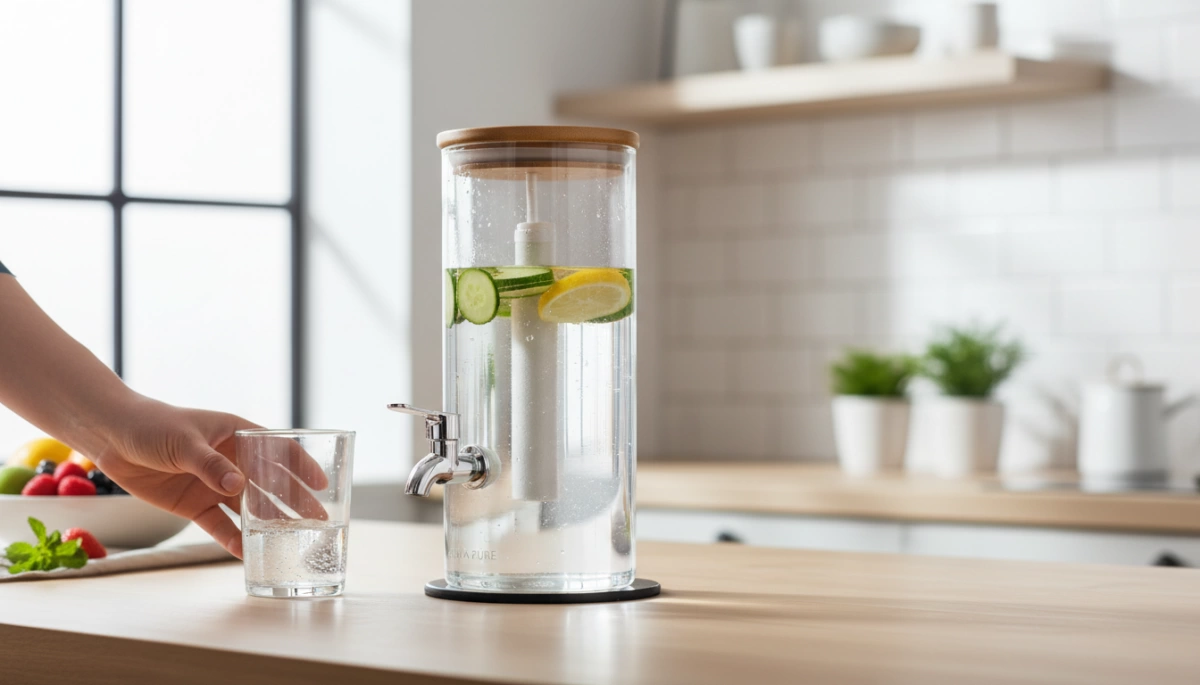
- Versatility: The wide mouth and non-porous nature of the glass make it perfect for creating fruit-infused waters (like lemon or cucumber) without worrying about lingering odors or stains.
- Visual Clarity: Understanding water quality is vital, and knowing the hard vs. soft water differences can help you appreciate how a quality filter removes cloudiness, leaving you with pristine water on display.
- Entertaining Ready: It functions beautifully as a self-serve station during dinner parties, removing the need to constantly refill small pitchers.
Adopting an eco-friendly water purifier like this isn’t just a purchase; it’s a lifestyle upgrade that prioritizes health, aesthetics, and the planet equally.