

















Are you watching your profit margins shrink while manufacturing costs continue to climb?
It’s the silent killer for B2B water purification businesses right now.
You might already be feeling the heat from rising Countertop RO BOM cost trends, fluctuating resin prices, and unpredictable freight rates.
But how do you protect your bottom line without scaring off your wholesale clients?
In this post, we’re going deep into Material Cost Pressure and Pricing Adjustments in Countertop RO Supply Chains.
We aren’t just talking theory. We’re sharing actionable distributor margin protection strategies and the hard reality of cost pass-through in the current market.
If you are looking to stabilize your supply chain and secure your profits against volatility, this guide is for you.
Let’s dive in.
Deconstructing the BOM: Where Are the Cost Pressures Originating?
In my years managing water filtration supply chains, I’ve seen market cycles come and go, but the current countertop RO BOM cost trends are uniquely challenging. We are witnessing a simultaneous price surge across nearly every critical component. Understanding the anatomy of the Bill of Materials (BOM) is the first step in navigating these water purifier supply chain challenges. When the cost of raw inputs shifts, it ripples through the entire manufacturing process, forcing us to re-evaluate our baseline expenses.
Plastics, Resins, and Housings
The external chassis and internal water paths of a countertop RO system rely heavily on high-grade polymers. Reverse osmosis raw material fluctuations in the petrochemical sector directly impact the price of:
- Food-grade Polypropylene (PP): Essential for filter housings and internal tubing.
- ABS Plastics: Used for the aesthetic outer casing and water tanks.
- BPA-free Resins: Critical for maintaining the safety standards expected by the US market.
Even a minor uptick in crude oil or refining costs translates to higher per-unit pricing for these molded components.
RO Membranes and Filtration Media
The “heart” of the system—the RO membrane—is facing its own set of pressures. The RO membrane pricing forecast remains volatile due to the rising costs of specialized thin-film composites (TFC) and the chemicals required for membrane casting.
- Polyamide Layers: Increased demand in industrial sectors is tightening the supply for residential RO.
- Activated Carbon: High-quality coconut shell carbon, a staple for taste and odor removal, has seen steady price increases due to harvest fluctuations and high demand in air purification.
Electronic Components and Pumps
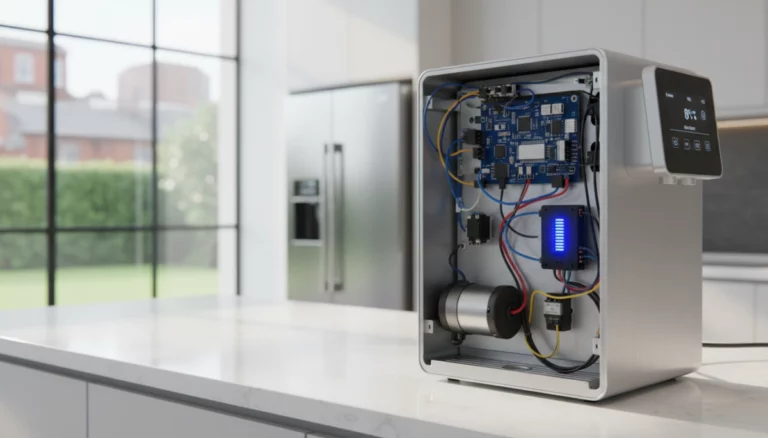
Modern countertop RO systems are no longer just mechanical filters; they are smart appliances. This shift introduces exposure to the semiconductor and precision motor markets.
- Smart Sensors & PCBs: Real-time TDS monitoring and leak detection require stable microchip supplies.
- High-Pressure DC Pumps: The “muscle” of the RO process relies on copper windings and precision magnets, both of which are subject to global metal market volatility.
The Freight and Logistics Multiplier
The freight cost impact on water filters acts as a multiplier on top of the physical BOM. Even if material costs were to stabilize, the expense of moving bulky countertop units from the factory floor to US distribution centers remains a significant variable.
- Container Rates: Fluctuations in trans-Pacific shipping lanes can add a 5-10% “hidden tax” on every unit.
- Last-Mile Logistics: Rising fuel surcharges in the US domestic market further squeeze the margins for B2B distributors.
By deconstructing these costs, I can better identify where to optimize without compromising the structural integrity or filtration performance of our systems. This transparency is essential for any brand looking to maintain a competitive edge in a high-cost environment.
The Distributor’s Dilemma: Cost Pass-Through vs. Market Share

We are currently navigating one of the toughest tightropes in the industry: balancing material cost pressure countertop RO pricing against the need to keep products moving off the shelves. As a distributor, you are stuck between a rock and a hard place. Do you absorb the rising BOM (Bill of Materials) costs to keep your customers happy, or do you pass those costs along and risk losing ground to cheaper competitors? It’s a classic B2B water filter distributor pricing standoff.
The Risk of Margin Erosion
Doing nothing is not an option. When raw material fluctuations hit—whether it’s the price of ABS plastic or filtration media—simply absorbing the hit directly impacts your bottom line. Margin protection distributor RO strategies are essential because if your cost of goods sold (COGS) increases by 12% and your wholesale price stays flat, your net profit doesn’t just dip; in a low-margin volume game, it can evaporate entirely. You need to maintain a healthy spread on your countertop water filter inventory to fund operations and marketing, otherwise, you are essentially financing the supply chain inflation yourself.
The Danger of Aggressive Cost Pass-Through
However, simply flipping the switch and raising prices overnight is dangerous. The cost pass through countertop RO market reality is that US consumers and retailers are sensitive to sticker shock. If you push a 15% price hike to cover your new membrane costs, you might trigger a “substitution effect.” Retail buyers might switch to a lower-tier brand or, worse, stick with pitcher filters and bottled water. Aggressive pass-throughs can damage long-term relationships with retailers who operate on fixed seasonal pricing cycles.
Analyzing Consumer Price Elasticity in the RO Market
To execute a smart distributor price adjustment strategy RO, you have to understand elasticity. In the US market, countertop RO systems are often viewed as a premium appliance, but they still have a price ceiling.
Here is what we are seeing regarding price sensitivity:
- Entry-Level Elasticity: Budget models are highly sensitive. A $20 increase can kill conversion rates.
- Premium Inelasticity: High-end models with smart features or instant heating are less sensitive. Customers here are buying health and convenience, not just a price tag.
- Total Cost of Ownership: You can offset sticker price increases by highlighting lower long-term filter replacement costs.
The goal is to find the “sweet spot” where you protect your margins without stalling your sales velocity.
Strategic Pricing Adjustment Strategies for RO Brands
Navigating material cost pressure and pricing adjustments in countertop RO supply chains requires more than just slapping a higher price tag on your products. A flat price hike can easily alienate your customer base. Instead, we rely on a calculated countertop water purifier pricing strategy to protect margins while keeping US buyers engaged.
Implementing Tiered Pricing Models
One of the most effective ways to handle rising costs is to give your customers choices. A tiered pricing structure allows you to cater to different budgets while absorbing cost shocks at the higher ends.
- Base Tier (Entry-Level): Stripped-down models focusing purely on reliable filtration. This keeps the price point accessible for budget-conscious shoppers even when raw material costs fluctuate.
- Mid-Tier (Standard): The core product with standard convenience features. Minor, calculated price bumps are applied here.
- Premium Tier (Flagship): High-margin units packed with advanced tech. This tier absorbs the brunt of the BOM cost increases without hurting your overall sales volume.
Value-Added Repositioning
If you need to raise prices, you have to increase the perceived value. US consumers are willing to pay a premium if the product elevates their kitchen experience. Instead of competing purely on price, we focus on upgrading the user experience to justify the cost pass-through. For example, integrating smart user interface engineering for multifunction countertop RO dispensers allows us to reposition a standard water filter as a high-end smart home appliance. Adding features that carry a high perceived value but a relatively low manufacturing cost is the fastest way to offset supply chain pressures.
Phased Price Rollouts and Transparent Communication
A sudden 15% price jump will stall your sales overnight. A successful distributor price adjustment strategy for RO systems relies heavily on pacing and honesty.
- Stagger the Increases: Roll out price adjustments in small 3% to 5% increments over several quarters rather than all at once.
- Give Advance Notice: Always provide your B2B partners and retailers a 60-day heads-up before new pricing takes effect. This allows them to stock up, adjust their own margins, and prepare their customers.
- Explain the “Why”: Be transparent about the market realities. Whether it is the freight cost impact on water filters or sudden resin shortages, sharing the exact context builds trust and makes the price adjustment much easier for your partners to swallow.
Supply Chain Optimization: Protecting Margins Beyond Pricing
Raising prices is often the first reaction to material cost pressure in the countertop RO supply chain, but it shouldn’t be the only one. To maintain a competitive edge in the U.S. market, we focus on internal efficiencies that absorb cost spikes before they ever reach the consumer’s wallet. True margin protection comes from a lean, proactive approach to how we manage every dollar spent on the Bill of Materials (BOM).
Advanced Supplier Negotiation Tactics
We don’t just haggle over pennies; we build strategic alliances. When dealing with water purifier supply chain challenges, we leverage several high-level negotiation strategies:
- Index-Based Pricing: We tie component costs to raw material indices (like plastic resin or copper) to ensure prices drop when market rates cool down, rather than staying locked at peak levels.
- Volume-Commitment Rebates: By guaranteeing annual volumes, we secure “preferred partner” status, which often comes with priority shipping and lower baseline costs.
- Multi-Sourcing Critical Components: We never rely on a single source for RO membranes or high-pressure pumps. Having a secondary, vetted supplier keeps our primary partners honest and our production lines moving.
Inventory and Forecasting Optimization
In a volatile market, timing is everything. We use predictive analytics to track BOM cost trends for water purifiers, allowing us to hedge against inflation.
- Strategic Stockpiling: When we anticipate a rise in resin or filtration media costs, we increase our safety stock of raw materials.
- Just-in-Time (JIT) Refinement: For non-volatile components, we tighten our JIT processes to reduce warehouse overhead and free up capital for more critical investments.
- Demand Sensing: By closely monitoring U.S. consumer buying patterns, we avoid overproduction and the costly “fire sales” that erode brand value.
Value Engineering in Countertop RO Systems
Value engineering is where we truly separate ourselves from the competition. It’s not about making a cheaper product; it’s about making a smarter one. By understanding the role of R&D in modern water filtration partnerships, we can redesign internal layouts to reduce the amount of plastic housing needed or simplify the assembly process to cut labor costs.
This cost optimization trend in the water purifier industry involves:
- Component Consolidation: Reducing the total number of parts in an RO system to minimize failure points and assembly time.
- Material Substitution: Swapping expensive specialty plastics for high-performance composites that offer the same durability at a lower price point.
- Modular Design: Creating universal internal components that can be used across multiple models, significantly lowering the per-unit cost through massive economies of scale.
The Driplife Advantage: Your Buffer Against Supply Chain Volatility
Navigating material cost pressure in countertop RO pricing requires more than just reactive adjustments; it demands a manufacturing partner with deep roots in the supply chain. At Driplife, we leverage our position to absorb market shocks that would otherwise cripple a distributor’s margins. We act as a strategic buffer, ensuring that your business remains resilient even when global markets are unpredictable.
Economies of Scale and Vertical Integration
By controlling the manufacturing process from the ground up, we minimize the “middleman markup” on essential components. Our massive production volume allows us to negotiate better rates for resins and high-grade plastics, ensuring that Driplife countertop RO manufacturing remains competitive even when global commodity prices spike. We don’t just assemble parts; we manage the entire lifecycle of the product to maintain cost leadership.
Collaborative R&D for Cost Efficiency
Innovation is our primary tool for managing high TDS source water with dual-membrane RO solutions and other complex filtration challenges. Our R&D team works directly with partners to find value engineering opportunities. This means we look for ways to simplify the Bill of Materials (BOM) and improve assembly efficiency without sacrificing the high-performance filtration American consumers expect. This proactive design philosophy is a key driver in the cost optimization trend for water purifiers.
Transparent Partnerships
We believe in a “no surprises” approach to business. When you partner with us, you gain a level of transparency that is rare in the OEM/ODM world.
- Open-Book Communication: We provide clear insights into cost drivers, helping you plan your retail pricing and marketing strategies months in advance.
- Strategic Stockpiling: We maintain healthy raw material reserves to bridge the gap during temporary supply chain disruptions, preventing sudden price hikes for our partners.
- Shared Risk Models: We work with our long-term partners to stabilize pricing, ensuring your brand remains a reliable choice for consumers despite broader market volatility.
Frequently Asked Questions About Countertop RO Supply Chain Costs
What drives the main material cost pressure in countertop RO supply chains?
The primary drivers of material cost pressure in countertop RO pricing are the fluctuating costs of high-grade plastics (like ABS and food-grade PP) and specialized resins. These materials make up the bulk of the system’s housing and filtration media. Additionally, the price of high-performance RO membranes and electronic components—such as sensors and high-pressure pumps—remains sensitive to global trade shifts. The freight cost impact on countertop RO units also plays a massive role, as shipping rates for bulky water filtration systems can significantly inflate the landed cost per unit.
How can distributors balance margin protection and market share amid rising material costs?
Distributors must navigate a delicate balance between margin protection and maintaining a competitive edge. To achieve this, many are adopting a selective cost pass-through approach. This involves:
- Tiered Pricing: Absorbing costs on entry-level models to capture market share while adjusting prices on premium units.
- Value-Added Bundling: Including extra filter sets or extended warranties to justify a higher price point.
- Localized Inventory: Stocking up during price dips to mitigate the impact of the BOM cost trend in water purifiers.
What are effective pricing strategies for RO brands facing BOM cost increases?
When the Bill of Materials (BOM) rises, a sudden price hike can alienate customers. Effective distributor price adjustment strategies for RO include phased rollouts, where price increases are introduced gradually over several months. Brands also benefit from value-added repositioning, focusing on the long-term savings of high-efficiency pre-filtration engineering which extends the life of expensive membranes. Transparent communication about market conditions helps maintain trust with B2B partners and end consumers alike.
How does supply chain optimization help protect margins beyond just adjusting prices?
Optimization is about working smarter, not just charging more. We focus on cost optimization trends such as:
- Value Engineering: Redesigning internal layouts to reduce material waste without sacrificing performance.
- Supplier Negotiation: Leveraging long-term contracts for countertop RO components to lock in lower rates.
- Forecasting Accuracy: Using data to predict demand, which prevents expensive emergency shipments and overstocking.
- Vertical Integration: Minimizing the number of third-party vendors to reduce cumulative markups.
Why choose Driplife as a manufacturing partner in volatile supply markets?
Driplife acts as a strategic buffer against market volatility. Our massive economies of scale and vertically integrated manufacturing allow us to absorb many of the shocks that smaller suppliers cannot. We invest heavily in collaborative R&D to ensure our smart water purifiers are designed for both performance and cost-efficiency. By partnering with us, you gain access to stable pricing, reliable lead times, and a supply chain built to withstand the pressures of the global market.