

















Trying to figure out if a mineral water filter is really worth it—or just marketing hype?
You’re not alone. Many people love how mineral-rich bottled water tastes but don’t want to keep paying for plastic bottles… or deal with flat, demineralized RO water at home. That’s where mineral water filters come in.
In this guide, you’ll see exactly how these systems retain or add minerals like calcium and magnesium, how they change taste and pH, and how to choose between mineral retention, RO remineralization, and alkaline filters for your setup.
If you want clean, safe, great-tasting water that doesn’t taste “empty” after filtration—and a realistic look at what these filters can and can’t do for your health—keep reading.
Understanding Mineral Water Filters
What Is a Mineral Water Filter?
A mineral water filter is a drinking water filter designed not only to clean your water, but also to protect or enhance its natural minerals—mainly calcium, magnesium, and potassium—so your water doesn’t taste flat or “empty.”
In simple terms, a mineral drinking water filter does one (or both) of these:
- Mineral retention filtration – filters out contaminants while keeping beneficial minerals that are already in your tap water.
- Remineralization filter – filters the water first (often with RO or multi-stage systems), then adds minerals back using a mineral cartridge, beads, or media (like Maifan stone or calcium–magnesium media).
The result is clean, pH-balanced mineral water at home that tastes closer to bottled mineral water without the plastic bottles.
How Mineral Water Filters Compare to Standard Water Filters
Standard water filters (like basic carbon pitchers or single-stage under-sink units) focus on:
- Chlorine, odor, and basic contaminant reduction
- Little or no control over minerals
- Often leaving water slightly improved in taste, but not necessarily balanced or mineral-rich
A mineral water filter system goes further:
- Uses base filtration (sediment, carbon, sometimes RO) for safety
- Includes mineral retention or post-RO mineral addition
- Targets a better taste profile, smoother mouthfeel, and more “refreshing” water
- Can create pH balanced mineral water or even alkaline water, depending on the media
Think of it this way:
| Feature | Standard Filter | Mineral Water Filter |
|---|---|---|
| Main goal | Basic contaminant reduction | Clean water plus mineral balance & taste |
| Minerals in water | Uncontrolled | Retained or re-added |
| Taste | Cleaner than tap | Smoother, less flat, closer to bottled mineral |
| Ideal for RO users | Not optimized | RO remineralization cartridge recommended |
Who Actually Needs a Mineral Water Filter (and Who Doesn’t)?
You’re a good fit for a mineral water filter if:
- You use RO water and it tastes flat, soft, or “too pure”
- Your city tap water is safe but unpleasant in taste, and you want better mouthfeel
- You buy bottled mineral water often and want a home mineral water system instead
- You care about pH-balanced mineral water for coffee, tea, and daily drinking
- You want a point-of-use mineral filter (under-sink or countertop) for your kitchen
You may not need a mineral water filter if:
- Your water is already hard, high in minerals, and you like the taste
- Your biggest issues are serious contamination (bacteria, heavy metals) and you haven’t installed proper base filtration yet
- You’re expecting minerals in water to be your main source of nutrition (they shouldn’t be)
Bottom line:
A mineral water filter is for people who already care about clean water and want to upgrade taste, texture, and balance—not for replacing proper filtration or a healthy diet.
How Mineral Water Filters Work
Base Filtration vs. Mineral Stages
Every solid mineral water filter is built in two parts:
- Base filtration stage – This is the “cleanup crew.” It usually uses sediment and carbon filters to:
- Remove chlorine, odors, and bad taste
- Cut down on rust, sand, and visible particles
- Lower some chemicals and organics
- Mineral stage – This is the “balance and taste” stage. After the water is clean, a mineral drinking water filter uses special media to:
- Keep natural minerals in (mineral retention), or
- Add minerals back after RO (remineralization / post-RO mineral addition)
If you’re running RO at home, it helps to understand the basics of reverse osmosis drinking water before you pick a remineralization filter.
Mineral Retention vs. Remineralization (Simple Explanation)
Think of it in two simple options:
- Mineral retention filtration
- Uses gentler filtration (usually carbon-based)
- Targets “bad stuff” but tries not to strip calcium and magnesium
- Best for city water that’s already treated but you want better taste
- Remineralization filter (post-RO)
- RO first removes almost everything (including minerals)
- A remineralization cartridge or alkaline remineralization stage adds selected minerals back
- Ideal if you like RO purity but hate that “flat” demineralized taste
Both styles aim for pH-balanced mineral water and better mouthfeel, but they start from very different water.
How Mineral Cartridges Release Minerals
Mineral cartridges use solid media that slowly dissolves or exchanges ions into the water as it passes:
- Common media in a calcium magnesium water filter:
- Calcite (calcium carbonate)
- Maifan stone filter media
- Mineral beads or ceramic balls with calcium, magnesium, and other trace minerals
How they work in practice:
- Water flows through a mineral cartridge or under sink mineral filter
- A controlled amount of minerals dissolves into the water
- The release rate depends on:
- Water contact time (flow rate)
- Water temperature
- Starting hardness and pH
- Media composition and quality
Good multi-stage mineral water filters are engineered so the mineral release is stable and predictable, not random.
What Really Affects Mineral Level and Taste
Your final water taste and mineral level depend on a few key factors:
- Source water type
- Hard tap water: mineral retention filters mostly “polish” taste
- RO water: needs a stronger post-RO remineralizer to fix flat taste
- System design
- Length and size of the mineral cartridge
- Type of media (natural mineral infusion filter vs. alkaline water filter system)
- Whether it’s a countertop remineralizer, pitcher, or point-of-use mineral filter under the sink
- Usage habits
- Faster flow = less contact time = lighter taste
- Very low usage = water sits too long, sometimes stronger mineral taste
When I design a home mineral water system, I focus on taste consistency, safe base filtration, and a clear mineral cartridge replacement schedule so the water doesn’t slowly drift in taste or pH over time.
Types of Mineral Water Filter Systems
Mineral retention filters (keep natural minerals)
Mineral retention filtration is all about cleaning the water without stripping out the good minerals. These systems usually use carbon and mechanical filters to remove chlorine, odors, and particles while letting calcium and magnesium stay in your tap water. If your city water is generally safe but tastes off, a mineral drinking water filter that focuses on retention is a simple, low-maintenance option.
Remineralization filters after RO and other systems
If you already use RO and hate the “flat” taste, a remineralization filter or RO remineralization cartridge is what fixes that demineralized water. The RO does the heavy cleaning first, then a post-RO mineral addition stage brings back a controlled mix of calcium, magnesium, and other trace minerals. This is the go-to setup for people who want very pure water but still want it to taste like natural spring water.
Alkaline and mineral-infused water filters
Alkaline and mineral-infused water filters use media like Maifan stone, calcium, and magnesium beads to raise pH and smooth out taste. These systems are often marketed as alkaline water filter systems or alkaline remineralization stages, giving you pH-balanced mineral water that feels softer and more refreshing. I position these for users who care about both taste and a slightly higher pH profile at home.
Under-sink, countertop, and pitcher mineral filters
For most U.S. homes, the easiest way to start is a point-of-use mineral filter:
- Under sink mineral filter – hidden, plumbed to a dedicated faucet, ideal for families and cooking.
- Countertop remineralizer – no drilling, good for renters and offices; often pairs well with a countertop water cooler.
- Pitcher with mineral beads – entry-level, portable, but with limited flow and smaller mineral media.
Whole-house vs point-of-use mineral water
You can run minerals at:
- Whole-house level – mainly to soften feel and protect plumbing; not as precise for drinking water minerals at every tap.
- Point-of-use (POU) – under-sink or countertop systems for drinking and cooking only, where we can tightly control taste, pH, and mineral balance. For most U.S. homes, I recommend a POU home mineral water system first, then scale up if needed.
Essential minerals in filtered drinking water
Mineral water filters are built to keep or add a few key minerals that actually matter for taste and balance, not to replace a healthy diet.
Key minerals: calcium, magnesium, potassium
In most mineral drinking water filter setups, you’ll mainly see:
- Calcium – adds a light “sweetness” and body to the water; too little and water tastes flat, too much and it feels chalky.
- Magnesium – sharpens flavor and gives water a “crisper” edge; it’s also what many people miss in flat RO water.
- Potassium – often used in remineralization filters as potassium-based media; supports a smoother taste and helps with pH balance.
Many calcium magnesium water filter cartridges blend these to hit a stable, comfortable range rather than chasing high “mineral water” numbers.
Trace elements: sodium, zinc, and others
You’ll also get trace elements in tiny amounts:
- Sodium – usually very low; mainly tweaks taste and softness.
- Zinc and others – can appear from certain mineral media (like Maifan stone or mineral beads) in very small, controlled levels.
These are background players—good for water balance and flavor, not primary nutrition.
How minerals change taste, mouthfeel, and pH
The right mineral mix is what makes pH balanced mineral water feel “right”:
- Taste – more minerals = more character; too little = “empty” water.
- Mouthfeel – calcium/magnesium give a rounder, smoother feel; pure RO can feel thin or “hollow.”
- pH – alkaline remineralization stages can nudge pH into the 8–9 range, which many people in the U.S. prefer for daily drinking and coffee.
A good taste enhancing water filter is tuned so you notice the difference immediately, but it doesn’t feel heavy or salty.
What “healthy mineral water” really means at home
At home, “healthy mineral water” simply means:
- Clean, properly filtered water with balanced minerals (not zero TDS).
- A comfortable pH and taste that makes you want to drink more.
- A reliable home mineral water system so you’re not relying on random bottled water every week.
From my side, when we design multi-stage mineral systems and RO remineralization cartridges, the goal is consistent, stable mineral output, not miracle claims. Your main nutrition still comes from food; the mineral filter’s job is to make your water safe, balanced, and something you actually enjoy drinking every day.
Benefits of Using a Mineral Water Filter
A good mineral water filter changes how your water tastes and how often you actually drink it. Here’s what it really does for you at home.
Why a Mineral Drinking Water Filter Feels Better
| Benefit | What You Actually Notice | Why It Matters |
|---|---|---|
| Better taste | No “flat” or “empty” RO taste | Calcium & magnesium add natural flavor |
| Smoother mouthfeel | Water feels softer and easier to drink | Balanced minerals improve mouthfeel and pH |
| More refreshing | You want to drink more, especially in summer | Helps you stay hydrated without thinking about it |
| Less bottled water | You stop hauling cases from Costco | Home mineral water system replaces bottled mineral water |
| Lower long-term cost | Filters cost less per gallon than bottles | Big savings for families and office use |
Real-World Advantages in Daily Use
- Better taste vs demineralized RO water
A mineral retention filter or RO remineralization cartridge fixes that “dead” RO taste by adding back calcium and magnesium in a controlled way. - More refreshing, smoother drinking experience
Alkaline remineralization stages can slightly raise pH, giving you pH-balanced mineral water that feels cleaner and easier to sip all day. - Cut your bottled mineral water habit
A solid under sink mineral filter or countertop remineralizer gives you mineral-rich drinking water at the tap, so you rely less on plastic bottles. - Cost savings and convenience
Once installed, a multi-stage mineral water filter costs just cents per gallon. You only need to follow a simple mineral cartridge replacement schedule instead of constant store runs. - You naturally drink more water
When water tastes good, your family actually drinks it. That’s the quiet win of a taste enhancing water filter with natural mineral infusion.
If you also care about premium drinking water at a dedicated faucet, pairing a mineral filter with a filtered water tap is one of the cleanest, most convenient setups for a U.S. kitchen:
Use a mineral system under the sink and run it to a separate filtered water tap designed for drinking water for easy daily use.
Limitations and Myths About Mineral Water Filters
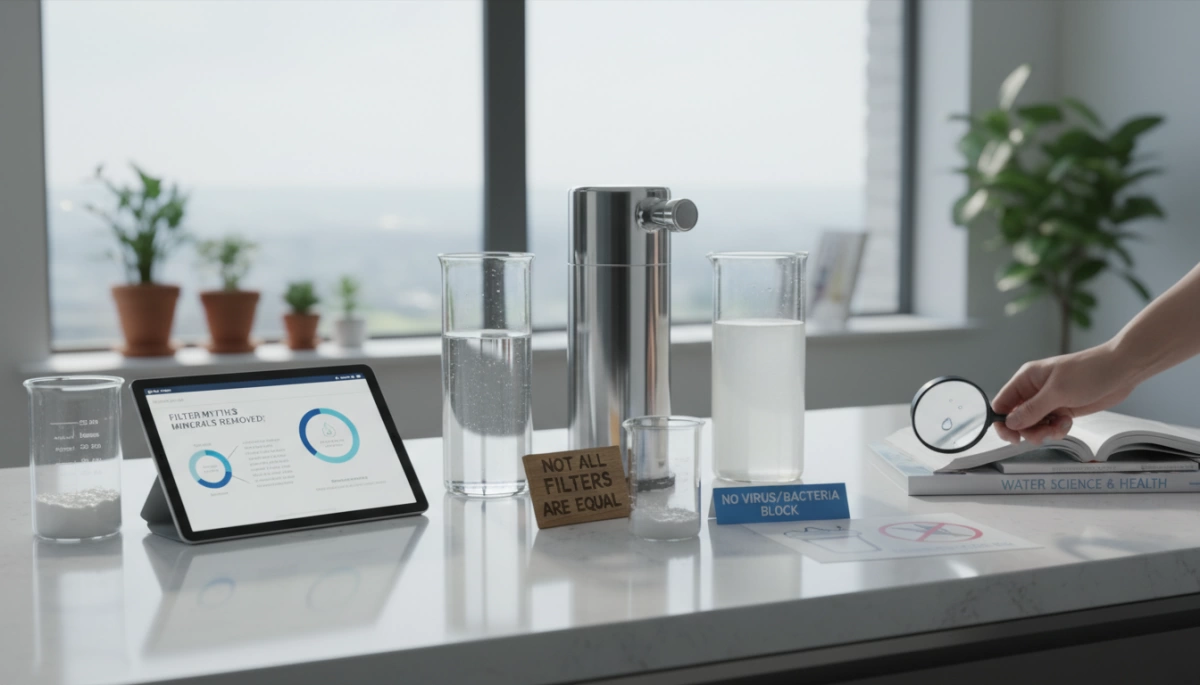
Mineral water filters are great for taste and balance, but they’re often overhyped. I want to be clear about what a mineral drinking water filter can and cannot do.
Not a Main Nutrition Source
A mineral water filter is not a replacement for real nutrition.
Even a strong calcium magnesium water filter or alkaline remineralization stage only adds small amounts of minerals—nowhere close to what you get from food or supplements.
- Treat minerals in water as a bonus, not your main source
- Don’t rely on a home mineral water system to fix deficiencies
- “Healthy mineral water” at home = balanced, pleasant drinking water, not a multivitamin
Myths About “Cure-All” Mineral Water
There’s a lot of marketing hype around alkaline water filter systems and natural mineral infusion filters. Common myths you should ignore:
- “This filter cures disease.” – False, mineral retention filtration is not medical treatment
- “Alkaline water will fix all acidity issues.” – pH-balanced mineral water helps taste, not your entire health profile
- “More minerals = always better.” – Too much post-RO mineral addition can hurt taste and scaling
Use mineral water filter benefits for what they’re best at: better taste, smoother mouthfeel, and a more enjoyable daily drinking experience.
When a Mineral Filter Won’t Fix Your Water
Mineral filters are not a fix for serious water quality issues. If your water has:
- High contaminants (PFAS, lead, nitrate, pesticides, etc.)
- Strange color, odor, or visible particles
- Unknown well quality or very hard water
You need solid base filtration (like carbon, sediment, or a full reverse osmosis water system) first. A countertop remineralizer or under sink mineral filter should only come after your core safety filtration is handled.
Risks of Only Adding Minerals Without Proper Filtration
Just dropping in mineral beads for water filters or a remineralization filter on dirty water is a bad move:
- You can improve taste while still drinking contaminants
- Scale, sediment, or metals can damage your system and plumbing
- It creates a false sense of “healthy mineral water” when the basics aren’t covered
The right order is:
- Clean the water first (sediment, carbon, RO, etc.)
- Then use mineral retention or an RO remineralization cartridge to dial in taste, pH, and balance
Used correctly, a multi-stage mineral water filter is a powerful finishing tool, not a magic cure-all.
How to Choose the Right Mineral Water Filter
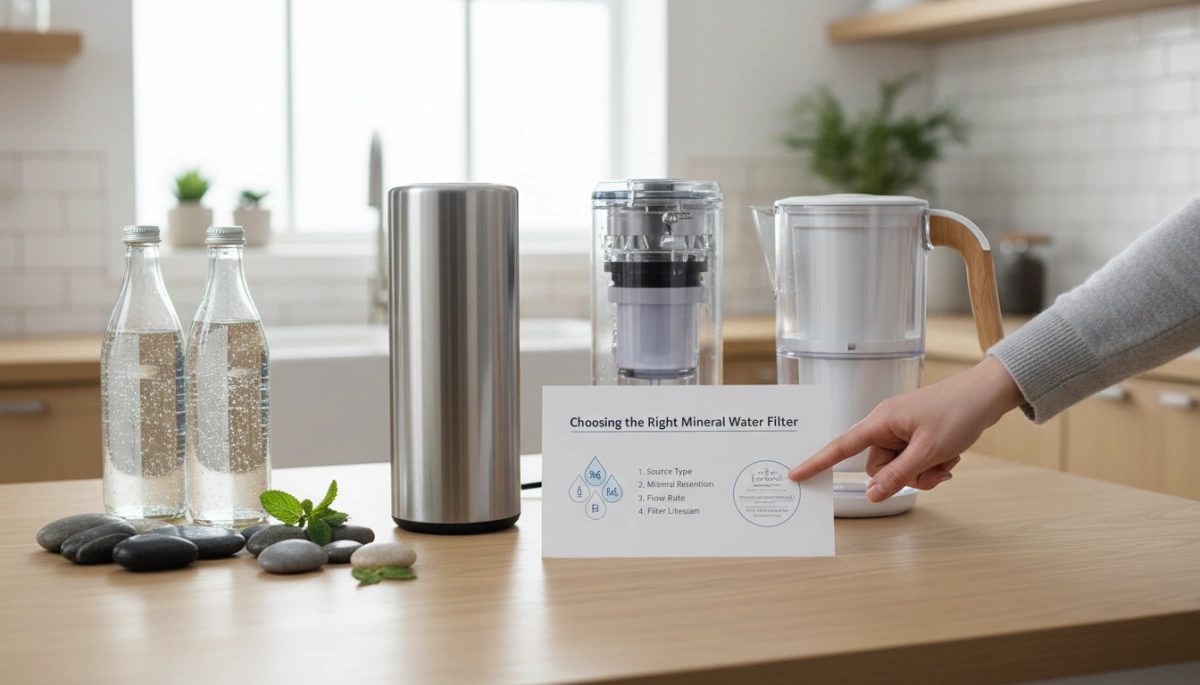
1. Start With Your Water Test
Before you buy any mineral drinking water filter, know what you’re dealing with.
- Test your water (city report or home test kit)
- Note: hardness, chlorine, TDS, bad taste/odor, well vs city water
- If you use RO already, you’ll almost always need a remineralization filter
| Water Source | Typical Need | Notes |
|---|---|---|
| City tap (moderate TDS) | Mineral retention filtration | Keep natural minerals, improve taste |
| Very hard tap | Base softening + mineral retention | Control scaling first |
| RO or distilled | RO remineralization cartridge | Fix flat, demineralized water |
| Well water | Strong base filtration, then mineral | Safety first, minerals second |
For RO users, a quick intro to how RO works is in our guide on under-sink reverse osmosis systems.
2. Retention vs. Remineralization
You’ve got two main paths:
- Mineral retention filter
- Keeps existing calcium and magnesium
- Uses gentler filtration (usually carbon-based)
- Best if your tap water is already safe and stable
- Remineralization (post-RO mineral addition)
- Adds minerals back after RO or distillation
- Often a post-RO mineral addition cartridge
- Ideal if you want very clean water but better taste and pH
Rule of thumb:
- Good tap water = retention
- Flat RO water = remineralization
3. Match Filter Type to Your Home and Lifestyle
Choose the mineral water filter system based on how you actually live:
| Setup | Best For | System Type |
|---|---|---|
| Families, cooking, coffee | Daily kitchen use | Under sink mineral filter or RO + remineralization |
| Renters, small apartments | No drilling, easy move-out | Countertop remineralizer or pitcher with mineral beads |
| Whole-home feel | Showers + all taps | Whole house mineral water filter (plus pre-filtration) |
If you already use a hot/cold water dispenser or an under-sink water dispenser system, make sure the mineral filter is compatible with its flow rate and fittings.
4. Installation, Space, and Plumbing
Look at the boring stuff first—it’s what makes or breaks the install:
- Under-sink: need cabinet space, access to cold-water line, basic tools
- Countertop: needs clear counter space and nearby outlet (if powered)
- Whole house: requires main line access, shutoff valve, usually a plumber
Ask yourself:
- Can I mount a multi-stage mineral water filter vertically?
- Do I have room for cartridges plus a tank (for RO system with mineral filter)?
- Am I okay drilling the sink for a dedicated faucet?
5. Filter Life, Replacement Cost, and Maintenance
Mineral cartridges don’t last forever, and mineral output drops as they age.
- Check mineral cartridge replacement schedule (months or gallons)
- Confirm real-world replacement cost, not just system price
- Look for:
- Simple twist-off cartridges
- Clear labels for flow direction and stages
- Easy access under the sink
Typical ranges (varies by brand and usage):
| Component | Typical Life | Notes |
|---|---|---|
| Carbon pre-filter | 6–12 months | Protects mineral media |
| RO membrane | 2–3 years | For RO remineralization setups |
| Mineral / alkaline stage | 6–18 months | Output drops gradually |
6. Red Flags and Marketing Claims to Avoid
Stay away from:
- “Cures disease”, “detox miracle,” or medical promises
- Claims of delivering your daily mineral requirements from water alone
- No specs for:
- pH range
- Expected mineral output (e.g., mg/L of calcium/magnesium)
- Flow rate and capacity
- Systems that only add minerals but skip real base filtration
- You must fix contaminants before you worry about pH and taste
Look for honest positioning: taste enhancing water filter, healthy mineral water home setup, and clear data instead of hype.
When you line up your water test, lifestyle, installation reality, and long-term costs, picking the right mineral water filter becomes a straightforward, numbers-based decision instead of guesswork.
Real-World Mineral Water Filter Setups and Use Cases
Best Mineral Filter Setups for City Tap Water
For most U.S. city homes, a point-of-use mineral drinking water filter at the sink hits the sweet spot:
- Under sink mineral filter with carbon + mineral retention media for taste and chlorine control
- Great if your tap water is already treated and safe, but tastes “chemical” or slightly flat
- Easy to pair with a stainless-steel water dispenser for everyday drinking and cooking
If your tap water is very hard or heavily chlorinated, go with a multi-stage mineral water filter: sediment + carbon + mineral retention filtration for better taste and balance.
Best Setups for RO Users Who Hate Flat Water
If you already have RO and don’t like the “empty” taste:
- Add a RO remineralization cartridge (post-RO mineral addition) as the last stage
- Choose an alkaline remineralization stage if you want a slight pH boost and smoother mouthfeel
- A countertop reverse osmosis system with integrated remineralization is ideal if you want plug-and-play and don’t want to touch plumbing, similar to how our countertop RO hot and cold system is set up for modular add-ons
Mineral Filters in Rentals and Small Spaces
If you rent or have a small kitchen, focus on no-drill, no-plumber options:
- Countertop remineralizer that connects to a faucet or sits beside an RO unit
- Pitcher-style mineral water filter with natural mineral infusion filter media
- Great for apartments, dorms, and short-term rentals where you can’t change plumbing
You still get pH balanced mineral water and better taste without changing the building’s pipes.
Pairing Mineral Filters with Existing Systems (RO, UV, Carbon)
Mineral water filters are designed to sit at the end of the line:
- After RO: add a remineralization filter to restore calcium and magnesium
- After UV: use a mineral cartridge as the final taste-enhancing water filter
- After carbon: use a mineral retention filtration stage to fine-tune taste and smoothness
This lets you keep your safety-focused filtration (RO, UV, carbon) and then dial in flavor, mouthfeel, and light alkalinity.
Using Mineral Water Filters for Cooking, Coffee, and Tea
If you care about flavor in the kitchen, a home mineral water system for the drinking tap is a big upgrade:
- Cooking: more consistent taste for soups, pasta, and sauces
- Coffee: balanced minerals help extraction; water that’s too pure (RO-only) makes coffee taste flat
- Tea: better aroma and a smoother finish with controlled calcium magnesium water filter output
Most U.S. customers run a point of use mineral filter at the kitchen sink for both drinking and cooking, sometimes paired with a hot/cold dispenser for daily convenience instead of bottled mineral water.
driplife Mineral Water Filter Solutions
As a dedicated mineral water filter manufacturer and supplier, I build driplife systems to deliver stable, repeatable mineral water quality for U.S. homes and brands.
Stable Mineral Media and Cartridges
Our mineral drinking water filter cartridges are packed with controlled mineral media—such as Maifan stone, calcium, and magnesium blends—designed for:
- Stable mineral output over the full cartridge life
- Consistent pH-balanced mineral water, not random spikes
- Reliable performance in multi-stage mineral water filters and post-RO mineral addition setups
Each mineral cartridge is engineered so you know what you’re getting in every gallon, whether you’re softening the taste of RO water or building a new home mineral water system.
Systems Tuned for Taste, pH, and Consistency
driplife mineral water filter solutions are built around three goals:
- Taste optimization – smoother, “rounder” taste vs. flat RO water
- pH balance – optional alkaline remineralization stages to gently raise pH
- Repeatable performance – consistent mineral levels across daily household use
If you’re working with RO, you can pair our mineral modules with a system that’s already tuned for water quality and pH control. For example, we often design around setups similar to those used in countertop RO systems and in-depth pH adjustment workflows like what’s described in this guide on RO water pH levels, testing, and adjustment.
OEM and Private Label Mineral Water Filters
I also support OEM and private label partners who need:
- Custom under sink mineral filters, countertop remineralizers, or point-of-use mineral filters
- Tailored mineral beads for water filters and media blends for specific taste and pH targets
- Modular RO remineralization cartridges that drop into existing platforms
We work closely with U.S. brands, installers, and distributors to match:
- Target TDS and mineral profile
- Housing size and connection type
- Branding and packaging requirements
Testing, Certification, and Compliance Support
For trade and OEM customers, I don’t just ship media and hope for the best. driplife backs every mineral water filter system with:
- Support for performance testing and verification
- Guidance on certifications and compliance in North American markets
- Clear mineral cartridge replacement schedules and documentation
If you’re building a bottled mineral water alternative or upgrading an RO system with a mineral filter, driplife gives you a stable platform, not guesswork.
Frequently Asked Questions About Mineral Water Filters
Do mineral water filters really make water healthier?
A mineral water filter can improve overall drinking experience, but it’s not a magic health device.
What it realistically does:
- Improves taste and mouthfeel vs flat demineralized water
- Helps keep a more natural mineral balance at home
- Can support better hydration because you’ll actually want to drink more
You should still get most of your minerals from food, not from a mineral drinking water filter.
Can mineral filters raise pH and make alkaline water?
Yes, many alkaline water filter systems and RO remineralization cartridges can:
- Gently raise pH (often into the 8.0–9.0 range, depending on your source water)
- Add calcium and magnesium that naturally push water more alkaline
If you want a mild, everyday pH-balanced mineral water, choose a multi-stage mineral water filter that clearly lists its alkaline remineralization stage.
Are mineral water filters safe for all water sources?
Mineral filters are meant for already-filtered or relatively clean water. They are not a substitute for core filtration.
Use a mineral filter:
- After RO, carbon, or sediment filtration
- On treated city tap water that already meets basic safety standards
Don’t rely on a natural mineral infusion filter alone for well water or heavily contaminated sources. You still need proper base filtration (RO, carbon, UV, etc.).
How often do I need to replace mineral cartridges?
Most mineral cartridges and mineral beads for water filters need changing about every 6–12 months, but it depends on:
- Your water usage (gallons per day)
- The system design (under sink mineral filter vs countertop remineralizer vs pitcher)
- The mineral cartridge replacement schedule recommended by the manufacturer
When the water starts to taste “flatter” or less smooth, that’s a sign the post-RO mineral addition stage is nearing the end of its life.
Should I choose RO plus remineralization or just a mineral retention filter?
Here’s the simple way to decide:
- RO + remineralization filter is better if:
- You’re on city tap water with questionable taste or TDS
- You want maximum contaminant reduction, then add back controlled minerals
- You dislike “flat” RO water and want a filter for softening the taste of RO water
- Mineral retention filtration is better if:
- Your source water is already safe and stable (many U.S. city systems)
- You want to keep natural minerals in while improving taste and odor
- You prefer a simpler, lower-waste home mineral water system
For many U.S. homes, a compact point-of-use mineral filter at the sink or a countertop ice and water purifier with mineral enhancement (similar to how premium countertop water systems are built) hits the sweet spot between taste, cost, and convenience.