











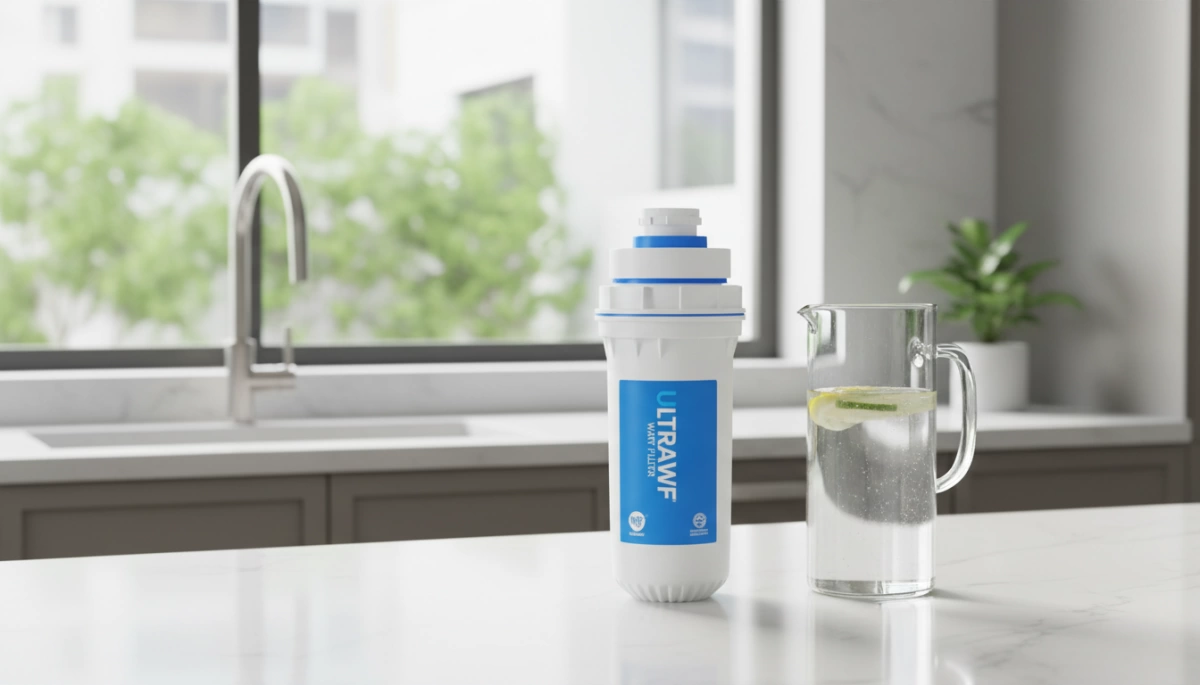
What Is an ULTRAWF Water Filter?
If you own a Frigidaire or certain Kenmore refrigerators, the ULTRAWF water filter (also called Frigidaire PureSource Ultra filter) is the main cartridge that cleans your drinking water and ice right inside the fridge.
ULTRAWF refrigerator water filter: simple definition
The ULTRAWF refrigerator water filter is:
- A carbon block filter cartridge
- Installed inside the fresh food compartment of many Frigidaire fridges
- Designed to reduce chlorine taste and odor, sediment, and some impurities from your tap water
- A point‑of‑use filter – it treats only the water going to your fridge dispenser and ice maker
Role of ULTRAWF in Frigidaire and Kenmore fridges
In supported models, the ULTRAWF replacement cartridge is the primary defense between your tap and your glass. It:
- Protects dispenser water and ice cubes from basic contaminants
- Helps protect fridge internals (valves, lines, ice maker) from sediment and rust
- Keeps water tasting cleaner and fresher than unfiltered tap
You’ll see ULTRAWF used in:
- Many Frigidaire Gallery and Professional side‑by‑side and French door fridges
- Select Kenmore refrigerators labeled “Kenmore fridge water filter ULTRAWF compatible”
ULTRAWF vs generic fridge water filters
Not every “fits ULTRAWF” filter is equal. Here’s how OEM vs generic ULTRAWF filters usually compare:
| Feature | OEM ULTRAWF (Frigidaire) | Generic / Aftermarket ULTRAWF |
|---|---|---|
| Brand | Frigidaire PureSource Ultra | Various third‑party brands |
| Fit & seal | Designed for exact ULTRAWF port | Can vary; some loose or too tight |
| NSF/ANSI certifications | Clearly listed on label | Sometimes limited or missing |
| Filter life rating | ~6 months / ~200–300 gallons | Often “up to 6 months” (untested) |
| Risk of leaks / flow issues | Low when installed correctly | Higher with cheap knockoffs |
I always recommend:
- Check NSF/ANSI certification claims (like NSF 42 for chlorine, taste, and odor)
- Avoid counterfeit ULTRAWF filters that look like OEM but lack real testing
How the ULTRAWF Water Filter Works
The ULTRAWF refrigerator water filter is a compact multi-stage system built around a high-density carbon block, designed to clean your fridge water line before it hits the dispenser or ice maker.
Carbon block filtration basics
Inside every ULTRAWF replacement cartridge, the carbon is pressed into a solid block. That design does two big jobs at once:
- Forces water through tiny pathways for physical filtration
- Maximizes contact time for chemical adsorption
Compared with loose granular carbon, a carbon block gives more consistent performance and less channeling, which is why OEM Frigidaire PureSource Ultra filters use this style.
Mechanical filtration: sediment, rust, particles
As water moves through the block, it works like a dense sponge:
- Traps sediment like sand, silt, and fine dirt
- Catches rust flakes from aging pipes
- Reduces turbidity so water looks clear
This is basic mechanical filtration: if the particle is bigger than the pores, it gets stuck. That’s one reason a clogged ULTRAWF can cause low water pressure after filter change—it’s full of trapped debris.
Chemical adsorption: chlorine, taste, odor
The carbon surface grabs and holds certain chemicals through adsorption, especially:
- Chlorine, which is the
What ULTRAWF Water Filters Actually Remove
An ULTRAWF refrigerator water filter (Frigidaire PureSource Ultra) is built to clean up the everyday junk most U.S. households see in tap water, not to act like a full lab-grade purifier. Here’s what it actually does for your fridge water and ice.
Chlorine, Taste, and Odor Reduction
ULTRAWF uses a tight carbon block to grab chlorine and many of the compounds that cause:
- Chlorine taste
- “Pool” or “chemical” smell
- Stale, musty odors
If your fridge water tastes like tap now, an NSF-certified ULTRAWF replacement cartridge will usually make it noticeably smoother and more neutral.
Sediment, Sand, Rust, and Turbidity
The filter also provides mechanical filtration of:
- Fine sediment and sand
- Rust flakes from old pipes
- General “haze” (turbidity)
This doesn’t turn dirty well water into crystal-clear spring water, but on city water it’s usually enough to clear up visible particles and protect your ice maker and dispenser parts from grit.
Some Heavy Metals and Cysts (If Certified)
Depending on the exact model and its NSF/ANSI certifications (check the label):
- Some ULTRAWF filters can reduce certain heavy metals (like lead or mercury), but only if clearly listed.
- Many are rated for cyst reduction (like Cryptosporidium and Giardia), which adds a layer of safety if your municipal system has a history of microbiological issues.
Always read the spec sheet and certification marks—this is where OEM vs generic ULTRAWF filters really separate. Cheap knockoffs often skip real certification.
Microplastics and Emerging Contaminants
ULTRAWF can help with larger microplastics and some emerging contaminants by:
- Straining out bigger particles with the carbon block
- Adsorbing certain organic chemicals that cause odor or off-flavors
But it is not a dedicated microplastics or PFAS solution. If those are top concerns, you’ll want to stack your fridge filter with an additional system, like a high-performance under-sink filter or even a best-in-class water filter setup built specifically around those contaminants.
How ULTRAWF Improves Taste and Smell
For most U.S. city water, the payoff from an ULTRAWF is simple:
- Less chlorine bite
- No metallic or musty aftertaste
- Clearer ice cubes with less odor
- Water that actually tastes “clean” straight from the fridge
If you’re trying to cut back on bottled water, a properly certified ULTRAWF refrigerator water filter is one of the easiest, low-maintenance upgrades to get better-tasting drinking water and ice right where your family already uses it.
What ULTRAWF Water Filters Do Not Remove
Even though an ULTRAWF refrigerator water filter does a solid job on basic tap water cleanup, it’s not a full-blown purification system—and knowing its limits helps you decide if you need backup.
Limits With TDS, Salts, and Minerals
ULTRAWF filters do not significantly reduce:
- Total Dissolved Solids (TDS)
- Dissolved salts (like sodium, calcium, magnesium)
- Water hardness
It’s a carbon block fridge filter, not a reverse osmosis or distillation unit. Your TDS meter will barely move before vs. after ULTRAWF—and that’s normal.
Lead, PFAS, and VOC Limits
Unless an ULTRAWF (OEM or generic) is individually NSF/ANSI certified for specific contaminants, you should assume:
- Lead reduction is limited or not guaranteed
- PFAS (“forever chemicals”) removal is minimal
- VOCs (volatile organic compounds) are only partially reduced, if at all
Always read the NSF/ANSI standards on the label (like 42 for chlorine, 53 for some health contaminants). If it doesn’t list lead, PFAS, or VOCs, don’t count on it.
Why ULTRAWF Isn’t a Whole-Home Solution
ULTRAWF only treats the water going to:
- Your fridge dispenser
- Your ice maker
It does not protect:
- Shower water
- Bathroom sinks
- Laundry or dishwashers
- Outdoor spigots
If your house has serious issues (iron staining, sulfur smell, heavy hardness), you’re in whole-house filtration or softener territory, not just a fridge filter. You can learn how those compare in this breakdown of a water softener vs. water filter.
When You Need Extra Filtration Beyond ULTRAWF
You should consider adding more filtration in addition to your ULTRAWF if:
- Your water report shows lead, PFAS, or high VOCs
- You want TDS reduction or “bottled-water-type” taste
- You’re on a well with bacteria concerns
- You have scale buildup in appliances
Good add‑ons for U.S. homes:
- Under-sink RO or advanced systems at the kitchen sink
- Whole-house carbon filters or softeners for scale and odor control
- UF or RO countertop systems, like a countertop RO cold and hot purifier with ice maker for dedicated drinking water upgrades, similar to this style of RO water purifier with built-in ice maker
Bottom line: ULTRAWF is great as your fridge’s final polishing filter, but it’s not your only line of defense if your tap water has bigger problems.
ULTRAWF vs Ultrafiltration (UF) Water Filters
ULTRAWF Fridge Filter vs UF Membrane
When people search “ultrawf water filter,” they often mix up the Frigidaire ULTRAWF refrigerator water filter with ultrafiltration (UF) membrane systems. They’re two very different things:
- ULTRAWF = carbon-based fridge filter cartridge (point-of-use, inside your fridge).
- UF system = hollow-fiber membrane unit usually installed under-sink or as part of a multi-stage system.
Both improve drinking water, but they’re built for different jobs.
Pore Size: Carbon Block vs 0.01–0.1 Micron UF
- ULTRAWF uses a carbon block + mechanical filtration. It doesn’t have a defined “pore size” like a membrane.
- Great for chlorine, taste, odor, and basic sediment.
- Can be certified for cyst reduction (like Giardia, Cryptosporidium) depending on the NSF rating.
- Ultrafiltration (UF) uses a 0.01–0.1 micron membrane:
- Physically blocks bacteria, most cysts, and fine particles.
- Much tighter physical barrier than a typical fridge filter.
If you care specifically about bacteria removal and micro-particle control, UF wins. If you care more about taste and chlorine reduction, a carbon-style filter like ULTRAWF is essential (and is what most US homeowners notice first in daily use).
Pathogens: Cyst Risk vs True Microbial Barrier
- ULTRAWF fridge filters:
- Often rated for cyst reduction (check NSF/ANSI 42/53 on the label).
- Not designed as a full microbial barrier for heavily contaminated water.
- UF water filters:
- Built as a physical barrier to bacteria and many pathogens.
- Common in systems where microbiological safety is a concern (well water, older pipes, some small community systems).
If your municipal tap is already disinfected (most US city water), ULTRAWF is usually fine on the microbiological side. If you’re on a well or have known bacterial issues, a UF or RO system is the safer backbone, sometimes paired with a carbon stage for taste, like you’ll see in many residential filtration setups that focus on safety and taste together.
Minerals: What ULTRAWF and UF Both Keep
Both ULTRAWF and UF:
- Do not strip minerals like calcium and magnesium.
- Do not significantly lower TDS (total dissolved solids).
So if you like your water to taste natural and still keep healthy minerals, both ULTRAWF and UF are good fits. They are not like reverse osmosis, which can remove most dissolved minerals.
Electricity & Wastewater: UF vs RO vs Fridge Filters
- ULTRAWF fridge filters:
- Run on house water pressure only.
- No electricity, no drain line, no wastewater.
- Ultrafiltration systems:
- Also typically run on water pressure, no power, and very little or no wastewater (some designs use occasional backwash).
- Reverse osmosis (RO):
- Uses a tight membrane that creates wastewater (reject water) and often needs more plumbing.
- Stronger on dissolved contaminants, but less efficient on water use.
For most US households that want simple, low-maintenance, eco-friendlier filtering at the fridge, ULTRAWF is enough. When you need strong microbial protection without wasting water, a UF membrane system under the sink combined with carbon is a smart upgrade beyond what any fridge filter alone can do.
ULTRAWF vs Reverse Osmosis and Other Filters
ULTRAWF vs Reverse Osmosis (RO) Systems
An ULTRAWF refrigerator water filter is a carbon block point-of-use filter, while a reverse osmosis system is a multi-stage purifier under your sink.
- ULTRAWF strengths
- Cuts chlorine, taste, and odor
- Catches sediment, rust, and some cysts (depending on NSF certification)
- Keeps healthy minerals in your water
- No tank, no drain line, no electricity, low maintenance
- RO strengths
- Big reduction in TDS, salts, nitrates, many heavy metals, and PFAS (depending on certification)
- Better for very hard, salty, or heavily contaminated municipal or well water
- Delivers a more “neutral” taste similar to many bottled waters
If you want basic taste, odor, and sediment improvement, ULTRAWF is enough. If you’re chasing very low TDS or serious contaminant reduction, a dedicated RO drinking water system (like a compact countertop RO purifier with hot and cold water) plus ULTRAWF is the stronger pairing.
ULTRAWF vs Pitcher Filters and Faucet Filters
Pitcher and faucet filters also use carbon, but they’re usually smaller and cheaper, and the performance often drops fast if you don’t change them on time.
- ULTRAWF advantages
- Integrated into the fridge dispenser and ice maker
- Consistent flow vs slow pitcher refills
- Typically better build quality and more robust carbon block
- Less countertop clutter, more “set it and forget it”
A good pitcher or faucet filter can be a backup, but if your family mostly drinks fridge water and ice, the ULTRAWF refrigerator water filter should be your primary filter at that tap.
ULTRAWF vs Whole-House Filters
Whole-house sediment or carbon systems treat all the water entering your home, not just drinking water.
- Whole-house systems do better at:
- Protecting plumbing, shower heads, and appliances
- Reducing sediment, chlorine, and odor across every tap
- ULTRAWF does better at:
- Final polishing for drinking and ice
- Targeted point-of-use filtration with finer carbon media
The cleanest setups in U.S. homes often run a whole-house sediment/carbon filter to protect the plumbing and then use ULTRAWF at the fridge plus a faucet filter at the sink for drinking and cooking water. If you care about shower water too, a dedicated shower head filter can stack on top of that.
When ULTRAWF Alone Is Enough vs When to Stack
Use ULTRAWF alone when:
- You’re on municipal water that already meets standards
- Your main complaints are chlorine taste, smell, and minor sediment
- You just want better-tasting fridge water and ice without extra gear
Stack ULTRAWF with other tech when:
- You have well water, boil notices, or older plumbing with risk of lead
- Local reports show PFAS, high TDS, nitrates, or heavy metals
- You want bottled-water-level quality from your tap
In most U.S. cities, ULTRAWF gives solid everyday drinking water right from your fridge. If your water report shows more serious issues, use ULTRAWF as the last step after RO, ultrafiltration, or a whole-house system.
Compatibility and Models for ULTRAWF Water Filters
Frigidaire Models That Use ULTRAWF
The ULTRAWF refrigerator water filter (also called the Frigidaire PureSource Ultra filter) is used in many side‑by‑side and French door Frigidaire fridges. In general, it fits models where the filter is a long, skinny cartridge that locks into the top right of the fresh food compartment.
Typical Frigidaire series that often use ULTRAWF include:
- Gallery and Professional French door models
- Side‑by‑side models with “PureSource Ultra” printed near the dispenser
- Many models with prefixes like FGHB, FPHB, FGHC, LFHB, LGHB, DGUS (always confirm)
Because Frigidaire releases new lines often, I always tell customers: go by the existing filter part number, not just the fridge series name.
Kenmore and Other Compatible Brands
Some Kenmore refrigerators are made by Frigidaire and are ULTRAWF compatible, especially:
- Kenmore models with a similar top‑right interior filter location
- Kenmore Elite units that say “uses Frigidaire PureSource Ultra” in the manual
If you have a Kenmore, check:
- The model number (on the fridge frame inside the fresh food door)
- The current filter—if it’s labeled ULTRAWF or PureSource Ultra, you’re good
How to Check Your Existing Filter Model
To confirm you need an ULTRAWF replacement cartridge:
- Pull out your current filter from the housing.
- Look at the label for ULTRAWF, PureSource Ultra, or the Frigidaire part number.
- Cross‑check that number with your user manual or the brand website.
- If you’re upgrading to a better carbon block style, it helps to understand what carbon filters actually remove from water so you can match it to your needs.
If the label is worn off, use your fridge model number + “water filter” in a search or check a Frigidaire filter compatibility chart.
OEM ULTRAWF vs Aftermarket Replacements
When you’re picking a ULTRAWF refrigerator water filter, you’ll see:
- OEM ULTRAWF filters
- Made by Frigidaire
- Higher price, consistent fit and quality
- Often NSF certified for chlorine taste and odor, sometimes cysts
- Aftermarket / generic ULTRAWF replacements
- Cheaper, quality varies a lot
- Look for NSF/ANSI certification printed on the label
- Avoid options with vague claims, no brand name, or no test data
For U.S. homes, I recommend:
- Stick with OEM or a well‑known certified generic brand
- Make sure the listing clearly says “ULTRAWF compatible” and shows real certification, not just marketing buzzwords
That way you get the performance ULTRAWF is designed for—without guessing if the cartridge is actually doing its job.
How to Choose the Right ULTRAWF Replacement
OEM vs Generic ULTRAWF Water Filters
You basically have two choices for an ULTRAWF refrigerator water filter:
| Type | Pros | Cons | Best For |
|---|---|---|---|
| OEM ULTRAWF (Frigidaire / Kenmore-labeled) | Guaranteed fit, usually full NSF certifications, consistent quality | Higher price | People who want zero guesswork |
| Generic / Compatible ULTRAWF | Cheaper, often sold in multi-packs | Quality and certification vary a lot; more risk of leaks or poor performance | Budget shoppers willing to check specs carefully |
I always lean OEM for ice-and-drinking water, unless a third-party brand clearly shows NSF test data, real packaging, and a track record of good reviews.
Reading NSF/ANSI Certifications
Look for these markings on the ULTRAWF replacement cartridge label or box:
| NSF/ANSI Standard | What It Means |
|---|---|
| 42 | Chlorine, taste, and odor reduction; basic aesthetic improvement |
| 53 | Health-based claims (lead, cysts, some heavy metals, VOCs – only if listed) |
| 401 | “Emerging” contaminants (some pharmaceuticals, certain chemicals – if listed) |
Key checks:
- Certifications should say “NSF/ANSI 42” (or 53, 401) and list what’s reduced, not just “tested to NSF standards.”
- Brand name and model number on the box should match your ULTRAWF refrigerator water filter exactly.
If you want a primer on why proper certification matters, this overview of why water filters are important for safe drinking water breaks it down in simple terms.
Filter Life and Gallon Capacity
Most ULTRAWF-style filters are rated for:
- Life: Up to 6 months
- Capacity: Around 200–300 gallons
Rules of thumb:
- 1–2 people: You might get close to the full 6 months.
- 4+ people / heavy water & ice use: Expect more like 3–4 months of solid performance.
- If your tap water is dirty or has lots of sediment, the filter can clog faster than the time/gallon rating.
Match ULTRAWF to Your Local Water
Before buying, think about what your city water (or well) actually needs help with:
- Typical city water (chlorine taste/smell): ULTRAWF with NSF 42 is usually enough.
- Older homes / lead risk: Look for NSF 53 for lead, or plan an extra under-sink system.
- Well water / heavy sediment: Add a sediment pre-filter or whole-house filter so your ULTRAWF doesn’t clog early.
- Chemical concerns (PFOA/PFOS, meds): You’ll likely need additional filtration (UF, RO, or advanced carbon) on top of the fridge filter.
Red Flags With Cheap Knockoff ULTRAWF Filters
Skip any ULTRAWF replacement that shows these warning signs:
- No brand name, no company contact info, no website
- Vague claims like “NSF compliant” but no standard numbers (42/53/401) or test data
- Price that’s far below other generics without a clear reason
- Misspelled labels, blurry printing, or packaging that doesn’t match known Frigidaire ULTRAWF compatible models
- Very few or obviously fake reviews
For long-term use, I’d rather pay a bit more for a filter I trust than gamble on a mystery cartridge going into my family’s drinking water.
How to Install and Replace an ULTRAWF Water Filter
Swapping an ULTRAWF refrigerator water filter is simple if you follow a clear process. Here’s exactly how I handle it on my own fridges and what I recommend to customers.
Step-by-Step ULTRAWF Filter Replacement
Most Frigidaire PureSource Ultra / ULTRAWF refrigerator water filters sit in the upper right corner inside the fridge compartment:
- Turn off the ice maker
- Flip the ice maker switch to OFF to avoid air-locked cubes or splashing.
- Remove the old ULTRAWF filter
- Open the filter cover.
- Push the old cartridge in or twist it (model dependent) to release.
- Pull it straight out—some water drips are normal.
- Prep the new ULTRAWF replacement cartridge
- Remove all caps and protective seals.
- Check the O-rings are seated and not twisted.
- Do not use lubricant or tape on the O-rings.
- Install the new filter
- Align the filter with the housing (arrows or grooves will guide you).
- Push in firmly until it clicks or twist to the “LOCK” mark, depending on your model.
- Close the filter cover fully.
- Turn the ice maker back on after flushing (see below).
How to Reset the Refrigerator Filter Indicator Light
Every brand is a bit different, but most Frigidaire ULTRAWF compatible models reset like this:
- Frigidaire / Gallery / Professional (ULTRAWF):
- Press and hold the “Reset Water Filter” or “Filter” button for 3–5 seconds until the light turns green or goes out.
- Kenmore models using ULTRAWF-style filters:
- Press and hold the “Filter Reset” or “Water Filter” key for 3–5 seconds.
If the light doesn’t reset:
- Make sure the doors are closed.
- Try holding the button a bit longer.
- Power-cycle the fridge for 30 seconds, then try again.
How Long to Flush a New ULTRAWF Filter (And Why)
A brand-new ULTRAWF refrigerator water filter needs to be flushed to clear carbon fines and air:
- Run 2–4 gallons of water through the dispenser:
- Dispense in 30–60 second bursts, then pause 30 seconds.
- Keep going until the water runs clear and the spurting/air noise is gone.
- Toss the first 2–3 batches of ice after a new filter install.
Why this matters:
- Removes loose carbon dust (those tiny black specks).
- Clears trapped air to avoid cloudy water.
- Helps your NSF certified refrigerator filter perform like it should from day one.
If you prefer a more comprehensive drinking setup at your sink alongside your fridge, pairing your ULTRAWF with a dedicated drinking water filter system gives you cleaner water at both the tap and the dispenser.
If the ULTRAWF Filter Won’t Lock in Place
If your ULTRAWF replacement filter won’t click or twist into position, check these common issues:
- Wrong filter model:
- Confirm the part number is ULTRAWF (or a direct compatible) and matches your fridge manual.
- Misaligned tabs or grooves:
- Remove the filter and reinsert it straight—don’t force it at an angle.
- Rotate gently until you feel it “drop” into the track, then push/twist to lock.
- Debris in the filter housing:
- Inspect inside the housing for broken plastic, old O-ring pieces, or sediment.
- Wipe gently with a clean cloth.
- Filter cover not closing:
- Make sure the filter is fully seated; if it’s partially inserted, the cover won’t latch.
If you’ve checked all this and still can’t get the ULTRAWF refrigerator water filter to lock, stop forcing it—at that point, it’s worth contacting a technician or the fridge manufacturer so you don’t damage the housing.
ULTRAWF Water Filter Maintenance & Lifespan
How Often to Replace an ULTRAWF Water Filter
For most U.S. homes, an ULTRAWF refrigerator water filter should be replaced:
- Every 6 months, or
- Every 200–300 gallons (check your fridge manual),
whichever comes first.
You’ll want to change it sooner if:
- You have well water or very hard water
- Your city water has high sediment or chlorine
- Your family uses the dispenser and ice all day, every day
Signs Your ULTRAWF Filter Is Clogged or Expired
If your Frigidaire PureSource Ultra filter (ULTRAWF) is done, you’ll usually notice:
- Slower water flow from the dispenser
- Small or hollow ice cubes
- Water or ice tastes flat, musty, or like chlorine
- Cloudy water or visible particles
- Filter light stays yellow/red even after a reset interval
Any of these are your cue to swap in a new ULTRAWF replacement cartridge.
How Usage, Family Size, and Water Quality Change Filter Life
Real-world filter life depends on:
- Family size
- 1–2 people: you might stretch close to 6 months
- 3–5+ people: plan on closer to 4–5 months
- Water quality
- Clean city water: closer to rated life
- Sediment-heavy or rusty water: expect shorter life
- Habits
- Frequent cooking, coffee, and ice = more gallons, faster clogging
If you know your tap has more serious issues, pairing your fridge with an under-sink ultrafiltration system like our UF kitchen faucet water purifier DL-F05 can take the load off the ULTRAWF and extend its useful life.
What Happens If You Keep Using an Old ULTRAWF Filter
Running an expired ULTRAWF filter is a bad trade-off:
- Filtration performance drops off—more chlorine, odor, and sediment get through
- The carbon block can channel, letting water bypass areas that actually filter
- Flow may get very weak, stressing fridge components
- You risk bacterial growth inside an oversaturated, stagnant filter
- In extreme cases, you can see black specks (carbon fines) or weird taste
If your goal is safe, good-tasting fridge water and ice, don’t push an ULTRAWF filter much past its 6‑month or gallons rating—swap it on schedule and treat it like a core part of your kitchen, not an optional add‑on.
Troubleshooting Common ULTRAWF Water Filter Problems
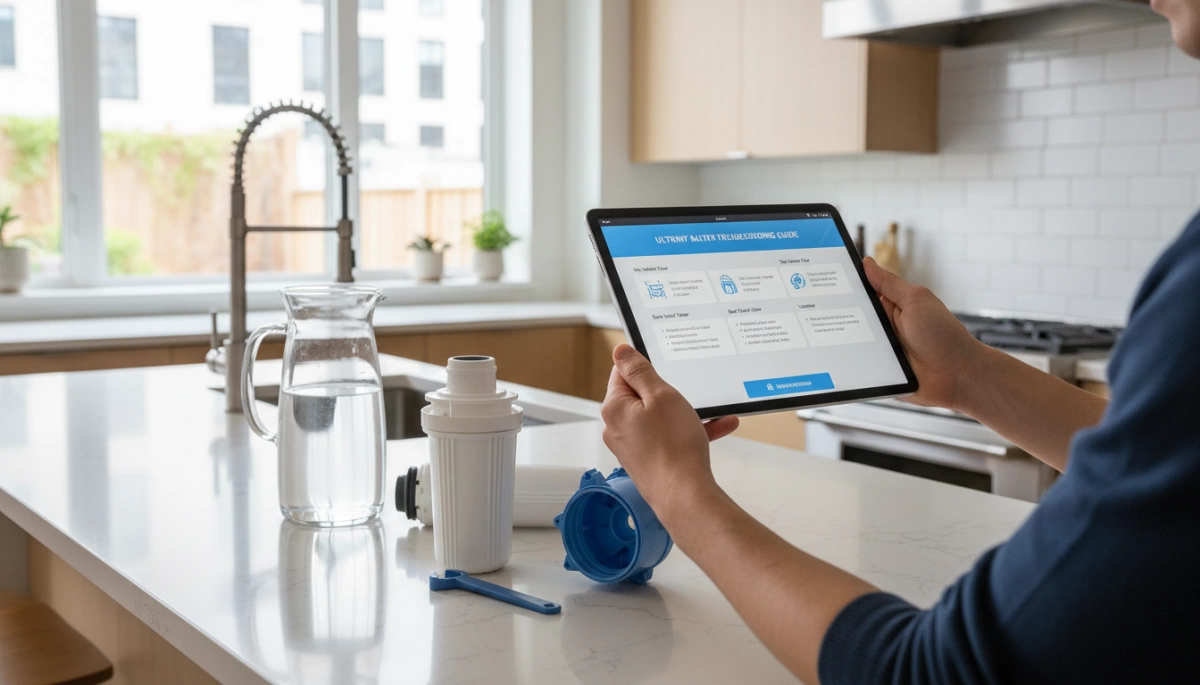
Low water pressure after installing an ULTRAWF filter
If your ULTRAWF refrigerator water filter just got swapped and the dispenser is slow:
- Flush 2–4 gallons of water through the new ULTRAWF cartridge to clear trapped air and loose carbon.
- Make sure the filter is fully seated and locked—remove and reinsert firmly until it “clicks.”
- Check the shutoff valve to the fridge; it must be fully open.
- If pressure is still bad, you may have:
- Very sediment-heavy water clogging the filter early
- A kinked water line behind the fridge
At that point, I’d check your home’s plumbing or talk to a local water purifier company that understands residential setups in the U.S. (like specialists similar to those at DripLife’s water treatment services).
Cloudy water, black specks, or odd taste
New ULTRAWF filters often cause:
- Cloudy water or tiny black specks: usually harmless carbon fines
- Fix: run 2–3 minutes of continuous water (or 2–4 gallons) to flush the filter.
- Odd taste or smell right after replacement:
- Make sure you flushed long enough
- Toss the first batch of ice after an ULTRAWF replacement
- If it persists more than a week, the filter may be defective or counterfeit.
Filter light not resetting or staying red
Most Frigidaire PureSource Ultra / ULTRAWF compatible fridges reset like this:
- Press and hold the “Filter Reset” or “Water Filter” button for 3–10 seconds.
- On some models, hold “Ice” + “Filter” or “Alarm” + “Down Arrow” together.
If the filter light stays red:
- Confirm you installed a ULTRAWF replacement cartridge that matches your model.
- Unplug the fridge for 1–2 minutes, plug back in, then try the reset again.
- If the control panel still won’t reset, that’s usually a control board or sensor issue—time to call a tech.
Leaks around the ULTRAWF filter housing
If you see drips or a small puddle after installing your ULTRAWF:
- Remove the filter, inspect the O-rings for cuts, flat spots, or missing seals.
- Wipe the filter port in the fridge clean—no debris, plastic bits, or old gasket.
- Reinstall the ULTRAWF filter straight, then twist until it’s fully locked in.
- Never overtighten or use tools—hand-tight only.
If it still leaks:
- Stop using the dispenser, turn off the water supply, and call a technician.
- Leaks inside the cabinet can damage insulation and electronics if you ignore them.
When to DIY vs call a technician
DIY fixes are usually enough when you’re dealing with:
- Low flow right after a filter change
- Mild cloudiness/black specks from carbon
- Filter light not resetting (first few tries)
Call a technician if you notice:
- Persistent leaking around the ULTRAWF housing
- Very low pressure that doesn’t improve after flushing and rechecking lines
- Control panel errors or lights that won’t reset after power cycle
- Water on the floor, ice buildup, or signs of internal damage
Handled right, an OEM or high‑quality ULTRAWF-compatible filter should run clean, clear, and leak‑free for about six months in a typical U.S. home.
ULTRAWF Water Quality and Safety Questions
Is ULTRAWF Filtered Water Safe for Babies and Pets?
ULTRAWF refrigerator water filters are designed to improve city tap water, not turn unsafe water into medical-grade water. In a typical U.S. home with treated municipal water:
- Babies – It’s generally fine for mixing formula if your tap water is already safe, but always:
- Ask your pediatrician if they prefer bottled/distilled or boiled water for newborn formula.
- Check if your city has any lead, nitrate, or PFAS alerts; ULTRAWF may not fully handle those.
- Pets – For healthy dogs and cats, ULTRAWF water is usually as safe or safer than tap water because it reduces chlorine, sediment, and bad taste/odor.
If you’re on well water, or your city has contamination issues, treat ULTRAWF as a polishing filter, not your only protection.
Does ULTRAWF Remove Fluoride, Lead, and PFAS?
This is where a lot of people overestimate what a fridge filter can do.
- Fluoride – ULTRAWF does not remove fluoride in any meaningful way. If you want low-fluoride water, you’re usually looking at reverse osmosis or specialized media. You can see how that compares overall in this RO filter and pitcher guide.
- Lead – Some OEM ULTRAWF filters may be NSF certified for limited lead reduction, but:
- You must check the NSF/ANSI 53 claim on the box or spec sheet.
- Even when certified, it’s for specific conditions and limited capacity.
- PFAS (“forever chemicals”) – Most ULTRAWF fridge filters:
- Are not certified for PFAS removal.
- May reduce some PFAS if they use quality carbon, but you should never rely on ULTRAWF alone for known PFAS problems.
If lead, PFAS, or other “emerging contaminants” are a concern in your area, you need additional treatment (RO, advanced carbon, or certified under-sink systems) and use ULTRAWF mainly for polishing taste and chlorine.
ULTRAWF Filtered Water vs Bottled Water
In a typical U.S. city with decent tap water:
- Quality – ULTRAWF:
- Cuts chlorine, taste, odor, and sediment, which makes water taste closer to “bottled” for most people.
- Doesn’t strip minerals like calcium or magnesium, similar to many “spring” or “mineral” bottled waters.
- Safety – For most municipal supplies, ULTRAWF water is comparable or better than cheap bottled water, assuming:
- You replace the filter on time.
- Your fridge plumbing is clean and not contaminated.
- Cost & waste – ULTRAWF wins:
- Much cheaper per gallon.
- Far less plastic waste than buying cases of bottles.
If you specifically want **very low T
Upgrading Beyond ULTRAWF: Whole-Home and Under-Sink Options
If your water has more going on than chlorine taste and basic sediment, an ULTRAWF refrigerator water filter probably isn’t enough on its own. I like to treat ULTRAWF as the last stage at the fridge, not the only stage in your home.
When ULTRAWF Alone Isn’t Enough
You probably need extra filtration if you’re dealing with:
| Issue | ULTRAWF Alone? | What You Likely Need |
|---|---|---|
| High TDS / salty taste | ❌ | Reverse osmosis (RO) under-sink |
| Well water, heavy sediment | ❌ | Whole-house sediment + carbon |
| Iron, sulfur “rotten egg” smell | ❌ | Iron filter / specialized media |
| PFAS, VOCs, industrial chemicals | ⚠️ Limited | Certified RO or advanced carbon |
| Hard water scale on appliances | ❌ | Water softener or conditioner |
Pairing ULTRAWF With Under-Sink Ultrafiltration (UF)
A strong combo for many US homes is: under-sink UF system + ULTRAWF in the fridge.
- Under-sink UF (0.01–0.1 micron):
- Blocks most bacteria, cysts, microplastics, and fine particles
- Keeps healthy minerals in the water
- No wastewater, no electricity, uses normal line pressure
- ULTRAWF in the fridge:
- Polishes taste, cuts chlorine and odor
- Protects ice maker and dispenser from fine grit
This layered approach gives you cleaner, better-tasting water at the sink and at the fridge, without the complexity of full RO. If you’re comparing tech, it can help to see what a reverse osmosis system removes vs. other filters so you don’t under- or over-buy.
Using Sediment Pre-Filters or Softeners With Your Fridge
If your water is rough on plumbing, protect the whole house first, then let ULTRAWF finish the job.
Smart add-ons:
- Whole-house sediment filter
- Catches sand, rust, and dirt before it reaches your fridge
- Extends ULTRAWF filter life and keeps flow rate strong
- Whole-house carbon filter
- Knocks down chlorine and odor for every tap
- Lets your ULTRAWF focus on final polishing instead of heavy lifting
- Water softener
- Reduces scale buildup in ice makers, valves, and lines
- Helps your fridge, dishwasher, and water heater last longer
How to Build a Layered Filtration Setup Around ULTRAWF
Think in stages, from the main line to your glass:
- Point-of-entry (POE) – At the main line
- Sediment filter → optional iron/sulfur system → softener → whole-house carbon
- Point-of-use (POU) – Under the sink / kitchen
- Under-sink UF or RO (for serious contaminants or high TDS)
- Optional instant hot or RO countertop system if you want premium drinking water; see how countertop RO systems are set up and used for comparison.
- Appliance level – At the fridge
- ULTRAWF refrigerator water filter as the final polishing stage for water and ice
This “stacked” setup keeps your ULTRAWF working in its sweet spot—improving taste, smell, and clarity—while the heavy-duty jobs (iron, hardness, serious contamination) are handled before the water ever gets to your fridge.
Buying ULTRAWF Filters Online Safely
Buying an ULTRAWF refrigerator water filter online can save money, but you’ve got to watch out for counterfeits. Fake filters can look close to the real thing, but they often don’t filter properly and may even leak.
How to Spot Counterfeit ULTRAWF Filters
When shopping for an ULTRAWF replacement cartridge on Amazon, eBay, or other marketplaces, check:
- Branding and spelling
- The name should be Frigidaire ULTRAWF (or clearly marked compatible).
- Watch for typos, blurry printing, or weird logos.
- Label details
- Look for NSF/ANSI certification marks and model numbers that match “ULTRAWF.”
- Compare product photos to the official images on the brand site.
- Build quality
- Cheap, flimsy plastic, loose caps, or crooked O-rings are a red flag.
- Genuine ULTRAWF filters fit snugly and have clean, clear molding.
Why Packaging, Serial Numbers, and Price Matter
Counterfeits usually give themselves away with the box and the “too good to be true” price:
- Packaging
- Real Frigidaire PureSource Ultra filters come in clean, high-quality boxes with barcodes and clear printing.
- Look for shrink wrap or seals that haven’t been tampered with.
- Serials / batch codes
- Genuine filters usually have lot codes or date codes printed or laser-etched.
- Missing or smudged codes are a bad sign.
- Price
- If the “ULTRAWF water filter” is half the normal price, assume it’s fake or low-grade.
- Compare pricing from multiple major retailers to know the real market range.
If you’re serious about what’s actually in your water, it’s worth understanding how different treatment options compare. For example, some homeowners pair fridge filters with systems that more aggressively handle contaminants like fluoride or dissolved solids, similar to what’s explained in this guide on filtered water and fluoride removal options.
Best Practices for Buying ULTRAWF from Trusted Sellers
To buy ULTRAWF filters with confidence in the U.S.:
- Buy from authorized sources
- Manufacturer websites, big-box retailers, or the fridge brand’s official Amazon store.
- Avoid random third-party sellers with few reviews.
- Check seller ratings
- Look for consistent 4–5 star feedback and reviews mentioning genuine ULTRAWF or “works like OEM.”
- Read recent reviews
- Watch for complaints like “filter didn’t fit,” “water tastes off,” or “no NSF mark on the box.”
- Keep your receipts
- Screenshots and invoices help if you need to return a bad batch or file a claim.
Storing Spare ULTRAWF Filters at Home the Right Way
If you buy ULTRAWF refrigerator water filters in a 2–4 pack, store them correctly so they stay fresh:
- Keep them sealed
- Don’t open the plastic wrap until you’re ready to install.
- Store indoors
- Room temperature, dry cabinet or pantry; no garages, attics, or sheds where it gets very hot or humid.
- Avoid sunlight and chemicals
- Keep away from direct sun, bleach, paint fumes, or strong cleaners.
- Rotate your stock
- Use the oldest filter first; note the purchase date on the box with a marker.
Handled right, a quality ULTRAWF refrigerator water filter from a trusted seller will give you cleaner, better-tasting water without the risk that comes with counterfeit cartridges.
Frequently Asked Questions About ULTRAWF Water Filters
How long does an ULTRAWF filter really last?
For most homes in the U.S., an ULTRAWF refrigerator water filter realistically lasts:
- Up to 6 months or about 200–300 gallons, whichever comes first
- Heavy use (big family, lots of ice, cooking with fridge water) can push that closer to 3–4 months
- Very clean municipal water may stretch a bit longer, but I still recommend changing at 6 months max for safety and performance
If you notice slower flow, dull taste, or cloudier ice before 6 months, the ULTRAWF is likely clogged and should be replaced.
Can I run my fridge without an ULTRAWF filter installed?
Usually you can, but it’s not ideal:
- Many Frigidaire ULTRAWF compatible models let you run water in bypass mode if the filter is removed or a bypass plug is installed
- You’ll be drinking unfiltered tap water directly from your fridge line
- If your city water has chlorine, rust, or sediment, you’ll taste and see the difference fast
I only recommend running without an ULTRAWF replacement cartridge temporarily, not as a long-term setup.
Why does my ULTRAWF water taste different after replacement?
Right after you install a new Frigidaire PureSource Ultra filter (ULTRAWF), taste changes are normal:
- New carbon block releases tiny carbon fines at first
- If you don’t flush 2–3 gallons through the dispenser, you may get:
- Slightly gray/cloudy water
- Muted or “flat” taste for a day or two
Always follow the ULTRAWF installation instructions and flush properly. If the taste is still off after a few days, you could have:
- A counterfeit ULTRAWF filter
- A contaminated fridge line or old plumbing
Is an ULTRAWF filter worth it compared to bottled water?
For most U.S. households, yes:
- Way cheaper per gallon than bottled water (usually just a few cents per gallon)
- Less plastic waste and no hauling cases from the store – a big plus if you care about an eco‑friendly fridge water filter setup
- Great for chlorine taste and odor reduction, basic sediment and turbidity reduction, and much better‑tasting ice
If you’re already looking at home systems (like reverse osmosis), it’s worth learning how RO tank pressure and performance compare to fridge filters from a system view; this guide on reverse osmosis tank pressure and setup is a helpful reference.
If your tap water is safe but just tastes bad, an OEM or NSF certified ULTRAWF refrigerator water filter is usually a much better deal than buying bottled.
How does ULTRAWF compare to ultrafiltration (UF) systems for daily use?
An ULTRAWF fridge filter and an under sink ultrafiltration water filter do very different jobs:
- ULTRAWF (fridge filter)
- Carbon block + basic mechanical filtration
- Focused on chlorine, taste, odor, and sediment
- Does not reliably remove bacteria or very fine particles
- Easy, no extra faucet, built into your Frigidaire or Kenmore fridge
- UF membrane systems (0.01 micron ultrafiltration)
- True physical barrier for bacteria, cysts, microplastics, and fine colloids
- Keeps minerals and salts (TDS stays about the same)
- Often paired with carbon for a multi‑stage residential drinking water system
- Better if you’re worried about microbial safety but don’t want RO or wastewater
For day‑to‑day use in most U.S. cities, ULTRAWF is enough for taste and basic filtration. If you want a strong microbial barrier without the complexity of RO, stacking an ultrafiltration system under the sink with your ULTRAWF refrigerator water filter gives you a solid, layered setup.