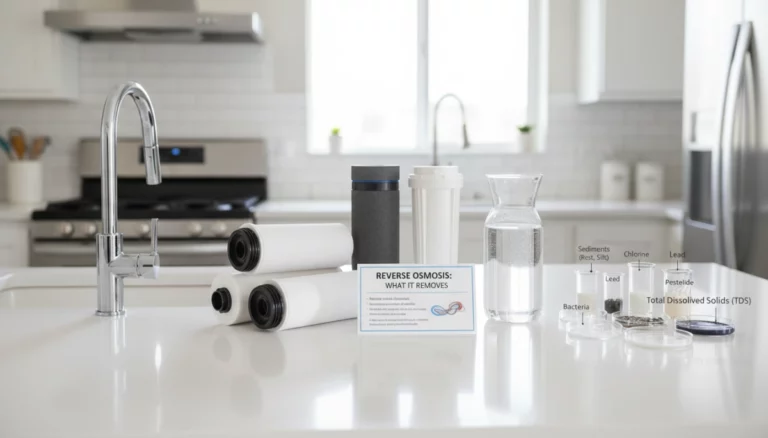
In this article, I delve into the intricate differences between reverse osmosis vs distilled water. Reverse osmosis employs a semipermeable membrane to filter out impurities, whereas distillation involves boiling and condensing water to remove contaminants. Each method has unique advantages and drawbacks, making them suitable for different needs and preferences.
By reading this article, others will gain a comprehensive understanding of reverse osmosis vs distilled water, including their efficiency, maintenance requirements, and environmental impacts. This knowledge will enable you to make informed decisions about which water purification method best suits their specific circumstances and needs.
Key Points
- Reverse osmosis uses a semipermeable membrane.
- Distillation involves boiling and condensing water.
- RO removes salts, minerals, and organic molecules.
- Distillation removes heavy metals and salts.
- RO systems are energy-efficient but waste water.
- Distillation uses more energy but produces no waste.
- RO water may need remineralization.
- Distilled water tastes flat due to lack of minerals.
- RO systems require regular filter replacement.
- Distillation systems need periodic cleaning.
- RO has higher initial and maintenance costs.
- Distillation has lower setup but higher energy costs.
- RO is effective in areas with hard water.
- Distilled water is suitable for medical and lab use.
Secret Distinctions In Between Reverse Osmosis and Distilled Water
As an expert in water filtration innovations, I frequently obtain asked about the differences in between reverse osmosis and distilled water. Both approaches are highly reliable at getting rid of contaminants, yet they operate fundamentally different principles and have distinct features.
Reverse osmosis (RO) utilizes a semipermeable membrane to eliminate contaminations from water. Water is forced with this membrane under pressure, which obstructs pollutants like salts, minerals, and organic molecules while permitting distilled water to travel through. This approach is specifically reliable at reducing dissolved solids and a large variety of pollutants.
On the various other hand, purification entails home heating water to develop steam, which is then condensed back right into liquid type. This procedure effectively divides water from contaminants with greater steaming factors, such as hefty steels, salts, and many organic compounds. Distillation is known for generating extremely pure water, commonly used in laboratory and medical setups.
| Aspect | Reverse Osmosis | Pure water |
|---|---|---|
| Approach | Semipermeable membrane layer filtration | Dissipation and condensation |
| Contaminant Elimination | Salts, minerals, natural particles, germs | Heavy steels, salts, many natural compounds |
| Performance | High, but with some water wastefulness | High, with substantial power use |
| Water Taste | Normally improved; might need remineralization | Pure, yet may taste level as a result of lack of minerals |
The crucial distinctions in between these 2 methods hinge on their functional systems and the sorts of pollutants they properly remove. While both create high-grade water, the choice in between reverse osmosis and distilled water commonly depends upon particular demands and choices.
Benefits and Drawbacks of Reverse Osmosis Water
Reverse osmosis (RO) water filtering is a preferred technique for detoxifying water, recognized for its ability to remove a vast array of contaminants. This procedure pressures water through a semi-permeable membrane, leaving pollutants behind. While RO water is commended for its pureness, comprehending both its advantages and negative aspects is necessary for informed decision-making.
Benefits of Reverse Osmosis Water
The key advantage of reverse osmosis water is its exceptional pureness. RO systems are qualified of removing up to 99% of liquified salts (ions), fragments, colloids, organics, germs, and pyrogens from the feed water (although an RO system must not be trusted to remove 100% of bacteria and viruses). This high level of filtering results in water that is tidy, clear, and extra palatable, which is especially beneficial for individuals staying in locations with hard water or high degrees of pollutants.
Another significant benefit is the improvement of preference, smell, and appearance of water. By getting rid of pollutants and minerals that create solidity and other water high quality issues, RO treated water usually tastes much better and is much more appealing for alcohol consumption and cooking.
RO systems are likewise power reliable, requiring no electrical energy to operate unless furnished with an electric pump to improve water pressure. This makes them a green option for water filtration.
Drawbacks of Reverse Osmosis Water
In spite of its advantages, there are several downsides to consider. Among the main criticisms of RO water is the elimination of helpful minerals. In the procedure of getting rid of contaminants, necessary minerals such as calcium and magnesium are likewise removed from the water, causing demineralized water. This has actually increased problems concerning the potential health effects of long-term intake of RO water, as these minerals are essential for human health and wellness.
RO systems likewise generate wastewater, called brine or decline water. For every gallon of cleansed water created, several gallons of wastewater are discharged. This aspect is especially concerning in areas where water conservation is a concern.
Furthermore, the initial expense and maintenance of RO systems can be high. The demand to replace filters and membranes on a regular basis includes in the overall cost, making it a significant consideration for families.
To conclude, while reverse osmosis water provides exceptional benefits in terms of purity and taste, it is very important to consider these versus the possible disadvantages, including mineral removal, wastewater production, and the expenses related to system upkeep. Comprehending these aspects will certainly assist in making an educated decision concerning whether RO water is the ideal selection for your home.

Selecting Between Reverse Osmosis and Pure Water for Home Usage
When choosing in between reverse osmosis and distilled water for home use, it’s critical to comprehend the distinct attributes and advantages each kind provides. Both approaches are efficient for water filtration, yet they offer different requirements and preferences.
Water Purity and Contaminant Elimination
Reverse osmosis (RO) makes use of a semi-permeable membrane layer to remove contaminations and pollutants from water. This procedure effectively eliminates minerals, germs, viruses, and chemical pollutants. On the various other hand, pure water is produced via purification, where water is steamed and the heavy steam is accumulated, leaving most contaminants behind. This approach is outstanding for getting rid of inorganic substances, hefty metals, and minerals.
| Contaminant | Reverse Osmosis | Distilled Water |
|---|---|---|
| Microorganisms and Viruses | Properly Gotten rid of | Generally Gotten rid of |
| Inorganic Substances | Efficiently Eliminated | Effectively Removed |
| Heavy Steels | Successfully Eliminated | Effectively Removed |
| Minerals | Efficiently Gotten rid of | Properly Gotten rid of |
| Chemical Pollutants | Efficiently Eliminated | Differs |
Preference and Mineral Material
The preference and mineral material of water are significant considerations. Reverse osmosis water is understood for its tidy taste, as it removes most liquified solids. However, it also removes useful minerals like calcium and magnesium. Some systems include these minerals back into the water. Pure water, similarly, does not have minerals and has an extremely neutral taste, which might not be attracting everyone.
System Installation and Maintenance
Setup and maintenance needs differ between the two systems. Reverse osmosis systems commonly include a lot more intricate installment, consisting of pre-filters, the RO membrane, and post-filters. Normal upkeep is called for to replace these parts. Distillation systems are usually easier to mount and preserve, commonly simply calling for regular cleaning to get rid of mineral buildup.
| Aspect | Reverse Osmosis | Distilled Water |
|---|---|---|
| Installation | Complicated | Basic |
| Maintenance | Normal filter replacement | Regular cleaning |
Price Considerations
Cost is an additional crucial element. Reverse osmosis systems can have greater preliminary configuration costs and ongoing expenses for filter substitutes. Distillation devices may be less costly in advance but can consume more energy, causing greater operational costs over time.
Ecological Effect
The environmental impact of each system ought to additionally be thought about. Reverse osmosis systems can create wastewater, which may be a problem in locations with water shortage. Purification systems utilize significant quantities of power, which can add to a greater carbon impact.
| Variable | Reverse Osmosis | Pure water |
|---|---|---|
| Initial Expense | High | Modest |
| Ongoing Price | Modest | High (energy consumption) |
| Waste Production | Wastewater | None |
| Power Use | Reduced | High |
In conclusion, the option between reverse osmosis and pure water depends on private requirements and conditions. If you focus on eliminating a large range of impurities and don’t mind normal upkeep, reverse osmosis could be the better option. If you like a less complex system with reliable elimination of inorganic compounds and don’t mind the higher power use, distilled water can be extra appropriate. Consider your water quality objectives, budget plan, and environmental influence when making your choice.
FAQs on Reverse Osmosis vs Distilled Water
What is the main difference between reverse osmosis and distilled water?
The primary difference lies in their purification processes. Reverse osmosis uses a semipermeable membrane to filter out contaminants, while distillation involves boiling water to create steam and then condensing it back into liquid form, leaving impurities behind.
Which method removes more contaminants?
Both methods are highly effective, but they target different types of contaminants. Reverse osmosis excels at removing dissolved solids, salts, and organic molecules, whereas distillation is particularly good at eliminating heavy metals, salts, and many organic compounds.
Is reverse osmosis water better for drinking?
RO water is generally considered better for drinking due to its improved taste and removal of a wide range of contaminants. However, it also removes beneficial minerals, so some systems add these minerals back into the water.
Does distilled water taste different from reverse osmosis water?
Yes, distilled water often tastes flat because it lacks minerals that give water its natural flavor. Reverse osmosis water, while also low in minerals, tends to have a cleaner taste and may be more palatable for everyday drinking.
Which system is more cost-effective?
Cost-effectiveness depends on various factors. Reverse osmosis systems have higher initial setup costs and ongoing expenses for filter replacements. Distillation units may be cheaper upfront but consume more energy, leading to higher operational costs over time.
What are the environmental impacts of each method?
Reverse osmosis systems produce wastewater, which can be a concern in areas with water scarcity. Distillation systems use significant amounts of energy, contributing to a higher carbon footprint.
Which system requires more maintenance?
Reverse osmosis systems typically require more maintenance, including regular replacement of filters and membranes. Distillation systems generally need less maintenance but require periodic cleaning to remove mineral buildup.
Can I use distilled water for cooking?
Yes, distilled water can be used for cooking. It is extremely pure and free from contaminants, making it suitable for various culinary applications. However, some people may find the lack of minerals affects the taste of food and beverages.
Is one method more energy-efficient than the other?
Reverse osmosis is generally more energy-efficient as it requires no electricity unless an electric pump is used to boost water pressure. Distillation, on the other hand, requires significant energy to heat water to its boiling point.
Which method is better for medical or laboratory use?
Distilled water is often preferred for medical and laboratory settings due to its high purity and the effective removal of a wide range of contaminants, including heavy metals and minerals.
Can these systems be used together?
Yes, some people use both systems together to achieve the highest level of water purity. For example, using a reverse osmosis system followed by distillation can ensure the removal of nearly all contaminants.
Which method is more suitable for areas with hard water?
Reverse osmosis is particularly effective for areas with hard water as it removes minerals that cause water hardness, such as calcium and magnesium.