














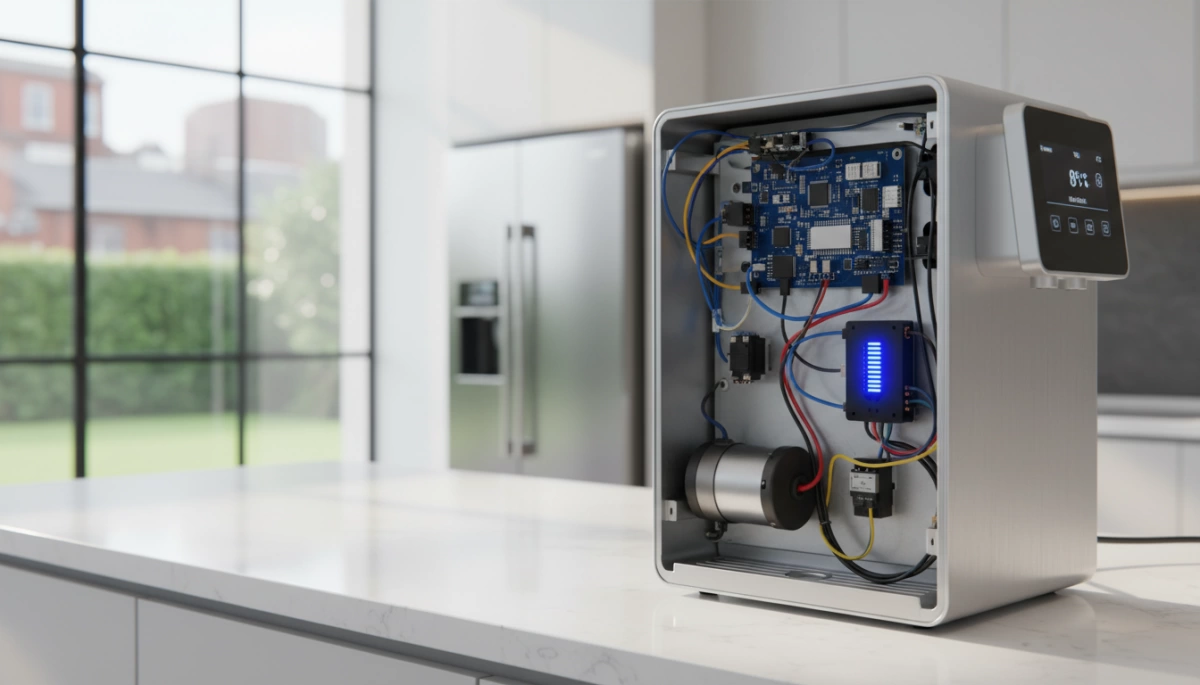
Are your commercial hydration units failing prematurely due to dry-firing, or lagging during peak demand? The root cause usually lies in a poorly designed physical layer. When we engineer the Smart Control System Architecture in Water Dispensers, we start with a rugged, responsive hardware foundation built for heavy-duty commercial and residential environments.
Core Hardware Infrastructure: The Physical Layer
Our approach to intelligent water appliance design divides the physical hardware into three strictly managed categories: the processing brain, the sensory inputs, and the mechanical actuators.
Microcontroller Integration (The Brains)
To process complex inputs without bottlenecking, we rely on high-performance Microcontroller Units (MCUs). We integrate advanced chips like the STM32 or ESP32 to serve as the central processing unit. These MCUs handle real-time data ingestion from dozens of concurrent pathways, ensuring zero-latency user interface response, stable IoT connectivity, and immediate failsafe activation.
Fluid Sensing Technology (The Senses)
An automated control system is only as reliable as its telemetry. We deploy a comprehensive sensor array to monitor appliance health and guarantee user safety in real time:
- Water Quality & Flow: Inline TDS (Total Dissolved Solids) sensors, high-precision flow meters, and pressure switches meticulously track output volumes and calculate accurate filter depreciation.
- Temperature Regulation: Digital thermistors provide sub-degree accuracy, monitoring rapid heating and cooling cycles.
- Capacity & Safety: Ultrasonic and infrared sensors drive our touchless dispensing features while acting as primary failsafes for leak detection and dry-fire prevention.
Solenoid Valve Control Systems & Actuators (The Muscle)
Once the MCU processes the environmental data, it fires execution commands to the output mechanisms. We engineer our control boards to manage high-load components seamlessly without power surges:
| Actuator Type | Primary Function in Architecture |
|---|---|
| 12V Solenoid Valves | Instantly routes cold, hot, or room-temperature water to the designated output without pressure drops or cross-contamination. |
| RO Booster Pumps | Maintains optimal membrane pressure for rapid, continuous Reverse Osmosis filtration. |
| UV-C Sterilization Modules | Triggers automated, logic-based sterilization cycles tied directly to usage timers and flow detection data. |
Software and IoT Integration
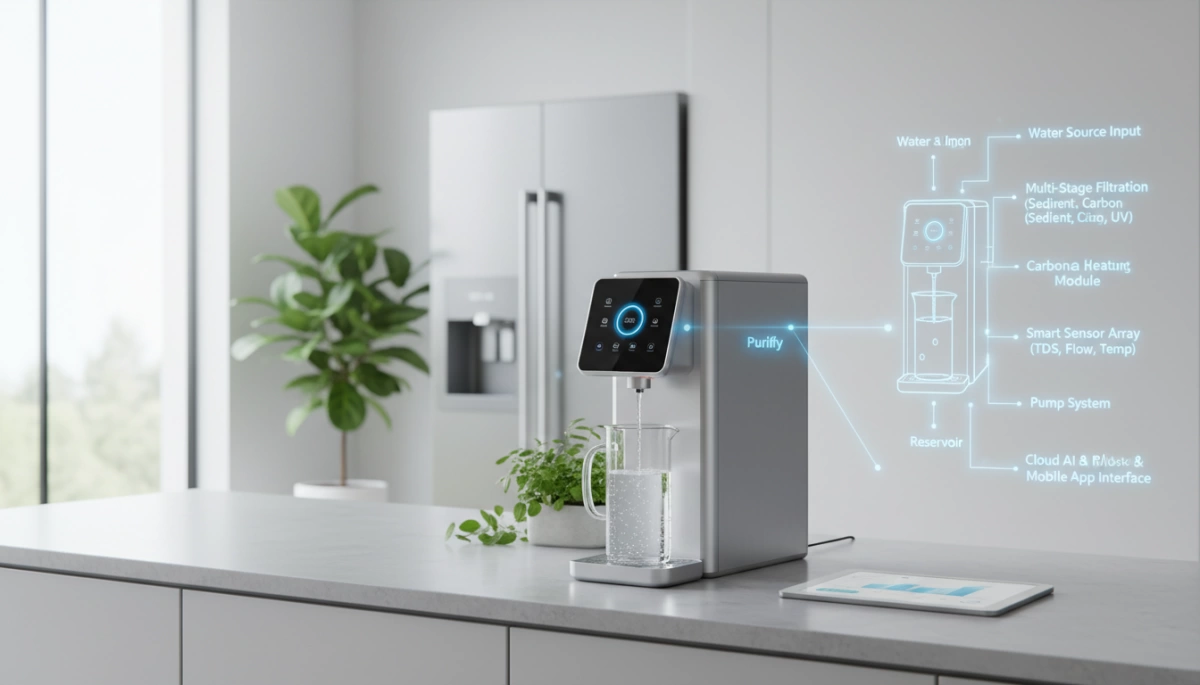
In our system control architecture, the software acts as the true brains behind the machine. We rely on a streamlined Input-Process-Output (IPO) model to manage the automated water dispensing logic.
Here is how our smart control water dispenser logic layer breaks down:
- System Coordination Logic: The software reads real-time inputs (like a user pressing ‘Ice’ or a sensor detecting low pressure), processes the data, and triggers the correct physical output. This system coordination logic actively prioritizes tasks to prevent power surges and optimize overall energy use, making the automated control system highly efficient.
- Connectivity Protocols: We embed reliable Wi-Fi and Bluetooth modules directly into the control board design. This transforms a standard unit into an IoT water purification system, constantly syncing real-time data to the cloud so you can track performance from anywhere.
- User Interface (UI) Management: We take complex dispenser control board engineering and simplify it for the end user. The software translates raw background data into a smooth, intuitive experience via responsive capacitive touch panels and a connected mobile app. For example, the app tracks exact filter lifespans, taking the guesswork out of maintenance and automatically reminding you why a water filter is important by ensuring your daily hydration stays perfectly safe.
Ultimately, this smart dispenser platform bridges the gap between heavy-duty microcontroller integration and a simple, highly reliable user experience tailored for modern American homes and businesses. Every tap, swipe, and alert on our intelligent water appliance is designed to feel completely effortless.
Designing for Multi-Functional Complexity: Smart Control System Architecture in Water Dispensers
At Driplife, we know that American consumers expect their appliances to do more while taking up less space. Modern hydration demands go far beyond simple filtration. Building a machine that can handle multiple complex tasks simultaneously requires an incredibly robust Smart Control System Architecture in Water Dispensers. We focus heavily on multi-functional water dispenser R&D to ensure our platforms can seamlessly juggle high-demand features without missing a beat.
4-in-1 System Challenges: The 150 GPD Countertop Unit
Packing Purification, Cold, Hot, and Ice Making into a single 150 Gallons Per Day (GPD) countertop unit is an engineering hurdle. The control board must act as an aggressive traffic cop, routing power and water precisely where they need to go in milliseconds. When designing these units, we look at the core benefits of hot and cold water dispensers and elevate them by safely adding ice generation and high-capacity RO filtration into the exact same footprint.
To make this intelligent water appliance design work, our system architecture manages several critical functions:
- Aggressive Thermal Management: The smart control board must constantly monitor internal sensors to ensure the 190°F heating element does not compromise the freezing temperatures required for the ice maker.
- Dynamic Power Allocation: Household 120V outlets have limits. The system coordination logic instantly decides whether to briefly pause the compressor while the flash-heater draws peak power, ensuring the user’s circuit breaker never trips.
- Fluid Routing Priority: The internal logic ensures the RO booster pump maintains adequate pressure, preventing the ice maker from drawing air if the user simultaneously dispenses a pitcher of cold water.
Under-Sink Distribution Engineering
Under-sink systems are incredibly popular in the US market because they hide the hardware while delivering premium water straight from the tap. However, separating modules for soda, RO purification, and heating presents a completely different set of challenges for the smart dispenser platform.
The control board must manage these remote modules without cross-interference or pressure drops at the faucet. For instance, managing a dedicated carbonation module means delivering all the benefits of a seltzer water machine without letting CO2 back-pressure interfere with the RO lines or the boiling water output.
Here is how our control systems stabilize under-sink distribution:
- Independent Valve Control: We use dedicated solenoid valve control systems for each fluid pathway. If you dispense sparkling water while the RO tank is refilling, the smart board isolates the lines to prevent pressure loss.
- Module Synchronization: The central MCU communicates with the separated chilling and heating modules, ensuring they only cycle on when needed, drastically reducing under-sink heat buildup and energy waste.
- Anti-Interference Shielding: Because under-sink environments are tight, our control board engineering includes heavy electrical shielding so the high-draw heating module doesn’t cause electronic static or false readings in the sensitive TDS water quality sensors.
Scaling Smart Control System Architecture in Water Dispensers
Custom ODM Smart Hydration Solutions
Moving from a raw concept to a fully functional smart water filtration OEM project starts in our dedicated R&D laboratory. We design and customize the software and hardware architecture to fit the exact specifications of our global clients. Whether developing complex multi-valve systems or streamlining the logic for a compact benchtop water filter, our hardware development team ensures the control board design perfectly matches the appliance’s footprint and feature set.
Firmware Reliability and Stress Testing
A smart appliance is only as dependable as its code. To prevent system crashes or glitchy user interfaces during the appliance’s lifespan, we prioritize aggressive firmware stress-testing.
- Cycle Simulation: We simulate hundreds of thousands of dispensing cycles to test the automated control system under heavy load.
- Edge-Case Testing: Pushing the logic to its limits with rapid temperature fluctuations and rapid user inputs.
- Long-Term Stability: Ensuring the system coordination logic remains stable over years of continuous operation.
Mass Production and Quality Control
Taking a working lab prototype and scaling it for mass-market distribution requires absolute precision. We bridge the gap between initial prototyping and full-scale manufacturing, maintaining strict consistency across an annual production capacity of 500,000 units.
To achieve this, we rely on tight manufacturing protocols:
- Standardized Component Sourcing: Using highly reliable microcontrollers and sensors for uniform performance.
- Online Quality Control: Implementing real-time digital diagnostics on the assembly line to test every smart dispenser platform before it goes in the box.
- Firmware Locking: Securing the finalized code onto the chips to guarantee that every unit rolling off the line performs exactly like the approved lab prototype.
Future Trends in Dispenser Architecture
The future of Smart Control System Architecture in Water Dispensers relies on proactive data and seamless connectivity. As we advance our intelligent water appliance platforms, the focus shifts from basic hardware automation to complete smart home synergy.
Predictive Maintenance Algorithms
Guesswork is obsolete. We engineer our control boards with AI-driven predictive maintenance algorithms that analyze system health around the clock. Instead of waiting for a bad taste or low pressure to show you the signs you need a water filter, our systems tell you exactly when a change is due.
- Filter Life Analytics: Real-time water quality monitoring tracks TDS levels and flow rates to predict precise filter exhaustion.
- Component Diagnostics: The system monitors voltage anomalies, alerting you before an RO booster pump or solenoid valve fails.
- Automated Alerts: Push notifications hit your smartphone before a minor clog turns into a complete system shutdown.
Smart Home Ecosystem Integration
Modern smart appliance hardware development requires appliances to communicate with the rest of the house. We are designing our ODM smart hydration solutions to plug directly into popular US smart home ecosystems.
Key Integration Features:
- Voice Control: Full compatibility with smart speakers leverages touchless water dispenser circuitry for completely hands-free pouring.
- Routine Syncing: The automated dispensing logic learns your habits, pre-heating water just in time for your morning routine.
- ADA Accessibility: Voice activation and automated fluid delivery create advanced, ADA-compliant hydration solutions for users with mobility limitations.
FAQs: Smart Control System Architecture in Water Dispensers
What are the best microcontrollers for smart water dispenser architecture?
For a highly responsive smart control water dispenser, we heavily rely on ESP32 and STM32 chips. These processors represent the industry standard for microcontroller integration because they effortlessly handle the real-time data, Wi-Fi connectivity, and complex logic required to run an automated control system inside an intelligent water appliance.
How does IoT integration optimize water filtration maintenance?
IoT connectivity removes the guesswork from maintenance. Instead of relying on a basic calendar timer, our system control architecture monitors actual water volume and real-time TDS (Total Dissolved Solids) levels. This predictive maintenance data is synced to your smartphone, alerting you exactly when a filter is exhausted. This smart tracking is a major factor in why modern countertop water filters are highly effective and reliable for US households.
What failsafes does the control system use to prevent dry-firing and leaks?
Safety protocols are hardwired directly into our control board design.
- Dry-Fire Prevention: If internal sensors detect an empty heating tank, the MCU instantly cuts power to the heating element.
- Leak Protection: Base-level moisture sensors actively scan for errant water. If a leak is detected, the solenoid valve control systems are instantly triggered to shut down the main water supply, protecting your home from water damage.
How does the mainboard handle simultaneous hot and cold fluid requests?
It all comes down to advanced system coordination logic. When a user requests hot and cold water at the same time, our smart dispenser platform relies on priority-based algorithms. The mainboard independently actuates separate 12V solenoid valves and routes power to isolated heating and cooling modules. This ensures stable water pressure and precise temperatures without any cross-interference between the lines.