


















If you’ve ever installed a shower filter to protect your skin and hair—only to end up with weak, disappointing water pressure—you’re not alone.
The missing piece most people never hear about? Flow rate balance.
In other words, how well a shower filter manages the trade-off between:
- Effective filtration (actually removing chlorine, sediment, and heavy metals)
- And strong, consistent water pressure (so your shower still feels powerful and refreshing)
Get that balance wrong, and you get pressure drop, sluggish spray, faster clogging, and filters that look good on paper but underperform in real life. Get it right, and you get cleaner water, steady flow, longer filter life, and a shower that still feels great—even with modern low-flow GPM limits.
In this guide, you’ll learn how flow rate balance really works inside a shower filter, what causes pressure loss, how smart high flow shower filter design avoids it, and how brands like Driplife engineer filters that remove contaminants without killing your water pressure.
What Is Flow Rate Balance in Shower Filters?
If you care about water quality but hate weak showers, flow rate balance is the detail you cannot ignore.
In simple terms, shower filter flow rate is how much water passes through the filter, usually measured in GPM (gallons per minute). Most US home showers today are regulated to around 1.75–2.5 GPM, depending on local low-flow regulations and your home water pressure.
Flow rate balance is the sweet spot between:
- Enough contact time for the media to remove chlorine, sediments, and other contaminants
- Enough water pressure to give you a strong, comfortable shower
When this balance is off, you feel it right away:
- If the flow is too high, water blows through the filter too fast
- Less contact time with the filter media
- Weaker chlorine removal and lower contaminant reduction
- If the flow is too restricted, you get:
- Noticeable shower filter pressure drop
- Thin, weak spray that feels like mist instead of a full stream
That is why a high flow shower filter design is not just about blasting more water. A well-engineered system uses balanced flow filtration technology to:
- Minimize pressure loss in the shower filter
- Keep a consistent, high-pressure shower filter experience
- Still give the media enough time to work on chlorine and other contaminants
On the flip side, many generic filters rely on overly tight cartridges and high flow restriction in shower filters to “force” water through the media. The result is:
- Big pressure drop as soon as you install it
- A shower that feels worse, even if the water is technically cleaner
This flow rate balance matters even more in low-flow regulated showers. When your shower is already capped at a low GPM, you cannot afford a filter that chokes the line. The filter must be designed to:
- Work within low GPM limits
- Protect water quality
- Still keep your shower feeling strong and satisfying
Why Flow Rate Balance Impacts Shower Filter Performance
Flow rate balance is what decides whether your shower filter actually works or just looks good on the wall. When the shower filter flow rate in GPM is dialed in, water moves slowly enough for chlorine removal and contaminant reduction to happen, but fast enough to keep real, usable pressure at the shower.
When flow is too high, water rushes through the media so fast that filter media contact time drops. That means less chlorine, heavy metals, and sediment get captured, and overall shower filtration performance falls off. You’ll still feel good pressure, but the water quality upgrade you paid for isn’t really happening.
When flow is too low, you feel the opposite problem: a big shower filter pressure drop, weak spray, and a “misting” effect instead of a full, strong stream. Over‑restrictive designs increase flow restriction in shower filters, which can cause faster shower filter clogging issues because sediment and scale pack into tight pathways and choke the filter sooner.
A balanced flow rate keeps spray consistency, temperature stability, and a true high pressure shower filter experience at the same time. Because the media isn’t being slammed or starved, optimal shower filter performance lasts longer, so you push out your shower filter cartridge lifespan and don’t have to swap cartridges as often.
In the U.S., modern low‑flow shower regulations already limit total GPM, so any extra restriction from a filter hits harder. That’s why we engineer for balanced flow filtration technology that works with typical home water pressure and shower filters, instead of fighting against the plumbing code. And if you live with hard water, pairing balanced flow with smart upkeep (like the tips in this guide to maintaining shower filters in hard water regions) helps keep both water pressure and filtration right where they should be.
Key Factors That Influence Flow Rate Balance
When we engineer balanced flow shower filters, I look at every part that touches the water. Flow rate balance isn’t an accident; it’s the result of a lot of small design choices that either minimize pressure loss or choke your shower.
Filtration media and resistance
The filter media does most of the work, but it also creates most of the flow restriction in shower filters.
- KDF media, granular carbon, and calcium sulfite all have different resistance levels and chlorine removal performance.
- KDF media flow rate is usually higher than very fine carbon blocks, which can feel more restrictive if they’re packed too tight.
- A smart media blend gives strong chlorine and heavy metal reduction without killing water pressure.
You see the same idea in faucet filters that use multi-layer filtration designs to balance contact time and flow.
Granule size and packing density
Media granule size and how tightly we pack them directly control shower filter flow rate (GPM):
- Smaller, denser packing = better contact time but higher pressure drop.
- Larger, looser granules = easier flow but less contaminant contact.
- Balanced flow filtration technology uses a tuned mix so water doesn’t “channel” through one path and bypass the media.
Housing and cartridge design
Housing and cartridge engineering has a huge impact on shower filter pressure drop:
- Straight, high-flow internal pathways reduce turbulence and resistance.
- Larger-diameter cartridges allow more media without crushing flow.
- Internal baffles and screens are shaped to guide water smoothly instead of forcing sharp turns that waste pressure.
This is where real shower filtration engineering separates a high flow shower filter design from a cheap, restrictive one.
Multi-stage layouts and flow restriction
Multi-stage shower filter efficiency isn’t just about stacking more layers; it’s about spreading out resistance:
- Good multi-stage layouts break up the work: sediment removal first, then chlorine reduction, then polishing.
- By spreading media types across stages, we avoid one “bottleneck” layer that causes a sudden pressure drop.
- The result is more constant pressure shower filter performance across the whole cartridge life.
Port size and internal pathways
Inlet/outlet port size and internal passageways can either support or ruin a high pressure shower filter experience:
- Full-bore ports and smooth channels help maintain the rated shower filter flow rate GPM.
- Undersized connectors, tight elbows, or narrow necks create noise, whistling, and pulsing under normal home water pressure.
- On U.S. plumbing, matching NPT threads and using wide, low-restriction passages is key to minimize pressure loss.
Home water pressure and plumbing layout
Home water pressure and plumbing layout always interact with the filter:
- Older homes or multi-story setups often have lower pressure, so any extra flow restriction hits harder.
- Long pipe runs, small-diameter lines, or partially closed shutoff valves reduce the “headroom” a filter has to work with.
- In these cases, choosing a filter designed to minimize pressure loss becomes critical for optimal shower filter performance.
Shower head compatibility and overall balance
Shower head filter compatibility is the last piece of the puzzle:
- Pairing a restrictive water-saving shower head with a tight filter can double-stack the pressure drop.
- A balanced flow shower filter plus a well-designed low-flow shower head feels much closer to a full, pressure-balanced shower experience.
- I always recommend checking both the filter’s rated GPM and your shower head’s spec so they work together instead of fighting each other.
Common Problems from Poor Flow Rate Balance in Shower Filters
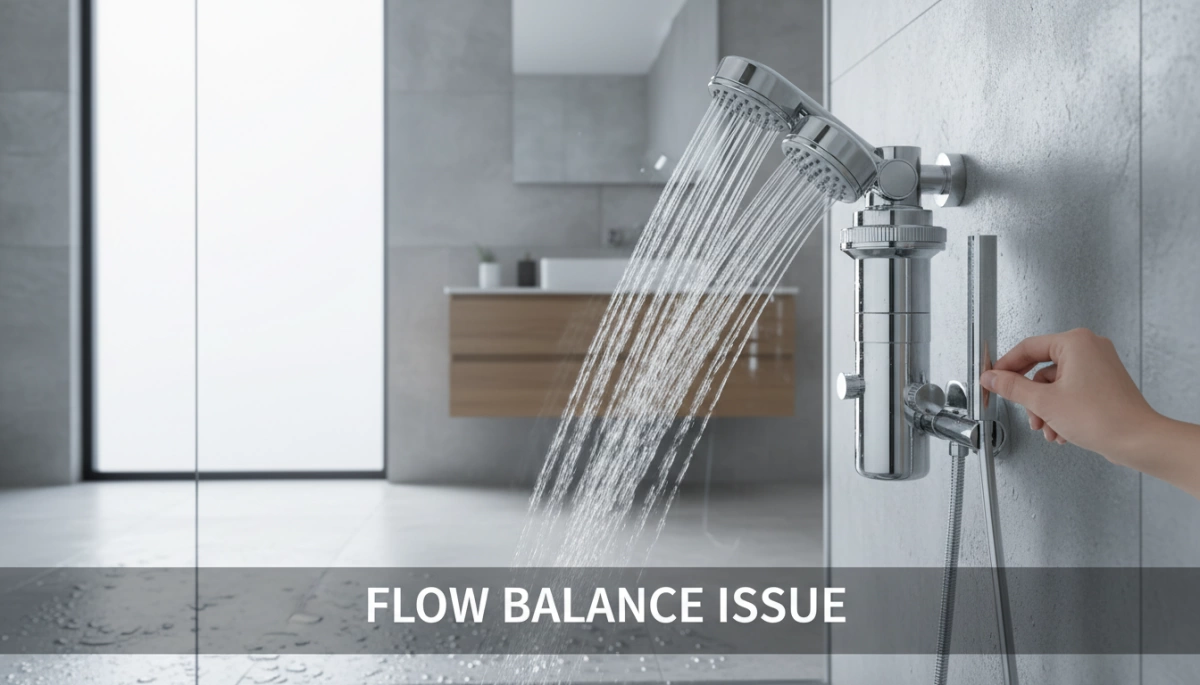
When the shower filter flow rate GPM isn’t balanced, you feel it right away in daily use. Poor flow balance shows up as:
- Sudden shower filter pressure drop right after installation, especially with restrictive designs that don’t minimize pressure loss in the filter housing.
- Weak spray patterns, misting, and uneven coverage because of excessive flow restriction in the cartridge, killing that high pressure shower filter experience most of us want.
- Temperature fluctuations at the valve as the unstable flow rate causes your pressure-balanced shower valve to hunt for balance, making hot/cold shifts more noticeable.
- Faster sediment buildup and constant cartridge changes when the media bed and internal pathways are too tight, causing shower filter clogging issues instead of smooth, balanced flow.
- Reduced chlorine and contaminant removal as a clogged or channeling cartridge stops working evenly, cutting into optimal shower filter performance and overall bathroom water quality improvement.
- Noise, pulsing, or whistling from extreme flow restriction in shower filters, especially on homes with higher incoming pressure or complex shower plumbing compatibility issues.
If you’re already filtering your drinking water with something like a glass water filter pitcher, you’ll recognize the same pattern: once flow balance goes off, both performance and user experience drop fast.
How Balanced Flow Filters Improve Daily Shower Experience
When the flow rate is balanced, a shower filter doesn’t just “work” — it actually makes your daily shower feel better.
A well‑designed, balanced flow shower filter delivers strong, consistent water pressure while it’s busy reducing chlorine, sediments, and metals in the background. You don’t get that frustrating shower filter pressure drop or weak spray that feels more like a mist than a shower. Instead, you get a steady, full stream that makes rinsing fast and easy.
Because the flow rate is controlled, the valve sees a stable volume of water, which helps keep your shower temperature steady. That means fewer random hot‑cold swings and more comfortable, predictable spray patterns every time you turn the water on.
Balanced flow filtration technology also supports healthier skin and hair by maximizing contact time for chlorine removal without reducing pressure. You still get the high pressure shower filter experience you want, but with less dryness, irritation, and color fade from harsh tap water.
With proper shower filter flow rate optimization, performance stays more stable over the full cartridge life. The media doesn’t clog as quickly, pressure loss is slower, and you’re not replacing cartridges every few weeks just to get your pressure back. That’s especially important in the U.S., where low‑flow shower regulations already limit GPM — a good high flow shower filter design feels powerful while still staying within code.
For busy homes that care about bathroom water quality improvement but don’t want more chores, a balanced flow filter simply reduces maintenance stress. Less clogging, fewer sudden pressure issues, and longer, more reliable shower filter cartridge lifespan make it a set‑and‑forget upgrade to your everyday routine.
How Driplife Designs for Optimal Flow Rate Balance
At Driplife, I design every shower filter around one core goal: balanced flow. I want strong, stable pressure with real filtration results, not a “trickle” shower.
Balanced flow filtration technology
I use balanced flow filtration technology to control shower filter pressure drop instead of just stuffing more media into the housing.
Key points:
- Target shower filter flow rate: 1.5–2.0 GPM under typical U.S. home water pressure
- Internal channels engineered to minimize pressure loss while keeping enough filter media contact time
- Designs verified with in‑house shower filtration performance testing similar to what we use in our laboratory filtration research
High-flow internal pathways
To support a high pressure shower filter experience, I focus heavily on flow paths:
- High‑flow internal pathways with smooth turns instead of tight, 90° corners
- Low‑restriction housing design that avoids narrow bottlenecks
- Oversized inlet/outlet ports to keep a more constant pressure shower filter performance
Optimized media blends, not overpacking
I tune the media so we get chlorine removal without reducing pressure:
- Optimized blends of KDF, carbon, and other media sized for efficient flow
- Media bed depth designed for filter media contact time without choking the line
- Configurations that slow shower filter clogging issues, so users see stable performance longer
Real-bathroom pressure testing
I don’t only test on a bench; I test in real bathroom setups across typical U.S. ranges:
- Designed for home water pressure and shower filters in apartments, condos, and houses
- Performance checked with both standard and low‑flow shower heads to keep spray consistent
- Focus on pressure balanced shower experience with stable temperature and spray patterns
Compatibility with modern shower setups
Flow rate balance only works if the filter plays nice with the rest of the system:
- Built for shower head filter compatibility with common U.S. thread standards
- Works with water‑saving shower heads with filters and pressure‑boosting models
- Sized to fit tight spaces without adding extra flow restriction
Driplife vs generic shower filters
Here’s how my engineering approach compares with many generic units:
| Feature | Driplife Balanced Flow | Generic Shower Filters |
|---|---|---|
| Flow rate balance focus | Yes, engineered in | Rarely considered |
| Pressure drop control | Tested and measured | Often unknown |
| Internal pathways | High‑flow, low bends | Narrow, sharp restrictions |
| Media strategy | Optimized blends | Overpacked, high restriction |
| Real‑world performance testing | Lab + bathroom testing | Basic lab-only or none |
By engineering around shower filter flow rate GPM, pressure drop control, and balanced flow shower filtration technology, I’m able to deliver optimal shower filter performance that feels great every day and still takes care of your water.
How to Choose a Shower Filter with Good Flow Rate Balance
Picking a shower filter with the right flow rate balance is all about matching good filtration with strong, comfortable pressure. Here’s how I’d evaluate one before buying.
Key Flow Specs to Check
| What to Check | Why It Matters | Good Target for US Homes |
|---|---|---|
| Shower filter flow rate (GPM) | Tells you how much water comes through | 1.5–2.5 GPM for most bathrooms |
| Pressure drop (psi) | Shows how much pressure you lose through the filter | Lower is better; look for minimized pressure loss |
| Operating pressure range | Confirms if it works with your home’s pressure | Common: 30–80 psi |
- Always check the stated shower filter flow rate in GPM and any pressure drop data so you know the real shower filter water pressure impact.
- If the brand doesn’t list flow rate or pressure drop, I treat that as a red flag for optimal shower filter performance.
Design Terms and Media to Look For
When you read the product page, look for phrases like:
- “High flow shower filter design”
- “Balanced flow filtration technology”
- “Constant pressure shower filter”
- “Designed to minimize pressure loss”
Then check the build:
- Media type: KDF, activated carbon, and calcium sulfite are common. A well‑designed KDF media flow rate setup can handle chlorine and heavy metals without killing pressure, as explained in our guide on why copper-zinc (KDF) media is used in premium shower filters.
- Multi‑stage shower filter efficiency: Multiple stages should spread out flow restriction, not choke it at one point.
- Housing size: A larger, well‑engineered housing usually allows more water to pass with less flow restriction in shower filters.
Match to Your Home and Hardware
To keep a pressure balanced shower experience, match the filter to your actual bathroom setup:
- Know your water pressure: If your home pressure is on the low side, prioritize a high pressure shower filter experience with low pressure drop.
- Check shower head filter compatibility: Make sure the filter threads match your shower arm and that it works with your existing shower head or water‑saving shower head with filter built in.
- Look at real‑world feedback: Read reviews that mention:
- Water pressure change after installation
- Spray pattern (full stream vs misting)
- Temperature stability and everyday comfort
When you line up flow rate specs, balanced flow filtration technology, and your home’s actual pressure, you’ll get bathroom water quality improvement without sacrificing the feel of your shower.
Maintenance Tips To Keep Shower Filter Flow Rate Balance
Keeping your shower filter’s flow rate balance dialed in over time is simple if you stay on top of a few basics. This is how I protect optimal shower filter performance without killing water pressure.
Set a Simple Replacement Schedule
- Follow the recommended shower filter cartridge lifespan (usually every 3–6 months or X gallons).
- If you have hard water, chlorinated city water, or a big family, plan on replacing a bit sooner.
- Treat cartridges like an oil change: don’t wait for a big shower filter pressure drop before you swap them.
Flush And Clean The Housing
- Every time you change the cartridge, quickly flush or rinse the housing to remove trapped sand, rust, and scale.
- If you see visible sediment, soak removable parts in a vinegar solution, then rinse well.
- This cuts down on shower filter clogging issues and helps minimize pressure loss.
Watch For Early Signs Of Flow Imbalance
- Pay attention to weaker water pressure, thin or “misting” spray, or sudden hot/cold swings.
- Any change in spray pattern or temperature stability is a red flag that flow restriction is building up.
- Catching these early keeps your balanced flow shower filtration working instead of fighting it.
Check Other Plumbing Parts Too
- Unscrew and clean the shower head, hose, and any flow restrictors or aerators for mineral buildup.
- A “bad filter” feeling is often a combo of mild clogging in several spots, not just the filter.
- Good shower plumbing compatibility means the whole line is clear, not just the cartridge.
Adjust For Hard Or Sediment-Heavy Water
- If your water is very hard or you see visible particles, expect faster sediment removal flow balance issues.
- Consider shorter replacement intervals or adding simple sediment pre-filtration for showers at the main line.
- This keeps the main filter media focused on chlorine and heavy metal reduction instead of acting like a dirt trap.
Know When To Upgrade The Filter
- If you’re replacing cartridges constantly or always fighting low pressure, it’s a sign you’ve outgrown the filter.
- Move to a higher-capacity, high flow shower filter design with better internal pathways and balanced flow filtration technology.
- Smart shower filtration engineering—like we use in our other water systems and advanced RO filtration platforms—pays off in longer life, stronger flow, and less hassle.
Troubleshooting Low Pressure After Installing a Shower Filter
If you notice low water pressure right after installing a shower filter, don’t ignore it. In most cases, it’s either a flow restriction issue in the filter or a simple blockage you can clear in minutes.
Test If the Shower Filter Is Causing the Pressure Drop
To see if the new filter is the problem:
- Remove the shower filter and connect the shower head directly to the arm.
- Turn on the water to your normal setting and compare the spray strength.
- If the pressure jumps back up without the filter, you’re dealing with a shower filter pressure drop, not a whole-home plumbing issue.
- If pressure is still weak with the filter removed, you likely have a bigger plumbing or water supply problem.
Quick Checks for Shower Head, Hose, and Valve Blockages
Before blaming flow restriction in shower filters, rule out simple clogs:
- Unscrew the shower head and rinse the screen and nozzles to clear sediment or scale.
- If you use a handheld, run water through the hose alone to see if it kinks or clogs.
- Open and close the shower valve fully to check for sticking or partial opening.
- If you live in a hard water area, mineral buildup can hit everything from the shower head to the valve, not just the filter.
When a New Filter Cartridge Will Help (And When It Won’t)
A new shower filter cartridge can fix low pressure when:
- The current cartridge is past its rated shower filter cartridge lifespan.
- You see visible discoloration, heavy sediment, or smell chlorine despite filtration.
- Pressure gradually declined over weeks or months, a classic sign of shower filter clogging issues.
A new cartridge usually won’t help when:
- Pressure dropped instantly after installing a brand‑new filter.
- Your home’s water pressure is already low and the filter has high flow restriction.
- The filter’s design simply isn’t a high flow shower filter design and can’t minimize pressure loss.
Poor Flow Rate Balance vs General Plumbing Problems
Poor flow rate balance in a shower filter shows up differently than general plumbing issues:
- The shower feels “choked” only when the filter is installed.
- Spray pattern turns into a mist or weak drizzle, even on a “high pressure” setting.
- Other fixtures (kitchen sink, other bathrooms) still have strong flow and stable temperature.
General plumbing issues usually affect multiple fixtures and can cause pressure drops throughout the home, not just at the filtered shower.
When to Call a Plumber vs Switching Filters
Use this as a quick guide:
Call a plumber when:
- Multiple showers and faucets have low pressure.
- You hear banging pipes, see leaks, or get sudden temperature swings all over the house.
- You recently had work done on your main water line or water heater.
Switch to a better shower filter design when:
- Only the filtered shower feels weak.
- You’ve tested without the filter and pressure is fine.
- Reviews mention strong flow, constant pressure shower filter performance, and balanced flow filtration technology for that model.
If you care about skin and hair health and already use filtered water for things like facial cleansing routines with tap water filtration, it’s worth choosing a filter that delivers chlorine removal without reducing pressure.
Checklist to Restore Balanced Flow Without Losing Filtration
Run through this simple checklist to restore a pressure‑balanced shower experience:
- Test pressure with and without the shower filter installed.
- Clean the shower head nozzles, internal screens, and hoses.
- Replace an old or heavily used cartridge to reset optimal shower filter performance.
- Confirm your home water pressure is within the filter’s recommended range.
- If problems persist, upgrade to a balanced flow shower filtration technology that’s engineered to minimize pressure loss and maintain a high pressure shower filter experience.