

















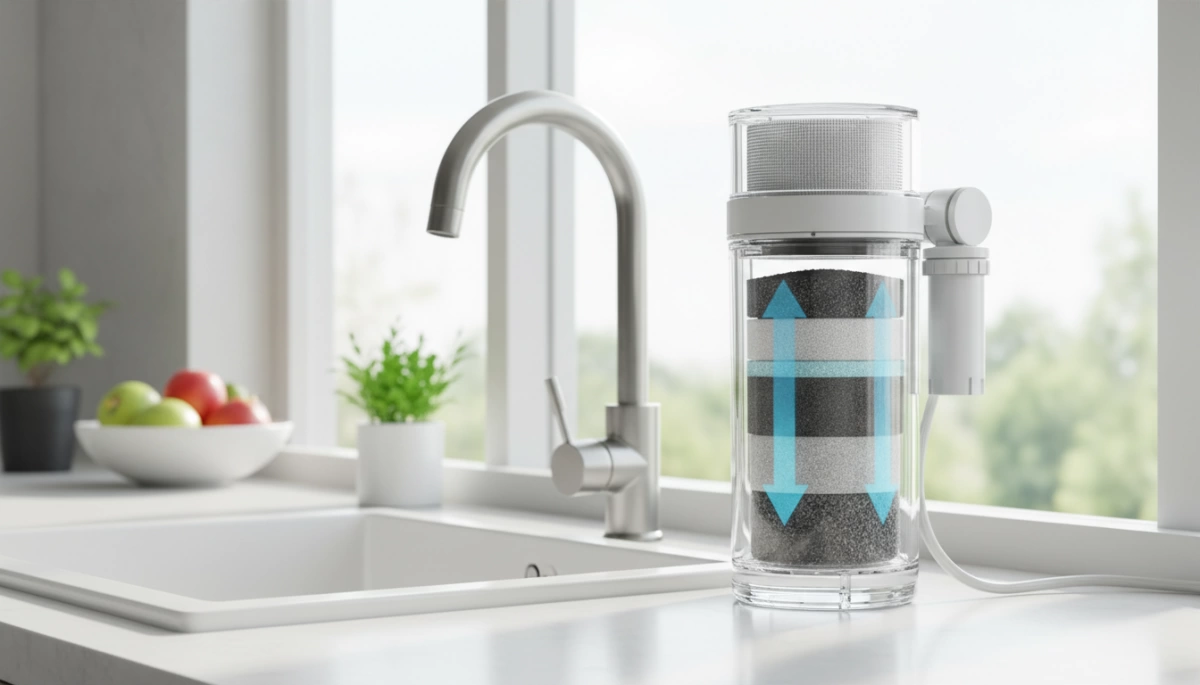
The Evolution of Compact Filtration: Beyond the Single Screen
Legacy single-layer faucet filters were designed for a different era of water quality. A simple metal screen or basic carbon insert can trap visible sediment, but it struggles with today’s real-world challenges: residual chlorine, fine rust, micro-sediment, and heavy metal traces. In many US municipalities, this single-stage approach cannot deliver consistent performance or stable micron rating accuracy.
This is why I focus on multi layer filtration design in faucet water filters instead of basic carbon filters. A multi layer filtration faucet uses sequential filtration stages, where each layer targets a specific contaminant type:
- A sediment pre filtration mesh captures larger particles so they never load the fine media.
- Activated carbon fiber adsorption handles chlorine, VOCs, and odor, improving taste.
- Dedicated heavy metal reduction media increases heavy metal reduction capacity beyond what standard carbon can achieve.
In a compact faucet filter, efficient use of volume is critical. I rely on a combined filtration structure and composite filter cartridge that stacks staged media vertically and radially. This staged filtration faucet filter uses a sequential filtration design to maximize hydraulic contact time with each layer without sacrificing flow. The result is a performance optimized filtration system with an anti clogging internal structure that maintains pressure, fits standard US faucets, and delivers visibly clearer, better-tasting water from a small, transparent housing.
The Anatomy of a Multi Layer Filtration Design in Faucet Water Filters
Layer 1: Sediment Pre Filter Barrier
In our multi layer filtration faucet design, the first layer is a tight sediment pre filtration mesh that grabs sand, rust, and visible particles before they move deeper into the composite filter cartridge. This layer protects the inner media, cuts down on clogging, and keeps your faucet flow steady instead of slowing to a trickle after a few weeks.
Layer 2: Activated Carbon Fiber Adsorption
Next, we use activated carbon fiber adsorption instead of basic loose carbon. This stage targets residual chlorine removal, chemical byproducts, and stubborn odors that make tap water smell like a pool. It’s engineered to boost taste, so your everyday drinking water, coffee, and cooking water feel cleaner and smoother without adding extra steps or countertop clutter.
Layer 3: Heavy Metal Reduction & Bacterial Inhibition
The third layer is dedicated to heavy metal reduction capacity and microbial control. Here we pair specialized media, such as KDF 55 media, with other targeted materials to cut down lead, some dissolved metals, and to inhibit bacterial growth inside the faucet filter internal structure. For families focused on safer tap water, especially those worried about lead exposure in older buildings, this stage is a key selling point and pairs well with broader protection strategies like those discussed in our guide on protecting infants from lead and nitrates in tap water.
Layer 4: Hollow Fiber Ultrafiltration Membrane
The fourth stage uses a hollow fiber ultrafiltration membrane with tight micron rating accuracy to screen out fine particulates and many microscopic impurities that earlier layers don’t catch. This is where our sequential filtration stages really show their value: by the time water reaches this membrane, the heavier load is already gone, which helps maintain flow and reduces stress on the fibers.
Layer 5: Post Filtration Mesh & Mineral Balance
Finally, a post filtration mesh polishes the water and supports a light mineralization step so the water doesn’t taste flat. This stage stabilizes the output, keeps tiny media fines from escaping, and delivers balanced, ready-to-drink water right from the tap. The result is a 5 stage faucet filter with true filtration layer synergy—optimized for U.S. households that want reliable daily use, not just a lab spec sheet.
Filtration Layer Synergy in Multi Layer Faucet Filter Design
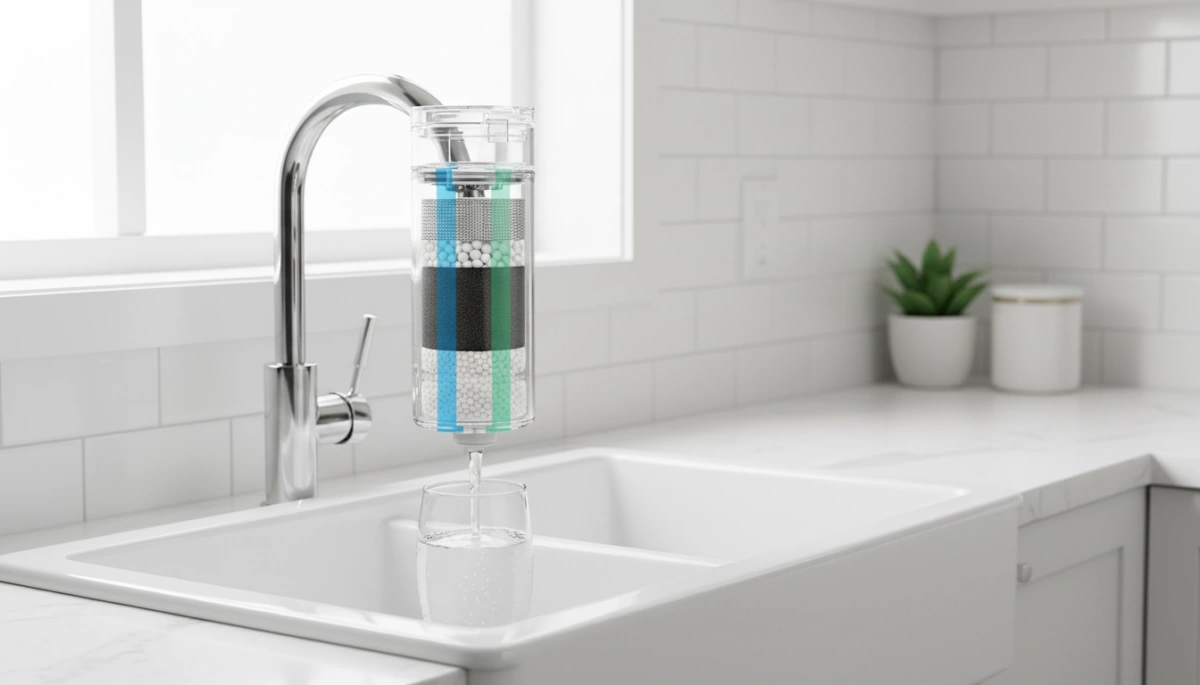
In a multi layer filtration faucet, the real performance comes from how the layers work together, not just from any single material. I use a sequential filtration design on purpose: sediment pre filtration mesh up front, adsorption and heavy metal media in the middle, and fine membranes at the end. This order protects each stage, boosts heavy metal reduction capacity, and keeps the composite filter cartridge from clogging too fast.
The layer order matters because each stage is sized for a specific job and micron rating accuracy. Larger particles hit the pre filter, chemicals and residual chlorine removal happen in the activated carbon fiber adsorption zone, and then ultrafine particles are stopped by hollow fiber ultrafiltration or ceramic diatomite membrane. That sequential filtration logic gives us longer life, better taste, and more stable flow compared to a basic 5 stage faucet filter that’s poorly arranged inside.
Inside the faucet filter internal structure, I design the flow path so water spreads evenly through all media instead of “channeling” down one shortcut. We use an anti clogging internal structure with controlled pore sizes, baffles, and layered media filtration so the water is forced through each stage, increasing hydraulic contact time without killing your water pressure.
For U.S. homes, I always balance flow rate, water pressure, and filtration efficiency across these sequential filtration stages. That means:
- Keeping resistance low enough for older plumbing and low-pressure apartments
- Optimizing media depth so you still get strong residual chlorine removal
- Using a combined filtration structure that hits performance targets without feeling slow at the tap
If you’re comparing this kind of faucet system to deeper systems like a home reverse osmosis water filter, think of it as a performance optimized filtration option for renters and busy families who want better everyday drinking and cooking water right at the sink, with no major install.
Customizing Multi Layer Filtration Design for Local Water Conditions
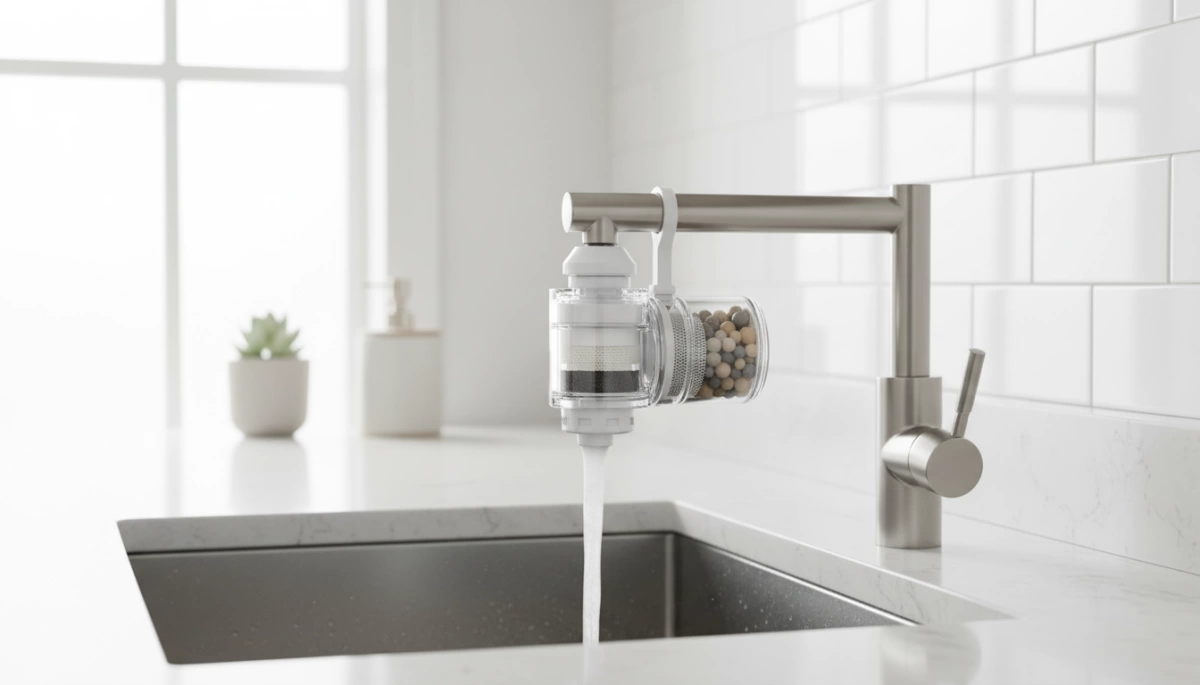
When I design a multi layer filtration faucet system for the U.S. market, I don’t use a one-size-fits-all recipe. City water in Phoenix looks nothing like well water in rural Pennsylvania, so I customize the multi layer filtration design in faucet water filters to match real local conditions.
OEM configuration by regional water quality
For OEM water filter manufacturing, I tweak the filter media ratios inside the composite filter cartridge based on verified water reports:
- More activated carbon fiber adsorption and sintered carbon block technology for systems dealing with high residual chlorine and VOCs
- Higher KDF 55 media loading in the heavy metal reduction layer for older infrastructure with lead, copper, or other metals
- Finer sediment pre filtration mesh or a ceramic diatomite membrane where sand, rust, or turbidity are the main headache
This kind of sequential filtration design lets me hit the right balance of hydraulic contact time, micron rating accuracy, and cartridge lifespan for each city or region.
Adapting layers for chlorine, metals, and turbidity
I adjust the staged filtration faucet filter layout depending on which problem is worst:
- High chlorine cities: stronger carbon stages plus extended contact paths to maximize residual chlorine removal
- Heavy metal hotspots: boosted KDF 55 media and heavy metal reduction capacity in the mid-layers
- High turbidity or well water: aggressive pre filters and anti clogging internal structure to protect the ultrafiltration and carbon stages
If you’re just starting to look at your options, a good reference point is our tap-focused setups similar to what we use in our dedicated water filter for tap systems, which follow the same performance optimized filtration logic.
Material compatibility and long-term reliability
I’m strict about material compatibility between the faucet filter internal structure and the layered media filtration:
- Housings use food-grade, chlorine‑resistant plastics or stainless components that won’t react with KDF or carbon
- Seals and gaskets are chosen so they don’t leach, swell, or break down under continuous contact with treated water
- The combined filtration structure is tested at pressure so the 5 stage faucet filter keeps its sequential filtration stages intact over time
By tuning both the media mix and the materials, I can deliver a multi layer filtration faucet design that’s not only efficient on day one, but stays stable and safe through the full service life.
Commercial Advantages of Multi Layer Filtration Faucet Design
A multi layer filtration design in faucet water filters isn’t just a tech upgrade—it’s a clear business win.
Longer-Lasting, Anti-Clogging Performance
Because the water moves through sequential filtration stages (sediment pre filtration mesh → activated carbon fiber → heavy metal reduction media → hollow fiber ultrafiltration, etc.), each layer protects the next. That staged, anti clogging internal structure:
- Extends cartridge lifespan compared with a basic carbon filter
- Maintains more stable flow rate over time
- Reduces customer complaints about slow or “dead” filters
- Lowers replacement frequency and total cost of ownership for U.S. households
For buyers comparing options, a 5 stage faucet filter with documented micron rating accuracy and residual chlorine removal is an easy upsell over single-stage designs.
Visual Marketing That Sells Itself
Transparent or semi-clear housings that show the composite filter cartridge and layered media filtration give you instant shelf appeal. Customers can literally see:
- The staged filtration faucet filter structure
- The different layers (sediment mesh, carbon, KDF 55 media, ultrafiltration membrane)
- The “worked” sections of the cartridge over time, reinforcing perceived value
That visible faucet filter internal structure makes it easier for sales teams and retailers to explain why your multi layer filtration faucet costs more—and why it’s worth it.
Strong All-in-One Value for Retailers and B2B
For OEM water filter manufacturing, multi layer faucet filters create a clean, all-in-one value proposition:
- One SKU that handles chlorine taste, odor, sediment, and many heavy metals
- Flexible media mixes to align with regions that also care about fluoride (pairing well with solutions like a dedicated fluoride reduction setup)
- Easier merchandising and education for big-box retailers, hardware stores, and online channels
When I pitch these systems, I position them as performance optimized filtration: better protection, fewer callbacks, and a premium story that justifies higher margins for both brands and distributors.