
















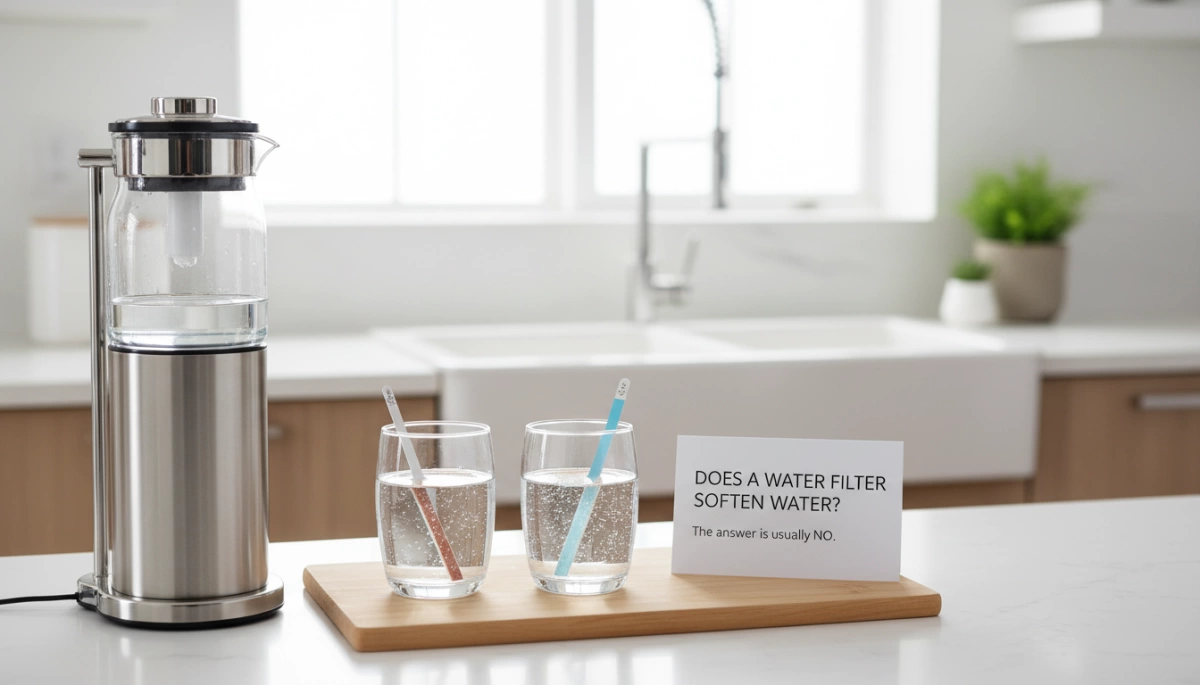
Understanding Water Hardness: What Makes Water “Hard” Anyway?
Before determining if a filter can fix the problem, we need to define exactly what we are dealing with. Hard water is defined by high levels of dissolved minerals, specifically calcium and magnesium. As groundwater travels through layers of limestone, chalk, and gypsum, it picks up these mineral ions. In the United States, this is a pervasive issue, with varying degrees of hardness measured in grains per gallon (GPG) or parts per million (ppm) depending on your region’s geology.
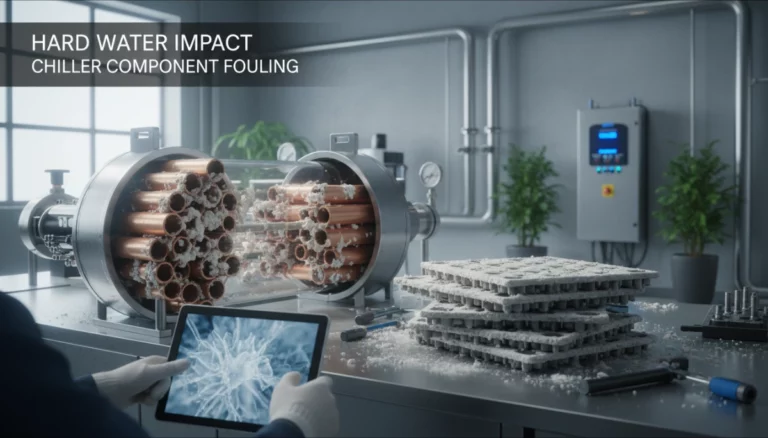
While these minerals aren’t toxic to ingest, they are destructive to your home infrastructure. Understanding the impact of hard water is crucial because it affects everything from your utility bills to your morning shower.
Why High Mineral Content Matters:
- Plumbing Damage: Over time, minerals accumulate inside pipes, restricting water flow and causing corrosion.
- Appliance Inefficiency: Scale buildup coats heating elements in water heaters, dishwashers, and coffee makers, forcing them to use more energy and shortening their lifespan.
- Skin & Hair Irritation: Hard water prevents soap from dissolving completely, leaving a residue that dries out skin and makes hair brittle.
- Poor Cleaning Performance: You may notice scale buildup on faucets, spotty glassware, and stiff, dingy laundry due to the inability of detergents to lather properly.
The Short Answer: Do Standard Water Filters Soften Water?
If you picked up a standard filter pitcher or installed a basic under-sink unit hoping to stop scale buildup, here is the verdict: No, standard water filters do not soften water.
It is a common misconception that any filtration device fixes every water problem. However, most typical carbon, sediment, or pitcher filters are engineered to target specific contaminants like chlorine, sediment, volatile organic compounds (VOCs), and bad odors. While a high-quality drinking water filter will significantly improve the taste and safety of your tap water, it generally leaves the dissolved hardness minerals—calcium and magnesium—completely untouched.
Why does this happen?
It comes down to physics and chemistry.
- The Size Issue: The mineral ions responsible for hard water are dissolved in the liquid. They are simply too small for standard mechanical filtration media (like activated carbon) to trap.
- The Design: Standard filters are like nets designed to catch debris and chemicals; hard water minerals flow right through that net along with the water molecules.
To actually remove calcium and magnesium from water, you need a different type of technology entirely, which is where the confusion between filtration and softening often begins.
In :
- Standard Filters: Great for taste, odor, and chemical removal.
- Water Softeners: Necessary for removing hardness minerals.
Water Filter vs. Water Softener: What’s the Difference?
It is incredibly common for homeowners to confuse these two systems, but they are fundamentally different tools designed for different jobs. Thinking a standard filter will fix your hard water scale is a costly mistake that leads to frustration.
Here is the simplest way to view it: Water filters clean the water; water softeners treat the hardness.
Comparison Breakdown: At a Glance
To help you choose the right equipment, here is a quick comparison of how these systems function.
| Feature | Standard Water Filter | Water Softener |
|---|---|---|
| Primary Goal | Removes contaminants (Chlorine, bacteria, sediment, odors). | Removes hardness minerals (Calcium, Magnesium). |
| Technology | Adsorption/Mechanical: Uses carbon or sediment media to trap impurities. | Ion Exchange: Swaps calcium ions for sodium ions. |
| Result | Cleaner, safer, better-tasting water. | “Slippery” water that prevents scale buildup. |
| Installation | Often Point-of-Use (e.g., under-sink, pitcher) or Whole House. | Almost always Whole House (Point-of-Entry). |
Technology Differences Explained
Water Filters:
These systems act like a sieve or a sponge. Most utilize activated carbon or sediment cartridges. The goal is to physically block particles or chemically adsorb bad tastes and chemicals like chlorine. If you want to dive deeper into the mechanics, understanding how a water purifier works reveals why they are excellent for health but ineffective against dissolved minerals.
Water Softeners:
These use a process called ion exchange softening. Inside the tank, resin beads attract calcium and magnesium (the stuff that causes scale) and swap them out for sodium. They don’t technically “clean” the water of dirt; they chemically alter it to protect your plumbing.
Installation and Maintenance Realities
- Water Filters:
High-quality under-sink water filter systems are popular in the US because they are easy to install and maintain. You simply swap out a cartridge every 6 to 12 months. They are compact and focus on the water you actually drink. - Water Softeners:
These are bulky units installed where the main water line enters your home (whole house water filtration level). Maintenance involves heavy lifting—literally—as you must regularly refill the brine tank with 40lb bags of salt.
Why The Distinction Matters
Mixing these up is expensive. If you install a standard carbon filter to stop scale buildup on your faucets, the calcium will clog that filter rapidly, ruining it without solving your hard water problem. Conversely, buying a softener won’t remove the chlorine taste from your tap water.
The Exceptions: Filters That Do Soften Water
While standard pitcher or fridge filters won’t do the trick, there are specific systems engineered to tackle hard water. If you are asking, “does reverse osmosis soften water?” the answer is a resounding yes.
Reverse Osmosis (RO) Systems
An RO system is the most effective point-of-use solution for removing hardness minerals. Unlike a standard setup where you might ask what a carbon filter does for water regarding minerals (the answer is usually “very little”), an RO system uses a semi-permeable membrane with microscopic pores.
These pores are tight enough to block up to 99% of Total Dissolved Solids (TDS). This process effectively works to remove calcium and magnesium from water, along with dangerous contaminants like lead, fluoride, and arsenic.
Key Benefits of RO:
- Pure Taste: Removes the metallic or salty taste associated with high mineral content.
- Appliance Protection: Prevents scale buildup in coffee makers, electric kettles, and ice makers.
- Health: significantly lowers the intake of inorganic minerals that your body struggles to process.
However, RO is generally not used for whole-house softening because of the flow rate and wastewater production. It is best utilized as an under-sink unit for drinking and cooking water.
RO System vs. Whole House Softener
| Feature | Reverse Osmosis (RO) | Water Softener |
|---|---|---|
| Primary Goal | Total dissolved solids TDS reduction & purification | Removing hardness minerals only |
| Method | Membrane separation | Ion Exchange (Salt-based) |
| Installation | Point-of-Use (Under sink) | Point-of-Entry (Whole house) |
| Outcome | “Soft” & Pure Drinking Water | Soft Utility Water (Showers/Laundry) |
Salt-Free Water Conditioners
Another option you might encounter is the salt-free water conditioner. It’s important to note that these do not actually remove hard minerals. Instead, they use a technology called Template Assisted Crystallization (TAC). This changes the structure of the minerals so they don’t stick to your pipes or heater elements. The water technically remains “hard” (the minerals are still there), but it behaves like soft water regarding scale buildup.
Note: If your goal is specifically to stop scale buildup on faucets without using salt bags, a conditioner is a great low-maintenance choice. If you want pure drinking water, stick with RO.
Signs You Need a Softener vs. a Filter
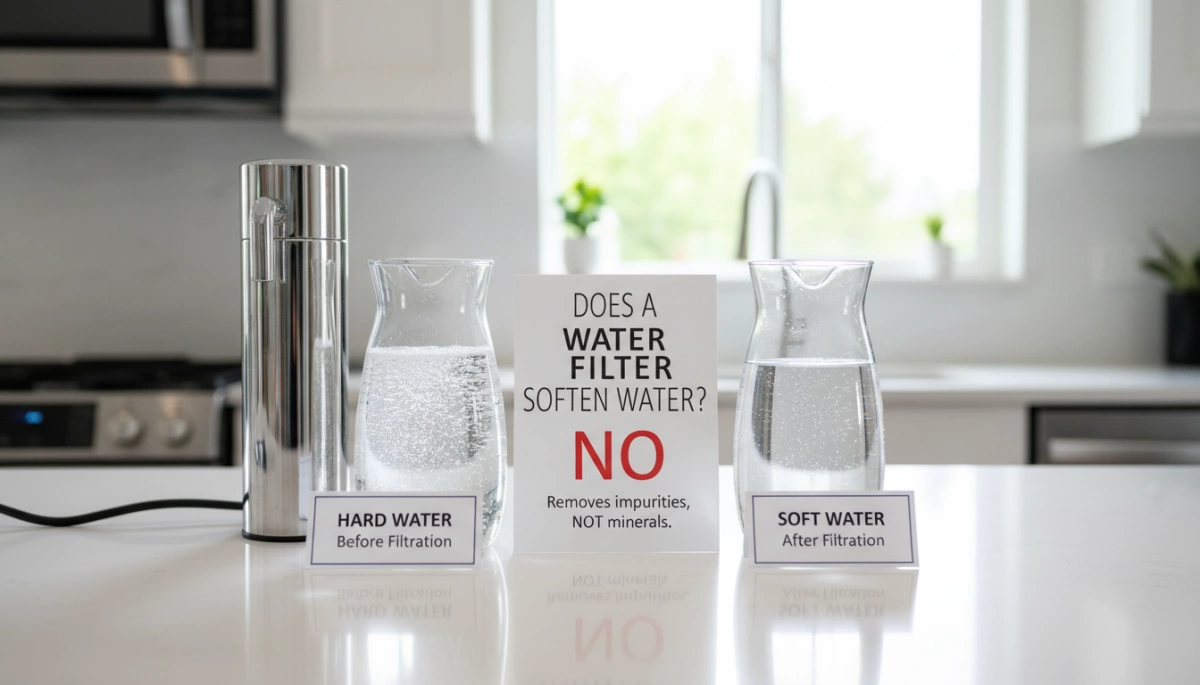
Recognizing whether you need a simple filter or a heavy-duty softener often comes down to looking at your fixtures, your appliances, and your own skin. While a standard filter makes water taste better, it won’t stop the mineral attacks on your home.
Here is a quick checklist to diagnose your water issues:
The Hard Water Symptom Checklist
If you check more than one of these boxes, you are likely dealing with high levels of calcium and magnesium:
- Scale Buildup on Faucets: You see white, crusty residue accumulating on showerheads, faucets, and coffee pots. This is the most obvious sign of dissolved minerals.
- Dry, Itchy Skin & Dull Hair: Hard water makes it difficult to rinse off soap completely, leaving a film on your skin.
- Faded Laundry: Clothes wear out faster, feel stiff, and lose their color vibrancy.
- Soaps Don’t Lather: You find yourself using twice as much detergent or shampoo just to get a decent foam.
Choose a Water Filter if…
Your primary concerns are taste, smell, and safety. If your water leaves no physical residue but tastes like a swimming pool or has a metallic tang, a standard carbon or sediment filter is usually sufficient. These systems excel at chlorine removal, reducing bad odors, and catching floating sediments.
Choose a Softener or RO System if…
You are battling persistent scale and appliance damage. To actually remove calcium and magnesium from water, you need the ion exchange process of a softener or the membrane technology of a Reverse Osmosis (RO) system.
For many homeowners, the goal is specifically better bathing water. While a softener treats the whole house to prevent scale, a customized shower filter can be an effective, targeted solution to reduce chlorine and heavy metals that aggravate sensitive skin and hair, bridging the gap between basic filtration and comfort.
Comparison at a Glance
| Symptom | The Culprit | The Solution |
|---|---|---|
| Bad taste / Chlorine smell | Chemicals & Organics | Carbon Filter |
| White crust / Scale | Calcium & Magnesium | Softener or RO |
| Turbid / Cloudy water | Dirt / Rust | Sediment Filter |
| Bacteria / Viruses | Pathogens | RO or UV System |
The Combo Solution: Combining Filtration and Hardness Reduction
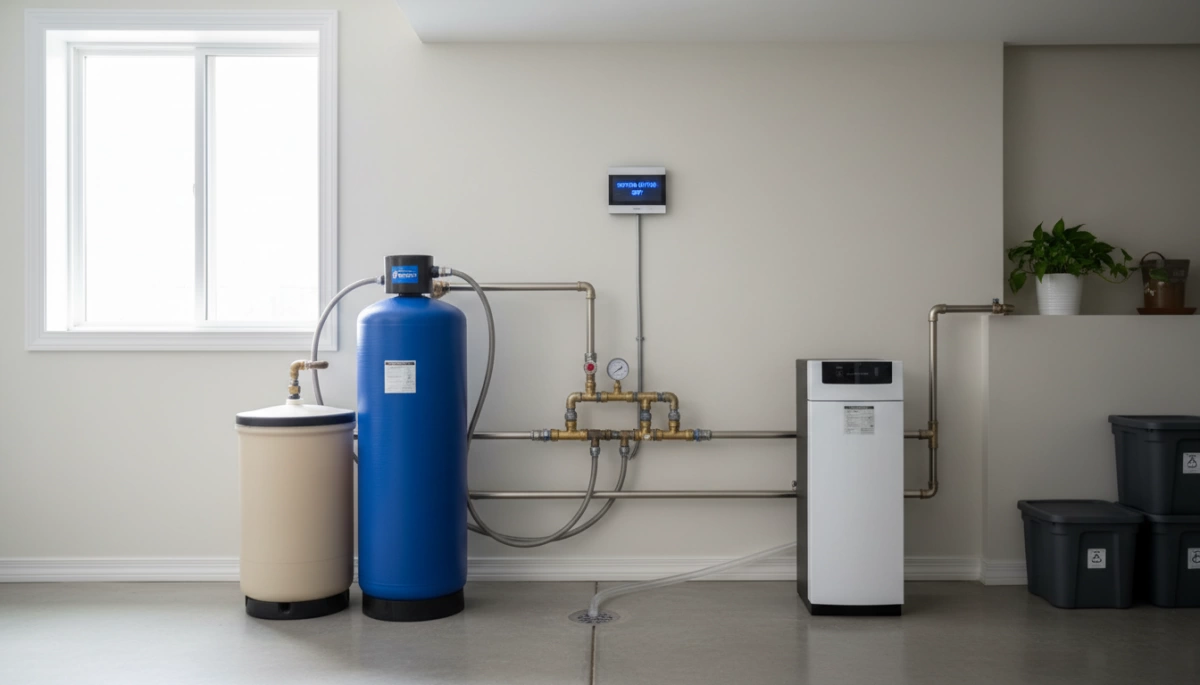
Sometimes, the answer isn’t “either/or”—it’s both. If you are dealing with significant mineral buildup but also worry about city contaminants like chlorine or lead, a single unit often falls short. The most effective strategy we see in American homes is a layered approach that targets specific water problems at different stages.
The Ideal Setup
To get the best of both worlds, you combine filter and softener capabilities. This two-step process ensures every tap serves its purpose:
- Step 1: Whole-House Pre-Filtration. Install a robust whole house water filtration system at the main entry point. This acts as the first line of defense, removing sediment, rust, and chlorine before the water travels through your pipes.
- Step 2: Point-of-Use Softening (RO). Install an under sink water filter for hard water—specifically a Reverse Osmosis system—in the kitchen. This strips away the dissolved calcium and magnesium that cause scale, ensuring your drinking and cooking water is perfectly soft and pure.
Why Integration Matters
Separating these tasks drastically extends the life of your equipment. If you force a fine RO membrane to process raw, sediment-heavy municipal water, it clogs quickly. By pre-filtering, you protect the expensive components, ensuring you get the full reverse osmosis system benefits for years.
| Feature | Filter Alone | Softener Alone | Integrated Combo |
|---|---|---|---|
| Taste | Improved (Removes Chlorine) | Salty/Neutral | Crisp & Pure |
| Scale Protection | Minimal | Excellent | Excellent (at POU) |
| Contaminant Removal | High | Low | Maximum |
| Appliance Life | Standard | Extended | Maximum |
A Manufacturer’s View on Customization
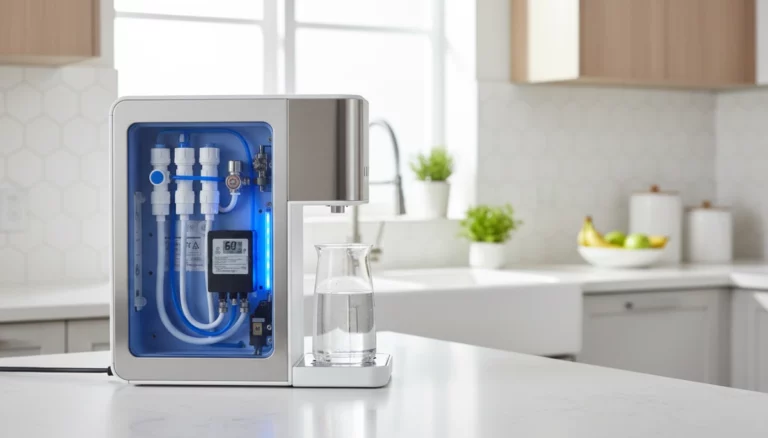
From our engineering perspective at Driplife, the industry is shifting toward smart, customizable solutions. We design tankless RO designs and high-capacity membranes that specifically address real-world hardness challenges. Unlike generic filters, these systems are engineered to prevent scale buildup on faucets while managing wastewater efficiency. By customizing the pre-filtration stage to match your local water quality, we can protect the RO membrane, ensuring it effectively removes hardness minerals without frequent replacements.
Testing Your Water — The First Step to the Right Choice
Before you invest in a whole-house system or an under-sink unit, you need to know exactly what you are dealing with. Guessing leads to buying equipment that doesn’t solve the actual problem. The most common mistake homeowners make is relying solely on a basic TDS (Total Dissolved Solids) meter thinking it measures hardness. It doesn’t.
TDS vs. Hardness: Know the Difference
A TDS meter measures the conductivity of the water, telling you the total amount of dissolved content, but it doesn’t distinguish between healthy minerals, salt, or harmful contaminants.
- TDS Meter: Good for checking reverse osmosis performance, but poor for diagnosing hardness.
- Water Hardness Test Kit: Usually involves test strips or a titration drop test. This specifically measures calcium and magnesium concentration in grains per gallon (GPG) or parts per million (ppm).
To fully understand why these specific measurements matter for your daily life, it helps to review the key differences between hard and soft water.
Home Kits vs. Professional Lab Testing
For most city water, a simple water hardness test kit from a hardware store is sufficient to determine if you need a softener. However, if you are on a private well, I strongly recommend a professional lab test. Well water often contains iron, manganese, sulfur, or bacteria that standard hardness strips won’t detect, and these contaminants can ruin a standard water softener if not pre-treated.
Interpreting Your Results to Match Solutions
Once you have your numbers, use this quick guide to choose the right equipment:
| Your Water Result | Recommended Solution |
|---|---|
| High Hardness (>7 GPG) | Dedicated Water Softener or Salt-Free Conditioner |
| High TDS + Hardness | Reverse Osmosis System (removes minerals and lowers TDS) |
| Chlorine Taste/Odor Only | Carbon Filter (Pitcher or Whole House) |
| Hardness + Chlorine | Hybrid System (Softener + Carbon Filtration) |
Manufacturer’s Engineering Perspective: Real Solutions for Hard Water
At Driplife, we understand that standard filtration often falls short when facing the high mineral content found in many American homes. We don’t just assemble parts; we engineer specific solutions designed to tackle the gap between simple filtration and true water softening. Our focus is on high-performance Reverse Osmosis (RO) systems and multi-stage configurations that effectively handle Total dissolved solids (TDS) reduction, ensuring you get water that isn’t just clean, but also soft and scale-free.
When we design our systems, we prioritize the features that modern households demand to combat hard water symptoms:
- High GPD Output & Tankless Efficiency: We utilize advanced high-flow membranes that eliminate the need for bulky storage tanks. This maximizes under-sink space while delivering a continuous flow of treated water, perfect for filling pots or coffee reservoirs quickly.
- Precision Hardness Reduction: Unlike basic carbon filters, our RO technology physically removes the calcium and magnesium ions responsible for scale, offering the distinct benefits of under-sink RO systems for protecting expensive kitchen appliances.
- Chlorine and Odor Removal: While softening is key for appliances, we also integrate premium carbon stages. This ensures that even if you are just looking for chlorine removal for skin hair, the water feels significantly softer and less aggressive in the shower or at the sink.
We believe in customizable solutions because water quality varies drastically from coast to coast. Whether for residential use or commercial application, our ability to tailor the filtration media allows us to create systems that specifically target your region’s water profile. Instead of a one-size-fits-all patch, we provide a definitive upgrade for your home’s water quality.