

















Why the PFAS Crisis is the Defining Market Opportunity for Water Dealers in 2026
The water treatment landscape has shifted permanently. We are no longer just selling better-tasting water; we are selling critical health protection against forever chemicals remediation. The widespread detection of Per- and Polyfluoroalkyl Substances (PFAS) in municipal water supplies has created a massive gap between public infrastructure capabilities and consumer safety requirements. For water dealers and distributors, this represents the single largest growth vector of the decade.
The Regulatory Shift: Understanding the New EPA Mandates
Federal oversight has moved from advisory health goals to enforceable standards. The era of unregulated contaminants is ending, forcing a technological upgrade across the residential and commercial sectors. Dealers who rely on outdated filtration methods that cannot handle these chemical bonds will be left behind, while those offering certified water filter for PFAS protection solutions will capture the market.
The Context: EPA’s New Maximum Contaminant Levels (MCLs)
The EPA has established legally enforceable EPA Maximum Contaminant Levels (MCLs) for six specific PFAS compounds, fundamentally changing the baseline for water quality.
- Strict Limits: PFOA and PFOS are now capped at 4.0 parts per trillion (ppt).
- Detection Reality: Many municipal systems cannot currently meet these standards without massive infrastructure overhauls, driving immediate demand for point-of-use solutions.
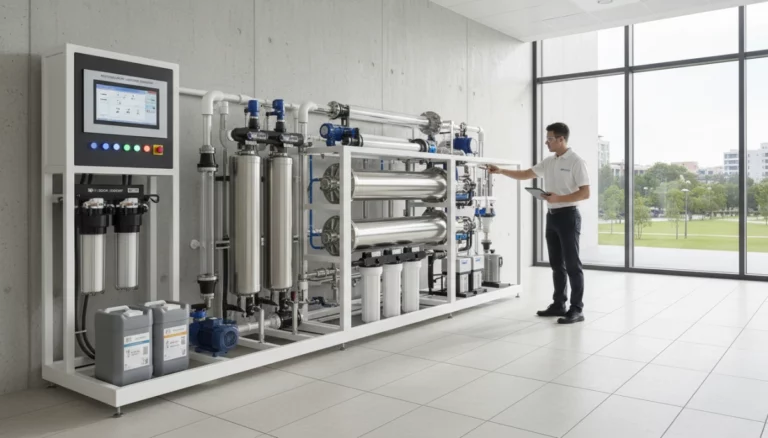
- Technology Requirement: Achieving these low levels requires advanced filtration, specifically High-rejection RO membrane technology found in our DripLife RO-800G and RO-1000G series.
The Market Impact: Compliance Urgency for Households and Businesses
Awareness is at an all-time high. Homeowners are conducting independent water tests, and businesses are seeking Commercial water treatment solutions to mitigate employee health risks.
- Residential: Families are prioritizing PFOA and PFOS reduction over aesthetic features.
- Commercial: Offices and hospitality venues require high-capacity systems that guarantee compliance to avoid public relations fallout.
- Urgency: The window to establish your brand as the local authority on PFAS is now, before the market becomes saturated with generic options.
The Liability Factor: Risks of Selling Unverified Products
In this high-stakes environment, vague performance claims are a liability. Distributing filtration systems without Third-party lab verification exposes your business to significant risk if the products fail to perform.
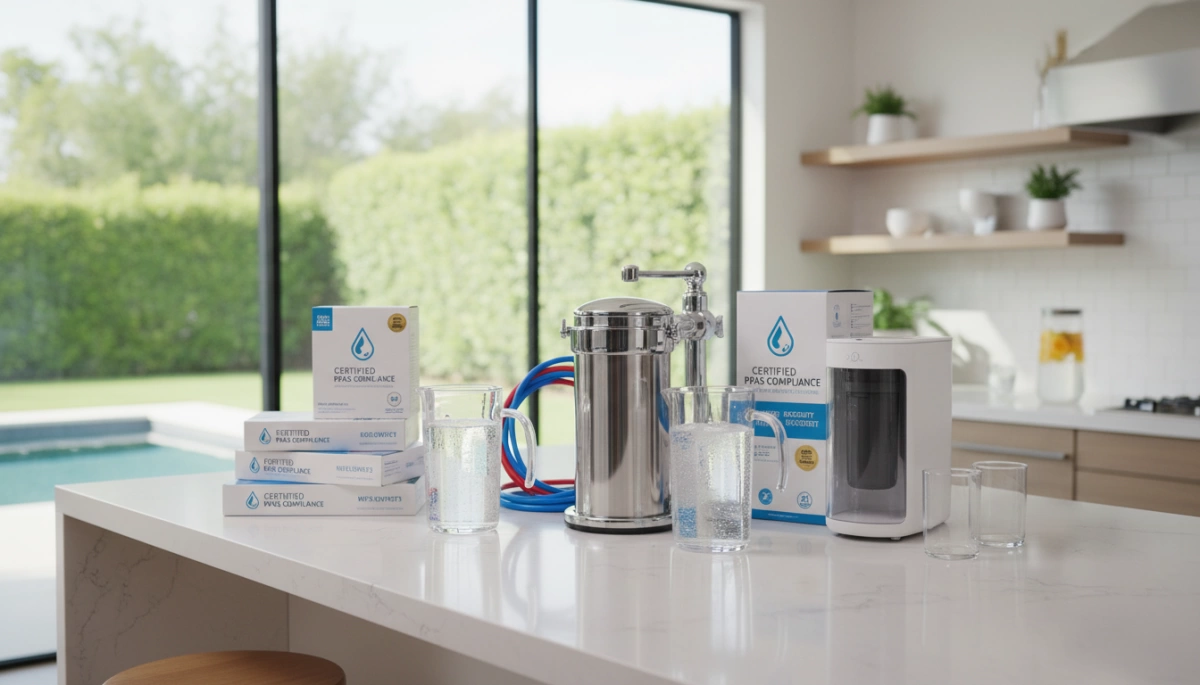
- Verification Matters: We rely strictly on NSF/ANSI 53 & 58 Standards to validate performance.
- Consumer Trust: Selling unverified units erodes brand credibility instantly when independent tests reveal contaminants are still present.
- Our Approach: We mitigate this risk by providing systems backed by rigorous testing and Material safety data sheets (MSDS), ensuring our partners sell with absolute confidence.
The Regulatory Shift: Understanding the New EPA Mandates
The Context: EPA’s New Maximum Contaminant Levels (MCLs)
The landscape of water treatment in the United States has fundamentally changed. The EPA has established strict EPA Maximum Contaminant Levels (MCLs) for six specific PFAS compounds, pushing the allowable limit down to near-zero levels (4 parts per trillion for PFOA and PFOS). This isn’t just a minor update; it is a federal directive that redefines what “safe” water means.
For us in the industry, this signals the end of relying on generic filtration claims. Technologies that cannot demonstrate effective forever chemicals remediation through rigorous testing are becoming obsolete. We focus on Reverse Osmosis (RO) because it is one of the few methods capable of meeting these aggressive new standards, filtering down to 0.0001 microns to physically reject these synthetic molecules.
The Market Impact: Compliance Urgency for Households and Businesses
This regulatory shift has triggered immediate demand across the residential sector. Homeowners are no longer looking for simple taste improvement; they are actively seeking health-grade protection. The urgency to comply with these safety standards is driving a mass upgrade from standard pitchers to advanced under-sink water filter systems capable of handling heavy chemical loads.
- Consumer Awareness: News coverage of “forever chemicals” has educated the average buyer.
- Commercial Pressure: Businesses, especially in food service, must ensure their water supply does not become a liability.
- Technology Shift: There is a clear migration toward tankless RO units that offer both high efficiency and verified PFOA and PFOS reduction.
The Liability Factor: Risks of Selling Unverified Products
Ignoring these mandates is a dangerous game for water dealers. Distributing filtration products that claim to remove PFAS without third-party lab verification exposes your business to significant liability and consumer trust issues. If a system fails to perform under the new EPA scrutiny, the fallout falls on the supplier.
We prioritize offering systems backed by NSF/ANSI 58 standards. This ensures that when we claim a reduction in hazardous contaminants, the data supports it. In this new regulatory era, certification is not just a badge; it is the only shield against market liability.
The “Certified” Advantage: Why NSF/ANSI Standards are Your Best Sales Tool
In the current US water treatment market, claims of “purity” are no longer enough. To truly Lead the Market by Offering Certified Water Filter for PFAS Protection Solutions, you need verifiable proof. For dealers and distributors, certifications are not just technical requirements; they are your most powerful sales assets. When a customer asks if a system can handle “forever chemicals,” pointing to a certified seal eliminates hesitation and closes the deal.
Defining the Standards: NSF/ANSI 53 and 58 Explained
Understanding the specific certifications allows you to position products accurately. We encounter two primary standards when discussing health-safety contaminants like PFAS:
- NSF/ANSI 53 (Health Effects): This standard typically applies to filtration technologies like activated carbon. It verifies that the filter can reduce specific health-related contaminants—including Lead, PFOA, and PFOS—to safe levels established by the EPA.
- NSF/ANSI 58 (Reverse Osmosis): This is the gold standard for RO systems. It goes beyond simple filtration, verifying the structural integrity of the system and the performance of the membrane. NSF/ANSI 58 certifies that the system effectively reduces Total Dissolved Solids (TDS) and specific contaminants like PFAS through the reverse osmosis process.
Building Trust: Converting Skeptical Commercial Buyers
Commercial clients and informed homeowners are risk-averse. They are aware of the liability associated with ineffective water treatment. Offering commercial water treatment solutions backed by third-party lab verification shifts the conversation from “Does this work?” to “When can we install it?”
By providing data sheets that confirm PFOA and PFOS reduction, you protect your reputation and provide peace of mind. A certified system proves that the claims are not just marketing fluff but are backed by rigorous scientific testing. This level of transparency is essential when addressing the health risks associated with modern water supplies.
Driplife’s Commitment: Adherence to Rigorous Testing Protocols
At Driplife, we don’t leave compliance to chance. Our manufacturing process integrates strict quality control measures to ensure every unit meets global safety standards. We focus on:
- Material Safety: Using verified lead-free materials to meet NSF/ANSI 372 requirements.
- Performance Testing: Subjecting our RO membranes to high-stress scenarios to guarantee high rejection rates for heavy metals and chemicals.
- Hygiene Standards: Designing systems that prevent secondary contamination, mitigating risks like bacterial buildup or mold in water filters inside the housing.
Partnering with an OEM that prioritizes these protocols ensures you are stocking inventory that is ready for the scrutiny of the American market.
Technology Deep Dive: What Actually Removes “Forever Chemicals”?
To lead the market by offering certified water filter for PFAS protection solutions, you cannot rely on standard sediment filters or basic pitchers. The molecular bond of “forever chemicals” is incredibly strong, requiring advanced filtration mechanics to break the cycle of contamination. At DripLife, we utilize a multi-stage approach that combines physical separation with chemical adsorption to ensure safety.
Reverse Osmosis: The Heavy Lifter (0.0001-Micron Accuracy)
The core of our defense strategy against PFAS is the High-rejection RO membrane. While standard filters operate at the micron level, our Reverse Osmosis systems function at the molecular level with 0.0001-micron filtration accuracy.
This level of precision is non-negotiable for effective targeted contaminant removal. PFAS molecules, while microscopic, are significantly larger than water molecules. By forcing water through the semi-permeable membrane under pressure, our systems effectively block heavy metals, bacteria, and complex chemical chains like PFOA and PFOS, flushing them out via the waste line while pure water passes through. Understanding the technical distinction in purified water vs. filtered water is essential for dealers explaining why RO is the superior choice for chemical defense.
Activated Carbon & Ion Exchange: The Polisher
While the RO membrane acts as the primary barrier, the composite filters play a crucial role in PFOA/PFOS adsorption capacity. We integrate Granular Activated Carbon (GAC) and carbon block technology into our 5-stage filtration process.
- Adsorption Power: Carbon is highly effective at attracting and trapping organic chemicals. The vast surface area of our carbon blocks grabs onto PFAS compounds that might attempt to bypass initial stages.
- Ion Exchange Resin Technology: In specific configurations, we utilize ion exchange to target charged contaminants, further polishing the water to ensure it meets rigorous safety standards.
This combination of physical RO barriers and chemical adsorption ensures that households are protected by a comprehensive system, rather than a single point of failure.
Positioning Your Brand as a Market Leader with Driplife Solutions
To truly Lead the Market by Offering Certified Water Filter for PFAS Protection Solutions, your inventory must reflect the severity of modern water contamination. Standard faucet filters often fall short against “forever chemicals.” We position our partners for success by supplying advanced filtration technology that goes beyond basic taste improvement to address genuine health concerns like PFOA and PFOS.
Inventory Strategy: Undersink RO Systems vs. Faucet Filters
Stocking the right mix of products is critical for capturing the health-conscious US market. While simple carbon filters have their place, the real market opportunity lies in high-performance Reverse Osmosis (RO) systems capable of meeting strict EPA mandates. Our laboratory testing confirms that comprehensive filtration is necessary for significant PFAS reduction.
Comparison: Why RO Wins for PFAS Protection
| Feature | Standard Faucet Filter | Driplife Tankless RO System |
|---|---|---|
| Filtration Accuracy | 0.5 – 5 microns | 0.0001 microns |
| PFAS Removal | Limited (mostly taste/odor) | High (up to 99% reduction) |
| Heavy Metal Removal | Minimal | Excellent (Lead, Arsenic, etc.) |
| System Lifespan | 2-3 months | 12-24 months (RO Membrane) |
| Market Positioning | Entry-level commodity | Premium health solution |
Addressing Pain Points: Tankless Designs and Easy Maintenance
American homeowners are tired of bulky equipment taking up valuable under-sink space. We address this directly with our tankless reverse osmosis design. By eliminating the traditional storage tank, we save up to 70% of under-sink space and remove the risk of secondary pollution from stagnant water.
We also solved the maintenance headache. Our systems feature a “twist-and-pull” filter replacement mechanism.
- 3-Second Change: Users can swap filters instantly without tools.
- Smart Monitoring: Integrated TDS displays and color-coded indicators on the faucet show exactly when to change filters.
- Low Waste: Our 2:1 pure-to-drain ratio is far more efficient than the industry standard, appealing to eco-conscious buyers.
Material Safety: 100% BPA-Free and Lead-Free Requirements
Safety starts with the materials we use. You cannot sell a health product that introduces new contaminants. Our manufacturing process strictly adheres to NSF/ANSI 372 standards, ensuring every component that touches water is completely lead-free. We utilize 100% BPA-free materials throughout the system’s waterways. This commitment to material integrity protects your brand from liability and assures your customers that their water is pure from the source to the glass.
Sourcing for Success: Why Partner with an OEM Like Driplife?
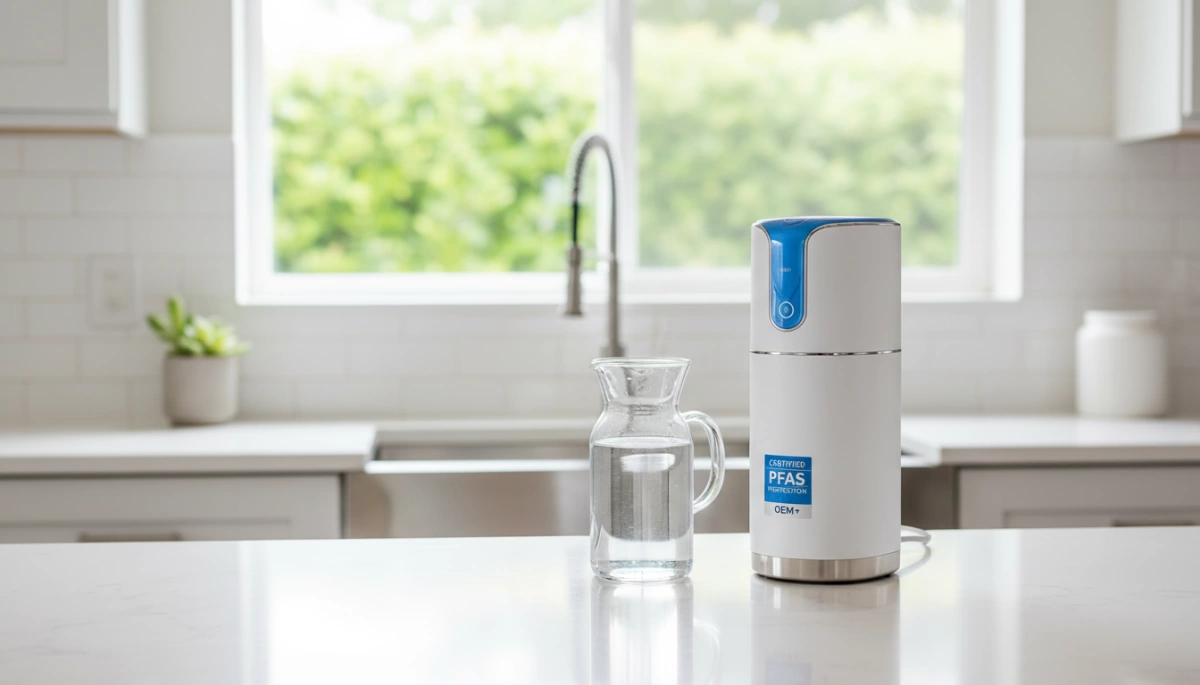
To truly Lead the Market by Offering Certified Water Filter for PFAS Protection Solutions, you need a supply chain that moves as fast as the regulations do. Partnering directly with an OEM water filtration manufacturer like us eliminates the bloat of third-party distributors, giving you a direct line to the technology that solves the PFAS crisis.
Factory-Direct Advantage: Tiered Wholesale Pricing
Margins matter in the water treatment business. By sourcing directly from our factory, you access tiered wholesale pricing that improves as your volume grows. We strip away the markup layers found in traditional distribution channels. This allows you to price your high-end RO systems competitively while maintaining healthy profit margins, giving you the financial flexibility to market aggressively.
Customization & Private Labeling Opportunities
Your brand is your strongest asset. We don’t just sell boxes; we support private label water filters that allow you to customize housing, smart features, and packaging. Whether you need specific flow rates or branding for local markets, we assist in tailoring your RO system features for specific regional water qualities to ensure your product fits your customer base perfectly.
Supply Chain Stability: ISO Certified Manufacturing
Reliability is non-negotiable when you are promising health safety. Our facility operates under strict ISO certified manufacturing protocols. This ensures supply chain reliability and consistent product quality, so you never have to worry about stockouts or defects during peak seasons. We control the process from raw material to final assembly.
Technical Support and Material Safety Data Sheets (MSDS)
Compliance requires documentation. We provide comprehensive factory-direct technical catalogs and Material safety data sheets (MSDS) to back up every claim. When you sell a system designed for PFAS removal, you need the data to prove the materials are safe and effective.
| Partnership Benefit | Impact on Your Business |
|---|---|
| Direct OEM Sourcing | Lower costs, higher margins, no middleman markups. |
| ISO Certification | Guaranteed consistency and strict quality control. |
| Private Labeling | Build your own brand authority, not someone else’s. |
| Compliance Data | Full access to MSDS and lab reports for verification. |
Actionable Steps to Launch Your PFAS Protection Line
Transitioning your product offering to lead the market requires a strategic approach. We aren’t just adding SKUs; we are building a reputation for safety and reliability. Here is the roadmap I use to ensure our catalog is ready to meet the new EPA mandates head-on.
Step 1: Audit Current Inventory for NSF 53/58 Compliance
Go through your current stock immediately. If your Reverse Osmosis systems or filters do not explicitly carry NSF/ANSI 53 & 58 Standards certification, you are vulnerable. In today’s market, implied safety isn’t enough. You need to verify that your inventory is rated specifically for PFOA and PFOS reduction. Any product lacking these credentials should be phased out in favor of certified systems that guarantee compliance with federal regulations.
Step 2: Educate Sales Teams on GenX Chemical Risks
Your sales team is your frontline defense. They need to move beyond basic pitch points like taste and odor. Train them to discuss forever chemicals remediation and the specific dangers of GenX chemicals. When a homeowner asks about the latest local water report, your team must confidently explain how high-precision filtration handles these invisible threats. Knowledge builds trust, and trust closes deals.
Step 3: Partner with Manufacturers Providing Verified Lab Data
Supply chain transparency is non-negotiable. You need to source from an OEM water filtration manufacturer that offers more than just low prices. I insist on seeing Third-party lab verification and comprehensive Material safety data sheets (MSDS) before bringing any product on board. Understanding how water filters are produced gives you the insight needed to select partners who prioritize rigorous testing over cutting corners. Align yourself with factories that treat data as their most valuable asset.
Frequently Asked Questions About PFAS Water Filtration
What specific certifications are required for PFAS removal?
To legitimately claim PFAS reduction, a system must meet rigorous third-party standards. The gold standards in the industry are NSF/ANSI 53 (for filtration systems) and NSF/ANSI 58 (specifically for Reverse Osmosis systems). These certifications verify that the device effectively reduces PFOA and PFOS concentrations to below the EPA’s health advisory levels. We prioritize these benchmarks because selling unverified generic filters exposes dealers to significant liability. Always look for the specific claim of “PFOA/PFOS reduction” on the data sheet, not just a general safety seal.
How does Reverse Osmosis compare to Carbon filters for PFAS?
While Granular Activated Carbon (GAC) can reduce PFAS through adsorption, it has limitations regarding saturation points and contact time. Reverse Osmosis (RO) is generally considered the superior solution for comprehensive protection. An RO system uses pressure to force water through a High-rejection RO membrane with a pore size of 0.0001 microns, physically blocking the complex molecular structures of “forever chemicals.” Just as dealers often ask does reverse osmosis remove lead, the mechanism for PFAS removal relies on the same high-pressure barrier that effectively isolates heavy metals and dissolved solids from the clean water stream.
Why is factory-direct sourcing better for PFAS filtration compliance?
Sourcing directly from an OEM like us ensures you have total visibility into the supply chain. When dealing with emerging contaminants, you need access to Factory-direct technical catalogs and Material safety data sheets (MSDS) to prove component integrity. Buying through middlemen often obscures the origin of the filtration media. By partnering directly with the manufacturer, you guarantee that the High-rejection RO membrane and composite filters in your inventory match the exact specifications tested in the lab, ensuring consistent compliance and safety for your end-users.
What is the difference between NSF 53 and NSF 58 standards?
The primary difference lies in the technology being tested.
- NSF/ANSI 53: Applies to filtration systems (like carbon blocks) that reduce specific health-related contaminants. It verifies that the filter media can adsorb or mechanically filter out the target substance.
- NSF/ANSI 58: Is the specific standard for Reverse Osmosis systems. It is more comprehensive, testing for contaminant reduction (including PFAS), total dissolved solids (TDS) reduction, and system structural integrity.
For dealers looking to Lead the Market by Offering Certified Water Filter for PFAS Protection Solutions, offering NSF 58 compliant RO units provides the highest level of assurance to health-conscious consumers.