















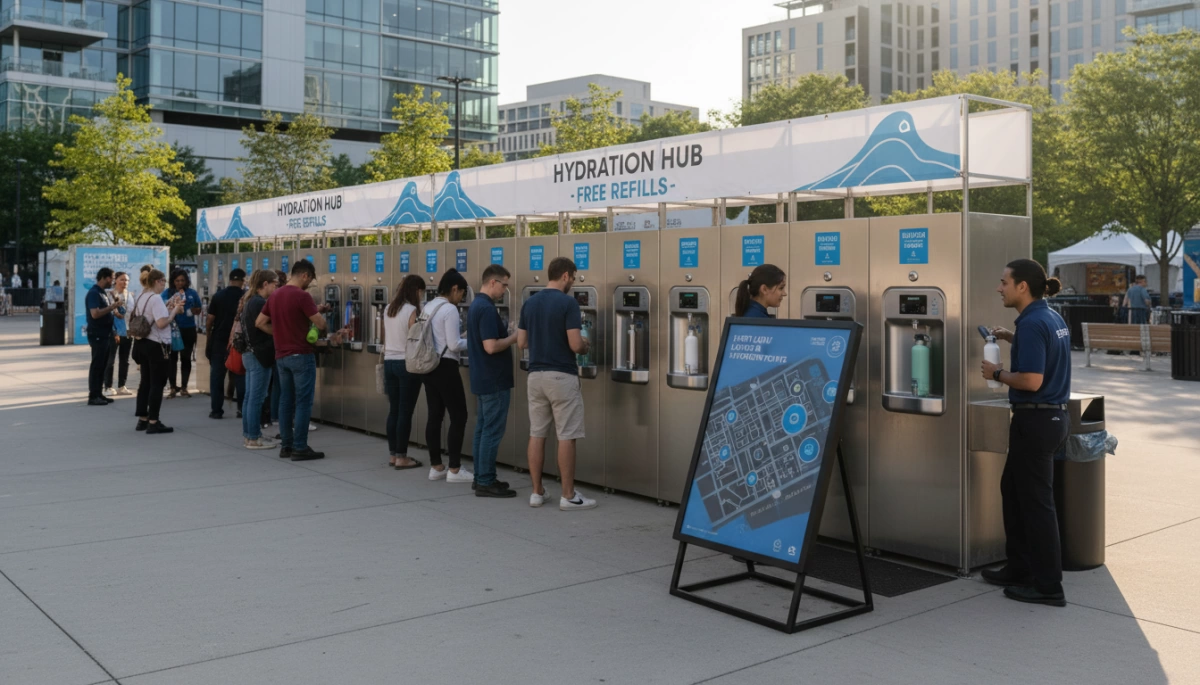
The Hydration Equation: Capacity and Flow Rate Calculations
Accurate capacity planning for large event temporary hydration is critical to avoid long waits and dehydration risks. Start by analyzing crowd demographics, factoring age, activity level, and outdoor weather conditions—these drive water consumption rates. For example:
| Factor | Impact on Consumption |
|---|---|
| High activity (sports) | +30-50% increase in water demand |
| Hot weather (>80°F) | +40% increase |
| Mixed demographics | Adjust per hydration needs |
Next, apply flow rate math to define peak load hydration demands:
- Estimate peak hour attendees (typically 20-30% of total crowd).
- Calculate needed flow rate per spigot: 0.5 to 1 gallon/minute at minimum.
- Determine bottle filler speed: 15-20 seconds per fill (assuming 24 oz bottle).
Spigot ratio guidelines for optimal throughput:
| Attendee Count | Recommended Spigots | Notes |
|---|---|---|
| 1,000 | 8-10 | Based on a 20,000 oz/hr demand |
| 5,000 | 40-50 | Adjust for event type and climate |
| 10,000+ | 80+ | Prioritize high-flow commercial grade bottle fillers |
This data-driven approach ensures hydration infrastructure matches crowd peaks, minimizing downtime and boosting event safety. Reliable portable bottle filling stations need precise sizing to maintain seamless flow and meet consumption spikes efficiently.
Strategic Site Layout: Mitigating Bottlenecks for Smooth Hydration Flow
Efficient temporary hydration infrastructure hinges on smart site zoning and queue management to avoid bottlenecks at portable bottle filling stations during crowd peaks.
Zoning the Venue: High-Traffic vs. Cooling Areas
- High-Traffic Zones: Place portable water refill kiosks where foot traffic naturally flows—near main entrances, food courts, and activity hubs.
- Cooling Off Areas: Add extra hydration spots near shaded or rest zones to encourage breaks and reduce crowd pressure elsewhere.
Queue Management Design
| Queue Type | Description | Space Needed | Best Use Case |
|---|---|---|---|
| Linear | Single-file line | Narrow, long space | Tight venues, straightforward flow |
| Island | 360-degree access around unit | More space, flexible | Large plazas, festivals |
Choose island configurations when space allows to enhance visibility and reduce frustration. Linear queues work well in tight event layouts.
Accessibility & Visibility
- Ensure all hydration stations meet ADA compliance with reachable heights and clear access paths.
- Use bold, well-placed signage with hydration station icons and directions visible from a distance to guide attendees quickly.
This site layout approach taps into crowd management best practices, limiting wait times while maximizing distribution efficiency during peak demand.
Infrastructure & Hardware: Selecting the Right Portable Fillers
For large event temporary hydration, choosing the right portable bottle fillers is key. You want units that balance durability with portability—ruggedized designs handle rough outdoor conditions best, while skid-mounted setups make moving and repositioning easier during crowd peaks. When it comes to water quality, integrating municipal water hookups with high-capacity filtration systems ensures safe, great-tasting water throughout the event. Using commercial-grade filters similar to those explained in our guide on how charcoal filter water can help maintain purity and prevent contamination.
Hygiene is another critical factor. Touchless hydration dispensers significantly reduce germ spread in high-traffic zones, providing safer refill points compared to manual spigots. Prioritizing touchless or sensor-activated fillers supports better crowd health and fits today’s expectations for contactless solutions. Combining these features creates a temporary hydration station lineup that covers performance, safety, and user convenience at scale.
Operational Logistics: Installation and Maintenance
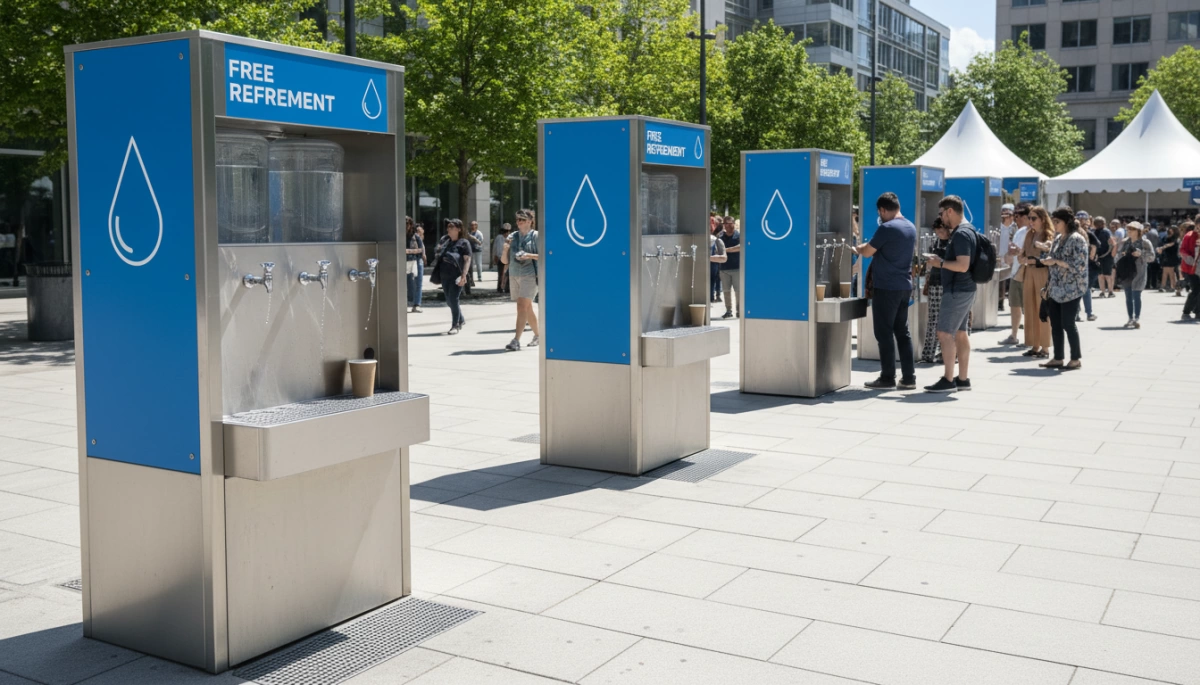
Efficient installation of large event temporary hydration stations hinges on choosing the right water source and managing pressure effectively. Plumbing hookups provide steady pressure and consistent supply, ideal for long events in venues with infrastructure. In contrast, tanker-fed systems offer flexibility for remote sites but require careful pressure regulation to avoid flow drops during peak crowd use.
Rapid deployment protocols are essential for smooth setup—plan for testing flow rates, pressure, and functionality at least 24 hours before the event. Keep installation timelines tight but allow buffer time for troubleshooting to ensure hydration stations are fully operational when crowds arrive.
Maintenance during the event demands a “pit crew” approach: assign teams to monitor water flow, clean units regularly, and manage waste effectively. Quick response to clogs or leaks minimizes downtime and keeps hydration flowing. Regular sanitizing, especially on touchless dispensers, supports hygiene and boosts attendee confidence. This hands-on operational strategy ensures that portable bottle fillers perform reliably under crowd peak hydration logistics.
For events relying on municipal water hookups or mobile filtration setups, consider filters that handle varying water qualities to maintain taste and safety, as detailed in our guide on the benefits of carbon filtration for water systems.
Sustainability & ROI: The Business Case
Investing in temporary hydration infrastructure is a smart move for large events looking to cut costs and boost sustainability. Tracking waste reduction metrics, especially plastic bottles saved, offers clear proof of environmental impact. Every portable bottle filling station deployed helps slash single-use plastic waste, aligning with growing consumer demand for greener solutions.
From a cost perspective, free refill stations typically outrun bottled water logistics by reducing transport, storage, and disposal expenses. Plus, they cut down on vendor dependency and delivery delays at crowded events. With optimized event water distribution planning, event operators can achieve a faster return on investment through lower operating costs and improved attendee satisfaction.
For a deeper dive into filtration efficiency that supports sustainability goals, consider exploring filter life monitoring with smart sensors vs timers, which ensures your mobile water filtration units perform reliably throughout the event.