

















Analyzing the Halftime Hydraulic Challenge
Meeting halftime peak hydration demand is a critical logistics puzzle. Calculating throughput starts with gallons per minute (GPM) aligned to stadium capacity—for example, a 50,000-seat venue can require stations delivering upwards of 3-5 GPM collectively during a 15-minute halftime window. The dwell time factor is key: sipping directly from fountains is quick but minimal, while bottle filling takes longer—often 5–10 seconds per refill—making rapid flow rates essential to prevent bottlenecks. Stations must handle these peak load surges seamlessly, shifting from idle times during play to intense bursts without stagnation or queue buildup. Properly engineered hydration points ensure smooth throughput, meeting real-time user demand without slowing concourse crowd flow.
Strategic Placement: Mapping the Concourse for Flow
Placing stadium concourse bottle filling stations smartly is key to managing halftime peak hydration demand without causing bottlenecks. First, decouple units from restrooms to avoid queue collisions that slow down traffic and frustrate fans. Positioning fountains away from busy restroom lines keeps foot traffic moving smoothly.
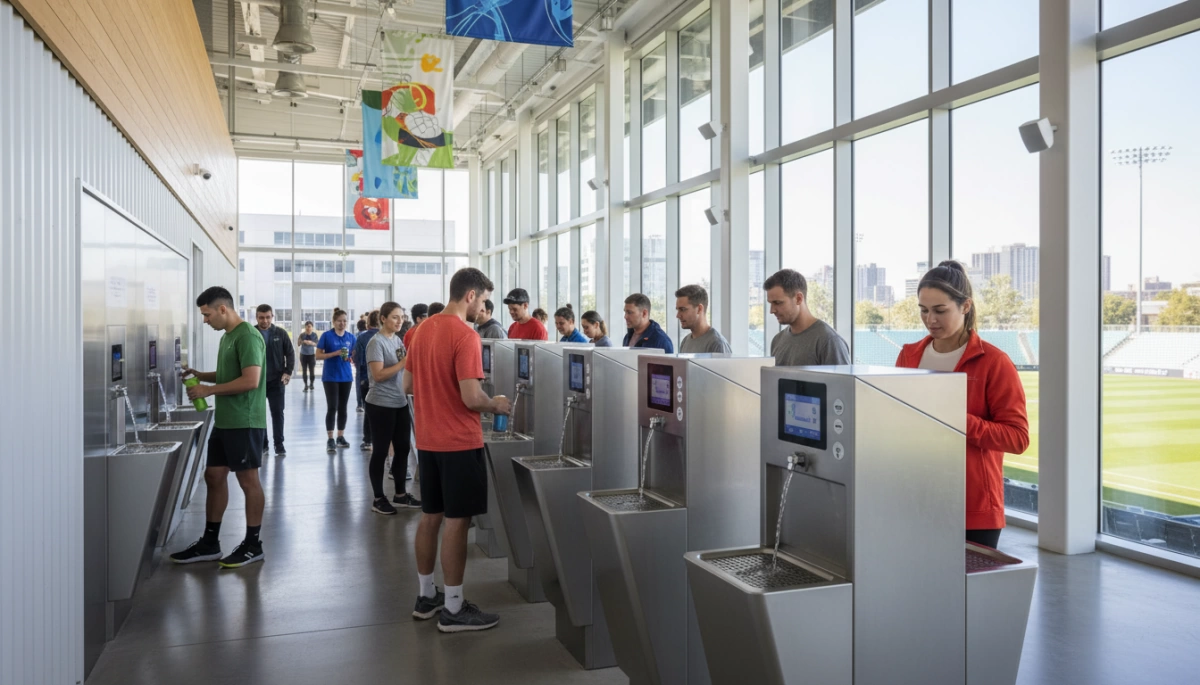
Leverage the “Eddy” effect by installing bottle fillers in alcoves or recessed wall areas. This approach prevents blockers in the main walking path, allowing crowds to hydrate without interrupting flow. Plus, using these recessed spots offers space for multi-user hydration banks without congestion.
Clear visual sightlines are crucial. Stations should be highly visible from multiple angles to encourage even crowd dispersion across the concourse. This avoids clustering and long wait times at just a few refill points. Thoughtful placement paired with good signage optimizes concourse crowd flow management, enhancing user experience while meeting halftime demand efficiently. For hardware designed to support peak throughput with durability and chilled water capacity, you can explore options like our commercial grade water filtration systems.
Hardware Specifications for High-Traffic Venues
High-traffic stadium concourse bottle filling stations demand rugged, efficient hardware built to handle halftime peak hydration surges. Key specs include:
| Feature | Requirement | Why It Matters |
|---|---|---|
| Rapid Fill Rates | >1.0 GPM (gallons per minute) with laminar flow | Speeds bottle refills, cuts queue time |
| Chiller Recovery | Fast cooling cycles for chilled water | Keeps bottles cold even during nonstop use |
| Durability & Materials | 304-grade stainless steel & vandal-resistant sensors | Resists damage and corrosion in busy venues |
| Touchless Reliability | Infrared sensors tuned for noisy, high-traffic environments | Ensures accurate, hands-free activation |
These specs ensure that hydration stations not only meet the heavy demand of stadium attendees but stay reliable and hygienic throughout the event. Using commercial-grade parts and sensor calibration also aids in aligning with smart event facility plumbing infrastructure needs. For optimal chilled water performance, consider factors affecting internal chiller components, similar to those detailed in hard water impact on chillers.
Queue Management & User Experience (UX)
To handle halftime peak hydration demand smoothly, multi-station banks are a must. Installing hydration walls with several bottle filling units side-by-side cuts wait times and prevents bottlenecks. Clear signage and wayfinding—like floor decals and overhead signs—help direct concourse foot traffic and keep lines organized. This reduces congestion and keeps the crowd moving efficiently.
Equally important is ADA accessibility. All bottle refill stations must be compliant to ensure fast, unimpeded access for everyone, including people with disabilities. Prioritizing queue management with multi-user hydration banks and visible directional cues creates a better user experience while optimizing stadium concourse bottle filling station placement for peak crowds. For enhanced reliability and smooth operation, consider integrating commercial grade water filtration systems designed for high-traffic venues. You can explore options for these on our page about countertop water filter systems.
The Sustainability ROI for Venues
Installing stadium concourse bottle filling stations delivers clear sustainability returns. Tracking and displaying plastic reduction metrics highlights the tangible impact of saved single-use bottles, boosting guest awareness and venue credibility. These savings translate directly into operational cost reductions by minimizing waste cleanup and the need for disposable plastic cup replenishment.
Moreover, well-planned hydration stations contribute to green building standards, supporting venues in earning valuable LEED and ISO certifications. These stations promote continuous use of refillable containers, aligning with environmental goals and enhancing your venue’s overall sustainability profile. For facilities looking to integrate efficient water filtration with their bottle filling units, exploring advanced commercial grade water filtration systems can further optimize resource use and water quality.
Maintenance Protocols for Event Days
Ensuring smooth operation during peak use starts well before kickoff. Pre-event checks must cover filter integrity and precise calibration of touchless sensors to avoid downtime. Real-time monitoring with smart water station systems detects leaks early and flags filter exhaustion, preventing interruptions in hydration service. After the game, thorough post-game sanitization focuses on high-touch surfaces, keeping the concourse bottle filling stations hygienic and user-friendly. This disciplined maintenance maximizes uptime and supports venue sustainability goals. For advanced filtration options, consider integrating commercial-grade filters designed for continuous heavy use.