














The Thermodynamics of Scale: How Heat Exchangers Fail
The Mechanism of Deposition and Inverse Solubility
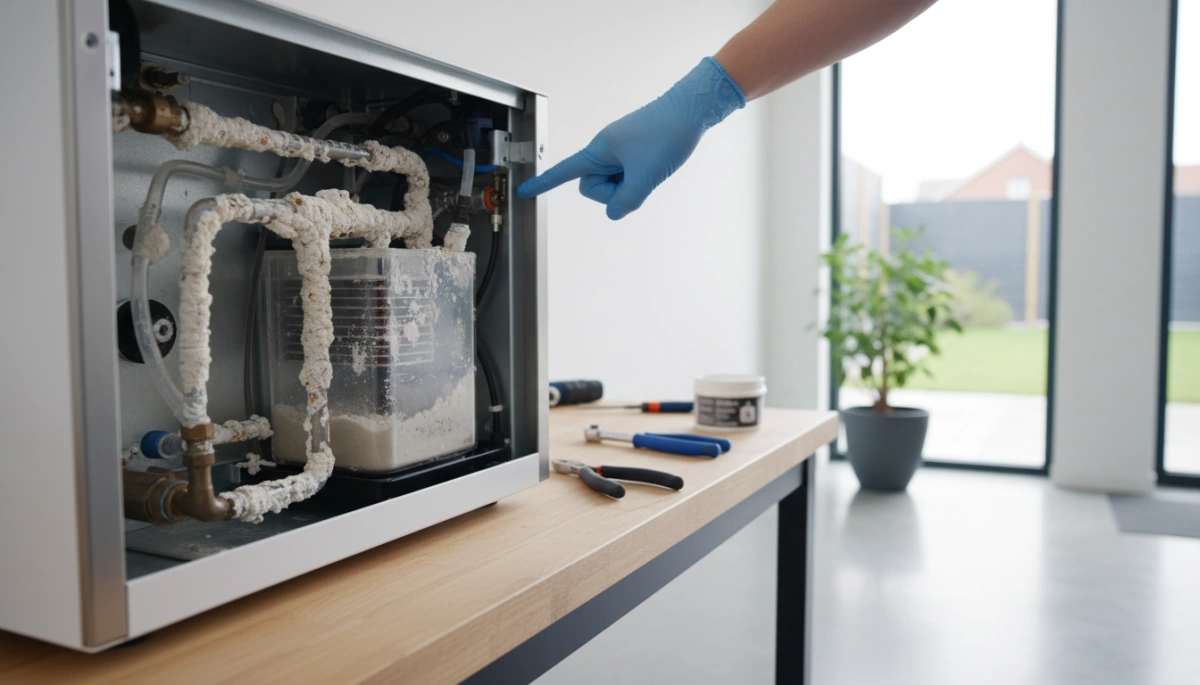
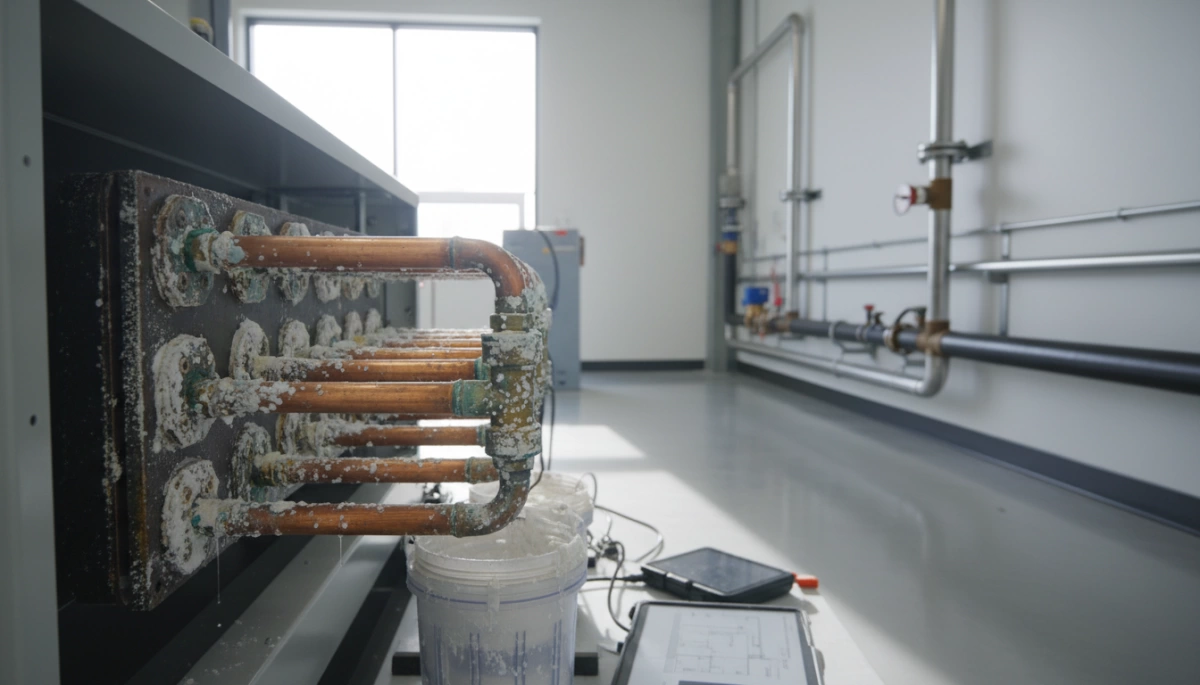
We often think of dissolving things like sugar in hot tea, but hard water minerals behave differently. Calcium carbonate scaling follows the rule of inverse solubility. This means that as water temperature rises or pressure changes within the system, these minerals become less soluble and precipitate out of the liquid. In our line of work, we see these deposits latch onto metal surfaces with aggressive tenacity. It isn’t just loose dust; it is a hard, crystalline buildup that fundamentally changes the geometry of internal components. For high-precision equipment like our under-sink chillers, this deposition is the first step toward system degradation.
The Insulation Effect on Cooling Coils
Once that mineral layer forms, the damage begins. Scale acts as a powerful thermal insulator. In a clean system, the evaporator coil pulls heat directly from the water to chill it rapidly. However, when evaporator coil fouling occurs, that layer of scale sits between the refrigerant and the water.
- Thermal Barrier: The coil has to cool the layer of rock before it can cool the water.
- Efficiency Drop: Heat transfer efficiency plummets because scale has a fraction of the thermal conductivity of copper or stainless steel.
- Performance Lag: The rapid cooling capabilities we engineer into our 4-in-1 systems get throttled, resulting in lukewarm output despite the machine running at full power.
Impact on Compressor Cycles and Electricity Usage
The direct consequence of insulated coils is a massive strain on the heart of the system: the compressor. Because the heat exchange is blocked, the compressor must run significantly longer to reach the target temperature. This leads to compressor overheating and a noticeable energy consumption spike.
- Extended Duty Cycles: The machine never gets a rest, causing premature wear on moving parts.
- Thermal Conductivity Loss: The system fights against physics, wasting electricity to overcome the mineral barrier.
- Risk of Burnout: Continuous overwork pushes the compressor beyond its design limits, turning a maintenance issue into a total component failure.
Mechanical Degradation: Beyond the Cooling Coil
While the loss of thermal transfer gets the most attention, the physical destruction of moving parts is often what actually kills the machine. The Impact of Hard Water on Internal Chiller Components isn’t limited to just insulation; it causes severe mechanical abrasion and blockage throughout the hydraulic circuit. When calcium carbonate scaling precipitates out of the water, it essentially turns your fluid into liquid sandpaper, grinding down components that were designed for smooth operation.
Solenoid Valves and Flow Restrictors Clogging
The most vulnerable points in any water system are the narrowest ones. Solenoid valves and flow restrictors rely on precise, small orifices to manage water direction and volume. Hard water leaves behind jagged mineral deposits that accumulate rapidly in these tight spaces.
- Solenoid valve clogging: Scale can jam the internal plunger, causing the valve to stick in an open position (leading to leaks) or a closed position (resulting in total failure).
- Flow rate restriction: As the effective diameter of the tube shrinks, the flow slows down to a trickle, frustrating users.
- Seal Damage: Hard deposits form on rubber gaskets and O-rings, preventing them from making a watertight seal.
Pumps and Impellers Wear and Tear
Pumps are the heart of the circulation system, but they aren’t built to crush rocks. Scale buildup on the impeller blades adds weight and friction. This abrasive environment physically grinds down the plastic or metal components, leading to a significant system pressure drop. The motor has to work twice as hard to move the same amount of fluid, which generates excess heat and leads to premature burnout. If you are looking to maintain the best chilled water dispensers for home use, protecting the internal pump from this specific type of abrasive wear is non-negotiable for the unit’s lifespan.
Sensors and Instrumentation Errors
Modern chillers rely on data to run efficiently, but that data is only as good as the sensors collecting it. Scale buildup creates an insulating shell around temperature probes, conductivity sensors, and water level detectors.
- Thermal Lag: A coated probe reacts slowly to temperature changes, causing the compressor to run longer than necessary.
- Phantom Readings: Mineral layers can trick level sensors into thinking a tank is full when it’s empty, or vice versa, leading to dry running or overflows.
- Control Logic Failure: When the input data is wrong, the system’s internal logic fails, often resulting in erratic cycling and error codes.
The ‘Ice & Heat’ Factor: Specific Risks for 4-in-1 Systems
At Driplife, we design our machines to handle multiple thermal tasks simultaneously, but combining heating, cooling, and ice-making in one compact unit makes water quality critical. In advanced 4-in-1 systems, hard water doesn’t just affect one function; it attacks the entire thermodynamic cycle. The rapid fluctuation between freezing and boiling temperatures accelerates mineral precipitation, threatening the longevity of the device.
Scale Formation in Hot Water Circuits
Heat is the primary catalyst for calcium carbonate scaling. In the heating modules of our countertop RO water filter systems, high temperatures cause dissolved minerals to drop out of the solution much faster than in cold water lines. This creates a hard, chalky layer on the heating elements.
- Thermal Conductivity Loss: The scale acts as an insulator, preventing the heating element from effectively transferring energy to the water.
- Overheating: The internal components must work harder and hotter to reach the desired temperature, often leading to premature burnout.
- Flow Restriction: As deposits thicken, they narrow the hot water pathways, reducing the flow rate significantly.
Ice Maker Module Failure and Mineral Friction
The ice-making components in a multifunction dispenser are precision-engineered and highly sensitive to mineral friction. Unlike liquid water, the freezing process concentrates minerals. As pure water turns to ice, it leaves behind a highly concentrated mineral brine that coats the evaporator plate and ejection mechanisms.
Consequences of hard water on ice modules:
- Mechanical Jamming: Scale buildup creates a rough surface on the ice mold, causing ice cubes to stick rather than release smoothly. This forces the ejection motor to over-torque and potentially fail.
- Component Abrasion: The gritty texture of mineral deposits acts like sandpaper on moving parts, accelerating wear on seals and gears.
- Poor Ice Quality: High mineral content results in soft, cloudy ice that melts quickly, rather than the clear, solid ice our systems are designed to produce.
The Financial Consequence: Calculating the Cost of Inaction
Ignoring the impact of hard water isn’t just a maintenance oversight; it is a direct hit to the bottom line. For businesses deploying water purification solutions, the hidden costs of mineral buildup accumulate rapidly, turning a high-performance asset into a financial liability.
Energy Bills and Efficiency Loss
When scale forms on internal chiller components, it acts as a thermal insulator. This forces the compressor to work significantly harder to achieve the same cooling temperature, leading to a massive energy consumption spike. The system draws more electricity to overcome the heat exchange loss, driving up utility bills month after month. We see this often: a machine that was once energy-efficient becomes a power hog because the internal coils are fighting against a layer of mineral deposits.
Premature CapEx and Component Replacement
Capital Expenditure (CapEx) planning relies on equipment meeting its expected lifespan. Hard water accelerates wear and tear, causing critical failures in pumps, solenoids, and ice modules long before the warranty period should be up. Instead of a simple filter change, you are looking at expensive component replacements or scrapping the entire unit. Understanding the protective role of specific water filter types is essential to extending the lifecycle of these machines and protecting your initial investment.
Downtime and User Experience Impact
The soft costs of inaction are just as damaging. Unexpected breakdowns lead to:
- Operational Downtime: Machines sit out of order while waiting for repairs.
- Poor User Experience: Users get lukewarm water or deal with slow flow rates.
- Brand Reputation Damage: A reliable water dispenser is expected; a broken one is noticed immediately.
Implementing a strict preventative maintenance schedule is the only way to avoid these disruptions and ensure system efficiency remains high.
The Solution: Engineering Defense and Filtration
Combating the impact of hard water requires a dual approach: robust internal engineering and effective pre-treatment. As a water purification OEM, we prioritize protecting the integrity of the chiller and heating elements through advanced R&D and material selection. The goal is to maintain heat transfer efficiency and extend the lifespan of the machine, even in regions with high mineral content.
Material Quality and Corrosion Resistance
The first line of defense is the hardware itself. We utilize high-grade stainless steel and corrosion-resistant alloys in our cooling tanks and internal piping. Cheaper materials are prone to galvanic corrosion, which accelerates when mineral deposits create uneven surfaces on the metal. By ensuring smooth, high-quality surfaces in our manufacturing process, we reduce the ability of calcium carbonate scaling to adhere to critical components like the evaporator coil.
Filtration Technologies: RO vs. UF vs. Inhibitors
Different water conditions demand specific filtration strategies to prevent system pressure drop and clogging.
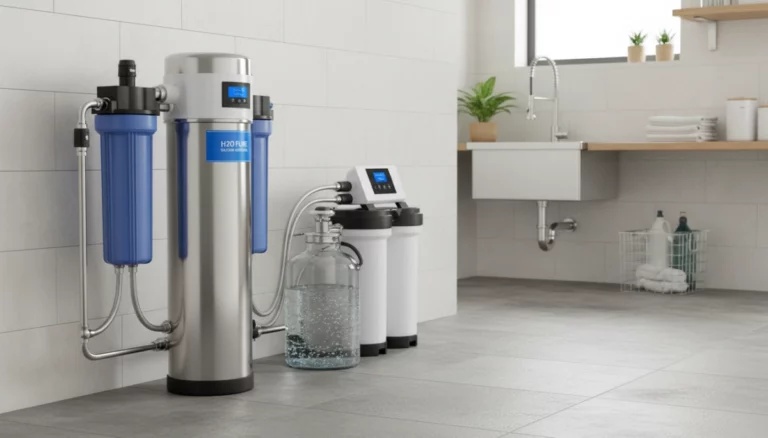
- Reverse Osmosis (RO) Pre-treatment: This is the most effective method for hard water. RO membranes remove the dissolved solids (Calcium and Magnesium) responsible for scale. This prevents the problem at the source. Understanding how water filters handle softening is crucial for selecting the right unit for your water source.
- Polyphosphate Filters: For setups where RO isn’t feasible, scale inhibitor technology is vital. These filters release a food-grade polyphosphate that coats mineral ions, preventing them from crystallizing into hard scale on heating elements and chiller coils.
- Ultrafiltration (UF): While excellent for removing bacteria and particulates, standard UF does not remove dissolved minerals. In hard water areas, UF systems should be paired with a scale inhibitor to protect the internal solenoid valve and pumps.
Comparison of Defense Mechanisms:
| Method | Mechanism | Best Application | Impact on Scale |
|---|---|---|---|
| Reverse Osmosis (RO) | Removes dissolved minerals | High hardness areas | Eliminates scale potential |
| Polyphosphate | Sequesters minerals (prevents sticking) | Moderate hardness | Inhibits buildup |
| High-Grade Materials | Resists corrosion and adhesion | All Driplife units | Mitigates damage |
Design for Maintenance and Accessibility
Even with the best protection, regular maintenance is non-negotiable. We design our under-sink and countertop units with accessible service ports to simplify the preventative maintenance schedule.
- Quick-Change Filters: Our systems allow for rapid filter swaps to ensure flow rates remain high (up to 5.2L/min).
- Modular Components: Critical parts like the ice-making module in our 4-in-1 systems are designed for durability.
- User-Friendly Replacement: Choosing the correct replacement filter for your water dispenser is the easiest way to prevent flow rate restriction caused by clogged pre-filters.
By integrating these engineering solutions, we ensure that the energy consumption spike associated with fouled chillers is avoided, delivering consistent cold and hot water performance.
Frequently Asked Questions About Hard Water and Chillers
How quickly does hard water damage a chiller?
The timeline for damage depends heavily on the mineral content of your local water supply and daily usage volume. In regions with significant hardness, calcium carbonate scaling can begin to coat the evaporator coil within just three to six months. Without a strict preventative maintenance schedule, this buildup rapidly degrades heat transfer efficiency, causing the compressor to overheat and shortening the equipment’s lifespan significantly.
Can reverse osmosis prevent scale buildup completely?
Yes, Reverse Osmosis (RO) pre-treatment is highly effective at removing the dissolved solids that cause scale. By filtering out calcium and magnesium before they enter the chilling unit, you essentially starve the scale formation process. As a water purification OEM, we recommend pairing chillers with a robust good faucet water filter system that utilizes RO or UF technology to protect internal components and ensure consistent performance.
What are the signs of scale buildup in a water dispenser?
The most immediate indicator is usually a noticeable flow rate restriction or a drop in water pressure at the dispenser. You might also observe that the unit runs longer than usual to reach the set temperature, leading to an energy consumption spike. If the machine becomes noisier or fails to deliver the under-sink water chiller benefits regarding rapid cooling, internal fouling is likely the culprit.
Is descaling a chiller difficult?
Descaling complexity varies by design, but it generally involves circulating a cleaning solution through the internal lines to dissolve mineral deposits. While this is a standard hard water fix, it requires downtime and technical care to avoid damaging seals. We focus our R&D on designing systems that are easier to service, but we always emphasize that prevention through proper filtration is far more cost-effective than reactive maintenance.