

















Why Standard VC Filters Fail in Hot Water
Creating a shower experience that balances purification with aromatherapy requires overcoming basic chemistry. High water temperatures are the primary enemy of poorly engineered filtration systems. Without advanced stabilization techniques, standard filters lose their efficacy within the first few minutes of a hot shower.
Thermolabile Compounds: The Heat Sensitivity of Vitamin C
Vitamin C (Ascorbic Acid) and essential oils are classified as thermolabile compounds, meaning their molecular structure is highly sensitive to thermal degradation. In generic filters, the binding agents often fail when water temperatures rise above 40°C (104°F). This thermal stress causes the Vitamin C to oxidize rapidly before it ever reaches your skin, nullifying the antioxidant benefits intended for neutralization.
The “Flash-Off” Effect: Rapid Evaporation of Fragrance VOCs
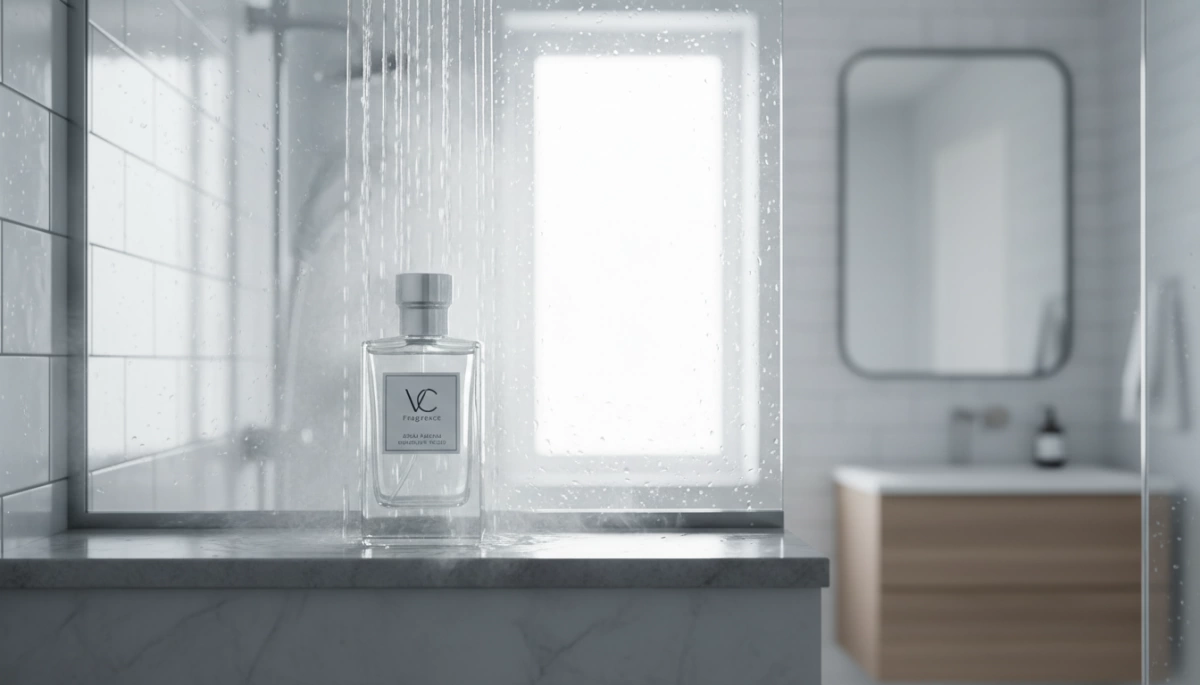
A common complaint with standard shower filters is the disappearance of scent once steam builds up. This is known as the “Flash-Off” effect. Fragrance oils are comprised of Volatile Organic Compounds (VOCs) that have low boiling points. In a high-temperature environment, these compounds evaporate into the air instantly rather than binding to the water droplets. Without proper encapsulation, the aromatherapy benefits are lost to the bathroom fan rather than being delivered to the user.
Inconsistent Dosing: Scent Dumping vs. Depletion
Temperature fluctuations often lead to erratic release rates in conventional designs. We frequently observe two distinct failure modes in competitor products:
- Initial Scent Dumping: The heat melts the outer layer of the fragrance block too quickly, releasing an overwhelming concentration of aroma in the first minute.
- Rapid Depletion: After the initial “dump,” the remaining core hardens or washes away, leaving the user with zero scent for the remainder of the shower.
Achieving scent release consistency requires precise engineering to ensure the dissolution rate remains steady, regardless of thermal spikes.
Engineering Stability: The Driplife R&D Approach
With over 15 years of dedicated R&D experience, we tackle the stability of VC fragrance under high-temperature showers through rigorous material science rather than guesswork. Our specialized software laboratory and manufacturing teams understand that standard filtration methods often fail when heat is introduced. We focus on engineering solutions that maintain structural integrity and performance, ensuring that the “Modern Lifestyle” promise of our products holds true even in the hottest steam.
Advanced Gel Encapsulation Technology
To prevent the rapid degradation of thermolabile compounds, we have moved beyond basic solid blocks. We utilize heat-resistant encapsulation methods that transform fragile Vitamin C and essential oils into stable, viscous gels. This slow-release gel filtration technology is critical for high-temperature viscosity control. Unlike traditional powders that dissolve instantly upon contact with hot water, our gel formulations resist thermal breakdown, ensuring the aromatherapy oil concentration remains steady throughout the shower rather than washing away in the first minute.
Gradual Dissolution Rate Control
Our 60,000 sq. ft. manufacturing facility operates under strict quality standards to produce filter housings that master flow dynamics. By controlling how water interacts with the filtration media, we achieve a precise gradual dissolution rate.
- Flow Optimization: Internal structures are designed to regulate water velocity, preventing the “flash-off” of volatile organic compounds.
- Thermal Protection: The housing design minimizes direct heat shock to the core ingredients.
- Scent Release Consistency: We ensure a uniform release profile, avoiding the common issue of scent dumping followed by zero fragrance.
Antioxidant Synergy
Stability isn’t just about physical structure; it is about chemical preservation. We engineer our filters with stabilizing agents that work in synergy with Vitamin C. This approach prevents premature oxidation within the cartridge, preserving the potency of the ingredients until they are needed. This attention to detail ensures that our OEM/ODM partners receive a product that delivers genuine skin benefits and reliable performance, regardless of water temperature.
The Impact of Temperature on Chlorine Neutralization
Reaction Speed: Heat Accelerates Ascorbic Acid & Chlorine Interaction
When you crank up the heat, chemistry happens faster. In a hot shower environment, the chlorine neutralization rate increases significantly because heat acts as a catalyst. While this ensures rapid removal of harsh chemicals, it presents a challenge: uncontrolled heat can cause the filtration media to deplete too quickly. We have to manage ascorbic acid thermal degradation carefully. If the reaction is unregulated, the filter might lose its potency halfway through your shower, leaving your skin exposed to chlorine right when your pores are most open.
The Sweet Spot: Balancing Stability and Efficiency
It is a delicate balance between speed and longevity. We engineer our shower filter manufacturing solutions to hit the “sweet spot.” This ensures the Vitamin C remains stable enough to survive the thermal stress but active enough to neutralize chlorine effectively. It’s not just about dumping vitamins into the water; it’s about controlled release. By stabilizing the media, we prevent the “flash-off” effect where the benefits evaporate instantly in steam.
Sensory Experience: Maintaining Aromatherapy Throughout
A hot shower should be a consistent spa experience, not a fleeting scent. High temperatures usually cause steam-activated aroma to dissipate rapidly, leaving you with plain hot water after just a minute. Our designs focus heavily on scent release consistency, ensuring the fragrance oils don’t evaporate immediately upon contact with hot water. We protect those thermolabile compounds within the filter housing, guaranteeing a steady, relaxing sensory experience from the moment you turn the tap on until you towel off.
Manufacturing & Quality Control for Global Brands
At Driplife, we leverage over 15 years of R&D experience to ensure our products withstand the rigors of daily use. We don’t just assume our filters handle heat; we prove it through water filtration R&D standards that set the industry benchmark. Our dedicated laboratories simulate extreme shower environments, pushing water temperatures above 50°C (122°F) to rigorously test Ascorbic acid thermal degradation. This ensures that the Vitamin C output remains stable and effective, verifying how shower head filters work even under thermal stress.
Material Safety and Heat Resistance
We prioritize structural integrity alongside filtration performance. Our manufacturing process utilizes food-grade, heat-resistant housings designed to prevent warping or chemical leaching during hot showers.
- Strict Online Inspection: Every unit undergoes rigorous checks to ensure the housing contains the pressure and heat without failure.
- Phthalate-Free Fragrance Formulation: We ensure that the only thing entering the water stream is pure aromatherapy, eliminating the risk of harmful byproducts.
Customization for OEM/ODM Partners
With a manufacturing capacity of 500,000 units annually across our 60,000 sq. ft. facility, we offer flexible shower filter OEM/ODM solutions tailored to specific market needs. We understand that regional preferences vary, which is why we customize heat-resistant encapsulation and gel viscosity. Whether adapting for hotter climates or specific scent preferences, we fine-tune the dissolution rates to guarantee a consistent sensory experience for your brand’s customers.
FAQs on VC Fragrance Stability in Hot Showers
How does heat affect Vitamin C in shower filters?
Heat is the enemy of stability for many skincare ingredients. Vitamin C (ascorbic acid) is a thermolabile compound, meaning it breaks down rapidly when exposed to high temperatures. In standard filters, hot water can cause the Vitamin C to degrade before it ever reaches your skin. We engineer our filtration media to resist this thermal degradation, ensuring the antioxidant benefits remain potent even during a steaming hot shower.
What technologies prevent fragrance evaporation in steam?
Steam naturally strips away scent through a process where volatile organic compounds (VOCs) evaporate instantly. To combat this, we utilize heat-resistant encapsulation technology. Instead of using simple oils that flash off immediately, we use viscous gels that hold the fragrance molecules tight. This ensures scent profile preservation, allowing the aroma to release slowly into the water stream rather than disappearing into the air.
Can high-temperature showers reduce chlorine neutralization?
It is a balancing act. While heat actually accelerates the reaction speed between Vitamin C and chlorine, it can also deplete the filter media too quickly if not controlled. Our bath water filter designs are calibrated to manage this reaction rate. We ensure the chlorine neutralization rate stays high without burning through the cartridge lifespan, protecting your skin from harsh chemicals regardless of the temperature.
How does Driplife ensure long-term scent consistency?
We hate it when a filter smells strong for two days and then has no scent at all. To solve this, we focus on a gradual dissolution rate. Through our strict online inspection and R&D testing, we formulate our aroma blocks to dissolve evenly. This guarantees scent release consistency, providing a steady, therapeutic aromatherapy experience from the first use to the last.
What customization options exist for OEM/ODM clients?
As a dedicated water filter supplier with a massive manufacturing capacity, we offer deep customization. We don’t just slap a logo on a box; we tailor the aromatherapy oil concentration and gel viscosity to match specific market preferences. Whether you need a subtle scent for sensitive markets or a robust steam-activated aroma for luxury spa lines, our engineering team adjusts the formulation to meet your brand’s exact standards.