















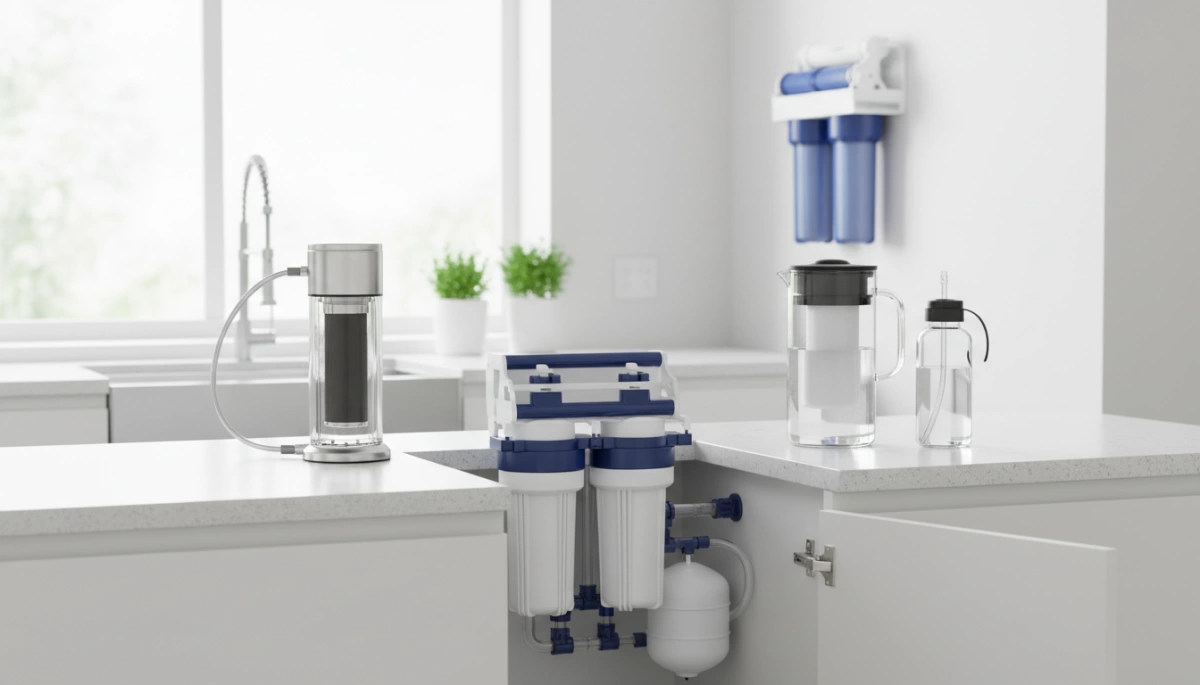
Classifying Water Filters by Filtration Technology
When navigating the market, the sheer variety of water filter types can be overwhelming. As manufacturers, we classify these systems not just by how they look, but by the science inside them. Understanding the distinct mechanisms is crucial because a filter designed for sand won’t stop dissolved chemicals, and a standard carbon block won’t sterilize viruses.
To select the right solution, we must look at the specific problem each technology solves. We categorize modern filtration into five primary technologies:
- Activated Carbon: The go-to for chemical adsorption.
- Reverse Osmosis (RO): The gold standard for removing dissolved solids.
- Ultrafiltration (UF): A balance of pathogen removal and mineral retention.
- Sediment Pre-filters: The first line of defense against physical debris.
- UV Sterilization: Absolute protection against bacteria and microbes.
Each mechanism plays a vital role in targeting specific water filter contaminants, ensuring the final output meets rigorous safety standards.
Activated Carbon Filters: Taste and Odor Control
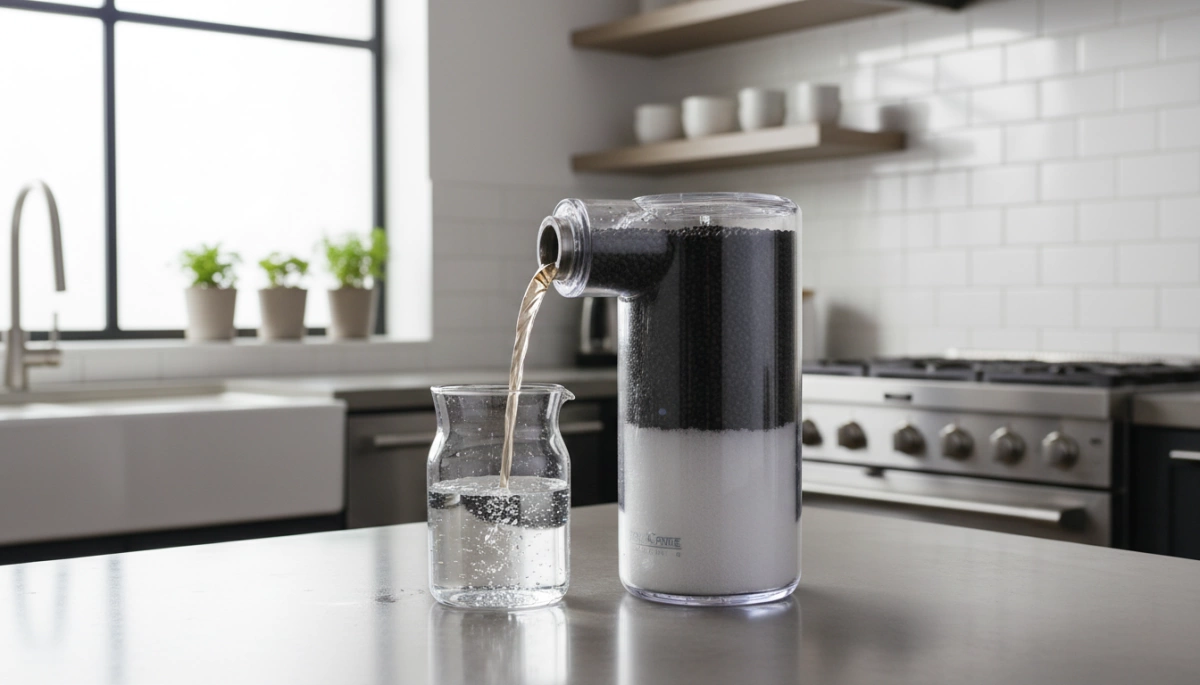
When you turn on the tap and catch a whiff of chlorine, activated carbon filtration is the go-to solution. As manufacturers, we rely on this technology for its ability to improve the sensory experience of drinking water immediately. The process works through adsorption—think of the carbon as a magnet with a massive surface area full of tiny pores. As water flows through, organic compounds, chlorine, and Volatile Organic Compounds (VOCs) get trapped in these nooks, leaving the water tasting crisp and clean.
However, it is crucial to understand what carbon cannot do. While it excels at removing bad tastes and odors, a standard carbon filter has limitations.
- It does not remove minerals: It generally leaves dissolved solids (TDS) like calcium and magnesium in the water.
- Limited metal reduction: Unless specifically treated, it is not the best water filter for lead or heavy metals compared to other tech.
- Microbial limits: It does not filter out viruses or bacteria.
To get the best performance, the density and quality of the carbon block are key. Using high-grade faucet water filter production materials ensures the filter doesn’t channel or bypass, providing consistent water filter contaminants removal for the life of the cartridge.
Reverse Osmosis (RO) Systems: The Gold Standard for Purity
When strictly filtered water is the priority, a reverse osmosis water filter is the industry heavyweight. Unlike basic screens that only trap visible dirt, RO uses a semi-permeable membrane to separate pure water molecules from dissolved pollutants on a molecular level. We consider this the “gold standard” because it tackles the most difficult contaminants that other filters let pass through.
For US households concerned about modern industrial runoff, RO is often the most reliable solution. It is arguably the best water filter for lead reduction and is highly effective at stripping out fluoride, arsenic, and bacteria. Perhaps most importantly, RO technology is one of the few proven PFAS removal systems, capable of significantly reducing those invisible “forever chemicals” found in many municipal water supplies.
Key capabilities of RO technology:
- Microscopic Precision: The membrane pores are approximately 0.0001 microns, blocking 99% of dissolved solids.
- Heavy Metal Defense: deeply effective against lead, mercury, and chromium.
- Pathogen Barrier: Physically blocks cysts and bacteria.
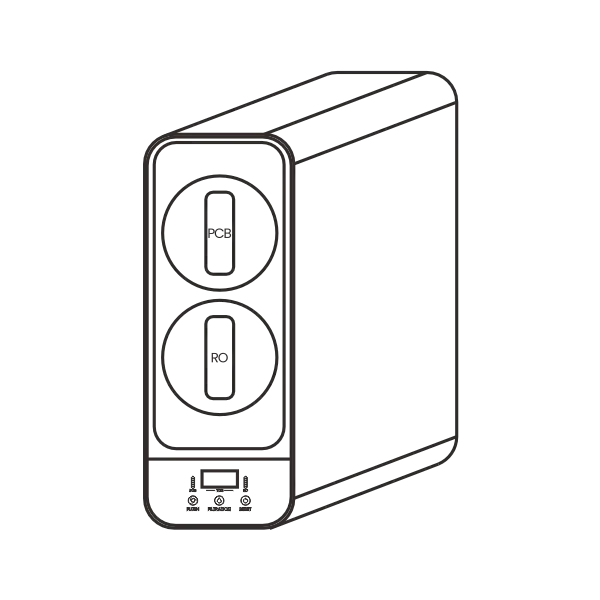
While these systems are incredibly powerful, they do require a process called “cross-flow filtration,” which generates a small amount of wastewater (brine) to wash away the rejected contaminants. However, modern engineering has improved efficiency. For example, a high-capacity under-sink 800-2000GPD reverse osmosis filtration system can deliver a rapid flow of purified water while minimizing waste, making it a sustainable alternative to plastic bottled water.
Ultrafiltration (UF) Technology: Mineral Retention and Efficiency
If you are looking for a filtration method that strikes a balance between purity and natural composition, the ultrafiltration UF system is often the unsung hero. Unlike Reverse Osmosis (RO), which strips water down to its bare molecules, UF technology uses a hollow fiber membrane with a pore size of roughly 0.01 microns. This mechanical barrier is tight enough to block harmful particulates but permeable enough to let dissolved salts and essential minerals pass through.
For many households, understanding key reasons why water filtration is crucial often centers on biological safety without sacrificing water quality. This is where UF shines. It effectively filters out 99.9% of bacteria, cysts, and parasites (like Giardia and Cryptosporidium) while retaining beneficial minerals like calcium and magnesium. This makes the water taste more “natural” compared to the flat taste sometimes associated with RO water.
Why choose Ultrafiltration?
- Zero Wastewater: Unlike RO, which sends a portion of water down the drain to flush the membrane, UF systems filter 100% of the water that enters them.
- Low Pressure Operation: These systems typically work on standard tap water pressure and do not require electricity or booster pumps.
- Mineral Retention: You get safe water that still provides the healthy electrolytes your body needs.
- High Flow Rates: Because the membrane isn’t as restrictive as RO, you get water faster at the faucet.
However, it is important to note the limitations. While an ultrafiltration UF system is excellent for biological contaminants, it cannot remove dissolved heavy metals, high levels of TDS (Total Dissolved Solids), or fluoride. It is best suited for municipal water that is chemically safe but needs a final polish to ensure it is free of microorganisms and sediment.
Sediment Pre-Filters and UV Sterilization
While complex membranes get all the glory, simple mechanical filtration is the unsung hero of any reliable system. Think of sediment pre-filters as the bodyguards for your entire water treatment setup. They are designed to physically trap large particulates—dirt, rust, sand, and silt—before the water ever reaches delicate carbon blocks or RO membranes. Without this crucial first step, your finer, more expensive filters would clog almost immediately, driving up water filter replacement costs and reducing efficiency.
This mechanical filtration is especially vital in whole house water filtration setups where large volumes of water enter directly from the municipal line or a private well.
Once the physical debris is gone, UV Sterilization acts as the ultimate safeguard against biological threats. UV light doesn’t “filter” water by removing matter; instead, it penetrates the cell walls of bacteria, viruses, and cysts, scrambling their DNA so they cannot reproduce.
- Mechanical Pre-Filters: Essential for water filter contaminants removal regarding large solids (5 to 50 microns).
- UV Purification: Chemical-free disinfection that kills 99.99% of microbes without altering taste or pH.
By combining these two technologies, we ensure the system is physically protected from clogging while delivering water that is biologically safe for consumption.
Classifying Water Filters by Installation and Application
Understanding the internal chemistry of filtration is vital, but as a manufacturer, I know that for most homeowners, the decision often comes down to logistics: space, installation complexity, and aesthetics. When we categorize water filter types by their application, we are primarily looking at where the filtration happens. This is generally split into two main camps: point of use vs point of entry. Navigating these options depends entirely on your specific household setup and whether you own your home or rent.
Here is how we break down the different installation formats to help you match the right hardware to your kitchen:
- Countertop Water Purifiers: These are standalone units that sit directly on your counter. They are favorites for renters or students because they require zero plumbing modifications. You simply fill a reservoir or attach a diverter valve to your existing tap. If you are looking for flexibility without permanent installation, exploring our countertop water filter range is a smart place to start.
- Under Sink Water Filters: If you want to keep your countertops clutter-free, an under sink water filter is the standard solution. These are plumbed directly into the cold water line beneath the cabinet. They typically offer a higher flow rate and capacity than faucet mounts, making them better for families, but they do require some minor installation work.
- Faucet-Mounted Filters: These are the small units that screw directly onto the end of your faucet. They are an entry-level solution for simple chlorine reduction, though they often have slower flow rates and require frequent cartridge changes.
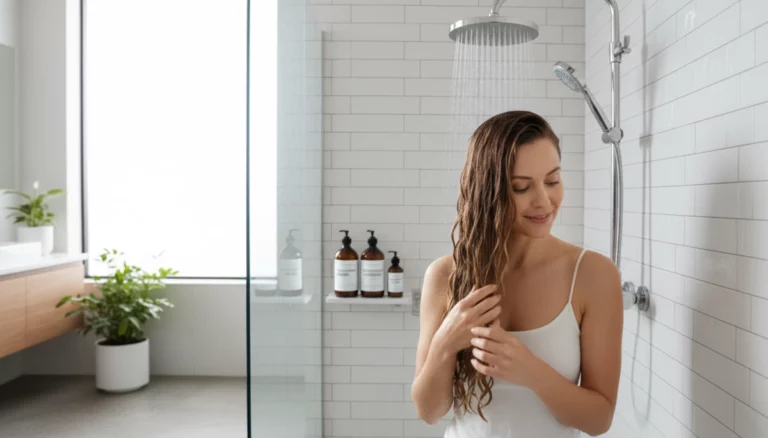
- Shower and Specialized Filters: We shouldn’t limit filtration to drinking water. Specialized point-of-use filters for showers are increasingly popular in the US to combat hard water and chlorine that can damage skin and hair.
Choosing the right form factor is about balancing convenience with volume. A countertop water purifier offers plug-and-play simplicity, while under-sink systems provide a seamless “invisible” experience.
Countertop vs. Under-Sink Systems: Convenience vs. Volume
When we help clients decide on the right filtration setup, the choice often narrows down to two popular form factors: the portable countertop water purifier and the discreet under sink water filter. This decision usually isn’t just about water quality—since both can utilize powerful technologies like Reverse Osmosis—but about lifestyle, installation constraints, and daily water volume.
Countertop Systems: The Renter-Friendly “Plug-and-Play” Solution
For renters, students, or anyone living in an apartment where drilling holes into granite is a lease violation, countertop units are the go-to choice. These are essentially “point of use” systems that require zero plumbing expertise. You simply plug them into an electrical outlet (if they require pumps or UV) or attach them to the faucet aerator.
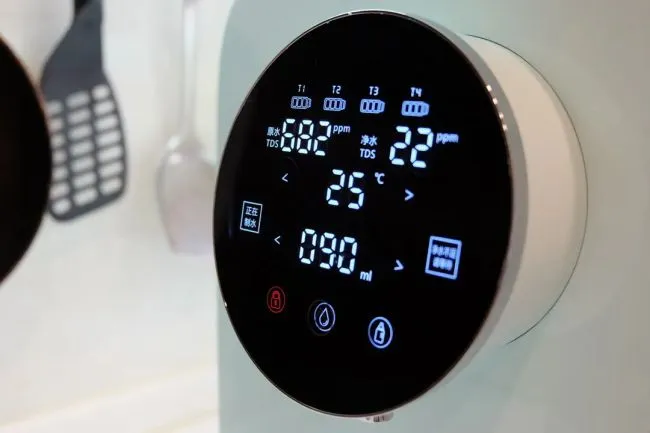
The biggest advantage here is portability and multifunctionality. Modern units have evolved beyond basic pitchers. For instance, a high-end countertop 4-in-1 RO cold and hot water purifier can serve as a standalone hydration station, dispensing chilled, boiling, and ambient water immediately without touching your plumbing.
- Pros: Zero installation, portable, often includes temperature control.
- Cons: Takes up valuable counter space, smaller water tanks require manual refilling.
- Best For: Apartments, dorms, RVs, and small households.
Under-Sink Filters: High Volume and Hidden Hardware
On the flip side, if you own your home or have a large family, an under sink water filter is generally the superior long-term investment. These systems connect directly to your cold water line and hide the bulky tanks and filter cartridges inside the cabinet.
Because they tap directly into the water supply, they offer a continuous flow rate suitable for cooking and filling large pots, which small countertop tanks can’t handle efficiently. While they require an initial installation effort (and usually a dedicated faucet), they keep your kitchen aesthetics clean and clutter-free.
- Pros: High filtration capacity, hidden from view, continuous water supply, low cost per gallon.
- Cons: Requires plumbing modification, harder to take with you if you move.
- Best For: Homeowners, large families (4+ people), and high-volume cooking needs.
Faucet-Mounted and Point-of-Use Solutions
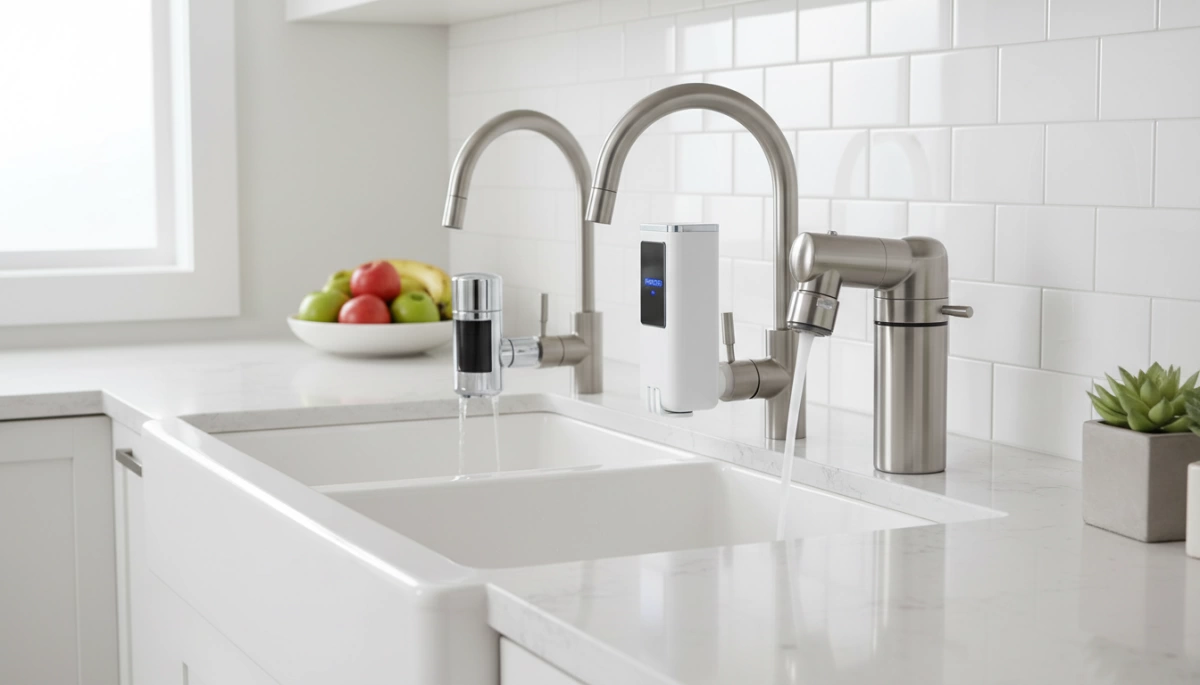
Not every situation calls for drilling into countertops or rerouting plumbing. Sometimes, you just need a straightforward solution right where the water comes out. This is where Point of Use (POU) systems shine, distinguishing themselves from whole-house setups by treating water at a single specific location.
For many renters or those on a budget, a faucet mounted filter is the most accessible entry point into water filtration. These compact units screw directly onto your existing tap, diverting water through a small carbon block or composite filter. They are incredibly effective at water filter contaminants removal regarding taste and odor, specifically targeting chlorine and sediment. If you are looking for an immediate upgrade without tools, installing a high-quality faucet tap water filter takes less than five minutes and instantly improves the quality of your drinking and cooking water.
Beyond the kitchen, we shouldn’t overlook the bathroom. Specialized point-of-use filters for showers and bathtubs are gaining massive popularity in the US market. Municipal water often contains chlorine levels that can strip natural oils from your skin and hair.
Why Choose Point-of-Use Filters?
- Renter-Friendly: No permanent installation or plumbing changes required.
- Targeted Treatment: You don’t waste filter capacity treating toilet water; you only filter what you consume or wash with.
- Cost-Effective: Lower upfront costs compared to under-sink or whole-house systems.
- Maintenance: Filter cartridges are small and easy to swap out by hand.
Next Step: Would you like to see a breakdown of the specific maintenance costs and filter lifespans for these faucet-mounted units?
Side-by-Side Comparison: Technologies and Formats
Choosing the correct filtration method isn’t just about price; it is about matching the specific technology to the contaminants present in your local water supply. As a manufacturer, we see that most customer dissatisfaction stems from expecting one technology to do the job of another.
Below is a direct breakdown of water filter pros and cons, maintenance needs, and performance capabilities to help you decide which system aligns with your water quality reports.
Technology Performance Matrix
| Feature | Activated Carbon | Reverse Osmosis (RO) | Ultrafiltration (UF) | UV Sterilization |
|---|---|---|---|---|
| Best For | Chlorine, Taste, Odor, VOCs | Heavy Metals, Fluoride, PFAS, High TDS | Bacteria, Cysts, Retaining Minerals | Viruses, Bacteria, Microorganisms |
| Filtration Level | 0.5 – 50 microns | 0.0001 microns (Highest Purity) | 0.01 microns | N/A (Disinfection only) |
| Flow Rate | High | Low to Medium | High | High |
| Wastewater | None | Yes (varies by efficiency) | None | None |
| Minerals | Retained | Removed (unless remineralized) | Retained | Retained |
Deep Dive: Choosing the Right Tool
- Activated Carbon Filtration:
This is the workhorse for city water. If your main complaint is the “pool water” smell (chlorine) or weird tastes, carbon is your go-to. It is cost-effective and easy to replace, but it will not remove dissolved inorganic solids like arsenic or nitrates. - Reverse Osmosis (RO):
The heavy lifter. If you are dealing with lead, high Total Dissolved Solids (TDS), or “forever chemicals” (PFAS), an under-sink RO system is the gold standard. While it does produce some wastewater during the flushing process, modern efficient designs have minimized this significantly.Pro Tip: For maximum purity in the kitchen, a high-capacity under-sink RO system provides the most comprehensive water filter contaminants removal available for residential use.
- Ultrafiltration (UF) System:
Think of this as the middle ground. It blocks bacteria and parasites physically without removing healthy minerals like calcium and magnesium. It is an excellent choice for users who want safe water without the wastewater associated with RO, provided the chemical quality of the source water is decent. - UV Sterilization:
UV is not a filter; it is a neutralizer. It uses ultraviolet light to scramble the DNA of bacteria and viruses so they cannot reproduce. It is almost always used as a final stage in a whole house water filtration setup or alongside RO to ensure the water is biologically safe, especially for well water users.
Maintenance & Cost Reality
- Carbon: Low upfront cost, but filters need changing every 3-6 months to prevent bacterial growth.
- RO: Higher initial investment. Membranes last 2-3 years, but pre-filters need changing every 6-12 months.
- UF: Low maintenance; membranes can last a year or more depending on sediment levels.
- UV: Requires an annual bulb change and periodic cleaning of the quartz sleeve to ensure light transmission.
Which One Wins?
There is no single winner—only the right fit for your situation.
- Renters/City Water: Countertop Carbon or Faucet Mount.
- Families/High Contaminants: Reverse Osmosis.
- Well Water: UV Sterilization + Sediment/Carbon Pre-filters.
- Eco-Conscious/Medium Quality: Ultrafiltration.
Critical Factors When Choosing a Water Filter Type
Selecting the right system isn’t just about picking the most expensive box on the shelf; it’s about matching the technology to your specific water profile and lifestyle. As a manufacturer, I see too many people buy overkill systems for simple problems, or weak filters for dangerous water. Here is what you need to evaluate:
- Analyze Your Water Source: Municipal water usually requires chlorine and odor reduction, whereas private wells often need robust sediment pre-filters and UV sterilization to handle bacteria. You cannot choose the right water filter types without a recent water quality report.
- Target Specific Contaminants: If your home has aging infrastructure, finding the best water filter for lead is non-negotiable. If you are in an industrial area, prioritize PFAS removal systems or Reverse Osmosis to handle dissolved solids.
- Installation & Space Constraints: Not everyone can modify plumbing. If you are renting or have limited cabinet space, a versatile countertop RO system offers top-tier filtration without permanent installation.
- Total Cost of Ownership: Don’t just look at the initial price tag. Calculate the water filter replacement cost per year. High-capacity under-sink systems often have lower long-term operating costs than frequent pitcher replacements.
- Verify Certifications: Trust but verify. Look for NSF certified water filters (specifically NSF/ANSI 53 for health effects or 58 for RO). These certifications prove the system actually removes what it claims to remove.
Manufacturing Quality & Customization
When it comes to something as vital as clean drinking water, who builds your system matters just as much as the technology inside it. As a dedicated manufacturer, we know that reliable filtration isn’t about slapping a label on a generic box; it’s about rigorous engineering and deep industry expertise.
The Power of In-House R&D
Real innovation happens in the lab, not a warehouse. Experienced manufacturers invest heavily in Research and Development (R&D) to refine various water filter types and improve efficiency. Whether it is optimizing the pore size of a membrane or engineering the heating element of a sophisticated hot water dispenser, having an in-house R&D team ensures that every component works in perfect harmony.
Strict Testing Standards
Quality control is the difference between a filter that works for a month and one that protects your family for years. At Driplife, we adhere to strict testing protocols to ensure every unit meets global safety benchmarks.
- Performance Validation: We verify that flow rates and contaminant reduction claims are accurate.
- Leak Testing: Every system undergoes high-pressure testing to prevent household disasters.
- Material Safety: We ensure all parts contacting water are food-grade and BPA-free.
OEM/ODM Capabilities for Business
For our B2B partners, flexibility is key. Unlike mere resellers, a true manufacturer offers comprehensive OEM/ODM capabilities. We can customize filtration systems to meet specific market demands, whether that means tweaking a design for hard water areas or creating a completely unique housing for a brand. Partnering with a leader like Driplife gives businesses the competitive edge of factory-direct quality and rapid prototyping.