

















Why You Need a Bath Water Filter: The Hidden Contaminants in Your Tub
Most of us assume that if tap water is safe to drink, it is safe to bathe in. However, the very chemicals used to treat municipal water can wreak havoc on your skin and respiratory system once they fill your tub. Without a quality bath water filter, you are essentially soaking in a cocktail of residual disinfectants and minerals that were never intended for prolonged contact with your skin.
We need to look past the clear appearance of water and address what is actually flowing out of the faucet:
- Chlorine and Chloramines: Used universally for disinfection, these chemicals strip natural oils from the skin and hair, leading to dryness and irritation.
- Heavy Metals: Trace amounts of lead, mercury, and copper can leach from aging pipes, accumulating in the water supply.
- Hard Water Minerals: High levels of calcium and magnesium can clog pores and leave a residue that makes skin feel tight and itchy.
- Sediment and Rust: Visible particles that not only dirty the water but can cause physical irritation to sensitive areas.
Health Impacts: Skin Barrier Disruption and Inhalation Risks
The danger isn’t just skin deep. When you take a hot bath, your pores open up, increasing the rate at which your skin absorbs these contaminants. Furthermore, chlorine vaporizes in hot water. In a steamy bathroom, you and your family are likely inhaling these vapors, which can irritate the lungs and sinuses.
For adults, this manifests as dry, flaky skin, brittle hair, and premature aging. For those with compromised skin barriers, the effects are far more immediate and uncomfortable.
Vulnerabilities for Babies and Eczema Sufferers
If you or your child struggles with conditions like psoriasis, widespread eczema, or atopic dermatitis, a sensitive skin bath filter is not a luxury—it is a necessity.
- Infants and Children: Babies have significantly thinner, more absorbent skin than adults. Their developing systems are less capable of processing toxins, making a baby bath water filter essential for protecting their delicate microbiome.
- Chronic Skin Conditions: For eczema sufferers, chlorine acts as a major trigger. It dries out the skin patches that desperately need hydration, creating a cycle of itching and inflammation that lotions alone cannot fix.
By filtering these contaminants at the source, we stop the damage before it begins, turning bath time back into a healing ritual rather than a source of irritation.
Would you like me to write the next section on “How Bath Water Filters Work: Filtration Technologies Explained”?
Specialized Filtration for Standing Water: How It Works
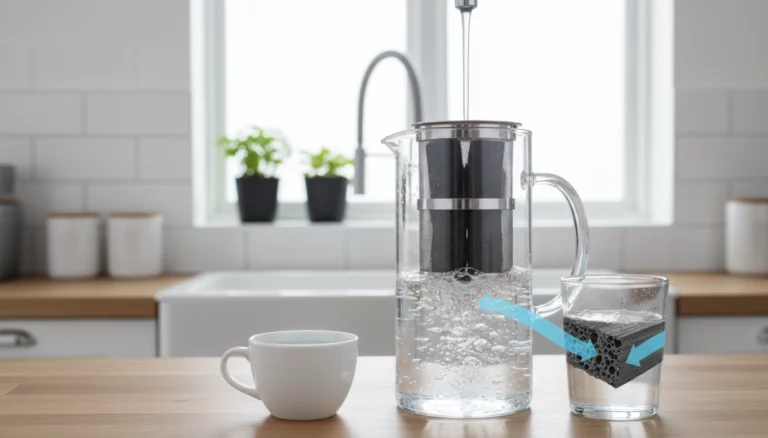
When we engineer a high-performance bath water filter, we aren’t just building a physical barrier to catch dirt; we are dealing with complex water chemistry. Unlike a kitchen filter that drips slowly, a bath filter must handle a high volume of hot water rapidly. To achieve this without killing your water pressure, we rely on a blend of advanced media designed for instant reaction.
Here is the breakdown of the filtration technologies inside a multi-stage bath purifier:
- KDF-55 (Kinetic Degradation Fluxion): This is the heavy lifter in KDF bath filtration. It uses an electrochemical process (redox) to neutralize chlorine and bind heavy metals like lead and mercury. crucially, KDF-55 remains highly effective even in hot water, where standard carbon filters might struggle.
- Calcium Sulfite: We use this specifically for its speed. It excels at rapid chlorine removal bath scenarios, neutralizing chemicals almost instantly as water rushes through the housing.
- Activated Carbon: This porous media acts like a sponge for Volatile Organic Compounds (VOCs), pesticides, and bad odors, eliminating that harsh “swimming pool” smell.
- Vitamin C & Mineral Balls: A Vitamin C bath filter layer goes beyond purification. It neutralizes resilient chloramines and helps lower pH levels to be more compatible with your skin, while mineral balls add beneficial elements back into the water.
The 15-Stage Difference and Flow Rate Reality
We often stack these materials into a comprehensive 15-stage system. This forces the water through sediment pads (to stop rust and sand) before hitting the chemical filtration layers.
However, there is a delicate balance to maintain. Effective filtration requires “contact time”—the water must touch the media long enough for the chemical reaction to occur. That is why specialized bath water filters are designed differently than shower filters; they are optimized to maintain a high flow rate for filling a tub quickly while ensuring the water spends just enough time in the filter to strip away contaminants effectively.
Product Types for Different Tubs
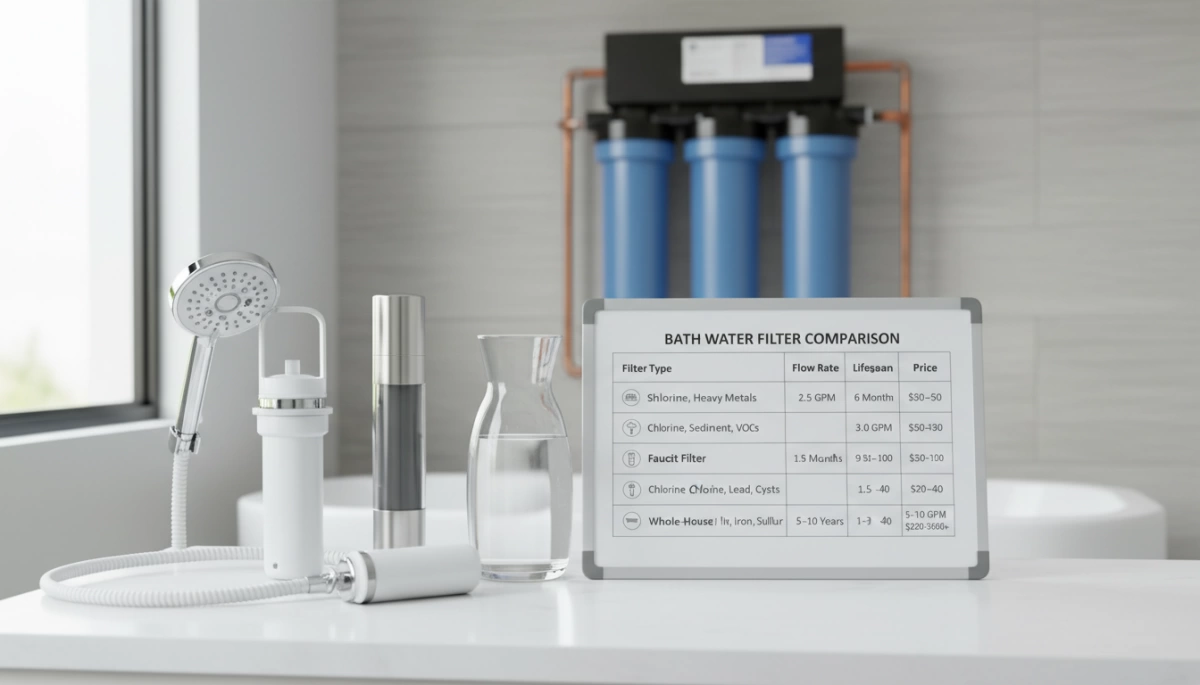
Choosing the right bathtub water filter depends entirely on your specific faucet setup and family needs. In my experience, most US households fall into one of three categories, ranging from portable solutions to high-capacity units designed for serious skin protection.
Bath Ball Filters and Dechlorinators
The bath ball filter is the most versatile option, especially if you are renting or have a uniquely shaped tub spout. These units typically hang from the faucet, allowing water to flow through the media as the tub fills. They act as a dedicated dechlorinator for bath water, utilizing a swirling motion to neutralize chemicals. They are portable, requiring no tools, making them a favorite for travel.
Faucet-Mounted and Inline Filters
For a more robust defense, a faucet mounted bath filter attaches directly to the tub spout. These units generally house denser filtration blocks, forcing water through KDF-55 or activated carbon stages. While they require a compatible spout, they offer superior filtration for heavy metals and sediments, making them an ideal baby bath water filter.
Smart Alternatives
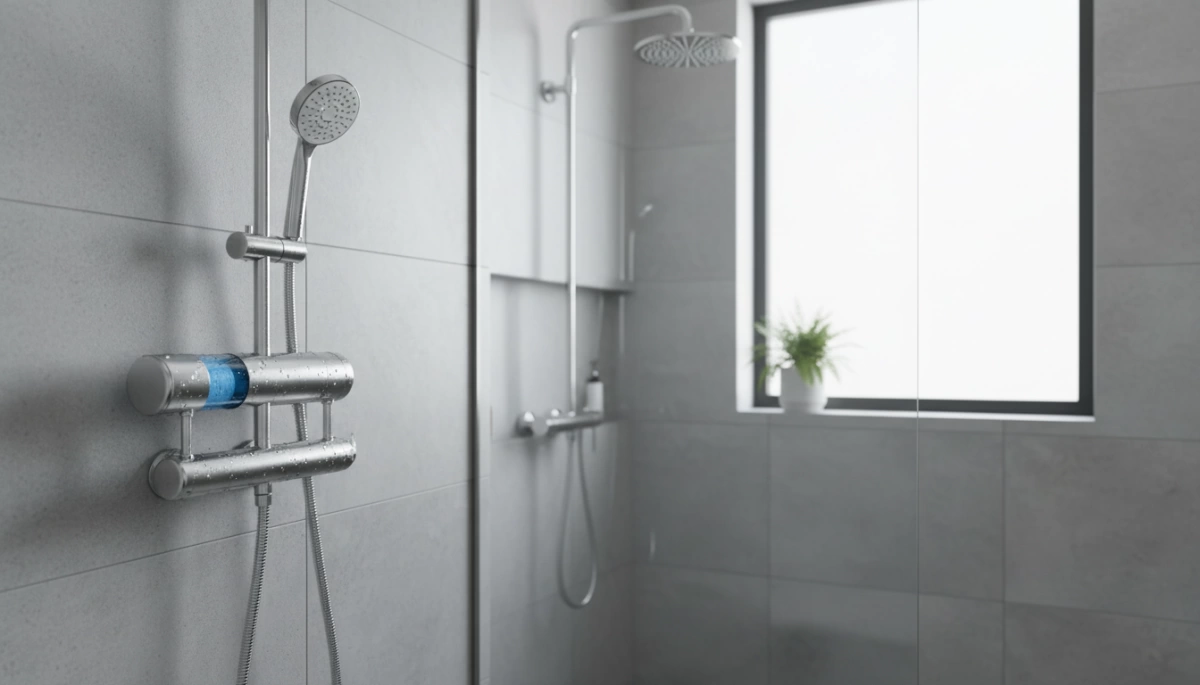
If your tub spout is incompatible with standard mounts, a common workaround is the shower to bath filter method. This involves using a filtered handheld showerhead to fill the tub. It takes longer but guarantees filtered water. Alternatively, whole-house systems provide the ultimate coverage but come with a much higher price tag.
Comparison: Finding Your Match
| Filter Type | Installation Ease | Filtration Capacity | Flow Rate Impact | Suitability for Sensitive Skin |
|---|---|---|---|---|
| Bath Ball / Sphere | Easiest (Hang & go) | Medium (Focus on chlorine) | None (High flow) | Good for general dryness |
| Faucet-Mounted | Moderate (DIY Friendly) | High (Multi-stage) | Minimal reduction | Best (Eczema & Infants) |
| Shower Head Fill | Easy (Uses shower hose) | Medium | Slows fill time | Good |
| Whole House | Hard (Pro Install) | Massive | None | Excellent |
Life-Changing Benefits
Investing in a bathtub water filter transforms your daily routine from a simple wash into a genuine wellness therapy. We often focus heavily on what we drink, yet we soak our entire bodies in unfiltered tap water that can be just as absorbent. Here is why making the switch is a game-changer for your family’s health and comfort.
Soothing Relief for Eczema and Sensitive Skin
For those of us dealing with skin conditions, tap water can be an invisible enemy. Chlorine and hard water minerals strip away natural oils, disrupting the skin barrier and leading to tightness and itching. An eczema bath water purifier removes these harsh irritants, allowing the skin to retain moisture naturally.
- Restored Hydration: Without chlorine drying out your pores, lotions and oils absorb better.
- Reduced Flares: Many users report a significant drop in redness and irritation after switching to a sensitive skin bath filter.
- Softness: You can physically feel the difference in the water texture—it feels silkier and less aggressive on the skin.
Healthier, Shinier Hair
It is not just your skin that suffers from tap water; your hair takes a beating too. A chlorine removal bath system prevents oxidative damage that makes hair brittle, frizzy, and prone to breakage. If you color your hair, a filter is non-negotiable—it prevents the color from fading or turning brassy prematurely.
Peace of Mind for Family Bathing
When filling the tub for a little one, safety is the top priority. Babies have thinner, more absorbent skin than adults, making them more susceptible to chemical exposure. A baby bath water filter ensures that the water surrounding your child is free from heavy metals and disinfection byproducts. Furthermore, because hot water opens pores and releases steam, a filter prevents the inhalation of vaporized chlorine, creating a safer environment for those with asthma or respiratory sensitivities.
Comparison: The Filtered Difference
Here is a quick breakdown of how a hard water bath filter upgrades your experience:
| Feature | Unfiltered Tap Water | Filtered Bath Water |
|---|---|---|
| Smell | Strong chemical/bleach odor | Neutral, fresh, and clean |
| Skin Feel | Dry, itchy, “tight” sensation | Soft, hydrated, and smooth |
| Hair Texture | Frizzy, tangled, straw-like | Shiny, manageable, vibrant |
| Safety | Contains chlorine/sediment | Reduced chemicals & metals |
| Products | Soaps typically lather poorly | Improved lather and soap efficiency |
By removing the “bad stuff,” you create a pristine canvas for aromatherapy and bath salts, ensuring you are soaking in pure relaxation rather than a chemical cocktail.
What to Look for in the Best Bath Water Filters
When shopping for a bath water filter, I always advise looking beyond the price tag. You need a system that balances powerful purification with the practical reality of filling a large bathtub quickly. Here are the essential features that separate high-quality units from the rest:
- High Chlorine Reduction: The primary goal is eliminating irritants. Aim for a filter proven to remove at least 90% of chlorine and chloramines.
- Maintained Flow Rate: Filling a tub takes gallons of water. A top-tier filter purifies effectively without turning your faucet into a slow trickle.
- Long Lifespan: Look for high-capacity cartridges that last 6 to 12 months. This offers better value and less maintenance hassle.
- Tool-Free Installation: The best units utilize a universal design that straps or screws onto standard faucets in minutes—no plumber required.
Certifications and Safety Standards
Performance claims mean nothing without proof. I strictly recommend filters that meet NSF/ANSI standards and have visible third-party lab results. This validation ensures the unit effectively handles specific contaminants. It is crucial to verify these specs, especially if you are concerned about whether water filters filter out lead or other heavy metals alongside standard chlorine removal.
Material Quality and Compatibility
ly, safety extends to the device itself. Ensure the filter housing is made from durable, BPA-free materials to prevent plastic byproducts from leaching into hot water. always check compatibility with your specific faucet type—whether you have a diverter or a standard spout—to ensure a secure, leak-free seal.
Advanced Protection with driplife Bath Water Filters
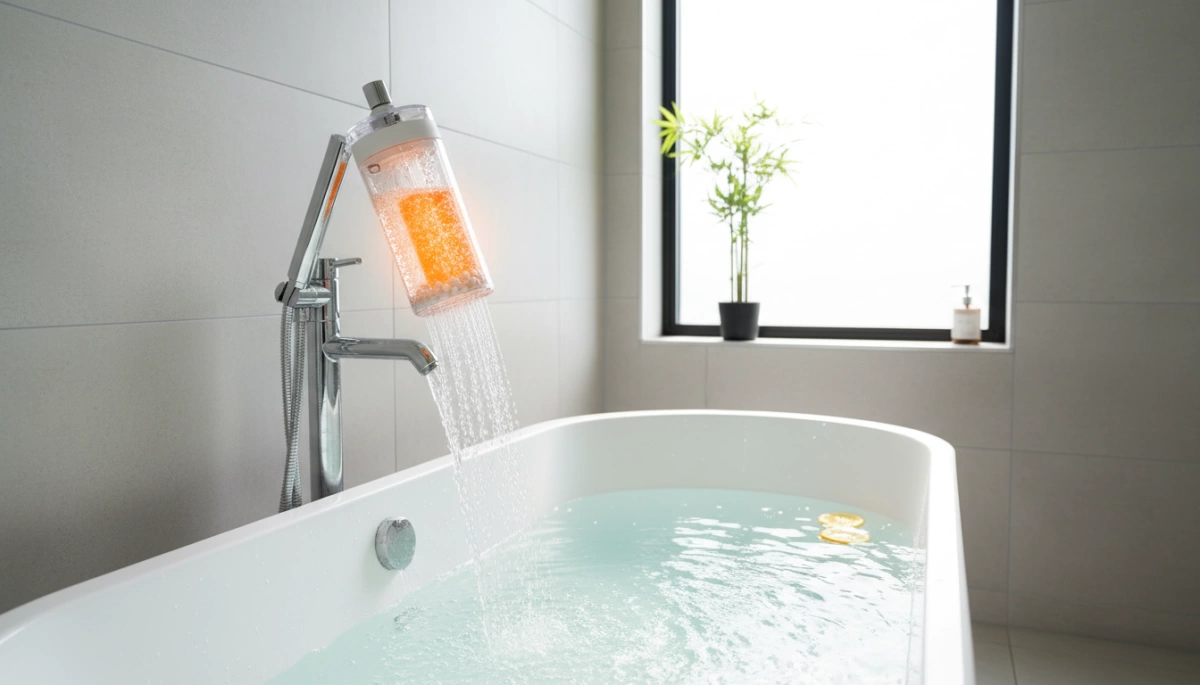
At driplife, we don’t just sell filters; as a dedicated manufacturer, we engineer them for precision and safety. We understand that for families in the US dealing with hard water or city chlorination, a standard bath water filter often isn’t enough. That’s why we developed our high-performance filtration systems to meet the rigorous demands of sensitive skin and daily wellness.
Our specialized multi-stage bath purifier sets a new standard for bathing comfort. We utilize a proprietary 15-stage filtration technology that goes beyond simple sediment removal. By combining KDF-55, calcium sulfite, and activated carbon with beneficial elements like Vitamin C, our filters actively neutralize harsh chemicals while infusing the water with skin-nourishing nutrients. This Vitamin C bath filter design is particularly effective for neutralizing chlorine and chloramines, providing immediate relief for those prone to dryness or eczema.
Why Choose driplife for Your Home?
We build our units to withstand the high flow rates of American bathtubs without leaking or cracking. Here is what makes our sensitive skin bath filter the reliable choice for your bathroom:
- 15-Stage Purification: A comprehensive blend of media that targets heavy metals, odors, and bacteria.
- Vitamin C Infusion: revitalizes the skin and helps restore natural moisture barriers.
- Universal Compatibility: Designed to fit standard faucet types easily, making it a hassle-free addition to any rental or owned home.
- Durable Build: Constructed with high-grade, BPA-free ABS material to handle hot water temperatures safely.
- High Capacity: Long-lasting cartridges that maintain peak performance for months, ensuring consistent protection for every bath.
Real users report a noticeable difference immediately—the water feels softer, the chemical smell is gone, and post-bath skin feels hydrated rather than tight. Whether you are bathing a newborn or simply soaking away stress, our filters deliver the clean, safe water your family deserves.
Installation Guide: Set Up Your Bath Filter in Minutes
You don’t need to call a plumber or own a toolbox to upgrade your bathroom. Most modern bathtub water filter systems are designed for quick, DIY installation that fits standard American fixtures. Whether you are using a robust faucet mounted bath filter or a simple hanging option, getting set up is straightforward.
Step-by-Step Installation for Common Faucet Types
- Standard Round Faucets: Most filters simply screw directly onto the aerator threads. If your tub spout doesn’t have threads, use the universal rubber adapter included with most kits. Tighten the clamp securely to prevent leaks.
- Hanging “Bath Ball” Filters: These are the easiest to use. simply loop the harness over the faucet spout so the water flows directly over or through the filter media as the tub fills.
- Diverter Valve Systems: If you are using a shower-to-bath setup, screw the diverter valve between your shower arm and the showerhead. Attach the hose leading to the bath filter.
Pro Tip: Always run hot water through the new unit for 2–5 minutes before your first bath. This flushes out any loose carbon dust or fine particles from the manufacturing process.
Maintenance: Keeping Your Water Pure
To ensure your family continues to enjoy chemical-free bathing, regular maintenance is key. Over time, the filter media becomes saturated with contaminants. Understanding how filtration mechanisms work highlights why a clogged filter can eventually release trapped pollutants back into the water if not changed.
Best Practices for Cartridge Replacement:
- Monitor the Lifespan: Most cartridges last 6 to 12 months, or roughly 10,000 to 15,000 gallons. If you take multiple baths a day, check it sooner.
- Watch for Signs: A noticeable drop in water pressure or the return of a chlorine smell are clear indicators it is time to swap the cartridge.
- Regular Cleaning: Occasionally backflush the filter (if the model allows) to dislodge sediment and extend the life of the KDF bath filtration media.
Would you like me to draft the “Real Results” section next to highlight user testimonials and success stories?
Real Results: What Users Say About Bath Water Filters
When we talk to customers about making the switch, the feedback is almost immediate. Most people don’t realize how much their tap water affects them until they try a bath water filter. The consensus is clear: removing harsh chemicals like chlorine transforms the bathing ritual from a routine clean into a genuine wellness experience.
Users consistently report a significant reduction in that “tight,” dry feeling often associated with municipal tap water. Instead of itching after a soak, the skin feels softer and more hydrated. This is a game-changer for families dealing with sensitive skin conditions.
Common feedback includes:
- Immediate Eczema Relief: Parents report fewer flare-ups and less redness in children with atopic dermatitis.
- No More Chemical Smell: The “swimming pool” odor of chlorine is completely eliminated, allowing bath oils and salts to work better.
- Softer Hair: Without heavy metals and drying agents, hair feels smoother and less brittle after rinsing in the tub.
“We bought a sensitive skin bath filter for our toddler who struggles with severe eczema. The difference was night and day. After just one week, he stopped scratching as much after bath time, and his skin stays moisturized longer.” — Sarah T., Verified Buyer
“I didn’t think a faucet mounted bath filter would make much difference for me, but I was wrong. My skin doesn’t feel like sandpaper anymore, and I can actually smell my lavender bath bomb instead of bleach. It’s a must-have for winter dry skin.” — Mike R., Long-term User
Next Step
Would you like me to draft the “Frequently Asked Questions” section next to address common queries about filter lifespan and specific contaminant removal?
Frequently Asked Questions
Do bath water filters really work for eczema?
Yes, they make a significant difference for many users. Chlorine is a known irritant that strips natural oils from the skin, which triggers flare-ups. By using an eczema bath water purifier or a filter with KDF-55 and Vitamin C, you eliminate that harsh chemical exposure. While it isn’t a medical cure, removing the irritant allows the skin barrier to heal, providing much-needed relief.
How long do they last, and what is the ongoing cost?
Longevity depends on your local water quality and how often you fill the tub.
- Bath ball filters: Typically last 12 months or about 26,000 gallons.
- Faucet-mounted units: usually require a cartridge swap every 6 months.
The ongoing cost is minimal compared to the price of therapeutic lotions and skin treatments, making it a smart investment for family health.
Can they remove fluoride or PFAS?
Standard bath water filters are engineered primarily for chlorine, chloramines, heavy metals, and sediment. Due to the high flow rate required to fill a bathtub quickly, they generally do not remove fluoride or PFAS (forever chemicals). Removing those requires contact time and technologies like Reverse Osmosis found in whole-house systems. It is helpful to understand the distinction between a standard water filter vs. purifier when targeting specific dissolved solids like fluoride.
Are they safe for baby baths?
Absolutely. In fact, a baby bath water filter is highly recommended. Infants have much thinner, more absorbent skin than adults, making them more susceptible to chemical absorption and inhalation of chlorine vapors. Filtering the water ensures a safer, non-toxic environment for your little one.
Shower filter vs. dedicated bath filter: Which is better?
It depends on your setup, but they serve different purposes.
- Shower filters: Designed for high pressure and restrict flow slightly to ensure filtration.
- Bath filters: Designed to handle high volume without slowing down the tub-filling process too much.
While you can use a shower to bath filter method (filling the tub with a handheld showerhead), a dedicated faucet mounted bath filter or bath ball is much faster and more convenient for daily baths.
Would you like me to help you compare specific driplifecorp bath filter models to find the perfect fit for your home?